
InsightsNewsAugmented Reality43 Articles
Augmented Reality News
Augmented reality in production: ARKit and tracking limits, retail and industrial use cases, and what AR projects actually cost to build.
 Indoor Navigation Solution: Technologies, Build Approaches, and Real Deployment CostsAn indoor navigation solution is a system that guides people through a building the way GPS guides them through a city, built from three layers: an indoor positioning layer, a routing engine, and a mobile or web interface. GPS signals fail indoors, where people spend roughly 87% of their time, according to Lawrence Berkeley National Laboratory data cited by Zappar. So these systems locate users with Bluetooth, WiFi, ultra-wideband, or the phone camera instead. A pilot floor can start near $20,000 in a few weeks; a full-campus rollout runs $150,000 to $300,000 or more over 6 to 12 months.Continue reading →
 What Is an AR Business Card? Cost, How It Works, and When to Hire a StudioAn AR business card is a physical business card that launches an augmented reality experience — a video, a 3D model, or an interactive portfolio — when someone scans it with a phone camera. Most cards today use WebAR, so the recipient needs no app and no download. Pricing runs from free on DIY platforms to roughly $8,000 or more for a fully custom studio build.
 What Is AR Advertising? Formats, Costs, and How to Choose a StudioAR advertising is paid marketing that overlays branded 3D objects, filters, and try-on experiences onto a user's live camera feed, so the audience interacts with a product instead of watching a clip of it. Brands buy it in three formats: social-platform effects on Snapchat and TikTok, WebAR opened from a QR code or link with no app to install, and in-app or programmatic AR ad units served inside other apps. Each format trades reach against control, cost, and creative freedom. This guide covers what each one costs, how long it takes to build, how to measure it, and how to pick the team that makes it.
 Augmented Reality Experts: What They Actually Know, What They Cost, and How to Vet ThemAugmented reality experts are practitioners who combine four disciplines most developers never master together: 3D graphics, computer vision, mobile or spatial development, and spatial UX design. A mobile developer can place a model in a room with ARKit. An augmented reality expert knows why the model drifts under fluorescent light, and has already fixed it. This guide explains what that expertise contains, what it costs, and how to tell a shipped practitioner from a demo reel.Read →
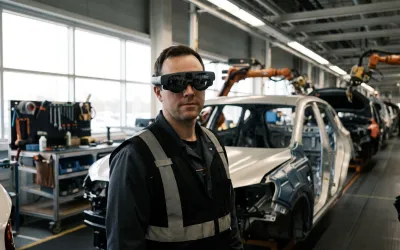 Augmented Reality in Car Manufacturing: Use Cases, Hardware, and Pilot CostsAugmented reality in car manufacturing is the use of headsets, smart glasses, and tablets to overlay digital work instructions, CAD data, and inspection results directly onto the physical vehicle, line, or machine. Automakers apply it to six jobs: guided assembly, quality inspection with gap-and-flush checks, weld and paint verification, worker training, maintenance and diagnostics, and design review over physical bucks.Read →
 How Much Does Augmented Reality Cost? AR Pricing by Project Type (2026)How much does augmented reality cost? Between $5,000 and $300,000-plus to build, depending on how the experience runs and how much 3D content it carries. A simple WebAR or marker-based experience runs $5,000–$40,000. A mid-complexity native app on ARKit or ARCore, with custom 3D content and analytics, runs $50,000–$120,000. An enterprise deployment with a backend, CMS, and managed device fleet starts near $120,000 and often passes $300,000.Read →
 How Is Augmented Reality Used in Businesses? Use Cases, ROI, and Getting StartedBusinesses use augmented reality to overlay digital information onto the real world across five functions: product visualization, employee training, hands-free field service and remote assistance, manufacturing and warehouse guidance, and marketing. Retailers using AR product previews report up to 94% higher conversion and up to 40% fewer returns (BrandXR, 2025), while manufacturers use AR overlays to cut assembly time and on-site error rates.Read →
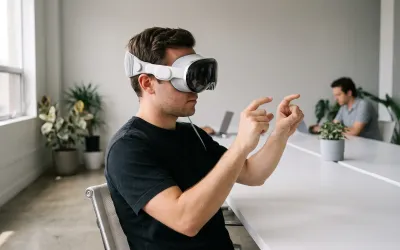 Hire ARKit Developers: Skills, Cost, and Engagement Models for Apple ARTo hire ARKit developers, look for engineers who have shipped native augmented reality apps to Apple's App Store using ARKit, RealityKit, and Swift — not generalist mobile developers who list AR as one skill among many. ARKit is Apple's augmented reality framework for iOS, iPadOS, and visionOS, and building on it well requires specialists who know the platform's tracking, rendering, and review requirements firsthand.Read →
 What Is AR Product Visualization? A Buyer's Guide for Ecommerce BrandsAR product visualization is technology that overlays a true-to-scale 3D model of a product onto a shopper's real environment through a phone or tablet camera, so a buyer can see a sofa on their own floor or a speaker on their own desk before ordering. A custom WebAR build typically costs $25,000 to $75,000 and ships in 6 to 16 weeks; hosted SaaS viewers start around $140 to $500 per month.Read →
 What Is Social AR? How Filters and Lenses Work and Why Brands Are Investing in 2026Social AR is camera-based augmented reality delivered inside social apps like Snapchat, TikTok, and Instagram, where filters, lenses, and branded effects track a face, body, or space and move with it in real time. For a marketing team, social AR is the quickest way to put an interactive brand experience in front of hundreds of millions of phones. This guide covers what it is, how it works, which platforms host it, and what a branded lens costs in 2026.Read →
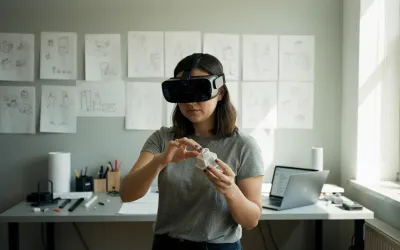 Mixed Reality Products in 2026: Headsets, Glasses, Platforms & Dev FrameworksMixed reality products are the headsets, smart glasses, software platforms, and development frameworks that let digital content perceive and interact with the physical world in real time. In 2026 the category runs well past the headset: four flagship headsets, a fast-growing wave of AR glasses, and the build tools behind them all count. This guide maps the full landscape and shows where each product actually fits.Read →
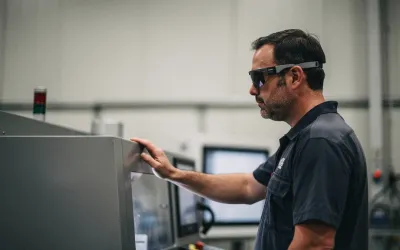 Industrial Augmented Reality: Use Cases, Platforms, and How to Get StartedIndustrial augmented reality is the use of AR to overlay digital work instructions, live equipment data, and 3D guidance onto real machines and environments, whether on the factory floor, in the warehouse, or at a remote field site. Delivered through smart glasses, tablets, or phones, it helps frontline workers assemble, repair, inspect, and pick with fewer errors. This guide covers the use cases, the platforms, the devices, the real costs, and how to launch a project that pays back.Read →