
AR Field Service: Build vs. Buy Cost Guide for Industrial Teams
Oct 16, 2026
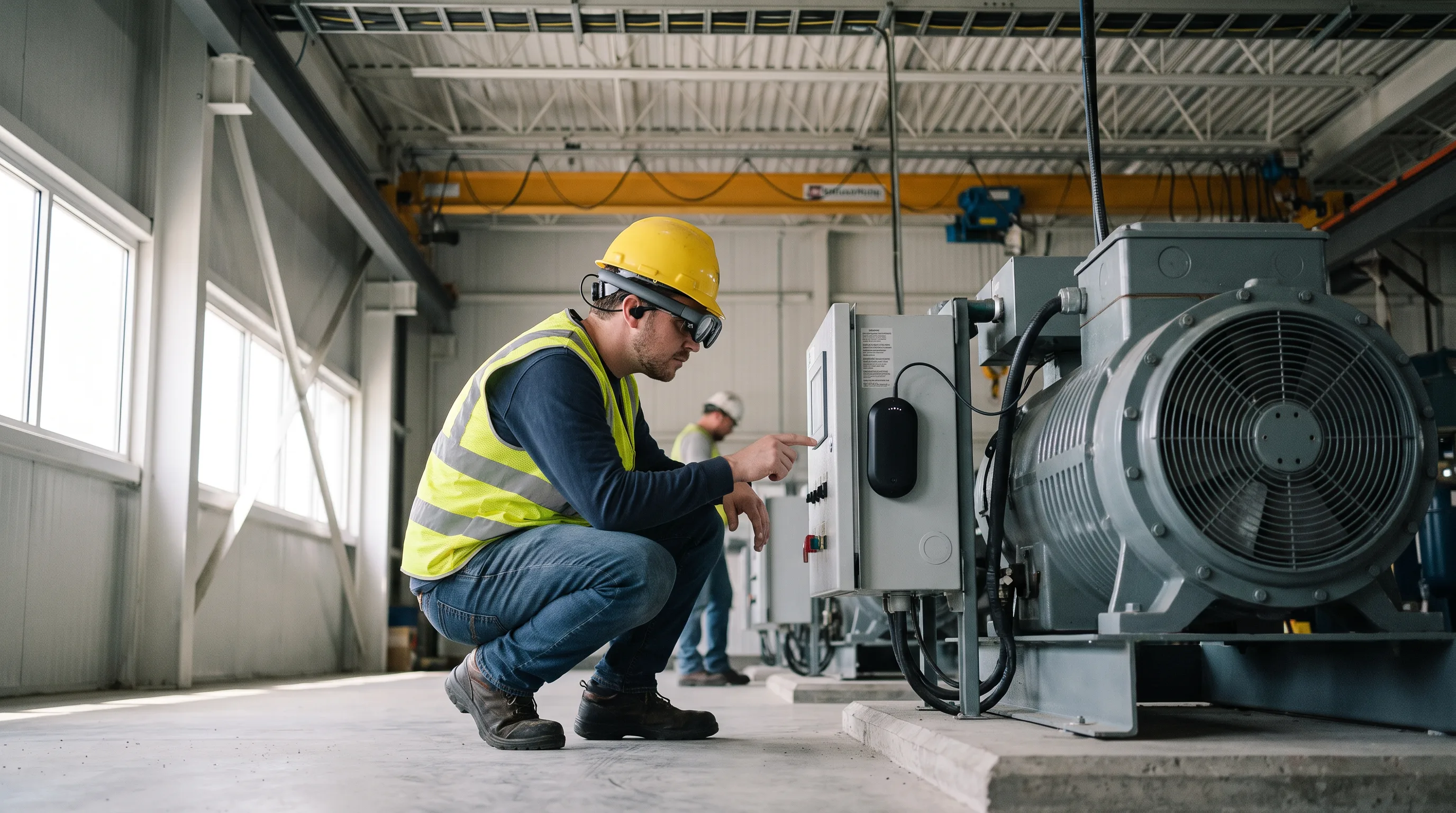
12 MIN READ
AR field service is the use of augmented reality to overlay digital work instructions, live expert annotations, and equipment data onto a technician’s real-world view through smart glasses or a phone camera. It lets a technician follow a guided repair, or get talked through one by a remote expert, without setting down a wrench. The approach has moved from pilot to standard practice. According to Gartner’s forecast cited by Brocoders in 2025, nearly half of all field service deployments will include mobile AR tools by 2025, up from under 10% in 2019.
This guide answers the question an operations director actually has: buy a SaaS seat, or build a custom app? Here is the stance we will defend. Most enterprise AR field service pilots fail not because the technology is weak, but because they get scoped as remote-assist demos instead of throughput programs tied to dispatch rates and repair time. Scope the metric first. Then pick the tool.
Key Takeaways
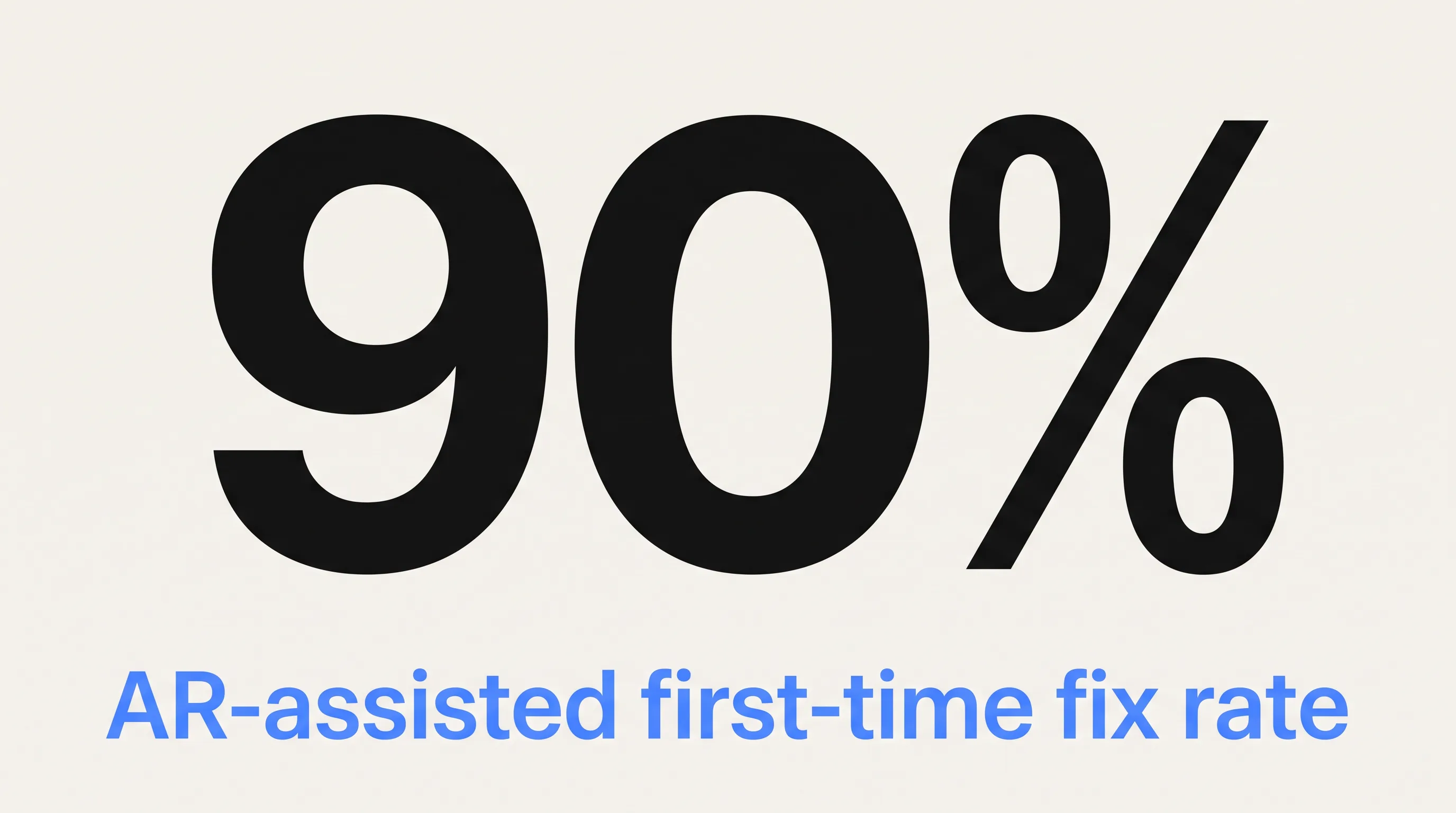
- AR-assisted first-time fix rates typically exceed 90%, versus 75–85% for conventional field service, per AIDAR Solutions’ 2025 benchmarks.
- SaaS AR remote assist starts around $30 per user per month (TechSee); custom AR field service apps run $120,000–$300,000+, per 2026 pricing data.
- A CGS TeamworkAR pilot cut truck roll dispatches by 24.6%, and each avoided dispatch saves over $1,000.
- AR field service deployments typically reach positive ROI within 12–18 months, according to AIDAR Solutions’ 2025 analysis.
- Buy SaaS for standard remote-assist at small scale; build custom when equipment is proprietary, workflows need offline mode, or the team exceeds roughly 50 technicians.
What Is AR Field Service?
AR field service is augmented reality applied to equipment maintenance and repair, overlaying digital information onto the physical asset a technician is working on. It takes three main forms: AR-guided work instructions that pin steps and diagrams onto the equipment itself, remote expert assistance that lets an off-site specialist annotate a live video feed, and AR-based training that lets new hires practice on virtual equipment. The information is delivered to smart glasses like the RealWear Navigator or Vuzix headsets, or to a standard phone or tablet.
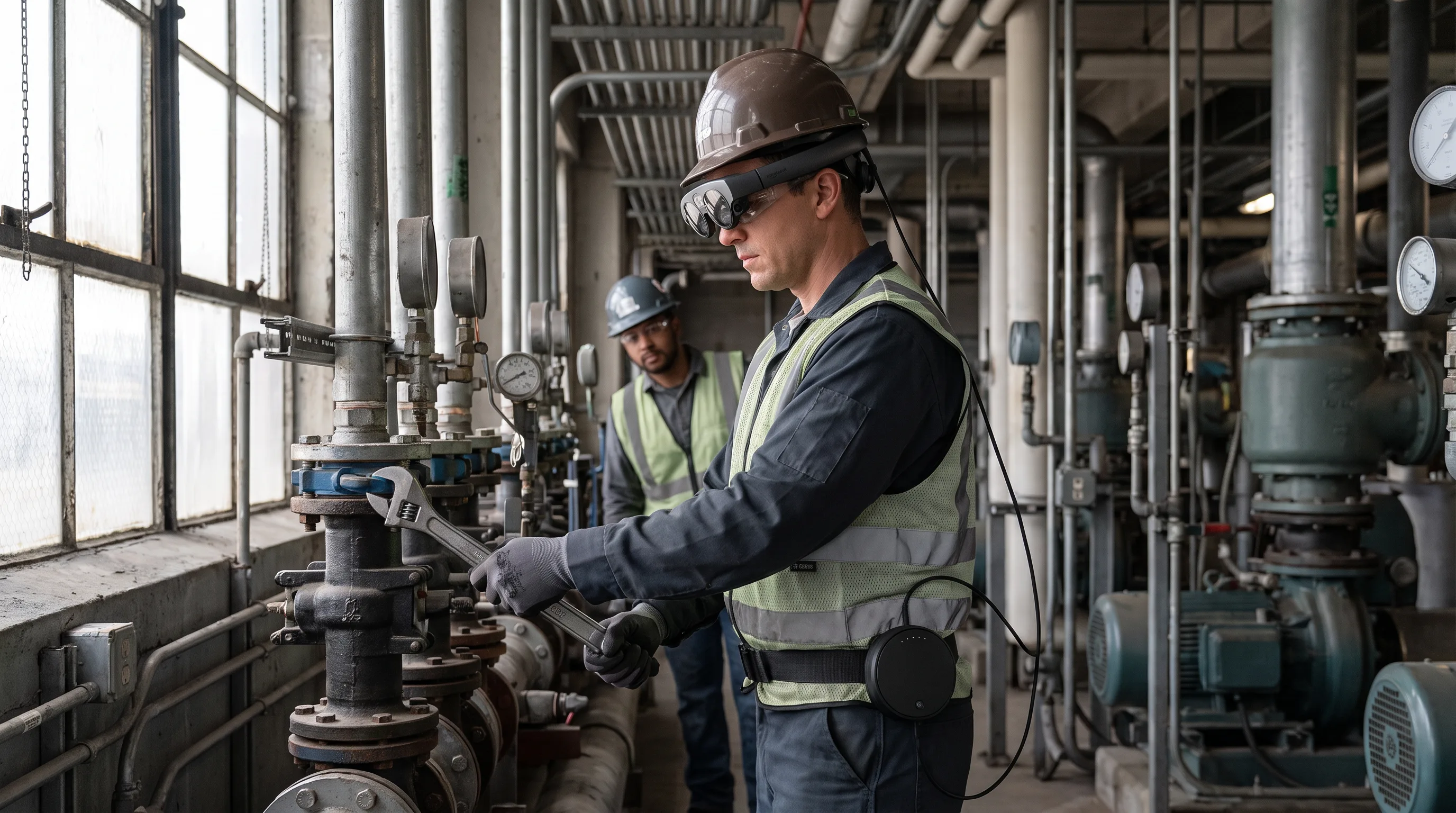
The point is to keep the technician’s hands and attention on the job. Instead of flipping through a PDF manual or phoning a senior engineer and describing a part over a bad connection, the technician sees the next step rendered in place, or shows the remote expert exactly what they see. Salesforce’s 2025 field service guide reports that its Field Service Mobile App now uses Apple’s ARKit to let technicians create 3D renderings and measure spaces on site, a sign of how far the tooling has moved into mainstream platforms. These capabilities also anchor broader industrial augmented reality programs that extend past field service into assembly and quality inspection.
How Does AR Remote Assist Improve First-Time Fix Rates and Cut Repair Time?
AR remote assist improves first-time fix rates by putting a remote expert’s eyes and annotations onto the technician’s live view, so complex faults get diagnosed on the first visit instead of the second. AIDAR Solutions’ 2025 analysis reports AR-assisted first-time fix rates typically exceed 90%, compared with 75–85% for conventional methods, and mean time to repair falling 25–50% through guided digital workflows. Those two numbers are where the money is.
The mechanism is simple. A technician wearing smart glasses streams point-of-view video to an off-site specialist, who draws arrows, circles, and notes directly onto the real-world feed. No more describing a valve over the phone. The specialist points at it. Oxmaint’s July 2025 case study documents a major equipment manufacturer that raised first-time fix rates from 67% to 91% and cut average repair time by 32% after deploying AR-assisted field service.
Travel is the other cost center AR attacks. AIDAR Solutions reports expert travel costs dropping over 75% when AR remote assistance replaces physical dispatch to complex sites. Pair that with the economics CGS documents: the average field service dispatch costs over $1,000 once labor, travel, parts, and scheduling are counted, and a 30% dispatch avoidance rate produces six figures of annual savings for a single service line. A CGS TeamworkAR pilot hit a 24.6% reduction in truck rolls and shaved 2.5 minutes off average handle time per call. Better fix rates and fewer trucks on the road reinforce each other, so the savings from a well-scoped program compound rather than add.
How Much Does AR Field Service Cost?
AR field service costs fall into two very different bands: SaaS remote-assist seats billed monthly per user, and custom-built apps billed as a one-time development project. The right number depends on how many technicians you have and how specialized your equipment is.
How Much Does SaaS AR Remote Assist Cost?
SaaS AR remote assist costs roughly $30 to $65 per user per month for named platforms, with enterprise tiers quoted on request. Blitzz’s March 2026 platform review lists TechSee starting at $29.99 per user per month, Microsoft Dynamics 365 Remote Assist at about $65 per user per month, XMReality near $40, and CareAR on custom enterprise pricing. The same review notes a telling split: all ten major platforms offer AR annotation, but only four support smart glasses, so hands-free field work narrows your options fast.
Seat pricing looks cheap until you multiply it. A 50-technician team on a $65 seat spends $39,000 a year on licensing alone, before admin, integration, and training overhead. That fee recurs every year and rises with headcount.
| Platform | Starting price | Smart glasses support |
|---|---|---|
| TechSee | $29.99 / user / month | Yes |
| XMReality | ~$40 / user / month | Yes |
| Microsoft Dynamics 365 Remote Assist | ~$65 / user / month | Yes |
| CareAR | Custom enterprise quote | Yes |
How Much Does a Custom AR Field Service App Cost?
A custom AR field service app costs $120,000 to $300,000 or more, with build timelines of 6 to 12 months, according to HQ Software Lab’s 2026 pricing breakdown. Basic enterprise-grade builds start near $38,000, but production field service apps with real integration land in the higher band. What drives the number up is specific: 3D asset creation, on-device model caching for offline sites, proprietary equipment marker libraries, integration with ServiceNow or SAP, and mobile device management for a headset fleet.
At Frame Sixty, an AR/VR and spatial computing development studio, a field service build almost always starts with a device decision before a line of code is written. RealWear-class headsets win on durability and voice control in loud plants; a phone or tablet wins when technicians already carry one and the environment is forgiving. We build the 3D pipeline around USDZ and glTF assets so the same models run across iOS, Android, and headset targets, which keeps asset costs from multiplying per platform. That judgment, made early, is often the difference between a $120,000 build and a $300,000 one.
A full build is not the first step. A scoped pilot of 5 to 10 workers over 8 to 12 weeks, costing roughly $25,000 to $75,000, proves the workflow and the metric before anyone commits to production. Our guide to AR app development covers how platform choice shapes that build path in more detail.
Need help scoping an AR field service build?
We are here to help!
AR Field Service Platforms: How Do the Leading Options Compare?
The AR field service platform market splits into two categories, and conflating them is a common buying mistake. Remote visual support SaaS, like TechSee and Microsoft Dynamics 365 Remote Assist, handles ad-hoc expert calls. Embedded AR work-instruction platforms, like PTC Vuforia, handle repeatable guided procedures that often need offline operation or deep asset data. Knowing which workflow dominates your service calls tells you which category to shortlist.
CareAR is ServiceNow-native and aimed at enterprise field service, with pricing quoted per deployment. TechSee leans on AI vision at the lowest published entry price. Microsoft Dynamics 365 Remote Assist integrates with Teams, which suits organizations already standardized on Microsoft. PTC Vuforia pairs with ServiceMax, and in February 2025 PTC launched ServiceMax AI, a generative-AI assistant that layers diagnostics and predictive maintenance onto its AR work instructions. XMReality covers mid-market remote assist at around $40 per seat.
| Platform | Best for | Smart glasses | Starting price |
|---|---|---|---|
| TechSee | AI-assisted remote visual support | Yes | $29.99 / user / mo |
| XMReality | Mid-market remote assist | Yes | ~$40 / user / mo |
| Microsoft Dynamics 365 Remote Assist | Teams-based organizations | Yes | ~$65 / user / mo |
| CareAR | ServiceNow-native enterprise FSM | Yes | Custom quote |
| PTC Vuforia + ServiceMax AI | AR work instructions + GenAI diagnostics | Yes | Custom quote |
A custom app is not always a rip-and-replace of these platforms. A well-built field service app can sit on top of one, consuming CareAR’s remote-assist calls or Vuforia’s work instructions through their APIs while owning the proprietary workflow, branding, and offline logic the SaaS tier cannot deliver. Verdict: buy a SaaS platform when a standard category fits your calls, and build custom when your highest-value workflow falls between the categories or needs data no vendor exposes.
Should You Build a Custom AR Field Service App or Buy a SaaS Platform?
Build or buy comes down to three factors: how standard your workflows are, how many technicians you have, and whether you need to own the IP. Buy when your needs are common and your team is small. Build when your equipment, workflows, or scale push you past what a seat license can economically serve.
When Is Buying a SaaS Platform the Right Choice?
Buying a SaaS platform is the right choice when deployment speed matters and your use case is standard remote visual support. A SaaS seat goes live in days; a custom build takes months. For a team under about 20 technicians running ordinary expert-escalation calls, seat licensing is cheaper and lower-risk than a development project. It is also the correct move when a custom budget has not been approved and you need to prove value to finance before committing capital. Gomocha’s 2026 overview notes that implementation challenges like device durability and system integration are real, and a SaaS trial lets you surface them cheaply.
When Does Building Custom Win?
Building custom wins when your equipment is proprietary, your workflows need offline mode, or you want to own the integration and the IP. Energy, mining, and remote industrial sites often lack reliable connectivity, which rules out cloud-dependent SaaS and forces on-device model caching. Prakash’s March 2026 report describes utilities, oil and gas, and telecom as the sectors pushing AR smart glasses into daily use, precisely the environments where off-the-shelf tools strain.
Scale changes the math. A 50-technician team paying $65 per seat spends roughly $195,000 over five years on licensing alone, which lands inside the band of a one-time custom build the organization then owns outright. Past that headcount, or past that time horizon, custom amortizes below SaaS. When you reach that point, hiring an augmented reality development team to commission a fitted build becomes the economically rational call. Verdict: buy SaaS for standard workflows at small scale, and build custom for proprietary equipment, offline sites, or teams large enough that seat fees outrun a one-time build.
What ROI Can You Expect from AR Field Service?
AR field service deployments typically reach positive ROI within 12 to 18 months, per AIDAR Solutions’ 2025 analysis, and Haptiq’s November 2025 operations guide puts the payback window at 12 to 24 months for well-scoped programs. The return comes from three levers you can model against your own numbers before spending a cent.
The first lever is dispatch reduction. Every avoided truck roll saves over $1,000, and a pilot like CGS TeamworkAR’s cut dispatches 24.6%. Run that against your annual dispatch volume. The second lever is repair efficiency: a 25–50% cut in mean time to repair means each technician closes more jobs per day, which is capacity you would otherwise hire for. The third lever is training. Oxmaint’s 2025 case study documents an automotive manufacturer that compressed technician training from 6 months to 2.5 months while improving safety scores 45%.
The macro trend backs the micro case. CGS reports Gartner’s forecast that 75% of capital-equipment-intensive industries will adopt AR as a primary cost-reduction tool by 2026. As Rich Davis of Haptiq’s Pantheon Digital Transformation group put it in November 2025, “AR gives technicians the information they need, exactly when and where they need it—without pulling them out of the task at hand.” That is the whole ROI thesis in one sentence: value comes from throughput, not novelty, which is exactly why a pilot scoped around a demo rather than a dispatch metric tends to stall.
How Do You Choose an AR Field Service Development Partner?
Choosing an AR field service development partner comes after you have decided to build custom, and it demands a narrower skill set than general AR work. A field service app has to integrate with FSM and ERP systems, run offline on managed headsets, and survive a dusty plant floor. A studio that has shipped consumer AR filters has not necessarily solved any of that. Screen for the specific experience.
What Should You Ask a Prospective AR Development Partner?
Ask these five questions before signing with any AR field service development partner:
- Have you shipped AR work-instruction apps that integrate with FSM platforms like ServiceNow or SAP? Integration is where field service builds overrun; proven connectors de-risk the project.
- What is your approach to offline mode and on-device model caching? Remote sites lose connectivity, and a cloud-only app is useless at a substation.
- Who owns the IP and 3D assets at project close? You are paying to own the workflow, so confirm the code and models transfer to you.
- How do you handle mobile device management for a headset fleet? Rolling out 200 RealWear units is a deployment problem, not just a coding one.
- Can you show first-time fix or MTTR improvements from a comparable deployment? Metrics, not mockups, prove the partner understands field service.
At Frame Sixty we have shipped more than 100 AR applications across iOS, Android, web, and headset platforms including Meta Quest 3, Apple Vision Pro, and industrial devices like RealWear and Vuzix, and every engagement ends with full code and asset ownership transferring to the client. Our standard model is a pilot of 8 to 12 weeks at roughly $25,000 to $75,000, which validates the workflow and the target metric, followed by a production build in the $120,000 to $300,000 band over 6 to 12 months. We scope the dispatch or fix-rate number we are trying to move at the start, because a field service app that does not move an operational metric is just an expensive demo.
Conclusion
AR field service has crossed from experiment to operating standard, and the evidence is in the metrics: first-time fix rates above 90%, repair times down 25–50%, and dispatch savings north of $1,000 per avoided truck roll. The buy-versus-build decision is not about which technology is better. It is about which fits your workflows, your technician count, and your need to own the result. Buy a SaaS seat when your calls are standard and your team is small. Build custom when your equipment is proprietary, your sites go offline, or your scale makes recurring seat fees the more expensive path.
Whichever path you choose, scope the operational metric first. The pilots that fail are the ones that chase a slick remote-assist demo instead of a measurable cut in dispatches or repair time. Pick the number you need to move, then pick the tool that moves it, and insist your partner can show they have moved it before.
If you are weighing a custom AR field service build against an off-the-shelf platform and want real cost math for your equipment and workflows, get in touch with Frame Sixty. We will tell you honestly whether a SaaS seat or a fitted build is the smarter investment for your service operation.
FAQs
Common questions about AR field service, covering where it fits, how it is built, and how to select a platform or development partner.
AR field service delivers the most value in capital-equipment-intensive industries like utilities, oil and gas, telecom, manufacturing, and medical devices, where equipment is complex and downtime is costly. Gartner forecasts 75% of such industries will adopt AR as a primary cost-reduction tool by 2026. These sectors combine high dispatch costs with remote or hazardous sites that reward hands-free guidance.
AR field service can work offline, but only when the app is built for it with on-device model caching rather than cloud streaming. Energy, mining, and remote industrial sites often lack reliable connectivity, which rules out cloud-dependent SaaS remote assist. Custom builds that cache 3D assets and work instructions locally let technicians follow guided repairs at a substation with no signal.
AR training shortens field technician ramp-up sharply compared with traditional classroom instruction. A leading automotive manufacturer cut technician training from 6 months to 2.5 months using AR modules while improving safety scores 45%, per Oxmaint's 2025 case study. AR lets new hires practice on virtual equipment and follow guided steps on real assets, building competency faster than lectures and manuals.
The best smart glasses for field service in 2026 depend on the environment: RealWear-class headsets win in loud, rugged plants on durability and voice control, while Vuzix devices suit lighter industrial use. Only four of ten major remote-support platforms support smart glasses, per Blitzz's 2026 review, so hands-free field work narrows vendor options. Match the device to plant conditions before choosing software.
AR field service integrates with ServiceNow, Salesforce, and SAP through platform-native connectors or custom APIs. CareAR is ServiceNow-native, Microsoft Dynamics 365 Remote Assist ties into Teams, and Salesforce's Field Service Mobile App now uses Apple's ARKit for on-site 3D rendering. Integration is where field service builds most often overrun, so proven FSM and ERP connectors are a critical screening point for any custom project.
AR in industrial field service must meet the same safety and data requirements as the plants it operates in, including worker-safety standards like OSHA and ISO 45001 and enterprise data governance for the video and asset data it captures. Lone-worker safety and recorded-session privacy matter most in utilities and energy. Mobile device management for a headset fleet enforces security across deployed units.
CareAR, TechSee, and Microsoft Dynamics 365 Remote Assist differ mainly in ecosystem and price. CareAR is ServiceNow-native enterprise field service on custom quotes; TechSee leans on AI vision at the lowest published entry price of $29.99 per user per month; Microsoft Dynamics 365 Remote Assist runs about $65 per user per month and integrates with Teams. All three support smart glasses.
An AR field service deployment typically runs a pilot of 8 to 12 weeks before a production build of 6 to 12 months. SaaS remote-assist seats can go live in days for standard use cases, but a custom app with offline mode and FSM integration takes months. A scoped pilot of 5 to 10 workers proves the workflow and metric before full commitment.
Look for an AR field service development partner with shipped FSM-integrated work-instruction apps, a clear offline-mode approach, and full IP and asset transfer at project close. Frame Sixty, an AR/VR and spatial computing development studio, has shipped more than 100 AR applications across iOS, Android, web, and headsets, and ends every engagement with code and asset ownership transferring to the client.