Apple Vision Pro Immersive Video for Logitech
Logitech Immersive 3D Video for Apple Vision Pro
View MoreFrame Sixty is an AR/VR development agency specializing in enterprise solutions for Apple Vision Pro, Meta Quest, web AR and mobile.










At Frame Sixty, we’re at the forefront of building next-generation experiences for Apple Vision Pro.
We create premium XR experiences that meet the high standards of industry leaders
We specialize in AR/VR development for enterprise, creating proof-of-concept solutions that drive innovation
Frame Sixty is an award-winning, US-based leader in AR/VR development. As certified Apple Vision Pro developers, we build immersive applications for all major platforms—including Vision Pro, Unity, native VisionOS, and Meta Quest—and collaborate with the world’s largest enterprises to deliver groundbreaking augmented reality solutions.
We build Apple Vision Pro applications for enterprise, medtech, training, and beyond, blending spatial design, advanced 3D, and certified VisionOS expertise.
We build augmented-reality experiences for mobile (iOS, Android), Vision Pro, Meta Quest, and WebAR.
We build virtual-reality experiences for Meta Quest, Vision Pro, and WebVR.
We build Web AR experiences with 8th Wall, A-Frame, AR.js, and more.
We build mobile applications for iOS, Android, and cross-platform frameworks like Flutter, React Native, and Unity.
We build artificial-intelligence solutions with large-language models, computer vision, and custom machine-learning pipeline.

VR Medical Scan Viewer for interactive 3D MRI & CT scans on Apple Vision Pro, built for radiology, training, and immersive medical imaging

Experience the power of real-time communication with our innovative sign language translation app on Apple Vision Pro. This app utilizes state-of-the-art hand tracking technology to interpret sign language instantly and translates it into text and speech. Aimed at reducing the isolation experienced by millions of Deaf people, it promotes more effective communication and better integration into society.
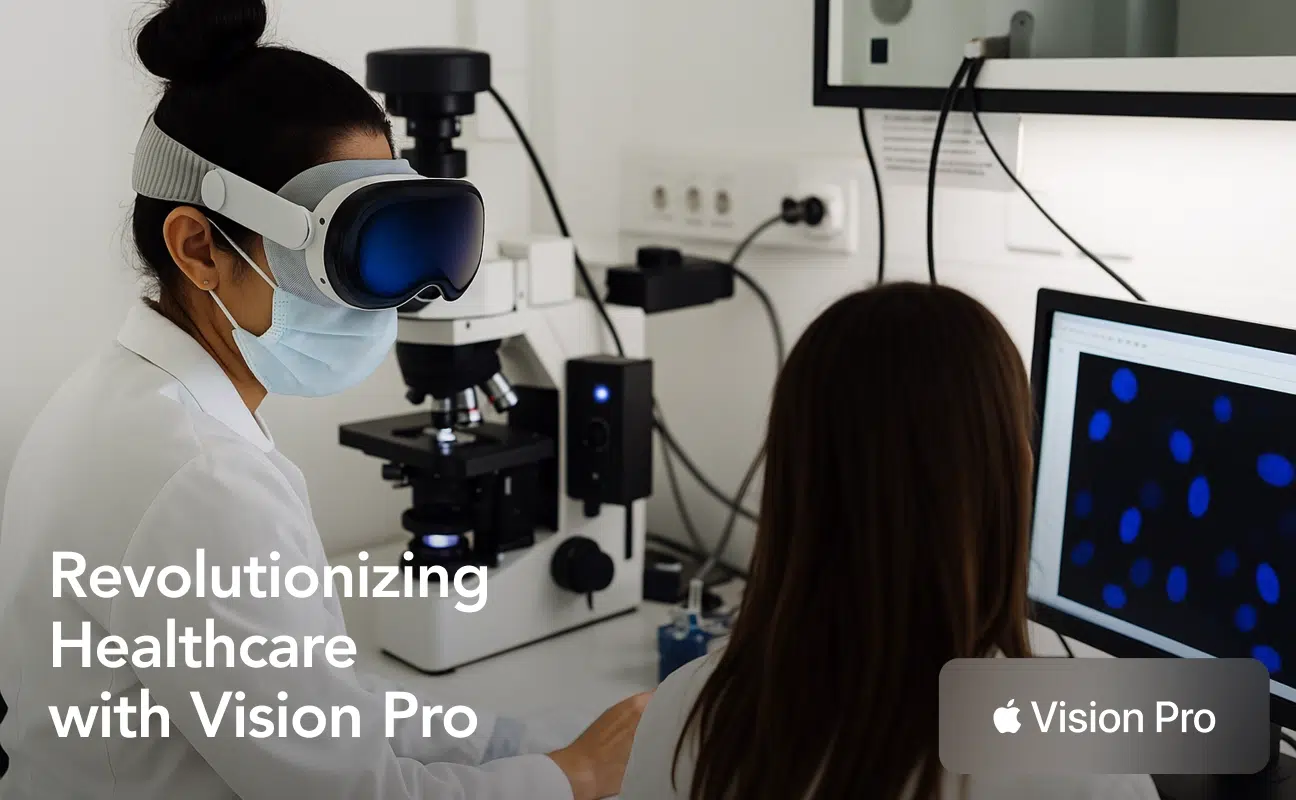
 NDA Project
Frame Sixty is currently partnering with a Fortune 100 healthcare company on a confidential R&D initiative that explores how next-generation spatial-computing headsets can improve clinical workflows, practitioner training and research.

Frame Sixty collaborated with Red Bull and Walmart to execute an innovative and engaging promotional campaign. The campaign aimed to drive sales of Red Bull products at Walmart stores and online while providing gamers with an exclusive in-game reward for Gran Turismo 7, a popular racing video game. The challenge was to seamlessly integrate the offline purchase of Red Bull products with the online gaming experience.
With decades of expertise and multiple patents in AR/VR development and artificial intelligence, we are pioneers in spatial computing and immersive experiences
Our veteran team has spent two decades advancing spatial computing—designing cutting-edge AR/VR experiences for leading global brands.
As an AR/VR development agency, our combined experience has resulted in a staggering 10 million+ downloads.
We hold seven published technology patents in augmented reality and machine learning.
We have successfully developed over 100 AR/VR applications, deployed worldwide and supporting multiple languages.
We specialize in AR/VR development, building spatial experiences for Vision Pro, Meta Quest, and mobile AR—from prototype to release.
Client happiness has been our top priority for over a decade. We listen intently to clients and their customers, assume nothing, and fearlessly create innovative solutions. Relentless dedication ensures the perfect outcome.
 Gabe CostaLogitech
Frame Sixty was a great partner in supporting our Apple Vision Pro initiative. Their mixed reality team brought strong technical expertise and a clear understanding of the Apple ecosystem. They were friendly, committed, and easy to work with throughout the process. Most importantly, they delivered on time and met our expectations, making the collaboration smooth and efficient from start to finish.
 Stephen RuizSMR Consulting
They handled everything incredibly well.
Frame Sixty, LLC helped the client engage influencers and brick-and-mortar retailers. They ensured agile project management and completed the beta version on time and within budget, exceeding the client’s expectations. Frame Sixty, LLC’s flexibility and resourcefulness were hallmarks of their work.
 Nick AlfieriBlitz Media, LLC
They work with an incredible urgency, getting tasks done with a great turnaround and creative problem-solving that saves us time and money.
Frame Sixty, LLC has successfully improved the app with luxury features and enhanced its speed and overall UI/UX. The team ensures a transparent workflow by working efficiently and providing valuable insights and guidance. Their keen understanding of the client’s vision and goals stands out.
 Justin HosekHosek Enterprises
Frame Sixty far exceeded my expectations on design. They also went above and beyond to add some features that were not in our original scope but were discovered as needed during the build.
They always delivered on time or early. They were available night and day for any needs I might have had.
All of the staff are intelligent with great attitudes, which makes the entire process quick, easy and enjoyable.
 Dave M.The Image Resolution
Frame Sixty was instrumental in transforming my vision of an XR 3D movie streaming app into reality, guiding me through every stage of the process. With deep expertise in AR/VR development, they supported everything from initial ideation to design and Unity development, ultimately achieving a successful launch on the Meta Oculus Store. The synergy of their spatial design skills and the technical depth of their senior Unity engineers made for a collaboration that was both professional and personable. Their commitment and industry knowledge were key in bringing my project to life.
 Walter MarquezWalter Marquez Miami
Frame Sixty was instrumental in swiftly developing my responsive WordPress website. Their meticulous approach to detail and support in account creation and configuration ensured a seamless website launch.
This exceptional team, led by experienced senior developers and project managers, not only displayed technical proficiency but also guided me through content creation for each page. Regular communication facilitated timely delivery of the website. I’m excited to collaborate with Frame Sixty in the future.
 JustiniRobot
In the 20 years that I have been developing technical products, this was the very first time that a developer successfully deployed code to an IoT device that worked the very first time without any bugs or prior testing.
Our team’s pioneering work in spatial computing has garnered prestigious awards and widespread recognition. This section highlights our key achievements that underscore our innovative impact and leadership.

As part of this exclusive partnership, Lufthansa is equipping select business and first-class travelers with Meta Quest headsets, offering a curated catalog of premium apps, games, and mixed reality experiences. Passengers can now enjoy entertainment, relaxation, and experiences—all from their seat at 30,000 feet. Learn more about the Lufthansa & Meta partnership: Lufthansa & Meta Partnership


Offering exclusive access to cutting-edge VR & mixed reality experiences.
No controllers needed, making it easy to enjoy in-flight
Featuring high-quality content from top developers, including Frame Sixty.
Offering a seamless and immersive experience for international travelers
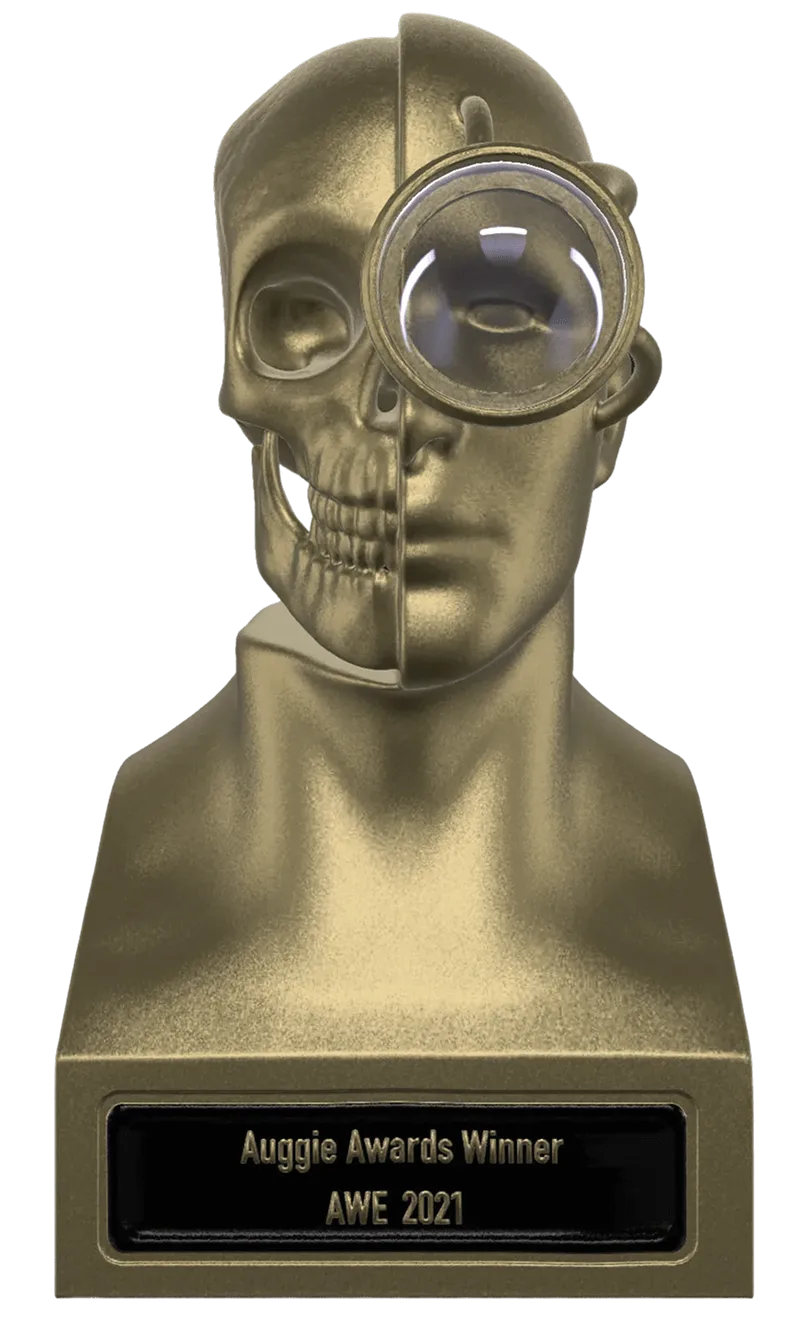

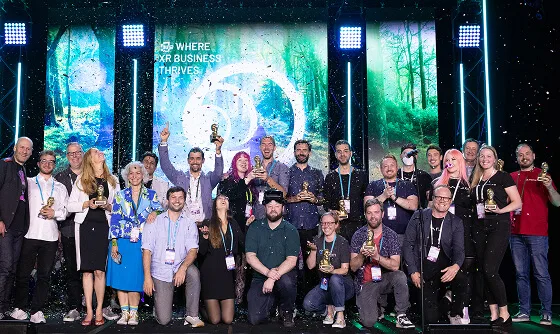
In 2025, Frame Sixty won the “Best Societal Impact” award at the AWE USA Auggie Awards for our real-time ASL Translator on the Apple Vision Pro, bridging Deaf and hearing communities.
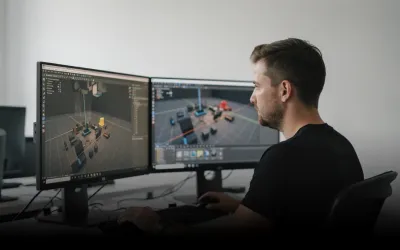
Metaverse development tools fall into three groups: game engines like Unity 6 and Unreal Engine 5.8 for custom cross-platform builds, platform-layer editors like Roblox Studio and the Unreal Editor for Fortnite for reach and speed, and the open WebXR stack for zero-install browser delivery. The tool you choose sets your cost floor and your vendor-lock ceiling. Match it to the experience you need to ship, not to the brand name you recognize.
Continue Reading
This Meshy AI 3D review evaluates whether Meshy earns a place in a production pipeline as of October 2026. Meshy AI is a generative 3D platform that turns text prompts and images into textured, riggable meshes in about a minute, with export to FBX, GLB, OBJ, STL, and USDZ. Our verdict holds from the last update: Meshy is a pipeline accelerator, not a pipeline replacement.
Continue Reading
Building an MVP takes 4 to 8 weeks for a simple single-platform product, 8 to 16 weeks for a standard cross-platform app, and 16 to 24 weeks or more for a complex AI- or XR-enabled build. Those ranges cover five phases: discovery, design, engineering, QA, and launch. Most estimates quote only the engineering phase. That is why real MVP timelines run longer than founders expect.
Continue Reading
AR for manufacturing is the use of augmented reality to overlay digital information — assembly steps, inspection criteria, remote expert annotations — directly onto physical equipment, parts, and workstations, viewed through smart glasses, tablets, or phones. On the shop floor it supports four proven uses: assembly guidance, quality inspection, remote expert assistance, and worker training. Manufacturers adopt it to cut assembly errors, shorten onboarding, and reduce expert travel.
Continue Reading
Unity 3D game development services are the end-to-end work a studio does to design, build, and ship a 3D game or interactive experience in the Unity engine: prototyping, 3D art and engine integration, multiplatform builds, performance optimization, quality assurance, and post-launch support. This guide explains what those services include, what they cost, and how to evaluate a studio before you sign.
Continue Reading
Augmented reality training software is a class of application that overlays step-by-step digital guidance — 3D annotations, procedural callouts, equipment labels — onto real machinery or a reconstructed workspace, so workers learn by doing instead of reading a manual. Enterprises source it two ways: license an off-the-shelf platform, or commission a custom build. The right path hinges on one question. Is your training about generic skills, or about your specific equipment?
Continue Reading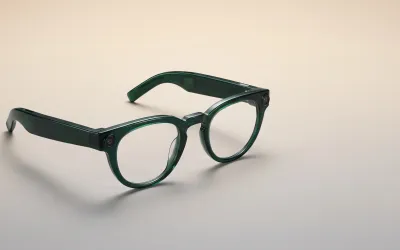
Samsung smart glasses are the first Android XR glasses from Google's hardware partner, and they are expected to launch in November 2026 after previews at Google I/O in May and Galaxy Unpacked in July. They are audio glasses, not display glasses: a camera, microphones, and open-ear speakers in Warby Parker and Gentle Monster frames, paired to a phone, with Google Gemini doing the work. Samsung has confirmed up to 9 hours of battery, a case with seven more charges, iPhone and Android support, and a privacy light that cuts the camera when covered. Price is unannounced.
Continue Reading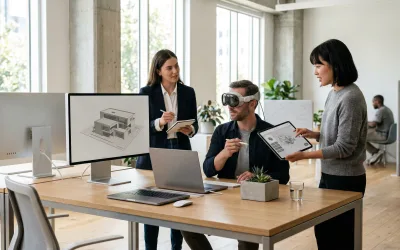
Augmented reality app development companies build AR software for phones, headsets, and smart glasses, from retail try-on tools to industrial maintenance systems. The strongest firms in 2026 share three traits: dedicated AR engineering teams, coverage across ARKit, ARCore, visionOS, and OpenXR, and proven enterprise delivery. This guide ranks and compares the leading studios, including Frame Sixty, an AR/VR and spatial computing development studio, alongside MobiDev, ELEKS, Groove Jones, and Treeview.
Continue Reading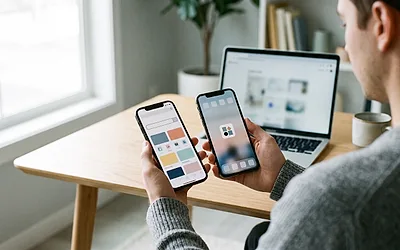
The choice between a PWA vs native app comes down to one tradeoff. A progressive web app (PWA) is an installable website that runs from a single codebase, ships in weeks, and costs less; a native app costs more and takes longer but gives full hardware access and App Store discoverability. Choose a PWA when users arrive from links and search and no device API is on the critical path. Choose native when hardware, performance, or app-store growth is load-bearing.
Continue Reading
Hiring a mobile app development company in Austin costs between $25,000 for a basic single-platform app and $220,000 or more for an enterprise platform, with most funded startups budgeting $50,000 to $150,000. Those figures come from 2026 Texas market data. Price is the easy part. The harder question is how to choose a studio that actually ships on budget, and this guide answers it with real cost tiers, timelines, and a vetting checklist.
Continue Reading
To hire ARCore developers well, match the SDK skills to your actual feature set: ARCore is Google's augmented reality platform for Android and cross-platform apps, and the developer you need depends on whether your project uses basic plane detection or the advanced Depth, Geospatial, and Cloud Anchors APIs. This guide covers the skills to require, how to vet them, 2026 rates, and the freelance-versus-agency-versus-in-house decision.
Continue Reading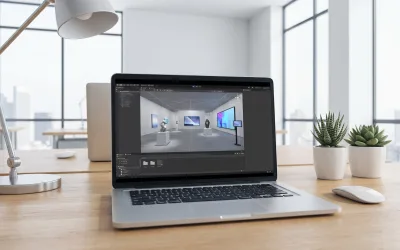
This virtual reality development guide maps the decisions that set what a VR project costs, how long it takes, and whether it pays for itself. Virtual reality development is the process of designing, building, and shipping interactive 3D applications that run on headsets and other XR devices. In 2026 the work is less about one technology than about a sequence of choices: use case, cost tier, platform, engine, and return on investment.
Continue ReadingAt Frame Sixty, we help companies turn bold ideas into immersive realities through expert AR/VR development. Whether you’re building for Apple Vision Pro, Meta Quest, or mobile AR, our clients often come to us with similar questions. We've grouped them into helpful categories so you can get a head start before reaching out.
Yes — Frame Sixty signs a non-disclosure agreement (NDA) before discussing any confidential information. Protecting your ideas is a standard part of our AR/VR development process, so you can bring an unreleased product or early concept to a discovery call knowing it stays private.
Frame Sixty starts with a short discovery call to understand your needs, then provides a detailed estimate covering phases, deliverables, timeline, and pricing specific to your AR/VR development goals. Structuring the work into phases means you see what ships at each stage before development begins.
Yes — Frame Sixty can audit, optimize, and build on top of what you already have, whether that is 3D models, design files, or a partially completed app. Continuing from existing work rather than starting over shortens the path to a finished AR/VR product.
Frame Sixty works with Unity, Unreal Engine, RealityKit, ARKit, WebXR, and proprietary tools. We choose the stack based on your platform and experience goals — a cross-platform headset app, a native iOS experience, and a browser-based Web AR campaign each call for a different toolset.
Frame Sixty structures development into phases with feedback loops built in, so revisions, pivots, and iteration happen inside the plan rather than derailing it. That keeps your AR/VR development timeline on track while the product improves with each round of review.
Yes — Frame Sixty frequently partners with agencies and businesses that resell AR/VR development services under their own brand. White-label and partnership models are an established way we work: your clients see your brand while our team handles the AR/VR engineering behind it.
Apple Vision Pro introduces a spatial computing environment with new interaction methods like eye tracking and hand gestures, so visionOS apps need design and engineering approaches built for space rather than screens. Frame Sixty's AR/VR development for visionOS adapts each experience to those spatial inputs from the start.
Yes — Frame Sixty regularly builds proof-of-concept apps and MVPs for Apple Vision Pro to help clients validate ideas, secure funding, or pitch internal stakeholders. A focused prototype keeps early costs contained, and our Apple Vision Pro developers take the same prototypes on to full production when the idea proves out.
Yes — Frame Sixty has built medical-grade prototypes on Apple Vision Pro, including brain scan visualization tools, and tailors AR/VR development to healthcare use cases. Our portfolio includes a VR medical scan viewer, so clinical visualization on headsets is proven ground for the team.
No — initial Vision Pro development runs in Apple's visionOS simulator, so early builds need no headset at all. Full testing does require the Apple Vision Pro device itself, which Frame Sixty supports internally, meaning your app is validated on real hardware before it ships.
Yes — Frame Sixty migrates existing Unity projects to visionOS using Unity PolySpatial and Apple's APIs, optimizing for performance and visionOS UI/UX standards along the way. A port is also the right moment to rework interactions for eye tracking and hand gestures instead of carrying over touch controls.
Some components of a Vision Pro app can extend to iPad or iPhone, but immersive spatial features are exclusive to Apple Vision Pro. Frame Sixty advises on cross-device strategy as part of your AR/VR development roadmap, so you know early which features travel and which stay spatial.
Yes — Frame Sixty has helped clients submit and get approved on both the Meta Quest Store and App Lab, including meeting Meta's technical and content review guidelines. Store submission is handled as part of the project rather than left to you after delivery.
Yes — Frame Sixty's AR/VR development team specializes in Meta Quest's mixed reality capabilities, using color passthrough, depth APIs, and environment blending. That covers experiences that anchor virtual content in the user's real room as well as fully immersive VR.
Yes — Frame Sixty integrates Photon, Normcore, or custom networking stacks to enable social, collaborative, and multiplayer AR/VR apps on Meta Quest. Whether the experience is a shared workspace or a competitive game, the networking layer is built to fit how people actually meet in it.
All Meta Quest headsets support the core features, but Quest 3 and Quest Pro offer better passthrough, depth sensing, and hand tracking. Frame Sixty tailors AR/VR development to each device's strengths, so a mixed reality app targets the hardware that can actually deliver it.
Yes — Frame Sixty implements Meta Quest's hand tracking APIs for natural, gesture-based input without controllers. Controller-free interaction suits immersive experiences and accessibility-focused apps, and it pairs naturally with the passthrough mixed reality work the team already ships on Quest.
Yes — Frame Sixty primarily uses Unity for Meta Quest apps and also develops in Unreal Engine when the visual or technical requirements call for it. The engine choice comes out of discovery, based on your performance targets and the platforms the app will ship to.
Frame Sixty works across healthcare, education, entertainment, enterprise training, architecture, and retail. Portfolio work ranges from medical scan visualization to brand campaigns — the common thread is AR/VR development in service of a concrete business goal rather than a demo.
Yes — Frame Sixty handles the full spectrum, from mobile AR on iOS and Android to fully immersive VR for headsets like Meta Quest and Apple Vision Pro. Because one team covers both, a product can start as a phone AR feature and grow into a headset experience without switching vendors.
Yes — Frame Sixty frequently develops custom graphics pipelines, shaders, and input systems to create high-fidelity AR/VR experiences. When an off-the-shelf effect cannot hit the look or the frame rate a project needs, the team builds one that does, tuned to the strengths of the target headset or phone so fidelity never comes at the cost of performance.
Yes — many clients engage Frame Sixty early to shape the product vision, build prototypes, and outline a go-to-market plan before full development begins. Starting at the strategy stage means the first build already reflects what the product needs to prove.
Yes — Frame Sixty offers ongoing support, feature expansions, and performance optimizations after your AR/VR app is live. Launch is treated as a milestone rather than a handoff, so the same team that built the app keeps improving it on every platform it ships to.
Yes — Frame Sixty has integrated AI-based assistants, object tracking, and spatial awareness features into AR/VR projects for smarter interactions. Artificial intelligence is one of Frame Sixty's core service areas alongside AR/VR, so combining the two is routine work — see our AI development services.
We’re interested to see how we can help. Send us a message and we will get back to you within 24 hours.
Get the latest tech news and updates for mobile, web and Apple Vision Pro delivered to your Inbox.