
How to Choose an AR Advertising Company (Without Hiring the Wrong One)
Nov 18, 2026

13 MIN READ
The best AR advertising companies prove a few things before you sign: deep platform coverage across the social and browser channels where audiences actually spend time, a production pipeline they own rather than rent, and a measurement plan written into the brief instead of improvised after launch. Judge a vendor on shipped work and on the questions it asks you, not on the polish of the pitch deck.
Key Takeaways
- Snapchat now records more than nine billion AR lens opens per day as of early 2026, which makes Snap expertise non-negotiable for an AR advertising company.
- Meta Spark shut down on January 14, 2025, removing third-party AR effects from Instagram and Facebook and concentrating self-serve social AR on Snapchat and TikTok.
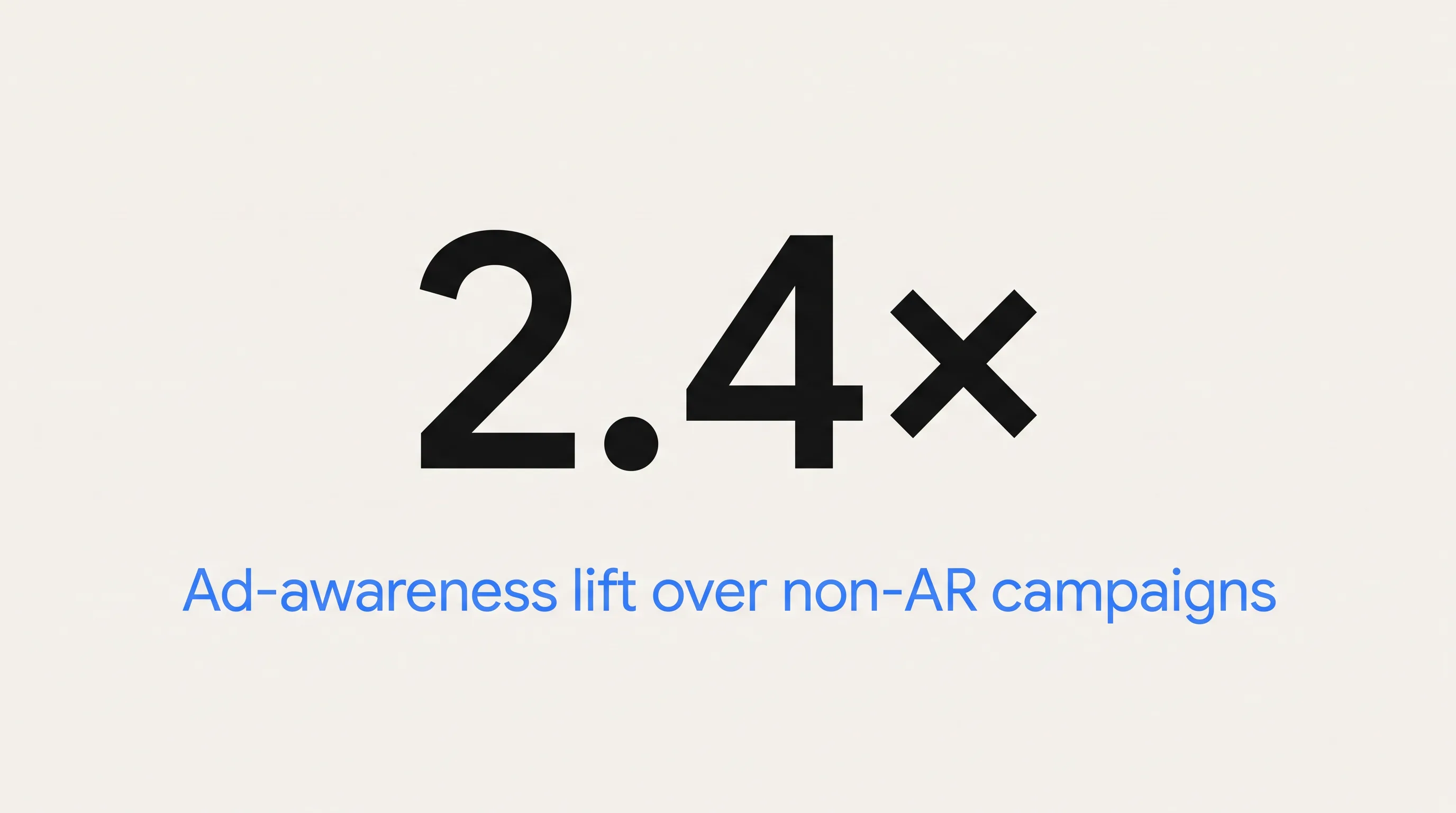
- AR campaigns delivered 2.4 times the ad-awareness lift of non-AR campaigns across 38 Wpromote campaigns, per Snap and Lumen research published in January 2025.
- Niantic wound down the 8th Wall cloud platform in February 2026, forcing every WebAR vendor to answer a new hosting question.
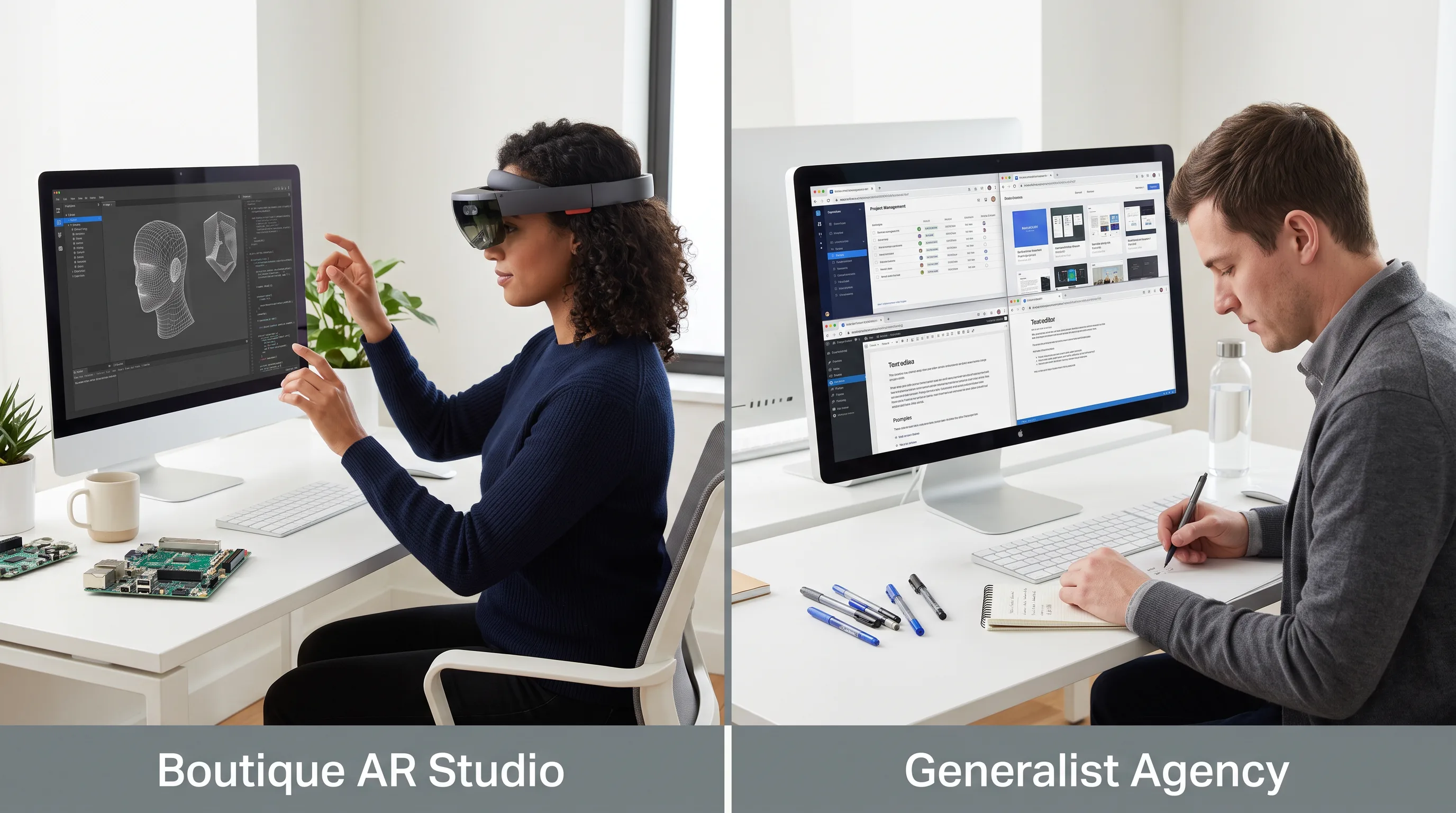
- A boutique AR studio that owns its production pipeline iterates faster than a generalist agency that subcontracts the build.
What Should You Look For in an AR Advertising Company?
Look for an AR advertising company with active platform credentials, an in-house production team, and a measurement plan it commits to before creative begins. These capabilities separate studios that consistently ship working campaigns from agencies that win the pitch and then outsource the hard parts. Everything else, including price and location, is secondary to whether the vendor can actually build and measure what it sells.
The failure mode here is predictable. A brand picks the agency with the slickest reel, discovers mid-project that the AR work is being passed to a freelancer, and loses weeks to a communication layer nobody priced in. The broader mechanics of formats, costs, and timelines are covered in our guide to AR advertising formats and studio selection; this page stays at the level of choosing the company itself.
Most results for this search are roundups. Lists of AR campaign examples, like Arprio’s gallery of branded AR campaigns, are useful for inspiration but stop short of telling you how to vet the company that would build yours. Vendor directories, such as The Inklusive’s roundup of AR design agencies, catalog shops without publishing the criteria used to rank them. This guide closes that gap with questions you can ask in a first call.
Does the Studio Cover Snapchat, TikTok, and WebAR?
Platform breadth is the first filter. An AR advertising company should show shipped work across social AR, meaning Snapchat and TikTok, and browser-based WebAR, not a single format dressed up as a specialty. Snapchat alone records more than nine billion AR lens opens per day in early 2026, with three-quarters of its users engaging with AR daily, so a vendor without Snap depth is ignoring the largest AR distribution channel in the market.
Ask a specific question: do you hold Snap Creative Partner status, and can you build directly in Lens Studio and TikTok’s Effect House? A studio that “partners with” these platforms without hands-on tooling is describing a subcontracting arrangement. The answer tells you whether the people pitching you are the people building your lens.
Who Owns the Production Pipeline?
The production pipeline is where boutique AR studios separate from resellers. A capable AR advertising company models, rigs, and optimizes its own assets, which matters because mobile AR runs under a hard polygon and texture budget that a generic outside shop rarely respects. When the studio owns this work, every revision stays inside one team.
In our AR work at Frame Sixty, an AR/VR and spatial computing development studio, the polygon budget is the conversation that shapes a social lens from day one. A face lens that looks flawless in a desktop preview can drop frames on a mid-range Android handset if the mesh and textures were never optimized for the target device. We build that constraint into the asset pipeline rather than discovering it in platform review, and our team holds seven published patents in augmented reality and machine learning that come out of exactly this kind of production detail, as described on our augmented reality agency page.
Does the Vendor Commit to Measurement Before Creative?
Measurement discipline is the third capability, and the easiest to test in a first call. A strong AR advertising company specifies what it will report, naming lens engagement time, scan-to-interaction rate, share rate, and conversion lift inside the brief response rather than after the campaign is live. These metrics differ from standard cost-per-impression reporting, so a vendor that cannot name them has not run enough AR campaigns to know what moves.
Christine Schrader, VP of Strategic Innovation at Wpromote, framed the stakes plainly: “Attention is a zero-sum game. People have limited supply of attention: if you lose it, the game is already over,” in Snap and Lumen’s attention research from January 2025. A studio that treats measurement as an afterthought is gambling your budget on attention it never planned to track.
Boutique AR Studio, Generalist Agency, or In-House Team?
Delivery models for AR advertising differ in cost structure, revision speed, and platform depth, and the right one depends on your campaign’s complexity and cadence rather than on agency size. A boutique AR studio wins on technical depth and speed for custom lenses and WebAR. A generalist agency suits brands that want a single shop for every channel. An in-house team makes sense only at high campaign volume.
| Model | Best for | Relative cost | Main risk |
|---|---|---|---|
| Boutique AR studio | Custom Snap and TikTok lenses and WebAR needing platform depth | Moderate | Narrower full-service scope |
| Generalist agency with AR add-on | Brands wanting one agency across all channels | Higher | AR work often subcontracted; slower iteration |
| In-house team | Brands running AR at high volume and frequency | Capital plus hiring | Steep ramp; platform expertise hard to retain |
The reason a boutique AR studio iterates fastest on custom lenses is structural. It owns the assets, works directly in Lens Studio, and carries no subcontracting markup, so a creative change touches one team and ships in a day rather than a week. A generalist agency with a single AR specialist introduces a handoff on every revision. Frame Sixty operates on the boutique studio model, and you can see the service scope on our augmented reality agency page.
Verdict: Choose a boutique AR studio for custom, platform-native campaigns that need fast iteration; choose a generalist agency when AR is one tile in a larger multichannel buy; build in-house only when AR volume justifies permanent headcount.
Which Platforms Support AR Advertising, and What Changed?
The AR advertising platform map shifted materially over the last two years, and a vendor’s answer to “which platforms do you work on?” reveals whether it adapted or is still selling an outdated playbook. Snapchat and TikTok now anchor self-serve social AR, WebAR covers everything outside the platform apps, and the tooling underneath both has changed hands. The technical mechanics of how these experiences work are detailed in our social AR guide.
Snapchat and TikTok: The Self-Serve Social AR Duopoly
Snapchat and TikTok are the dominant self-serve platforms for brand-built social AR, a position they consolidated when Meta Spark shut down on January 14, 2025 and pulled third-party AR effects from Instagram and Facebook. Any AR advertising company still pitching Instagram-first lens distribution has not updated its map.
The performance case is well documented. AR campaigns generated 2.4 times the ad-awareness lift and 1.8 times the brand-awareness lift of non-AR campaigns across 38 Wpromote campaigns and 219 million impressions, according to Snap and Lumen research from January 2025. More recently, GenAI-powered AR Lens ads drove a ten-point gain in brand favorability and a nine-point gain in purchase intent in a 14,800-respondent study run by PMG and Eye Square, reported by Mediacat UK in August 2025.
The attention advantage is not new. In Snap and dentsu’s 2022 eye-tracking study, AR lenses beat Dentsu attention benchmarks by four times, and 80% of participants engaged for at least two seconds against under a tenth for other formats, per Snap’s attention research from November 2022.
WebAR: Do You Need an App for AR Advertising?
No app is required for WebAR. WebAR delivers an augmented reality experience through the mobile browser, so a user scans a QR code or taps a link and the experience loads without any download. That makes it the right format for out-of-home, packaging, and influencer campaigns where you cannot assume the audience has a specific platform app installed.
WebAR infrastructure is where a quiet but important change landed. Niantic wound down the 8th Wall cloud platform in February 2026 and released its core technology as open source, after licensing that previously cost studios between seven hundred and three thousand dollars per month per project. A vendor that relied solely on that platform’s hosting now faces a migration decision, so ask directly how it handles WebAR infrastructure going forward. A vendor without a clear answer is a timeline risk.
What About Smart Glasses and the Next Hardware Wave?
Smart glasses are the platform question a forward-looking AR advertising company should already be fielding. Hardware like the Meta Ray-Ban Display, Samsung Galaxy XR, and Xreal glasses points toward advertising surfaces that sit in a viewer’s line of sight rather than inside a phone, and the creative and measurement models for that shift are still forming. You are not buying a glasses campaign today, so do not let a vendor oversell one.
What you are testing is judgment. Ask whether the studio has a point of view on where branded AR moves as wearables mature, and whether its current pipeline could extend to a headset build without starting over. A company that waves the question away is selling you only what it already knows how to make. A company with a credible roadmap is one you can grow with.
Need help choosing an AR advertising company?
We are here to help!
How Much Does It Cost to Hire an AR Advertising Company?
Budget for two separate line items: the studio’s development fee and the media spend to distribute the experience. These are distinct costs, and a vendor that quotes only creative development without helping you model distribution is leaving half the budget conversation unaddressed. The detailed, format-by-format production ranges live in our AR advertising cost breakdown; the point here is how the two line items interact.
On the media side, Snapchat’s Sponsored Lens placement at the top of the carousel runs from fifty thousand to more than five hundred thousand dollars per day, while an auction-based Promoted Lens runs at a five to fifteen dollar CPM, per Benly’s Snapchat Lens pricing guide from January 2026, with professional Creative Partner development landing between five thousand and fifty thousand dollars and up. A studio that can model both halves of that spend has run real campaigns. One that treats distribution as your problem has not.
How Do You Measure the ROI of an AR Advertising Campaign?
Measure AR advertising on four outcome-linked metrics: lens engagement time, scan-to-interaction rate, share rate, and conversion lift. A capable AR advertising company commits to these in writing before launch, because retrofitting goals onto a live campaign produces numbers that flatter the agency rather than inform the brand. The measurement plan is itself a capability signal.
The outcome data behind AR is strong when campaigns are built to be measured. AR Lens ads produced a 6.4 times higher swipe-to-purchase ratio than standard commercials in Snap and Lumen’s research from January 2025. On the brand side, Samsung’s Galaxy S21 FE TikTok AR campaign returned 32.5 to 1 on ad spend across 26 million views, and L’Oréal reports three times higher conversion rates from virtual try-on AR, both documented by BrandXR in July 2025.
Longer-running formats back this up. Marks & Spencer’s AR campaign lifted perceived quality by 250% at 61% lower cost, and Hyundai Australia’s AR activation produced an 8.4-point brand lift, both reported by Superside. Across formats, AR experiences hold attention for roughly 75 seconds per interaction, far longer than a traditional digital ad, per BrandXR’s AR advertising guide.
There is a simple procurement test that cuts through the pitch. Ask the vendor to show you its post-campaign report template before you sign. A studio with a clean, repeatable template has measured enough campaigns to know what it is accountable for, while a vendor that improvises one for your deck is learning on your budget. For broader return benchmarks across immersive work, our immersive experience design agency guide sets out the wider picture.
What Are the Red Flags in an AR Advertising Agency Pitch?
The clearest red flags are subcontracting disguised as partnership, a portfolio of only the simplest format, and a measurement plan deferred until after launch. Each one predicts a specific failure, and each is visible in the first meeting if you know the question to ask. Treat the following as disqualifying until the vendor proves otherwise.
- No hands-on Lens Studio or Effect House work. A studio that “partners with” Snapchat without active Creative Partner status is subcontracting the build, which adds a handoff to every revision.
- A portfolio of only face filters. Face lenses are the simplest format, so a reel without world AR, body tracking, or WebAR signals a vendor that has never shipped the harder, higher-performing work.
- A measurement plan written after launch. “We’ll figure out KPIs once we see how it performs” means the agency has never been held to a campaign outcome.
- No answer on WebAR infrastructure. A vendor offering WebAR with no clear position on hosting after the recent platform shake-up is putting your timeline at risk.
- AR capability that rests on one person. A single AR developer inside a large generalist agency is a single point of failure, so ask who backs them up when that person is on leave.
What Does a Capable AR Advertising Company Actually Deliver?
A capable AR advertising company delivers campaigns that ship, perform, and solve constraints a generalist could not. Capabilities claimed in a deck matter far less than work that reached real users under real conditions. Two Frame Sixty projects show what that looks like in practice, across a consumer gaming activation and an enterprise mixed-reality build.
For Red Bull Capture Point, Frame Sixty built the mobile-first hub for an in-game photography competition, including a custom backend that processed social submissions, resized images, and populated country-specific leaderboards. The activation drove average sessions over four minutes, roughly three times higher than previous Red Bull gaming pages, and the contest hashtag became a top photo-mode trend on PlayStation, as detailed in the Red Bull Capture Point case study. That same framework was later reused for additional Red Bull activations, which is the kind of reusability a one-off vendor rarely delivers.
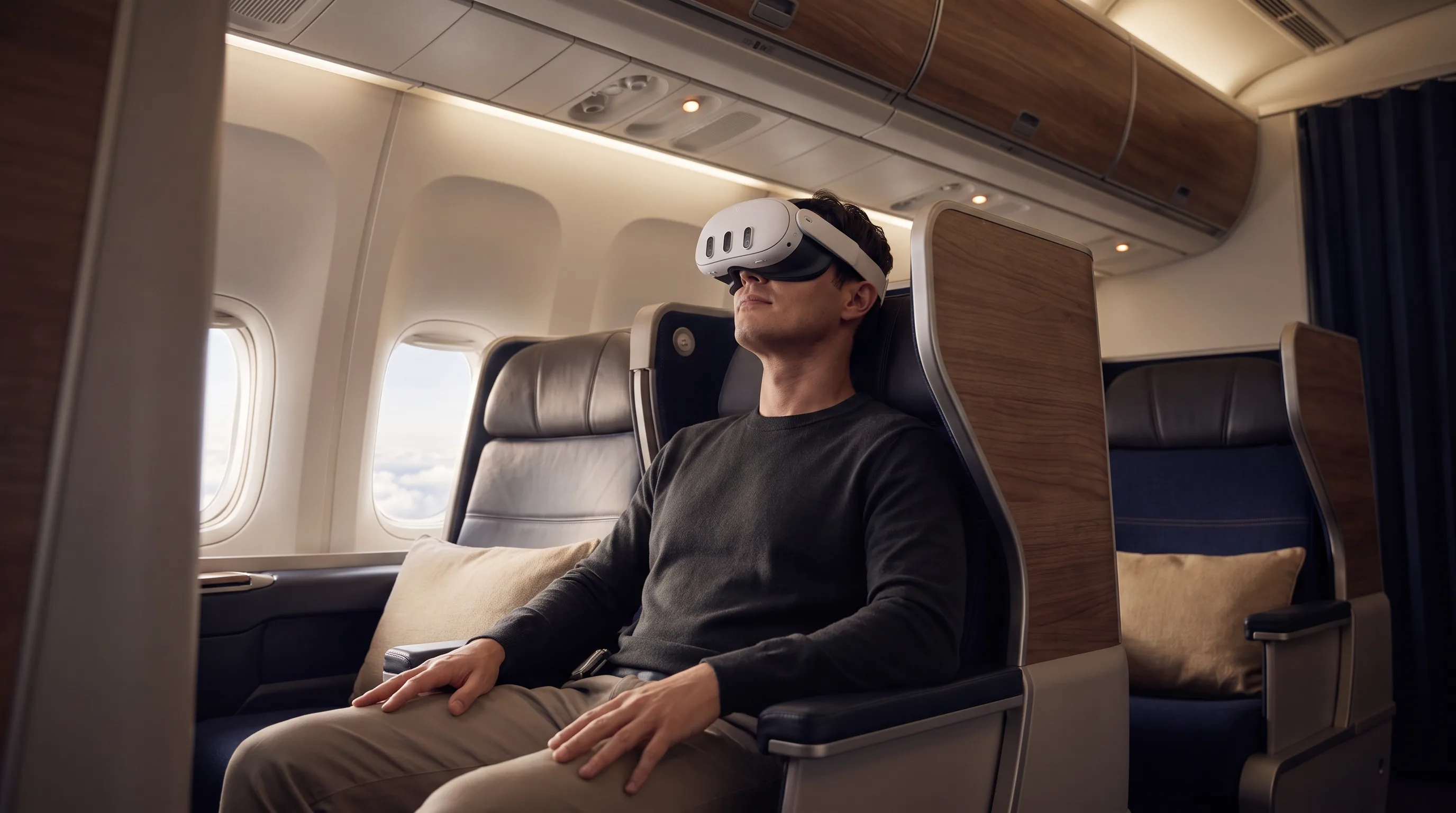
The Meta x Lufthansa project shows the enterprise end of the range. Frame Sixty designed Aquarium Adventures, a mixed-reality experience for Lufthansa Allegris Business Class running on Meta Quest 3, with a hand-tracking-only interface and spatial cabin mapping that detects aircraft walls and ceilings. The build had to be seated-safe, offline, and multi-language, aviation constraints a generalist agency could not have solved without subcontracting the entire mixed-reality layer, as shown in the Meta x Lufthansa case study. A comparable retail-meets-gaming activation appears in our Red Bull x Gran Turismo case study, which bridged in-store purchases with in-game rewards.
These projects sit alongside location-based work like our Tokyo AR game, which used gamified exploration to drive foot traffic to partner stores, and the broader AR and WebAR delivery described on our AR/VR app development page. The through-line is consistent: shipped campaigns under real constraints, not demos.
Conclusion
Choosing an AR advertising company comes down to a position Frame Sixty will defend on any client call. The vendor that owns its production pipeline, holds active platform credentials, and commits to measurement before creative will out-deliver the agency with the better reel nearly every time. Platform depth, pipeline ownership, and measurement discipline are not nice-to-haves. They are the capabilities that decide whether your campaign ships on time and performs once it does.
The market context reinforces the point. With Meta Spark gone, Snapchat and TikTok anchoring social AR, and the WebAR tooling shake-up reshaping hosting, the studios that stay current are a shrinking subset of the agencies that will pitch you. The red flags above exist precisely because the easy version of this work, a face filter with no measurement plan, is what an unprepared vendor defaults to.
If you are comparing AR advertising companies and want a partner that builds its own lenses, owns its WebAR infrastructure, and reports on the metrics that matter, get in touch with our team at Frame Sixty. We will tell you honestly which of your campaign ideas AR serves well and which it does not.
FAQs
Common questions about choosing an AR advertising company, covering platforms, costs, timelines, and how to vet a vendor's capabilities before you sign.
You can run AR advertising without Snapchat, but you give up the largest distribution channel. Snapchat records more than nine billion AR lens opens per day in early 2026, so skipping it cedes real scale. TikTok's Effect House covers social AR, and WebAR reaches audiences through the mobile browser via a QR code or link, with no app and no reliance on any single platform.
Social AR and WebAR differ in where the experience runs. Social AR lives inside Snapchat or TikTok, using each platform's camera and built-in distribution. WebAR delivers the same augmented reality through a mobile browser, so a user scans a QR code or taps a link and it loads with no download. WebAR fits out-of-home, packaging, and influencer campaigns where you cannot assume a specific app is installed.
AR ads outperform standard video on measured attention and conversion. Across 38 Wpromote campaigns, AR delivered 2.4 times the ad-awareness lift of non-AR campaigns, and AR Lens ads produced a 6.4 times higher swipe-to-purchase ratio than standard commercials, per Snap and Lumen research from January 2025. AR experiences also hold attention for roughly 75 seconds per interaction.
8th Wall is a WebAR development platform, owned by Niantic, that lets brands build browser-based AR without an app. Niantic wound down its cloud platform in February 2026 and released the core technology as open source, after commercial licensing that had cost between seven hundred and three thousand dollars per month per project. Vendors can still use it, but they now self-host rather than rely on Niantic's hosting.
A Snapchat Sponsored Lens is a branded AR lens placed at the top of the Lens carousel for guaranteed reach. Sponsored Lens placement runs from fifty thousand to more than five hundred thousand dollars per day, while an auction-based Promoted Lens runs at a five to fifteen dollar CPM, per Benly's January 2026 pricing guide. Professional Creative Partner development adds roughly five thousand to fifty thousand dollars.
AR advertising production timelines depend on format complexity, from a single face lens to a world-tracking or WebAR build. The clearest timing signal is revision speed: a studio that owns its pipeline and works directly in Lens Studio can turn a creative change in a day, while a generalist agency relying on a subcontractor adds a handoff that can stretch each revision to a week.
Brief an AR advertising company around outcomes and constraints, not just visuals. Name your target platforms (Snapchat, TikTok, or WebAR), the devices you must support, and the four metrics you expect reported: lens engagement time, scan-to-interaction rate, share rate, and conversion lift. A strong vendor commits to that measurement plan in its brief response, before creative begins, rather than retrofitting goals after launch.
An AR advertising partner's portfolio should show more than face filters, which are the simplest format. Look for world AR, body tracking, and WebAR, plus shipped campaigns under real constraints. Frame Sixty, an AR/VR and spatial computing development studio, built Red Bull Capture Point and the Meta x Lufthansa mixed-reality experience on Meta Quest 3, and holds seven published patents in AR and machine learning.
Several brands report strong AR advertising results. Samsung's Galaxy S21 FE TikTok AR campaign returned 32.5 to 1 on ad spend across 26 million views, and L'Oreal reports three times higher conversion rates from virtual try-on AR, both documented by BrandXR in July 2025. Marks & Spencer's AR campaign lifted perceived quality by 250% at 61% lower cost, per Superside.