
What Is an Immersive Experience Design Agency — and How Do You Choose the Right One?
Sep 7, 2026
13 MIN READ
An immersive experience design agency conceives, builds, and deploys experiences in which digital content occupies or transforms physical space: AR activations, VR installations, spatial computing applications, and interactive environments that engage an audience in ways a screen cannot. The best ones design the concept and engineer the build under one roof. This guide answers what the category rarely states plainly — what these agencies deliver, what they cost, how long they take, and how to tell a real production studio from a shop that outsources the work.
Here is the position worth stating up front, because most vendor pages avoid it: the type of agency you hire matters more than any single line on the proposal. A design-only agency, a marketing agency that subcontracts the build, and a studio that designs and engineers in-house are three different businesses. The type decides who is accountable when the build diverges from the concept — and it always diverges.
Key Takeaways
- Three distinct business models operate under the “immersive experience design agency” label; the type determines who actually engineers the build.
- Immersive project budgets run from roughly $15,000 for a focused prototype to $200,000+ for a permanent multi-zone installation (Utsubo, 2026).
- Most custom brand activations take three to nine months from brief to launch.
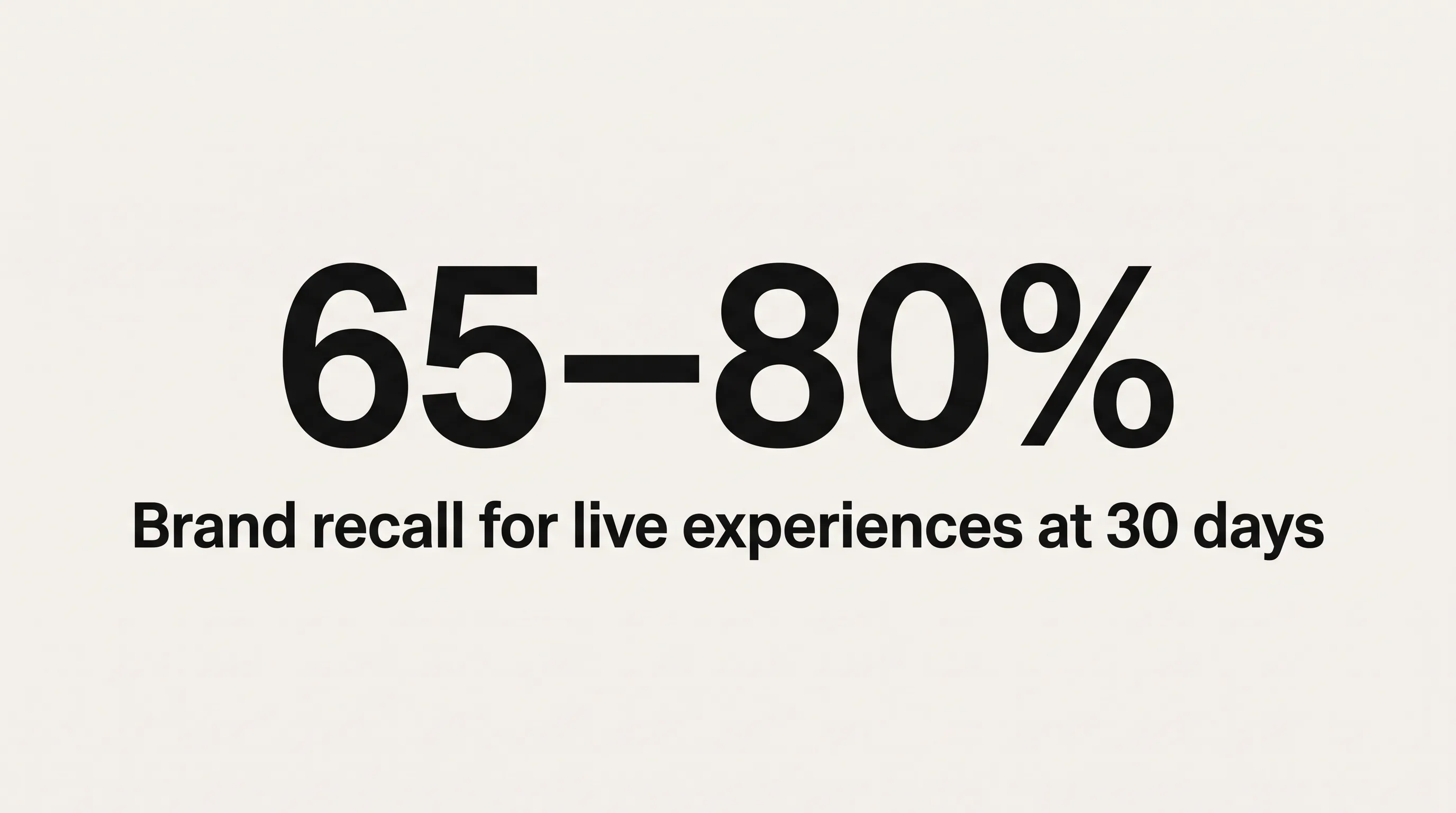
- Well-executed experiential campaigns deliver 200–600% ROI and 65–80% brand recall at 30 days, versus 10–25% for digital ads (Street Teams Co, 2026).
- XR device shipments reached 14.5 million units in 2025, up 41.6% year over year (IDC, 2026).
Design-Only, Subcontracted, or Full Build: Which Type of Immersive Experience Agency Are You Hiring?
The phrase “immersive experience design agency” covers three operationally different business models: a design-only agency, a marketing agency that subcontracts the engineering, and a design-and-build studio that does both in-house. Knowing which type you are talking to before the pitch meeting saves months of misalignment. The difference shows up not in the sales deck but in who writes the code.

The Design-Only Agency
A design-only immersive agency creates concepts, experience blueprints, UX flows, and renders, then hands the creative package to whoever the client hires to build it. This suits clients who already have an in-house engineering team or a trusted fabricator. The risk is the handoff. Creative intent rarely survives translation to a separate build team, the design agency has no authority over the engineering schedule, and the client ends up managing two vendor relationships that blame each other when the prototype slips. You can spot this type quickly: the team page lists designers and strategists but no engineers, and the portfolio shows concept renders rather than recorded footage of a working interaction.
The Marketing Agency That Subcontracts the Build
A marketing agency of this type owns brand strategy and creative direction, then issues a subcontract for the AR/VR engineering or physical fabrication. This model works for simple activations where the brief is locked before development starts. It breaks down on complex real-time builds — projection-free interactive installations, hand-tracking applications, custom sensor rigs — where design and engineering have to iterate together, daily. The downstream costs are predictable: scope changes arrive with a subcontractor’s margin attached, no single party owns the outcome, and the agency that sold you the vision cannot debug software it did not write. Ask one question and listen closely: “Who writes the code?”
The Design-and-Build Studio
A design-and-build studio puts designers, engineers, 3D artists, and technical directors on the same project under one roof. The team moves from wireframe to a working prototype without couriering a spec sheet to an outside contractor. When the experience design changes mid-production — and it does — the engineering adapts in the same meeting rather than in a change order three weeks later. Frame Sixty, an AR/VR and spatial computing development studio, works this way, with in-house visionOS, Unity, Unreal Engine, ARKit, WebXR, and RealityKit engineering sitting beside spatial content production. You can read how the studio frames this integrated model on its immersive technology and XR development agency pages.
Verdict: hire a design-only agency when you already own the engineering talent; hire a subcontracting marketing agency when the concept is fixed and simple; hire a design-and-build studio when the brand, the budget, and a live event date cannot survive a vendor-coordination failure.
What Services Does an Immersive Experience Design Agency Offer?
A full-service immersive experience design agency covers the whole stack: concept and experience design, spatial and 3D content, AR and VR application builds, headset and Apple Vision Pro apps, WebAR, interactive installations, and immersive video. Future Colossal, a competing agency, lists a similar spread — projection, computer vision, mixed reality. The distinction that matters is not the service menu. It is whether one team owns every layer.
What Happens in Concept Development and Experience Design?
Concept development and experience design turn a business goal into a buildable plan. Discovery workshops fix the audience, the venue, and the measurable outcome — dwell time, conversion uplift, brand recall. Experience design then maps the interaction model: how a visitor enters, engages, and leaves. The deliverables are an experience blueprint, an interaction prototype, and a technical scoping document. This phase usually runs two to four weeks, and its output is what a credible cost estimate is built on. A studio that quotes a firm number from a one-paragraph brief, before any scoping, is guessing.
What AR, VR, and Spatial Computing Applications Do These Agencies Build?
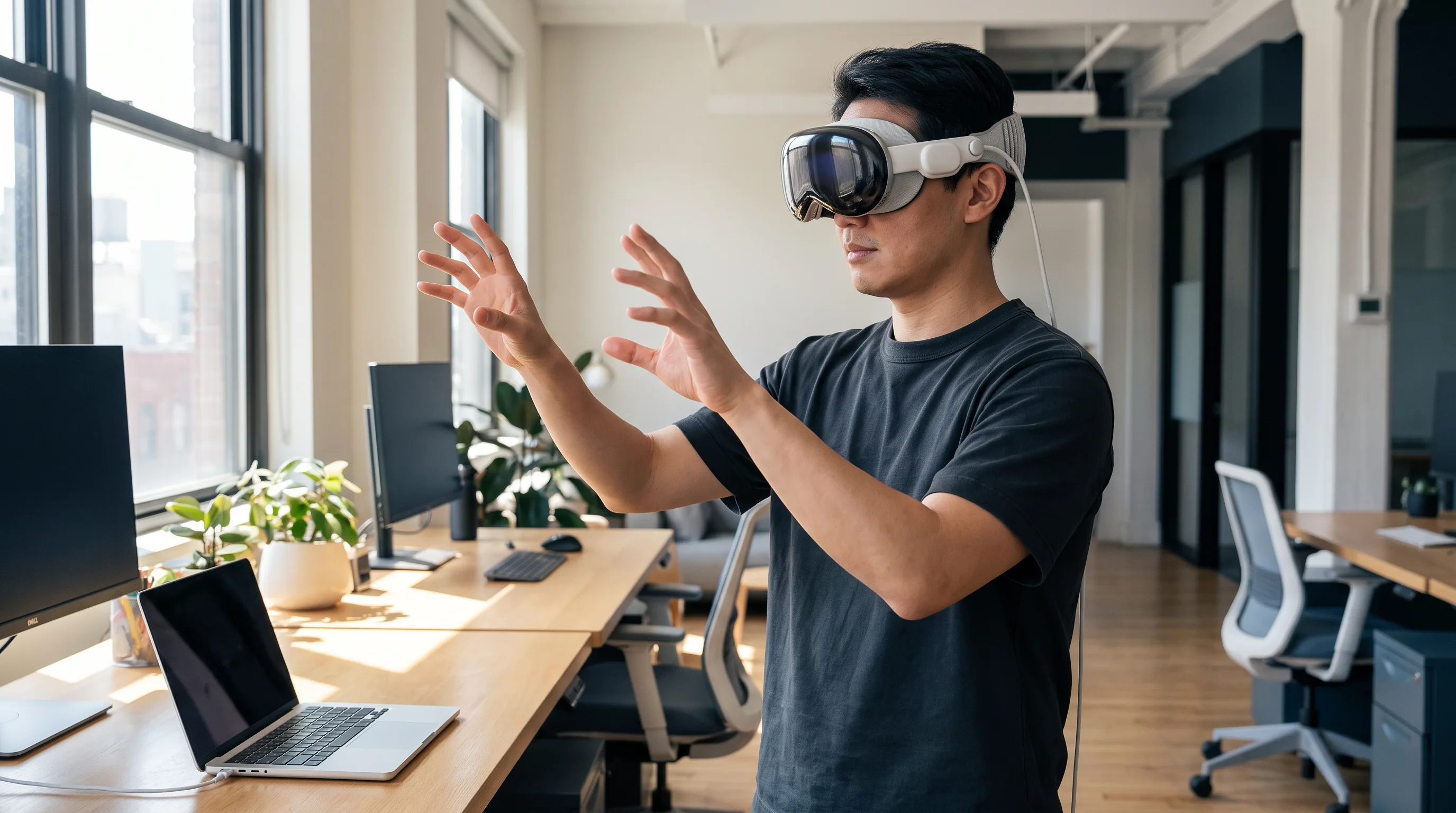
Immersive agencies build across the full device range: mobile AR on phones and tablets, browser-based WebAR, headset VR on Meta Quest 3 and Meta Quest 3S, Apple Vision Pro and visionOS native apps, mixed reality, and smart-glasses activations on hardware like Meta Ray-Ban Display and Xreal Glasses. Spatial computing — treating physical space itself as the interface — is where the category is heading. According to the BrandXR 2025 Research Report cited by Superside, over 90% of U.S. shoppers already use or want to use AR to shop, which is why retail is commissioning AR activations faster than any other sector. For AR-specific work, Frame Sixty details its approach on its augmented reality agency page.
What About Interactive Installations, WebAR, and Immersive Video?
Interactive installations, WebAR, and immersive video are where physical space and engineering meet. Installations use sensors, depth cameras, and gesture tracking to make a room respond to the people in it. WebAR and WebXR run inside a standard browser with no app download.
That browser delivery is not a minor technical detail. At a live event, every step between “walk up” and “experience it” costs you audience — and asking a stranger to install an app costs you most of them. WebXR removes that step entirely, which is why it increasingly wins for retail and event activations even when a native app would render marginally better. Frame Sixty builds these through its WebAR development practice. Immersive video is the third pillar: volumetric and 180°/360° capture that plays back with real depth on a headset.
How Much Does an Immersive Experience Design Project Cost?
An immersive experience design project costs roughly $15,000 for a focused prototype and $200,000 or more for a permanent, multi-zone installation, with most custom brand activations landing between $40,000 and $150,000. Pricing tracks the scale of the build, the hardware, and the amount of custom 3D content. The tiers below come from published 2026 cost research and match what full-stack studios quote.
What Are the Standard Budget Tiers?
The four-tier framework from the Utsubo interactive installation cost guide (2026) is the clearest public benchmark:
| Tier | Budget | Typical scope |
|---|---|---|
| Starter | $15K–$30K | Single touchpoint, template software, standard hardware |
| Standard | $40K–$80K | Custom design, multi-sensor interaction, professional content |
| Premium | $100K–$200K | Bespoke room-scale installation, advanced technology |
| Enterprise | $200K+ | Multi-site deployable, custom hardware, dedicated team |
Venue-specific ranges from the same guide help translate the tiers into real projects: a retail pop-up activation runs $26,000–$45,000 over four to eight weeks; a museum interactive exhibit $95,000–$190,000 over sixteen to twenty-four weeks; a hotel lobby installation $115,000–$225,000 over twelve to twenty weeks. European data from the Mimic Immersive cost guide (2026) corroborates the picture: “An immersive experience can cost from roughly €15,000 for a focused prototype to €300,000 or more for a permanent, multi-zone installation.” Custom XR projects at Frame Sixty sit in the same band, $50,000 to $300,000+.
What Drives the Cost Up or Down?
Where the money goes is fairly consistent. Utsubo’s 2026 breakdown puts hardware at 30–50% of the budget, software and content at another 30–50%, and fabrication and installation at 15–30%, with a 10–15% contingency on top.
Two levers move the number more than most buyers expect. Browser-delivered WebXR skips the platform-certification and app-store overhead that a native app carries, which trims both cost and calendar. Reusable asset libraries and a phased scope — ship a minimum viable activation first, then expand — do the same. What inflates a budget: multi-venue touring, real-time multi-user interaction, and custom hardware fabrication. Buyers also routinely forget recurring costs. Mimic Immersive flags content updates at $5,000–$30,000 a year and hardware maintenance at 5–15% of hardware value annually, and argues total cost of ownership should drive the decision more than the initial quote.
How Long Does an Immersive Experience Project Take From Brief to Launch?
An immersive experience project takes three to nine months from brief to launch for a custom build. The work moves through four phases, and the schedule is set less by engineering speed than by how firmly the concept is locked before production starts. Rushing the front end is what blows the back end.
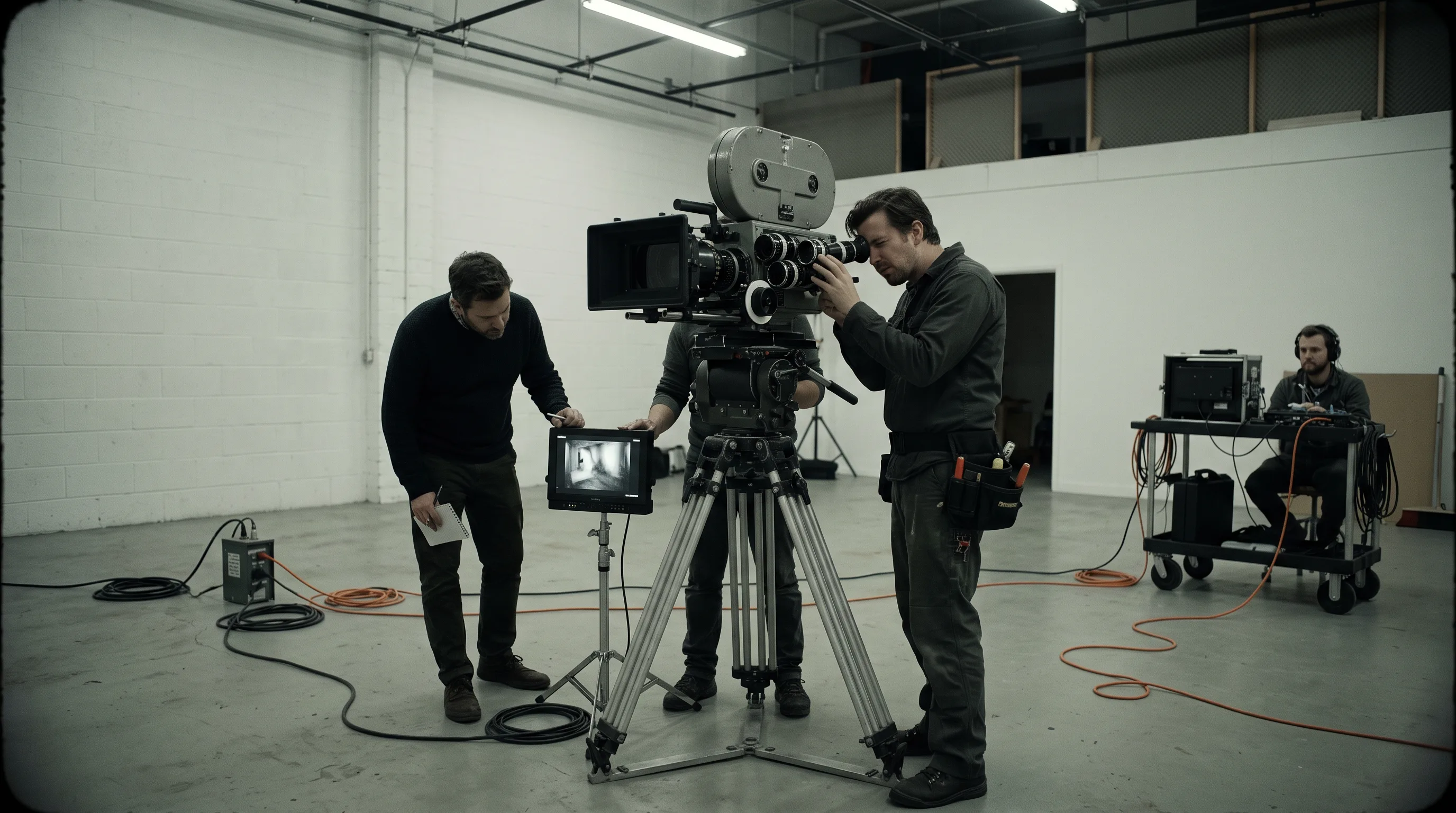
Discovery and scoping open the project, usually across two to four weeks of workshops, audience definition, technical requirements, and the cost estimate. Concept design and prototyping follow over four to eight weeks, producing the experience blueprint, the interaction model, and a working prototype on the actual target hardware. Production is the longest phase at eight to sixteen weeks, covering 3D content creation, engineering, hardware integration, and iterative testing on the real deployment platform. QA, on-site testing, and deployment close the job in a final two to four weeks of venue walk-throughs, load testing, and staff training.
What actually stretches timelines is rarely the code. Custom hardware fabrication can add six to ten weeks on its own, and restricted venue access shrinks the on-site testing window. But the single biggest schedule risk is a client who reserves the right to change the core interaction model after engineering has begun. That one decision can reset weeks of work. Lock the interaction design, then build. For VR-specific projects, Frame Sixty outlines its process on its virtual reality development page.
Need help with an immersive experience project?
We are here to help!
What Eight Questions Should You Ask an Immersive Experience Design Agency Before You Hire?
Ask the eight questions below on the first vendor call. They separate a studio that builds from a studio that resells someone else’s build. As Tornado Studios puts it in its vendor hiring guide (2025), “A strong immersive partner welcomes scrutiny; a weak one deflects it.” Watch how the answers land, not just what they say.
- Do you design and engineer in-house, or subcontract the build? The answer sets your risk profile for the entire engagement.
- Can you show a shipped project — not a render — on the platform I’m deploying to? Platform-specific technical debt is invisible in a concept deck.
- When has a project needed a concept redesign mid-production, and how did you handle it? This tests whether design and engineering can adapt together.
- Can you itemize the budget across concept, production, hardware, content, and support? Bundled quotes hide scope risk; line items expose it.
- What metrics do you track post-launch, and how do you report them? The Theatlyx partner-selection guide (2026) states plainly that the best partner “defines success metrics before production begins.”
- Can the experience be updated remotely, without an on-site visit? This matters for touring installations and retail refresh cycles.
- What do the first four weeks look like, week by week? A vendor with no clear answer has no methodology.
- Who owns the IP and source code when the project ends? Ownership terms vary widely; confirm before signing.
The takeaway: the questions that make a weak vendor uncomfortable are exactly the ones worth asking.
What Are the Red Flags When Evaluating an Immersive Experience Design Agency?
The clearest red flag when evaluating an immersive experience design agency is a portfolio of concept renders with no recorded footage of a working, shipped experience. The rest follow from the same root cause: a vendor selling a vision it cannot build alone.
Several warning signs cluster around engineering capacity. No engineering staff appear in the team bios, case-study credits, or LinkedIn profiles. The vendor cannot name the specific SDK, engine, or framework it would use for your deployment surface, whether visionOS, WebXR, the Meta Quest SDK, or ARKit. The direct question “who writes the code?” produces a vague answer or a referral to a “partner studio,” and the vendor turns evasive about attribution, unable to say which portfolio work it built rather than merely directed.
Other signs cluster around commercial discipline. A timeline gets committed without any stated methodology or milestone structure. The price arrives as a single lump sum, with no line items separating concept, production, hardware, and support. There is no post-launch plan at all: no SLA, no update cycle, no training documentation.
These flags carry real cost. According to experiential marketing data compiled by Seeker.io (2026), 78% of consumers recall a brand after an experiential interaction — which means a botched execution damages recall as measurably as a good one builds it. A weak vendor does not just waste the budget; it spends your brand equity too.
Why Do Immersive Experiences Justify the Investment?
Immersive experiences justify their cost because they outperform digital media on the metrics brands actually buy: recall, purchase intent, and return. According to the Street Teams Co ROI report (May 2026), well-executed experiential campaigns deliver 200–600% ROI, and brand recall at thirty days reaches 65–80% for in-person experiences against 10–25% for digital ads. The same report finds 85% of consumers report higher purchase intent after a brand experience, and 77% of marketers planned to increase experiential budgets in 2026.
The market context reinforces the case. The Treeview industry statistics report (2026), citing the IDC Q3 2025 XR Tracker, records XR device shipments of 14.5 million units in 2025, up 41.6% year over year, with a forecast 33.5% rise in 2026. More people own the hardware every quarter, which widens the audience an immersive activation can reach on devices they already carry. The takeaway: immersive is no longer an experiment budget line — it is a channel with benchmarkable returns.
How Does Frame Sixty Approach Immersive Experience Design?
Frame Sixty approaches immersive experience design as a design-and-build studio: every project is engineered in-house, from concept through deployment. That model is the reason the studio can commit to interaction designs competitors would have to route through a subcontractor. The work below shows what full-stack delivery produces.
Our ASL Translator for Apple Vision Pro is the clearest example. We built it natively in visionOS with Swift and RealityKit, using the headset’s sub-millimeter hand tracking to convert American Sign Language into speech and text in real time, with visual overlays showing live hand and joint models for feedback. The application won “Best Societal Impact” at the AWE USA Auggie Awards 2025, held June 12 in Long Beach, California — the XR industry’s most-watched annual awards. The AWE 2025 winners list and the PR Newswire announcement both record the result, and the full project write-up lives on our Vision Pro ASL translator case study.
Our immersive video work for Logitech shows the same in-house control at the content layer. We produced one of the first branded 180° immersive video experiences made specifically for Apple Vision Pro, capturing the Logitech Muse stylus stereoscopically at 16K resolution and 90 frames per second on a Blackmagic URSA Cine Immersive camera. We compressed it with MV-HEVC and delivered it through a browser-based WebXR and HTTP Live Streaming pipeline rather than a native app, so the piece plays without an install while holding depth and image quality on the headset. The engineering detail is documented on our Logitech Vision Pro immersive video case study, and our broader visionOS practice on the Apple Vision Pro developers page.
Beyond headset work, we build activations that connect physical retail to digital reward systems, as in our Red Bull x Gran Turismo 7 campaign platform, which linked Walmart purchases to in-game unlocks under a live promotional deadline. The full range of shipped projects sits on our portfolio.
Conclusion
Choosing an immersive experience design agency comes down to one question the glossy portfolios never answer directly: who actually builds the thing? A design-only agency hands off the engineering, a marketing agency subcontracts it, and a design-and-build studio owns it end to end. That structural difference — not the service list, not the render quality — is what decides whether your concept survives contact with production. It is the position we would defend on any client call.
The rest of the diligence is straightforward once you know the type. Get itemized budgets against the $15K–$200K+ tiers, expect a three-to-nine-month timeline, lock the interaction model before engineering starts, and walk from any vendor that cannot show shipped, platform-specific work or name who writes the code. The returns are real — 200–600% ROI and 65–80% brand recall — but only when the execution holds.
If you are shortlisting studios for an immersive installation, an AR or VR activation, or a spatial brand experience, get in touch with Frame Sixty. We design and engineer this work in-house, and we are happy to walk you through exactly how a project would run before you commit to a budget.
FAQs
Common questions about hiring an immersive experience design agency, covering industries, ROI, technology, and what to look for before you sign.
Retail benefits most from immersive experience design, with over 90% of U.S. shoppers already using or wanting to use AR to shop (BrandXR 2025 Research Report). Museums and attractions, hospitality, live events, and enterprise brand activations follow closely, commissioning interactive installations and AR/VR activations to lift dwell time, engagement, and measurable brand recall.
Immersive brand experiences deliver 200–600% ROI when well executed, according to Street Teams Co (2026), with brand recall at 30 days reaching 65–80% versus 10–25% for digital ads. The same report found 85% of consumers report higher purchase intent after a brand experience, which is why 77% of marketers planned to increase experiential budgets in 2026.
An immersive experience design agency either engineers in-house or subcontracts the build, and the difference decides who is accountable when a project diverges from the concept. Design-only agencies and marketing agencies outsource the engineering, while a design-and-build studio keeps designers, engineers, and 3D artists on one team. Ask directly: who writes the code?
An immersive experience design agency uses AR, VR, and spatial computing technologies across the full device range: mobile AR, browser-based WebAR and WebXR, headset VR on Meta Quest 3, and Apple Vision Pro visionOS apps. Interactive installations add sensors, depth cameras, and gesture tracking, while engines like Unity, Unreal Engine, ARKit, and RealityKit power the builds.
Yes, an immersive experience design agency can build native Apple Vision Pro apps in visionOS using Swift and RealityKit. Frame Sixty, for example, built a visionOS ASL Translator that won Best Societal Impact at the AWE USA 2025 Auggie Awards, and produced a 180° immersive video for Logitech shot at 16K/90fps and delivered via WebXR.
AR, VR, and spatial computing differ in how much of the physical world they keep. AR overlays digital content on a live view of the real environment, while VR replaces it with a fully digital one on a headset like Meta Quest 3. Spatial computing treats the physical space itself as the interface, blending digital objects into a room the user still sees.
Look for an immersive experience design agency that both designs and engineers in-house, and can show shipped work, not renders, on your target platform. Confirm it can name the specific SDK or engine for your deployment surface, itemize the budget across concept, production, hardware, and support, and define success metrics before production starts. Frame Sixty engineers every project in-house.
Calculate ROI on an immersive brand activation by measuring outcomes defined before production, such as dwell time, engagement rate, conversion uplift, and 30-day brand recall, against total cost of ownership rather than the initial quote. Factor recurring costs like content updates ($5,000–$30,000 a year) and hardware maintenance (5–15% of hardware value annually), which Mimic Immersive (2026) flags as commonly forgotten.
Volumetric video captures a subject in three dimensions so it can be viewed with real depth from multiple angles, unlike flat 2D footage. In immersive experience design, it plays back on headsets alongside 180°/360° capture. Frame Sixty shot Logitech's Muse stylus stereoscopically at 16K resolution and 90 frames per second on a Blackmagic URSA Cine Immersive camera.