
What Is Immersive Technology? AR, VR, MR, and Spatial Computing Explained
Jul 10, 2026

16 MIN READ
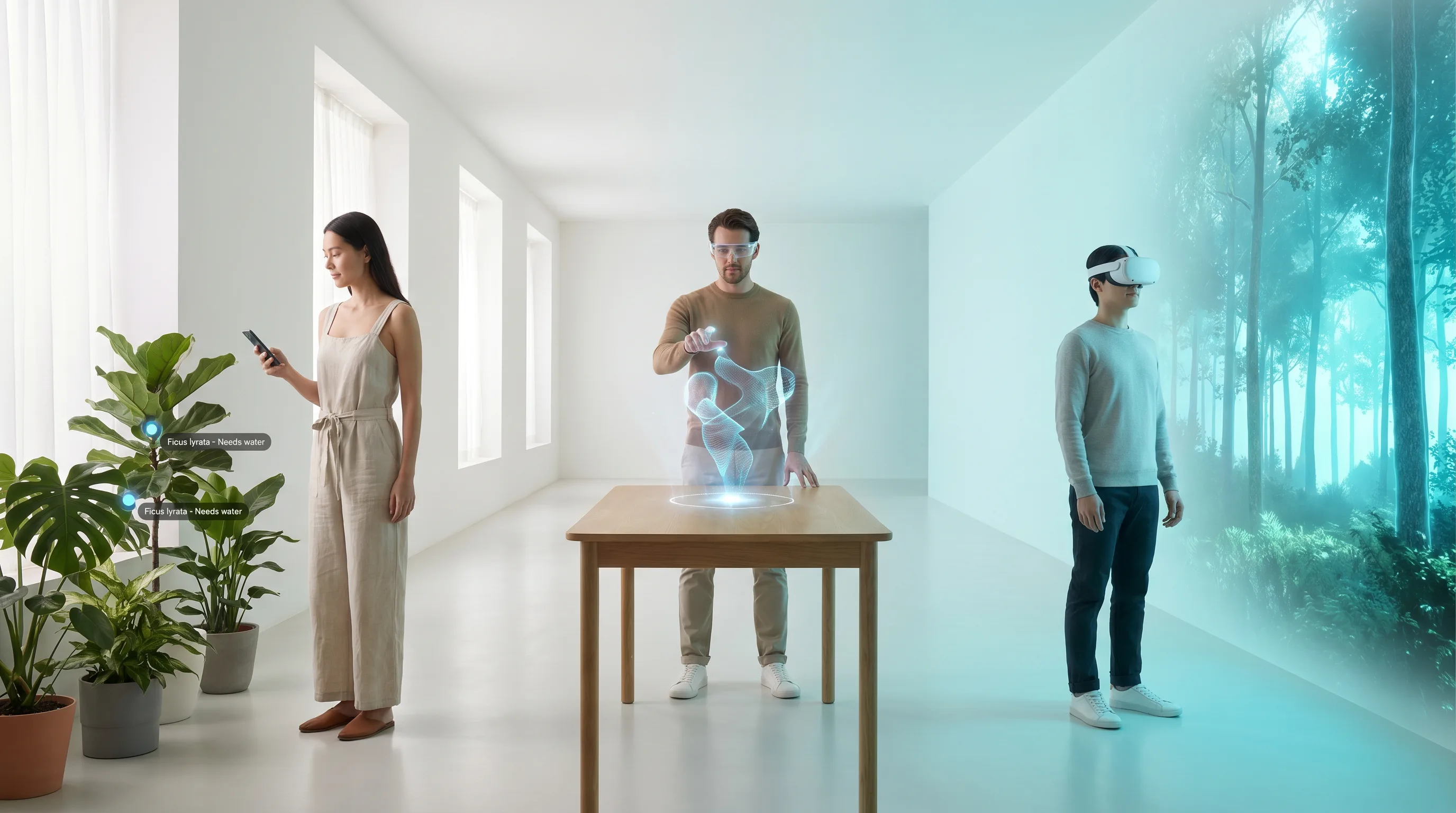
Immersive technology is any technology that blends digital content with the physical world or replaces it entirely, producing experiences that feel spatially present rather than confined to a flat screen. It spans four related modes: augmented reality overlays digital content on the real world, virtual reality replaces it, mixed reality lets physical and digital objects interact, and spatial computing is the umbrella that treats physical space itself as a computing interface. The category is now mainstream business infrastructure: global XR device shipments reached 14.5 million units in 2025, up 44.4% year over year, and 75% of Fortune 500 companies use VR for training or education. Choosing the right mode for a given problem is the decision that determines cost and value.
Key Takeaways
- Immersive technology spans AR, VR, MR, and spatial computing, each occupying a different point between the fully physical and fully virtual.
- Global XR device shipments reached 14.5 million units in 2025, up 44.4% year over year, per IDC (Electronics Weekly, 2026).
- 75% of Fortune 500 companies now use VR for training or education (Reality Atlas, 2026).
- Products with AR or 3D content convert 94% higher than those without, according to Shopify data (BrandXR, 2025).
- Smart glasses made up 50% of XR shipments in 2025, signaling a shift away from bulky headsets.
 
Need help building immersive technology?
Frame Sixty is a full-service digital innovation studio specialising in AR/VR, mobile, and web development.
What Is Immersive Technology?
Immersive technology is a class of technology that integrates computer-generated content with a user’s perception of physical space, either by layering digital objects onto the real world or by replacing the real world with a simulated one. It is an umbrella category: augmented reality, virtual reality, mixed reality, extended reality (XR), and spatial computing all sit under it. The unifying idea is spatial presence, where digital content occupies apparent three-dimensional space rather than a rectangular display.
The foundational framework for organizing these technologies is the Reality-Virtuality Continuum, introduced by Paul Milgram and Fumio Kishino in 1994 (Dauntless XR, 2026). It places experiences on a spectrum, from an unaltered physical environment at one end to a completely synthetic environment at the other. AR sits near the physical end, VR at the virtual end, and MR in the interactive middle. Treating the categories as points on a gradient, rather than as rival boxes, is the clearest way to reason about which one fits a given problem.
This is now a mainstream business category rather than a gaming niche. The global immersive technology market was valued at roughly $53.29 billion in 2025 and is projected to reach $500.27 billion by 2034 at a 27.9% compound annual growth rate, according to figures compiled by Reality Atlas in 2026. The definitions that follow matter because each technology serves a different audience, runs on different hardware, and returns value in a different way.
AR, VR, MR, and Spatial Computing: What’s the Difference?
Augmented reality, virtual reality, mixed reality, and spatial computing describe distinct points on the immersive spectrum, not interchangeable labels. AR overlays digital content on the real world, VR replaces the real world entirely, MR anchors digital objects so they interact with physical ones, and spatial computing is the broad umbrella that treats physical space itself as a computing interface. The sections below define each, and the comparison table pulls them together.
Augmented Reality (AR): Digital Layers on the Real World
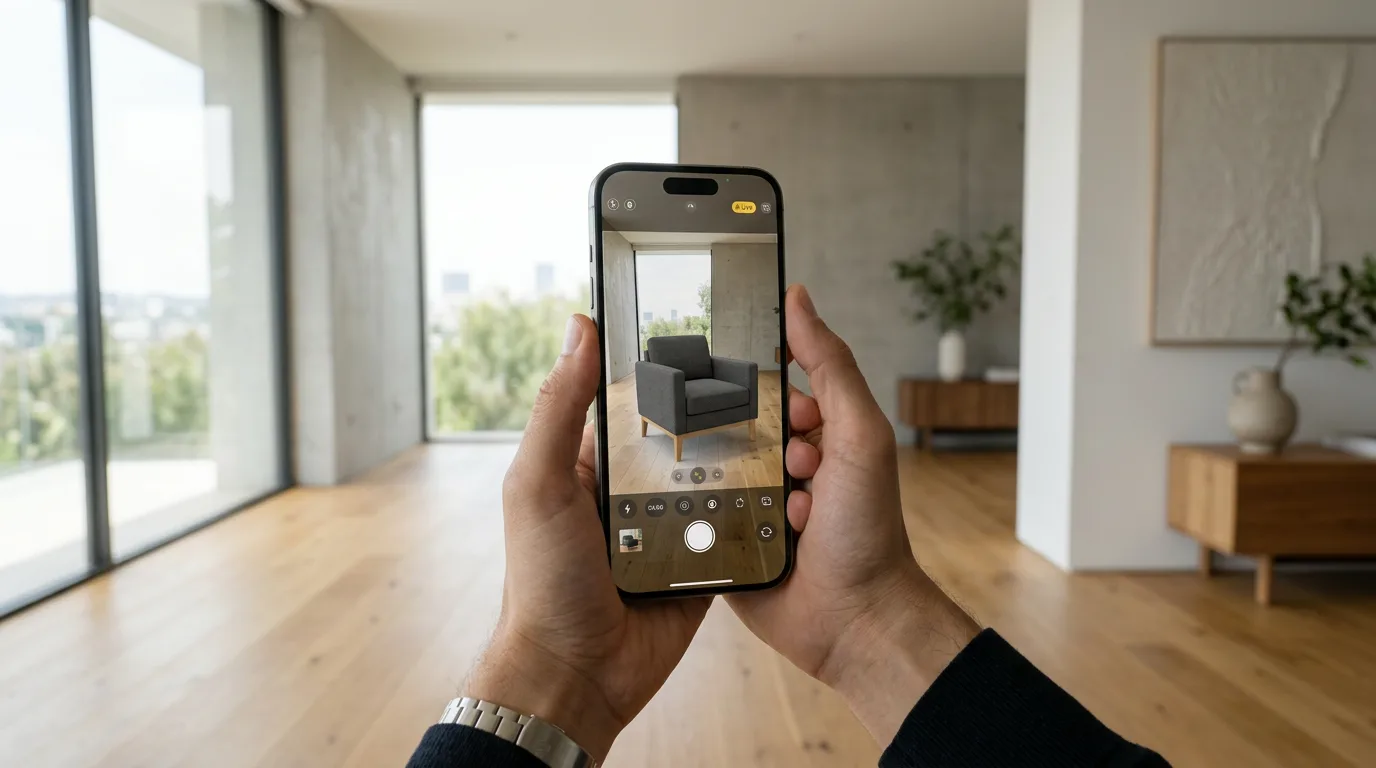
Augmented reality overlays digital content, such as 3D models, data, and graphics, onto a live view of the physical world while the user stays fully aware of their surroundings. AR is the most accessible immersive technology because it needs no dedicated headset at entry level. A smartphone camera running Apple’s ARKit or Google’s ARCore is enough, and WebXR brings the same capability into a browser through Web AR development — no app download at all.
AR already reaches consumers at scale. Snap’s platform sees roughly 300 million users engage with AR lenses daily, and Sephora’s Virtual Artist try-on logged 8.5 million sessions in its first year (BrandXR, 2025). For businesses evaluating a first immersive project, AR usually offers the lowest barrier to entry. Frame Sixty maintains a set of real-world augmented reality examples and dedicated augmented reality development services for teams starting here.
Virtual Reality (VR): Full Digital Immersion
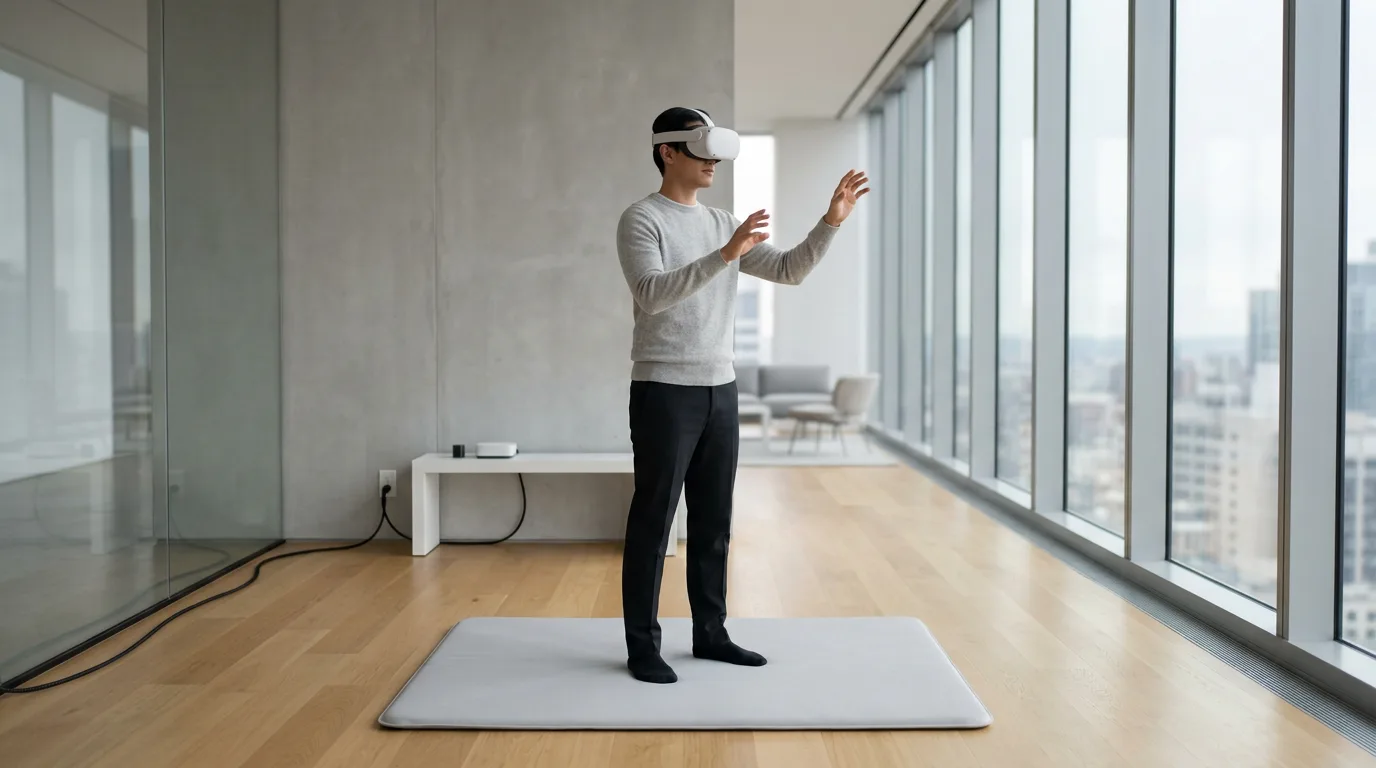
Virtual reality replaces the physical environment entirely with a simulated one, visually isolating the user inside a computer-generated space. VR requires a headset. The Meta Quest 3 and 3S sit at the accessible end near $299 to $499, the Sony PlayStation VR2 targets gaming, and the Apple Vision Pro runs fully immersive experiences at the premium end.
Gaming still accounts for about 70% of consumer VR headset use, but enterprise adoption is now the growth engine. As of 2026, 75% of Fortune 500 companies use VR for training or education (Reality Atlas, 2026). That shift toward workforce and simulation use cases is where most commercial VR budgets now go, and it is the core of Frame Sixty’s virtual reality development services.
Mixed Reality (MR): Physical and Digital Objects, Interacting
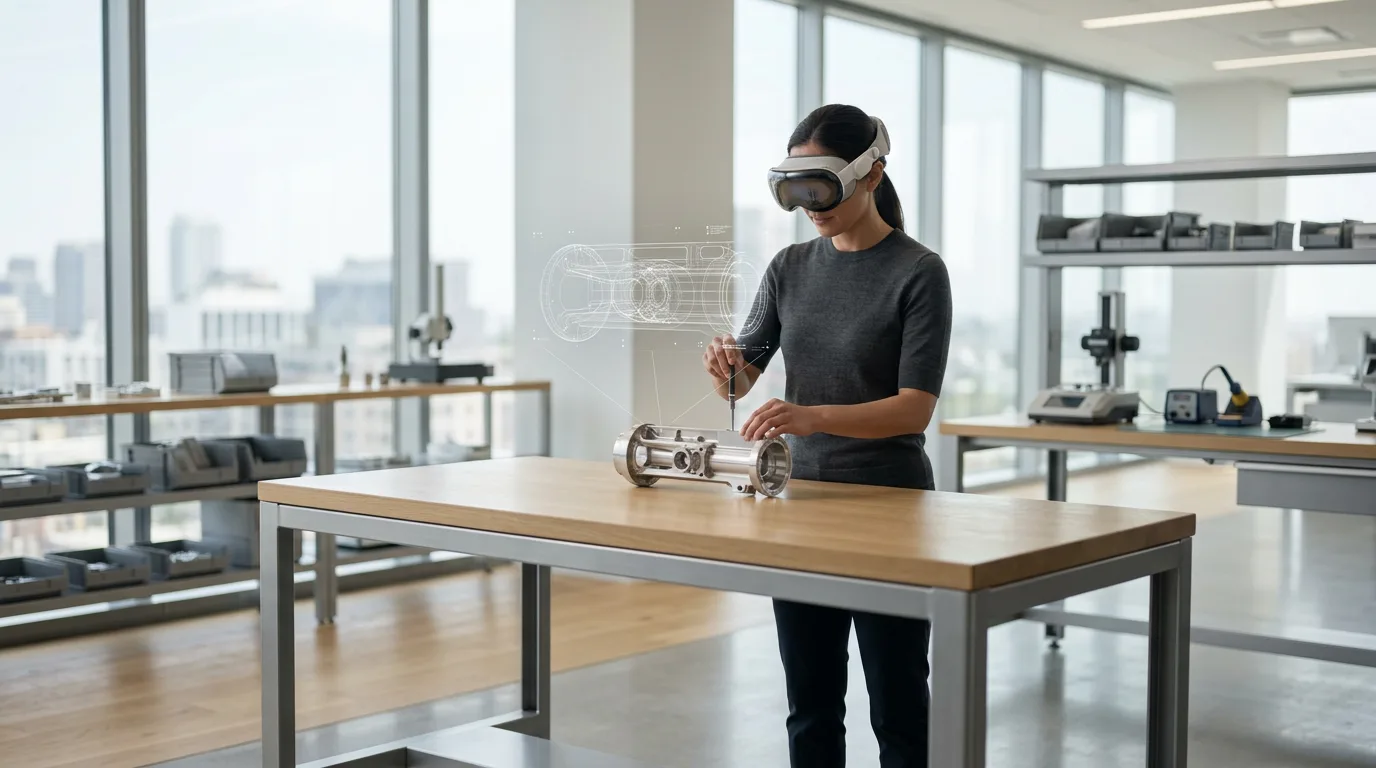
Mixed reality goes further than AR: virtual objects do not merely overlay the real world, they anchor to it and interact with it in real time. A digital widget can occlude behind a real desk, and a virtual blueprint can respond when a real tool passes through it. MR requires spatial-mapping hardware such as the Microsoft HoloLens 2 (around $5,231), the Magic Leap 2 (around $4,301), or the Apple Vision Pro in passthrough mode, which achieves roughly 12 ms latency.
The distinguishing test is interaction: in MR, physical and digital objects respond to each other, which is what makes it valuable for industrial and design work. Unilever’s MR remote-expert program delivered a 1,717% return on its initial investment, and Boeing’s AR and MR assembly work cut error rates to near zero while reducing production time by 25%, according to a Treeview mixed reality guide, 2026. Frame Sixty operates a dedicated mixed reality agency practice for these enterprise deployments.
Spatial Computing and Extended Reality (XR): The Umbrella Terms
Spatial computing is technology that lets computers understand, interact with, and simulate the physical world in three-dimensional space, treating space itself as the interface. It encompasses AR, VR, and MR, and the term gained wide use after Apple positioned the Vision Pro as a “spatial computer” at its 2024 launch (Treeview, 2026). Extended reality (XR) is the practical industry shorthand for the full AR, VR, and MR spectrum, and OpenXR is the open standard that lets developers build across devices.
The relationship is straightforward. Spatial computing is the broad conceptual framing, XR is the working abbreviation vendors and developers reach for, and AR, VR, and MR are the specific modes underneath both. Readers who want a deeper treatment of one term can consult Frame Sixty’s explainer on what spatial computing is.
Comparison: AR vs VR vs MR vs Spatial Computing at a Glance
The table below summarizes how the four categories differ across the factors that matter when scoping a project.
| Technology | What it does | Physical world visible? | Typical hardware | Primary use cases |
|---|---|---|---|---|
| Augmented Reality (AR) | Overlays digital content on reality | Yes | Smartphone, tablet, AR glasses | Retail try-on, marketing, field guidance |
| Virtual Reality (VR) | Replaces reality with a simulation | No | Meta Quest, PlayStation VR2 | Training, therapy, immersive design |
| Mixed Reality (MR) | Digital and physical objects interact | Yes | HoloLens 2, Magic Leap 2, Vision Pro | Industrial work, remote expert, design review |
| Spatial Computing / XR | Umbrella for space-as-interface computing | Varies | Apple Vision Pro, Samsung Galaxy XR | Enterprise platforms, cross-mode applications |
Immersive Technology Use Cases by Industry
Immersive technology returns value differently in each industry. Healthcare uses VR for training and therapy, retail uses AR to give online shoppers in-store confidence, workforce programs use VR to compress learning time and cost, and marketing uses AR and MR to turn audiences into participants. Each section below covers one vertical with named results.
Immersive Technology in Healthcare
Healthcare is the fastest-growing vertical for immersive technology, with the healthcare XR market projected to grow from $1.67 billion in 2025 to $9.14 billion by 2035, a 33.9% compound annual growth rate (Reality Atlas, 2026). The clinical value comes from letting practitioners rehearse and visualize without risk to patients.
The applications are concrete. Surgeons trained in VR make 40% fewer mistakes, per research published in the Journal of Medical Internet Research and cited by Takeaway Reality, 2024. VR pain-management programs have cut patient pain scores by up to 50% in hospital settings, and spatial computing is opening accessibility applications that were impractical before.
One example comes from our own work. At Frame Sixty, an AR/VR and spatial computing development studio, we built a Vision Pro ASL Translator that uses the headset’s cameras for real-time sign language translation, a project recognized with the 2025 Auggie Award for Best Societal Impact. Teams focused on clinical training and therapy can explore our virtual reality in healthcare practice. In healthcare, immersive technology earns its place by making high-stakes practice safe and repeatable.
AR and VR in Retail and E-Commerce
Augmented reality solves a specific retail problem: online shoppers cannot physically handle a product before buying, and AR closes that gap by placing a true-to-scale 3D model in the shopper’s own space. The measured commercial effect is large. Products with AR or 3D content convert 94% higher than those without, and AR visualization reduces product return rates by 40%, both from Shopify data reported by BrandXR in 2025.
Shopper sentiment tracks those numbers. In a Snap and Publicis Media study of 4,028 consumers across the US, UK, France, and Saudi Arabia, 80% felt more confident purchasing after using AR and 66% said they were less likely to return the item (BrandXR, 2025). Gartner projected that 80% of retailers would deploy AR as part of their customer experience strategy by 2025.
Brand programs show the pattern in practice:
- Sephora Virtual Artist logged 8.5 million try-ons in its first year.
- Gucci’s Snapchat lens drew 18 million engagements and a 25% lift in purchase intent.
- Mondelez uses the Samsung Galaxy XR to test in-store packaging and displays with eye-tracking analytics, according to Samsung Business Insights, November 2025.
VR extends the same logic to high-consideration purchases such as real estate, automotive, and luxury furniture, where a virtual showroom lets buyers inspect an item they cannot visit. In retail, immersive technology pays for itself by converting more browsers and taking back fewer returns.
VR for Workforce Training: Speed, Retention, and Cost
Virtual reality is now a mainstream corporate training tool, with 75% of Fortune 500 companies using VR for training or education (Reality Atlas, 2026). It works because employees learn procedures by doing them in a safe simulation rather than watching a slide deck.
A PwC study quantified the gains: VR-trained employees completed training up to four times faster than classroom learners, were 275% more confident applying what they learned, and felt 3.75 times more emotionally connected to the content (Takeaway Reality, 2024). Individual deployments back this up:
- Boeing reported a 75% reduction in training time for complex assembly processes using VR and AR.
- Delta Airlines increased daily technician proficiency checks from 3 to 150 after adopting VR, a 5,000% jump in capacity.
Cost follows scale. VR reaches parity with classroom training at 375 learners and becomes 52% more cost-effective than classroom methods at 3,000 learners (Takeaway Reality, 2024). Frame Sixty builds simulation programs of this kind through its VR training practice. For workforce development, VR wins on speed, retention, and unit economics once the trainee count is large enough.
Immersive Technology in Marketing and Brand Experience
Augmented reality and mixed reality give marketing teams something a video ad cannot: an experience that runs on the user’s own camera and hands, turning passive viewers into active participants. The engagement difference is measurable. AR experiences generate 300% higher sharing rates than non-AR campaigns, and the average interaction time with an AR ad is 75 seconds, compared with 2 to 3 seconds for static signage (BrandXR, 2025).
Campaign results show the commercial payoff. The 19 Crimes wine AR app drove 5.5 million downloads and a 40% increase in sales volume, and immersive video formats, including spatial video for the Apple Vision Pro and 360-degree social campaigns, extend the same participatory model to storytelling.
Our own experiential work illustrates the approach. At Frame Sixty, we built Red Bull Capture Point, an AR experience created for a competitive gaming event that put branded interaction directly in attendees’ hands. In marketing, immersive technology earns attention by making the audience part of the story rather than a spectator to it.
How Big Is the Immersive Technology Market?
The immersive technology market is large and growing at double-digit annual rates across every measure analysts use. The broad immersive technology market was valued at roughly $53.29 billion in 2025 and is forecast to reach $500.27 billion by 2034 (Reality Atlas, 2026), while the narrower spatial computing segment is projected to grow from $20.43 billion in 2025 to $85.56 billion by 2030 at a 33.16% compound annual growth rate, per Mordor Intelligence data compiled in a Treeview industry statistics report, 2026. The spread between figures reflects differences in what each analyst counts, not disagreement about direction.
Device volume tells the same story from the hardware side. XR shipments hit 14.5 million units in 2025, up 44.4% year over year, with IDC forecasting a 26.5% compound annual growth rate through 2030 (Electronics Weekly, 2026). The table below collects the headline figures.
| Market segment | 2025 value | Projected value | CAGR | Source (year) |
|---|---|---|---|---|
| Immersive technology (broad) | $53.29B | $500.27B by 2034 | 27.9% | Reality Atlas (2026) |
| Spatial computing | $20.43B | $85.56B by 2030 | 33.16% | Mordor Intelligence (2026) |
| Healthcare XR | $1.67B | $9.14B by 2035 | 33.9% | Reality Atlas (2026) |
| XR device shipments | 14.5M units | 26.5% CAGR to 2030 | 26.5% | IDC / Electronics Weekly (2026) |
Two adoption signals sit underneath these numbers. As of 2026, 75% of Fortune 500 companies use VR for training or education (Reality Atlas, 2026), and Gartner forecasts that by 2028, 20% of people worldwide will engage with immersive, persistently anchored geoposed content at least once a week (Treeview, 2026). The immersive technology market is past the pilot stage and into standard enterprise practice.

Where Is Immersive Technology Headed in 2026 and Beyond?
The clearest signal from the industry in mid-2026 is that artificial intelligence is no longer a feature bolted onto immersive devices; it is the logic that makes them useful. At the Augmented World Expo (AWE) 2026, spatial computing and AI were treated as a single discipline, and lightweight smart glasses, not headsets, emerged as the near-term consumer delivery vehicle.
AI as the Layer That Makes Spatial Computing Useful
Artificial intelligence is moving from demo feature to core infrastructure in spatial computing, supplying real-time object recognition, contextual answers, gesture control, and generative content in the devices announced through 2026. The AWE 2026 event, themed “I, Spatial: Humans Empowered by Spatial AI,” made the pairing explicit. AWE founder Ori Inbar described spatial technology as making “our digital world spatial,” with AI as the engine that makes that viable at scale, and Snap CTO Evan Spiegel’s keynote “Making Computing More Human” positioned AI contextual assistance as a way to reduce constant phone-checking (Forbes, 2026).
This convergence is producing agentic spatial computing, where AI agents operate inside spatial environments and act on both physical objects and digital systems. Frame Sixty tracks and builds in this area through its AI and augmented reality practice. The trajectory has a measurable horizon: Gartner forecasts that by 2028, 20% of people worldwide will engage with immersive, persistently anchored geoposed content at least once a week (Treeview, 2026).
Smart Glasses and the Shift Away from Headsets
Smart glasses, lightweight and always-on, are displacing bulky headsets as the mainstream immersive form factor. They accounted for 50% of all XR device shipments in 2025, up from 25% in 2024, and shipments grew 110% in the first half of 2025 (Treeview, 2026). Global XR device shipments overall reached 14.5 million units in 2025, a 44.4% year-over-year increase, according to IDC figures reported by Electronics Weekly in 2026.
The device lineup is broadening fast. The Ray-Ban Meta glasses passed 2 million units since their October 2023 launch and tripled quarterly sales in Q2 2025, while the Samsung Galaxy XR, Google’s Android XR glasses, and Snap’s Specs, launching in Fall 2026 at $2,195 with a 51-degree field of view and a 16-million-color display, expand the field further. “New products from Google’s Android XR ecosystem, Snap, and a growing number of Chinese vendors will accelerate adoption by expanding smart glasses availability,” said Jitesh Ubrani, Research Manager at IDC (Electronics Weekly, 2026). IDC projects a 26.5% compound annual growth rate for XR device shipments from 2026 to 2030.
The form factors are dividing by job rather than competing head to head. Smart glasses handle triage, notifications, and quick AI queries, while headsets remain the tool for deep immersion such as training simulations, surgical visualization, and complex design work. Both categories are set to grow.
Bringing Immersive Technology to Your Business
For most organizations in 2026, the question is no longer whether to invest in immersive technology, since 75% of Fortune 500 companies already have (Reality Atlas, 2026). The practical questions are which technology fits which problem, and who can build it well. Matching the mode to the use case is the first decision:
- AR fits retail, marketing, and accessibility, where users stay in their own environment.
- VR fits training, healthcare, and complex visualization, where full immersion is the point.
- MR fits industrial work, remote expert support, and design review, where digital and physical must interact.
- Spatial computing fits enterprise platforms and applications that span more than one mode.
Frame Sixty, an AR/VR and spatial computing development studio, has built across this full spectrum, from AR brand experiences like Red Bull Capture Point to the award-winning Vision Pro ASL Translator to enterprise VR training simulations. That range is what a pillar project often needs, since the right answer frequently combines modes rather than picking just one.
Conclusion
Immersive technology is a spectrum, not a single product. Augmented reality layers digital content on the real world, virtual reality replaces it, mixed reality lets the two interact, and spatial computing is the umbrella that treats physical space as a computing surface. Each mode has a distinct hardware profile, a distinct cost curve, and a distinct set of industries where it pays off, from AR-driven retail conversion to VR training that reaches cost parity at scale.
The direction of travel is clear. AI has become the operating logic of spatial computing, smart glasses are outselling headsets as the everyday form factor, and enterprise adoption has moved from pilots to standard practice. Organizations that match the right immersive mode to the right problem, and build it well, are the ones capturing the measured gains in conversion, training speed, and engagement documented across the industry in 2025 and 2026.
If you’d like to explore how immersive technology can work for your business, get in touch with our team at Frame Sixty. We build across AR, VR, MR, and spatial computing, and we can help you choose the mode that fits your goals and ship it.
Immersive Technology FAQ: AR, VR, MR, and Spatial Computing
Common questions about immersive technology, covering what it is, the hardware and standards behind it, and the market and returns that make it a business investment.
Extended reality (XR) is the industry shorthand for the full spectrum of AR, VR, and MR combined. It is a working abbreviation vendors and developers use rather than a separate technology, and OpenXR is the open standard that lets developers build XR applications across different devices. XR sits alongside spatial computing as an umbrella term for space-aware, immersive computing.
The Reality-Virtuality Continuum is the foundational framework for classifying immersive technologies on a spectrum from a purely physical environment to a fully virtual one. Introduced by Paul Milgram and Fumio Kishino in 1994, it places AR near the physical end, VR at the virtual end, and MR in the interactive middle, making it the clearest way to reason about which mode fits a project.
AR needs the least hardware: a smartphone camera running Apple's ARKit or Google's ARCore, or a browser using WebXR. VR requires a headset such as the Meta Quest 3 ($299 to $499) or Apple Vision Pro. MR requires spatial-mapping hardware like the Microsoft HoloLens 2 (around $5,231), the Magic Leap 2 (around $4,301), or Vision Pro in passthrough mode.
Spatial computing is technology that lets computers understand, interact with, and simulate the physical world in three-dimensional space, treating space itself as the interface. It is a broad umbrella that encompasses AR, VR, and MR. Augmented reality is one specific mode within it, overlaying digital content on a live view of the real world, while spatial computing is the wider conceptual framing popularized by Apple's 2024 Vision Pro launch.
The immersive technology market was valued at roughly $53.29 billion in 2025 and is projected to reach $500.27 billion by 2034 at a 27.9% compound annual growth rate, according to Reality Atlas (2026). On the hardware side, XR device shipments reached 14.5 million units in 2025, up 44.4% year over year, with IDC forecasting a 26.5% CAGR through 2030.
Frame Sixty, an AR/VR and spatial computing development studio, helps businesses adopt immersive technology across the full spectrum: AR brand experiences like Red Bull Capture Point, the Auggie Award-winning Vision Pro ASL Translator, and enterprise VR training simulations. That range matters because the right answer often combines modes, and matching AR, VR, or MR to the problem is the first scoping decision.
Get in touch
We’re interested to see how we can help. Send us a message and we will get back to you within 24 hours.