
Virtual Reality in Healthcare: Transforming Medical Training, Treatment, and Patient Outcomes
Apr 27, 2026

11 MIN READ
Virtual reality in healthcare uses immersive digital environments to enhance medical training, therapy, and patient engagement. It enables clinicians to practice complex procedures safely, supports pain management and rehabilitation through interactive experiences, and improves mental health treatment via controlled exposure therapy. Clinical studies from leading institutions confirm measurable benefits such as reduced pain, faster recovery, and improved surgical accuracy. Supported by AI, cloud computing, and regulatory validation, VR has become a scalable, evidence-based component of modern healthcare that strengthens both clinical outcomes and patient satisfaction.
The Evolution of Virtual Reality in Healthcare
Virtual reality in healthcare has progressed from experimental simulation labs to mainstream clinical practice. Once limited to research institutions, VR is now used in hospitals, rehabilitation centers, and telemedicine platforms worldwide.
From Simulation Labs to Clinical Practice
In the early 2000s, VR was primarily used in academic settings for medical simulation and surgical rehearsal. Institutions like Johns Hopkins University pioneered the use of VR for surgical training, allowing residents to practice complex procedures in a risk-free environment. By the 2020s, the technology matured enough for clinical integration, aided by advances in haptic feedback, motion tracking, and AI-driven analytics.
Today, VR applications extend to pain management, physical rehabilitation, and mental health therapy. The Mayo Clinic has demonstrated how immersive VR can reduce patient anxiety and pain perception during procedures. These developments have paved the way for healthcare systems to adopt VR as part of standard care.
Key Milestones in VR Medical Innovation
Several milestones have defined VR’s journey in healthcare:
- 2005–2010: Early adoption of VR in surgical simulation using basic 3D models.
- 2015: Launch of Osso VR and FundamentalVR, which introduced validated VR training modules.
- 2020: FDA began evaluating VR-based therapeutic devices under medical device regulations.
- 2023: Integration of AI-driven adaptive therapy tools, as explored in AI in Virtual Reality Development.
- 2025–2026: Widespread use of cloud-rendered VR systems powered by NVIDIA CloudXR, enabling scalable remote healthcare delivery.
The Role of Meta Reality Labs, HTC Vive, and Microsoft HoloLens
Major tech companies have accelerated VR’s adoption in healthcare. Meta Reality Labs has focused on ergonomic headset design and patient comfort, while HTC Vive and Microsoft HoloLens have become staples in surgical planning and anatomical visualization. These devices integrate seamlessly with platforms like Unity, Unreal Engine, and OpenXR to ensure interoperability across systems.
At Frame Sixty, developers collaborate with healthcare institutions to design custom 3D environments and 3D model design services that replicate real-world anatomy and surgical tools. This partnership between technology and healthcare is redefining clinical training and patient engagement.
Key takeaway: The evolution of VR in healthcare reflects a shift from experimental tools to clinically validated systems that enhance training, therapy, and patient outcomes.
Need help with VR healthcare solutions?
We are here to help!
Core Applications of Virtual Reality in Medicine
Virtual reality in medicine encompasses training, therapy, and patient education. It is now a proven technology that improves clinical accuracy, reduces pain, and enhances patient engagement.
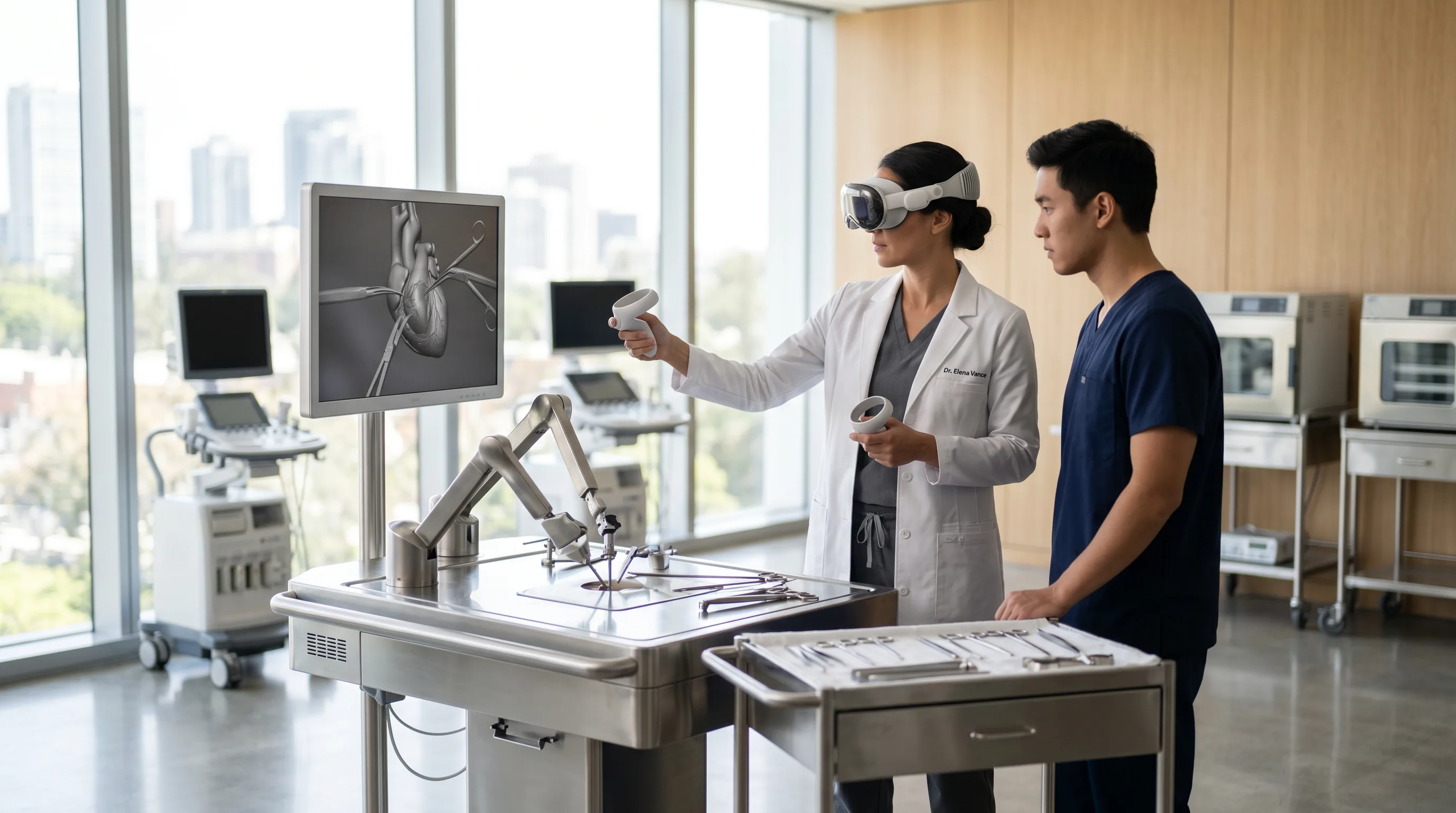
Medical Simulation and Virtual Surgery Training
Definition: Medical simulation with VR enables healthcare professionals to practice surgical procedures in a risk-free, immersive environment.
Platforms such as Osso VR, FundamentalVR, and Unity-based environments have become industry standards for virtual surgery training. These systems allow trainees to perform simulated operations with real-time feedback on training accuracy, error rate, and clinical validation. Studies from Johns Hopkins Medicine show that VR-trained surgeons perform 29% faster and make fewer errors than those trained traditionally.
| Platform | Focus Area | Validation Metric | Example Use Case |
|---|---|---|---|
| Osso VR | Orthopedic and general surgery | Training accuracy | Pre-operative rehearsal |
| FundamentalVR | Multi-specialty simulation | Error rate reduction | Neurosurgical training |
| Unity-based environments | Customizable clinical modules | User engagement | Anatomy visualization |
At Frame Sixty, 3D modeling expertise supports medical device manufacturers and educators in creating anatomically precise simulations. These environments mirror real-world surgical conditions, making them invaluable for both academic and clinical training.
Key takeaway: VR simulation platforms improve surgical proficiency, reduce training costs, and enhance clinical confidence.
VR Pain Management and Rehabilitation Therapy
Definition: VR pain management uses immersive environments to distract patients from pain and anxiety during treatment or recovery.
The Mayo Clinic and Cedars-Sinai Medical Center have documented significant reductions in perceived pain when patients use VR during procedures. AppliedVR, a leading therapeutic platform, has shown a 30–50% improvement in pain reduction rate and therapy adherence compared to traditional distraction techniques.
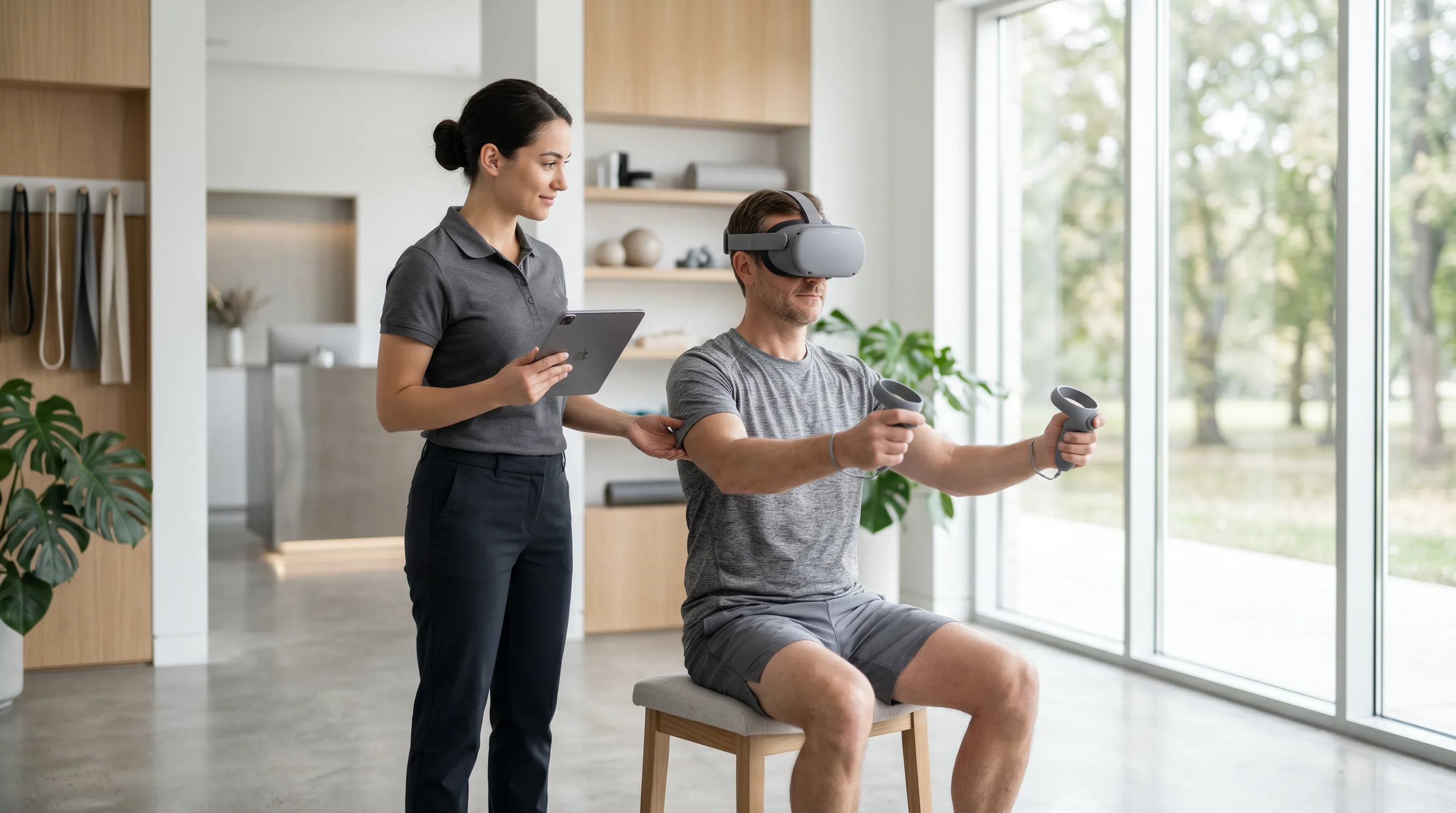
Rehabilitation specialists use VR to gamify physical therapy, improving motivation and consistency. Patients recovering from strokes or orthopedic injuries use VR-guided exercises to regain mobility while receiving real-time feedback.
Key takeaway: VR therapy enhances pain management and rehabilitation outcomes by increasing patient engagement and reducing reliance on medication.
Mental Health and Exposure Therapy
Definition: VR-based mental health treatment creates controlled environments for exposure therapy, helping patients confront anxiety, PTSD, and phobias safely.
Platforms like XRHealth and telemedicine systems use VR to deliver personalized therapy sessions. Clinical trials supported by the National Institutes of Health confirm VR’s efficacy in reducing anxiety and PTSD symptoms. Patients can revisit triggering scenarios under therapist supervision, gradually desensitizing their responses.
Integration with telehealth allows therapists to monitor patient progress remotely, aligning with interoperability frameworks promoted by HIMSS.
Key takeaway: VR offers scalable, evidence-based mental health therapy that complements traditional psychological treatments.
Patient Education and Engagement
Definition: VR enhances patient education by visualizing complex medical procedures and conditions in immersive 3D environments.
Devices like Oculus Quest and Varjo Base allow patients to explore their anatomy or upcoming surgical procedures. This visualization improves understanding and reduces preoperative anxiety. Hospitals use VR modules to explain treatment options, ensuring informed consent.
At Frame Sixty, developers explore how Apple Vision Pro and spatial computing can further enhance patient engagement through interactive 3D storytelling. These immersive experiences empower patients to make informed decisions about their care.
Key takeaway: VR-driven education fosters transparency, trust, and better patient outcomes.
How Hospitals Implement VR Therapy Programs
Hospitals implement VR therapy programs through structured integration with existing workflows, compliance frameworks, and cost-benefit analyses.
Integration with Existing Clinical Workflows
Definition: Integrating VR therapy into hospital systems requires alignment with telemedicine platforms, interoperability standards, and regulatory compliance.
Healthcare institutions rely on FHIR and HL7 standards to ensure seamless data exchange between VR systems and electronic health records. Organizations like HIMSS advocate for interoperability to support telemedicine integration. Compliance with HIPAA and NIST data security guidelines ensures patient privacy.
The FDA Medical Device Regulations classify VR therapeutic tools as medical devices, requiring validation and post-market surveillance. Hospitals must also consider ISO standards such as ISO 13485 for quality management and IEC 62304 for software lifecycle processes, as outlined by ISO.
At Frame Sixty, developers leverage agentic spatial computing to integrate VR systems with hospital data infrastructure, ensuring compliance and scalability.
Key takeaway: Successful VR implementation depends on interoperability, regulatory compliance, and secure data management.
Cost, ROI, and Scalability Considerations
Definition: Evaluating the cost-effectiveness of VR therapy involves analyzing hardware investment, training time, and long-term ROI.
Hospitals assess session duration, return on investment, and treatment efficacy to determine scalability. Cloud-based rendering via NVIDIA CloudXR reduces hardware costs by enabling remote processing. Subscription models and shared device pools further lower barriers to entry.
Procurement strategies may include partnerships with VR development firms like Frame Sixty, which offer customized app development and maintenance support. This approach ensures sustainable deployment across departments.
Key takeaway: Scalable VR programs rely on cost optimization, cloud infrastructure, and strategic vendor partnerships.
Hospitals implement VR therapy programs through structured integration with existing workflows, compliance frameworks, and cost-benefit analyses.
Integration with Existing Clinical Workflows
Definition: Integrating VR therapy into hospital systems requires alignment with telemedicine platforms, interoperability standards, and regulatory compliance.
Healthcare institutions rely on FHIR and HL7 standards to ensure seamless data exchange between VR systems and electronic health records. Organizations like HIMSS advocate for interoperability to support telemedicine integration. Compliance with HIPAA and NIST data security guidelines ensures patient privacy.
The FDA Medical Device Regulations classify VR therapeutic tools as medical devices, requiring validation and post-market surveillance. Hospitals must also consider ISO standards such as ISO 13485 for quality management and IEC 62304 for software lifecycle processes, as outlined by ISO.
At Frame Sixty, developers leverage agentic spatial computing to integrate VR systems with hospital data infrastructure, ensuring compliance and scalability.
Key takeaway: Successful VR implementation depends on interoperability, regulatory compliance, and secure data management.
Cost, ROI, and Scalability Considerations
Definition: Evaluating the cost-effectiveness of VR therapy involves analyzing hardware investment, training time, and long-term ROI.
Hospitals assess session duration, return on investment, and treatment efficacy to determine scalability. Cloud-based rendering via NVIDIA CloudXR reduces hardware costs by enabling remote processing. Subscription models and shared device pools further lower barriers to entry.
Procurement strategies may include partnerships with VR development firms like Frame Sixty, which offer customized app development and maintenance support. This approach ensures sustainable deployment across departments.
Key takeaway: Scalable VR programs rely on cost optimization, cloud infrastructure, and strategic vendor partnerships.

Research and Clinical Evidence Supporting VR in Healthcare
VR’s credibility in healthcare is backed by extensive research, clinical trials, and regulatory validation.
Peer-Reviewed Studies and Clinical Trials
Definition: Clinical research confirms VR’s effectiveness in improving patient outcomes across multiple therapeutic areas.
Peer-reviewed studies from NCBI show statistically significant improvements in pain management, rehabilitation adherence, and surgical training accuracy. The Mayo Clinic and Johns Hopkins Medicine have published controlled trials demonstrating reduced pain perception and faster recovery times.
The National Institutes of Health continues to fund large-scale trials exploring VR’s role in chronic pain and mental health therapy. These studies validate VR as a clinically effective and safe adjunct to traditional care.
Key takeaway: Clinical evidence confirms VR’s measurable benefits in treatment efficacy, patient satisfaction, and rehabilitation outcomes.
Measuring Effectiveness and Safety
Definition: VR medical devices must comply with international standards to ensure safety, reliability, and data protection.
Standards such as ISO 13485, IEC 62304, and ISO 14971—referenced by ISO—govern software validation, risk management, and quality assurance. Compliance with GDPR and HIPAA ensures patient data confidentiality.
The FDA oversees device classification and post-market monitoring, while NIST provides cybersecurity frameworks tailored to healthcare systems. These combined efforts create a robust regulatory environment for VR deployment.
Key takeaway: Adherence to international standards and data protection laws ensures VR healthcare applications remain safe, effective, and compliant.
Technological Foundations of Healthcare VR
Healthcare VR relies on a sophisticated combination of hardware, software, and cloud infrastructure to deliver reliable, immersive experiences.
Hardware and Software Ecosystem
Definition: The VR ecosystem in healthcare includes headsets, motion sensors, and software platforms that enable realistic medical simulations.
Devices such as Oculus Quest, HTC Vive, and Microsoft HoloLens deliver high-fidelity visuals and spatial tracking. Software platforms like Unity, Unreal Engine, SteamVR, Viveport, and the OpenXR Standard ensure cross-platform compatibility.
At Frame Sixty, AI developers integrate intelligent agents into VR environments to simulate patient responses and automate feedback. This enhances realism and educational value in clinical training.
Key takeaway: A robust hardware-software ecosystem underpins the accuracy, realism, and reliability of VR healthcare experiences.
Cloud and AI Integration
Definition: Cloud computing and artificial intelligence enhance VR scalability, personalization, and analytics in healthcare.
NVIDIA CloudXR enables real-time rendering and streaming of complex VR environments from the cloud, reducing latency and hardware requirements. AI-driven analytics personalize therapy sessions by adapting difficulty levels based on patient performance.
At Frame Sixty, developers combine AI and VR to create adaptive therapy modules that respond dynamically to user behavior. This integration supports remote monitoring and predictive analytics for clinicians.
Key takeaway: Cloud and AI integration make VR healthcare solutions more scalable, intelligent, and accessible across diverse clinical settings.
Challenges and Future Directions
Despite its promise, VR in healthcare faces challenges related to regulation, training, and infrastructure.
Barriers to Adoption in Hospitals
Definition: Common barriers include regulatory complexity, clinician training needs, and infrastructure limitations.
Hospitals must navigate FDA Medical Device Regulations, HIPAA, and NIST data security frameworks. Clinicians require training to use VR effectively, and institutions must invest in hardware, network bandwidth, and technical support.
The World Health Organization highlights ethical considerations around equitable access and patient consent, especially in developing regions. Overcoming these barriers requires collaboration among healthcare providers, regulators, and technology developers.
Key takeaway: Addressing regulatory, training, and infrastructure challenges is essential for widespread VR adoption in healthcare.
The Future of Immersive Healthcare
Definition: The future of VR in healthcare lies in its integration with telehealth, mixed reality, and AI-driven personalization.
Emerging trends include mixed reality therapy, agentic spatial computing, and remote clinical training through devices like Apple Vision Pro. Insights from A Developer’s Perspective on the Apple Vision Pro suggest that spatial computing will enable more intuitive and interactive healthcare experiences.
As interoperability improves through HIMSS initiatives, VR will become a standard component of digital health ecosystems. Hospitals will use immersive simulations for continuous education and patient engagement, supported by 3D modeling expertise from Frame Sixty.
Key takeaway: The next generation of immersive healthcare will merge VR, AI, and telemedicine to create personalized, data-driven care experiences.

Conclusion
Virtual reality in healthcare has evolved from a futuristic concept to a clinically validated tool that enhances training, therapy, and patient engagement. Supported by organizations like NIH, FDA, and HIMSS, VR now plays a pivotal role in improving patient outcomes and operational efficiency.
The integration of cloud rendering, AI analytics, and spatial computing ensures that VR systems are scalable, secure, and adaptable to diverse clinical needs. Hospitals adopting VR benefit from reduced training errors, improved pain management, and increased patient satisfaction.
As healthcare continues its digital transformation, VR will remain central to innovation—bridging the gap between physical and virtual care. Whether for surgical training, rehabilitation, or patient education, immersive technologies are redefining what’s possible in medicine.
To explore how VR can transform your healthcare organization’s digital strategy, get in touch with the experts at Frame Sixty. Their team specializes in AI-driven VR development, 3D modeling, and spatial computing solutions that bring medical innovation to life.
Virtual Reality in Healthcare – Expert Insights and Practical Guidance
This FAQ explores how virtual reality is transforming healthcare in 2026, addressing common questions about its applications, setup, and strategic use in clinical environments.
Virtual reality in healthcare is used for medical training, pain management, rehabilitation, and patient education. It enables clinicians to simulate procedures, patients to manage pain through immersive distraction, and educators to visualize anatomy in 3D.
Virtual reality improves patient outcomes by reducing anxiety, enhancing therapy adherence, and supporting precise surgical training. Studies show faster recovery times and fewer clinical errors when VR is integrated into treatment and training programs.
Virtual reality matters because it bridges digital and physical care, offering scalable, data-driven solutions. As telemedicine and AI evolve, VR provides immersive, personalized care experiences that improve both efficiency and patient satisfaction.
Cloud computing enables real-time rendering and streaming of complex VR environments without heavy local hardware. This allows hospitals to scale VR programs efficiently and support remote therapy or training sessions.
Medical VR systems typically require headsets like HTC Vive, Meta Quest, or HoloLens, along with motion sensors and compatible software such as Unity or Unreal Engine. These components ensure accurate spatial tracking and realistic simulation.
Yes, integration is possible through interoperability standards like FHIR and HL7. This allows patient data from VR sessions to sync securely with hospital systems, supporting personalized therapy and progress tracking.
Implementation costs vary depending on hardware, software licensing, and training needs. Cloud-based VR and subscription models can reduce upfront expenses, making programs more scalable and cost-effective.
Risks include motion sickness, data privacy concerns, and regulatory compliance challenges. Proper device calibration, adherence to HIPAA standards, and clinician training help mitigate these issues.
Yes, effectiveness can be measured through clinical metrics such as pain reduction rates, therapy adherence, and recovery times. Peer-reviewed studies and FDA-approved trials provide validated evidence of VR’s therapeutic impact.
Get in touch
We’re interested to see how we can help. Send us a message and we will get back to you within 24 hours.