
What Is Social AR? How Filters and Lenses Work and Why Brands Are Investing in 2026
Aug 4, 2026
12 MIN READ
Social AR is camera-based augmented reality delivered inside social apps like Snapchat, TikTok, and Instagram, where filters, lenses, and branded effects track a face, body, or space and move with it in real time. For a marketing team, social AR is the quickest way to put an interactive brand experience in front of hundreds of millions of phones. This guide covers what it is, how it works, which platforms host it, and what a branded lens costs in 2026.
Here is our position, and we will defend it on any client call: social AR pays off only when the lens is built around a single user action, a try-on, a share, a tap to buy, and not when it is treated as decoration. Novelty lenses spike for a day and vanish. Action-anchored lenses compound, because every use produces a post, and every post recruits the next user.
Key Takeaways
- Roughly 350 million people use Snapchat AR every day as of Q4 2025, and the AR lens is opened about 8 billion times daily (DemandSage, 2026).
- Meta Spark shut down on January 14, 2025, removing third-party AR filters from Instagram and Facebook and leaving Snapchat and TikTok as the main self-serve platforms for brand-built social AR (Meta, 2024).
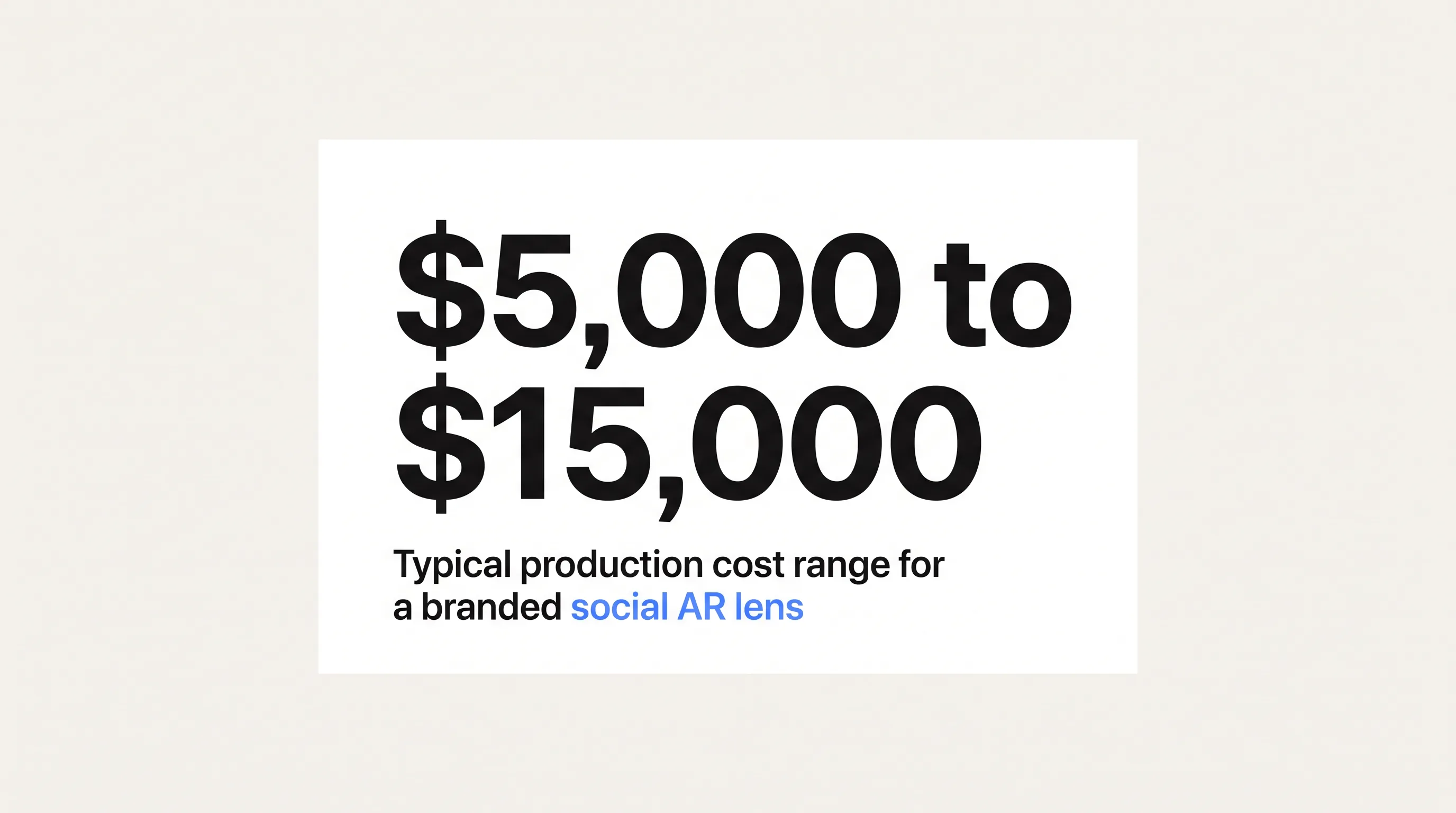
- A custom Snapchat AR lens typically costs $5,000 to $15,000 to produce, with paid distribution budgeted separately (RBKAVIN Studio, 2026).
- Marketing that integrates AR has been linked to a 94% lift in sales conversions, and 57% of users say they are more likely to buy from brands offering AR (Rock Paper Reality, 2025).
- Over 700 million users have engaged with Snapchat generative-AI lenses more than 17 billion times, and new formats like AI Clips arrived in March 2026 (ppc.land, 2026).
What Is Social AR?
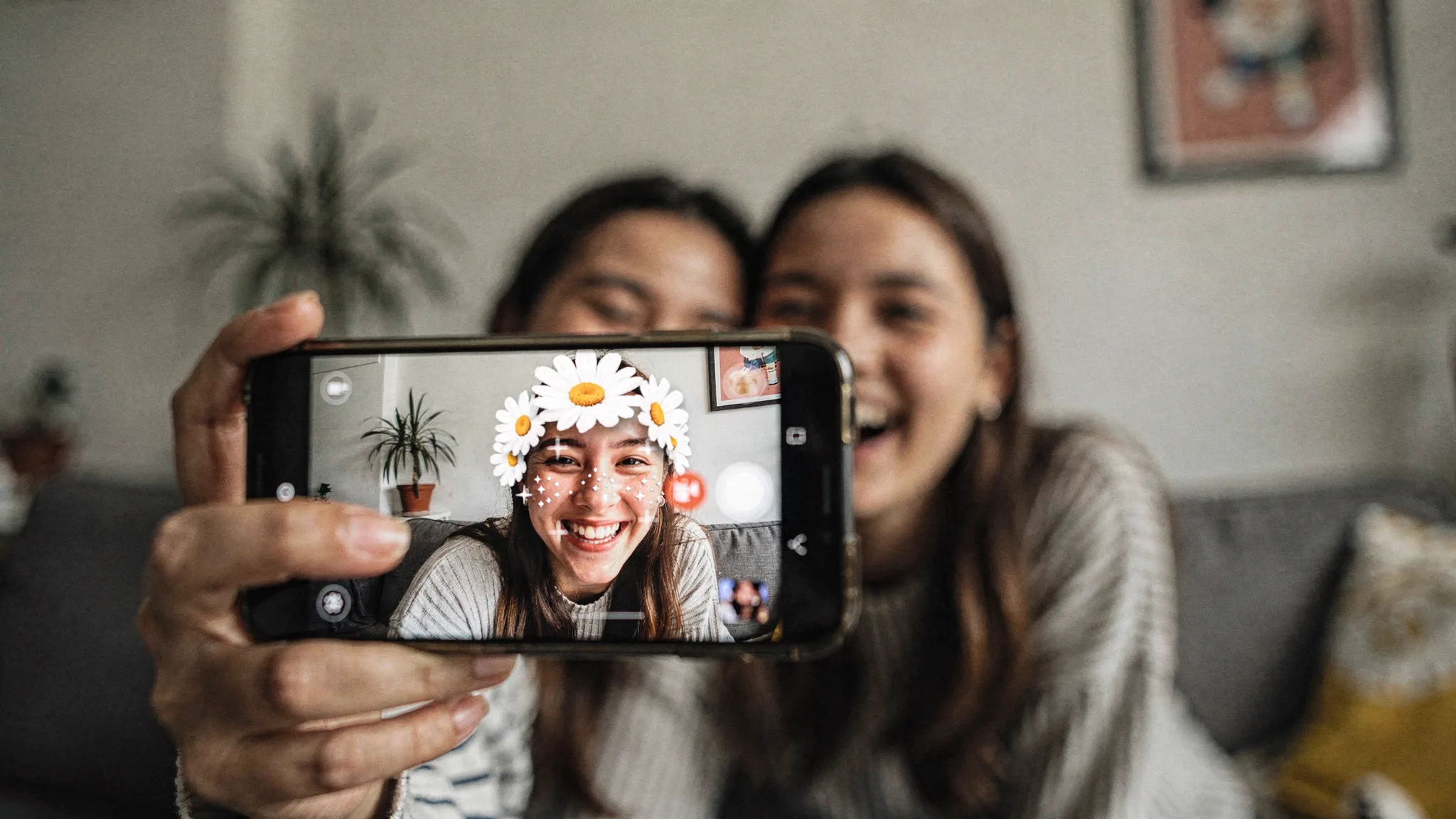
Social AR is the category of augmented reality that runs inside social media apps, where a phone camera overlays interactive graphics that track a face, body, or physical space in real time. On Snapchat these are called Lenses, on TikTok they are Effects, and on Instagram they were Filters. The common thread across social AR is distribution: the effect lives where billions of people already point their cameras.
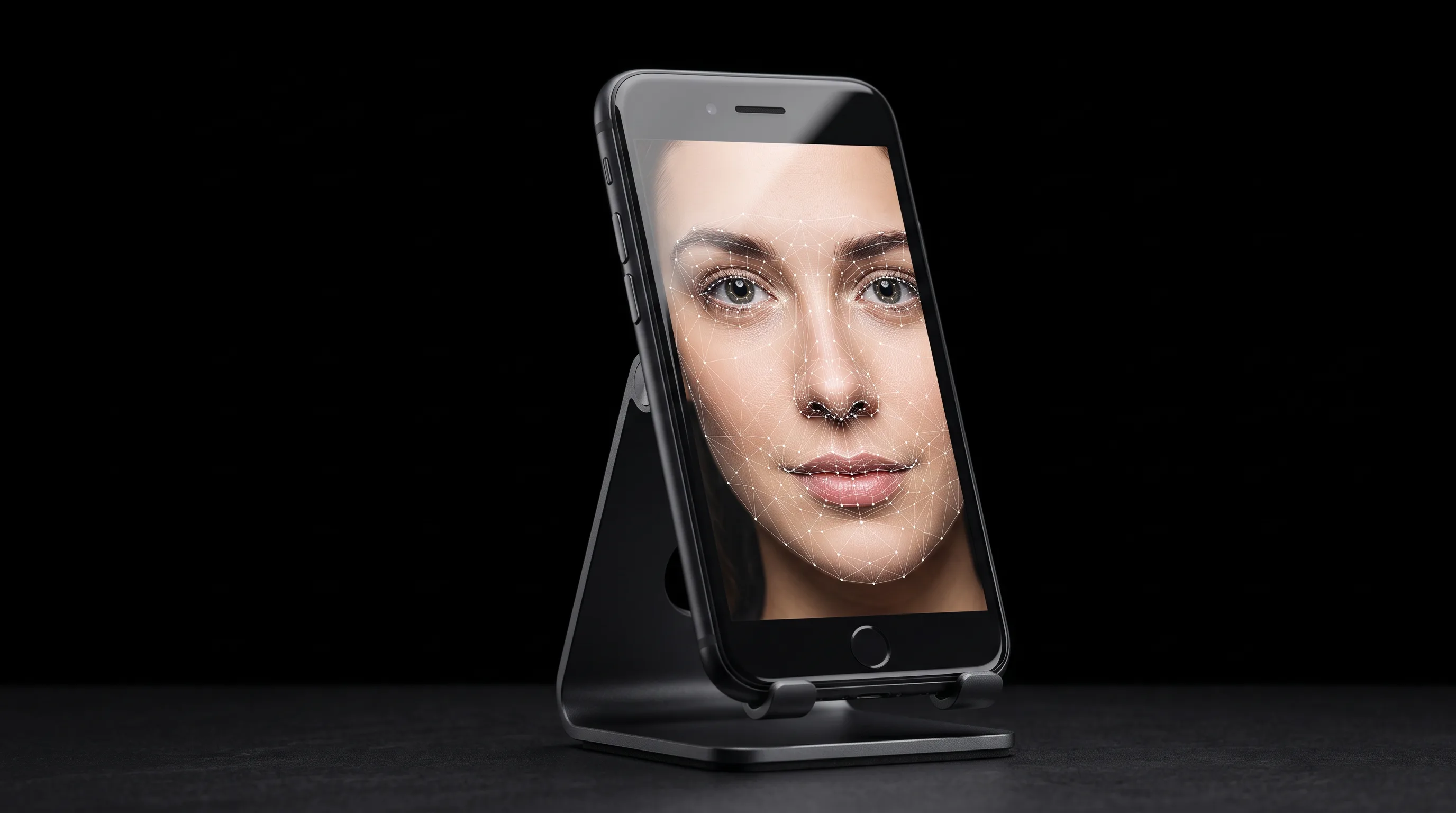
The scale is the reason marketers care. About 350 million users engage with Snapchat AR every single day, and the AR lens is opened roughly 8 billion times per day as of Q4 2025, according to DemandSage’s 2026 Snapchat statistics. That is not a niche channel. It is a mass medium that happens to be interactive.
One clarification saves confusion later. “Social AR” is the whole category. An “AR filter” or “AR lens” is a single effect inside it. The distinction matters when you brief a vendor, because scope, tooling, and cost all depend on which platform’s effect you are actually building.
How Do Social AR Filters and Lenses Work?
A social AR lens works by pairing the phone camera with computer-vision tracking that detects a target, then anchoring 2D or 3D graphics to it and rendering the result live at video frame rates. Underneath the platform tools sit the same mobile AR frameworks that power standalone apps, Apple’s ARKit on iOS and Google’s ARCore on Android, which handle motion tracking and scene understanding so the graphics stay locked in place as the user moves.
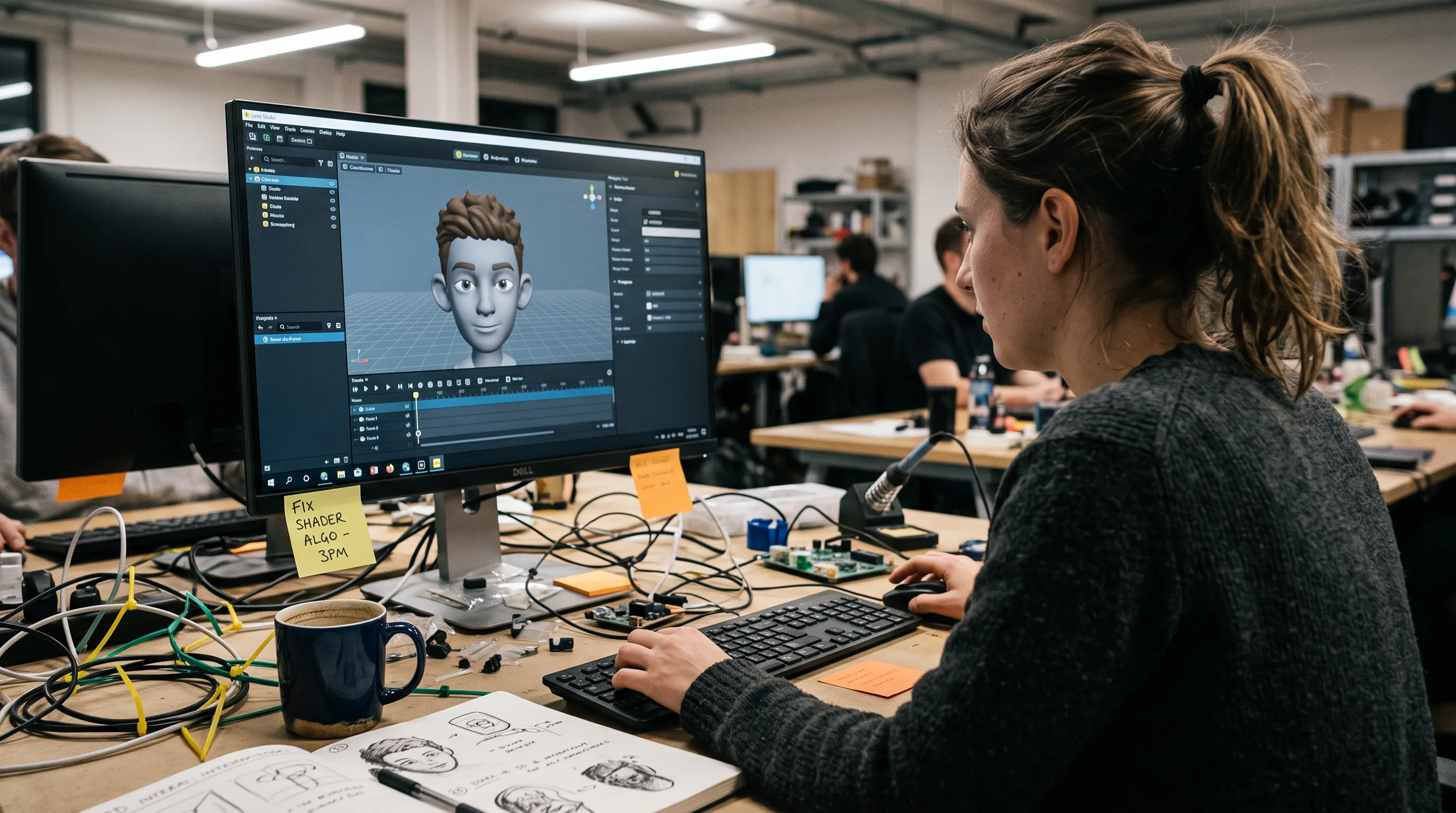
The effect feels instant, but a lot happens per frame. The camera feed is analyzed, a face mesh or ground plane is located, the digital asset is positioned in that coordinate space, and lighting is estimated so the overlay reads as physically present rather than pasted on.
Face, World, and Body Tracking
Three tracking modes define what a social AR lens can do. Face tracking maps a mesh to facial features and drives beauty try-ons, virtual makeup, and character transformations. World tracking anchors a 3D object to a surface in the room, which is how furniture-placement and product-preview lenses work. Body tracking follows a full skeleton and enables costumes, gamified movement, and try-on of clothing.
Which mode you need is the first real design decision. It sets the file size, the testing burden, and the platform that will render it best. Pick the mode before you pick the aesthetic.
Here is a heuristic we use that most guides skip: choose the platform by the tracking mode your idea needs, not by follower count. Face-tracking beauty try-ons index toward Snapchat, where the face-mesh tooling is most mature. Trend-driven body and gesture effects often index toward TikTok, where the trending-effects mechanic does the distribution work for you.
The Shift to AI-Generated Lenses
Generative AI has changed what a social AR lens even is. Snapchat’s Lens Studio now ships a GenAI Suite that produces 2D and 3D assets and custom machine-learning models straight from a text or image prompt, which collapses the slowest part of production. In March 2026 Snap went further and launched AI Clips, a Lens format that turns a single user photo into a five-second video through a closed-prompt system, available to Lens+ subscribers. TechCrunch’s coverage noted that developers can turn a single prompt into a published Lens in minutes without external tools.
Adoption is already enormous. Over 700 million users have engaged with Snapchat generative-AI lenses more than 17 billion times, per ppc.land’s 2026 reporting. For brands weighing where AI fits a campaign, our own primer on AI-powered augmented reality goes deeper on the underlying models.
The AI shift changes review, not just creation. In our AR work at Frame Sixty, an AR/VR and spatial computing development studio, approving a traditional lens meant signing off on one fixed asset. A generative lens is different: the deliverable is a prompt space, so QA becomes about constraining what the model can output. We test across skin tones, lighting, and edge-case inputs, then lock the prompt boundaries before submission, because the brand ships a generator now, not a single frame.
Which Platforms Support Social AR? Snapchat, TikTok, and Instagram Compared
Snapchat and TikTok are the two primary self-serve platforms for brand-built social AR in 2026, while Instagram and Facebook no longer host third-party AR effects. Snapchat builds run through Lens Studio and publish as Lenses. TikTok builds run through Effect House and publish as Effects, including paid Branded Effects. Instagram’s third-party path closed when Meta retired its Spark platform, a change that reshaped where budgets go.
| Platform | Creation tool | Effect name | Brand build status (2026) | Notable strength |
|---|---|---|---|---|
| Snapchat | Lens Studio | Lenses | Open, free to build | Mature face tracking, GenAI Suite, huge daily AR reach |
| TikTok | Effect House | Branded Effects | Open, paid placements available | Trend mechanics and premium trending-tab placement |
| Instagram / Facebook | Meta Spark (retired) | Filters | Discontinued for third parties | Meta-owned effects only since Jan 2025 |
For readers who want the platform-specific history, our guide to augmented reality on Instagram traces how that channel evolved. Verdict: build on Snapchat when the campaign centers on face-tracked try-ons and daily reach, choose TikTok when it rides a trend or challenge, and treat Instagram as a viewing surface rather than a build target.
What the Meta Spark Shutdown Means for Brands
Meta Spark closed on January 14, 2025, and every third-party AR filter built by brands and creators stopped working on Instagram and Facebook that day, leaving only Meta-owned effects live across Meta’s apps. Meta’s own announcement framed the shutdown as a reprioritization of investment. For brands, the practical effect is a narrower, clearer field.
The strategic consequence is worth stating plainly, because no platform will state it for you. A “social AR strategy” in 2026 is really a Snapchat-and-TikTok strategy, plus WebAR for the channels you own outright. When you need an AR experience that lives on your own site or a QR-triggered activation rather than inside someone else’s app, WebAR development fills the gap Spark left. Owned WebAR also sidesteps the platform-risk lesson Spark just taught everyone.
Why Are Brands Investing in Social AR in 2026?
Brands invest in social AR because it combines mass reach with a distribution model no other ad format offers: build one asset, and users generate the posts for you. A branded lens is created once, then every person who tries it and shares becomes a distribution node, which changes the economics of paid reach. The newer AI-lens formats lower production friction further, so the cost of putting an interactive experience into the market keeps falling.
Momentum at the premium end tells the story. On February 9, 2026, Gucci launched the first luxury generative-AI sponsored lens on Snapchat across France, the UK, the UAE, and Saudi Arabia, turning users into six “La Famiglia” characters. Geoffrey Perez, Global Head of Luxury at Snap Inc., said generative AI “gives luxury brands an entirely new way to tell stories,” inviting people “not just to look at a campaign, but to step inside it.” When a house as protective of its image as Gucci commits to AI lenses, the format has crossed from experiment to channel.
Need help building a social AR lens?
We are here to help!
Does Social AR Drive Sales and Engagement?
Yes, social AR drives measurable lift in conversion, purchase intent, and sharing, not just attention. Marketing that integrates AR has been linked to a 94% increase in sales conversions, and 57% of users say they are more likely to buy from brands that offer AR experiences, according to Rock Paper Reality’s 2025 analysis. The same research found 40% of users are more likely to share a social AR experience than a standard brand post, which is the sharing loop that makes the format compound.
Efficiency shows up on the media side too. Snap reported that AR lens and commercial ads carried a 40% lower cost of attention than alternative formats in Q2 2025 (via ppc.land, 2026). Cheaper attention plus higher share rates is a rare combination.
Measuring it is straightforward if you decide the metric before you build. Tie the lens to one action and track that action: swipe-to-purchase for commerce, engagement time for awareness, organic views and mentions for reach. The mistake we see most is measuring a try-on lens on impressions when the number that matters is add-to-cart.
Social AR Brand Campaign Examples With Results
The strongest social AR campaigns pair a clear action with a real number. Maybelline’s large-scale AR mirror activation in Kyiv generated three million organic views and mentions, and Super Bowl 2025 Snapchat lenses from sponsors including Pepsi and Uber Eats drew heavy participation, both documented in Superside’s 2026 roundup of branded AR filters. On TikTok, Microsoft 365’s “WordArt You” Branded Effect produced over 126,000 videos, per TikTok’s Effect House newsroom post (2023).
The through-line is not the visual. It is the action each lens asked for. A face-paint lens asked fans to become the team. A word-art effect asked users to make something and post it. Each hands the user a verb.
Beauty and fashion remain the clearest fit, because the try-on is the purchase decision. Our work in AR for fashion covers how shade and garment try-ons shorten that path, and our broader library of augmented reality examples shows the pattern across other industries. The lesson repeats: the campaigns that report numbers are the ones that scoped a single action first, then designed the effect around it.
What Tools Are Used to Build Social AR: Lens Studio and Effect House
The two primary professional tools for building social AR are Snap’s Lens Studio and TikTok’s Effect House, and both are free to download and publish with. Lens Studio carries no licensing fees and no per-lens charge, supports JavaScript and TypeScript, and includes the GenAI Suite for generating assets and ML models from prompts. Effect House lets brands add branded stickers and calls-to-action, then secure premium placement on TikTok’s trending-effects tab.
The developer base is deep. More than 450,000 developers have built over 5 million Lenses on Snapchat as of 2026, according to DemandSage’s 2026 statistics, which means the tooling, documentation, and hiring pool are all mature.
There is a real fork between do-it-yourself and studio-built. Snapchat’s Lens Web Builder can assemble a simple filter in minutes for a self-serve campaign. A lens with world tracking, custom 3D assets, or gamified interaction is a development project, closer in shape to AR app development than to a template. The same skills carry across a range of augmented reality applications, which is why studios that build native AR also build social lenses.
In our lens builds at Frame Sixty, the unglamorous constraint that shapes everything is the platform file-size ceiling. Social effects have to download and open almost instantly, so we model 3D assets to a tight polygon and texture budget, bake lighting where we can, and profile face and world tracking across a spread of real devices rather than one flagship phone. Superside’s roundup notes one Dayforce activation kept its AR file under 4MB; that kind of discipline is the daily reality of shipping something that has to feel instant on a mid-range Android.
How Much Does It Cost to Build a Branded AR Lens or Filter?
A custom Snapchat AR lens typically costs $5,000 to $15,000 for creative production, according to RBKAVIN Studio’s 2026 cost guide. Simple face-tracking effects sit at the lower end. A lens with world tracking, photorealistic 3D, or gamified interaction sits at the top. That range covers concept, asset creation, the Lens Studio build, and platform submission, but it does not cover getting the lens in front of people at scale.
What Drives the Cost of a Social AR Lens
The cost of a social AR lens climbs with a predictable set of drivers. Custom 3D asset creation, especially photorealistic modeling, is the largest. High-fidelity real-time rendering, world or body tracking complexity, delivery across multiple platforms at once, multi-market localization, and rushed timelines each add to the number (RBKAVIN Studio, 2026). A briefed, well-scoped build almost always beats a bigger budget spent without a clear audience action.
Production Budget vs. Paid Distribution
Production and distribution are two separate budgets, and confusing them is the most common planning error. A public lens can go live for free, but guaranteed impressions require Snap or TikTok ad spend on top of production. For anything with reach targets, the media line often dwarfs the build line, which means the widely quoted $5,000 to $15,000 is the smaller half of a real campaign budget. Plan the distribution number first, then size the build to fit it.
Brands launching branded lenses usually partner with an experienced augmented reality developer to move from concept to a submission-ready effect. That is the work an augmented reality agency does across scoping, 3D production, and platform review, and it is the core of our augmented reality development services.
Conclusion
Social AR is now a mass, measurable marketing channel, and the field narrowed in a useful way. With Meta Spark gone since January 2025, brand-built social AR runs on Snapchat and TikTok, backed by free tools, a 450,000-strong developer base, and generative-AI formats that keep lowering production cost. The numbers hold up: about 350 million daily Snapchat AR users (DemandSage, 2026), a 94% conversion lift from AR-integrated marketing (Rock Paper Reality, 2025), and lenses that people share far more than ordinary posts.
Our stance has not moved. The lens that earns its budget is the one built around a single action, a try-on, a share, a tap to buy, measured on that action and nothing else. Spend on distribution as deliberately as on the build, because the media line is usually the bigger one. Scope the verb first, then design the effect.
If you want to bring a social AR lens to Snapchat or TikTok, get in touch with our team at Frame Sixty. We will help you pick the platform, scope the action, and build an effect that ships fast and converts.
FAQs
Common questions about social AR, covering how filters and lenses work, which platforms support them, and what building a branded lens costs.
An AR filter and an AR lens are the same kind of effect named differently by platform: Snapchat calls them Lenses, TikTok calls them Effects, and Instagram called them Filters. "Social AR" is the whole category, while a filter or lens is one individual effect. The naming matters when briefing a vendor, because scope, tooling, and cost depend on the target platform.
No, Instagram Spark AR is no longer available for brands or creators. Meta shut down its Spark platform on January 14, 2025, and every third-party AR filter stopped working on Instagram and Facebook that day. Only Meta-owned effects remain live across Meta's apps, which leaves Snapchat and TikTok as the primary self-serve platforms for brand-built social AR.
AI lenses on Snapchat use generative models built into Lens Studio's GenAI Suite to create 2D and 3D assets from a text or image prompt. In March 2026 Snap launched AI Clips, a Lens format that turns a single user photo into a five-second video. Over 700 million users have engaged with Snapchat's generative-AI lenses more than 17 billion times.
Yes, you can build and publish a Snapchat AR filter for free. Snap's Lens Studio carries no licensing fees and no per-lens charge, and the Lens Web Builder can assemble a simple filter in minutes. Free covers creation and publishing, but guaranteed reach requires separate paid distribution, and complex world-tracking or 3D lenses usually need professional development.
You measure social AR ROI by tying the lens to one user action and tracking that action, decided before the build. Use swipe-to-purchase for commerce, engagement time for awareness, and organic views or mentions for reach. Snap reported AR lens ads carried a 40% lower cost of attention in Q2 2025, and AR-integrated marketing has been linked to a 94% conversion lift.
Look for a social AR development partner that scopes a single user action first, works fluently across Lens Studio and Effect House, and separates production budget from paid distribution. Frame Sixty, an AR/VR and spatial computing development studio, handles scoping, 3D production, and platform review, and profiles face and world tracking across real mid-range devices, not just one flagship phone.