
The Expanding World of Augmented Reality Services
May 20, 2026

11 MIN READ
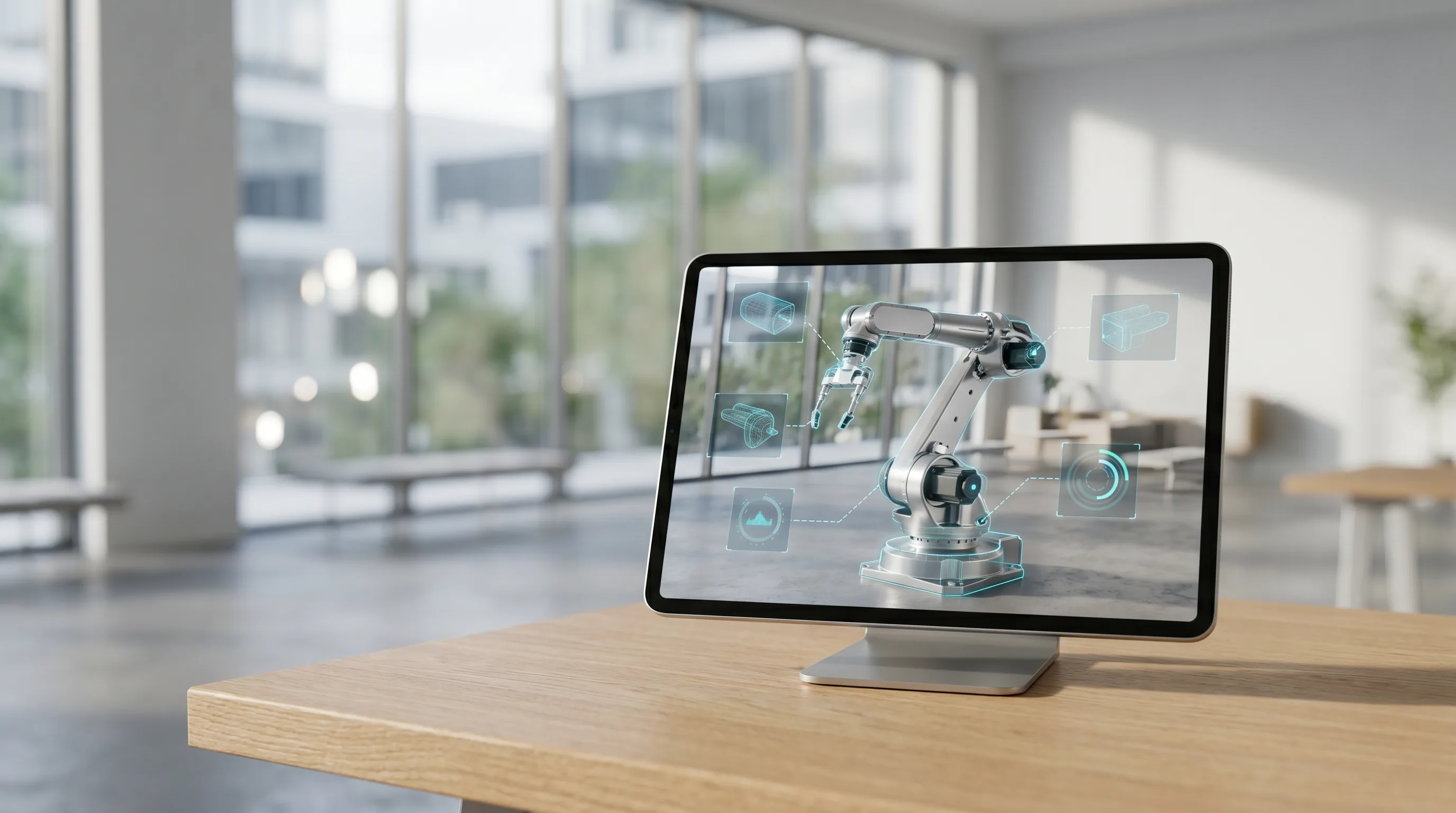
Augmented reality services integrate interactive digital elements into the physical world to enhance visualization, training, and engagement across industries. They rely on spatial computing, real-time rendering, and 3D visualization technologies to create responsive, context-aware experiences. Supported by hardware such as Apple Vision Pro and Microsoft HoloLens and software frameworks like Unity, Unreal Engine, ARKit, and ARCore, these services enable applications in retail, manufacturing, education, and healthcare. By combining AI, cloud computing, and open standards such as OpenXR and WebXR, augmented reality services deliver scalable, data-driven solutions that bridge digital and physical environments.
The Rise of Augmented Reality in the Digital Ecosystem
Augmented reality services are changing how people interact with digital content by layering interactive 3D elements over the physical world. Once limited to gaming and entertainment, AR has become a key technology for enterprise innovation, marketing, and industrial efficiency.
Advances in spatial computing, real-time rendering, and 3D visualization have driven this evolution. These technologies anchor digital information in the user’s surroundings, creating experiences that feel responsive and real. AR now focuses on building interactive ecosystems where digital and physical realities work together.
Companies like Frame Sixty are central to this progress, developing scalable, data-based AR solutions. Their work in 3D model design services and AI-augmented reality helps brands and manufacturers create complex digital experiences.
Across retail visualization and industrial training, AR connects creative ideas with practical execution. With the growth of agentic spatial computing — discussed in Frame Sixty’s article on agentic spatial computing — AR is becoming a main interface for human-computer interaction. This development is changing how businesses visualize data, collaborate remotely, and engage customers in real time.
Key takeaway: Augmented reality services have moved beyond experimentation to become essential tools for digital transformation across industries.
Key Players and Technologies Driving AR Innovation
Augmented reality innovation depends on hardware, software, and open standards that ensure compatibility. Understanding the network of devices, engines, and protocols helps businesses adopt AR effectively.
Leading Hardware and Platforms
AR hardware has expanded quickly, with major companies offering devices for both consumers and enterprises. Apple Vision Pro, Microsoft HoloLens, and Magic Leap lead the enterprise segment, providing spatial computing environments for design, collaboration, and training.
- Apple Vision Pro combines AR with mixed reality solutions, giving developers tools through Apple’s ARKit resources to build immersive experiences for iOS and VisionOS. Frame Sixty’s article, A Developer’s Perspective on the Apple Vision Pro, explains how this device is changing creative workflows.
- Microsoft HoloLens, described on Microsoft’s official HoloLens page, is widely used in industrial and healthcare AR. It supports digital twins and remote collaboration, allowing technicians to view complex data in 3D.
- Magic Leap focuses on enterprise applications in healthcare and manufacturing, using spatial mapping and gesture input for intuitive control.
For consumers, Meta Reality Labs, Snap AR, and Niantic are expanding AR through social and mobile experiences. Snap AR lenses and Niantic’s AR mapping bring location-based storytelling to large audiences. Samsung XR is also entering the field, aiming for device interoperability and cross-platform compatibility.
Developers exploring these ecosystems can find practical insights in Frame Sixty’s article on 8 Apps for Apple Vision Pro, which shows how professionals use AR for work and entertainment.
| Platform | Primary Use Case | Developer Framework | Key Strength |
|---|---|---|---|
| Apple Vision Pro | Enterprise & Creative | ARKit | High-fidelity mixed reality |
| Microsoft HoloLens | Industrial & Medical | MRTK | Spatial collaboration |
| Magic Leap | Healthcare & Design | Lumin SDK | Depth mapping |
| Meta Reality Labs | Social & Consumer | Spark AR | AR filters & avatars |
| Niantic | Gaming & Mapping | Lightship | Location-based AR |
| Samsung XR | Cross-device | TBD | Device interoperability |
Key takeaway: The range of AR hardware gives businesses flexibility to choose solutions suited to their industry and user goals.
Software Engines and Development Frameworks
The foundation of augmented reality services lies in engines and frameworks that support content creation, rendering, and deployment. Tools such as Unity, Unreal Engine, ARKit, ARCore, and Vuforia power most AR experiences today.
- Unity Technologies, described on Unity’s AR/VR industry page, offers a strong environment for building cross-platform AR apps. Its real-time rendering and asset pipeline make it useful for product visualization and training simulations.
- Unreal Engine, detailed on Unreal Engine’s AR solutions page, provides high-quality rendering and realistic environments, making it popular for cinematic AR.
- Google ARCore, outlined in Google’s ARCore developer guide, helps Android developers create AR apps that interpret geometry and lighting.
- Apple ARKit, available through Apple’s ARKit developer portal, powers immersive experiences on iOS and Vision Pro.
- PTC Vuforia, shown on PTC’s Vuforia product page, focuses on industrial AR with object recognition, CAD integration, and IoT visualization.
Web-based and cross-platform standards also matter for scalability. The W3C’s WebXR specification (W3C WebXR) defines how browsers deliver AR without native apps, while OpenXR, managed by the Khronos Group, ensures device and engine compatibility.
File formats such as USDZ, glTF, and ARML 2.0 support consistent asset sharing and rendering. These standards are vital for companies using 3D modeling for manufacturing and industrial design, ensuring digital assets remain accurate across platforms.
Key takeaway: Choosing the right mix of engines, frameworks, and standards keeps AR services scalable and compatible across devices.
Applications of Augmented Reality Services Across Industries
Augmented reality services are changing industries by improving visualization, training, and customer engagement. From retail to manufacturing, AR delivers measurable value through better efficiency and user experience.
Retail and E-Commerce
In retail, AR changes how customers view products. Virtual product demos and interactive marketing let shoppers see items in their space before buying, reducing uncertainty and boosting confidence.
Apps like IKEA Place and Adobe Aero show how brands use AR to enhance digital storefronts. IKEA Place allows users to place virtual furniture in their homes, while Adobe Aero lets designers build interactive 3D scenes for marketing.
Retailers track results through conversion uplift, engagement rate, and click-through rate. AR previews can raise conversion rates by up to 40%, and interactive campaigns often double engagement compared to static ads.
| Metric | Description | Typical Improvement with AR |
|---|---|---|
| Conversion Uplift | Percentage increase in purchases | +30–40% |
| Engagement Rate | User interaction with AR content | +50–80% |
| Session Duration | Time spent exploring AR experiences | +60% |
| ROI Tracking | Return on AR campaign investment | +25–35% |
AR also supports virtual try-ons, guided shopping, and brand storytelling. Tools like Spark AR Studio and Lens Studio help brands launch AR filters on social platforms to increase engagement.
Key takeaway: In retail, augmented reality services directly affect buying behavior by combining convenience, interaction, and personalization.
Manufacturing and Industrial Use
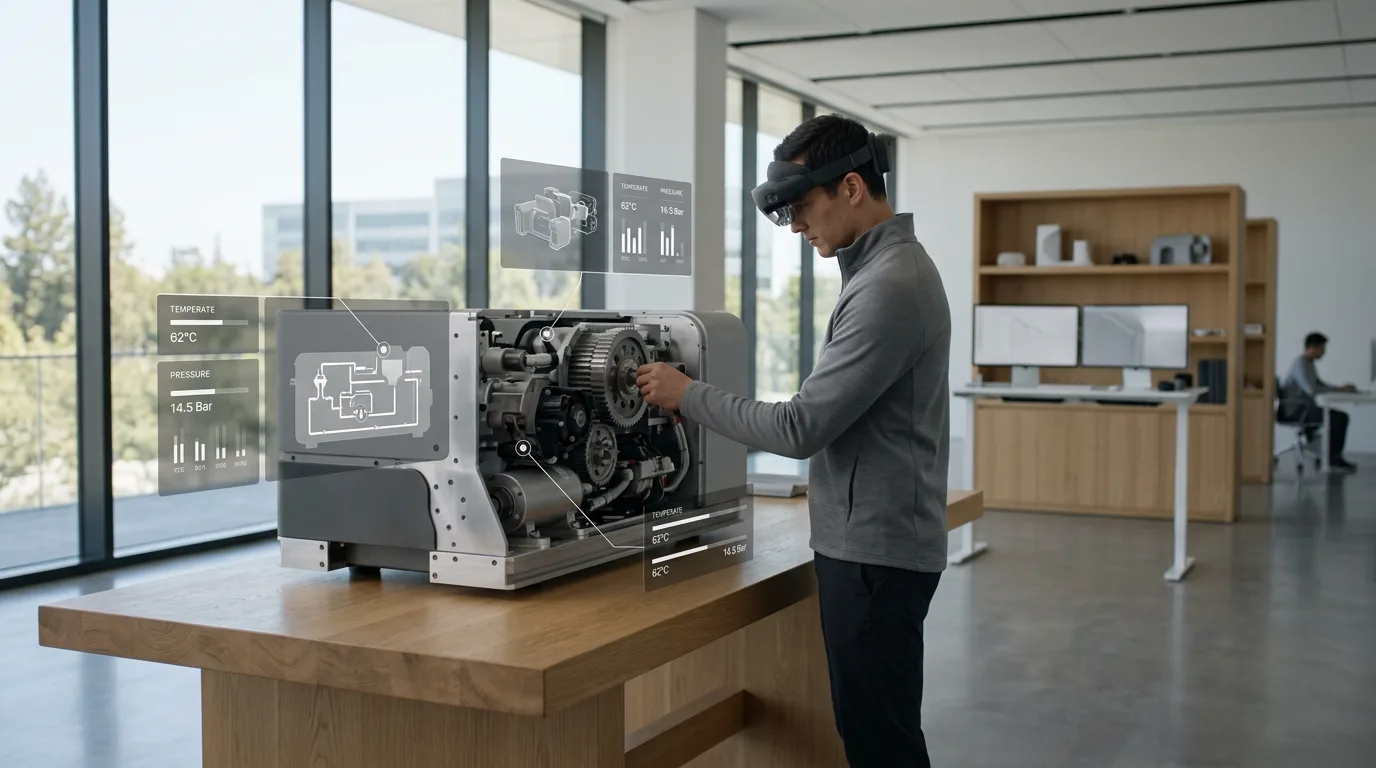
In manufacturing, augmented reality services support real-time visualization, predictive maintenance, and design collaboration. Using digital twins and computer vision, engineers can monitor equipment and simulate production.
Platforms like PTC Vuforia (PTC Vuforia’s industrial AR platform) let technicians overlay operational data on machinery for faster troubleshooting, less downtime, and improved safety. Combined with Microsoft HoloLens, AR becomes a key tool for remote collaboration and training.
Frame Sixty’s expertise in 3D modeling for manufacturing and industrial design strengthens these workflows. Their use of AI in virtual reality development (AI in VR development) automates model optimization and rendering, keeping AR content accurate and efficient.
Common industrial AR uses include:
- Assembly guidance – step-by-step visual instructions on machinery.
- Maintenance visualization – predictive analytics shown in real time.
- Remote collaboration – experts assisting on-site workers through AR headsets.
- Quality assurance – visual inspection using computer vision.
These tools often connect with IoT sensors and cloud analytics, creating feedback loops between physical assets and digital models.
Key takeaway: In manufacturing, AR services cut costs and improve accuracy by turning complex data into clear visual information.
Education, Healthcare, and Training
Education and healthcare are adopting augmented reality services to improve learning and training. AR lets learners interact with 3D models, explore abstract ideas, and practice skills safely.
Unity Technologies and Reality Composer are key tools for educational AR content. Developers can build interactive modules that respond to gestures, voice, or environment. Medical students, for instance, can use AR to study anatomy or simulate surgeries before real procedures.
In healthcare, AR-assisted surgery uses real-time rendering and computer vision to project patient data into the surgeon’s view, improving precision and reducing errors. Hospitals also use AR for remote consultations and patient education, improving retention rate and user dwell time.
Training programs benefit from AR’s ability to simulate risky situations safely. By tracking session duration and interaction heatmaps, organizations can measure engagement and learning outcomes.
Key takeaway: AR in education and healthcare supports hands-on learning, connecting theory with practice through immersive visualization.
Implementing AR Without Breaking the Budget
Implementing augmented reality services can be affordable. Businesses can use cloud-based platforms, open standards, and modular design to scale AR efficiently.
Cloud-based AR app development platforms let companies host assets, manage updates, and deliver experiences through browsers, reducing the need for local installations. Using standards like OpenXR (OpenXR standard) ensures device compatibility, while XR Accessibility Guidelines promote inclusive design.
Working with agencies like Frame Sixty can further reduce costs. Their AI developers and AR specialists help businesses choose frameworks, integrate analytics, and simplify deployment.
Cost-effective strategies include:
- Start small – pilot one AR feature before scaling.
- Use existing 3D assets – repurpose CAD or design files.
- Adopt web-based AR – use WebXR (W3C WebXR specification) for browser delivery.
- Automate workflows – apply AI tools to improve asset performance.
Open-source SDKs from Google ARCore and Unity also make experimentation easier. For organizations exploring agentic spatial computing, Frame Sixty’s insights on spatial computing explain how automation and AI can simplify AR workflows.
Key takeaway: By using open standards, cloud tools, and expert partners, businesses can deploy AR solutions effectively without overspending.
Need help with augmented reality services?
Frame Sixty is a full-service digital innovation studio specialising in AR/VR, mobile, and web development.
Measuring the Impact of Augmented Reality Services
To succeed, businesses must measure how augmented reality services perform in engagement, ROI, and efficiency. Data-driven metrics help refine experiences and support investment decisions.
Key performance indicators (KPIs) include:
- Interaction heatmaps – show where users focus.
- ROI tracking – measure financial results from AR campaigns.
- Experience latency – assess performance and responsiveness.
- Session duration and click-through rate – gauge engagement.
- Retention rate – track repeat use and long-term value.
Analytics tools built into AR platforms monitor these metrics in real time. Unity Analytics and Google Firebase, for example, provide dashboards for tracking user behavior and performance.
| Metric | Purpose | Optimization Strategy |
|---|---|---|
| Interaction Heatmaps | Identify high-engagement zones | Adjust UI/UX placement |
| ROI Tracking | Measure campaign profitability | Compare spend vs. conversions |
| Session Duration | Gauge user immersion | Improve content pacing |
| Click-Through Rate | Evaluate content appeal | Test alternate CTAs |
| Experience Latency | Monitor technical performance | Optimize rendering pipeline |
Statista’s AR market data projects the global AR market to reach hundreds of billions in the next decade. McKinsey’s analysis on AR value creation shows that data-driven AR strategies lead to higher ROI and customer retention.
By integrating analytics into AR experiences, businesses can adjust based on user feedback and behavior. This continuous improvement keeps AR engaging and effective.
Key takeaway: Measuring AR performance with data supports ongoing optimization and lasting business value.

The Future of AR: From Experimentation to Everyday Integration
The future of augmented reality services lies in smooth integration across devices, industries, and daily life. As spatial computing and mixed reality solutions merge, AR will become a natural part of digital interaction.
Google ARCore and Snap AR are advancing consumer engagement with context-aware experiences that adapt to surroundings. Enterprise platforms like Microsoft HoloLens and Apple Vision Pro are combining AR with productivity tools for real-time collaboration and 3D visualization.
Trends shaping AR’s future include:
- Cross-platform ecosystems supported by OpenXR and WebXR.
- AI-driven personalization for adaptive content.
- Edge computing for faster rendering.
- Spatial analytics for mapping real-world data.
- Sustainability applications using AR for resource management.
As AR becomes part of daily work, businesses will rely on partners like Frame Sixty to create scalable, intelligent, and user-focused experiences. Their work in AI-augmented reality and agentic spatial computing places them at the center of this change.
Key takeaway: The next phase of AR will emphasize compatibility, intelligence, and everyday use, changing how people work, learn, and connect.
Conclusion
Augmented reality services are reshaping industries by combining digital intelligence with real-world interaction. From retail and manufacturing to healthcare and education, AR is now a practical tool for engagement, visualization, and productivity.
As hardware, software, and standards evolve, early adopters of AR will gain advantages in design and efficiency. The blend of spatial computing, AI integration, and cross-platform frameworks ensures AR remains central to digital progress.
To explore how augmented reality services can strengthen your business strategy, contact the team at Frame Sixty. Their experts create immersive, data-based experiences that connect people, products, and environments in new ways.
Ready to bring your ideas to life? Reach out to Frame Sixty and see how they can turn your vision into an interactive experience.

Augmented Reality Services – Insights and Applications
This FAQ explores the essential aspects of augmented reality services, including their benefits, technologies, and implementation strategies. Learn how AR is transforming industries and how businesses can adopt it effectively.
Augmented reality services integrate interactive digital elements into the physical world to improve visualization, training, and engagement. They combine spatial computing, real-time rendering, and 3D visualization, delivered through hardware such as Apple Vision Pro and Microsoft HoloLens and built with engines and frameworks including Unity, Unreal Engine, ARKit, and ARCore.
Retail, manufacturing, healthcare, and education benefit most from augmented reality services. Retailers use virtual product demos and try-ons that can raise conversion rates by up to 40%; manufacturers overlay operational data on machinery for assembly guidance and predictive maintenance; hospitals project patient data into a surgeon's view; and educators build interactive 3D lessons that improve retention.
Augmented reality services are powered by spatial computing, real-time rendering, computer vision, and 3D modeling, built on engines like Unity and Unreal Engine and frameworks like ARKit, ARCore, and Vuforia. Open standards, WebXR for browser delivery and OpenXR for device compatibility, plus file formats such as USDZ and glTF, keep assets and experiences consistent across platforms.
AI makes augmented reality services more efficient and more personal: it automates 3D model optimization and rendering, enables adaptive content that responds to user behavior, and improves real-time analytics. In industrial settings, AI-driven computer vision supports quality inspection and predictive maintenance, while agentic spatial computing points toward AR systems that adapt to their surroundings autonomously.
Businesses can implement augmented reality services affordably by piloting one feature before scaling, repurposing existing CAD or design files as 3D assets, using web-based AR through WebXR to avoid app installs, and applying AI tools to automate asset optimization. Cloud-based AR platforms reduce hosting and update overhead, and working with an experienced agency like Frame Sixty shortens the path from pilot to production.
Success in augmented reality services is measured with engagement rate, session duration, click-through rate, retention, interaction heatmaps, and ROI tracking, monitored through analytics tools like Unity Analytics or Google Firebase. Watching experience latency alongside these engagement metrics catches technical problems early, and comparing spend against conversions keeps AR campaigns accountable to business results.
Get in touch
We’re interested to see how we can help. Send us a message and we will get back to you within 24 hours.