
What Is VR in Retail? Use Cases, Costs, and ROI Explained
Sep 23, 2026
12 MIN READ
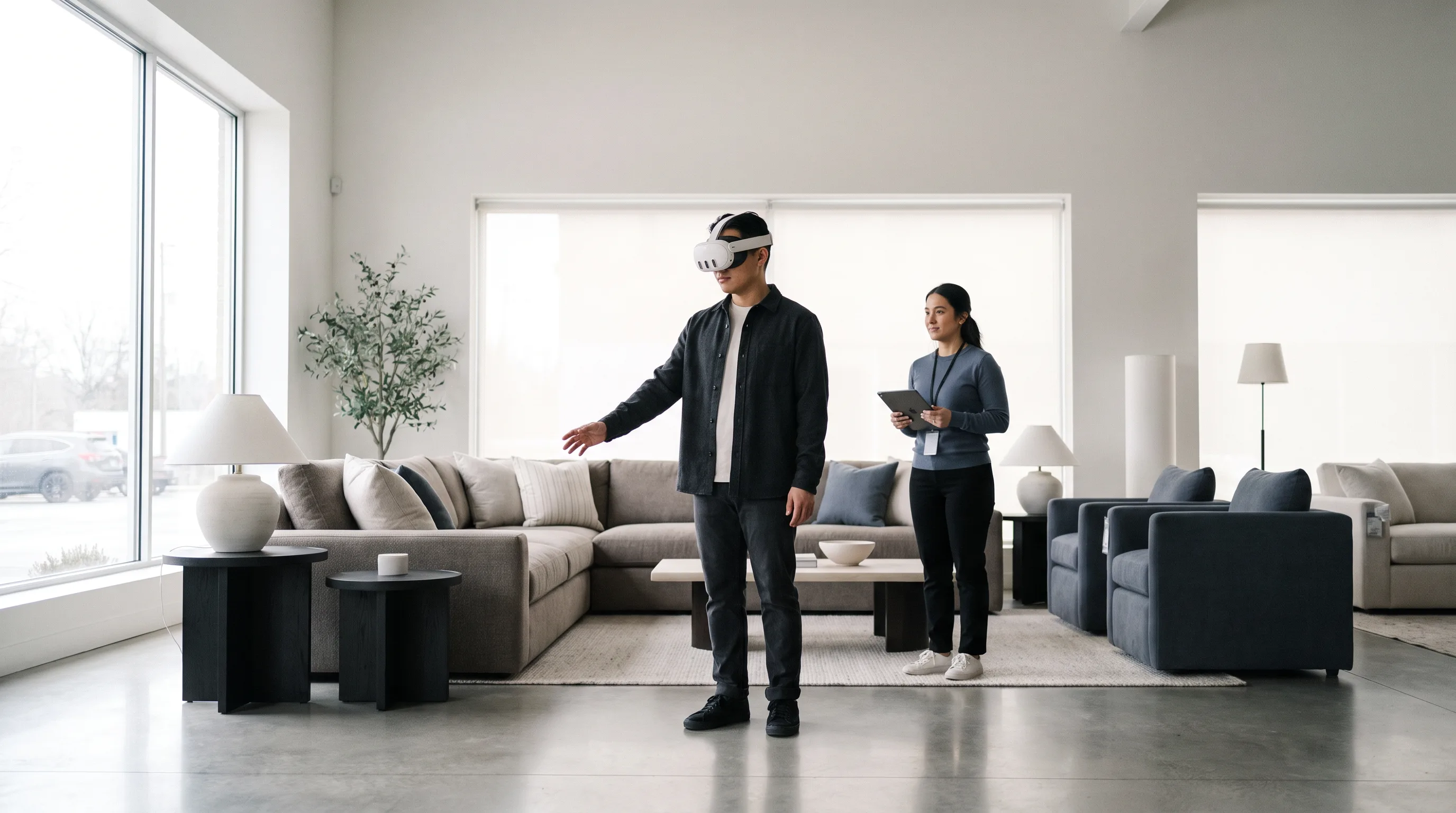
VR in retail is the use of head-mounted displays or browser-based 3D environments to let shoppers explore products, let staff rehearse procedures, and let merchandisers design store layouts without a physical space. Retailers deploy it four ways: virtual showrooms, in-store and pop-up brand activations, employee training simulations, and store design and category testing.
The global VR in retail market was valued at $3.89 billion in 2025 and is projected to reach $28.57 billion by 2034, growing at a 24.8% CAGR, according to Straits Research’s 2026 market report. The numbers are real. So is the failure rate.
Here is the position most vendors avoid leading with: retail VR rarely fails on technology. It fails on throughput and measurement. A headset that takes two minutes to sanitize between shoppers cannot justify its floor space, and a pilot with no tracked metric cannot survive its first budget review. The retailers who win treat VR as an operational investment tied to a number, not a marketing demo.
Key Takeaways
- The global VR in retail market reached $3.89 billion in 2025 and is forecast to hit $28.57 billion by 2034 (Straits Research, 2026).
- Products with 3D/AR content convert 94% higher on average, and Macy’s VR/AR furniture pilot cut returns 25% while lifting basket size 60% (BrandXR, 2025).
- Walmart has trained more than 1 million associates in VR since 2017, and PwC found VR learners finish 4 times faster than classroom peers.
- Custom VR retail builds run from under $15,000 for a templated WebVR showroom to $200,000+ for bespoke enterprise experiences (VR Vision Group, 2026).
- Meta Quest 3 fits in-store and training, Apple Vision Pro M5 fits premium showrooms, and WebXR fits e-commerce reach.
What Are the Main Use Cases for VR in Retail?
VR in retail has four main use cases: virtual showrooms that let customers explore products in 3D, in-store and pop-up brand activations, employee training simulations, and store design and category management. Each carries a different budget, platform requirement, and payback profile. Customer-facing showrooms chase conversion. Training chases retention and speed. Store-design VR settles merchandising questions before a single fixture is built.

Virtual Showrooms
A virtual showroom is an interactive, branded 3D space where customers explore, configure, and buy products using a headset or a browser, with no physical sample or store visit required, as Shopify’s 2025 virtual showroom guide defines it. Two formats dominate: full-headset VR for immersion, and browser-based WebXR for reach.
Full-headset VR suits high-consideration purchases. Furniture, kitchens, cars, and home goods all benefit when a shopper can walk around a life-size model and change its finish in seconds. WebXR trades some immersion for reach. It runs in a mobile browser with no app download, and Atlyx reports web-based VR drives 300% higher engagement and session duration than app-based VR because it removes the install barrier.
The commercial case is documented. BrandXR’s 2025 retail research found Macy’s VR/AR furniture visualization pilot produced a 60% larger average basket size and 25% fewer returns. For teams choosing a format, our breakdown of virtual showroom types walks through when each one pays off.
In-Store and Pop-Up Brand Activations
VR brand activations are time-limited, hardware-in-store experiences that let shoppers step inside a branded virtual world: product launches, seasonal campaigns, and virtual flagship events. They are a marketing investment, measured in dwell time and earned attention rather than direct conversion.
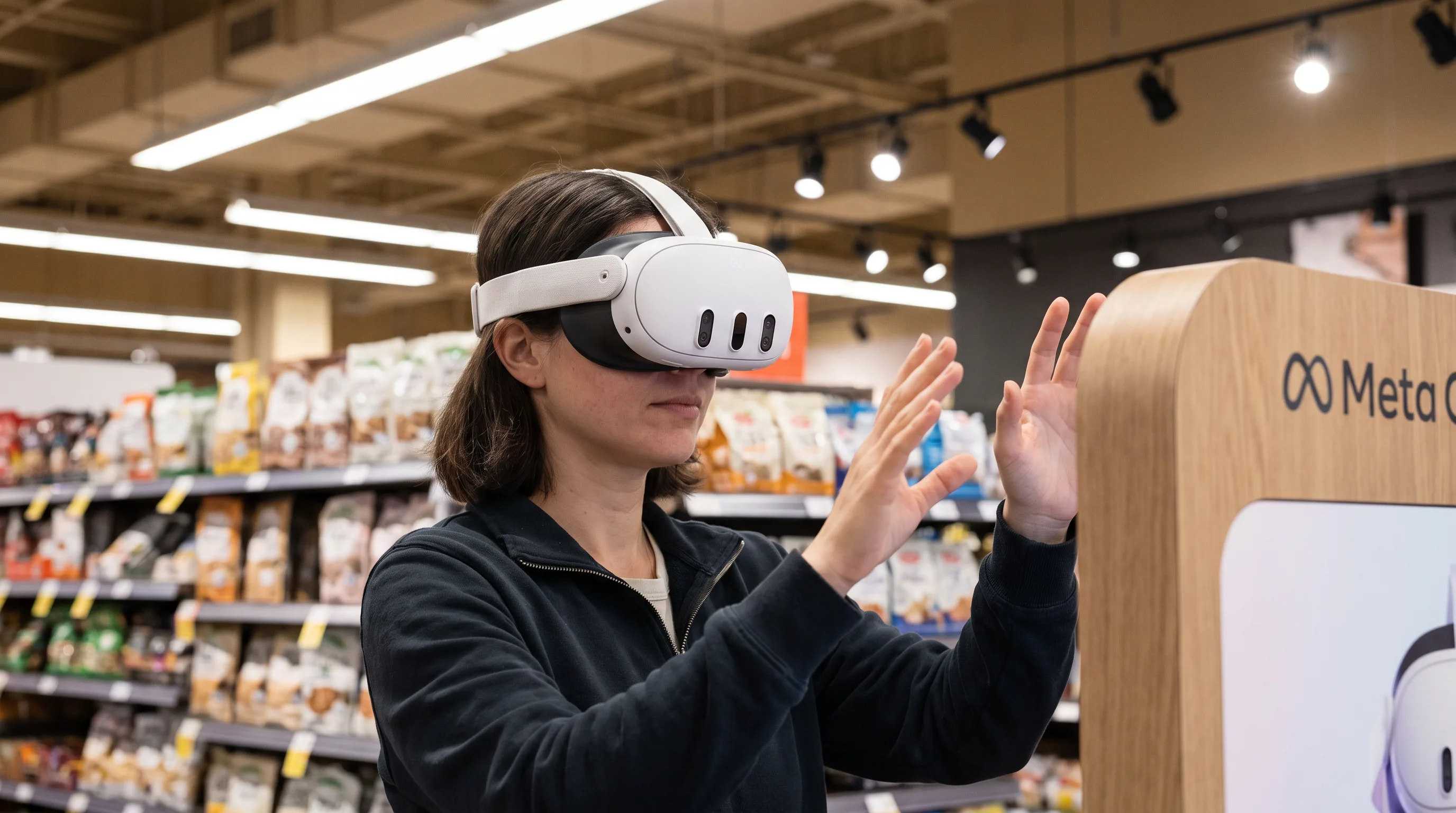
Adoption is no longer experimental. In June 2026, Meta opened Meta Lab experience centers in more than 50 Best Buy stores across the US and Canada, giving shoppers a fixed place to try Quest headsets before buying. MUJI has run in-store VR that immerses shoppers in a calm Finnish landscape while they test a bed.
The constraint that kills these deployments is throughput, not content quality. If a session runs eight minutes and the headset needs two minutes of cleaning, one unit serves six shoppers an hour at best. Plan the queue, the hygiene routine, and the content length together, or the activation looks busy and converts no one. For brands weighing VR against a lighter option, our AR in retail guide covers the phone-based alternative.
Store Design and Category Management
Store design and category management is VR’s back-of-house use case: retailers and CPG brands build photorealistic virtual stores to test shelf placement, layouts, signage, and promotions before spending on physical fixtures. It carries no customer-facing hardware cost, which is why it often returns value fastest.
The mechanics are direct. Merchandisers walk a virtual aisle, rearrange a planogram, and use built-in eye-tracking to see where attention lands. Kellogg reported an 18% sales increase during VR shelf-placement testing run with Accenture and Qualcomm. Samsung Business Insights reports that Mondelez tested Oreo packaging and merchandising displays in virtual stores using Samsung Galaxy XR with eye-tracking, before committing to physical production.
This is the quiet winner. Because virtual category testing needs one workstation and no shopper-facing fleet, it sidesteps the throughput problem entirely and pays back on a single avoided reset of a physical planogram.
What Is the ROI of VR in Retail?
The ROI of VR in retail shows up in three metrics: conversion rate, return rate, and average order value. Immersive product visualization lifts all three, with documented results from major retailers. Most first deployments recover their cost within the first operating year, driven mainly by fewer returns and higher conversion.
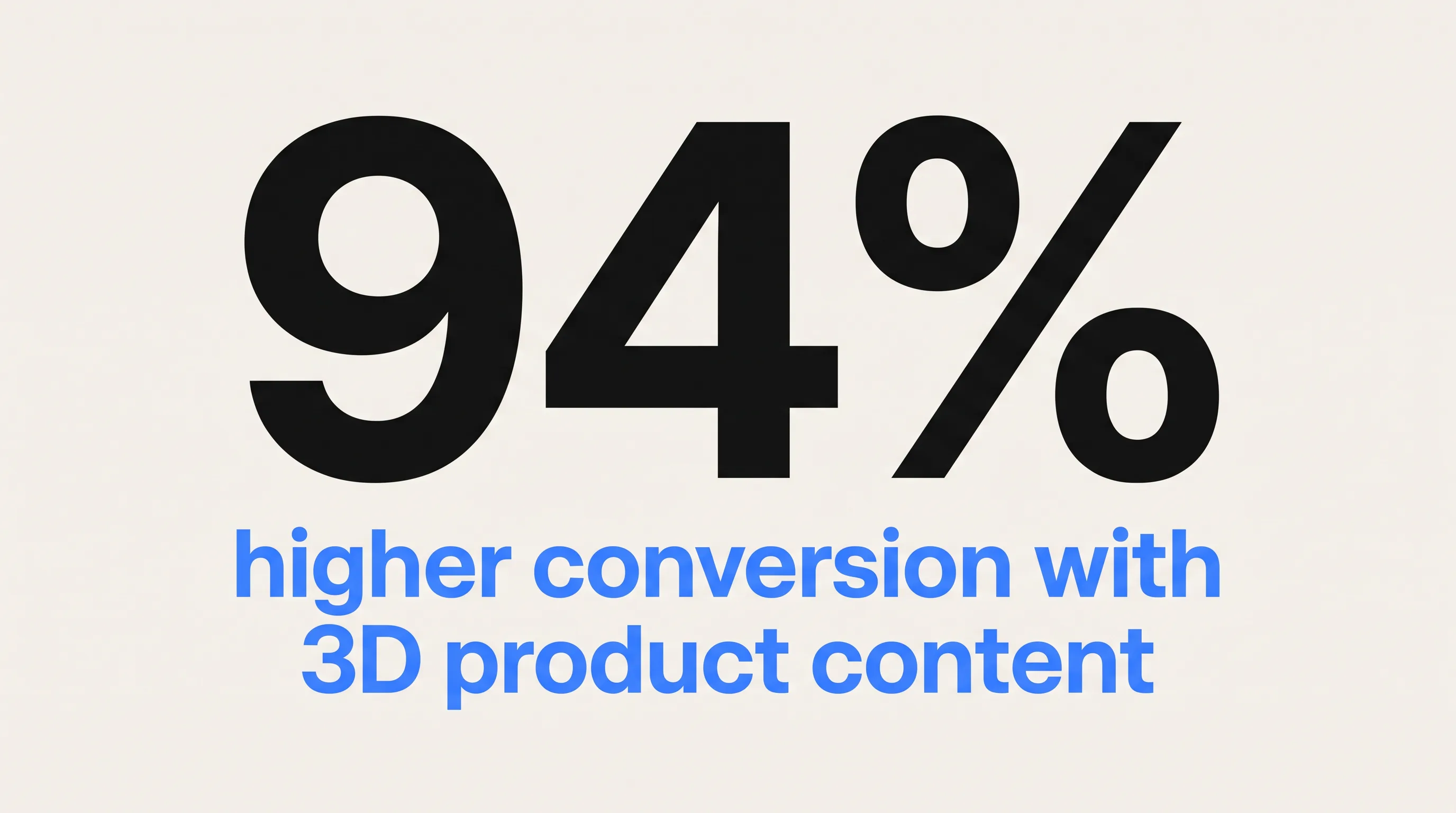
Conversion leads the case. Products with 3D/AR content convert 94% higher on average, per Shopify data compiled in BrandXR’s 2025 report, and AR shoppers are far less likely to send an item back. Returns follow. Macy’s pilot cut them 25% (BrandXR, 2025), and VR shopping software can reduce return rates by 60–80% according to ScienceSoft’s 2026 analysis. Basket size moves too. Macy’s saw baskets grow 60%, and Straits Research found customers are three times more likely to buy when they can customize a product virtually.
Intent data backs the spend. PwC research found 32% of consumers have used VR to test or purchase products, and 19% to buy luxury goods. A retail demo of AR and AI-powered try-on shows how short the path from browse to buy becomes when the product responds in real time.
The number that decides whether VR survives budget review is none of these. It is attribution. A showroom that lifts conversion but shares a checkout with the standard site earns no credit unless the retailer tags the session and tracks it through to the order. The retailers who win instrument that metric before a line of experience code is written. For the try-on economics specifically, our analysis of AR try-on and spatial commerce ROI breaks down the conversion and return math.
How Do Retailers Use VR to Train Store Staff?
Retailers use VR to train store staff in two areas: high-stakes procedural drills such as crowd management and crisis response, and repeatable soft-skills practice such as difficult customer interactions. VR training works at scale because one built module serves thousands of associates, and the measured outcomes beat classroom instruction on speed and retention.
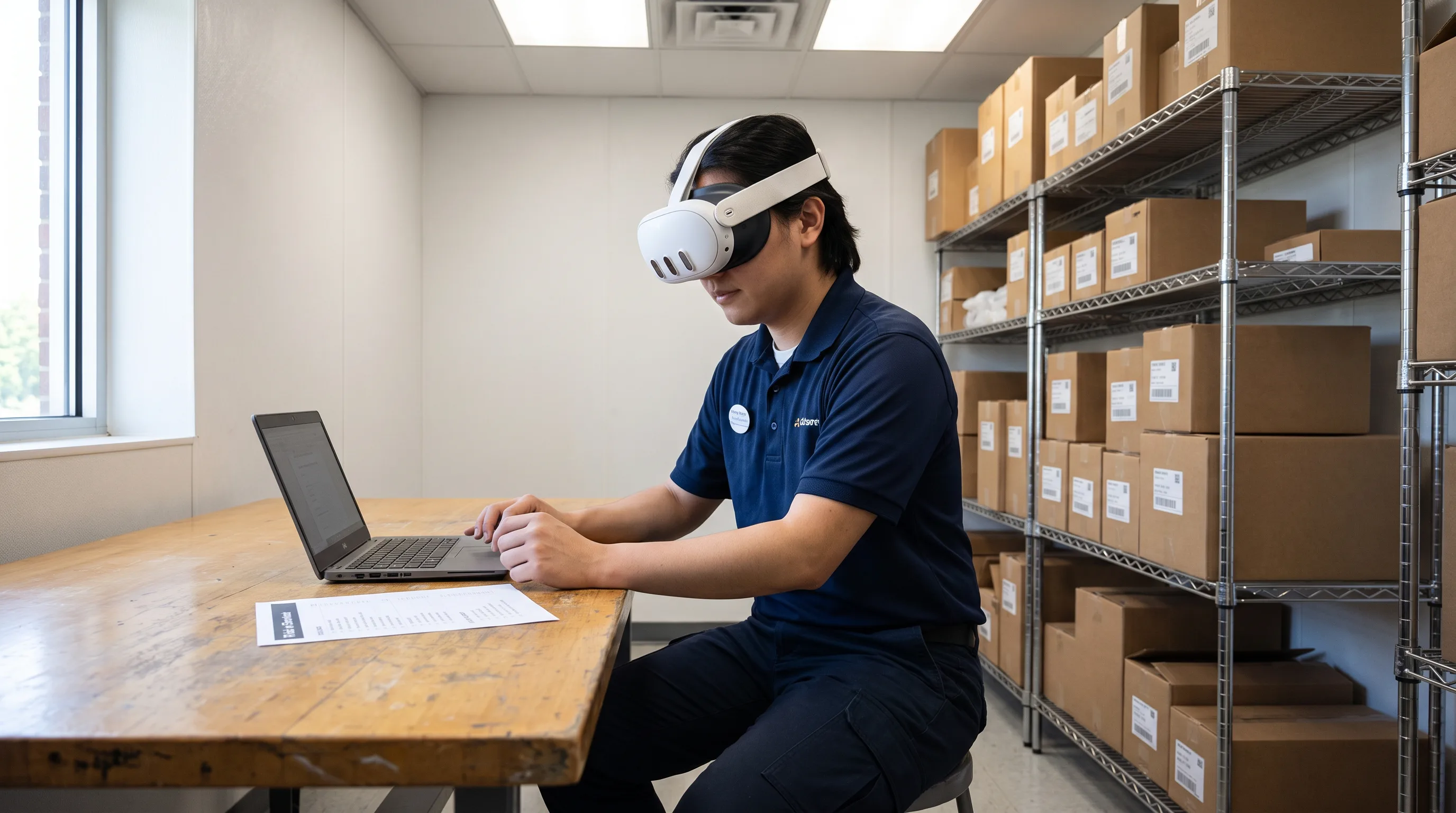
When Frame Sixty, an AR/VR and spatial computing development studio, scopes a retail training build, the first design question is throughput per headset, not visual polish. A crowd-control drill that runs four minutes can cycle a full shift through a handful of Quest units before opening. A thirty-minute cinematic cannot. The asset pipeline drives the timeline more than the environment art, because every interactive object needs collision, state, and a way to record whether the trainee did the right thing.
Training Outcomes: What the Research Shows
VR training outcomes are measurable and consistent across large retail programs. Employees learn faster, retain more, and report higher satisfaction than classroom cohorts. The evidence comes from named studies and one of the largest corporate VR rollouts on record.
Samsung Business Insights, citing a PwC study, reports VR-trained employees complete programs four times faster than classroom learners, and an Accenture study in the same analysis found a 30% rise in retention and job satisfaction among VR-trained new hires. Walmart has trained more than 1 million associates in VR since 2017, using it to rehearse Black Friday surges and new-system rollouts.
The economics favor scale in a way classroom training never can. A $150,000 module amortized across 25,000 annual trainees costs $6 a head, and every following year the marginal cost approaches zero. A classroom program re-incurs trainer time, travel, and floor coverage at every cohort. Roundtable Learning’s 2026 cost breakdown puts entry-level VR training modules at $50,000, rising past $200,000 for multi-environment simulations. Readers new to the format can start with our primer on immersive technology.
Need help with VR in retail?
We are here to help!
How Much Does VR in Retail Cost to Build?
VR in retail costs from under $15,000 for a templated WebVR showroom to $400,000 or more for a multiplayer, AI-driven experience. Most first custom retail projects land between $130,000 and $200,000 all-in. Scope drives the number, not hardware: 3D model count, interactivity depth, analytics integration, and how often the content must be refreshed.
| Project Type | Budget Range | Typical Use Case |
|---|---|---|
| Templated WebVR showroom | Under $15,000 | SMB product visualization |
| Bespoke WebVR or app showroom | $50,000–$150,000 | E-commerce or brand flagship |
| CG interactive experience | $100,000–$200,000 | In-store activation, product configurator |
| Employee training (single module) | $50,000–$200,000 | Staff onboarding, compliance |
| Multiplayer or AI-driven experience | $200,000–$400,000+ | Enterprise training, virtual events |
Atlyx puts templated WebVR showrooms under $15,000 and bespoke enterprise builds at $50,000 to $150,000+, while VR Vision Group’s 2026 pricing tracks CG interactive scenarios at $100,000–$200,000 and multiplayer or AI-driven builds at $200,000–$400,000+. ScienceSoft notes custom VR shopping software often starts near $150,000, with cost driven by 3D model volume, user roles, and product-data integration.
Ongoing cost is the line most budgets miss. Content updates, headset fleet management, and learning-system integration typically add 20% to 30% of the initial build every year. Our VR development cost guide breaks the ranges down by project type.
How Long Does a VR Retail Project Take?
A first VR retail project takes 18 to 26 weeks from kickoff to launch. The work splits into three phases: discovery and design, build, then deployment and training. Follow-on modules built on the same framework move far faster, because the reusable systems already exist.
- Discovery and design: 4 to 6 weeks. Brief, 3D asset audit, UX wireframing, and hardware selection, typically $20,000 to $45,000.
- Build: 12 to 20 weeks. Development, QA, and user testing, usually $80,000 to $180,000 of the total.
- Deployment and training: 2 to 4 weeks. Rollout, train-the-trainer, and analytics setup, around $10,000 to $25,000.
As Lorne Fade, immersive technology lead at VR Vision Group, put it in 2026, “Most enterprise training projects land between $100K–$200K for the first module, with material savings on follow-on modules built atop the same framework.”
That reuse is the part retailers underestimate. Once the interaction systems, analytics hooks, and asset pipeline exist, a second training scenario or a seasonal showroom refresh commonly runs 40% to 60% below the first build. Budget the first project as infrastructure, not a one-off. To scope one, see how to choose a virtual reality development service.
Which VR Hardware and Platforms Work Best for Retail?
The best VR hardware for retail depends on the use case, and there is no single winner. Meta Quest 3 fits in-store deployments and staff training, Apple Vision Pro M5 fits premium showrooms, and WebXR fits e-commerce reach. Match the device to the job, the budget, and how many people must use it at once.
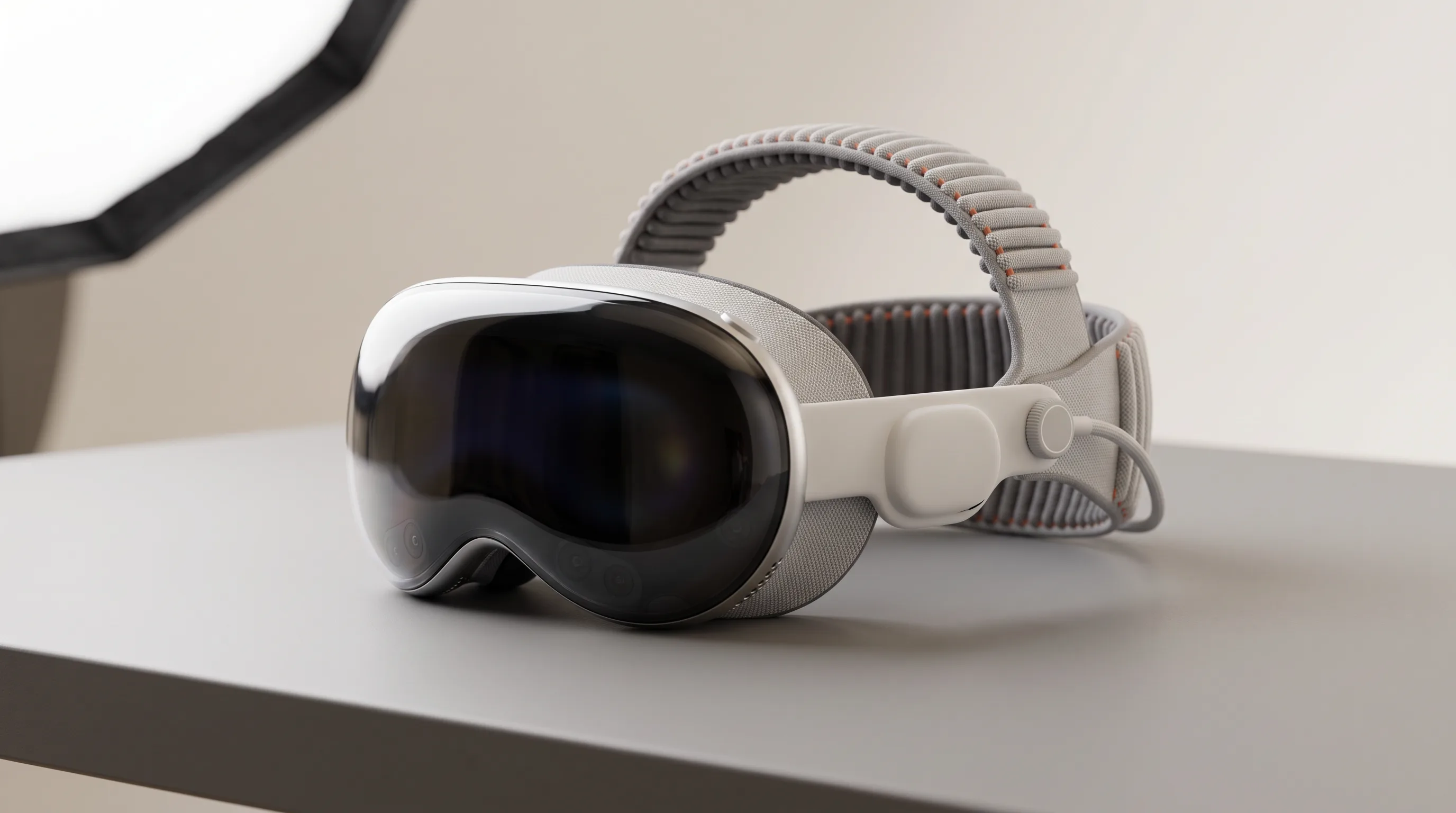
Comparing Meta Quest 3, Apple Vision Pro, and WebXR for Retail
Meta Quest 3, Apple Vision Pro M5, and WebXR solve different retail problems. Quest 3 wins on price and fleet scale, Vision Pro wins on fidelity for high-consideration buys, and WebXR wins on reach because it needs no hardware at all.
| Platform | Best for | Per-unit cost | Deployment note |
|---|---|---|---|
| Meta Quest 3 / 3S | In-store, training, activations | Under $500 | Standalone, no PC tether, easy multi-headset fleets |
| Apple Vision Pro M5 | Premium showrooms, luxury, automotive | $3,500+ | Highest fidelity, passthrough mixed reality |
| WebXR (browser) | E-commerce product visualization | No hardware | Runs on any smartphone, 3D visualization only |
Meta Quest 3 and Quest 3S run standalone, cost under $500, and carry the content ecosystem behind Meta’s Best Buy rollout, which makes them the default for any deployment needing more than a couple of headsets. Apple Vision Pro M5 delivers the sharpest passthrough and visual fidelity, earning its place in luxury, automotive, and real-estate showrooms where one shopper at a time is fine. WebXR skips hardware and reaches anyone with a phone, though it tops out at 3D product visualization rather than full-environment VR. Nexgits’ 2025 overview points to mixed-reality shopping on devices like Apple Vision Pro and AI-driven personalization as the next step.
Verdict: choose Meta Quest 3 for in-store and training at scale, Apple Vision Pro M5 for premium spatial commerce, and WebXR when e-commerce reach matters more than immersion. For help mapping platform to use case, talk to an XR development agency.
How Do You Choose a VR Development Partner for Retail?
Choosing a VR development partner for retail comes down to three tests: proven retail domain experience, breadth across platforms, and a habit of measuring business outcomes. A studio that passes all three will scope your first project as infrastructure and tie it to a tracked number. One that leads with polygon counts will not.
At Frame Sixty, retail conversations start with the metric, not the headset. Before scoping a virtual showroom or a training module, the team defines what will be tracked: session-to-order conversion, return rate on visualized SKUs, or time-to-competency for trained associates. That instrumentation shapes every later decision, from which engine to use to how the analytics events are logged, and it is the difference between a build that impresses a boardroom once and a system that survives its second budget cycle.
- Retail domain experience. Ask for shipped retail VR work with tracked metrics, not gaming reels or screenshots.
- Platform breadth. A studio locked to one engine or headset limits you as hardware shifts, so look for fluency across Unity, Unreal Engine, WebXR, Meta Quest 3, and Apple Vision Pro M5.
- Business-outcome focus. The studio should speak in conversion, returns, and training throughput. If the first call is only about technology, keep looking.
Frame Sixty builds custom retail VR across all four use cases, from virtual showrooms to training simulations to brand activations, for teams that need measurable results rather than a demo. Two useful starting points: how to pick an augmented reality studio, and where spatial AI is taking adaptive, personalized retail next.
Conclusion
VR in retail earns its budget when it is treated as an operational investment, not a novelty. The market backs the shift, from $3.89 billion in 2025 toward a projected $28.57 billion by 2034, according to Straits Research’s 2026 market report, yet the retailers who profit are the ones tracking a number: conversion on a showroom, returns on a visualized SKU, time-to-competency in a training module.
Return to the position from the top. Retail VR rarely fails on technology. It fails on throughput and measurement, the two things a good partner settles before the first asset is modeled. Scope the first project as infrastructure, instrument the metric early, and reuse the framework for everything after.
If you want to explore VR in retail for your brand, whether that means a virtual showroom, a staff-training program, or a store-design tool, get in touch with the team at Frame Sixty. You can also see the wider range of our augmented reality services and our AR in retail work for adjacent immersive options.
FAQs
Common questions about VR in retail, covering use cases, costs, documented brand results, and how to build a custom experience. Answers draw on named retailer results and 2026 cost benchmarks.
A virtual showroom is an interactive, branded 3D space where customers explore, configure, and buy products using a headset or browser, with no physical sample or store visit required. Two formats dominate: full-headset VR for high-consideration purchases like furniture and cars, and browser-based WebXR, which drives 300% higher engagement than app-based VR because it needs no download.
Several major brands report measurable VR retail results. Macy's VR/AR furniture pilot produced a 60% larger average basket size and 25% fewer returns (BrandXR, 2025). Walmart has trained more than 1 million associates in VR since 2017, and Kellogg reported an 18% sales increase during VR shelf-placement testing run with Accenture and Qualcomm.
VR in retail immerses a shopper in a fully virtual environment through a headset, while AR overlays digital content on the real world through a phone or glasses. VR suits showrooms, training, and store-design testing where immersion matters; AR suits lightweight, phone-based try-on and in-store product visualization with wider reach and no hardware to deploy.
Small and mid-size retailers can afford VR through templated formats. A templated WebVR showroom starts under $15,000 and runs in any mobile browser with no headset fleet to buy (Atlyx, 2026). Bespoke WebVR or app showrooms range from $50,000 to $150,000, so smaller retailers typically start with a templated showroom and expand once it proves conversion.
VR in retail is worth the investment when tied to a tracked metric. Products with 3D/AR content convert 94% higher on average (BrandXR, 2025), and most first deployments recover their cost within the first operating year through fewer returns and higher conversion. Projects fail on throughput and measurement, not technology, so attribution must be instrumented before launch.
A VR development partner for retail should pass three tests: proven retail domain experience with tracked metrics, platform breadth across Unity, Unreal Engine, WebXR, Meta Quest 3, and Apple Vision Pro M5, and a focus on business outcomes. Frame Sixty, an AR/VR and spatial computing development studio, scopes each retail project around a tracked number, such as session-to-order conversion or return rate on visualized SKUs.
A VR retail brand activation is a time-limited, hardware-in-store experience that lets shoppers step inside a branded virtual world for product launches, seasonal campaigns, or virtual flagship events. In June 2026, Meta opened Meta Lab experience centers in more than 50 Best Buy stores. Throughput is the binding constraint: plan session length and headset cleaning together, or queues form.
VR is used for category management by building photorealistic virtual stores where merchandisers test shelf placement, layouts, signage, and promotions before spending on physical fixtures. Built-in eye-tracking shows where shopper attention lands. Kellogg reported an 18% sales increase during VR shelf-placement testing, and this back-of-house use returns value fastest because it needs no shopper-facing hardware fleet.
Retail employees benefit from VR training through faster learning and stronger retention. A PwC study found VR-trained employees complete programs four times faster than classroom learners, and an Accenture study found a 30% rise in retention and job satisfaction among VR-trained new hires. At scale, a $150,000 module amortized across 25,000 annual trainees costs about $6 a head.