
How Much Does VR Development Cost in 2026?
Aug 15, 2026
12 MIN READ
VR development cost in 2026 runs from about $10,000 for a basic single-scene experience to $500,000 or more for a multiplayer enterprise platform, with most commissioned business projects landing between $50,000 and $200,000. Price is set by scope, not by the headset. What you build, how much custom 3D content it needs, and how many platforms it ships to move the number far more than any hourly rate.
Key Takeaways
- Most business VR projects cost $50,000–$200,000; a standard interactive CG training module runs $100,000–$200,000 (VR Vision Group, 2026).
- Labor drives 80–90% of a VR budget; software licenses are a rounding error by comparison (Frame Sixty, 2026).
- Enterprise VR training returned 219% ROI over three years in a Forrester Total Economic Impact study commissioned by Meta (VR.org, 2026).
- Apple Vision Pro builds cost roughly 3–4× a Meta Quest-only build: $50,000–$200,000+ versus $15,000–$80,000 (Windstar Games, 2026).
- Follow-on modules cost 40–60% of the first, because the first module pays for the reusable asset and interaction system (VR Vision Group, 2026).
The single most expensive decision you will make is not which headset to target. It is whether your experience is filmed 360° video or real-time computer-generated (CG) content. That one choice can swing a budget by 3–5×, and it is worth settling before you talk hardware or scope a feature list.
Here is the position we will defend throughout this guide: most VR budgets overspend because buyers commission the entire program up front instead of proving one module first. Scope a single pilot, ship it on real hardware, then let its measured results justify the rest. The math below shows why that sequence saves money.
How much does a VR product demo or virtual showroom cost?
A VR product demo or virtual showroom costs $25,000–$120,000 in 2026. A filmed 360° walkthrough with light interactivity sits at the low end ($25,000–$60,000). A computer-generated demo where users pick up, rotate, and configure products in real time runs $60,000–$120,000. Product count and interaction depth set the price, not the number of headsets you deploy.
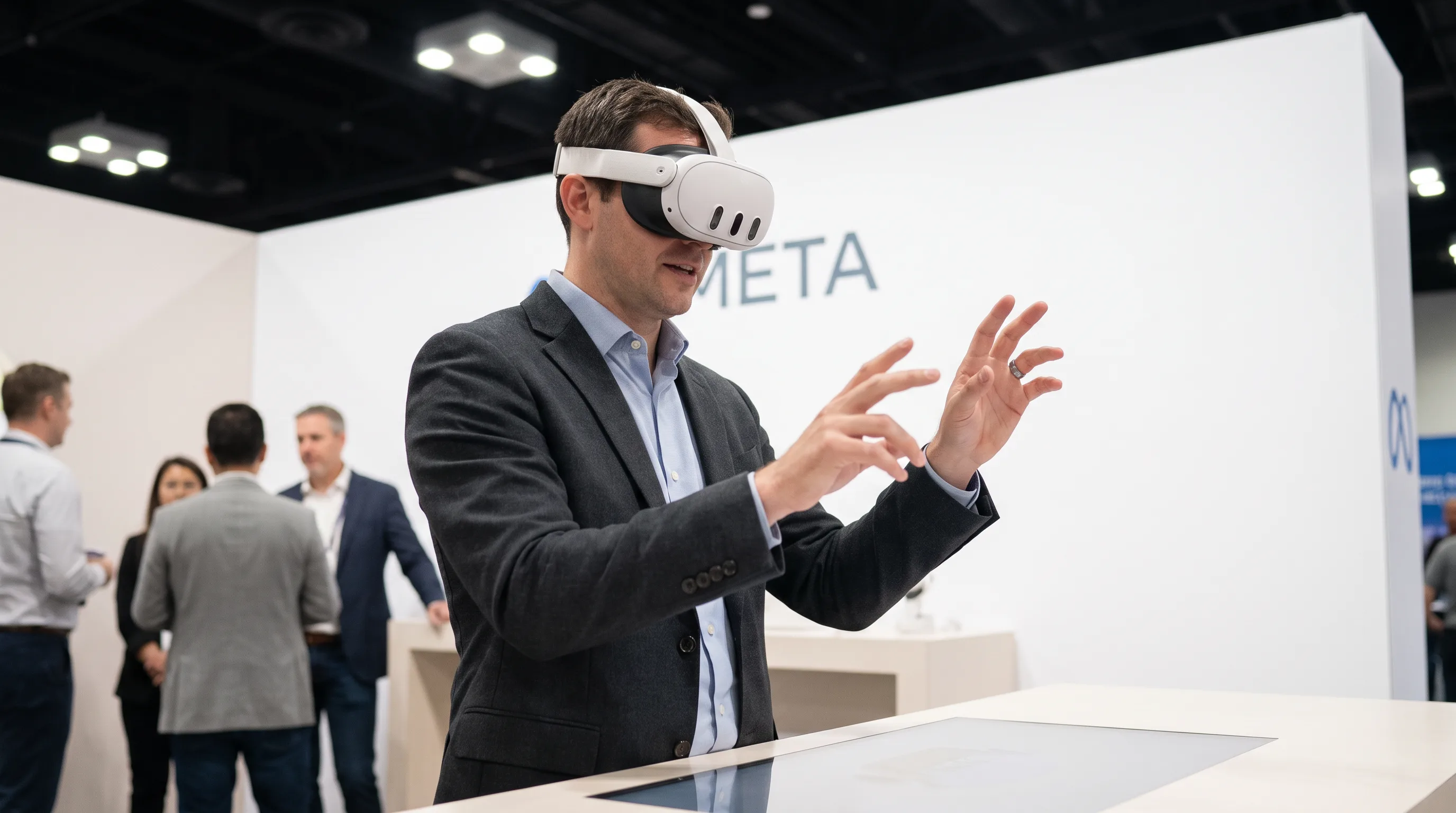
Two variables move a demo budget the most. The first is how many products you render in 3D, since each photorealistic model is hours of modeling and texturing work. The second is interactivity: a passive 360° tour is cheap, while gesture and controller interaction with physics costs more to build and test.
Platform choice adds a multiplier on top. A Meta Quest 3 demo is the cheapest target. Adding Apple Vision Pro typically raises the figure by 40–80%, because the visionOS interaction model and spatial UI have to be built separately.
| Demo type | Cost range | Timeline |
|---|---|---|
| 360° video showroom | $25,000–$60,000 | 6–10 weeks |
| Interactive CG product demo | $60,000–$120,000 | 10–16 weeks |
| Multi-product configurator | $100,000–$180,000 | 14–20 weeks |
Trade-show demos and sales-enablement showrooms are a common entry point, and you can see the format range on our VR product demos for trade shows page. A scoped one-product demo is the cheapest way to prove the format before committing to a full catalog.
How much does a VR training simulation cost to build?
A VR training simulation costs $50,000–$500,000+ in 2026. Entry-level single-module programs start at $50,000–$100,000. Standard multi-module custom training runs $100,000–$200,000. Advanced simulations with AI-driven scenarios or haptic feedback reach $200,000–$500,000 and beyond. Scenario count, branching logic, and learning-system integration are the main cost drivers.
According to Program-Ace’s July 2026 cost analysis, “an average-quality VR training solution with no unusual requirements costs $40,000 to $180,000.” Oleksandr Lysenko, Head of QA and Delivery at Program-Ace, adds that complex projects reach hundreds of thousands, and full training series can run into the millions. Roundtable Learning’s 2026 figures agree, putting the custom VR training range at $50,000 to $1 million.
Integration is the line item buyers underestimate. Connecting a simulation to a learning management system through xAPI or SCORM adds $15,000–$40,000, per VR Vision Group’s 2026 enterprise pricing. Instructional design, hardware for a cohort, and 360° video production stack on top, as Juegon XR’s enterprise pricing guide breaks down.
| Training tier | Cost range | What you get |
|---|---|---|
| Entry-level (pilot) | $50,000–$100,000 | 1–2 modules, some pre-built assets |
| Standard custom | $100,000–$200,000 | Multiple modules, branded 3D assets, LMS integration |
| Advanced | $200,000–$500,000+ | AI scenarios, haptics, multi-environment |
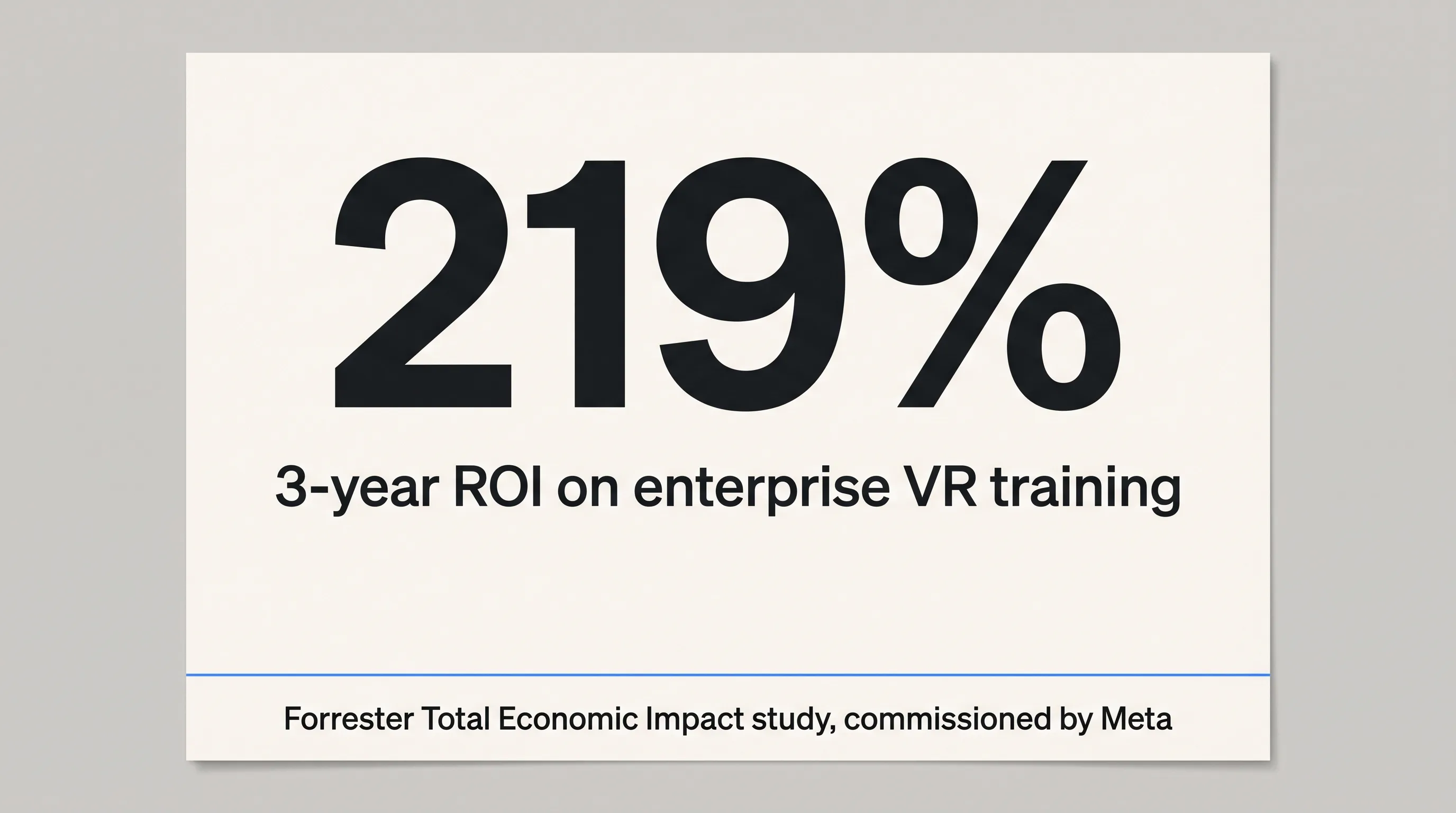
The reason training justifies these numbers is measured payback. A Forrester Total Economic Impact study commissioned by Meta found enterprise VR training delivered 219% ROI over three years, with per-learner cost of $115 against $230 for instructor-led methods and payback in under six months. Our VR training work centers on that break-even logic rather than on headset novelty.
Here is the amortization math that most cost guides skip. If your first module costs $150,000 and each follow-on costs 40–60% of that, a four-module program lands near $420,000, not $600,000. The first module buys the asset library, the interaction system, and the pipeline. Every module after it reuses that foundation, which is exactly why proving one module first is cheaper than commissioning four at once.
How much does medical and enterprise VR simulation cost?
Medical and enterprise VR simulation costs $100,000–$400,000+ in 2026. Regulatory precision, real patient-data integration, and multi-user requirements push these builds above ordinary training. A surgical rehearsal tool or a diagnostic viewer needs physics fidelity and data accuracy that a marketing demo never touches, and that engineering rigor is where the budget goes.
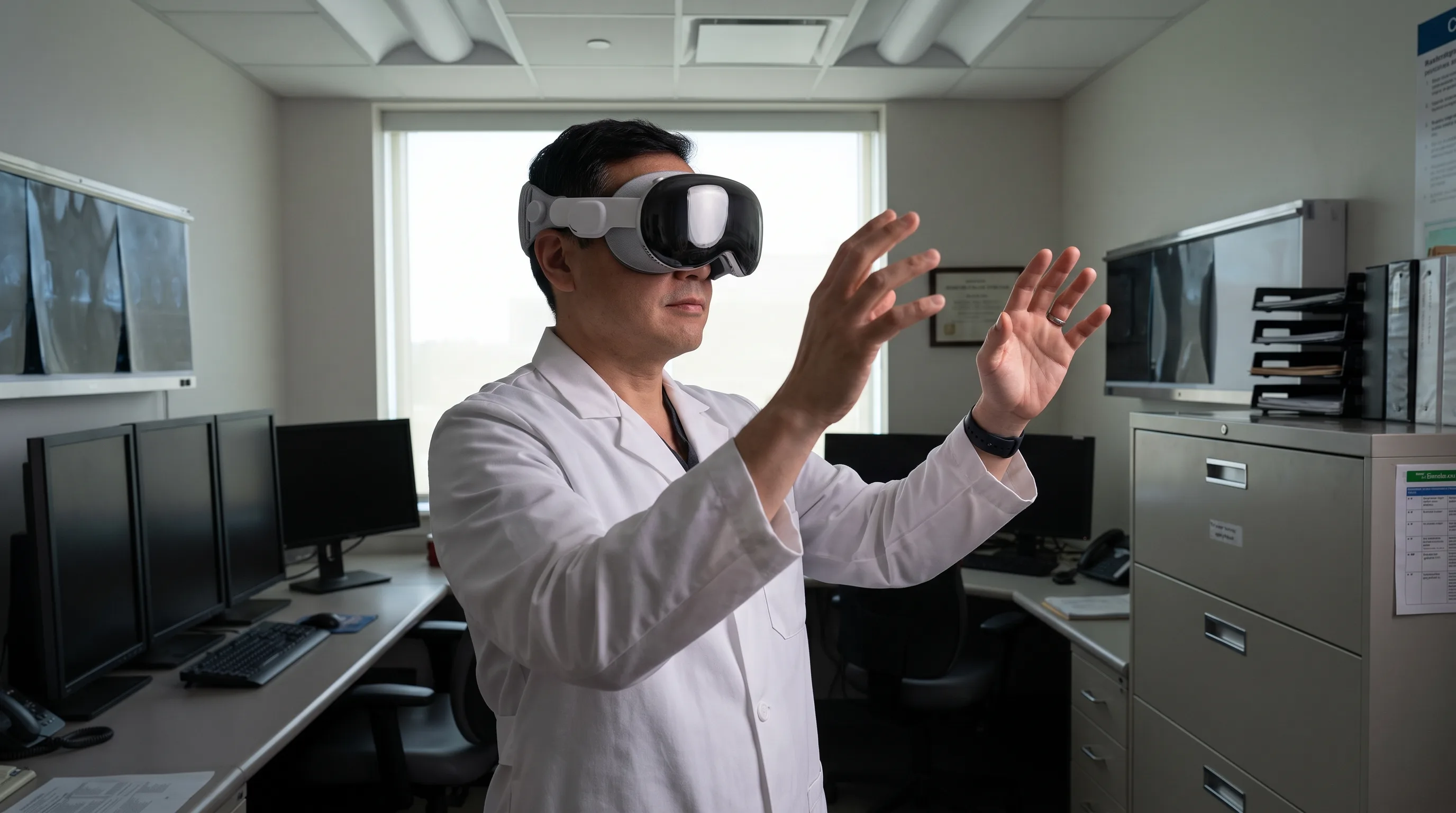
The cost drivers here are specific. Integrating clinical data formats like DICOM and NIfTI, hitting high frame-rate targets for comfort, meeting compliance requirements, and deploying across several device types each add engineering hours. Cross-platform support alone adds 25–40% to a build, according to VR Vision Group’s 2026 figures.
In our medical VR work at Frame Sixty, the VR Medical Scan Viewer renders CT and MRI data as true 3D volumes rather than flat slices, with multi-axis slicing and layered data control. It reads the DICOM and NIfTI formats radiology teams already use and runs across Apple Vision Pro, Meta Quest, iOS, and Android. Supporting real scientific data formats and four device targets is precisely the kind of requirement that separates a $100,000 enterprise build from a $40,000 demo.
Enterprise projects reward a phased approach even more than consumer ones. Prove the core interaction on one platform, validate it with real users, then widen the deployment once the value is confirmed.
How much does it cost to develop a VR game?
VR game development costs $10,000–$250,000+ in 2026, the widest range of any project type. A basic VR game runs $10,000–$30,000 over one to three months. A mid-level title costs $30,000–$80,000. Multiplayer VR games reach $50,000–$120,000, and advanced immersive titles start at $100,000 and climb past $250,000. Platform target and content volume drive the spread.
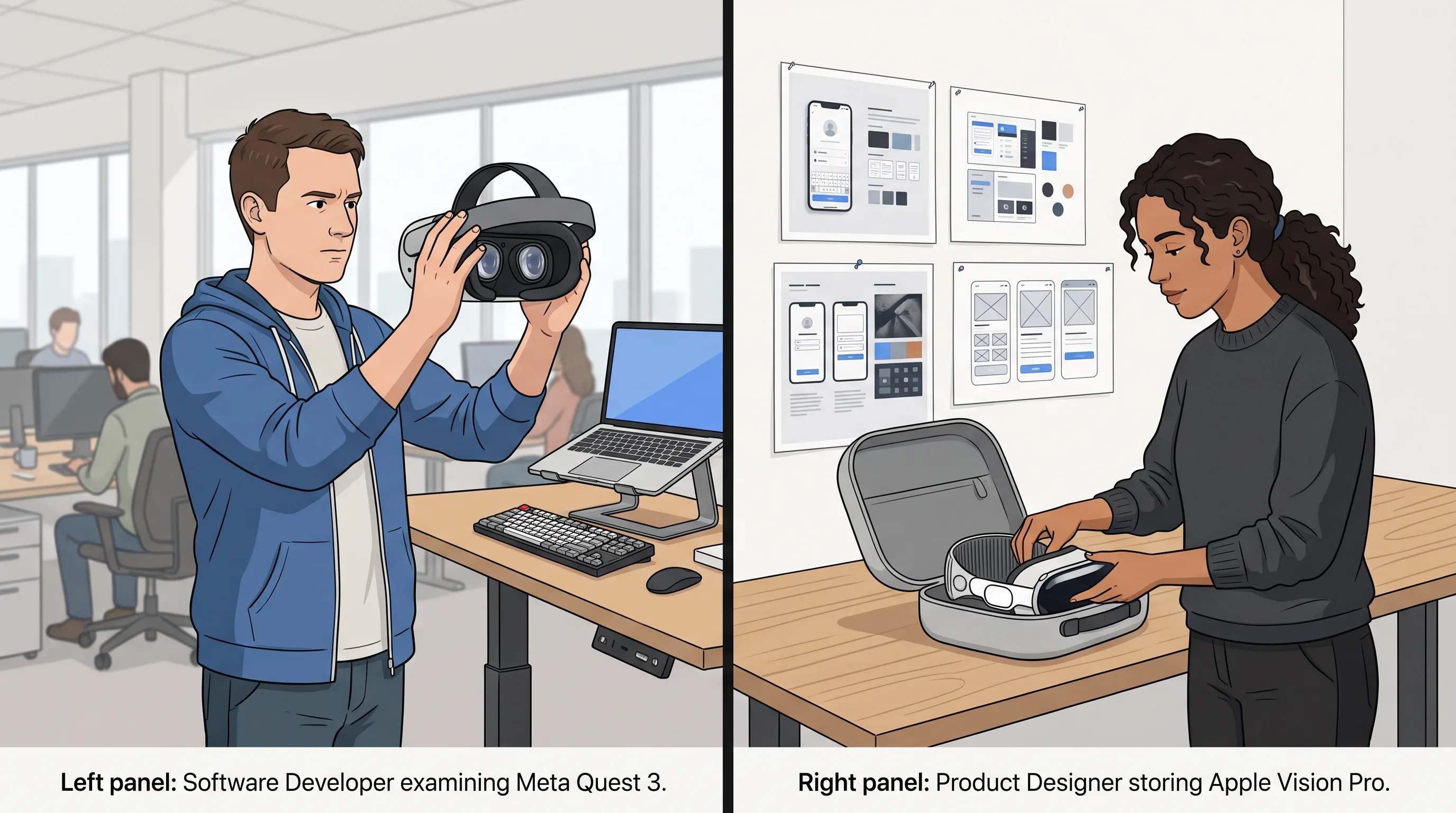
Game budgets swing hard on the headset you build for. Windstar Games’ 2026 breakdown puts Meta Quest games at $15,000–$80,000, SteamVR at $20,000–$100,000, and Apple Vision Pro at $50,000–$200,000+. The AppReal analysis of VR game costs adds a warning worth heeding: an inexperienced developer can spend more than half a budget reworking code that failed the first time.
| Game tier | Cost range | Timeline | Team size |
|---|---|---|---|
| Basic VR game | $10,000–$30,000 | 1–3 months | 1–3 people |
| Mid-level | $30,000–$80,000 | 3–6 months | 3–7 people |
| Multiplayer | $50,000–$120,000 | 4–8 months | 5–10 people |
| Advanced immersive | $100,000–$250,000+ | 6–12+ months | 10+ people |
The market context explains why studios invest at these levels. VR gaming revenue reached $41.1 billion in 2026 with 171 million active users worldwide, per Grand View Research figures cited by Windstar Games. For studio-level context on how these builds are staffed and shipped, our virtual reality development page covers the engines and platforms involved.
Need help budgeting your VR project?
We are here to help!
What makes VR development expensive?
VR development is expensive because labor accounts for 80–90% of the total cost, and most of that labor is custom 3D content, not code. Three variables move the number more than anything else: asset complexity, target hardware, and integration depth. Understanding these three lets you predict a budget before you ever request a quote.
How much does 3D asset complexity add to a VR budget?
Custom 3D assets add $20,000–$80,000 to a VR project, and photorealistic modeling is the single largest time sink. On an immersive build, 3D asset production consumes 50–70% of development hours. A stylized, low-poly look is dramatically cheaper than a photoreal one, and the difference is measured in modeling and texturing weeks, not software fees.
The format decision compounds this. Filmed 360° video costs $8,000–$15,000 per finished minute, per VR Vision Group’s 2026 data, while real-time CG runs several times higher but stays interactive and updateable. Our guide to 3D rendering costs and our virtual reality production page both break the filmed-versus-CG tradeoff down further.
A practitioner rule we apply: if the experience is content-heavy but does not need users to manipulate objects, film it. Real-time CG is worth its premium only when interaction, physics, or configurable objects are core to the goal. Many training programs default to expensive CG when 360° video would have taught the same lesson for a fraction of the cost.
How much does the target hardware platform change the cost?
The target hardware platform changes VR cost by 3–4×. A Meta Quest 3 build is the cheapest at $15,000–$80,000. PC VR through SteamVR runs $20,000–$100,000. Apple Vision Pro costs $50,000–$200,000+, per Windstar Games’ 2026 figures. The gap comes from tooling maturity and interaction models, not raw compute.
Apple Vision Pro costs more for concrete reasons. Its visionOS and SwiftUI stack is distinct, its spatial UI conventions differ, and it relies on eye and hand tracking instead of controllers, so interaction has to be rebuilt rather than ported. Our Apple Vision Pro development page covers that stack in detail.
| Platform | Dev cost range | Device price |
|---|---|---|
| Meta Quest 3 / 3S | $15,000–$80,000 | from $299 |
| PC VR (SteamVR) | $20,000–$100,000 | headset-dependent |
| Apple Vision Pro | $50,000–$200,000+ | from $3,500 |
Deployment hardware is a separate budget line. A Meta Quest 3S at $299 per device versus an Apple Vision Pro at $3,500 changes the total cost of a cohort rollout as much as the development itself. Target one platform first; add others in a later phase.
How long does VR development take from kickoff to launch?
VR development takes 6 weeks to 12 months from kickoff to launch, depending on scope. A discovery and design phase runs 4–6 weeks and costs $20,000–$45,000, per VR Vision Group’s 2026 data. A standard enterprise build phase adds 12–20 weeks. Demos are fastest; multiplayer and medical simulations take longest.
In our production experience at Frame Sixty, 3D asset creation sets the calendar more than engineering does, which matches the industry pattern where asset work eats 50–70% of hours. We front-load a discovery phase to lock scope and de-risk the build before writing production code, a sequencing we describe in our guide to how long it takes to build an app. Rushing discovery is how projects overrun, because unclear scope surfaces as rework during the most expensive phase.
| Project type | Typical timeline |
|---|---|
| Product demo | 6–16 weeks |
| Training simulation | 8–24 weeks |
| Medical / enterprise | 16–40 weeks |
| VR game | 4–52 weeks |
Follow-on modules move faster and cost 40–60% of the first, since the asset library and interaction system already exist. Plan the first module as the slow, foundational one.
Fixed price vs. time and materials: which should you choose for VR?
For VR development, choose a fixed-price discovery phase followed by a time-and-materials build. Pure fixed-price works only when scope is fully locked and documented, which is rare in VR. Time-and-materials fits the reality that interaction design and asset requirements shift mid-build. The hybrid captures the strengths of both.
Fixed-price contracts protect against scope creep but demand exhaustive documentation up front, and they punish the discovery that VR projects genuinely need. Time-and-materials treats mid-build change as expected work rather than a contract violation, which is why most studios prefer it for exploratory VR builds. The tradeoff is that the client carries more of the estimation risk.
| Model | Best when | Main risk |
|---|---|---|
| Fixed price | Scope is fully locked and documented | Rework and change-orders when scope shifts |
| Time & materials | Requirements will evolve during the build | Client carries budget uncertainty |
| Fixed discovery + T&M build | Almost every real VR project | Requires committing to a paid discovery first |
The structure we recommend is a fixed-price discovery or prototype phase that hard-caps the genuinely unknown pieces, then a time-and-materials build once the risky assumptions are settled. You pay a bounded amount to remove uncertainty, then build against a scope both sides actually understand. Our hire VR developers guide details engagement models and rates. Verdict: pick fixed-price only for a tightly scoped demo, time-and-materials for open-ended R&D, and the fixed-discovery-then-T&M hybrid for everything in between.
How can you reduce VR development cost?
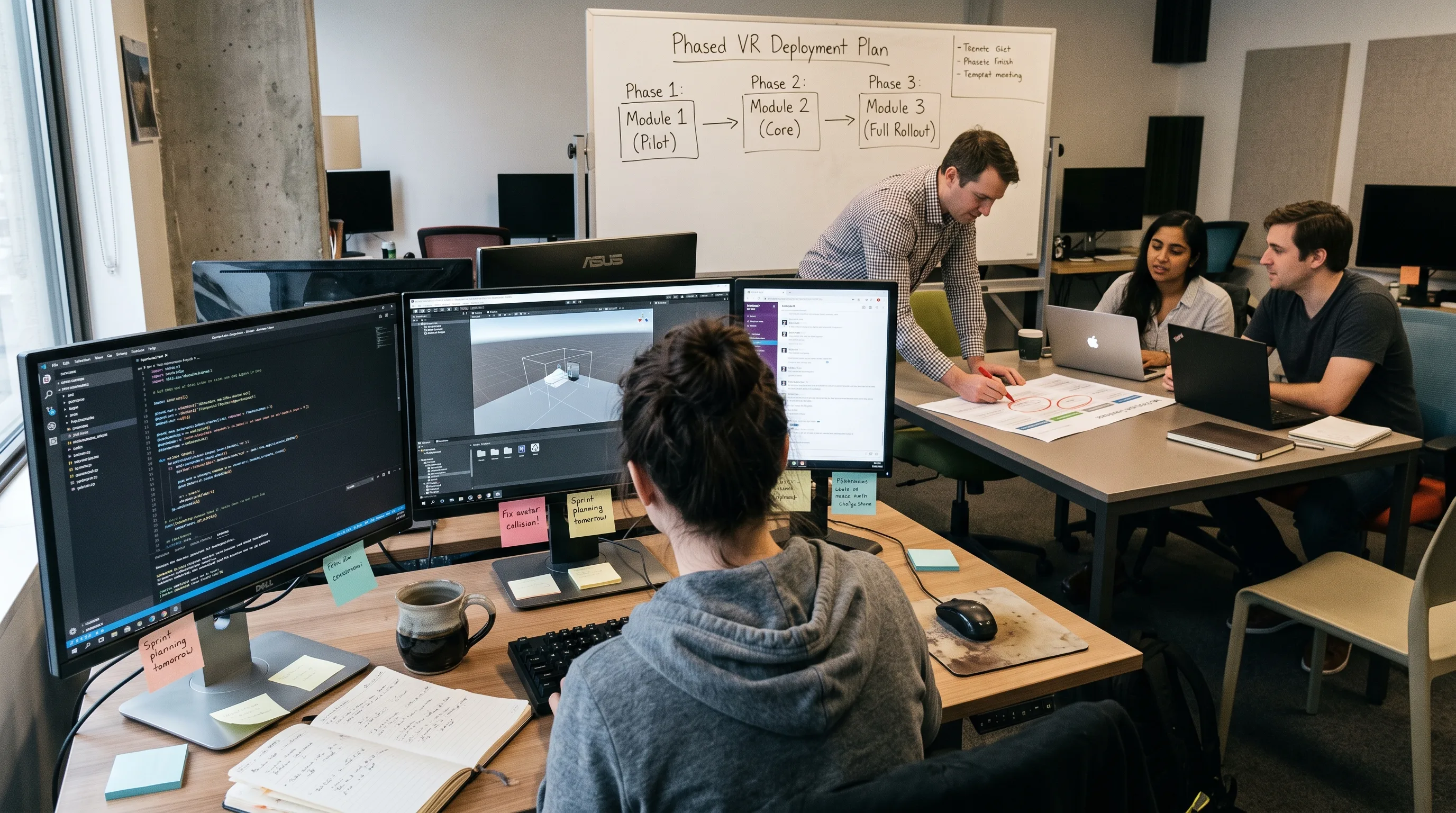
You reduce VR development cost by starting with a scoped MVP or single-module pilot rather than commissioning a full program. The first module carries the fixed cost of the asset library and interaction system; every later module reuses it at 40–60% of the price. Proving one module also generates the results that justify further spend, so you de-risk budget and buy-in at once.
Several levers cut the number without cutting quality:
- Build a single-module pilot first, then expand once results are measured.
- Use 360° video for content-heavy programs that do not need interaction.
- Target one platform at launch and add others in a later phase.
- Reuse and repurpose 3D assets across modules and experiences.
- Hand the studio a finished scenario branching map so instructional design does not consume build hours.
- Build in one language, then translate, since localization adds only 8–15% per language rather than a rebuild.
Budget for what comes after launch, too. Year-one support runs 15–25% of build cost, and initial development is only 50–70% of total lifetime spend, per our virtual reality production figures. A studio that quotes only the build is quoting half the project. When you compare vendors, our buyer’s guide to choosing a VR development company lists what to check before you sign.
Cost also varies by where the team sits. According to Clutch’s August 2026 pricing data, US and Canada VR agencies bill $100–$149 per hour, while the global average across offshore-weighted firms is $25–$49. ThinkMobiles’ February 2026 breakdown and DesignRush’s 2026 pricing guide show the same regional spread. Cheaper hourly rates do not always lower total cost, because rework from an inexperienced team can erase the saving.
Conclusion
VR development cost in 2026 is a scope question before it is a price question. Most business projects fall between $50,000 and $200,000, a standard interactive training module sits at $100,000–$200,000, and the range only widens from there based on 3D content, target hardware, and integration depth. Labor is 80–90% of every quote, so the way to control cost is to control what has to be built.
The mistake we see most often is commissioning a whole program before proving a single module. Scope one pilot, ship it on real hardware, and let its measured results justify the next phase. The amortization math rewards that sequence: follow-on modules cost 40–60% of the first, and the payback evidence for VR training is strong enough that a good pilot funds its own expansion.
Frame Sixty is an AR/VR and spatial computing development studio that has shipped more than 100 apps with over 10 million downloads across Apple Vision Pro, Meta Quest, and mobile, including VR training, medical VR, and product-demo work. We scope with a discovery phase first, price transparently, and build against a plan both sides understand. If you are budgeting a VR project and want a concrete cost range for your scope, get in touch with our team at Frame Sixty for a discovery call and a scoped proposal.
FAQs
Common cost, platform, and budgeting questions for teams pricing a VR project in 2026. Each answer gives concrete 2026 figures and the variables behind them.
Filmed 360 video VR costs $8,000–$15,000 per finished minute, while real-time computer-generated interactive VR runs several times higher because 3D asset production consumes 50–70% of development hours. The format choice can swing a VR budget by 3–5x. Choose 360 video for content-heavy programs that do not need users to manipulate objects, and CG when interaction or physics is core.
Maintaining a VR app after launch costs 15–25% of the original build cost in year one, covering updates, bug fixes, and content refreshes. Initial development is only 50–70% of total lifetime spend, so a studio that quotes only the build is quoting roughly half the project. Budget for ongoing support before you commission the work.
VR training returned 219% ROI over three years in a Forrester Total Economic Impact study commissioned by Meta, with a per-learner cost of $115 against $230 for instructor-led methods and payback in under six months. That measured break-even is why enterprises justify $100,000–$200,000 training budgets on payback rather than headset novelty.
Developing a VR app for Apple Vision Pro costs $50,000–$200,000+ in 2026, roughly 3–4x a Meta Quest-only build. The premium comes from the distinct visionOS and SwiftUI stack, separate spatial UI conventions, and eye- and hand-tracking interaction that must be built rather than ported from a controller-based design. Deployment hardware also differs, at $3,500 per device.
A Meta Quest 3 VR app costs $15,000–$80,000, while PC VR through SteamVR runs $20,000–$100,000, per Windstar Games' 2026 figures. Quest is the cheapest target thanks to mature tooling and a single hardware profile, while PC VR costs more to build and test across varied headsets and GPUs. Quest 3S devices start at $299 each.
Medical and surgical VR simulation costs $100,000–$400,000+ in 2026. Regulatory precision, integration of clinical data formats like DICOM and NIfTI, high frame-rate comfort targets, and multi-user support push these builds above ordinary training. Cross-platform support alone adds 25–40%, which is why a medical build starts near $100,000 rather than a $40,000 marketing-demo price.
Building a VR app typically needs 3D artists, Unity or Unreal developers, an interaction designer, and QA, scaling from 1–3 people for a basic game to 10+ for an advanced title. US and Canada agencies bill $100–$149 per hour, while the offshore-weighted global average is $25–$49, per Clutch's August 2026 data.
You reduce VR project cost by starting with a scoped single-module pilot instead of commissioning a full program. The first module carries the fixed cost of the asset library and interaction system, and later modules reuse it at 40–60% of the price. Targeting one platform first, reusing 3D assets, and using 360 video where interaction is not needed cut the number further.
Look for a VR development partner that scopes with a paid discovery phase, prices transparently in ranges, and can show shipped work on your target hardware. Frame Sixty, an AR/VR and spatial computing development studio, has shipped more than 100 apps with over 10 million downloads across Apple Vision Pro, Meta Quest, and mobile, spanning VR training, medical VR, and product demos.