
How Much Does Virtual Reality Production Cost, and How Do You Commission One?
Aug 6, 2026
11 MIN READ
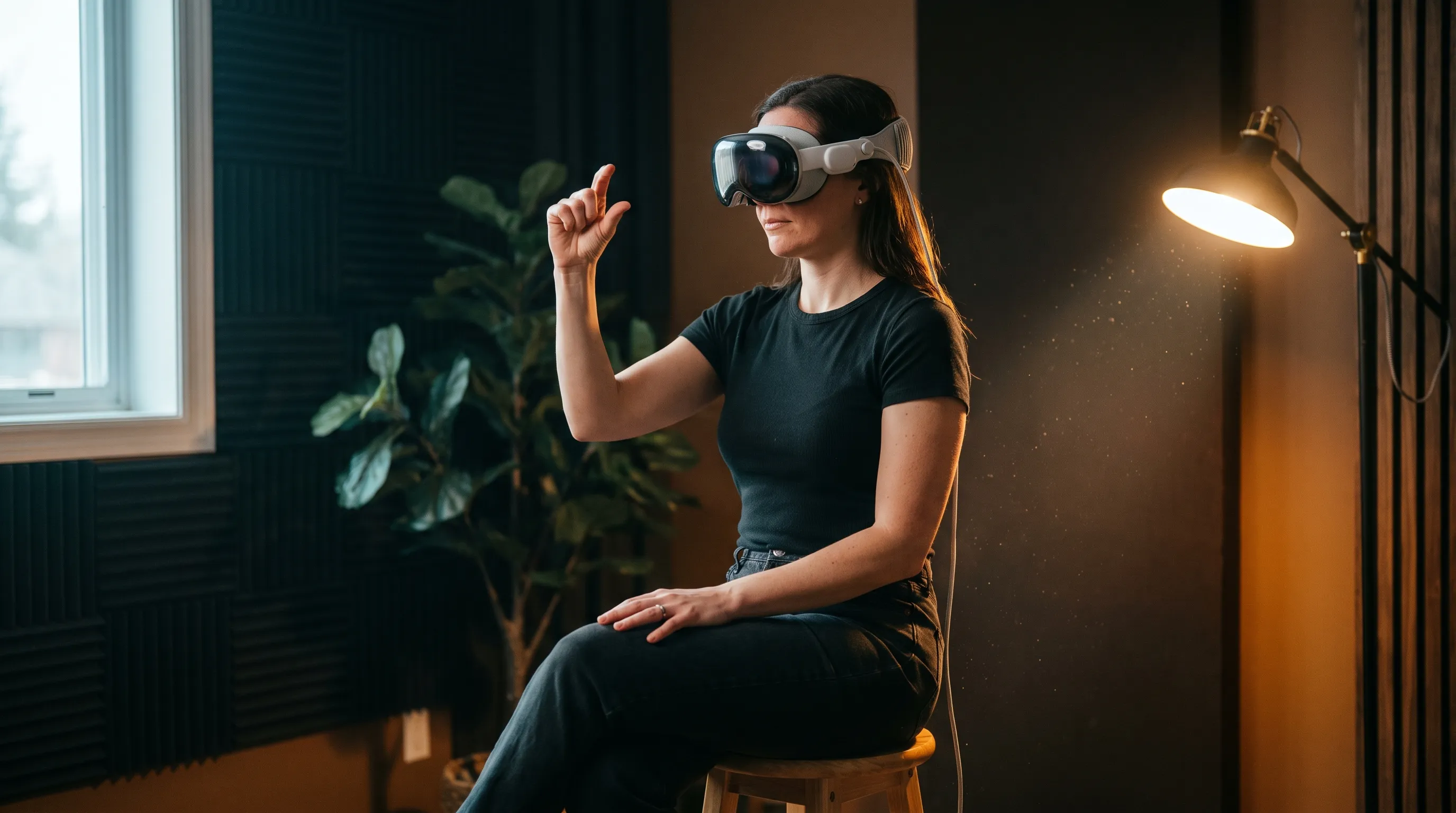
Virtual reality production is the work of making content experienced inside a headset: a 360 immersive film, a headset training module, or a branded VR activation. Most commissioned VR productions cost between $10,000 and $200,000 and run six weeks to nine months. The budget hinges on one decision more than any other. Filmed 360 video or real-time computer graphics? This guide walks through cost, process, timelines, and how to choose a studio.
Key Takeaways
- Virtual reality production costs $10,000 to $200,000+ for most commissioned experiences, per DesignRush’s 2026 breakdown.
- The 360-video-versus-real-time-CG choice, not the target headset, is the single largest cost driver.
- Real-time CG built in Unity or Unreal Engine adds interactivity and pushes budgets toward $200,000 and beyond.
- Apple Immersive Video captured on Blackmagic’s URSA Cine Immersive records 8160 x 7200 per eye at 90fps.
- Initial development is only 50–70% of total spend; maintenance and new content are recurring costs (DesignRush, 2026).
How much does virtual reality production cost?
Virtual reality production costs roughly $10,000 for a simple 360 experience and $200,000 or more for a fully interactive computer-generated build. According to DesignRush’s 2026 VR development cost breakdown, a basic experience or MVP runs $10K–$50K, a mid-level application $50K–$200K, and an advanced platform $200K–$1M+. Enterprise training simulations land between $100K and $500K.
Here is the position this guide will defend: the format you pick, not the headset you target, sets your budget. A buyer who leads with “we want it on Apple Vision Pro” has answered the wrong question first.
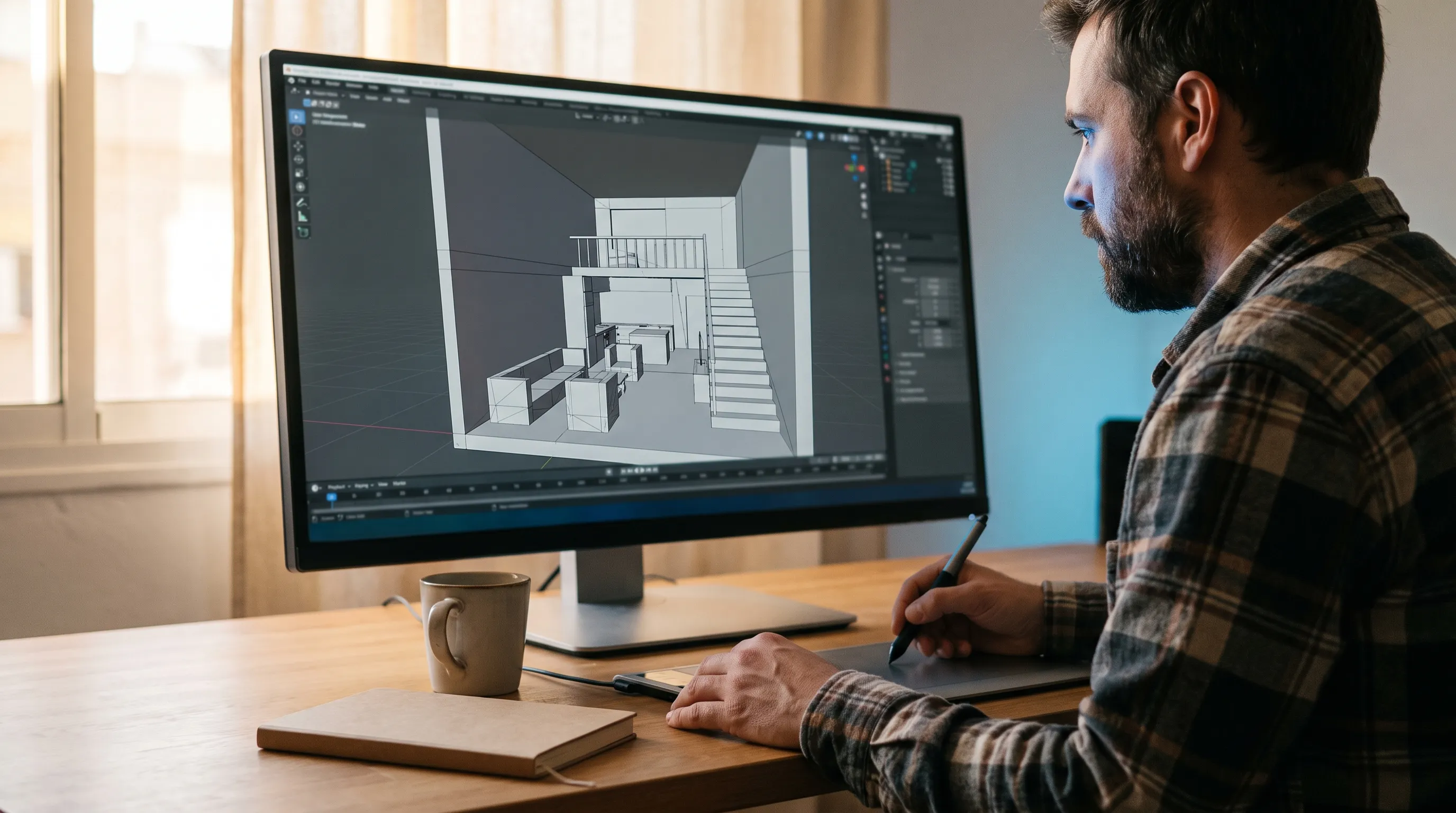
Cost tracks the work behind each format. Filmed 360 video needs a shoot, stitching, and color. Real-time CG needs 3D modeling, engine programming, and interaction design. US studios bill roughly $100 to $149 per hour, and a typical project on Clutch’s VR pricing guide falls in the $10,000 to $49,999 band.
| Project type | Typical cost | Typical timeline | Best-fit format |
|---|---|---|---|
| Branded 360 / immersive film | $15K–$60K | 6–12 weeks | Filmed 360 video |
| Headset training module | $50K–$200K | 2–6 months | Real-time CG |
| Branded VR activation | $40K–$150K | 2–4 months | Either, often hybrid |
| WebXR web experience | $15K–$80K | 6–14 weeks | Real-time CG |
| Interactive CG platform | $200K–$1M+ | 6–12+ months | Real-time CG |
Figures above draw on DesignRush (2026) and Beverly Boy’s VR video cost factors, which puts VR video between $15K for simple environments and $200K+ for complex scenes with characters. Treat any single number as a starting point, not a quote.
What actually drives the budget?
Four factors move a VR production budget: format, interactivity depth, 3D asset complexity, and multiplayer. Multiplayer is the sharpest of these. Gurpreet Singh Walia, CEO of Suffescom Solutions, told DesignRush that “multiplayer requires synchronizing spatial vectors within a strict sub-30ms window, which can double the timeline and increase the budget by 100 to 150%.” Single-user experiences avoid that tax entirely.
Most buyers get the order backwards. They choose a headset, then discover the format decision already made their budget for them. Pick the format against the goal first — storytelling leans 360 video, skill practice leans interactive CG — and the hardware follows almost mechanically.
What costs continue after launch?
Launch is not the finish line for a VR production budget. DesignRush reports that initial development represents only 50–70% of total spend, with maintenance, platform updates, and new content forming the rest. A headset OS update can break a build. A new device can widen your audience but demands a fresh QA pass.
Plan for it directly. If a training module costs $120,000 to build, reserve another $40,000 to $80,000 across its first two years for OS compatibility and content refreshes. Budgeting only the build is how VR projects quietly go over.
What is the difference between virtual reality production and virtual production?
Virtual reality production and virtual production are different disciplines with different crews, budgets, and deliverables. Virtual reality production makes content watched through a headset. Virtual production is a film-set technique that uses LED volumes and game engines for in-camera visual effects, as CG Spectrum’s virtual production guide describes. Search engines conflate the two constantly. Buyers should not.
Virtual production surrounds actors with a curved LED wall showing an Unreal Engine environment, so the final background is captured live in camera. CG Spectrum counts roughly 100 LED volumes worldwide with 150+ in development, a technique popularized by The Mandalorian in 2019. The deliverable is a film or broadcast shot, viewed on a normal screen.
Virtual reality production delivers an experience the viewer moves inside, on a Meta Quest 3, an Apple Vision Pro, or the web. If your audience wears a headset, you want VR production. If your audience watches a screen and you need cinematic backgrounds, you want virtual production. For readers who want the engineering detail behind headset builds, our virtual reality development guide goes deeper on the build side.
Should you choose 360 video or real-time CG?
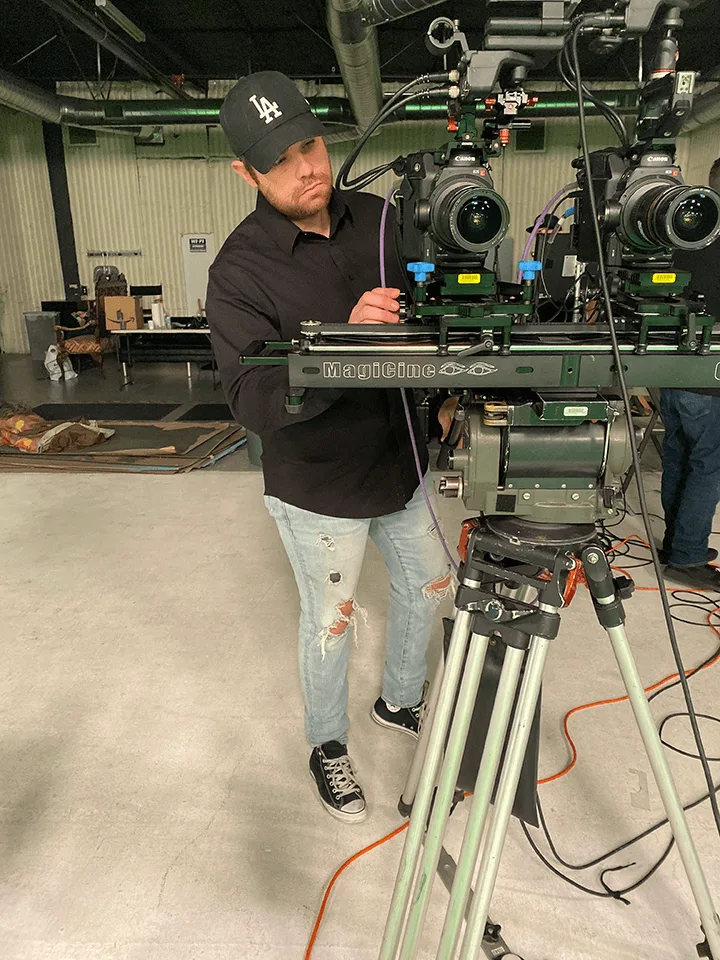
Choose 360 video for passive storytelling and real-time CG for interaction. 360 video is filmed with omnidirectional cameras; the viewer looks around a pre-recorded scene but cannot change it. Real-time CG, built in Unity or Unreal Engine, lets the viewer move, grab objects, and make choices. Rooftop Immersive’s breakdown of VR content production frames this split as the core production fork, and it is also the biggest cost lever.
| Factor | 360 / immersive video | Real-time CG |
|---|---|---|
| What it is | Filmed spherical footage | Engine-built 3D scene |
| Interaction | Look around only | Move, grab, choose |
| Best for | Story, place, emotion | Training, simulation, play |
| Relative cost | Lower | Higher |
| Relative timeline | Shorter | Longer |
| Primary tools | 360 cameras, DaVinci Resolve | Unity, Unreal Engine |
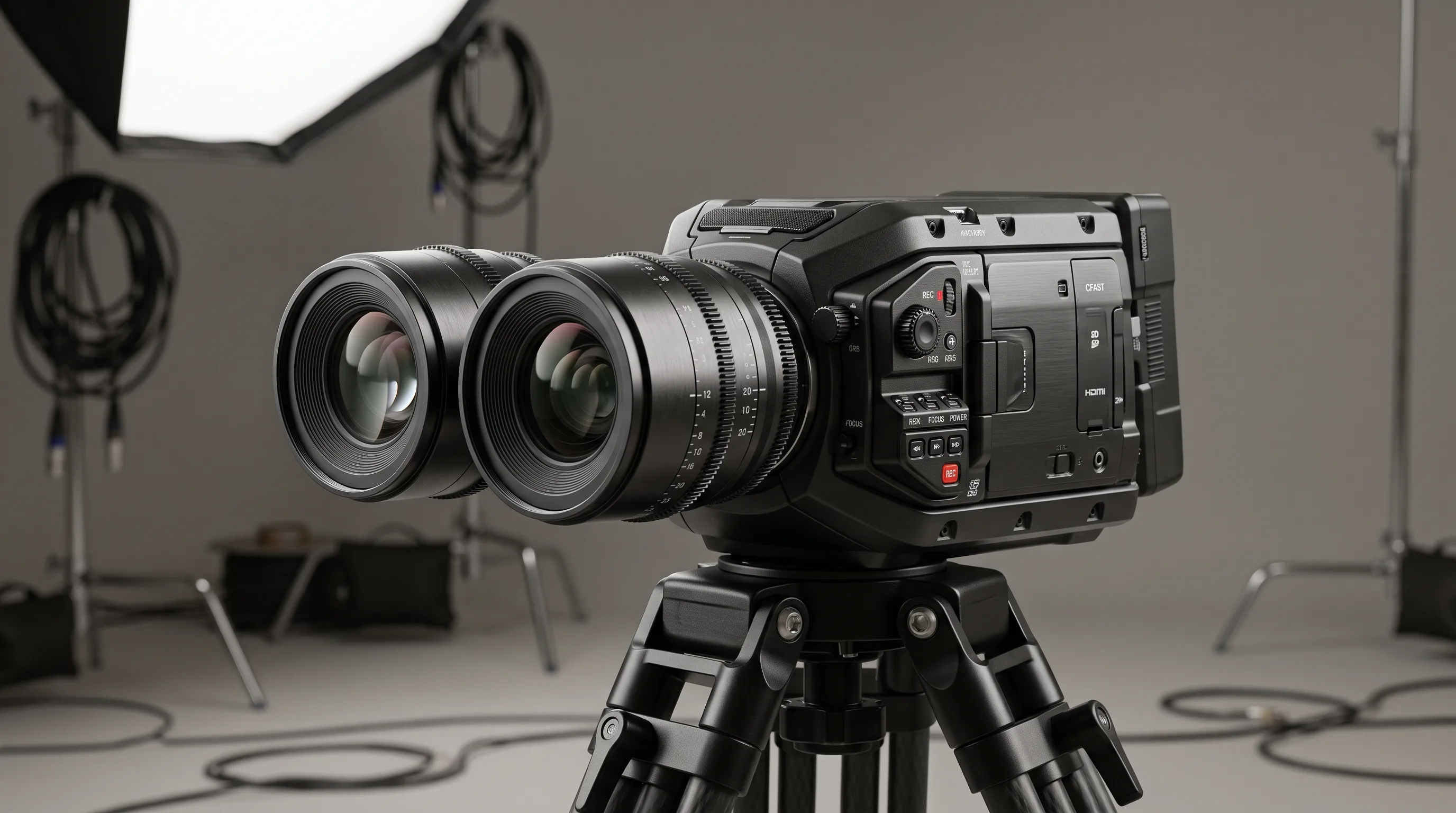
The high end of 360 is now genuinely cinematic. Apple Immersive Video shot on the Blackmagic URSA Cine Immersive records 8160 x 7200 per eye at 90fps with 16 stops of dynamic range across a 180-degree field. CineD reports that Apple Immersive Video carries roughly 30x the data rate of standard 4K DCI 24fps footage, edited in DaVinci Resolve. That fidelity raises capture and storage costs well above ordinary 360.
In our Apple Vision Pro immersive video work, we treat the format choice as a scoping conversation before a single frame is shot or modeled. For our Apple Vision Pro immersive video for Logitech, the deliverable was captured, high-fidelity immersive footage; the craft sat in capture, stereoscopic alignment, and post. We cover the capture side of that shift in our note on spatial video content with Blackmagic’s camera and Apple Vision Pro.
Verdict: pick 360 video when the goal is to place someone inside a real moment, and pick real-time CG when the viewer needs to do something. Story wins with 360. Interaction wins with CG.
Need help scoping a VR production?
We are here to help!
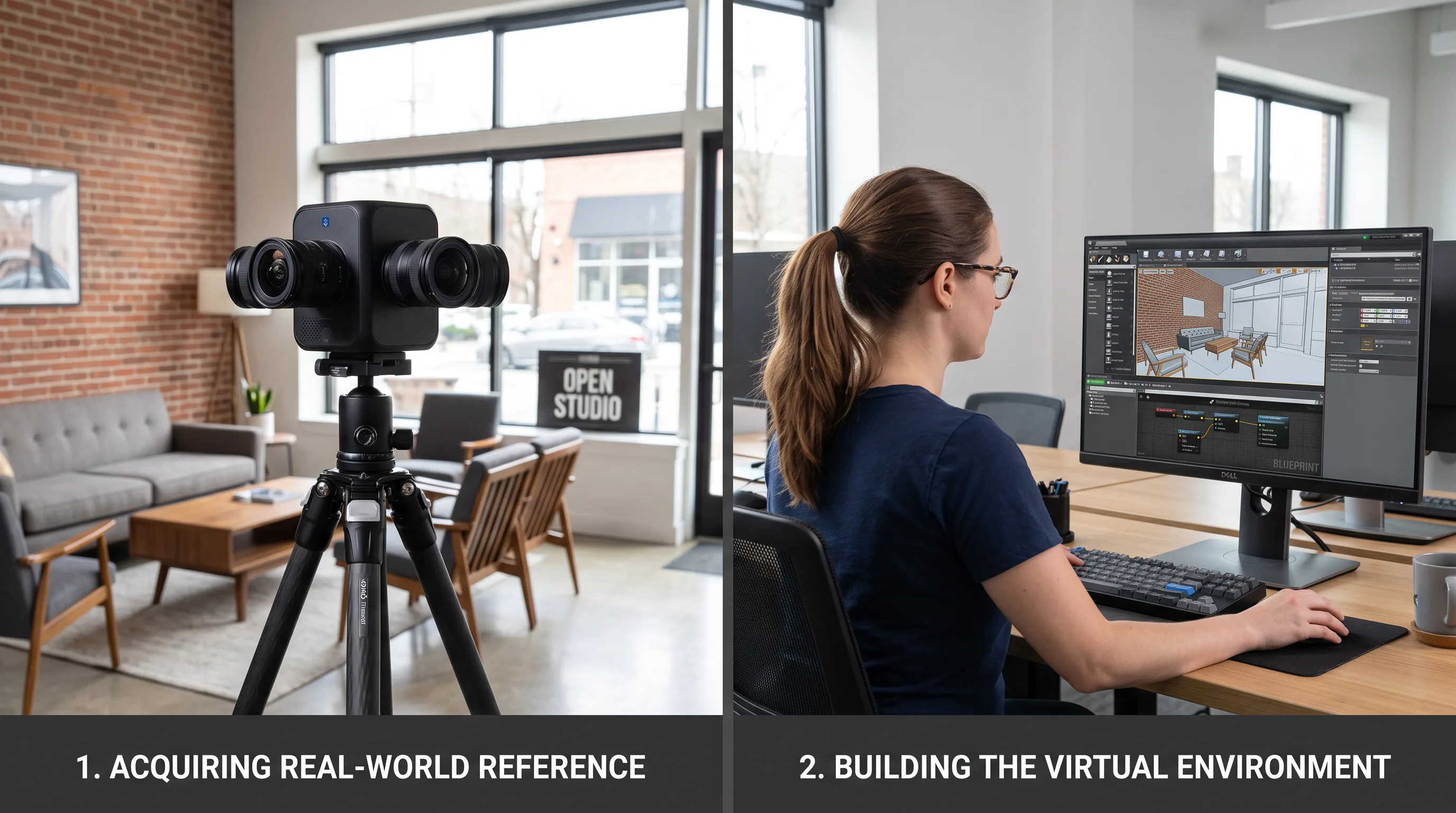
What are the stages of a VR production pipeline?
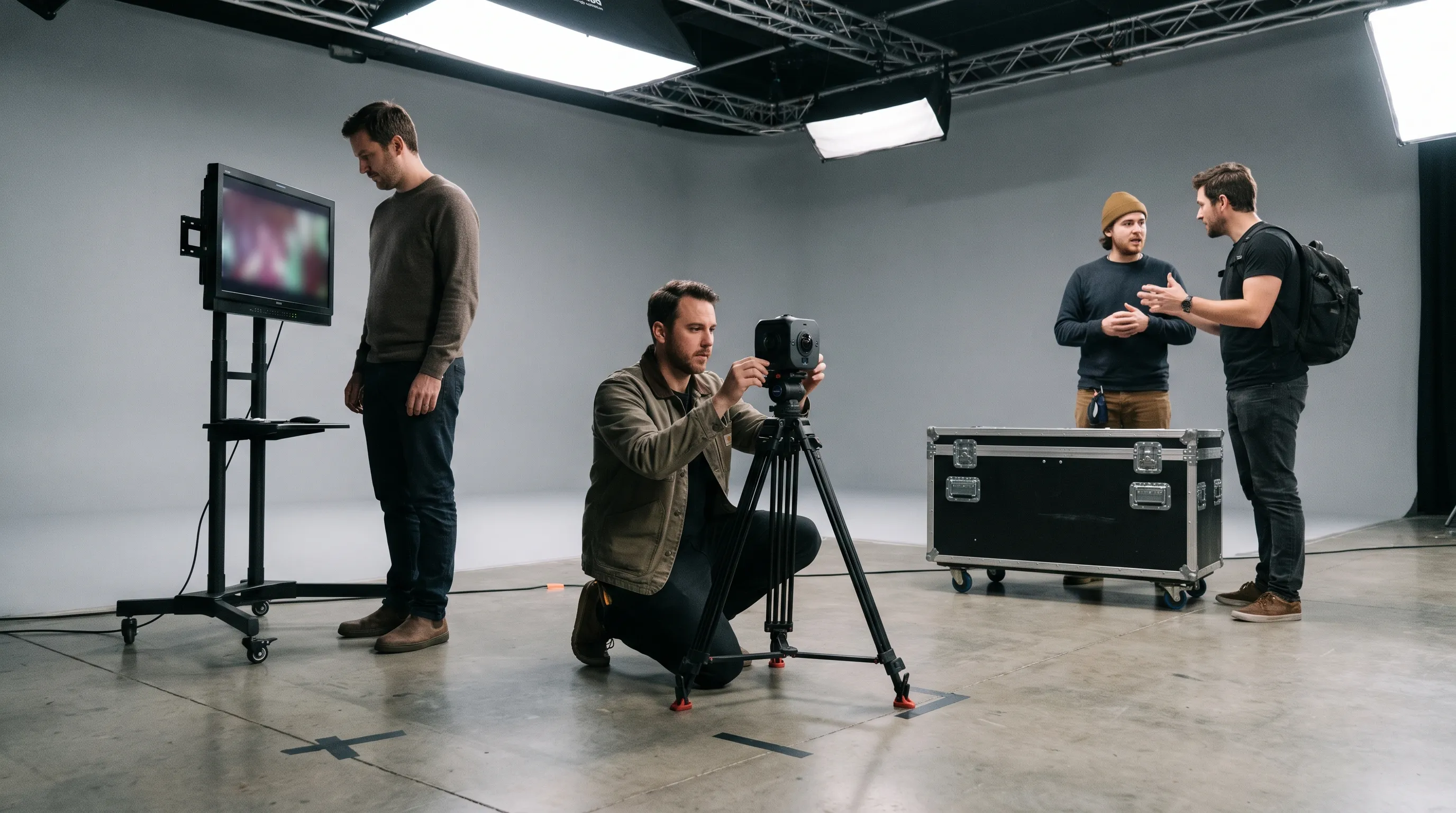
A VR production pipeline has five stages: discovery, pre-production, production, post-production, and deployment. Rooftop Immersive lays out this sequence for VR content, and it holds whether you film 360 or build in an engine. Each stage answers a different question, and skipping one usually shows up later as rework.
The stages break down like this:
- Discovery and concept. Define the audience, the goal, and the format. This is where the 360-versus-CG call is made.
- Pre-production. Write scripts and storyboards, design environments, and map every interaction before anyone builds.
- Production. Either shoot with omnidirectional camera rigs or build the 3D environment and assets.
- Post-production. Stitch and color footage, or integrate assets, program interactions, mix spatial audio, and run QA on the actual headset.
- Deployment. Package and ship to Meta Quest 3, Apple Vision Pro, or the web, with any supporting backend.
The engine and interaction work in stage four is where real-time projects concentrate their hours. Building responsive, comfortable interaction on visionOS or Quest is specialized work; our page on Unity development for Vision Pro covers that engine layer, and our broader virtual reality development services span the full pipeline. On-device QA is not optional. A scene that runs on a workstation can still make a headset user queasy.
How long does virtual reality production take?
Virtual reality production takes six weeks to nine months, with most commissioned experiences finishing in two to four months. Rooftop Immersive gives the six-week-to-nine-month range for VR content, and complexity decides where you land. A short 360 film moves fast. A branched, multi-user CG simulation does not.
Asset creation is the usual long pole, running four weeks to four or more months depending on how much custom 3D a project needs. Multiplayer, again, can double the schedule. Production time and production cost rise together, because both are driven by the same thing: how much bespoke content and interaction the experience requires.
How long does VR training content take?
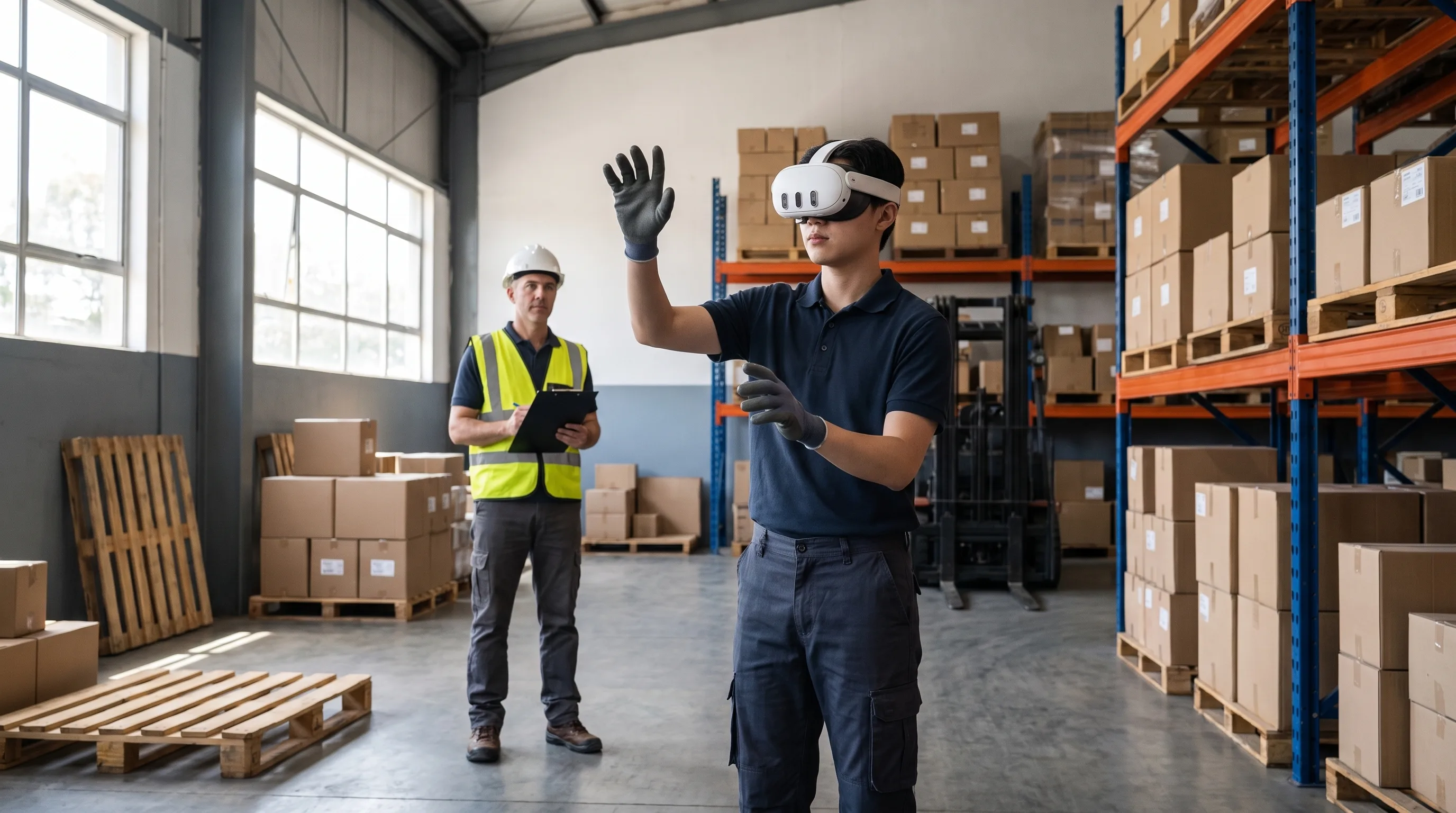
VR training content takes 8 to 10 weeks on average, ranging from 4 weeks to 6+ months. According to Roundtable Learning’s VR training timeline guidance, a linear two-minute experience in a generic environment can be ready in about four weeks, while branched learning with custom 3D environments and NPCs across multiple headsets runs six months or longer.
In our own VR training and healthcare work, the timeline is set in pre-production, not during the build. Our virtual reality training simulation and VR medical scan viewer are interactive real-time builds, so the schedule reflects interaction design and on-device testing rather than a shoot. Buyers scoping a headset training module can read more on our VR training page, where the format and timeline tradeoffs sit side by side.
| Project type | Realistic timeline |
|---|---|
| Simple 360 / immersive film | 6–12 weeks |
| Headset training module | 4 weeks–6+ months |
| Branded VR activation | 2–4 months |
| Interactive CG platform | 6–12+ months |
What can a VR production studio do that an in-house video team cannot?
A VR production studio delivers real-time engine work, 3D asset production, spatial audio, interaction design, and on-device QA across headsets — capabilities a linear-video team does not hold. An in-house video team can shoot beautiful 360 footage. It usually cannot program a comfortable grab interaction in Unreal Engine, optimize a scene to hold frame rate on a Quest 3, or test across Apple Vision Pro and WebXR.
The dividing line is interactivity. If your experience is watched, a video team can often deliver it. If your experience is used — if the viewer moves, touches, or decides — you need engine engineers, technical artists, and QA on real hardware. That is the work a studio exists to do, and it is hard to staff for a single project.
Across our branded and enterprise VR work, that gap is where we spend our time. Our Red Bull VR activation demanded real-time interaction and event-floor reliability, not just a clean render, and our VR medical scan viewer turned volumetric data into something a clinician could manipulate in headset. Both needed engine, interaction, and device-QA skills that sit outside a conventional video pipeline.
Distribution is part of this too. Targeting WebXR can cut cost and friction, because a browser experience needs no app-store submission and no separate per-platform builds. Road to VR reports that visionOS 2 enabled WebXR on Apple Vision Pro, joining Meta Quest, HoloLens 2, and Magic Leap 2, so one build can reach several headsets through a single URL.
Which headset should you target?
Target the Meta Quest 3 for reach, the Apple Vision Pro for fidelity, and WebXR for the widest, lowest-friction audience. The headset you target changes your budget, because each platform has its own build, store, and QA pass. Meta dominates the installed base: IDC data reported by Treeview puts Meta at about 75.7% combined XR market share in 2025, versus roughly 475,000 lifetime Apple Vision Pro units.
That share gap is a budgeting signal, not a verdict. A consumer VR activation usually starts on Quest 3 for audience size. A premium immersive film or an executive demo leans Apple Vision Pro for image quality. A shareable product experience often skips native stores entirely and ships to WebXR, so a single build reaches whichever headset the viewer already owns.
How do you choose a virtual reality production studio?
Choose a VR production studio on shipped headset work, engine depth, device-specific QA, and a clear scope-to-deliverable process. Portfolio matters more than promises. A studio that has shipped interactive experiences on Meta Quest 3 and Apple Vision Pro has solved problems a first-timer has not met yet. Our roundup of virtual reality companies is one place to start comparing.
Ask a prospective studio these questions:
- Which headsets have you shipped on — Meta Quest 3, Apple Vision Pro, WebXR?
- Do you recommend 360 video or real-time CG for my goal, and why?
- How do you test for comfort and frame rate on the actual device?
- What is the maintenance plan after launch, and what does it cost?
- How do you distribute — app stores, enterprise deployment, or the web?
A studio that answers the format question with a question of its own — “what is the goal?” — is thinking correctly. The market is real and growing, which means more studios to sort through. According to IDC’s 2026 data reported by Treeview’s XR industry statistics, XR device shipments grew 41.6% year-over-year in 2025 to about 14.5 million units, and Mordor Intelligence projects the spatial computing market rising from $20.43 billion in 2025 to $85.56 billion by 2030.
Conclusion
Virtual reality production is a manageable, scopeable process once you make the decisions in the right order. Choose the format against your goal first: 360 video for story and place, real-time CG for interaction and training. That single choice sets most of your budget and timeline, far more than which headset you name. Most commissioned experiences cost $10,000 to $200,000 and take two to four months, and roughly a third of the total lands after launch in maintenance and new content.
The gap between a video team and a VR studio is interactivity — engine work, spatial audio, interaction design, and on-device QA across Meta Quest 3, Apple Vision Pro, and WebXR. When you evaluate studios, weigh shipped headset work over pitch decks, and expect a good partner to ask about your goal before quoting a format.
Frame Sixty, an AR/VR and spatial computing development studio, has produced immersive video, branded VR activations, and interactive training across Apple Vision Pro and Meta Quest. If you’d like to scope a virtual reality production for your business, get in touch with our team and we’ll help you pick the format, budget, and timeline that fit your goal.
Virtual Reality Production: FAQs
Common questions about virtual reality production costs, formats, timelines, and choosing a studio. Each answer stands on its own.
Target the Meta Quest 3 for reach, the Apple Vision Pro for fidelity, and WebXR for the widest, lowest-friction audience. Each platform has its own build, store, and QA pass, so the target changes your budget. IDC data reported by Treeview puts Meta at about 75.7% combined XR market share in 2025, versus roughly 475,000 lifetime Apple Vision Pro units.
Ongoing maintenance for a VR experience is a recurring cost, because initial development is only 50 to 70 percent of total spend, per DesignRush's 2026 breakdown. The rest covers OS compatibility, platform updates, and new content. For a $120,000 training module, reserve another $40,000 to $80,000 across its first two years for headset OS updates and content refreshes.
Look for shipped headset work, engine depth, device-specific QA, and a clear scope-to-deliverable process in a virtual reality production partner. A studio that has shipped interactive experiences on Meta Quest 3 and Apple Vision Pro has solved problems a first-timer has not. A good partner asks about your goal before quoting a format. Frame Sixty has shipped immersive video and interactive training across both headsets.
Apple Immersive Video is a high-fidelity stereoscopic 360 format captured on the Blackmagic URSA Cine Immersive, which records 8160 x 7200 per eye at 90fps with 16 stops of dynamic range across a 180-degree field. It is edited in DaVinci Resolve. CineD reports the format carries roughly 30 times the data rate of standard 4K DCI 24fps footage, raising capture and storage costs.
You need Unity or Unreal Engine for a real-time CG VR project, where the viewer moves, grabs objects, and makes choices inside an engine-built 3D scene. Filmed 360 video does not need a game engine, because it is pre-recorded spherical footage edited in tools like DaVinci Resolve. The format decision, not the engine itself, sets whether engine programming enters your budget.
A 360-degree VR video is typically priced per project rather than per minute, with a branded 360 or immersive film running $15,000 to $60,000 over 6 to 12 weeks. Beverly Boy puts VR video between $15,000 for simple environments and $200,000 or more for complex scenes with characters. Capture, stitching, and color drive the cost more than runtime.