
How to Hire VR Developers: Costs, Skills, and Engagement Models (2026 Guide)
Jul 28, 2026
Updated
12 MIN READ
To hire VR developers in 2026, you choose one of three models: freelancers ($30–$100/hr), an agency or studio ($50–$200/hr), or a full-time in-house hire ($85,000–$180,000/yr). Whichever you pick, screen for the same core skills: Unity or Unreal, platform SDK depth for Meta Quest or Apple Vision Pro, and proof of shipped apps that hold frame rate on real hardware. This guide covers rates, evaluation, and how to decide.
Demand is climbing. According to Fortune Business Insights’ 2026 report, the global AR/VR market grows from $30.26 billion in 2025 to $40.76 billion in 2026, at a 34.69% CAGR through 2034. Whether you need to hire one VR developer or a whole team, that pressure is pushing rates and specialization up.
One distinction worth naming early: people searching “hire a VR developer” usually want a single freelancer for a scoped job, while “hire VR developers” signals a team or production build. That difference should drive your engagement model before you compare a single rate. Hiring a lone generalist for a full production build is usually a false economy, and this guide explains why.
Key Takeaways
- VR developer rates in 2026 run $30–$100/hr (freelance), $50–$200/hr (agency), and $85,000–$180,000/yr (in-house), per thinkmobiles’ 2026 data.
- A full-time hire adds 25–40% on top of base salary for benefits, taxes, and PTO, according to virtualverse.studio’s 2026 guide.
- Screen every VR developer for Unity or Unreal, OpenXR, platform SDKs, and shipped on-device work hitting 72 or 90 FPS.
- A production VR build needs five roles: engineer, 3D artist, technical artist, QA tester, and project manager.
- Time-to-hire ranges from days (freelance) to 3–6 months (in-house), per developers.dev’s 2025 comparison.
How Much Does It Cost to Hire VR Developers in 2026?
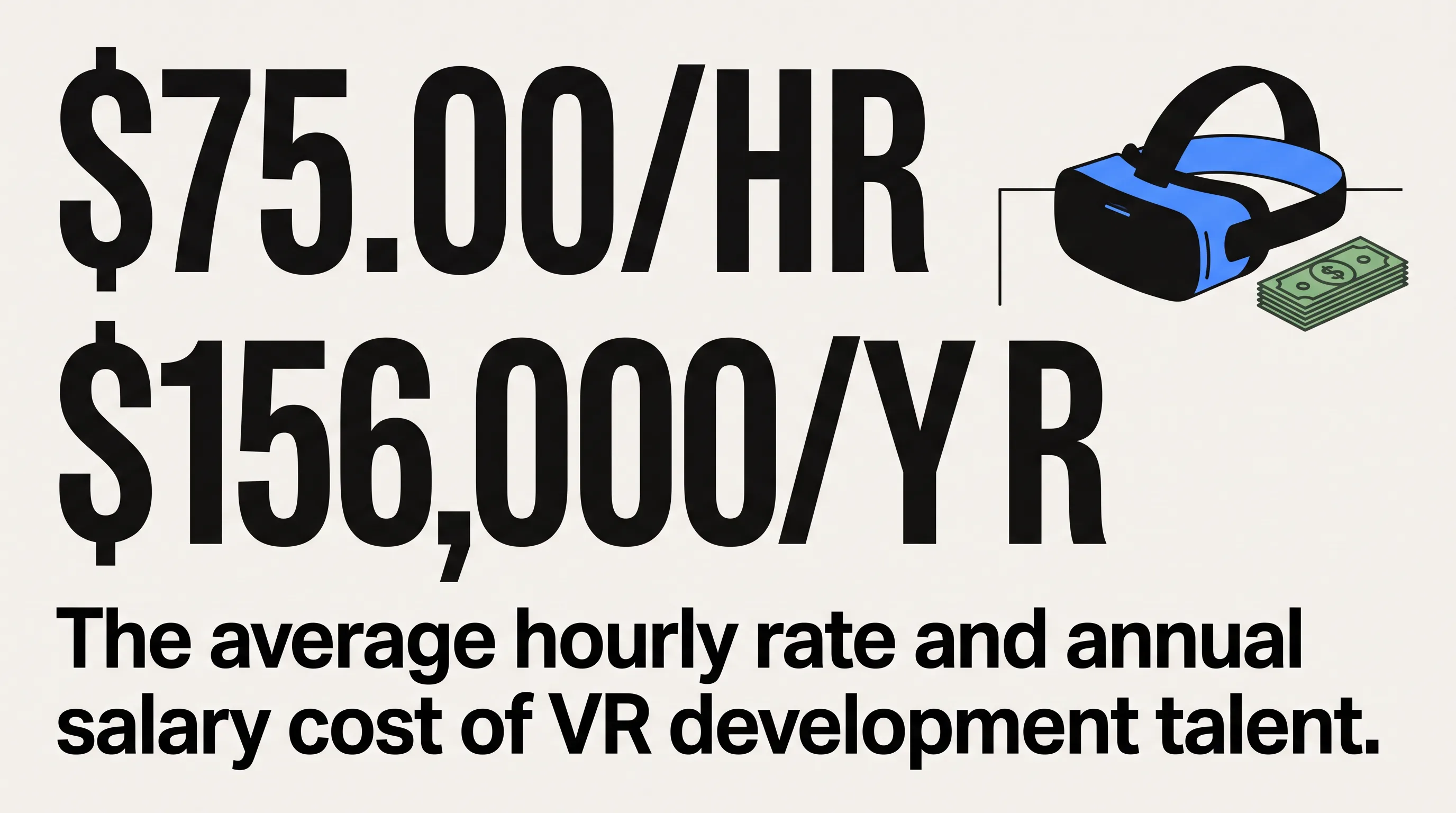
Hiring VR developers in 2026 costs $30–$100 per hour for freelancers, $50–$200 per hour for an agency or studio, and $85,000–$180,000 per year for a full-time in-house engineer, according to thinkmobiles’ February 2026 hiring guide. The right number depends less on the sticker rate than on how long the work lasts and how much QA, art, and project management the price already includes. A cheap hourly rate that needs heavy management is rarely the cheapest outcome.
| Engagement model | Typical 2026 cost | Best for |
|---|---|---|
| Freelancer | $30–$100/hr | Prototypes, scoped features |
| Agency / studio | $50–$200/hr | Full production builds |
| In-house | $85,000–$180,000/yr | Ongoing VR as a core product |
VR developer rates by region and seniority
VR developer rates vary sharply by region and seniority. In the United States, thinkmobiles’ 2026 data puts junior developers at $60–$90/hr, mid-level at $90–$140/hr, and senior at $140–$200+/hr. Eastern European seniors run roughly $80–$120/hr, and South and Southeast Asian seniors $55–$90/hr for comparable experience.
| Region | Junior | Mid-level | Senior |
|---|---|---|---|
| United States | $60–90/hr | $90–140/hr | $140–200+/hr |
| Eastern Europe | $30–50/hr | $50–80/hr | $80–120/hr |
| South/SE Asia | $20–35/hr | $35–55/hr | $55–90/hr |
Engine specialization moves the number too. Lemon.io’s 2026 rate data, drawn from more than 2,400 vetted developers, puts a senior Unity developer at about $57/hr in the US versus $40/hr in Eastern Europe, and adds a 12–20% premium for VR and XR delivery experience on top of base Unity rates. Pay the premium. VR-specific skill is what you are hiring for.
The true cost of a full-time VR hire
The true cost of a full-time VR developer is far higher than the salary line. US AR/VR developers average $113,000–$127,000 a year and specialized VR software engineers around $182,000, according to virtualverse.studio’s June 2026 guide, which also notes that a full-time hire adds 25–40% on top of base salary once you count benefits, payroll taxes, and PTO. Add a headset lab, workstations, and Unity or Unreal licenses.
If your roadmap is engine-specific, the same engagement models apply when you hire Unity developers from a studio — the economics below hold either way.
Here is the synthesis the marketplace pages skip. A $130,000 engineer loaded at 30% costs about $169,000 fully burdened, or roughly $81/hr assuming full utilization, and utilization is never full. Idle weeks between projects are pure burn. For any engagement under about 12 months of continuous VR work, a studio day rate usually beats a full-time hire on total cost, because you pay for output, not for the gaps. Above that threshold, in-house economics start to win.
Freelancer vs. Agency vs. In-House: Which VR Engagement Model to Choose
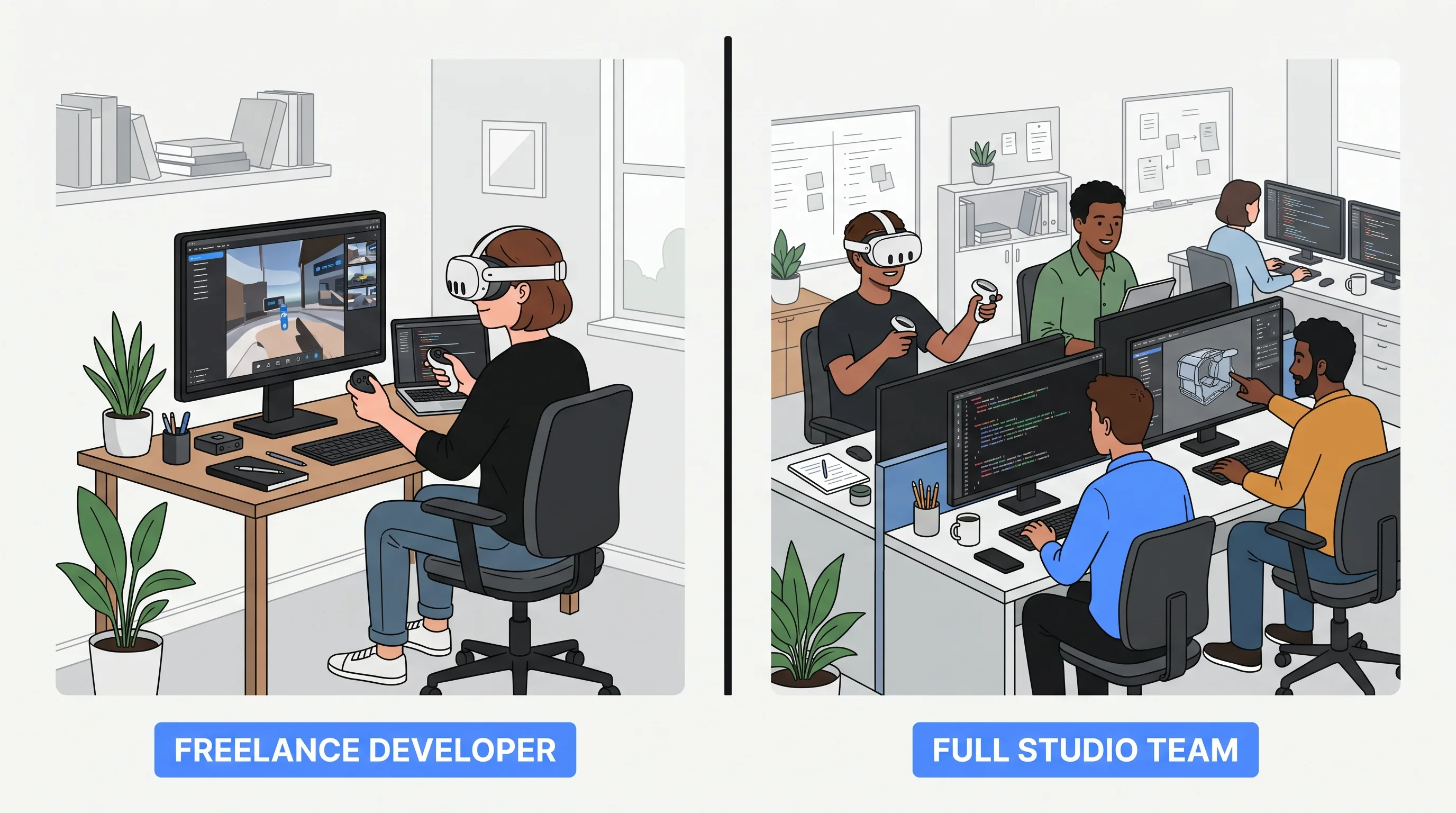
Choose a freelancer for scoped prototypes, an agency for full production builds you need shipped fast, and an in-house hire when VR is a permanent core capability. The three models differ most on time-to-hire and integrated support, not just price. Per developers.dev’s November 2025 comparison, hiring runs days to weeks for a freelancer, 2–4 weeks for staff augmentation, and 3–6 months for a full-time employee.
| Factor | Freelancer | Agency / studio | In-house |
|---|---|---|---|
| Cost | $30–100/hr | $50–200/hr | $85K–180K/yr |
| Time-to-hire | Days/weeks | 2–4 weeks | 3–6 months |
| IP risk | Higher | Low | Low |
| Scalability | 1–2 people | Scale on demand | Slow to grow |
When a freelance VR developer is the right call
A freelance VR developer is the right call for a tightly scoped prototype, an MVP, or a single feature where you can manage the work yourself. Freelancers are fast to engage and cheap per hour. The trade-off is that a freelancer is one resource, not an ecosystem, and cannot supply integrated QA, DevOps, or ongoing support for a live app. Contracts matter here: developers.dev’s 2025 analysis reports that IP disputes are four times more likely in freelance AR/VR engagements that lack robust, globally compliant legal frameworks. Get IP assignment in writing before work starts.
When to hire a VR development agency
Hire a VR development agency when you need a complete, multi-disciplinary team shipping a production build without recruiting lead time. An agency brings engineering, 3D art, technical art, and QA under one roof, with a project manager owning scope and schedule. As virtualverse.studio’s 2026 VR hiring guide puts it, “One generalist can build a rough prototype, but shipping a polished, comfortable VR experience across devices almost always requires this mix of specialists.”
This is the model we run at Frame Sixty, an AR/VR and spatial computing development studio, and it is the backbone of our virtual reality development services. On a typical VR build, our engineers hold a fixed frame budget on standalone Quest hardware while our technical artists tune shaders and lighting to stay inside it, and QA validates comfort on the headset rather than in the editor. That coordination is hard to reproduce with a single contractor. You can see the shape of that work in our VR training simulation project.
When an in-house VR team makes sense
An in-house VR team makes sense when virtual reality is a permanent, core capability with a steady, year-round workload. Owning the team gives you deep product knowledge, tight iteration, and cultural fit. The cost is real: VR talent is expensive to recruit, slow to hire at 3–6 months per role, and an idle team between releases is pure burn, as virtualverse.studio’s 2026 guide notes. In-house pays off past roughly a year of continuous work; below that, an agency ships faster for less.
Verdict: Freelancers win scoped prototypes, agencies win fast full-scope production builds, and in-house wins long-term VR products with steady demand.
Where to Find and Hire VR Developers
You can find and hire VR developers on freelance marketplaces, agency directories, job boards, and developer communities. Per onix-systems’ hiring guide (updated December 2025), the main freelance platforms are Toptal, Upwork, Freelancer, Guru, and PeoplePerHour, while Clutch and GoodFirms list vetted agencies. For full-time roles, post on LinkedIn and Indeed. For passive candidates, search GitHub and the Unity and Meta developer forums where VR engineers actually work.

Each channel filters for something different. Marketplaces optimize for speed and low friction, directories for vetted studios with reviews, and communities for hard-to-find specialists who rarely apply cold. Match the channel to the model you picked above.
A practical shortcut: if you already know you want an agency, skip the marketplaces and start with a shortlist of studios, then check their shipped work directly. Frame Sixty maintains roundups of the top VR development companies and established virtual reality companies, plus, for engine-specific needs, the top Unity development companies in 2026, which narrow the field before you ever send an email.
Need help hiring VR developers?
We are here to help!
What Skills to Look For When Hiring a VR Developer
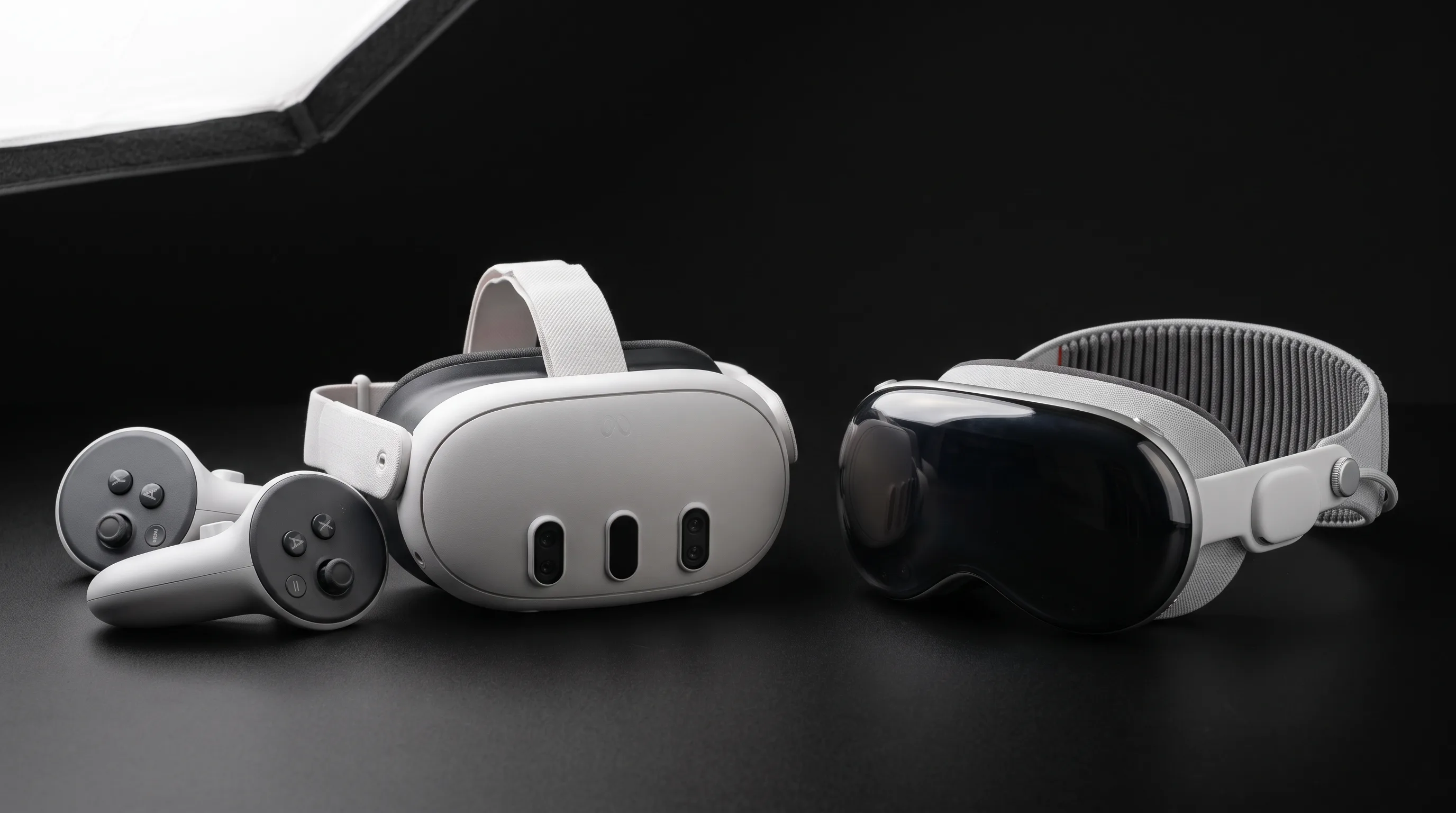
The core skills to look for when hiring a VR developer are a production engine (Unity or Unreal), the OpenXR standard, platform-specific SDKs, and demonstrable performance optimization for headsets. According to thinkmobiles’ 2026 guide, essential competencies include Unity or Unreal, Meta Quest SDK, OpenXR, shader programming, and stereoscopic rendering. Skills alone are not enough; you want evidence they ship.
Core technical skills every VR developer needs
Every VR developer needs a production engine, low-level graphics knowledge, and comfort-first design instinct. Concretely, that means Unity or Unreal with C# or C++, OpenXR for cross-platform targeting, shader work in HLSL or GLSL, stereoscopic rendering, and 3D asset optimization to protect frame rate. Motion-sickness mitigation is a skill, not an afterthought: locomotion choices, vignetting, and a steady frame rate are what keep users comfortable.
The tooling moves fast, so confirm currency. A 2026 Unity 6 VR tutorial for Meta Quest points out that many older guides are stuck on Unity 2021 and the pre-3.x XR Interaction Toolkit. Ask which toolkit version a candidate uses. For engine depth on newer devices, Frame Sixty’s notes on Unity development for Vision Pro show what current platform work looks like. If the project leads with visual fidelity instead of device reach, you can hire Unreal Engine developers for the same roles.
Platform expertise: Meta Quest, Vision Pro, and PCVR
Platform expertise means knowing the SDK and interaction model of your target device, because Meta Quest, Apple Vision Pro, and PCVR each demand different skills. For Quest, Meta’s official Unity development toolchain centers on the Meta XR Core SDK and OVRCameraRig, while the Meta XR Interaction SDK supplies grab, poke, ray, hand tracking, and locomotion with controllers or hands. Ask candidates which of these they have shipped.
For Apple’s headset, you want visionOS and RealityKit fluency; Frame Sixty’s Apple Vision Pro developers page outlines that skill set. If Vision Pro is your only target, it is often cleaner to hire Apple Vision Pro developers directly rather than a generalist. For browser-based reach, WebXR skills matter. Match the specialist to the device. A brilliant Quest engineer is not automatically a visionOS engineer.
How to Evaluate a VR Developer’s Portfolio
Evaluate a VR developer’s portfolio by putting their shipped apps on an actual headset and testing performance, comfort, and interaction quality yourself. thinkmobiles’ 2026 guide is blunt about this: “Watching a video is not enough.” A demo reel hides frame drops, tracking jitter, and nausea-inducing locomotion. Twenty minutes in the headset tells you more than an hour of screen-share.

Run this checklist, in order:
- Play it on-device. Load their shipped work on a Quest 3 or Vision Pro and use it.
- Watch the frame rate. It should hold 72 or 90 FPS on standalone hardware without hitches.
- Test comfort. Check locomotion options, snap-turn, and vignetting for motion sickness.
- Probe interactions. Grab, poke, and hand-tracking should feel precise, not floaty.
- Set a live task. Ask them to optimize a 500,000-triangle scene to 72 FPS on Quest 3 and narrate the tradeoffs.
The live optimization task is the single most predictive screen, because it exposes real performance judgment that a polished portfolio can mask. onix-systems’ 2025 guide adds two more filters worth applying: request a proof of concept for major projects, and verify Agile and CI/CD familiarity so the developer fits your process. For a broader primer to share with non-technical stakeholders, Frame Sixty’s virtual reality development guide covers the fundamentals.
What a Full VR Development Team Looks Like
A full VR development team has five specialized roles: a Unity or Unreal engineer, a 3D artist, a technical artist, a QA tester, and a project manager. According to virtualverse.studio’s 2026 guide, the engineer builds interaction logic and systems, the 3D artist produces performance-optimized environments and props, the technical artist bridges art and engineering through shaders and lighting, the QA tester validates comfort and frame rate on real headsets, and the project manager holds scope and schedule.
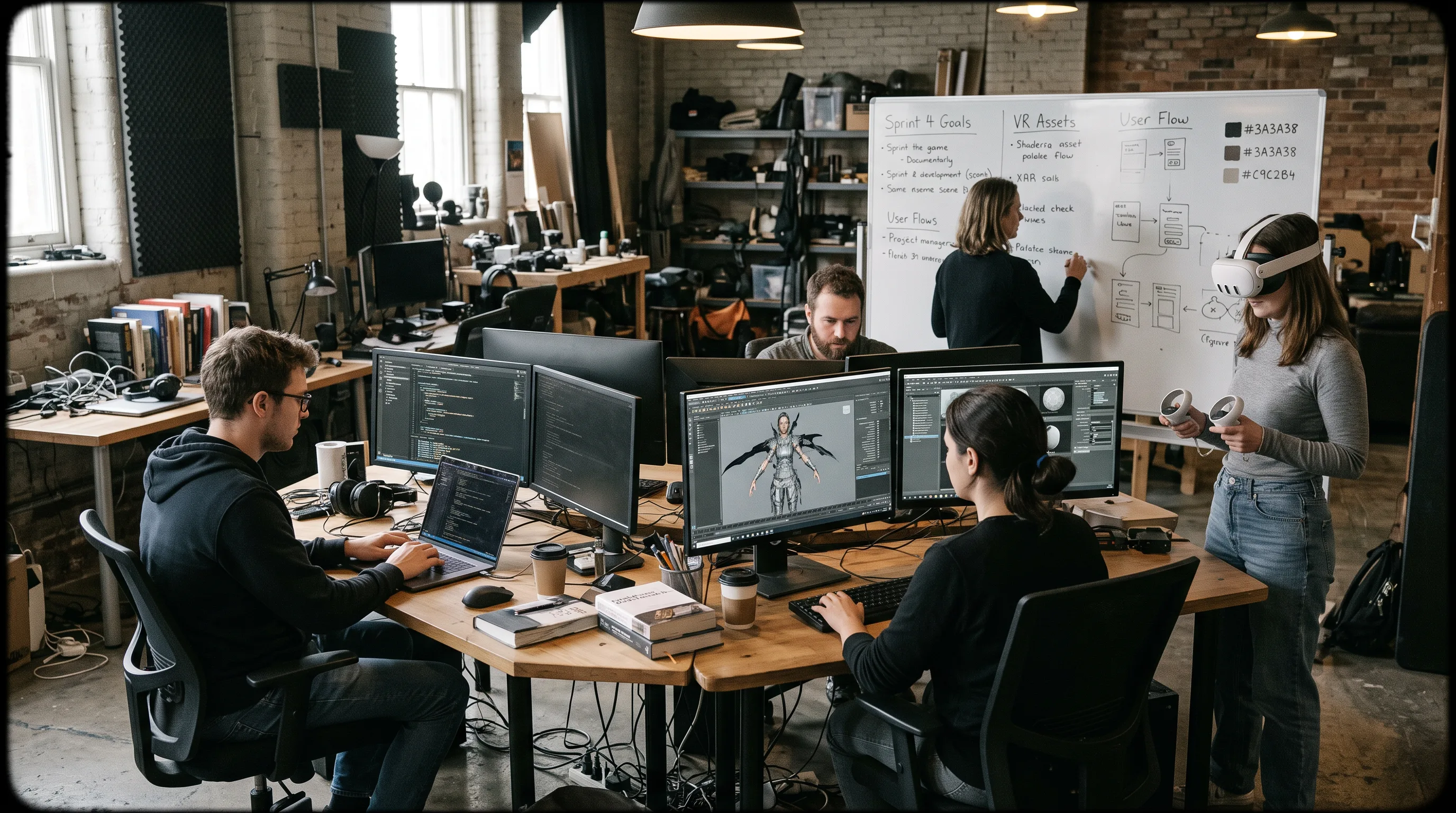
This is why hiring a single “VR developer” for a production build so often stalls. The work spans disciplines that rarely live in one person. VR is a team sport.
In our enterprise work at Frame Sixty, this five-role structure is how a VR training build actually ships: engineers and technical artists trade off against a shared frame budget while QA tests every interaction on the target headset, not in the Unity editor where performance lies to you. When a client asks us to “just add one developer,” we explain that a lone engineer without art and QA support tends to produce a demo, not a deployable product.
Red Flags to Watch for When Hiring VR Developers
The biggest red flag when hiring VR developers is a portfolio with no shipped, on-device VR work you can test yourself. If everything is concept art and sizzle reels, assume the hard problems are unsolved. Several other warning signs, drawn from thinkmobiles’ and virtualverse.studio’s 2026 guides and developers.dev’s 2025 analysis, should give you pause:
- One-person-does-everything claims. Nobody delivers professional engineering, 3D art, and QA alone at production quality.
- No real-hardware QA plan. Testing only in the editor hides the frame drops and nausea that ship to users.
- Vague performance targets. A serious VR developer commits to concrete goals like 72 or 90 FPS, not “it’ll run fine.”
- No optimization strategy for standalone headsets. Quest 3 is a mobile chip; ignoring that guarantees a poor experience.
- Weak IP or contract terms. Given the four-times-higher dispute rate in loose freelance agreements, insist on clear IP assignment.
The market rewards getting this right. Per Treeview’s July 2026 industry report, XR headset shipments reached 14.5 million units in 2025 (up 41.6% year over year), IDC forecasts 33.5% growth in 2026, and 75% of Fortune 500 companies have adopted VR for training and education. The talent you hire now builds for a fast-growing audience.
Conclusion
Hiring VR developers in 2026 comes down to matching the engagement model to the job: freelancers for scoped prototypes, an agency for production builds you need shipped fast, and an in-house team for long-term VR products. Across all three, the evaluation is the same. Screen for Unity or Unreal, OpenXR and platform SDK depth, and, above all, shipped work you can test on a headset at 72 or 90 FPS.
The position we hold, and defend on every client call, is that VR ships as a team sport. A single freelancer can prove a concept, but a comfortable, performant product almost always needs the five-role structure of engineer, 3D artist, technical artist, QA, and project manager. Hire for that reality and you avoid the rework that sinks solo builds. Get the IP terms in writing, and pay the VR specialization premium; it is cheaper than a rebuild.
If you’re weighing how to hire VR developers for your next project, get in touch with Frame Sixty and we’ll help you scope the team, timeline, and platform that fit your goals.
FAQs
Common questions about hiring VR developers in 2026, covering costs, rates, skills, engagement models, timelines, and protecting your IP.
Freelance VR developers charge $30 to $100 per hour in 2026, according to thinkmobiles' hiring guide. Rates rise with seniority and region: US juniors run $60 to $90 per hour and US seniors $140 to $200+, while Eastern European seniors run $80 to $120 and South and Southeast Asian seniors $55 to $90. VR and XR delivery experience adds a 12 to 20 percent premium.
US VR developers earn $113,000 to $127,000 per year on average, with specialized VR software engineers reaching roughly $182,000, according to virtualverse.studio's 2026 guide. Salary is not the full cost: a full-time hire adds 25 to 40 percent on top of base pay for benefits, payroll taxes, and PTO, plus equipment like headsets and Unity or Unreal licenses.
A Unity VR developer works in C# with the broadest VR ecosystem and standalone Quest support, while an Unreal developer works in C++ and Blueprints with stronger high-fidelity rendering for PCVR. Unity dominates standalone headset work; Unreal suits visually demanding, tethered experiences. A senior Unity developer averages about $57 per hour in the US, per lemon.io's 2026 data. Match the engine to your target device.
You need a specialist matched to your target device, because Meta Quest and Apple Vision Pro demand different skills. Quest work centers on the Meta XR Core SDK and Interaction SDK in Unity, while Vision Pro requires visionOS and RealityKit fluency. A brilliant Quest engineer is not automatically a visionOS engineer. If Vision Pro is your only target, hire a Vision Pro specialist directly rather than a generalist.
Hiring a VR developer takes days to weeks for a freelancer, two to four weeks for staff augmentation, and three to six months for a full-time in-house employee, according to developers.dev's 2025 comparison. Agencies fall between: an existing studio can start a production build without the recruiting lead time that a permanent hire requires. Match the timeline to your project's urgency.
Usually yes - hiring VR developers for a production build means staffing five roles: engineer, 3D artist, technical artist, QA tester, and project manager, a mix rarely found in one contractor. A lone engineer without art and QA support tends to produce a demo, not a deployable product. Frame Sixty runs this five-role structure on its VR builds, holding a fixed frame budget on standalone Quest hardware and validating comfort on the headset itself.