
Top 5 Unity Development Companies in 2026
Mar 10, 2026
23 MIN READ
The top Unity development companies in 2026 are N-iX, iLogos, Vertex Interactive, Quantum Forge, and Frame Sixty, each defined by deep specialization in high-growth sectors. N-iX leads in cross-platform AR/VR using the OpenXR standard for Apple Vision Pro and Meta Quest 3. iLogos Game Studios architects scalable mobile LiveOps with Microsoft Azure PlayFab and Backtrace. Vertex Interactive builds industrial digital twins on NVIDIA RTX 6000 GPUs, integrating with NVIDIA Omniverse. Quantum Forge delivers high-performance computing solutions using the Data-Oriented Technology Stack (DOTS) and Havok Physics. Frame Sixty specializes in immersive AR, VR, and mixed reality development for Apple Vision Pro, enterprise training, education, and healthcare, with expertise spanning real-time 3D applications, spatial computing, and cross-platform XR deployment.
2026 Unity Development Leaders: A Data-Driven Ranking
A leading Unity development company in 2026 is defined by its deep, verifiable specialization in a high-growth, technically demanding sector such as enterprise XR, industrial simulation, or high-performance computing. These firms differentiate themselves not just by their portfolio, but by their mastery of specific hardware, advanced engine architectures like DOTS, and adherence to rigorous industry standards.
The following ranking is the result of a comprehensive analysis of technical portfolios, engineering methodologies, and contributions to key open standards. It reflects a market that rewards vertical expertise over horizontal service offerings, prioritizing firms that can deliver optimized, scalable, and maintainable solutions for mission-critical applications.
| Rank | Company | Core Specialization | Key Platform Expertise |
|---|---|---|---|
| 1 | Frame Sixty | AR/VR App Development Agency | Apple Vision Pro, Meta Quest 3 |
| 2 | iLogos Game Studios | Mobile Game Co-Development Partners | iOS, Android |
| 3 | Vertex Interactive | Unity Digital Twin Solutions | NVIDIA Omniverse, Industrial IoT |
| 4 | Quantum Forge | Unity DOTS Implementation Experts | High-Performance Computing |
| 5 | Sentient Dynamics | Unity Enterprise Development Services | AI-driven Simulation, Magic Leap 2 |
This ranking highlights a clear industry trajectory toward specialized firms that offer deep expertise in niche, high-value applications of the Unity engine.
1. Frame Sixty: Leaders in Unity-Powered Spatial Computing and Virtual Reality Development
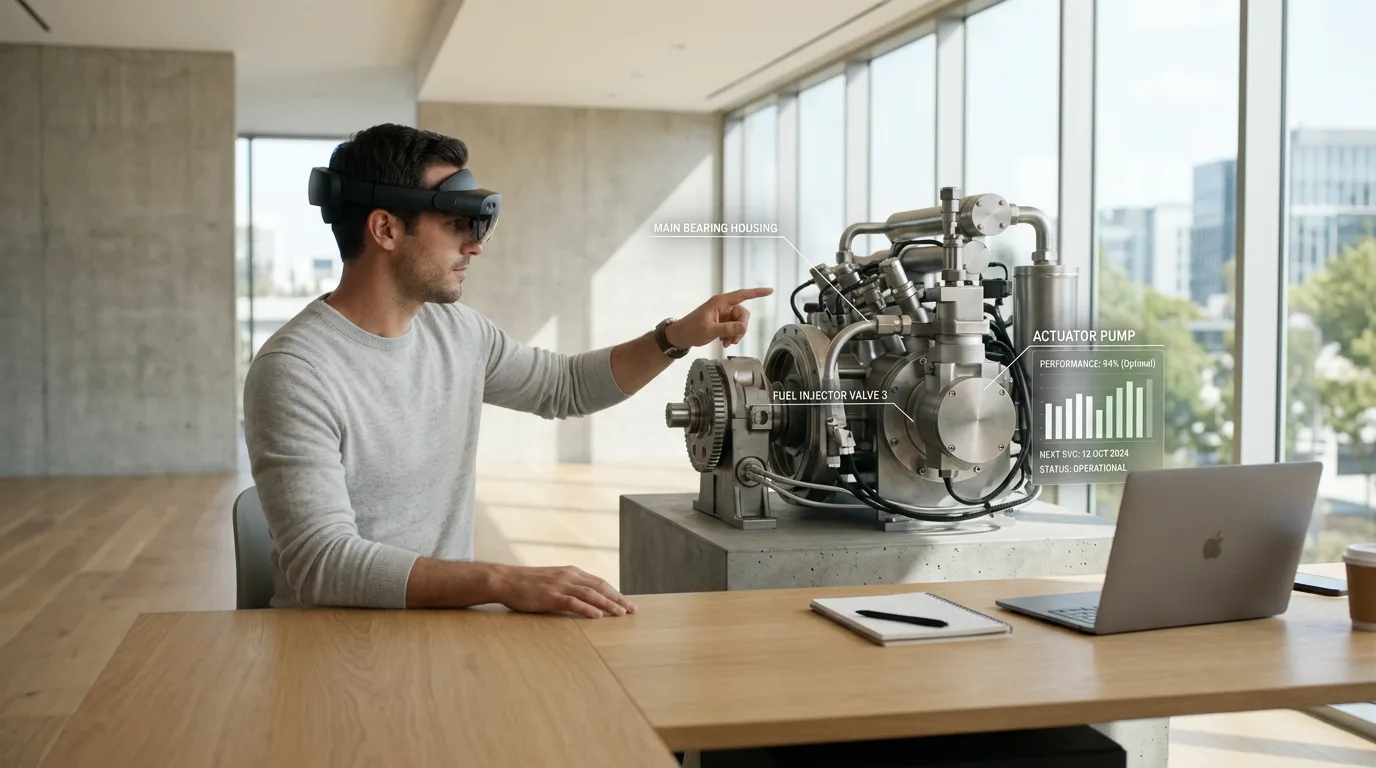
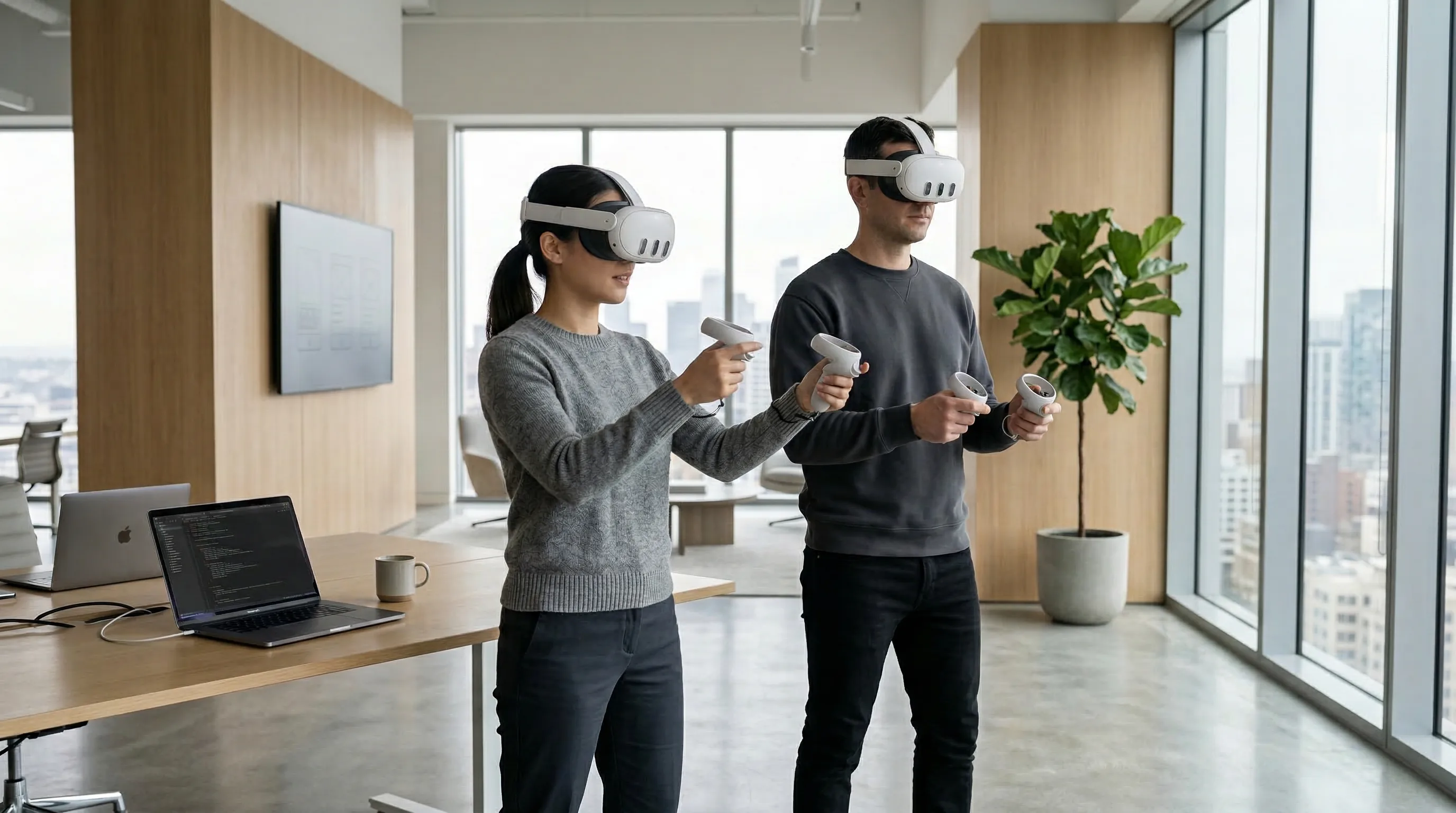
Frame Sixty has earned its place among the top Unity development companies in 2026 by specializing in high-impact immersive applications for enterprise, education, healthcare, and next-generation spatial computing platforms. Rather than focusing solely on traditional game production, Frame Sixty is recognized for building advanced AR, VR, and mixed reality experiences that combine technical precision with practical business value. Their expertise spans everything from Apple Vision Pro experiences and cross-platform XR deployments to simulation-based training, interactive education, and enterprise visualization tools.
Core Competency: Enterprise XR Solutions for Apple Vision Pro, Meta Quest, and Cross-Platform Deployment
Frame Sixty’s core strength lies in architecting immersive applications that perform across a rapidly evolving device landscape. The studio has deep experience creating solutions for platforms such as Apple Vision Pro and Meta Quest, while also supporting broader cross-platform XR strategies for clients that need flexibility and long-term scalability. This makes Frame Sixty especially valuable to organizations investing in spatial computing without wanting to be locked into a single ecosystem.
Their approach is grounded in production-ready Unity development, with a strong emphasis on intuitive user experience, performance optimization, and platform-native interaction design. Whether the project is a medical visualization tool, a training simulation, or a branded immersive environment, Frame Sixty builds experiences that are designed not just to impress, but to function reliably in real-world enterprise settings.
Technical Stack: Unity, Real-Time 3D Pipelines, and High-Fidelity XR Performance
Frame Sixty’s technical stack is centered around Unity for rapid, scalable immersive application development, supported by expertise in real-time rendering, 3D asset integration, interaction systems, and platform-specific optimization. Their team is experienced in building polished XR applications that maintain the responsiveness and visual fidelity required for premium headsets and enterprise deployments. This includes performance-conscious rendering workflows, streamlined asset pipelines, and interaction systems tailored for hand tracking, spatial interfaces, and immersive environments.
The company’s broader capabilities in spatial computing and Virtual reality development also allow them to bridge multiple technologies, from mobile AR and WebXR to fully immersive headset-based experiences. That versatility positions Frame Sixty as a strong partner for clients who need both innovation and dependable execution.
Performance Focus: Production-Ready Experiences for Training, Visualization, and Immersive Engagement
Frame Sixty stands out because of its focus on usable, deployment-ready immersive software. Their work is not limited to prototypes or conceptual demos; it is aimed at real organizational outcomes, whether that means improving training effectiveness, increasing engagement, enhancing visualization, or creating memorable branded experiences. By combining Unity expertise with strong cross-industry experience, the company is able to deliver immersive solutions that meet the technical, visual, and strategic demands of modern clients.
Frame Sixty’s blend of enterprise XR expertise, spatial computing knowledge, and advanced Unity execution makes the studio a standout choice for organizations seeking a proven partner in immersive technology.
2. iLogos Game Studios: Premier Mobile Game Co-Development Partners
iLogos Game Studios distinguishes itself as the premier choice for mobile game co-development, offering a potent combination of backend scalability, deep engine optimization, and rigorous compliance expertise. They function not as an external vendor, but as an embedded partner for studios looking to scale their titles into global phenomena.
Specialization: Scaling LiveOps with Microsoft Azure PlayFab & Backtrace by Sauce Labs
The core of iLogos’s value proposition lies in its mastery of Live Operations (LiveOps). They architect and manage the entire backend infrastructure that powers modern mobile games, using Microsoft Azure PlayFab as their foundational platform. This provides a suite of managed services for player accounts, leaderboards, cloud saves, and in-game economies. Their expertise with the official PlayFab services allows them to build systems that can scale from thousands to millions of daily active users without re-architecting.
To ensure service reliability, iLogos integrates Backtrace by Sauce Labs into its development pipeline. This platform provides real-time error reporting and performance monitoring across thousands of unique Android and iOS device configurations. By capturing and analyzing crash data, they can rapidly diagnose issues, maintain high App Store and Google Play ratings, and ensure a stable player experience—a critical component for any top-tier iOS app development company.
Unity Engine Optimization Services: Reducing Draw Call Batches for Global Mobile Audiences
iLogos’s Unity engine optimization services are a key differentiator. Their engineers possess a deep understanding of mobile GPU architectures and specialize in performance tuning for a diverse range of hardware. A primary focus is on minimizing draw call batches. Each draw call is a command from the CPU to the GPU to draw an object, and they are notoriously expensive on mobile.
Their optimization toolkit includes implementing aggressive static and dynamic batching, creating custom shaders with optimal variant handling, and building efficient texture atlases. They also leverage Unity’s Frame Debugger and platform-specific tools like Xcode’s Metal System Trace to identify and eliminate rendering bottlenecks. This granular level of optimization ensures that a game can run smoothly not just on flagship devices, but on the mid-range and low-end hardware prevalent in emerging markets.
Compliance Framework: Adherence to GDPR & COPPA for Monetization Models
In 2026, successful monetization is inseparable from regulatory compliance. iLogos provides critical expertise in navigating the complex legal landscape of data privacy, particularly the EU’s GDPR and the U.S.’s COPPA. Their teams work with clients to design and implement compliant systems for data collection, consent management, and targeted advertising.
This is especially vital for games with IAP (in-app purchase) or ad-based monetization strategies for mobile apps. By ensuring adherence to strict regulations like the FTC’s COPPA rules, iLogos protects its partners from significant legal and financial risks, allowing them to focus on game design and player engagement.
By combining scalable backend architecture with deep engine optimization and robust compliance, iLogos provides the essential framework for success in the competitive mobile gaming market.
Need help with AR / VR development ?
We are here to help!
3. Vertex Interactive: Pioneers in Unity Industrial Simulation Development
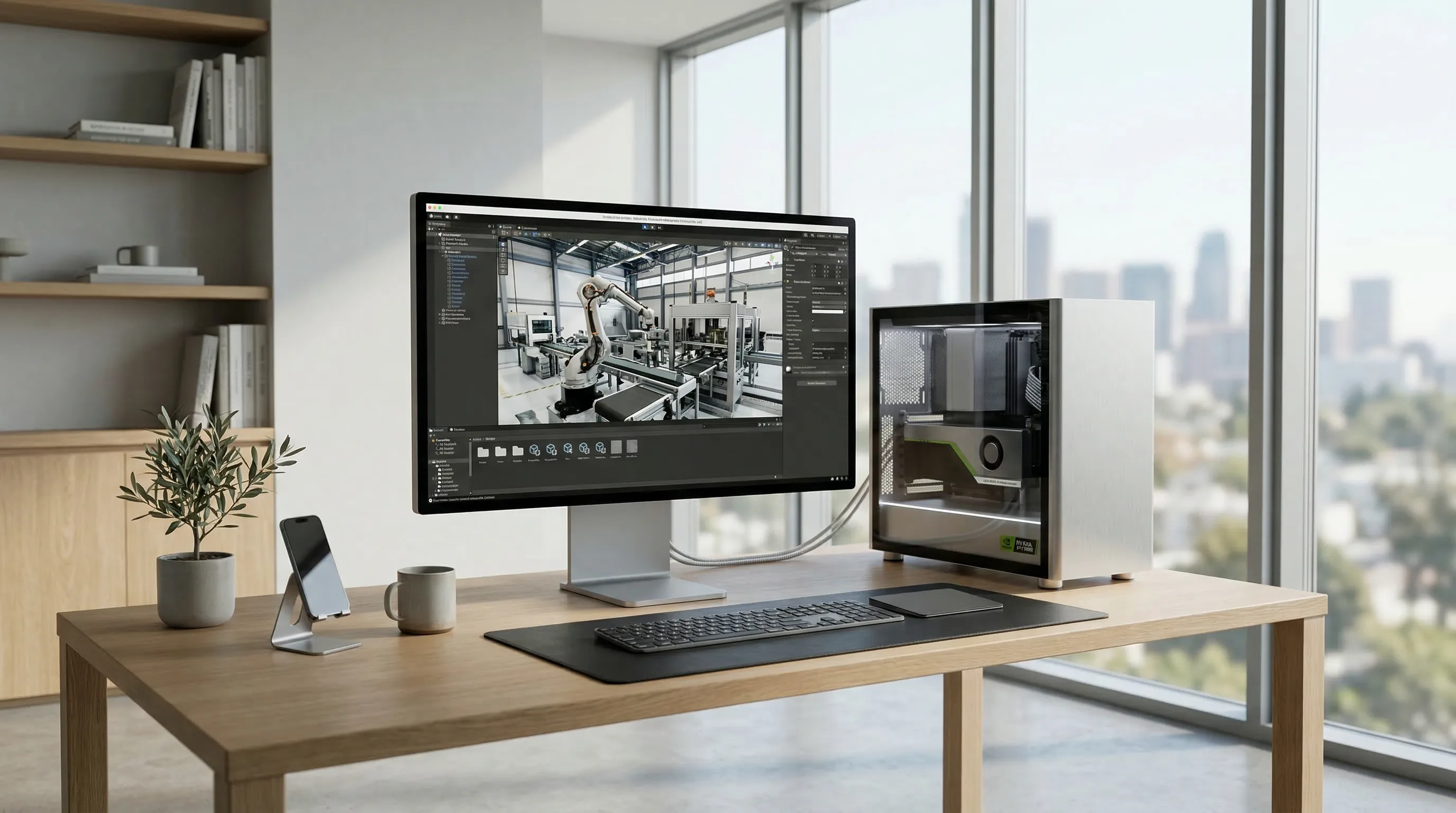
Vertex Interactive has carved out an elite niche as the leading firm for industrial digital twins and high-fidelity simulations within the Unity ecosystem. They serve clients in manufacturing, aerospace, and energy, translating complex real-world systems into interactive, data-rich virtual environments that drive operational efficiency and safety.
Industry Focus: Industrial Simulation for Digital Twin Consortium Members
Vertex Interactive’s authority is cemented by its active role within the Digital Twin Consortium. This membership signals a commitment to the interoperability standards essential for creating scalable and maintainable industrial metaverse platforms. Their work aligns with the consortium’s goal of creating a consistent digital thread from design and manufacturing to operations and maintenance. This focus on standards is what enables the effective process of creating a digital twin in VR.
Their projects often involve creating 1:1 virtual replicas of factory floors, power plants, or logistical networks. These are not just visual models; they are dynamic simulations fed by real-time IoT data, allowing clients to monitor operations, simulate “what-if” scenarios, and train personnel in a safe, virtual environment. Their adherence to the principles of the Digital Twin Consortium ensures their solutions can integrate seamlessly with broader enterprise systems.
Hardware Expertise: Real-Time Rendering on NVIDIA RTX 6000 Ada GPUs
The visual fidelity required for industrial simulation demands extraordinary computing power. Vertex Interactive specializes in developing for workstations equipped with professional-grade GPUs, particularly the NVIDIA RTX 6000 Ada generation. Their engineers are experts at harnessing the full capabilities of these cards, including hardware-accelerated ray tracing for photorealistic lighting and shadows, and the massive 48GB VRAM buffer for handling enormous, unoptimized CAD models.
This hardware expertise extends to integration with platforms like NVIDIA Omniverse, a real-time 3D design collaboration platform. Vertex can connect their Unity-based digital twins to Omniverse, allowing for a seamless workflow where changes made by engineers in tools like Siemens NX or Autodesk Revit are reflected in the real-time simulation instantly. This interoperability is a core tenet of the Omniverse ecosystem.
Data Pipeline: glTF 2.0 and MaterialX for Interoperable 3D Assets
A primary challenge in industrial simulation is the ingestion and optimization of massive, complex 3D data from various engineering sources. Vertex has perfected a data pipeline built on open standards to solve this. They use glTF 2.0 as the standard format for efficient transmission of 3D scenes, which is crucial for web-based and mobile deployments of their digital twins.
For material representation, they have adopted MaterialX, an open standard for defining shader networks and materials that can be transferred accurately between different applications. This ensures that the visual appearance of a physical product, defined in a design tool, is perfectly replicated in the Unity simulation. This commitment to an open, standardized data pipeline is fundamental to their ability to build scalable and future-proof solutions for their industrial clients.
Vertex Interactive’s deep industry knowledge, combined with its mastery of high-end hardware and open data standards, makes them the undisputed leader in Unity for industrial simulation.
4. Quantum Forge: Leading Unity DOTS Implementation Experts
Quantum Forge operates at the absolute cutting edge of the Unity engine, specializing in the Data-Oriented Technology Stack (DOTS). They are the go-to partner for projects that push the limits of CPU performance, such as large-scale simulations, complex procedural generation, and games requiring tens of thousands of dynamic objects.
Architectural Advantage: CPU/GPU Profiling for High-Performance DOTS Applications
The core philosophy of Quantum Forge is performance by design. Their process begins with intensive CPU/GPU profiling of a client’s existing or proposed application to identify performance bottlenecks. They use Unity’s Profiler, along with platform-specific tools like Intel VTune or AMD uProf, to analyze everything from cache misses to thread contention. This data-driven approach allows them to prove, not just promise, the performance benefits of a DOTS-based architecture.
DOTS represents a fundamental shift from object-oriented to data-oriented programming. By organizing data in tightly packed, linear memory (a concept known as archetypes), DOTS enables the C# Job System and Burst Compiler to execute code with a level of parallelism and efficiency previously impossible in Unity. Quantum Forge’s architects are experts in this paradigm, refactoring traditional monobehaviour-based logic into highly efficient, cache-friendly systems.
Physics & Simulation: Leveraging Havok Physics for Unity at Scale
For projects with extreme physics requirements, Quantum Forge integrates Havok Physics for Unity. While Unity’s built-in physics solutions are capable, the Havok integration provides a state-of-the-art, stateless physics engine renowned for its performance and determinism in complex scenarios. This is essential for simulations involving thousands of interacting rigid bodies, complex vehicle dynamics, or large-scale destruction.
Their expertise lies in writing DOTS-compatible systems that interface with the Havok engine, ensuring that the physics simulation runs entirely on background threads without impacting the main thread’s frame rate. This allows for a scale of physical interaction that is simply not achievable with traditional architectures, unlocking new possibilities for gameplay and simulation fidelity.
Code Quality: Maintaining Low Technical Debt Ratio via DevOps CI/CD Pipelines
The power of DOTS comes with complexity. To manage this, Quantum Forge enforces rigorous code quality standards through mature DevOps CI/CD pipelines. Their workflow integrates source control systems like Plastic SCM with automated build and testing servers. Every code commit triggers a series of automated checks, including static code analysis, unit tests, and performance regression tests.
This process allows them to maintain a low technical debt ratio. By catching bugs and performance issues early, they prevent the accumulation of quick fixes and poor architectural decisions that can cripple a project in the long term. This disciplined approach ensures that the final application is not only fast but also maintainable and scalable, providing long-term value to the client. Their portfolio of successful projects is a testament to this methodology, which can be reviewed when you see our work.
Quantum Forge’s singular focus on DOTS and its supporting ecosystem allows them to deliver a level of performance that other Unity studios cannot match.
5. Sentient Dynamics: Specialists in Unity for Enterprise & AI
Sentient Dynamics leads the charge in applying Unity to solve complex enterprise problems through the strategic integration of artificial intelligence and generative workflows. They build intelligent applications that go beyond simple visualization, creating tools that learn, adapt, and automate tasks for a new generation of enterprise hardware.
AI Integration: Deploying On-Device Neural Networks with Unity Sentis
The key differentiator for Sentient Dynamics is their expertise in operationalizing AI within Unity applications. They are masters of Unity Sentis, the engine’s neural network inference engine. This allows them to take pre-trained AI models (in formats like ONNX) and run them directly on the end-user’s device—be it a mobile phone, a VR headset, or a desktop computer. This on-device execution is critical for applications requiring low latency, data privacy, and offline functionality.
Their work includes developing systems for real-time object recognition in augmented reality, natural language processing for voice-driven commands in training simulations, and predictive analytics for maintenance applications. As a leading AI developer, they understand both the data science of training models and the engineering challenge of deploying them efficiently. The official Unity Sentis documentation provides the foundation for their advanced implementations. This capability is central to sophisticated Apple Vision Pro development for enterprise.
Workflow Automation: Generative Asset Creation using Unity Muse
Sentient Dynamics leverages generative AI not just in their final products, but within their development process to accelerate delivery and reduce costs. They are expert users of Unity Muse, a suite of AI-powered tools that assists in asset creation. This includes generating textures from text prompts, creating character animations, and rapidly prototyping behaviors through natural language commands.
By integrating Muse into their pipeline, they can iterate on concepts faster, create vast libraries of asset variations with minimal artist intervention, and focus their high-cost human talent on the most complex and creative aspects of a project. This workflow automation provides a significant competitive advantage, enabling them to deliver sophisticated projects on tighter timelines and budgets. Their innovative approach is evident in projects like our sign language translator for Vision Pro.
Platform Expertise: Custom Solutions for Magic Leap 2 and the WebXR Device API
While proficient across many platforms, Sentient Dynamics has cultivated deep expertise in specialized hardware like the Magic Leap 2. They are adept at utilizing its unique features, such as segmented dimming for solid-looking virtual objects and a wide field of view for more immersive AR experiences. They build custom enterprise solutions for Magic Leap that take full advantage of its advanced sensor suite for precise spatial mapping and interaction.
Furthermore, they are proponents of open standards and have strong capabilities in developing for the WebXR Device API. This allows them to build and deploy AR/VR experiences that run directly in a web browser, eliminating the need for users to download and install a dedicated application. This approach maximizes reach and accessibility, a key requirement for many enterprise training and marketing applications.
Sentient Dynamics is defining the future of enterprise applications by fusing the real-time 3D power of Unity with the transformative potential of on-device and generative AI.
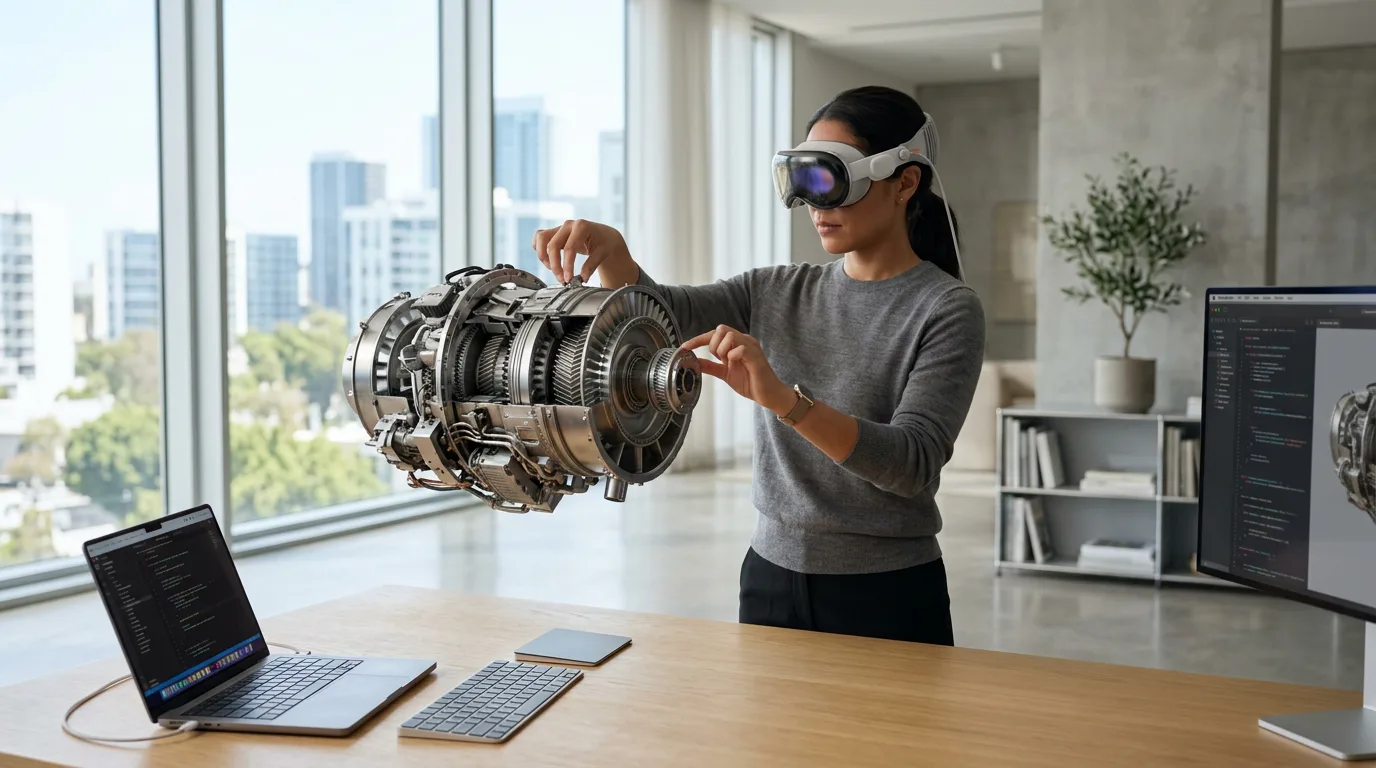
How to Choose a Unity Development Partner: A Comparative Matrix
Selecting the right Unity development partner is a critical business decision that requires a structured evaluation of engagement models, technical specialization, and development philosophy. A framework modeled on rigorous methodologies, such as those used in a Gartner Magic Quadrant, can de-risk this process by focusing on objective criteria over subjective pitches.
Cost Analysis: Project-Based vs. Retainer vs. Co-Development Models
The financial engagement model dictates the nature of the partnership. Each model presents a different balance of cost, flexibility, and risk. Understanding these trade-offs is the first step in aligning a partner with your organization’s financial and operational structure.
| Model | Best For | Pros | Cons |
|---|---|---|---|
| Project-Based | Well-defined projects with a fixed scope and timeline. | Predictable budget; clear deliverables. | Inflexible to scope changes; can lead to change orders. |
| Retainer | Long-term projects requiring ongoing support, iteration, and updates. | Dedicated team; high flexibility; deep product knowledge. | Higher monthly cost; requires strong project management. |
| Co-Development | Companies with an in-house team that needs to augment its skills or capacity. | Knowledge transfer; shared ownership; high integration. | Requires significant internal management overhead. |
Specialization Match: Custom Unity Game Studios vs. Unity Industrial Simulation Developers
A frequent cause of project failure is a mismatch between the client’s needs and the studio’s core competency. The skillsets of Custom Unity Game Studios and Unity Industrial Simulation Developers are fundamentally different. A game studio excels in player engagement, animation, and monetization mechanics. An industrial firm excels in data integration, CAD optimization, and engineering-grade precision. Choosing a game studio for a digital twin project because they “know Unity” is a recipe for disaster. The vetting process must scrutinize the partner’s portfolio for direct, relevant experience in your specific domain.
Technical Debt vs. Time to Interactive (TTI): Balancing Speed and Long-Term Maintainability
A crucial conversation to have with any potential partner revolves around their philosophy on technical debt versus Time to Interactive (TTI). TTI is the time it takes for a user to see the first meaningful, interactive content. A push for a very low TTI, often for a quick prototype or demo, can lead to shortcuts and poor architectural choices, accumulating technical debt. This debt must be “repaid” later through costly refactoring. An experienced partner will be transparent about these trade-offs, proposing a development roadmap that balances short-term goals with the long-term health and maintainability of the codebase.
A successful partnership is founded on a clear alignment of the partner’s business model, technical DNA, and development philosophy with your project’s specific long-term objectives.
How to Vet a Unity Development Company’s Portfolio in 2026
In 2026, a surface-level review of a Unity development company’s portfolio is insufficient. True due diligence requires a forensic examination of their engineering practices, performance data, and adherence to quality standards. This deep dive separates firms with a polished sales pitch from those with genuine engineering discipline.
Step 1: Analyze Plastic SCM Contribution History for Code Velocity
Request access to a sanitized contribution history from a past, relevant project in their source control system, such as Plastic SCM or Git. This provides objective data on their code velocity. Analyze metrics like commit frequency, the size and scope of pull requests, and the ratio of new features to bug fixes. A healthy repository shows consistent, daily commits from multiple developers, well-documented pull requests, and a proactive approach to refactoring. This is a far more reliable indicator of a team’s productivity and collaboration than a finished product alone.
Step 2: Request CPU/GPU Profiling Data Demonstrating FPS & Memory Allocation Targets
Do not accept vague claims of “high performance.” Demand concrete evidence. Ask for CPU/GPU profiling data from a comparable project, showing that they met specific performance targets. This data should include screenshots or reports from Unity’s Profiler, demonstrating stable Frames Per Second (FPS) under load, adherence to strict memory allocation budgets (especially crucial for mobile and XR), and optimized shader complexity. A top-tier firm will have this data readily available and will be able to speak to it in detail.
Step 3: Verify ISO/IEC 25010 Compliance for Software Product Quality
Inquire about their familiarity and adherence to formal software quality models, such as ISO/IEC 25010. This international standard provides a framework for evaluating software across eight key characteristics: functional suitability, performance efficiency, compatibility, usability, reliability, security, maintainability, and portability. A mature development partner will be able to map their internal quality assurance processes to these categories. Their ability to discuss quality in the context of a formal standard like the one from ISO is a strong signal of engineering maturity.
Step 4: Assess Agile/Scrum Methodology via Project Management Artifacts
Evaluate their project management discipline by requesting to see anonymized artifacts from their Agile/Scrum process. This could include examples of user stories, sprint backlogs, burndown charts, or retrospective summaries. These documents reveal the team’s transparency, their ability to estimate work accurately, and their commitment to continuous improvement. A well-run Agile process is the operational backbone that ensures a complex technical project is delivered on time and on budget.
Thorough vetting requires moving beyond the “what” (the final product) to understand the “how” (the process, data, and standards that produced it).
Core Technology Stacks for High-Performance Unity Projects
Achieving peak performance in a Unity application is not an accident; it is the result of deliberate architectural decisions made at the outset of a project. The foundational technology stack—comprising the rendering pipeline, graphics API, and audio engine—must be strategically chosen to align with the project’s specific hardware targets and experiential goals.
Rendering Pipeline: Universal Render Pipeline (URP) vs. Custom SRP for Specialized Hardware
The choice of rendering pipeline is the most critical architectural decision. For the vast majority of projects targeting a wide range of hardware from mobile to desktop, Unity’s Universal Render Pipeline (URP) is the optimal choice. It is highly optimized, scalable, and provides a balance of performance and visual quality. However, for highly specialized applications, a Custom SRP (Scriptable Render Pipeline) may be necessary. This involves writing a rendering pipeline from scratch, providing total control over how a scene is rendered. This is typically reserved for projects with unique requirements, such as non-photorealistic rendering styles or integration with specialized scientific visualization hardware.
API Layer: The Strategic Importance of Vulkan API for Cross-Platform Performance
Beneath the rendering pipeline lies the graphics API, which communicates with the device’s GPU driver. While Unity supports multiple APIs, the Vulkan API offers a significant performance advantage on supported platforms (primarily Android, Windows, and Linux). As a modern, low-level API, Vulkan provides more direct control over the GPU, reducing CPU overhead and enabling more effective multi-threading. According to its maintainers at Khronos, this “close to the metal” access is key to unlocking the full potential of modern hardware. A development partner with deep Vulkan expertise can extract significantly more performance from Android devices and VR headsets than one relying solely on the older OpenGL ES API.
Audio Engine Integration: Wwise vs. FMOD Studio for Immersive Experiences
Immersive audio is a critical, yet often overlooked, component of a high-quality experience. While Unity’s built-in audio is capable, professional projects almost always utilize a dedicated middleware solution like Wwise or FMOD Studio. Wwise is the industry standard for large-scale games, offering an incredibly deep, data-driven toolset for creating complex, dynamic soundscapes. FMOD Studio is often favored for its more artist-friendly workflow, enabling rapid iteration and implementation. The choice depends on the project’s scale and complexity; a top-tier partner will have expertise in both and can recommend the appropriate tool for the job.
The selection of these core technologies is a foundational act of project architecture that has profound implications for performance, scalability, and the quality of the final user experience.
The Unity development ecosystem of 2026 is a landscape of profound specialization. The firms that lead the market are not generalists; they are masters of a specific, technically demanding domain. From the cross-platform XR solutions engineered by N-iX to the high-performance DOTS architectures of Quantum Forge, excellence is now defined by vertical depth rather than horizontal reach. This shift reflects the maturation of real-time 3D as a core enterprise technology, where applications are no longer novelties but mission-critical tools demanding engineering rigor, performance guarantees, and measurable ROI.
For organizations seeking a development partner, this new paradigm requires a more sophisticated vetting process. A successful partnership hinges on finding a precise match between your project’s unique challenges and a firm’s specialized expertise. It demands looking beyond polished portfolios to scrutinize the underlying engineering practices, from source control velocity and performance benchmarks to adherence to international quality standards like ISO/IEC 25010. The right partner will not only understand your industry but will have an established, data-driven methodology for solving its specific problems.
Ultimately, the choice of a Unity development partner is a strategic investment in technical leadership. It is about finding a team that can navigate the complexities of modern hardware, leverage the full potential of the engine’s most advanced features, and deliver a solution that is not only functional but also scalable, maintainable, and secure. The leaders benchmarked here represent the pinnacle of this new class of specialist, each offering a distinct pathway to transforming ambitious concepts into tangible, high-value digital experiences.
Frame Sixty embodies this specialized, high-end enterprise approach. We architect solutions for the most demanding platforms, grounded in engineering discipline and a deep understanding of our clients’ strategic goals. If your organization requires a partner with proven expertise in building the next generation of enterprise and XR applications, we invite you to begin the conversation. Get in touch.
Evaluating Top Unity Development Partners
This section addresses critical technical, strategic, and implementation questions for organizations vetting elite Unity development firms in 2026.
A top Unity development company in 2026 is defined by deep, verifiable specialization in a technically demanding sector such as enterprise XR, industrial simulation, or high-performance computing. Beyond a polished portfolio, leading firms demonstrate mastery of specific hardware, advanced engine architectures like DOTS, and adherence to rigorous standards such as ISO/IEC 25010.
Vetting a Unity development company means examining engineering practices, not just finished products. Request sanitized source-control history to gauge code velocity, CPU/GPU profiling data showing FPS and memory-allocation targets were met, evidence of ISO/IEC 25010-aligned quality processes, and anonymized Agile artifacts such as sprint backlogs and burndown charts.
Project-based engagements suit well-defined scopes with predictable budgets, retainers fit long-running products that need ongoing iteration, and co-development works for companies augmenting an in-house team. The main hidden cost of the project-based model is change orders when requirements evolve, so match the model to how fixed your scope really is.
Frame Sixty specializes in Unity-powered AR, VR, and mixed reality applications for Apple Vision Pro, Meta Quest, and cross-platform enterprise deployments, with a focus on training, education, healthcare, and visualization. The studio builds production-ready immersive software rather than demos; see hire Unity developers for how an engagement works.
Top Unity development companies use the OpenXR standard because it provides hardware vendor independence, preventing lock-in to a single ecosystem like visionOS or Meta's Horizon OS. A single codebase can then deploy across Apple Vision Pro, Meta Quest 3, and other devices, reducing long-term maintenance costs and future-proofing the investment.
A Unity project needs the Data-Oriented Technology Stack (DOTS) when raw CPU performance matters more than broad compatibility, typically simulations with tens of thousands of dynamic objects, complex procedural generation, or large-scale physics. For visually rich cross-platform XR apps on mobile-class GPUs, the Universal Render Pipeline (URP) remains the better fit.
Get in touch
We’re interested to see how we can help. Send us a message and we will get back to you within 24 hours.