
What Is a Digital Twin in Construction?
Aug 27, 2026
14 MIN READ
A digital twin in construction is a live, data-connected virtual replica of a building or site that stays synchronized with the physical asset through IoT sensors, laser scans, and BIM data. It differs from a BIM model because BIM is a design-time model that freezes at handover, while a digital twin keeps updating through construction and into operation, reflecting real conditions and feeding decisions back to the people running the project.
Key Takeaways
- A construction digital twin syncs to the real building through IoT sensors, laser scans, and BIM geometry; BIM alone stops updating at handover.
- Construction digital twins cost $10,000 for a single-system proof of concept up to $4.2 million for a large campus, per Azilen’s 2026 cost guide.
- Gartner ranked digital twins the #1 strategic technology trend for building operators in 2025, per System Control Tech’s 2025 analysis.
- The construction and real estate digital twin market is projected to reach $92.06 billion by 2029 at a 17.1% CAGR, per Mindinventory’s 2026 digital twin statistics.
- A digital twin pays off on a single project when the owner keeps operating the building; on a hand-off-and-leave contract it usually does not.
What Is a Digital Twin in Construction?
A digital twin in construction is a virtual replica of a physical building or site that maintains a two-way data connection to the real asset, so the model reflects current conditions and can inform operational decisions. Three attributes separate a twin from an ordinary 3D model: a live data link to the physical structure, updates that flow in both directions, and the ability to simulate future states rather than just record the present.
The distinction matters because most AEC teams already own a model. They have BIM. What they usually do not have is the sensor feed, the analytics layer, and the persistent data connection that turn a static model into something that tracks reality week by week.
Adoption is real and accelerating, not theoretical. Gartner ranked digital twins the #1 strategic technology trend for building operators in 2025, according to System Control Tech’s November 2025 analysis, which also documented a 300–400% year-over-year surge in commercial-portfolio deployments that year.
This article covers construction and AEC specifically: BIM workflows, jobsites, reality capture, and facility handover. Manufacturing twins are a related but separate topic with a different lifecycle, covered in our guide to what a digital twin is in manufacturing.
How Is a Digital Twin Different from BIM?
BIM is a design-time model that captures how a building is designed and constructed; a digital twin is a live operational model that keeps updating after the building is complete. Building information modeling answers “what does this building consist of.” A digital twin answers “how is this building performing right now, and what happens next.” The two are complementary, not competing.
The table below compares the three artifacts an AEC team actually handles: the design BIM model, the reality-capture point cloud, and the operational digital twin.
| BIM Model | Reality Capture / Point Cloud | Digital Twin | |
|---|---|---|---|
| Purpose | Design, coordination, planning | Document existing conditions | Monitor and simulate live operations |
| Primary data source | Designer-authored geometry | LiDAR / photogrammetry scans | IoT sensors + scan data + BIM geometry |
| Update frequency | Manually, at design milestones | On-demand (as-built surveys) | Continuous or near-real-time |
| Lifecycle stage | Design and construction | Construction and handover | Construction through operations |
| Primary user | Architect, engineer, VDC manager | Site engineer, surveyor | Owner, facilities manager, operator |
| Typical cost | Included in design fees | $0.20–$0.70/sq ft to scan | $50K–$4.2M+ by scope |
BIM is the foundation, not the rival. Most construction twins import an existing Revit or IFC model as their geometric base, then add the sensor feed and analytics that BIM cannot provide. Datumate’s breakdown of BIM versus digital twins frames the relationship the same way: BIM supplies static design data, and the twin layers real-time sensor data on top. With roughly 65% of global projects already using BIM workflows, per Treeview Studio’s 2026 platform ranking, the twin is the operational step after BIM, not a replacement for it.
Verdict: use BIM when you are designing and coordinating; you need a digital twin once the building is standing and someone has to operate it.
How Does a Construction Digital Twin Work?
A construction digital twin is assembled in five layers: reality capture, geometry and BIM integration, an IoT sensor feed, an analytics layer, and visualization. Each layer adds a capability the previous one cannot deliver alone, and skipping any of them produces a model that looks like a twin but does not behave like one.
Step 1: Reality Capture
Reality capture is the first layer, using LiDAR, photogrammetry, drone survey, or Matterport 360 imaging to produce a georeferenced point cloud of the site. Terrestrial laser scanning runs roughly $0.20 to $0.70 per square foot, and a full facility capture costs $10,000 to $100,000 or more, according to Frame Sixty’s 3D scanning services guide. The point cloud becomes the spatial anchor every later layer is registered against.
Step 2: Geometry and BIM Integration
The second layer registers the point cloud against a Revit or IFC BIM model, resolving as-built versus design discrepancies before sensors are added. For new builds, the construction-phase BIM model supplies the starting geometry directly. Working in IFC (Industry Foundation Classes) keeps the twin portable, so it is not locked to a single vendor’s file format as the project moves from contractor to owner.
Step 3: IoT Sensor Feed
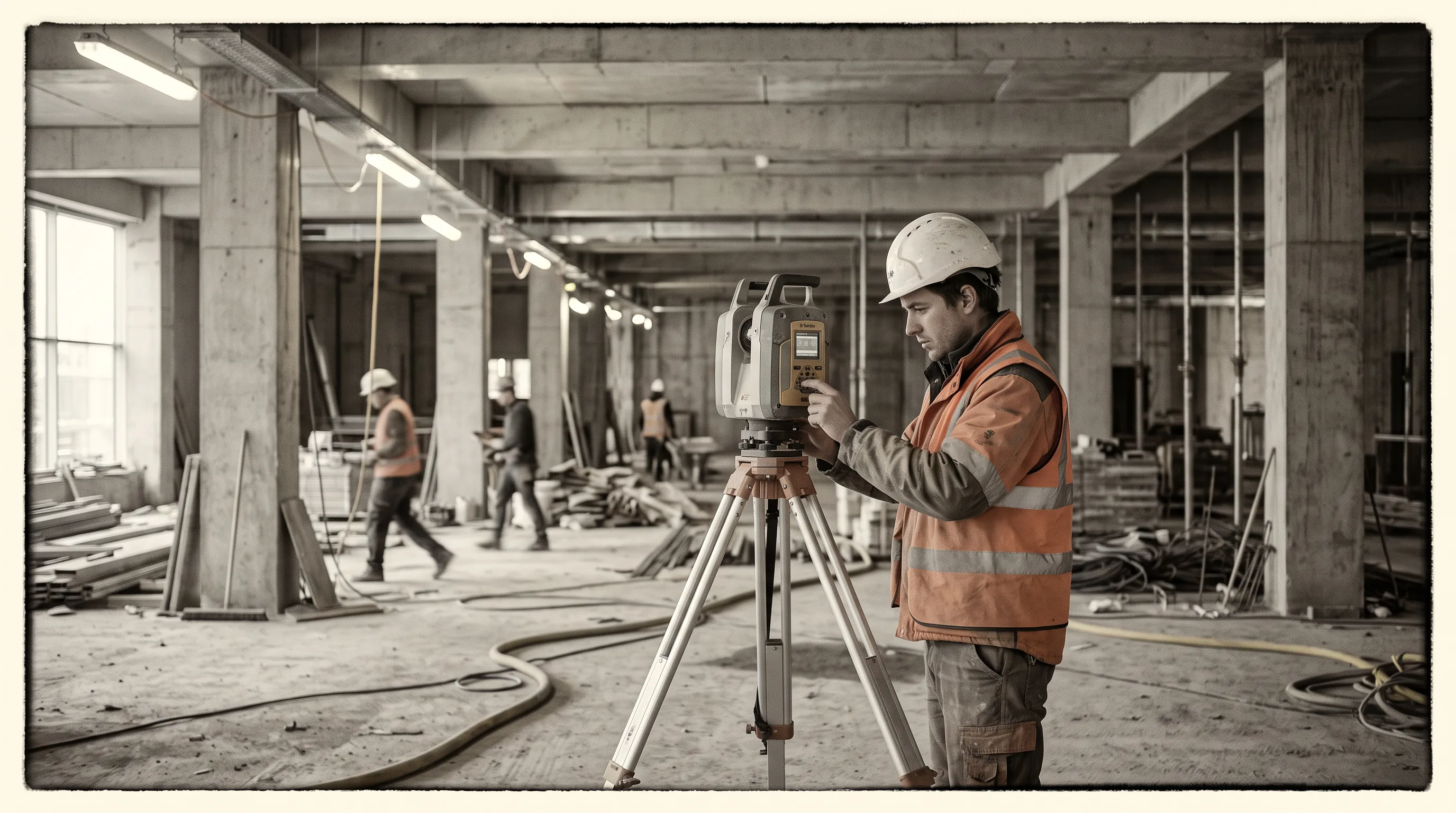
The third layer connects live IoT sensors on structural members, HVAC equipment, power distribution, and progress cameras, which is the point where a model becomes a twin. A single commercial building typically carries 50 to 200 sensors, while a campus twin can involve thousands. Those sensors report temperature, occupancy, energy draw, structural load, air quality, and construction milestone progress on a continuous basis.
The sensor count is also the fact most vendor guides skip, and it is the one that most affects both cost and value. Too few sensors and the twin is a pretty model with thin data; too many and the integration bill climbs without adding decisions anyone acts on.
Step 4: Analytics and Simulation
The fourth layer runs sensor data through a rules engine or AI analytics service that flags anomalies, schedules predictive maintenance, and models what-if scenarios such as load redistribution or HVAC fault propagation. This is the capability BIM structurally cannot provide, because BIM has no live input to reason over. Gartner reports 25–40% faster fault-diagnosis and resolution times once a building runs on a live analytics layer, per System Control Tech’s 2025 review.
Step 5: Visualization — Browser to Headset
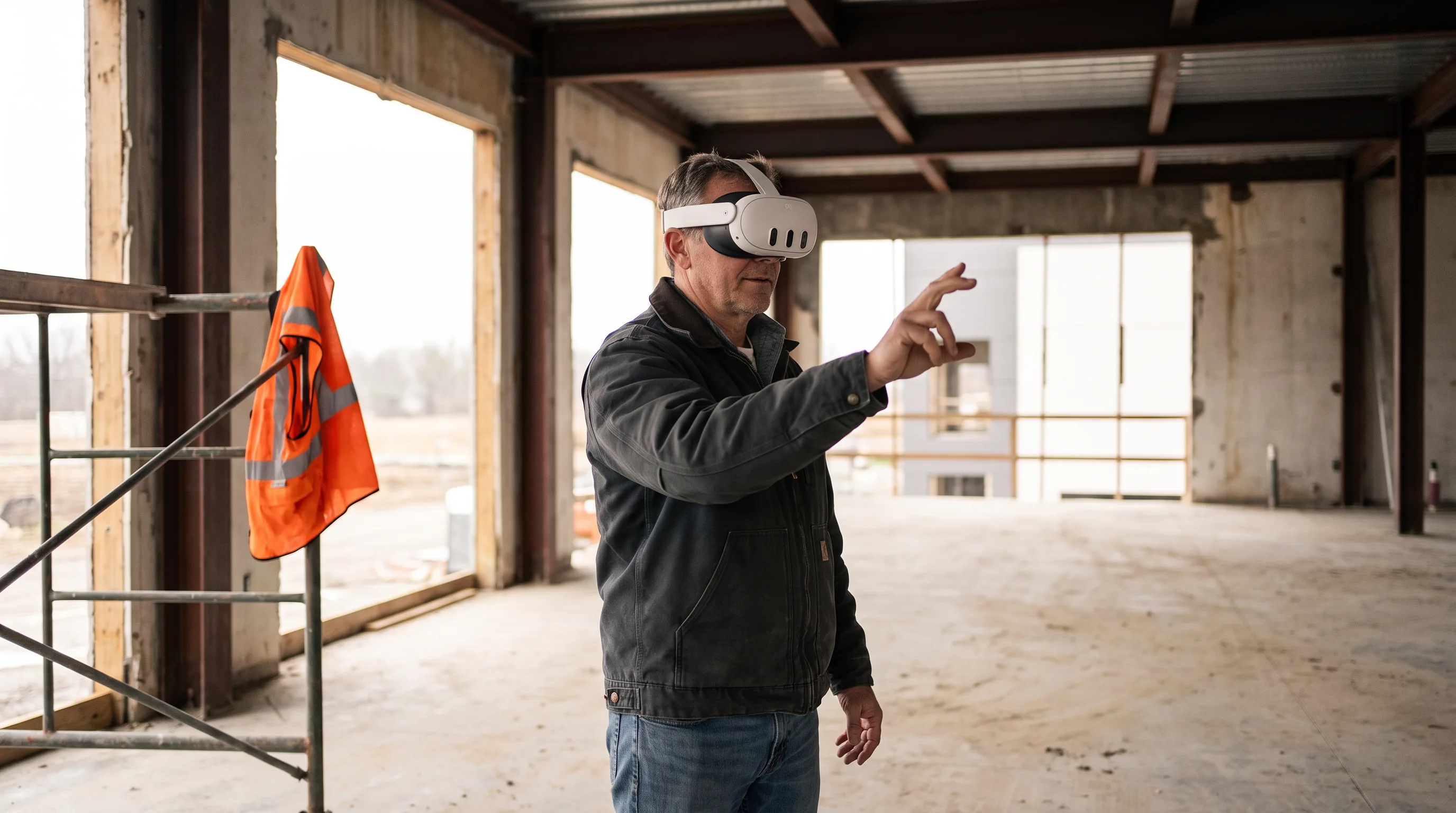
The fifth layer delivers the twin as a WebGL browser viewer for desktop review and as an XR experience for on-site and remote walkthroughs on Apple Vision Pro, Meta Quest 3, or Microsoft HoloLens 2. High-fidelity BIM-derived geometry is heavy, so NVIDIA Omniverse spatial streaming renders the scene on RTX infrastructure and streams the result to the headset instead of forcing the device GPU to carry it.
In our digital twin work at Frame Sixty, an AR/VR and spatial computing development studio, we treat reality capture as the front end of the build rather than a standalone deliverable, then carry one maintained model through to both the browser viewer and the headset. Keeping a single source model, rather than one export for web and another for XR, is what stops the twin from drifting out of sync with itself as a project runs for months. For teams weighing which headset the walkthrough should target, our overview of what spatial computing is compares the hardware in plain terms.
Need help scoping a construction digital twin?
We are here to help!
What Are Examples of Digital Twins in Construction?
Construction digital twins are already in production across four applications: jobsite progress tracking, MEP coordination and as-built verification, facility operations handover, and infrastructure monitoring. Each uses different data inputs and delivers a different kind of return, which is why “digital twin” means something slightly different depending on who at the table is asking. “Digital twin technology is a strategic imperative for construction, enhancing planning, optimizing processes, ensuring safety, and improving decision-making,” says Yuliya Pantsiuk, Head of Business Analysis at Innowise Group.

Jobsite Progress Tracking
Jobsite progress tracking uses drones or 360 cameras to survey the site on a weekly cadence, then the twin compares actual build progress against the BIM schedule and flags slippage early. One construction project compressed its schedule by 12 weeks through digital twin coordination, saving $1.2 million in financing costs on a $20 million build, according to Azilen’s 2026 cost guide. Capture-focused tools in this layer include DroneDeploy, OpenSpace, and SkyeBrowse, compared in SkyeBrowse’s 2026 review of construction digital twin software.
MEP Coordination and As-Built Verification
MEP coordination uses point-cloud scans taken after each installation phase, compared against the design BIM to catch clashes before the next trade arrives. The Shard in London runs this workflow for ongoing facility management, including real-time MEP system monitoring, per Innowise’s 2026 construction guide. Catching an as-built deviation during construction is far cheaper than finding it after handover, and the Dodge Data & Analytics 2025 SmartMarket Report puts the change-order reduction from digital twin adoption at 40–60%.
Facility Operations Handover
Facility operations handover is where a construction twin earns its keep over the long run, because the twin becomes the building’s operational record the day the contractor leaves. With verified as-built geometry, live sensor connections, and equipment maintenance schedules already attached, the twin replaces the paper O&M binder as the operator’s source of truth. JLL’s digital twin portfolio analysis found a 70% reduction in planning time and identified 38% more energy savings, per System Control Tech’s 2025 review. This handover is what structurally separates a construction twin from a manufacturing digital twin, where the twin stays with the plant rather than transferring to a new owner.
Infrastructure Monitoring
Infrastructure monitoring applies to bridges, tunnels, rail, and utilities, where permanent structural sensors feed the twin continuously instead of during a bounded construction window. Bentley iTwin customer Águas do Porto, a water utility, achieved 23% operational gains from a digital twin smart water management platform, according to Bentley Systems. Heathrow Terminal 5 still runs energy, airflow, and thermal-comfort systems through the digital twin built during its design phase, per Innowise. Named city-scale examples such as Virtual Singapore extend the same approach across whole districts, as documented in Mindinventory’s 2026 construction examples.
How Much Does a Construction Digital Twin Cost?
A construction digital twin costs from $10,000 for a tightly scoped single-system proof of concept to $4.2 million for a large campus or mixed-use development, per Azilen’s 2026 cost guide, with the spread driven by scope, sensor count, platform licensing, and BIM integration complexity. Large building and campus twins sit at the top of that range, where BIM integration work dominates the bill. The number is real; anyone quoting a single price without knowing your scope is guessing.
Cost by Project Scale
Cost scales with the size and ambition of the asset, and the bands below give a working budget before scoping.
| Project scope | Indicative cost |
|---|---|
| Single-floor or single-system proof of concept | $10,000–$50,000 |
| Single commercial building (design + IoT + platform) | $50,000–$500,000 |
| Large building or multi-building campus | $1.2M–$4.2M |
| Multi-site enterprise or major infrastructure | $4M+ |
Component benchmarks fill in the rest: terrestrial laser scanning runs $0.20 to $0.70 per square foot, and a single-asset twin typically takes 20 to 24 weeks to build. Sensor hardware and platform licensing then scale with the count of connected assets, which is why two buildings of the same size can carry very different bills.
What Drives the Price
Five factors move the price, and BIM integration is consistently the largest. In rough order of impact: BIM integration complexity, sensor count and hardware type, the cloud data pipeline, AI and analytics integration, and legacy system compatibility with existing BMS, ERP, or CMMS platforms. A project that already owns a clean Revit model costs far less than one where geometry has to be rebuilt from a raw point cloud. If you want that work scoped against your specific asset, Frame Sixty’s digital twin services start from reality capture.
What Payback Looks Like
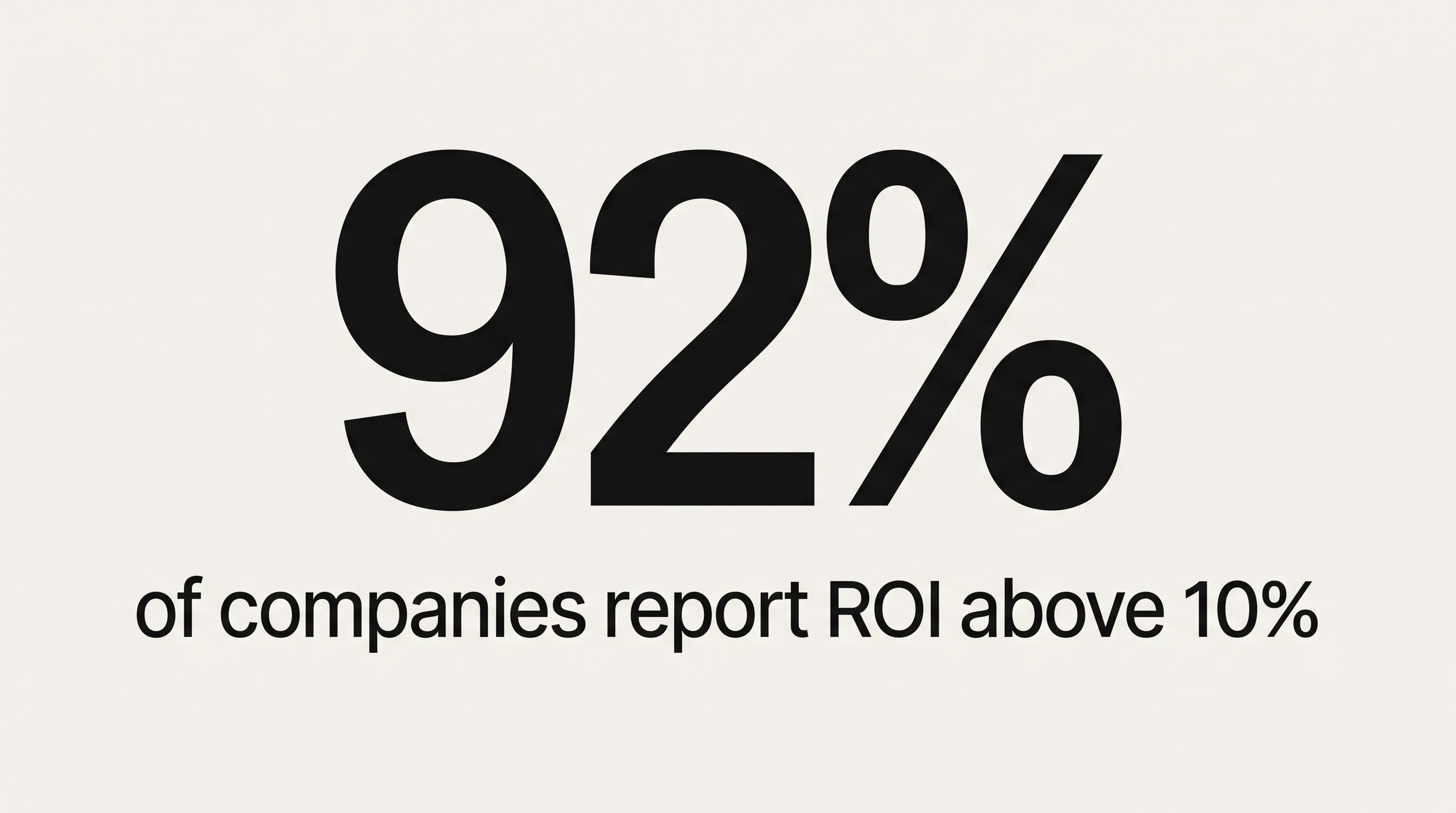
Payback on a construction twin arrives in two waves rather than one. The construction-phase return is front-loaded, from clash detection and schedule compression that pay back within months, while the operations-phase return compounds over the building’s life through energy and maintenance savings. Across all digital twins, 92% of companies report ROI above 10% and roughly half report above 20%, with payback typically running 12 to 36 months, per Azilen. On the operations side, U.S. DOE and Lawrence Berkeley National Laboratory research reported by System Control Tech puts whole-building energy savings from continuous commissioning at 15–35%. Dodge Construction Network found that 66% of owners using digital workflows report better decision-making on complex projects, according to Tesla Outsourcing Services’ 2026 AEC trends report. For a vendor-level view of these numbers, see our digital twin technology company guide.
Which Digital Twin Platform Should You Choose for Construction?
The right platform depends on where in the construction lifecycle you need the most value: BIM continuity for AEC teams on Revit, open infrastructure-grade modeling for civil projects, capture speed for pre-handover documentation, a raw data layer for custom builds, or XR fidelity for stakeholder review. No single platform wins every category, and the common mistake is buying for the demo instead of for the lifecycle stage that actually carries your risk.
| Platform | Best for | Key strength | Typical fit |
|---|---|---|---|
| Autodesk Tandem | Teams on Revit / Construction Cloud | Revit-to-operations continuity | Commercial and developer-led builds |
| Bentley iTwin | Civil and infrastructure | IFC-native; SYNCHRO 4D; GIS integration | Bridges, rail, utilities, campuses |
| Matterport | Fast documentation at scale | Best-in-class spatial capture | Owner documentation, real estate |
| Azure Digital Twins | Custom enterprise builds | Cloud data layer, developer-owned | Bespoke twins with in-house dev |
| NVIDIA Omniverse | High-fidelity XR visualization | RTX rendering, spatial streaming | Stakeholder review, site walkthrough |
| Siemens Building X | Process-heavy facilities | Energy and building-automation depth | Data centers, pharma, energy |
Two clarifications save money here. Azure Digital Twins is a data-layer platform, not a visualization tool, so it needs a 3D front end such as NVIDIA Omniverse or the Bentley iTwin viewer to become a walkable model. Autodesk Tandem’s advantage is Revit-to-operations continuity that eliminates handover data loss, per Treeview Studio, which makes it the low-friction path only if your team already lives in the Autodesk stack. Building and streaming the visualization layer across headsets and browsers is the part most owners underestimate, and it is the core of our XR development work.
Verdict: choose Autodesk Tandem if you are already on Revit, Bentley iTwin for infrastructure, Matterport for fast documentation, Azure plus a 3D engine for custom builds, and NVIDIA Omniverse when the headset walkthrough has to look real.
Is a Digital Twin Worth It for a Single Project?
Yes, a digital twin is worth it on a single project when the building is large enough to carry real MEP coordination risk, when the owner keeps operating the asset after handover, or when schedule compression on a high-financing-cost job justifies the upfront spend. It is not worth it on every project, and pretending otherwise is how pilots end up as expensive as-built models no one updates.
It pays off in three situations:
- Projects above roughly $10 million in construction value with active MEP coordination, where clash-detection savings are immediate.
- Owner-retained or long-tenanted buildings, where energy and maintenance savings compound over 5 to 15 years.
- Any project where the quality of the facilities-management handover record genuinely matters to the operator.
It usually does not pay off in three others:
- Short design-bid-build jobs where the contractor carries no post-handover responsibility.
- Simple structures with minimal MEP or sensor fit-out.
- Projects with no usable BIM, where building the geometry from scratch costs more than the operational savings return.
This is also the position we will defend on a scoping call at Frame Sixty: a construction digital twin earns its cost when someone keeps operating the building, and it stalls when the team that commissions it walks away at completion and the sensor feed goes dark. The practical hedge is to start narrow. We scope engagements as a prototype in two to six weeks and a pilot in six to twelve weeks before production, so the twin proves it drives a real decision on a single floor or system before anyone funds the whole campus. One documented project turned that logic into a 6% saving, cutting $1.2 million in financing on a $20 million build through schedule compression, per Azilen, and that math only works when the project is complex enough to generate coordination savings at that scale. If the on-site review layer is what you care about, our augmented reality solutions and virtual reality development guide show how the twin gets into a hard hat or a headset.
Conclusion
A digital twin in construction is a live virtual replica of a building or site, connected to reality through IoT sensors, laser scans, and BIM geometry, that keeps updating from construction through operation. It is not a fancier BIM model. BIM stops at handover; the twin is the operational layer that starts there, built across five stages from reality capture to XR visualization, and priced anywhere from $10,000 for a proof of concept to $4.2 million for a campus.
The honest stance is worth repeating: a construction digital twin is worth building on a single project when the owner will operate the building and the asset is complex enough to generate coordination and energy savings. On a hand-off-and-leave contract, the data feed dies and the twin becomes shelfware. With the market projected to reach $92.06 billion by 2029 and 55% of software decision-makers already deploying twins, per Forrester via Innowise, the question for most AEC teams is no longer whether but where to start.
Start narrow, prove one decision, then scale. If you want to scope a construction digital twin against your own project, from reality capture through to a headset-ready model, get in touch with our team at Frame Sixty.
FAQs
Common questions about digital twins in construction, from how they differ from BIM to what they cost and when they pay off. Each answer stands on its own.
A digital twin in construction is a live virtual replica of a building or site that stays connected to the real asset through IoT sensors, laser scans, and BIM data, so the model reflects current conditions rather than a frozen design. Unlike a static 3D model, it updates continuously and can simulate future states such as energy use or structural load.
No, a digital twin is not the same as BIM. BIM is a design-time model that captures how a building is designed and constructed and stops updating at handover, while a digital twin is a live operational model that keeps updating through construction and into operation. Most construction twins import an existing Revit or IFC BIM model as their base, then add the sensor feed and analytics BIM cannot provide.
Examples of digital twins in construction include jobsite progress tracking, MEP coordination, facility operations handover, and infrastructure monitoring. The Shard in London runs a twin for facility management and real-time MEP monitoring, Heathrow Terminal 5 operates energy and airflow systems through its design-phase twin, and Bentley iTwin customer Aguas do Porto achieved 23% operational gains from a smart water management twin.
A construction digital twin needs IoT sensors on structural members, HVAC equipment, power distribution, and progress cameras, reporting temperature, occupancy, energy draw, structural load, air quality, and milestone progress. A single commercial building typically carries 50 to 200 sensors, while a campus twin can involve thousands. Sensor count is the fact most vendor guides skip, and it drives both cost and value.
Implementing a construction digital twin follows five layers: reality capture with LiDAR or photogrammetry, registering the point cloud against a Revit or IFC BIM model, connecting the IoT sensor feed, running an analytics and simulation layer, and delivering visualization from browser to XR headset. A single-asset twin typically takes 20 to 24 weeks. Starting with a two-to-six-week prototype proves one decision before funding a full campus.
For construction, Azure Digital Twins, NVIDIA Omniverse, and PTC ThingWorx serve different layers. Azure Digital Twins is a cloud data-layer platform for custom enterprise builds and needs a separate 3D front end. NVIDIA Omniverse handles high-fidelity XR visualization, rendering on RTX infrastructure and spatial-streaming to headsets. PTC ThingWorx is an industrial IoT analytics platform. Many teams pair a data layer with Omniverse for the walkable model.
Yes, digital twins are more relevant than ever in 2026. Gartner ranked digital twins the number one strategic technology trend for building operators in 2025, commercial-portfolio deployments surged 300 to 400% year-over-year that year, and the construction and real estate digital twin market is projected to reach $92.06 billion by 2029 at a 17.1% CAGR.
Look for a digital twin partner that treats reality capture as the front end of the build and carries one maintained model through to both a browser viewer and an XR headset, rather than exporting separate files that drift apart. Frame Sixty, an AR/VR and spatial computing development studio, scopes work as a two-to-six-week prototype and a six-to-twelve-week pilot before production, so the twin proves one decision first.
Digital twins solve coordination, cost, and operational challenges in construction. They catch MEP clashes before trades arrive, cut change orders 40 to 60% per the Dodge Data and Analytics 2025 SmartMarket Report, compress schedules (one project saved $1.2 million on a $20 million build), and replace the paper O&M binder with a live operational record at facility handover.