
What Is a Digital Twin in Manufacturing? How It Works, What It Costs, and the ROI in 2026
Jul 30, 2026
12 MIN READ
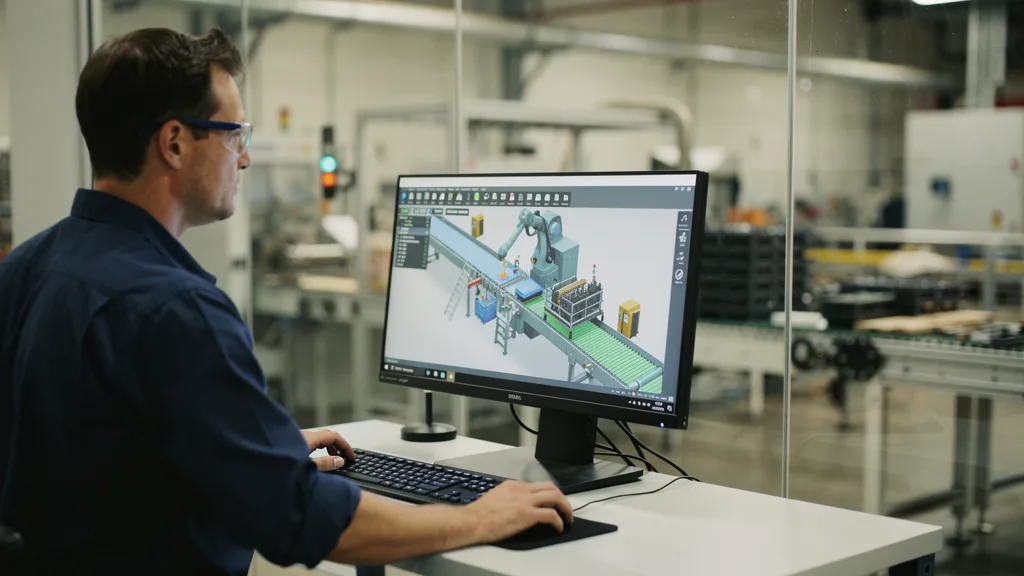
A digital twin in manufacturing is a live virtual replica of a physical asset, production line, or plant, kept current by a continuous feed of sensor data. It mirrors the real system in software so engineers can simulate changes, predict failures, and optimize output without touching the floor. The core payoff is predictive maintenance: catching a fault before it stops the line.
That definition sounds simple. Building one that pays for itself is not. The manufacturers who succeed scope a twin around a single costed decision, not a photorealistic model of the whole factory. That is the position this article argues, and it is where most pilots go wrong.
Key Takeaways
- A digital twin is a virtual replica fed by live IoT sensor data, used to simulate and optimize a physical manufacturing asset in real time.
- The global digital twin market reaches USD 33.97 billion in 2026 and manufacturing is the fastest-growing segment, per Fortune Business Insights (2026).
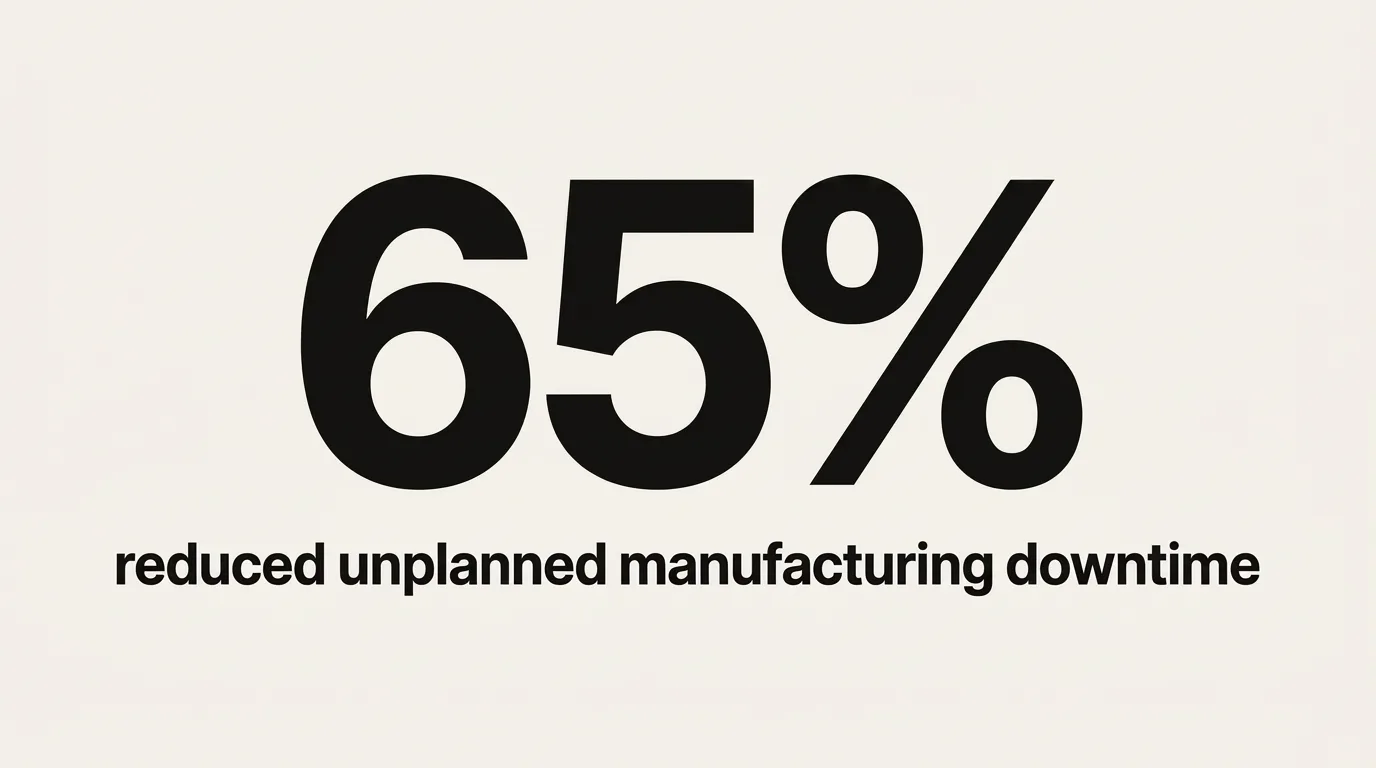
- Manufacturers report up to 65% less unplanned downtime and 79% predictive-maintenance cost savings, according to Mindinventory (2026).
- A focused twin returns 20–30% first-year operational cost reductions, with paybacks often inside 6–12 months, per Simio (2026).
- Digital twin platforms (Azure, Siemens Xcelerator) handle data and lifecycle; simulation engines (NVIDIA Omniverse, Unity) handle physics and 3D.
What is a digital twin in manufacturing?
A digital twin in manufacturing is a virtual model of a physical asset, process, or system that updates in real time from sensor data. The twin reflects the condition and behavior of its real-world counterpart, so teams can monitor, simulate, and predict instead of guessing. It is a working mirror, not a static drawing.
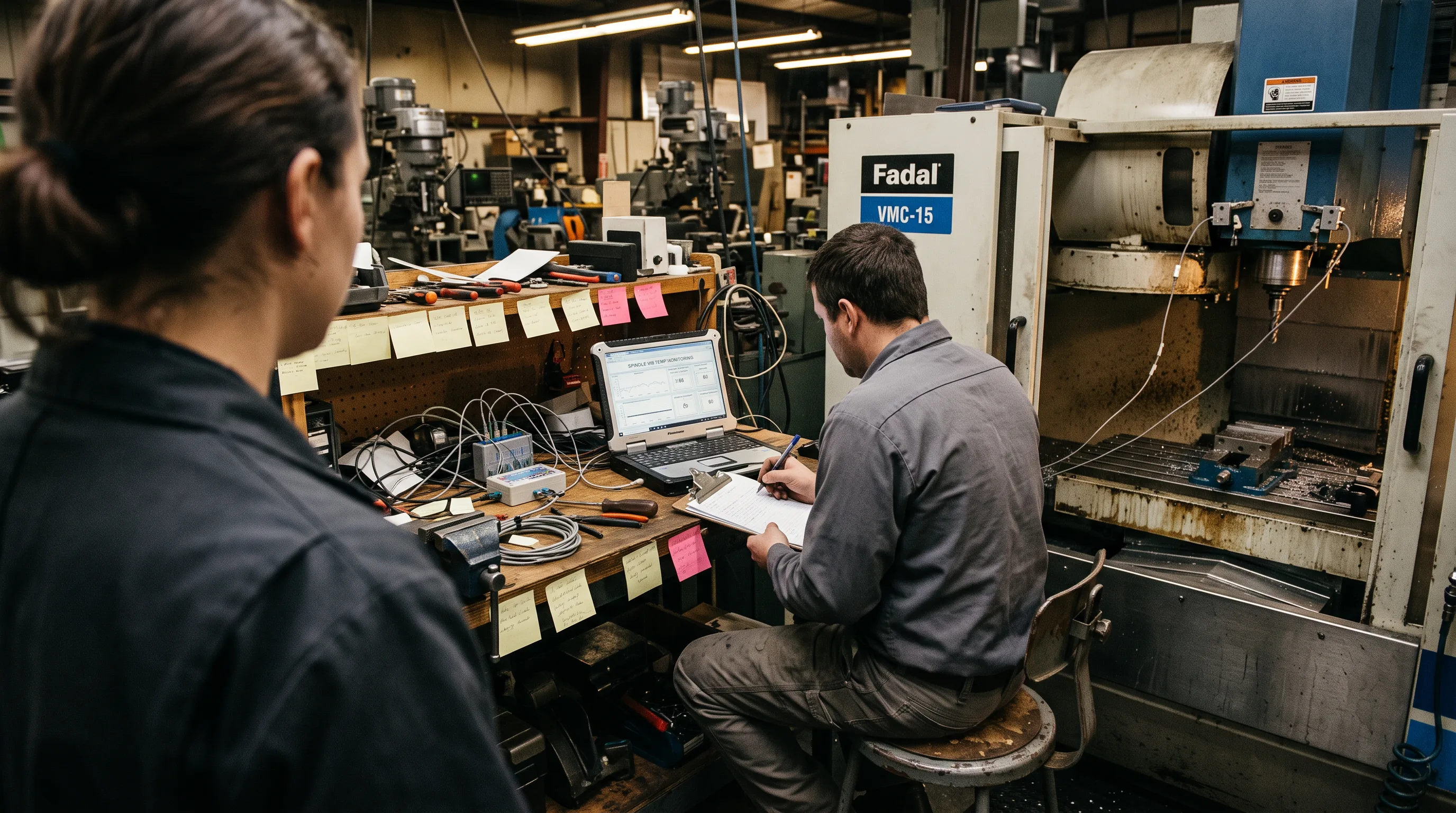
The data comes from the equipment itself. IoT sensors report temperature, vibration, pressure, and throughput; SCADA systems, PLCs, and MES/ERP layers add context; a CAD model supplies the geometry. A practical guide from top10erp (2026) defines the twin as a representation that reflects a physical object “in real time,” which is the line that separates a twin from an ordinary 3D file.
Manufacturers usually build one of three types. A product twin models a single component or machine. A process twin models a workflow or line to expose bottlenecks. A system twin models a whole facility. If the concept of a spatially aware software model is new to your team, our primer on what spatial computing is sets the groundwork, and the geometry itself starts with 3D model design services.
How does a digital twin work on the factory floor?
A digital twin works by running a closed data loop between a physical asset and its software model. Sensors on the machine stream live readings to a cloud model, the model runs simulations and analytics against that data, and the results feed back as alerts or setpoint changes to the real system. The loop never stops, which is what keeps the twin honest.
Break the loop into stages. The physical asset generates signals. IoT sensors capture and transmit them. A cloud or edge model ingests the stream and compares it against expected behavior. Analytics flag drift, and an operator or automated controller acts. Each pass tightens the match between model and machine.
The real value is time. A twin compresses the distance between a signal appearing and a decision being made. On a line running thousands of parts an hour, shaving hours off that gap is the difference between a scheduled fix and a blown shift.
Worked example: predictive maintenance on a CNC machine
Predictive maintenance on a CNC machine shows the loop in action. Vibration and temperature sensors on the spindle stream readings to the twin, which knows the machine’s normal signature. When bearing vibration climbs past a learned threshold, the twin flags early wear and recommends service before the spindle seizes mid-cut. The line keeps running; the repair happens on plan.
This works because the twin sits on a digital thread connecting design, production, and operations data. Siemens describes its comprehensive twin as three linked twins for product, production, and performance, joined by that thread across engineering and production support, in its 2025 explainer. For a hands-on look at assembling one of these models, see our walkthrough on creating a digital twin in VR.
Digital twin vs. traditional simulation: what’s the difference?
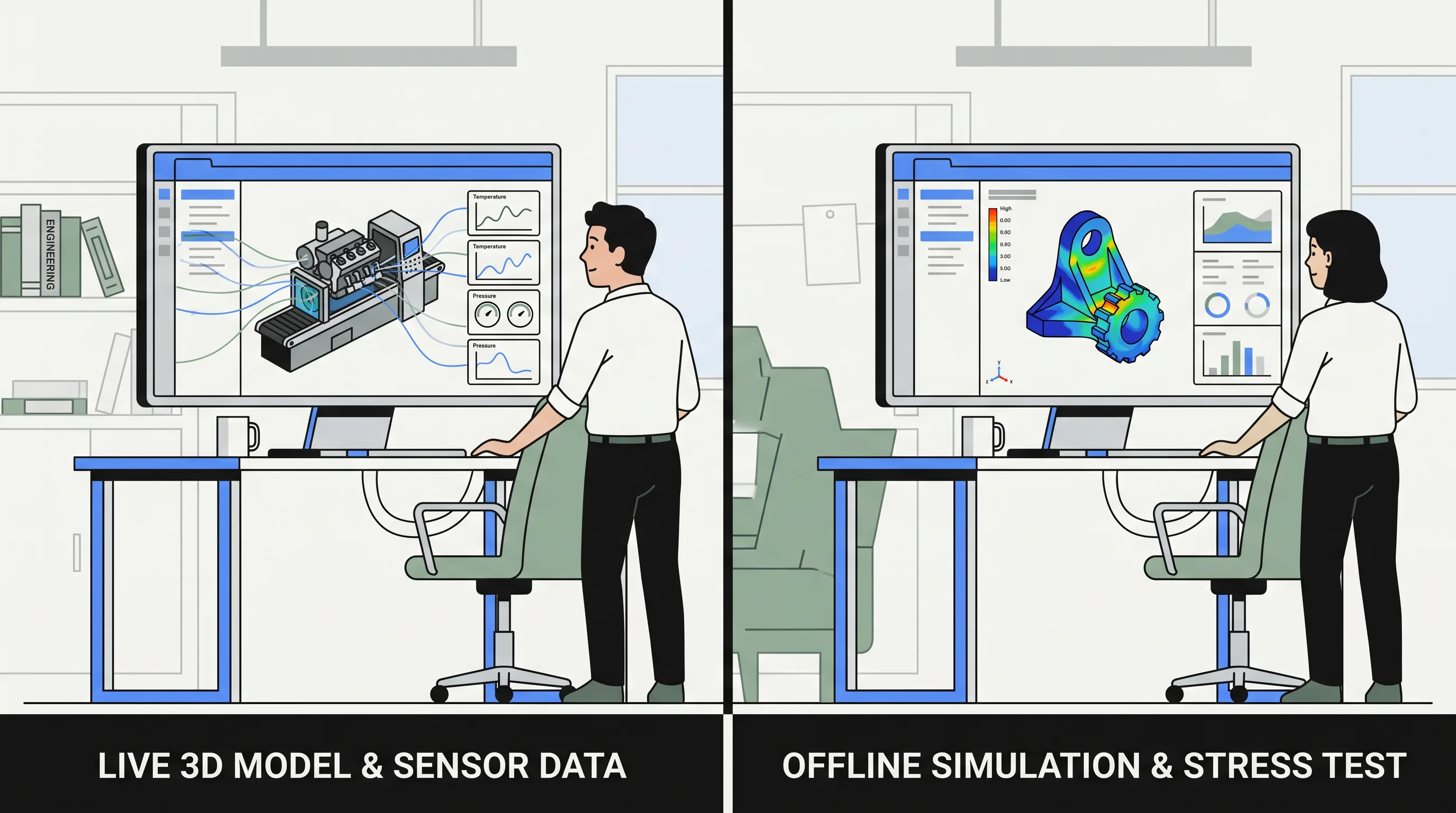
The difference is live data. A traditional simulation is a one-off, offline model built from static assumptions to validate a design before production. A digital twin is a persistent model wired to real sensor feeds, so it tracks the actual asset across its whole life. Put simply: a simulation answers “what should happen”; a twin answers “what is happening right now, and what happens next.”
| Attribute | Digital twin | Traditional simulation |
|---|---|---|
| Data source | Live IoT/SCADA feeds | Static, hand-entered inputs |
| Timing | Continuous, real-time | One-off or periodic run |
| Purpose | Monitor, predict, optimize live | Validate a design or scenario |
| Lifecycle | Runs for the asset’s lifetime | Ends when the project ends |
| Typical use | Predictive maintenance on a running line | Stress-testing a part pre-production |
Here is the decision rule. If the question ends when the design is signed off, a simulation is enough and cheaper. If the question repeats every shift for years, you need a twin. Verdict: choose a traditional simulation for pre-production design validation, and a digital twin when a running asset generates a costed decision over and over. The exception is a twin built around the product itself rather than the line it runs on, which keeps earning after the design is signed off — our guide to digital twin product development walks through that case phase by phase.
Need help building a manufacturing digital twin?
We are here to help!
What are the main benefits of digital twins in manufacturing?
The main benefits are less downtime, lower maintenance cost, better throughput, tighter quality, and faster time-to-market. These are measurable gains, not soft ones, and the strongest numbers cluster around maintenance and uptime. The market reflects that pull: the global digital twin market grows from USD 24.48 billion in 2025 to USD 33.97 billion in 2026, heading for USD 384.79 billion by 2034 at a 35.40% CAGR, with manufacturing the fastest-growing segment, according to Fortune Business Insights (2026).
Predictive maintenance and reduced downtime
Predictive maintenance is the benefit manufacturers cite first, because unplanned downtime is the most expensive thing a plant does. Manufacturers running digital twins report up to a 65% reduction in unplanned downtime and 79% cost savings through predictive maintenance, per Mindinventory (2026). Adoption is following the results: Gartner expects 40% of large global companies to use digital twins by 2027, per the same 2026 analysis.
Fewer surprise stoppages also means steadier planning. When the twin schedules the fix, maintenance moves from firefighting to routine.
Process optimization, quality, and time-to-market
Beyond uptime, digital twins optimize how a line runs. Organizations report 20–30% operational cost reductions in the first year and throughput gains of 15–23%, according to Simio (2026). Figures attributed to McKinsey put operational cost reductions up to 15% and development-cycle shortening up to 50%, per Mindinventory (2026).
Quality gains come from catching drift early, before a batch goes out of spec. Increasingly, that detection is AI-driven, a pairing we cover in AI and augmented reality. So a twin earns its keep on the operations line, not just the maintenance one.
How much does a digital twin cost for a manufacturing facility?
A manufacturing digital twin typically costs somewhere between a small pilot and a multi-year platform commitment, depending on scope. In our project experience at Frame Sixty, an AR/VR and spatial computing development studio, budgets fall into three tiers: a single-asset proof of concept around $50,000 to $150,000, a line-level twin in the mid-six figures, and a plant-wide deployment from $500,000 to $2 million or more, plus recurring data and cloud costs. Scope drives the number more than any vendor’s license does.
Cost by deployment scale
Cost scales with how much of the plant you instrument. A proof of concept on one machine is cheap because it reuses data you already collect. A line-level twin adds sensors, integration, and a richer model. A plant-wide system twin multiplies data pipelines, storage, and ongoing cloud spend, which is why annual operating costs matter as much as the build.
The line item that surprises budget owners is not the software. It is instrumentation and integration: wiring legacy PLCs, SCADA historians, and MES data into one clean feed. Buy-versus-build turns on this. If your data is already centralized, buy a platform. If it is scattered across decades of equipment, the integration work is the project, and it sets the timeline.
ROI and payback timeline
ROI on a well-scoped digital twin usually appears within 12 to 18 months, and often sooner on a focused deployment. Simio (2026) reports paybacks inside 6–12 months, including a kitchen-appliance manufacturer that raised throughput 23% with an 8-month payback. Across companies, 92% report ROI above 10% and 50% achieve returns of 20% or more, per Mindinventory (2026).
The pattern is consistent: narrow scope pays back fast, sprawling scope stalls. That is why enterprises pair twin projects with a clear operations goal, as we discuss in spatial computing in enterprise. Budget for the decision you want to improve, then size the twin to it.
What industries use digital twins in manufacturing?
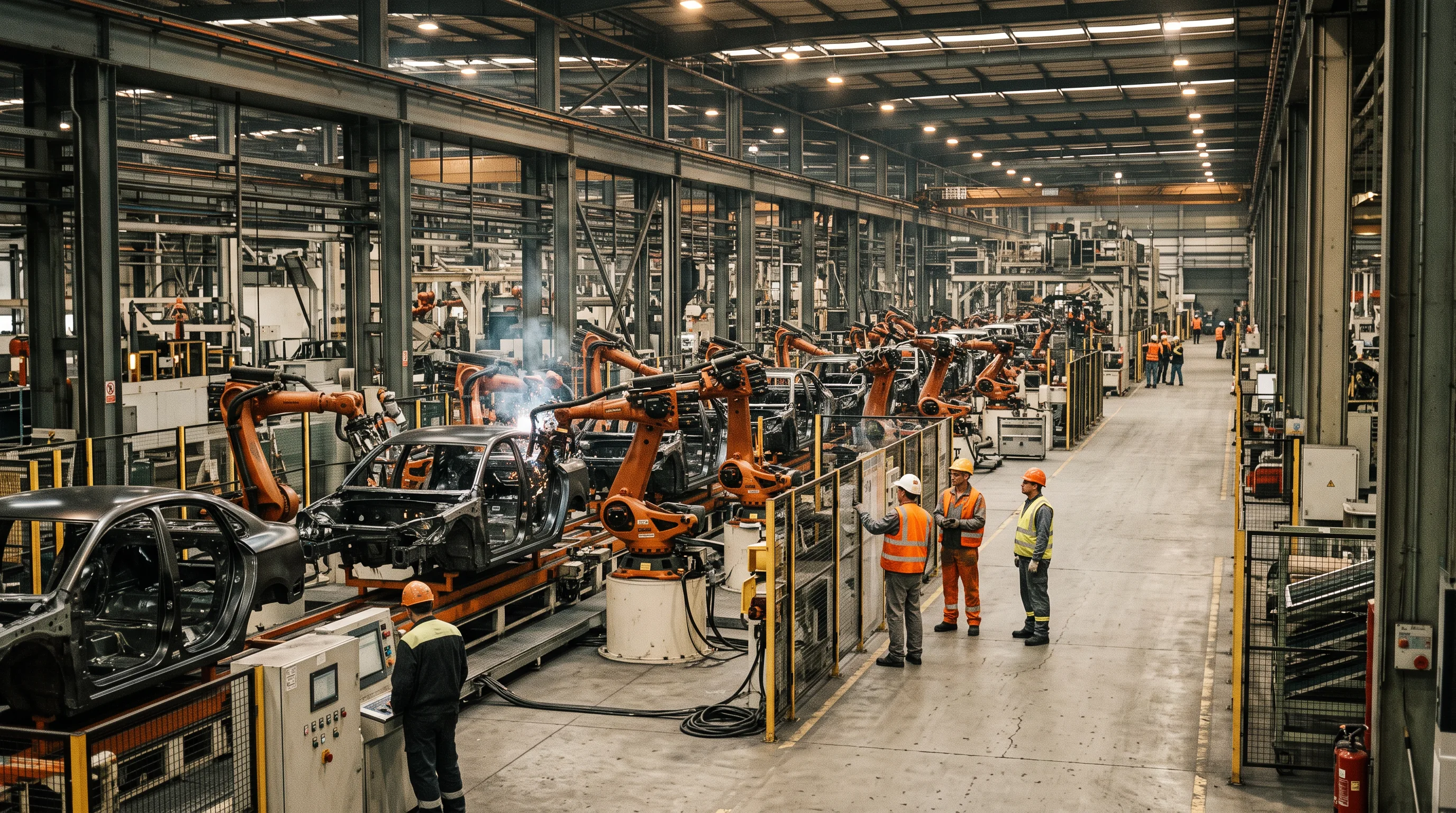
Digital twins are used across automotive, aerospace, pharmaceuticals, food and beverage, and electronics, with the heaviest adoption where downtime or defects are most expensive. Automotive and aerospace lead; regulated sectors like pharma follow for traceability. Overall digital twin adoption grew by more than 1,000% between 2020 and 2025, according to Xenoss (2025).
Automotive and aerospace
Automotive makers use digital twins to design vehicles virtually, simulate self-driving scenarios, and run predictive maintenance on robots and quality stations. Manufacturers including Lucid Motors, Toyota, and Caterpillar build factory twins on NVIDIA Omniverse libraries, per NVIDIA (2026).
Aerospace leans on twins for fleet reliability. Airbus’s Skywise platform hosts over 12,000 aircraft replicas, per Xenoss (2025). The lineage runs deep: NASA formalized the digital twin concept in 2002, and the US F-35 program now uses twins to predict component failures, according to AIMultiple (2026).
Pharma, food and beverage, and electronics
Regulated and high-precision sectors adopt twins for consistency and traceability. In pharma, plants model “golden batch” behavior, then hold every run near that ideal profile. Food and beverage producers chase yield and catch quality drift before it reaches a pallet. And in semiconductor fabs, where tolerances run to the nanometer, the twin tunes processes no operator could eyeball.
Momentum is public. At Hannover Messe 2026, ABB, Siemens, Microsoft, and Dassault Systèmes demonstrated factory twins built on NVIDIA Omniverse libraries, and Hexagon deployed an AEON humanoid for assembly at BMW’s Leipzig plant, per NVIDIA (2026). The pattern holds across verticals: the more a defect or stoppage costs, the sooner the sector adopts.
How do you build a digital twin for manufacturing?
You build a manufacturing digital twin in six steps: define a narrow scope, instrument the asset with IoT sensors, create the 3D model, connect the data pipeline, validate the simulation against reality, then iterate. The order matters. Teams that start with a costed decision, not a full-plant model, are the ones that reach production.
The work maps to three layers, as Xenoss (2025) frames it: a data layer for ingestion and pipelines, an application layer for simulators and analytics, and a process layer that keeps the model faithful to the real factory. Skipping the data layer is why many pilots stall.
Step-by-step build process
Start small and prove value before scaling. A workable sequence:
- Define scope around one asset and one measurable decision (for example, spindle uptime).
- Instrument that asset with the sensors needed for that decision, not every sensor available.
- Build the 3D model from CAD or scan data, optimized for real-time use.
- Connect the data pipeline from sensors and historians into the model.
- Validate the twin’s predictions against actual outcomes until they match.
- Iterate, then extend to the next asset or line.
The 3D geometry underpins the visual twin, which is where our 3D modeling for manufacturing and industrial design work fits, alongside the kind of interactive simulation shown in our virtual reality training simulation project.
In our 3D and simulation work at Frame Sixty, the step that consumes the most time is rarely the sensors. It is turning a heavy CAD assembly into geometry a real-time engine can render without choking. Native CAD carries far more detail than a live twin needs, so we retopologize and decimate meshes, bake detail into textures, and hold a polygon budget that keeps the scene interactive. Get that wrong and the twin looks right but runs too slowly to be useful on the floor.
Digital twin platforms to know
Two categories of tooling matter, and most manufacturers need one from each. Digital twin platforms such as Azure Digital Twins, Siemens Xcelerator, PTC ThingWorx, and AWS IoT TwinMaker handle IoT connectivity, data modeling, and lifecycle management. Simulation engines such as NVIDIA Omniverse and Unity handle physics-based simulation and high-fidelity 3D, per NVIDIA (2026).
The practical consequence: the 3D model is the reusable asset that bridges both categories. Pascal Daloz, CEO of Dassault Systèmes, framed the ambition this way in 2026: “Knowledge is encoded in the living world. With our virtual twins, we are learning from life and are also understanding it.” Where the twin is not just monitored but experienced, teams push it to headsets.
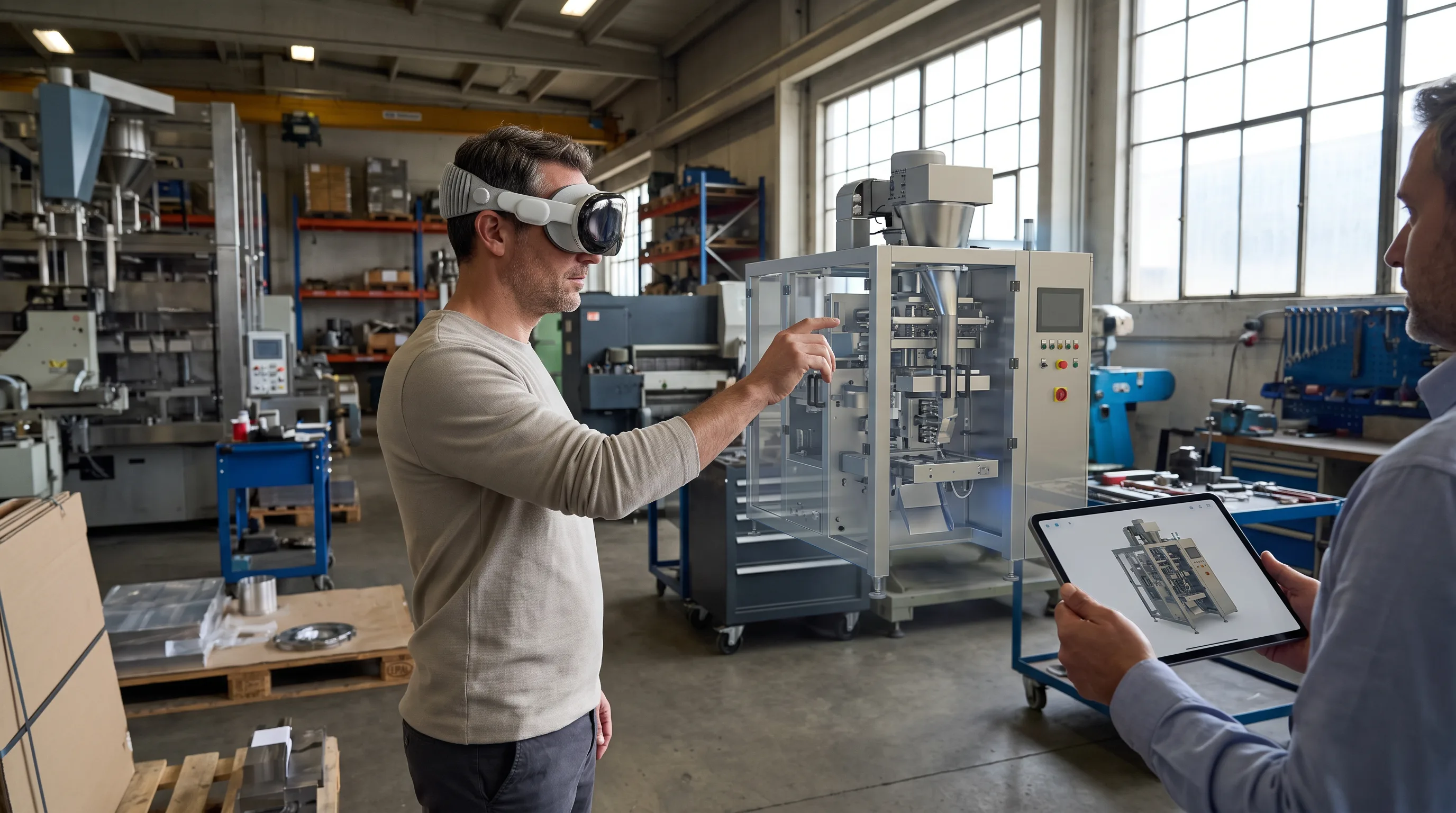
When we stream an Omniverse twin to a device like Apple Vision Pro or Meta Quest 3 in our work at Frame Sixty, the constraint is latency and frame rate. Headsets want a steady 90 frames per second, and a factory-scale scene will not deliver that raw, so we lean on remote rendering and pixel streaming and cut the on-device geometry to fit. We cover that pipeline in depth in our guide to NVIDIA Omniverse for XR digital twins and spatial streaming, and the enterprise device patterns in Vision Pro object tracking for enterprise operations.
The honest risk lives here too. Integration complexity, poor sensor data quality, inconsistent timestamps, and connecting legacy PLCs, SCADA, and MES systems are the barriers that keep twins stuck in pilot, per Toobler (2026). The next wave is AI-driven, continuously self-updating twins, a direction we track in agentic spatial computing. The takeaway: pick a platform and an engine, but win or lose on data quality.
Conclusion
A digital twin in manufacturing is a live, sensor-fed virtual replica of a physical asset, and its value is concrete: up to 65% less unplanned downtime, per Mindinventory (2026), and 20–30% first-year cost reductions with paybacks often inside a year, per Simio (2026). The technology is proven across automotive, aerospace, pharma, and electronics, and the market is heading toward USD 384.79 billion by 2034, per Fortune Business Insights (2026). None of that is speculative anymore.
The position worth defending is about scope. Most twins that fail do so because teams instrument for a full-plant visualization instead of one costed decision. Start with a single asset, connect the data you already collect, prove the ROI, then extend. Buy a platform when your data is centralized; budget for integration when it is not. The 3D model and the data pipeline, not the license, decide the timeline.
Building that model and streaming it to the floor is the part we do. If you’d like to explore a manufacturing digital twin for your operation, start with our digital twin services or get in touch with our team at Frame Sixty.
FAQs
Common questions about digital twins in manufacturing—what they are, how they are built, what they cost, and the returns they deliver.
A common digital twin example in manufacturing is predictive maintenance on a CNC machine: vibration and temperature sensors on the spindle stream to a twin that knows the machine's normal signature, then flags early bearing wear before the spindle seizes mid-cut. The line keeps running and the repair happens on plan instead of during an unplanned stoppage.
The main disadvantages of digital twins are integration complexity and poor data quality. Connecting legacy PLCs, SCADA historians, and MES systems into one clean feed is hard, and missing readings or inconsistent timestamps degrade the model, per Toobler (2026). Those barriers, plus cybersecurity risk from added connectivity and scarce multidisciplinary talent, are why many twins stall at the single-asset pilot stage.
Yes, small and mid-size manufacturers use digital twins by scoping them to a single asset and one costed decision, such as spindle uptime, rather than a full-plant model. A single-machine proof of concept runs roughly $50,000 to $150,000 because it reuses data the plant already collects, and Simio (2026) reports focused deployments paying back inside 6-12 months.
A manufacturing digital twin is fed by IoT sensors reporting temperature, vibration, pressure, and throughput, with SCADA systems, PLCs, and MES/ERP layers adding context and a CAD model supplying geometry. This live feed is what separates a twin from a static 3D file, per top10erp (2026); the continuous stream keeps the software model matched to the real asset.
There is no single best digital twin platform; most manufacturers need one tool from two categories. Digital twin platforms like Azure Digital Twins, Siemens Xcelerator, PTC ThingWorx, and AWS IoT TwinMaker handle IoT connectivity and lifecycle, while simulation engines like NVIDIA Omniverse and Unity handle physics and high-fidelity 3D, per NVIDIA (2026). Match the choice to whether your data is centralized or scattered.
ROI on a well-scoped manufacturing digital twin usually appears within 12 to 18 months, and often sooner. Simio (2026) reports paybacks inside 6-12 months, including a kitchen-appliance maker that raised throughput 23% with an 8-month payback, while Mindinventory (2026) found 92% of companies report ROI above 10% and 50% achieve 20% or more. Narrow scope pays back fast; sprawling scope stalls.
Frame Sixty, an AR/VR and spatial computing development studio, builds manufacturing digital twins by optimizing heavy CAD assemblies into real-time 3D models and connecting the data pipeline from sensors and historians into the model. For factory-scale scenes, the team streams Omniverse-based twins to devices like Apple Vision Pro and Meta Quest 3 using remote rendering and pixel streaming to hold a steady 90 frames per second.