
Best Digital Twin Technology Companies in 2026: Ranked by Use Case
Jul 24, 2026
14 MIN READ
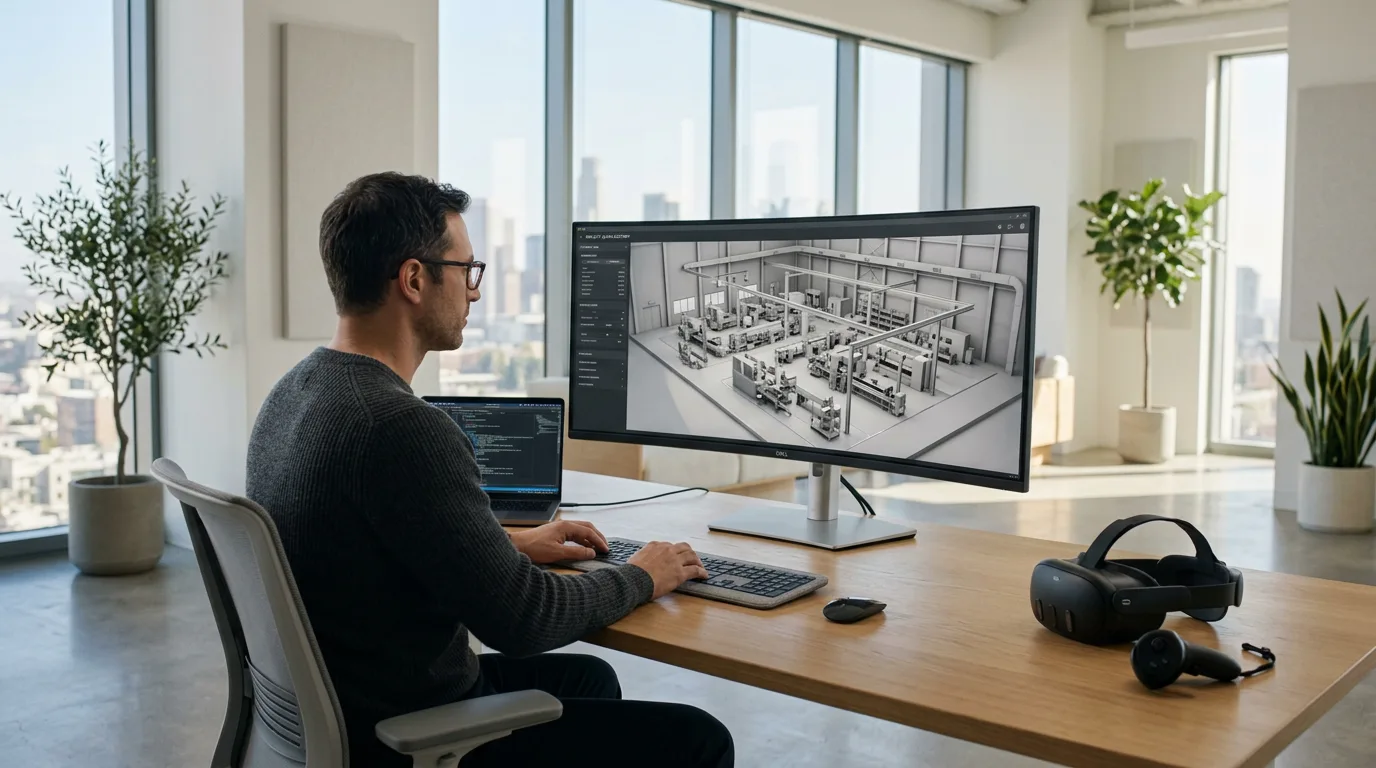
A digital twin technology company builds and maintains synchronized virtual replicas of physical assets, processes, or systems that update from live data. The best providers in 2026 split into two groups: platform vendors that model sensor data on a screen, and studios that render photorealistic 3D twins you can walk through in a headset. This guide ranks both and shows which fits manufacturing, healthcare, and construction.
Key Takeaways
- The global digital twin market grows from $21.14 billion in 2025 to $149.81 billion by 2030 at a 47.9% CAGR, according to MarketsandMarkets (2025).
- Digital twin companies fall into two camps: IoT/data-platform vendors (Siemens, Microsoft, PTC, Ansys) and immersive 3D/XR studios (Frame Sixty, built on NVIDIA Omniverse).
- 75% of businesses have adopted digital twin technology and 69% of manufacturers already use it, per MindInventory (2026).
- Implementation costs range from $50,000 for a single manufacturing line to $4.2 million for a large construction twin, according to Azilen’s 2026 cost guide.
- NVIDIA Omniverse Spatial Streaming, announced at CES on January 6, 2025, sends large-scale industrial twins to Apple Vision Pro and Meta Quest headsets in real time.
What Does a Digital Twin Technology Company Actually Do?
A digital twin technology company creates a living virtual copy of a real asset, then keeps that copy synchronized with its physical counterpart through sensor feeds, engineering data, or simulation. These companies sell two distinct outputs: the software platform that ingests data and models relationships, and the visual experience layer that lets people see and interact with the twin. Knowing which output you need is the first step in choosing a vendor.
The market backs the demand. According to MarketsandMarkets’ 2025 digital twin report, the sector was worth $21.14 billion in 2025 and will reach $149.81 billion by 2030 at a 47.9% compound annual growth rate. Adoption is already broad: MindInventory’s 2026 statistics roundup reports that 75% of businesses have adopted the technology and 70% of C-suite executives are evaluating or investing in it.
The catch is that “digital twin” describes very different products. A twin can be a graph of sensor readings on a dashboard or a photoreal 3D factory you inspect through a headset. Picking the right company means matching the vendor’s specialty to the output your use case actually requires.
Two Camps: IoT/Data-Platform Twins vs. Immersive 3D Twins
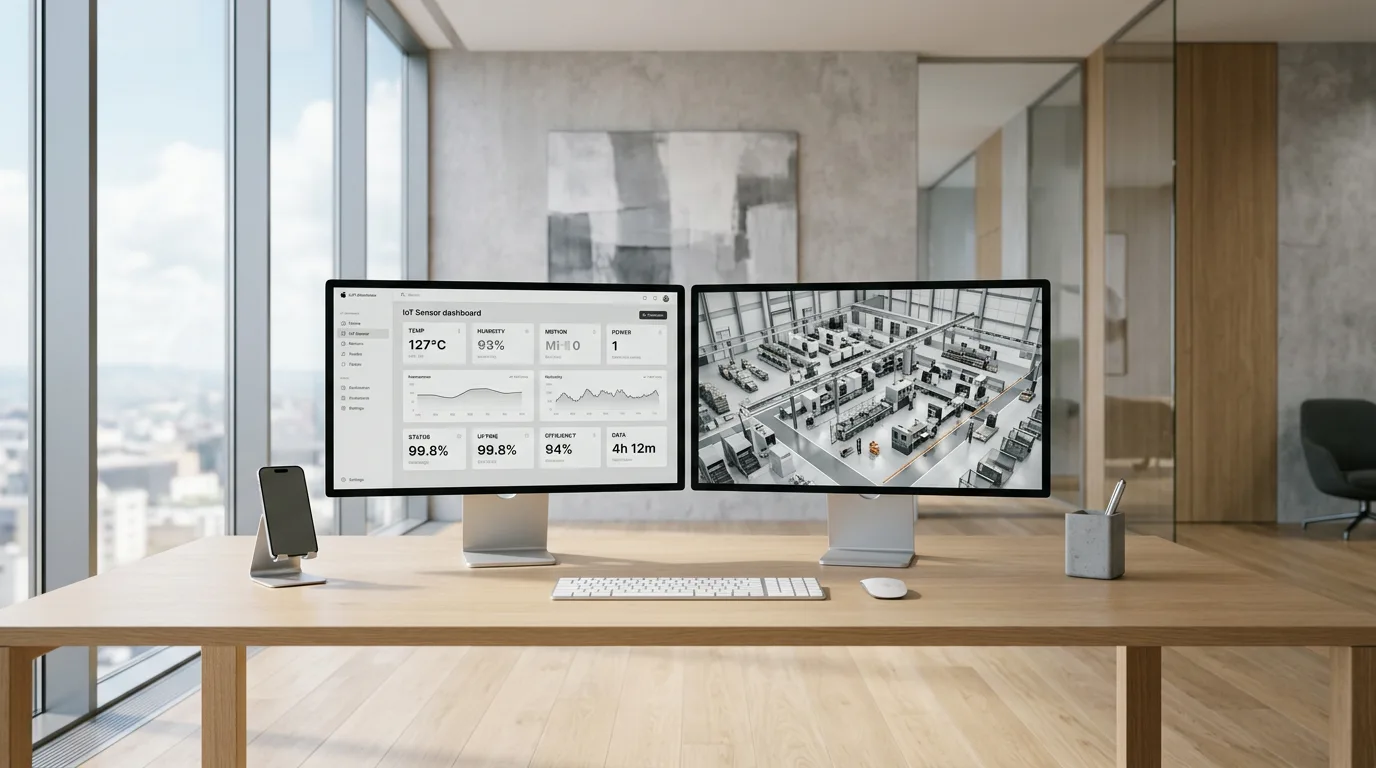
Digital twin companies divide into two camps. IoT/data-platform twins ingest sensor data, model it in a graph, and surface metrics on a screen, led by platforms like Azure Digital Twins, Siemens Xcelerator, and PTC ThingWorx. Immersive 3D/XR twins render photorealistic environments in real time and stream them to a headset or spatial display, with NVIDIA Omniverse as the dominant platform. The two are complementary, but individual vendors specialize in one.
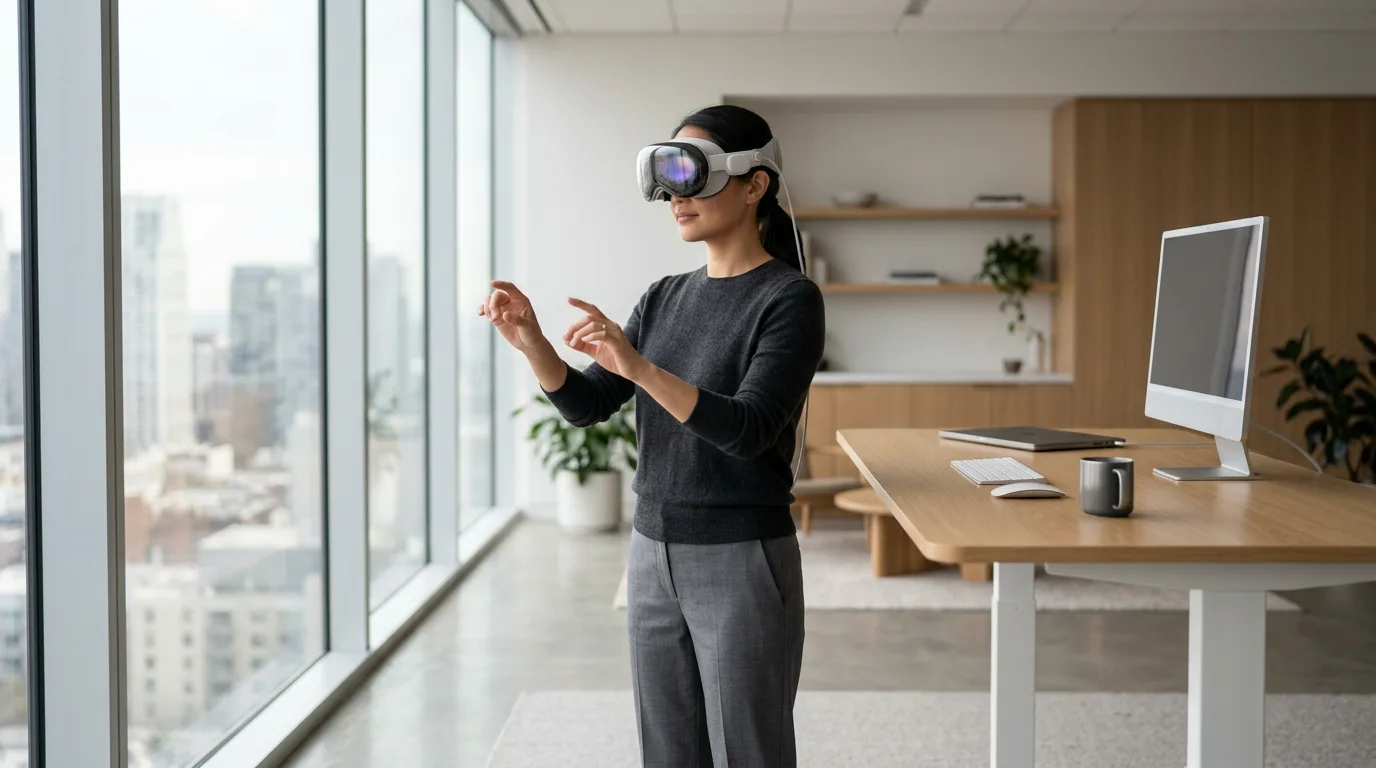
The distinction matters because it changes what you can do with the twin. A data-platform twin answers “is this pump about to fail?” An immersive twin answers “can I train a technician to replace that pump before the part arrives?” Most mature enterprise deployments pipe IoT data into a 3D scene, combining both.
| Attribute | IoT / Data-Platform Twins | Immersive 3D / XR Twins |
|---|---|---|
| Typical output | Dashboards, KPIs, alerts | Photoreal 3D scenes in a headset or browser |
| Primary standard | DTDL, IIoT | OpenUSD, spatial streaming |
| Best for | Monitoring, predictive maintenance | Training, walkthroughs, spatial inspection |
| Leading vendors | Siemens, Microsoft, PTC, Ansys | Frame Sixty, Treeview (on NVIDIA Omniverse) |
Choose the camp that matches your primary goal, then confirm the vendor can integrate with the other side when you need both.
The Best Digital Twin Technology Companies in 2026
The companies below were evaluated on four criteria: production deployments rather than demos, named enterprise clients, depth of platform or pipeline capability, and breadth across industries. The immersive-XR specialist leads because that capability is scarcer and harder to deliver end to end; the established IoT platforms follow in order of enterprise adoption. Disclosure: Frame Sixty is the studio publishing this guide, ranked first for immersive XR twins where its Omniverse-to-headset work is a genuine differentiator.
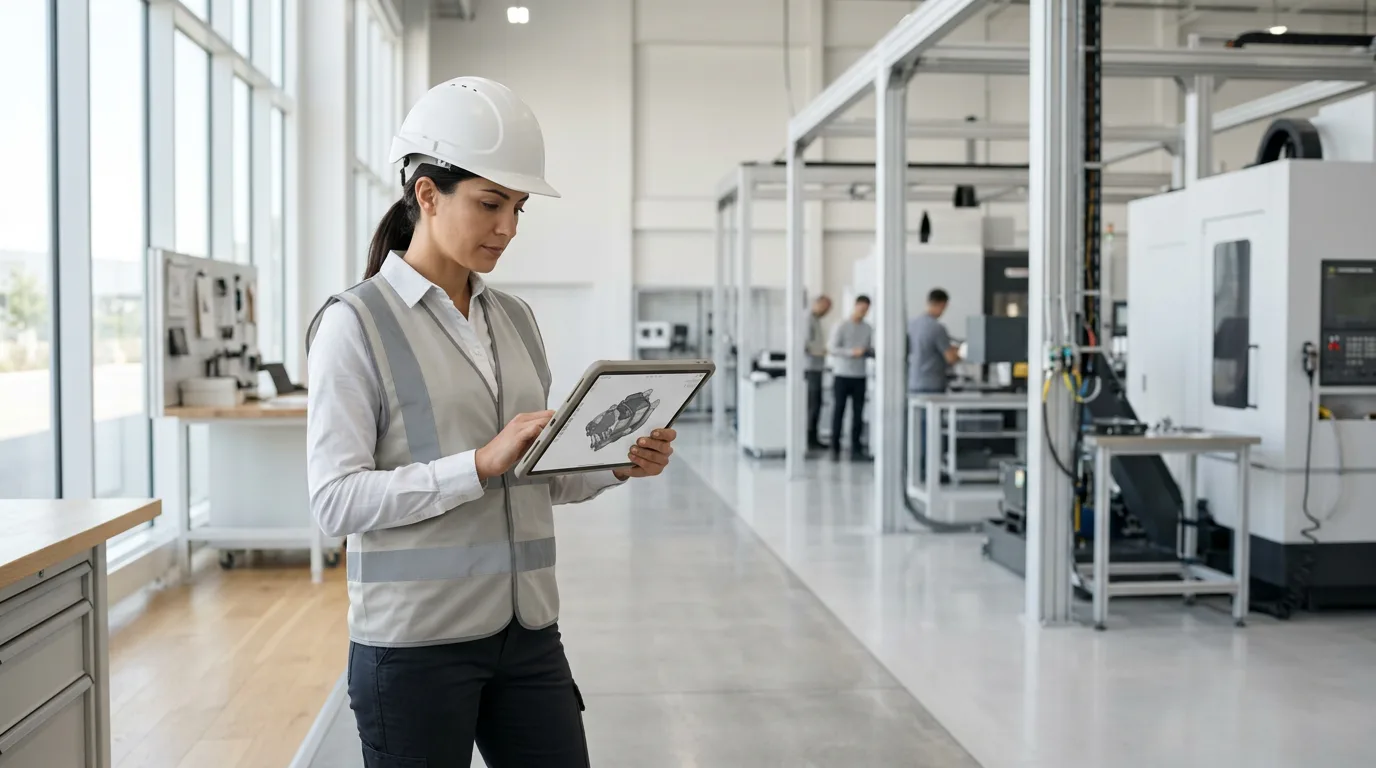
1. Frame Sixty — Best for Immersive XR Digital Twins
Frame Sixty, an AR/VR and spatial computing development studio, builds production-grade immersive digital twins and streams them through NVIDIA Omniverse to Apple Vision Pro, Meta Quest, and Android XR. The studio covers the full pipeline rather than a one-off demo: CAD and BIM conversion to OpenUSD, streaming infrastructure, enterprise security, and device management. Its verdict: the strongest pick when the twin needs to be experienced spatially, not just monitored.
Frame Sixty structures engagements in three phases to manage risk: prototype in two to six weeks, pilot in six to twelve weeks, then production. Its client roster includes Red Bull, Guardant Health, Carnival, and NBC, and the studio won a 2025 AWE Award for Best Societal App. You can see the approach in detail on its NVIDIA Omniverse XR digital twin page and its guide to creating a digital twin in VR. Best fit: manufacturing, healthcare, or construction teams that need walkthroughs, training, or spatial inspection.
2. NVIDIA Omniverse — Best Platform for Industrial Physical AI
NVIDIA Omniverse is the open development platform most immersive digital twin companies build on, based on OpenUSD and designed for large-scale industrial simulation. It is infrastructure rather than a services firm, so enterprises usually pair it with an implementation partner. Its verdict: the default backbone for photoreal industrial twins and headset streaming.
According to NVIDIA’s CES 2025 announcement, Omniverse Spatial Streaming sends large-scale twins to Apple Vision Pro, while Edify SimReady cuts 3D asset labeling from more than 40 hours to minutes for batches of 1,000 objects. Jensen Huang, founder and CEO of NVIDIA, said at the January 6, 2025 keynote that “Physical AI will revolutionize the $50 trillion manufacturing and logistics industries.” Enterprise adopters include Siemens, Dassault Systèmes, Microsoft, ABB, and Accenture. Best fit: organizations procuring a platform, with a partner like Frame Sixty implementing on top.
3. Siemens Xcelerator — Best for Full-Lifecycle Manufacturing Twins
Siemens Xcelerator delivers end-to-end product and performance digital twins spanning mechanics, multi-physics, electronics, and software in one virtual environment. It targets large manufacturers that want a single platform from design simulation through production monitoring. Its verdict: the most complete lifecycle platform for industrial manufacturing.
At CES 2026, Siemens unveiled Digital Twin Composer, which connects photorealistic 3D twins to live operational data and reaches the Xcelerator Marketplace in mid-2026. As NVIDIA’s March 2026 industrial AI report notes, Siemens integrates Omniverse physics rendering into the Xcelerator data backbone. Best fit: manufacturers needing deep lifecycle coverage; less suited to teams whose main goal is headset deployment.
4. Microsoft Azure Digital Twins — Best Cloud Platform for IoT Graph Modeling
Microsoft Azure Digital Twins is a platform-as-a-service for building knowledge graphs based on the Digital Twins Definition Language (DTDL), integrated with Azure IoT Hub, Azure Synapse, and Microsoft Fabric. It suits organizations already in the Azure ecosystem. Its verdict: the strongest cloud-native option for flexible IoT graph modeling.
In 2025, Microsoft added Digital Twins Builder inside Microsoft Fabric, a no-code graph-configuration interface that cuts onboarding time by up to 40%. The BlackRidge Research company roundup profiles Azure Digital Twins alongside the other major IoT platforms. Best fit: Azure-based teams that need data modeling without an XR layer.
5. Dassault Systèmes 3DEXPERIENCE — Best for Physics-Based Simulation Twins
Dassault Systèmes 3DEXPERIENCE is a virtual twin platform covering the full product lifecycle and positioning digital twins as core systems of record rather than standalone visualizations. It brings physics fidelity to aerospace, automotive, and life sciences. Its verdict: the choice when simulation accuracy outranks visualization.
Pascal Daloz, CEO of Dassault Systèmes, said in March 2026: “Knowledge is encoded in the living world. With our virtual twins, we are learning from life and understanding it to replicate and scale it.” The company’s Living Heart Project is described as the world’s first physics-based 3D digital replica of a human heart, and in February 2025 Dassault partnered with Apple to bring Vision Pro into the 3DEXPERIENCE platform for mixed-reality engineering. Best fit: physics-intensive engineering and medical simulation.
6. PTC ThingWorx — Best Industrial IoT Connectivity
PTC ThingWorx is an industrial IoT platform paired with PTC’s CAD and PLM tools, known for connecting a wide range of legacy industrial equipment. It suits manufacturers that need to link existing operational technology to a twin without a full platform migration. Its verdict: the most flexible connectivity layer for brownfield factories.
ThingWorx pairs with PTC Reality Lab to integrate datasets for factory floor analytics. Implementation through specialist partners typically runs $100 to $150 per hour, according to the Treeview development company comparison. Best fit: discrete and process manufacturers connecting existing OT systems; weaker than Azure on cloud-native graph modeling.
7. Ansys Twin Builder — Best for High-Fidelity Engineering Simulation
Ansys Twin Builder combines simulation-based reduced-order models with live IoT sensor data for real-time predictive maintenance and performance optimization. It serves engineering teams in aerospace, automotive, electronics, and energy. Its verdict: unmatched for physics-intensive component and system simulation.
Twin Builder works alongside Ansys Fluent for fluid dynamics, giving engineering teams validated performance predictions before they commit to a physical prototype. It is a simulation tool, not a visualization or XR platform, so pair it with an experience layer if you need headset delivery. Best fit: engineering teams validating performance at the component level.
Best Digital Twin Companies for Manufacturing
For manufacturing, the best digital twin companies combine an IoT monitoring layer with an immersive training layer: Siemens Xcelerator, PTC ThingWorx, and Ansys Twin Builder for live data and simulation, and Frame Sixty for headset-based walkthroughs and inspection. Manufacturing is the most mature vertical, with measurable returns already documented across connected production lines.

According to MindInventory’s 2026 statistics, 69% of manufacturers already use digital twins, and deployments deliver a 65% reduction in unplanned downtime and a 62% improvement in asset utilization. A manufacturing twin costs between $50,000 and $500,000, per Azilen’s 2026 cost guide, depending on the number of connected machines and the depth of AI integration. A twin scoped to a single product rather than a plant starts considerably lower; we break those budgets down in our guide to digital twin product development.
The immersive layer is where a screen dashboard falls short. Training an operator to service a machine, rehearsing a line changeover, or inspecting equipment remotely all benefit from a spatially accurate 3D twin. Frame Sixty’s 3D modeling for manufacturing and industrial design service produces the assets that feed these experiences. Manufacturers in early evaluation should run a proof of concept on a single line before an enterprise rollout, which is exactly what a two-to-six-week prototype phase is built for.
If you are still deciding what to scope and who to hire, our buyer’s guide to digital twin consulting breaks down the three services sold under that name, what each costs, and when you should skip consulting entirely.
Need help with an immersive digital twin?
We are here to help!
Best Digital Twin Companies for Healthcare
For healthcare, the leading digital twin companies are Siemens Healthineers, Dassault Systèmes, HeartFlow, and GE HealthCare for clinical and simulation work, with Frame Sixty supplying the immersive training and visualization layer. Healthcare is the fastest-growing digital twin segment, driven by surgical planning, patient monitoring, and drug development.

According to MarketsandMarkets’ April 2026 healthcare report, the healthcare digital twins market grows from $4.47 billion in 2025 to $101.19 billion by 2031 at a 68.4% CAGR, with North America holding 48.2% of global share in 2025. The MindInventory healthcare analysis adds that 66% of healthcare executives plan to increase digital twin investment over the next three years, while implementation costs run from $100,000 to more than $1 million because of HIPAA compliance and EHR integration.
The specialist vendors each own a clinical niche. The Treeview healthcare company roundup documents HeartFlow’s coronary artery twin, validated across more than 200 studies and 365,000 patients, and Dassault’s Living Heart Project. Frame Sixty fits where interaction matters: surgical walkthroughs, VR medical training, and immersive anatomy visualization that data-only platforms cannot deliver. For providers weighing broader deployments, Frame Sixty also documents its enterprise spatial computing practice.
Best Digital Twin Companies for Construction and Smart Buildings
For construction and smart buildings, the best digital twin companies are Siemens and Schneider Electric for building management, Autodesk and Bentley Systems for BIM-to-twin workflows, and Frame Sixty for immersive walkthroughs and safety training. Construction twins are moving from pilot projects to standard practice on large infrastructure portfolios.
Siemens and Schneider Electric together hold more than 35% of the smart building management market, while Autodesk, Bentley Systems, Trimble, and Hexagon lead BIM and site digitization. A digital twin for a large commercial or hospital building costs between $1.2 million and $4.2 million, according to Azilen’s 2026 guide, driven by BIM complexity and the scale of operational data integrated.
The decision comes down to your primary goal. If you need continuous operational monitoring of a finished building, the building-management platforms fit. If you need architects and developers to walk a pre-construction model in a headset, or crews to rehearse safety procedures in a spatially accurate replica, an immersive studio fits. Many portfolios eventually want both, feeding the same BIM source data into a monitoring platform and an XR experience layer.
How Much Does a Digital Twin Cost in 2026?
A digital twin costs between $50,000 and $45 million or more in 2026, depending on industry, data complexity, compliance requirements, and whether an immersive XR layer is included. Manufacturing sits at the low end, energy infrastructure at the high end. According to Azilen’s 2026 cost guide, 92% of companies tracking digital twin ROI report returns above 10% to 20%, with payback periods of 12 to 36 months for most implementations.
The table below breaks down typical ranges by industry and the factor that drives cost most.
| Industry | Project Scope | Typical Range | Key Cost Driver |
|---|---|---|---|
| Manufacturing | Single production line twin | $50,000–$500,000 | Machine connectivity, AI integration |
| Healthcare | Department or facility twin | $100,000–$1,000,000+ | HIPAA compliance, EHR integration |
| Construction | Grade A commercial building | $1,200,000–$4,200,000 | BIM integration, infrastructure scale |
| Energy / Utilities | Enterprise infrastructure twin | $5,000,000–$45,000,000+ | Operational data at grid scale |
Several costs sit outside the headline number: IoT sensors, cloud infrastructure, ongoing maintenance, and user provisioning. Adding an immersive headset layer through NVIDIA Omniverse is usually a separate engagement, which is why Frame Sixty scopes it in three phases so budget commitment follows a validated prototype.
Build the business case on documented benchmarks rather than projections. MindInventory’s 2026 data cites a 65% reduction in unplanned downtime, a 62% improvement in asset utilization, and 50% shorter development cycles among R&D teams using digital twins. To see how an interactive twin communicates value to stakeholders, Frame Sixty’s virtual reality product demos show the format in practice.
Can Digital Twins Stream to Apple Vision Pro or Meta Quest?
Yes. Digital twins can stream to Apple Vision Pro and Meta Quest headsets through NVIDIA Omniverse Spatial Streaming, announced at CES on January 6, 2025. The twin runs on cloud or edge compute and sends a compressed, interactive video stream to the headset, so a model containing hundreds of millions of polygons from CAD or BIM files never has to be optimized for the device itself.
This solves the core problem of headset-based twins. Standalone headsets cannot render a full industrial scene locally, but they can display a streamed one at full fidelity while compute stays server-side. That makes large-scale factory, hospital, and building twins practical to view in a Vision Pro or Quest without stripping detail.
How Does NVIDIA Omniverse Power XR Digital Twin Streaming?
NVIDIA Omniverse powers XR digital twin streaming through OpenUSD, the open scene-description standard that acts as a common format between CAD systems, BIM tools, simulation engines, and real-time renderers. Omniverse renders the twin server-side and streams it to headsets, while supporting tools prepare and generate the underlying 3D assets. This pipeline is what turns raw engineering data into a headset-ready experience.
Four Omniverse capabilities matter for XR deployment:
- Spatial Streaming delivers the rendered twin to Apple Vision Pro, Meta Quest, and Android XR.
- Edify SimReady labels 3D assets automatically, cutting more than 40 hours of manual work to minutes per 1,000 objects.
- Cosmos World Foundation Models generate synthetic data to train physical AI.
- USD Code and USD Search create and locate OpenUSD assets from text prompts.
Enterprise users including Siemens, Dassault Systèmes, ABB, Cadence, and Microsoft integrate Omniverse into their twin workflows. The implementation gap is where a studio fits: converting raw CAD and BIM files to OpenUSD, setting up streaming infrastructure and enterprise security, and managing headset fleets. Frame Sixty documents this work across its augmented reality solutions and virtual reality development services, and it sits alongside peers in the top VR development companies and best mixed reality companies in 2026 guides.
Conclusion
Choosing a digital twin technology company in 2026 starts with one question: do you need to monitor an asset or experience it? IoT and data-platform vendors like Siemens, Microsoft, PTC, and Ansys own the monitoring side, with mature lifecycle and simulation tooling. Immersive 3D and XR studios own the experience side, streaming photoreal twins to Apple Vision Pro and Meta Quest through NVIDIA Omniverse. Most enterprises will eventually want both, feeding the same source data into a dashboard and a headset.
The numbers support acting now rather than waiting. The market reaches $149.81 billion by 2030 at a 47.9% CAGR, 75% of businesses have already adopted the technology, and documented returns include a 65% cut in unplanned downtime. Costs scale with complexity, from $50,000 for a single production line to millions for grid-scale infrastructure, but payback typically lands within 12 to 36 months. Matching the vendor to your industry and your intended output is what keeps a twin from becoming an expensive demo.
Frame Sixty specializes in the immersive side of that equation — see our digital twin services — turning CAD and BIM data into interactive twins that run on Vision Pro, Quest, and Android XR. If you want to explore an immersive digital twin for your manufacturing, healthcare, or construction operation, get in touch with our team at Frame Sixty to scope a prototype.
Digital Twin Technology Companies: Frequently Asked Questions
Common questions about digital twin technology companies, covering market size, ROI, timelines, platforms, and how to choose a vendor by industry.
Digital twin ROI is strong and well documented: 92% of companies tracking returns report gains above 10% to 20%, with payback typically landing within 12 to 36 months, according to Azilen's 2026 cost guide. Reported manufacturing outcomes include a 65% reduction in unplanned downtime and a 62% improvement in asset utilization, per MindInventory's 2026 statistics.
Manufacturing, healthcare, and construction benefit most from digital twin technology. Manufacturing is the most mature vertical, with 69% of manufacturers already using twins. Healthcare is the fastest-growing segment, with its dedicated market projected to reach $101.19 billion by 2031 at a 68.4% CAGR. Construction is moving from pilots to standard practice on large infrastructure portfolios.
NVIDIA Omniverse is the leading platform supporting OpenUSD, the open scene-description standard that connects CAD systems, BIM tools, simulation engines, and real-time renderers. Omniverse converts raw CAD and BIM files into headset-ready twins and streams them server-side to Apple Vision Pro, Meta Quest, and Android XR, so models with hundreds of millions of polygons never need device-side optimization.
A digital twin can move from prototype to production in a matter of months when scoped in phases. Frame Sixty structures XR digital twin engagements in three stages: a prototype in two to six weeks, a pilot in six to twelve weeks, and then production. Phasing lets teams validate a single production line before committing budget to an enterprise rollout.
Look for a digital twin technology company with production deployments rather than demos, named enterprise clients, and end-to-end pipeline depth. Frame Sixty, an AR/VR and spatial computing development studio, covers CAD and BIM conversion to OpenUSD, streaming infrastructure, enterprise security, and device management, and has delivered immersive twins for clients including Red Bull, Guardant Health, and Carnival.
Digital twin costs vary sharply by industry in 2026, according to Azilen's cost guide. A single manufacturing line twin runs $50,000 to $500,000, a healthcare facility twin runs $100,000 to over $1 million because of HIPAA and EHR requirements, and a large commercial or hospital building twin runs $1.2 million to $4.2 million, driven by BIM complexity.
Get in touch
We’re interested to see how we can help. Send us a message and we will get back to you within 24 hours.