
The Role of VR in Surgical Planning and Simulation: What to Expect in 2026
Apr 30, 2026

12 MIN READ
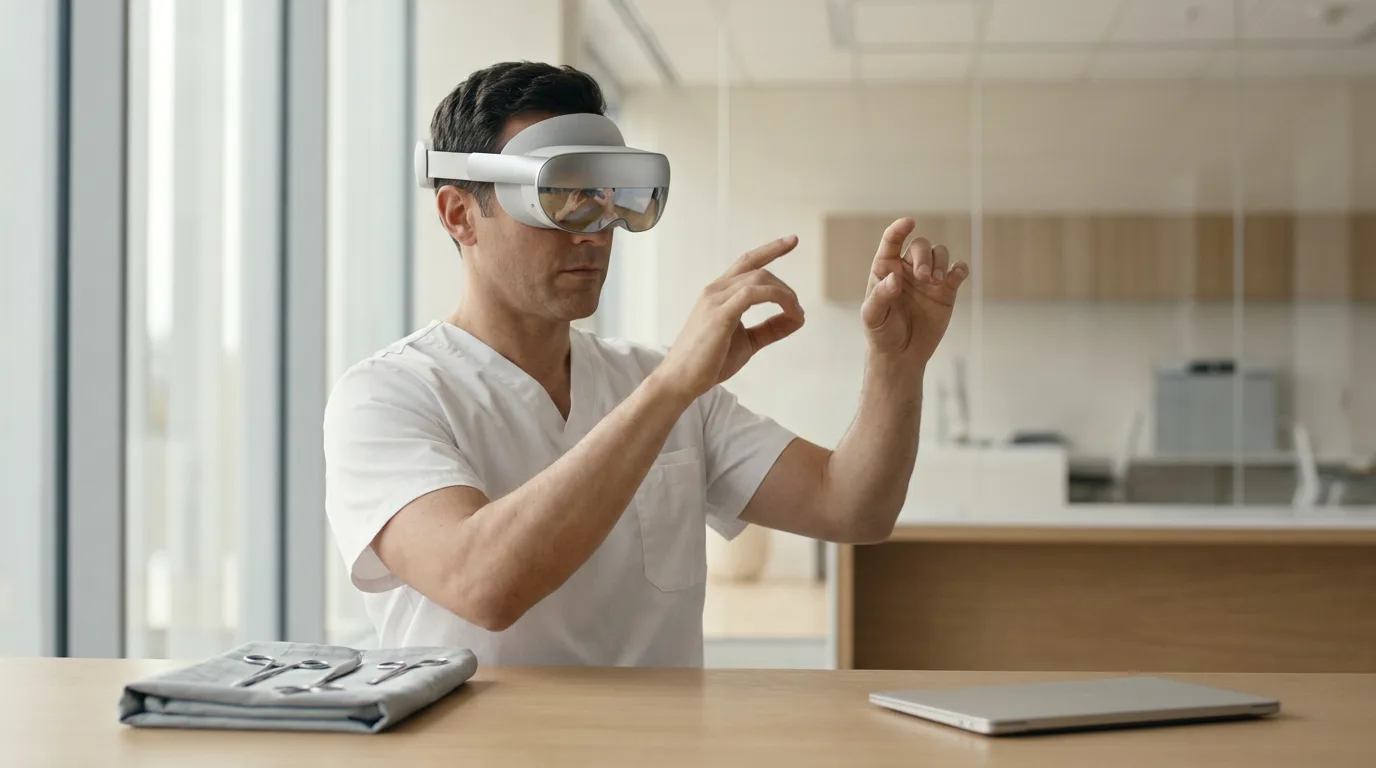
VR in healthcare uses immersive simulation, real-time data integration, and AI-driven modeling to improve surgical planning, training, and patient outcomes. By 2026, it will enable surgeons to interact with patient-specific 3D models, perform digital twin simulations, and receive predictive insights before operating. Interoperability standards such as DICOM and HL7 FHIR ensure accurate data exchange between imaging systems and VR platforms, while AI provides adaptive feedback for continuous skill improvement. This convergence of spatial computing, AI, and medical data transforms VR into a core component of modern surgical practice.
The Evolution of VR in Healthcare
Virtual reality (VR) in healthcare has evolved from basic visualization tools into sophisticated, data-driven platforms that transform how surgeons plan, rehearse, and execute complex procedures. In 2026, VR in healthcare will be defined by immersive surgical simulation, real-time data integration, and AI-driven predictive modeling that enhance both precision and patient outcomes.
From Early Visualization to Immersive Surgical Simulation
The journey of virtual surgical simulation began with simple 3D anatomical models used primarily for educational purposes. Early systems allowed medical students to rotate and dissect virtual organs, but lacked the realism and interactivity needed for true surgical rehearsal. Over the past decade, the convergence of spatial computing healthcare and mixed reality in medicine has transformed these static models into fully immersive surgical environments.
Pioneering companies like Osso VR, FundamentalVR, and Medical Realities have led this transformation. Osso VR’s platform, for instance, combines high-fidelity visuals with haptic feedback to simulate the tactile sensation of surgical tools. FundamentalVR integrates AI-assisted surgery analytics to assess surgeon performance in real time, while Medical Realities focuses on 360° surgical video training for global accessibility. These innovations have collectively raised the bar for surgical education and preoperative planning.
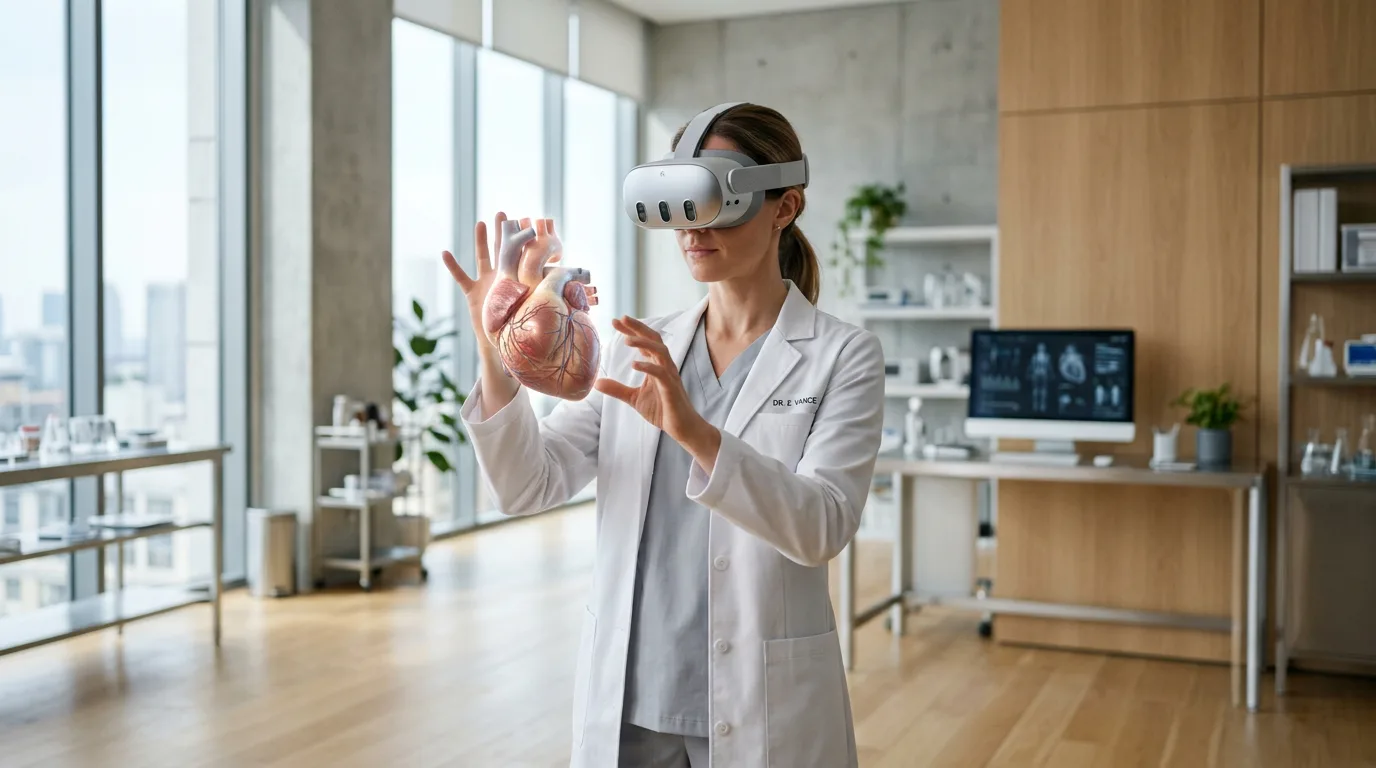
The integration of spatial computing—a concept explored in Frame Sixty’s agentic spatial computing overview—has been pivotal. Spatial computing enables surgeons to interact with patient data in three dimensions, manipulating organs, vessels, and tissues as if they were physically present. This hands-on digital interaction improves spatial awareness and procedural confidence.
By 2026, immersive surgical simulation will no longer be a niche training tool but a standard component of surgical planning. Hospitals and academic institutions are already embedding VR modules into their residency programs, and major medical device manufacturers are developing VR operating rooms that combine real-time patient data with interactive 3D environments.
Key takeaway: The evolution of VR in healthcare reflects a shift from passive visualization to active, data-driven simulation—enabling surgeons to plan, practice, and perform with unprecedented precision.
Integration of Real-Time Medical Data
The next frontier in VR in healthcare is the seamless integration of real-time medical data. Accurate 3D medical imaging and interactive anatomy models are essential for building patient-specific simulations that reflect real-world conditions. Modern VR systems now ingest imaging data from modalities such as MRI, CT, and ultrasound, converting them into manipulable 3D environments.
At Frame Sixty, our MRI visualization software leverages NIfTI (.nii) data formats to enable real-time anatomical visualization. Surgeons can explore volumetric scans interactively, isolating structures like blood vessels or tumors with precision. This capability enhances both diagnostic accuracy and surgical planning efficiency.
To ensure interoperability across systems, VR platforms rely on established healthcare data standards. The DICOM standard governs the exchange and storage of medical imaging data, ensuring that VR applications can accurately interpret and render clinical scans. Similarly, the HL7 FHIR framework provides a modern API-based approach to healthcare data exchange, allowing VR systems to pull live patient data from electronic health records (EHRs) securely and efficiently.
When combined, DICOM and FHIR create a foundation for medical data integration that supports real-time synchronization between imaging systems, hospital networks, and VR platforms. This interoperability is crucial for the next generation of surgical simulation, where every movement in the virtual environment mirrors the patient’s actual anatomy.
Key takeaway: Real-time data integration transforms VR from a static visualization tool into a dynamic surgical companion, bridging the gap between imaging, planning, and execution.
VR-Driven Surgical Planning in 2026
By 2026, VR-driven surgical planning will redefine how surgeons approach complex procedures. Through digital twin technology, AI-driven modeling, and interoperable data systems, VR will provide a fully interactive environment for preoperative rehearsal and intraoperative support.
The Rise of Digital Twin Surgery
Digital twin surgery refers to the creation of a real-time, data-driven virtual replica of a patient’s anatomy and physiology. This model allows surgeons to simulate procedures, test different surgical approaches, and predict outcomes before entering the operating room.
Companies like Siemens Healthineers, GE Healthcare, and Philips IntelliSpace are at the forefront of digital twin integration. Siemens’ digital twin solutions combine imaging and simulation to model organ behavior under surgical stress. GE Healthcare leverages AI to analyze imaging data and optimize surgical trajectories, while Philips IntelliSpace provides a connected ecosystem that synchronizes imaging, monitoring, and simulation data across devices.
In this ecosystem, AI-assisted surgery plays a critical role. Machine learning algorithms analyze thousands of previous procedures to predict the optimal surgical path, anticipate potential complications, and suggest instrument adjustments in real time. These predictive models contribute to measurable improvements in surgical accuracy rate and procedure time reduction.
At Frame Sixty, we’ve developed custom visualization tools that integrate patient-specific imaging data into interactive 3D environments. By combining digital twin surgery with real-time anatomical visualization, surgeons can perform virtual rehearsals that mirror the exact conditions of the upcoming operation. This approach not only enhances precision but also improves team coordination and patient safety.
Key takeaway: Digital twin surgery enables surgeons to “operate before they operate,” reducing risk and improving outcomes through predictive modeling and real-time simulation.
Hardware and Software Ecosystem
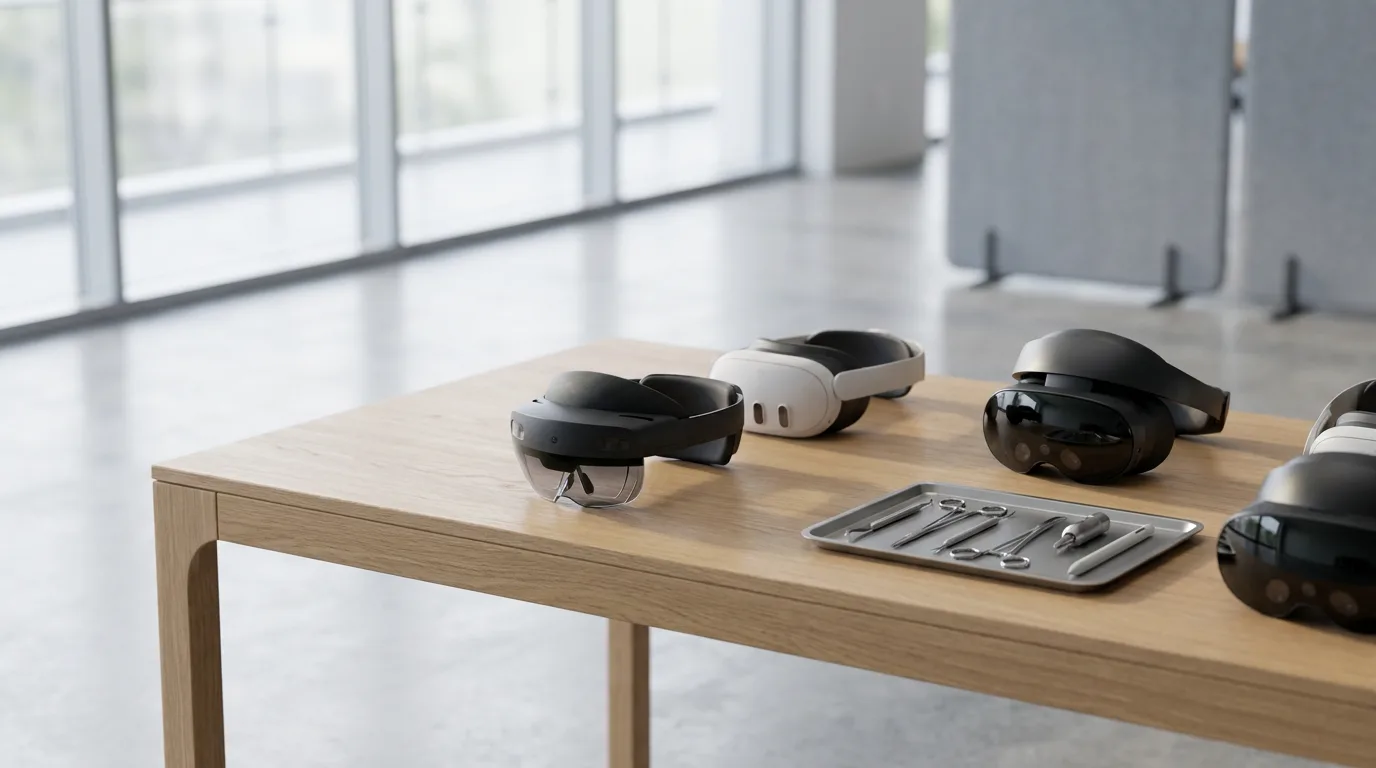
The hardware and software ecosystem supporting VR in healthcare has matured rapidly, offering surgeons an array of tools optimized for realism, performance, and interoperability.
| Hardware | Key Features | Use Case in Surgery |
|---|---|---|
| Microsoft HoloLens | Mixed reality headset with spatial mapping and gesture control | Overlaying 3D anatomy onto patients during surgery |
| Meta Quest Pro | High-resolution standalone VR headset | Portable surgical training and simulation |
| Varjo XR-4 | Photorealistic mixed reality with human-eye resolution | High-fidelity preoperative planning |
On the software side, engines like Unity, Unreal Engine, and NVIDIA Omniverse drive the realism of surgical simulations. These platforms enable developers to render lifelike tissues, simulate fluid dynamics, and integrate haptic feedback systems. Unity Reflect, for example, allows seamless synchronization between 3D models and real-time data streams, making it ideal for interactive anatomy models and preoperative planning.
Cross-platform compatibility is ensured through frameworks like OpenXR and IEEE VR Standards, which establish guidelines for interoperability and performance across devices. Compliance with medical device standards such as ISO 13485 and IEC 62304 ensures that VR systems meet stringent quality and safety requirements for clinical use.
At Frame Sixty’s 3D model design services, our team leverages these technologies to build custom medical simulations that integrate seamlessly with hospital systems. Whether developing a VR operating room or a digital twin surgery module, we ensure compatibility with existing imaging and data workflows.
Key takeaway: The hardware and software ecosystem for surgical VR is converging toward interoperability, realism, and compliance—laying the foundation for widespread clinical adoption.
Need help with VR healthcare solutions?
Frame Sixty is a full-service digital innovation studio specialising in AR/VR, mobile, and web development.
Immersive Surgical Training and Simulation
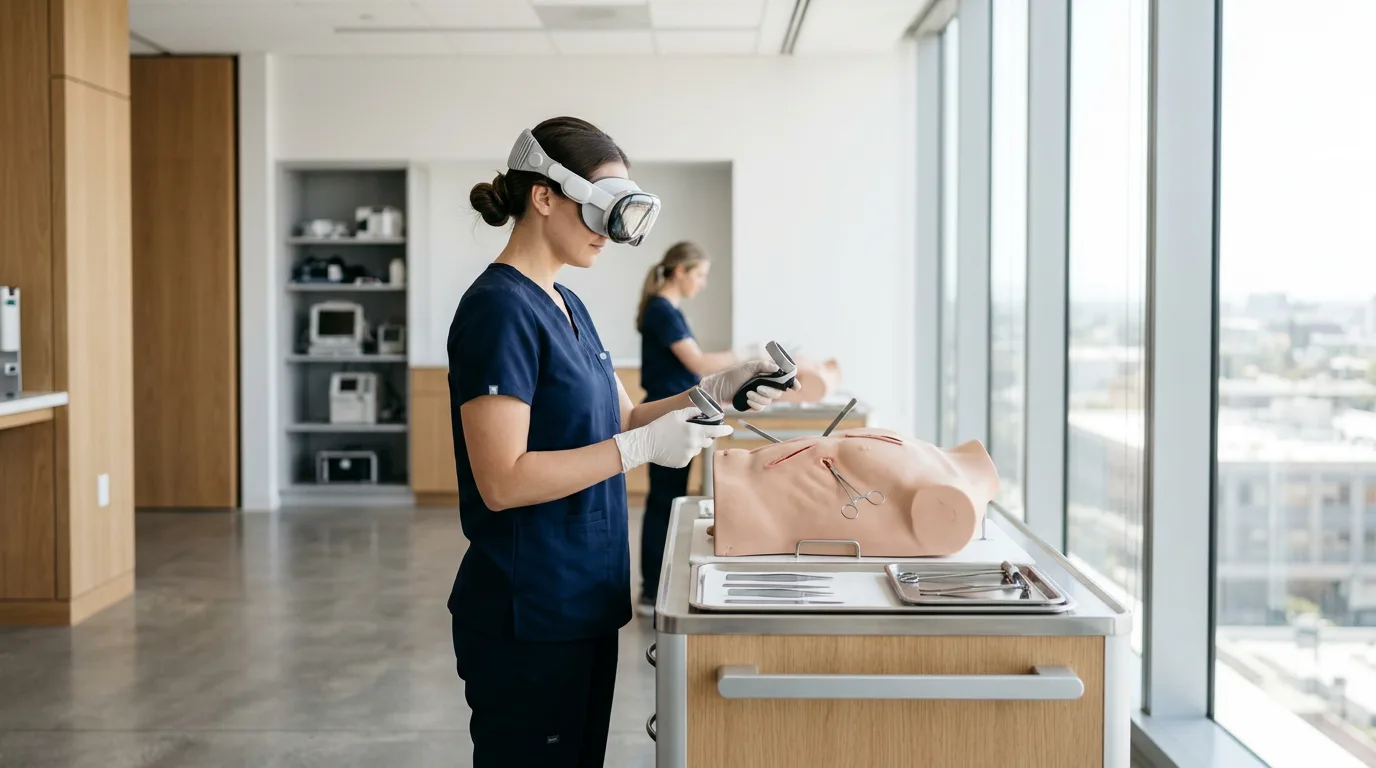
Immersive surgical training uses VR to replicate real surgical environments, allowing trainees to practice procedures repeatedly without risk to patients. In 2026, VR-based training will be a cornerstone of medical education, supported by AI-driven feedback and standardized performance metrics.
Enhancing Surgeon Competency and Retention
The primary goal of immersive surgical training is to enhance surgeon competency and improve training retention scores. Platforms like Surgical Theater, Osso VR, and FundamentalVR have demonstrated measurable improvements in learning curve efficiency and error rate decrease among trainees.
For example, Osso VR’s studies published in the New England Journal of Medicine highlight that trainees who practiced in VR environments achieved higher procedural accuracy and faster completion times compared to traditional methods. Similarly, Surgical Theater’s VR operating room allows residents to rehearse entire procedures collaboratively, improving communication and decision-making under pressure.
Metrics commonly used to assess performance include:
- Error rate decrease: Reduction in procedural mistakes after repeated VR sessions.
- Visual fidelity score: Subjective measure of realism and depth perception.
- User immersion index: Quantifies engagement and focus during simulation.
- Engagement duration: Tracks time spent actively interacting with the simulation.
At Frame Sixty’s AI in virtual reality development division, we integrate adaptive learning algorithms that adjust difficulty based on user performance. This ensures that trainees are continuously challenged, accelerating skill acquisition while maintaining engagement.
Key takeaway: Immersive VR training enhances surgeon performance through repetition, realism, and adaptive feedback—leading to measurable improvements in competency and retention.
AI and Real-Time Feedback Loops
Artificial intelligence is revolutionizing virtual surgical simulation by enabling real-time performance assessment and adaptive feedback. Using computer vision and motion tracking, AI systems analyze surgeon movements, instrument handling, and decision-making patterns to provide personalized insights.
Frame Sixty’s custom solutions integrate real-time equipment data—such as endoscope feeds or robotic arm telemetry—into VR environments. This creates a closed-loop system where trainees receive immediate feedback on metrics like system latency, simulation throughput, and procedure accuracy.
For instance, when a trainee applies excessive force to a virtual tissue, the system can instantly display corrective guidance or haptic resistance. Over time, these micro-adjustments refine muscle memory and improve procedural precision.
AI also supports predictive analytics by identifying recurring errors and recommending targeted practice modules. This approach aligns with the adaptive learning frameworks used in other industries, now tailored for surgical excellence.
At Frame Sixty’s AI developer team, we specialize in building these intelligent feedback systems that merge machine learning with immersive simulation. The result is a training environment that not only measures performance but continuously enhances it.
Key takeaway: AI-driven feedback loops transform VR training into a dynamic, personalized learning experience that accelerates skill mastery and reduces human error.
Challenges and Future Outlook
Despite its promise, VR in healthcare faces several challenges before achieving full-scale adoption. These include cost barriers, regulatory compliance, and the need for standardized evaluation metrics.
Scaling VR Training Across Healthcare Institutions
Scaling VR training across hospitals and universities requires overcoming logistical, financial, and regulatory hurdles. High-end VR hardware like the Varjo XR-4 and Microsoft HoloLens can be costly, especially when outfitting multiple training labs. Additionally, maintaining compliance with HIPAA and GDPR regulations is critical when handling patient data in virtual environments.
Regulatory frameworks such as FDA 510(k) and CE Marking govern the approval of VR-based medical devices and software. Developers must demonstrate safety, efficacy, and data security before deployment in clinical settings. Compliance with ISO 13485 ensures that quality management systems meet international medical device standards, while IEC 62304 governs software lifecycle processes.
Hospitals evaluating the ROI in simulation often measure outcomes such as procedure time reduction, error rate decrease, and patient outcome improvement. Studies have shown that VR-based training can reduce surgical errors by up to 30% and shorten procedure durations by 15–20%, leading to significant cost savings over time.
To support scalability, Frame Sixty’s 3D modeling for manufacturing and industrial design team collaborates with healthcare institutions to create modular, reusable VR training assets. These can be adapted for different specialties or procedures, reducing development costs and maximizing training ROI.
Key takeaway: Scaling VR training requires balancing cost, compliance, and customization—achievable through modular design, regulatory alignment, and measurable ROI tracking.
The Road Ahead for 2026 and Beyond
Looking ahead to 2026 and beyond, spatial computing healthcare will become an integral part of surgical practice. The fusion of mixed reality in medicine, AI-assisted surgery, and digital twin models will redefine not only how surgeons train but also how they operate.
We can expect to see:
- Integration with surgical robotics: VR interfaces will guide robotic arms during minimally invasive procedures, improving precision and reducing fatigue.
- Expanded use of digital twins: Continuous patient monitoring will update digital twins in real time, enabling predictive diagnostics and proactive interventions.
- Widespread adoption of spatial computing: Platforms like Apple Vision Pro—explored in Frame Sixty’s 8 apps for Apple Vision Pro and developer perspective—will bring high-fidelity visualization to clinical environments.
- AI-driven interoperability: Seamless data exchange between VR systems, imaging platforms, and hospital networks will enhance workflow efficiency.
As highlighted in a peer-reviewed study from Nature Digital Medicine, the convergence of VR, AI, and mixed reality is already improving surgical outcomes and patient engagement. The study emphasizes that the next phase of innovation will focus on real-time collaboration, allowing multiple surgeons to interact within the same virtual space from different locations.
At the forefront of this transformation, Frame Sixty’s Android app development agency is extending VR capabilities to mobile and wearable platforms, enabling surgeons to review 3D models and simulations on the go. Combined with our expertise in AI in virtual reality development, these tools empower clinicians to make data-driven decisions anytime, anywhere.
Key takeaway: The future of VR in healthcare lies in convergence—where spatial computing, AI, and digital twins unite to create a seamless, intelligent surgical ecosystem.
Conclusion
By 2026, VR in healthcare will have evolved into a fully integrated ecosystem that supports every stage of surgical care—from planning and simulation to execution and post-operative analysis. The convergence of digital twin surgery, AI-assisted feedback, and real-time data integration will enable surgeons to achieve unprecedented levels of accuracy, efficiency, and patient safety.
The key to successful adoption lies in interoperability and compliance. Standards such as DICOM, HL7 FHIR, and ISO 13485 ensure that VR systems communicate seamlessly and meet medical-grade quality requirements. Meanwhile, advances in spatial computing healthcare and mixed reality in medicine will continue to blur the line between the virtual and physical operating room.
At Frame Sixty, we’re proud to be part of this transformation. Our work in 3D model design, AI-driven simulation, and real-time anatomical visualization helps healthcare institutions harness the full potential of VR for surgical innovation. Whether developing immersive training modules or integrating digital twin systems, our goal is to make surgical planning more precise, efficient, and accessible.
If you’d like to explore how VR in healthcare can transform your organization’s surgical planning and training capabilities, get in touch with our team at Frame Sixty. Together, we can shape the future of immersive medical technology and redefine what’s possible in the operating room.
VR in Healthcare: Surgical Planning Questions
As VR in healthcare continues to evolve, its impact on surgical planning, simulation, and training grows stronger. Below are common questions and answers exploring how virtual reality will shape surgical precision, data integration, and clinical outcomes by 2026.
VR in healthcare lets surgeons plan procedures on interactive 3D models of patient anatomy built from MRI and CT scans, so they can rehearse and refine an operation before entering the operating room. Modern systems convert imaging data into manipulable environments where surgeons isolate structures such as vessels or tumors, improving spatial awareness and procedural confidence.
Digital twin surgery creates a real-time, data-driven virtual replica of a patient's anatomy and physiology so surgeons can simulate procedures, test different approaches, and predict outcomes before operating. Companies including Siemens Healthineers, GE Healthcare, and Philips are integrating digital twins with imaging and AI, letting surgeons effectively operate before they operate.
VR surgical simulations pull patient data through healthcare interoperability standards: DICOM governs medical imaging exchange, HL7 FHIR provides API-based access to electronic health records, and NIfTI files carry MRI volumes for real-time visualization. Together these standards keep every movement in the virtual environment synchronized with the patient's actual anatomy.
Surgical VR runs on devices such as Microsoft HoloLens for mixed reality overlays, Meta Quest Pro for portable training, and Varjo XR-4 for photorealistic preoperative planning. On the software side, Unity, Unreal Engine, and NVIDIA Omniverse render realistic anatomy, simulate physics, and integrate haptic feedback, with OpenXR providing cross-platform compatibility.
The main barriers to scaling VR in healthcare are hardware cost, regulatory compliance, and standardized evaluation metrics. VR medical software may require FDA 510(k) clearance or CE Marking, plus ISO 13485 and IEC 62304 quality processes, and patient data must meet HIPAA and GDPR requirements. The ROI case is strong: studies show VR-based training can cut surgical errors by up to 30% and shorten procedures by 15-20%.
Frame Sixty builds custom VR and AR healthcare solutions covering surgical planning, MRI visualization from NIfTI data, and immersive training modules that integrate with hospital imaging systems. Its virtual reality development and 3D modeling services produce modular, reusable training assets that adapt across specialties and procedures.
Get in touch
We’re interested to see how we can help. Send us a message and we will get back to you within 24 hours.