
3D Scanning Services: A 2026 Guide to Technologies, Costs, and Choosing a Provider
Jul 29, 2026
12 MIN READ
3D scanning services capture physical objects, parts, and spaces as precise digital 3D models using structured light, laser, and photogrammetry. Prices run from roughly $250 for a simple small part to $5,000 or more for large architectural or industrial scans. The right service depends on your accuracy requirements, object size, and end use, whether that is reverse engineering, quality inspection, a digital twin, or AR/VR content.
One decision rule matters more than any spec sheet: choose a scanning service by the deliverable your downstream pipeline can actually consume, not by the lowest price per scan. A metrology-perfect point cloud is worth little if it arrives as a multi-gigabyte mesh your CAD system or game engine cannot open. Match the scan to its destination first. Everything else is negotiation.
Key Takeaways
- The global 3D scanning market reaches USD 6.46 billion in 2026 and is projected to hit USD 16.65 billion by 2034 (Fortune Business Insights, 2026).
- Single-object scans run from about $250 for a simple part to over $2,000 for complex geometry (Artec 3D, 2026).
- Professional and industrial scanners deliver roughly 0.02 mm accuracy (3DPrinting.com, 2026); metrology-grade digital twins need tolerances near 0.05 mm (Artec 3D, 2026).
- North America holds about 32% of the 2026 market, with hardware at 78.3% of total spend (Coherent Market Insights, 2026).
- A digital twin differs from a static 3D model because it is linked to its physical counterpart by a real-time data stream (Artec 3D, 2026).
What are 3D scanning services and how do they work?
3D scanning services are outsourced providers that capture physical objects, parts, or environments and convert them into digital 3D models. They use hardware and software to record surface geometry as a dense point cloud, then process that data into a mesh or a CAD-ready model. The four primary methods are structured light, laser triangulation, photogrammetry, and CT scanning. Most 2026 professional systems are hybrids.
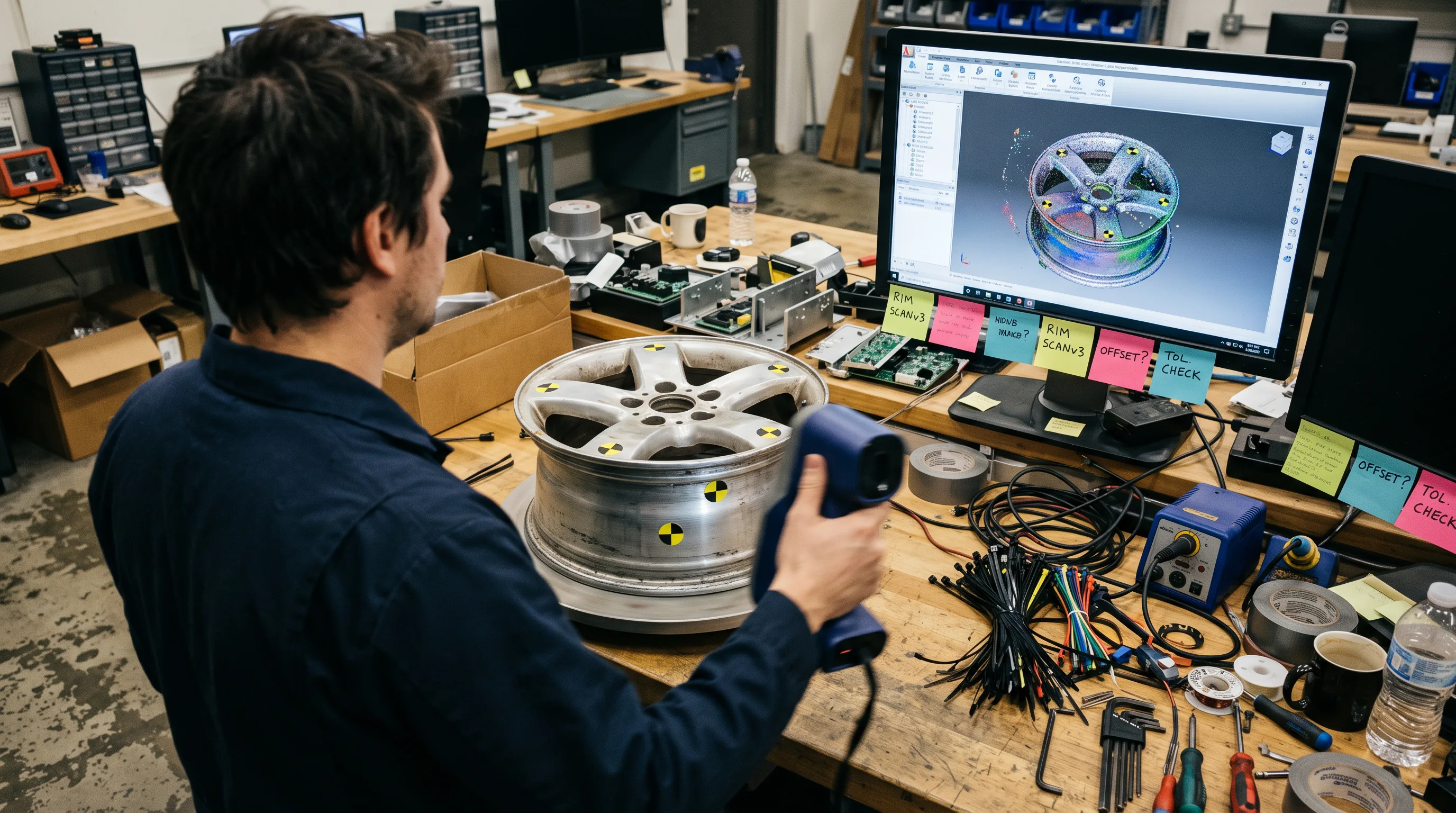
According to 3DPrinting.com’s 2026 buying guide, most current professional scanners combine blue laser, structured light, and near-infrared sensing so a single device handles every surface type, from matte plastic to polished metal. That convergence matters for buyers. It means the old question of picking one technology now shifts toward picking a provider whose equipment and skill fit your specific part.
Demand is climbing fast. The global market sits at USD 6.46 billion in 2026 and is forecast to reach USD 16.65 billion by 2034 at a 12.56% CAGR, per Fortune Business Insights’ 2026 report. Handheld and portable scanners are the fastest-growing segment.
How does the 3D scanning workflow go from capture to deliverable?
The 3D scanning workflow moves through five stages: surface preparation, capture, registration, mesh reconstruction, and export. Shiny or dark parts get a thin matte spray first so the sensor can read them. The scanner then records overlapping passes, software aligns those passes into one point cloud, and that cloud becomes a watertight mesh.
The deliverable is where projects diverge. A raw point cloud is millions of unconnected 3D points. A mesh connects them into a surface. A CAD-ready model rebuilds the geometry as editable, parametric features. As Cad Crowd’s cost breakdown notes, mesh-only output is the cheaper tier and CAD-ready output costs more. Metrology houses like ZEISS deliver scans traceable to NIST standards with color-map inspection reports in formats such as STL, STEP, and IGES. Know which deliverable you need before you request a quote.
Structured light vs. laser vs. photogrammetry: which 3D scanning technology fits?
Structured light suits small, detailed objects, laser triangulation handles complex or metallic parts, and photogrammetry captures large scenes and outdoor sites at lower cost. No single method wins everywhere. The right choice depends on object size, surface finish, and how much accuracy your end use actually requires. The table below maps each method to where it performs best.
| Method | How it works | Best for | Typical accuracy | Object size |
|---|---|---|---|---|
| Structured light | Projects a coded light pattern, reads its deformation | Detailed small-to-medium parts | 0.01–0.05 mm | Small to medium |
| Laser triangulation | Projects laser lines, measures return angle | Dark, shiny, or complex metal parts | ~0.02 mm | Small to large |
| Photogrammetry | Reconstructs geometry from overlapping photos | Rooms, sites, large outdoor objects | Sub-cm at best | Medium to very large |
| CT scanning | X-rays reveal internal and hidden geometry | Internal features, assemblies, voids | High, material-dependent | Small to medium |
Accuracy figures above are drawn from 3DPrinting.com’s 2026 scanner guide, which reports professional units reaching roughly 0.02 mm with volumetric specifications.
Verdict: Choose structured light for fine detail on the bench, blue laser for dark or metallic parts and larger volumes, photogrammetry for buildings and sites, and CT only when you must see inside a part.
How do structured light and blue-laser scanning compare?
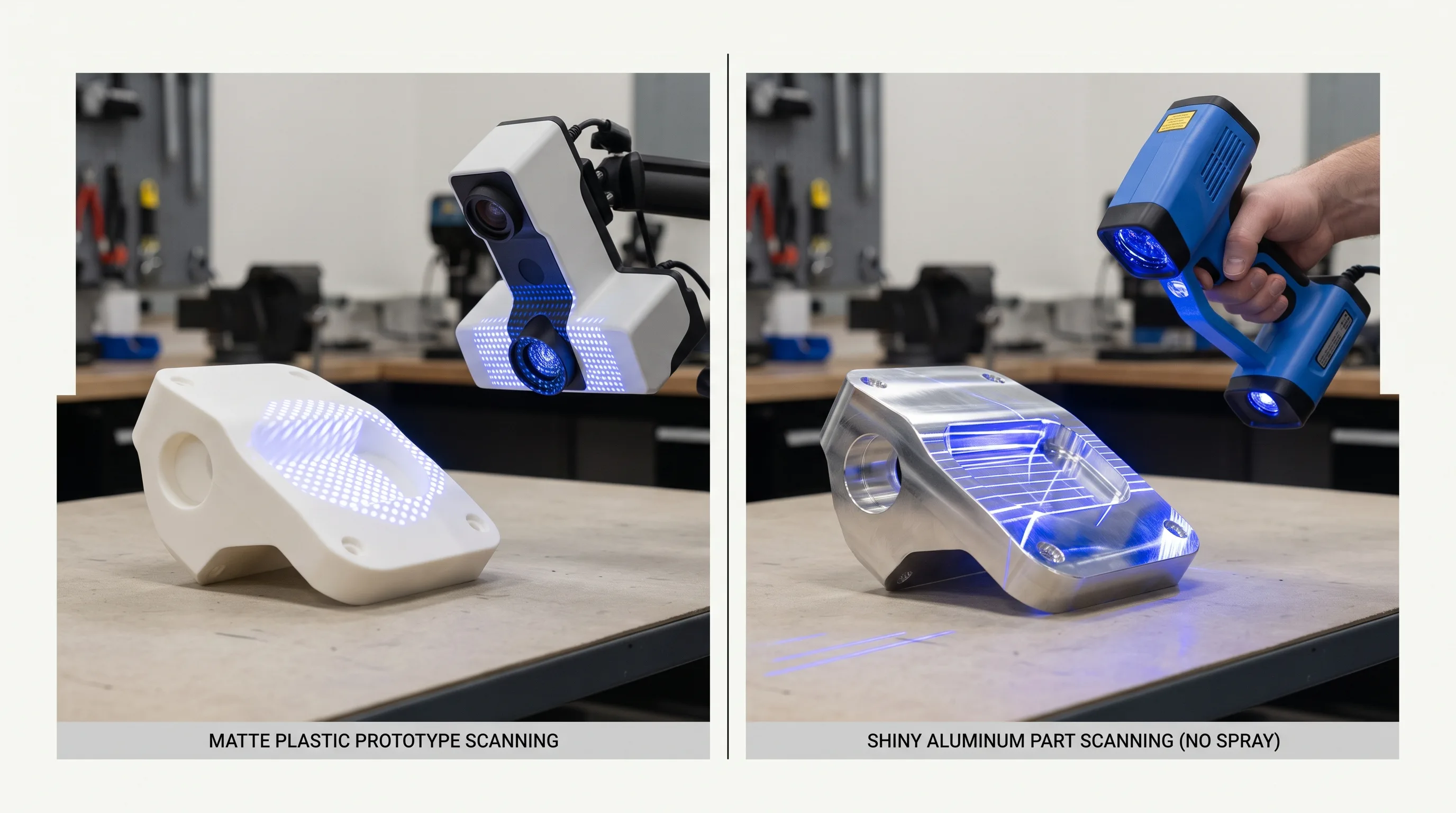
Structured light and blue-laser scanning both deliver high accuracy, but they fail on different surfaces. Structured light is fast and captures fine detail, yet it struggles on dark or polished surfaces unless you apply matte spray. Blue-laser triangulation reads dark and metallic parts without any spray, which saves prep time on production metal components.
3DPrinting.com’s 2026 guide places professional and industrial systems near 0.02 mm accuracy with volumetric specifications, while entry consumer units land around 0.1 mm. The practical difference on the shop floor is surface handling. If your parts are machined aluminum or cast iron, blue laser removes a preparation step. If they are matte prototypes with intricate features, structured light captures crisper edges.
Because 2026 hybrid scanners fold both technologies into one device, the buyer’s real decision is no longer “which method.” It is which operator knows how to sequence passes, set exposure for a given surface, and clean the data without smoothing away the features you care about.
When should you use photogrammetry, LiDAR, or CT scanning?
Photogrammetry and LiDAR win at scale, while CT scanning wins on hidden geometry. Photogrammetry reconstructs 3D models from overlapping photographs and excels at room-scale and outdoor capture, though it is weak on sub-centimeter detail. LiDAR measures distance with laser pulses and suits buildings and terrain. CT scanning uses X-rays to capture internal structures no optical method can reach.
Match the method to the job. A warehouse as-built or a heritage facade calls for photogrammetry or LiDAR. A sealed assembly with internal channels calls for CT. As VNTANA explains, both 3D scanning and photogrammetry produce models usable in AR, VR, and 3D web viewers, but the capture method sets the ceiling on detail. Pick the coarsest method that still meets your accuracy floor, because finer methods cost more time and money.
How much do 3D scanning services cost?
3D scanning services cost from about $250 for a simple small object to more than $2,000 for a complex mechanical part, according to Artec 3D’s 2026 pricing. Real jobs illustrate the spread: a car rim runs roughly $800, while a dual-clutch transmission with intricate geometry runs about $1,200. Object complexity, accuracy, and deliverable format drive the final number more than raw size.
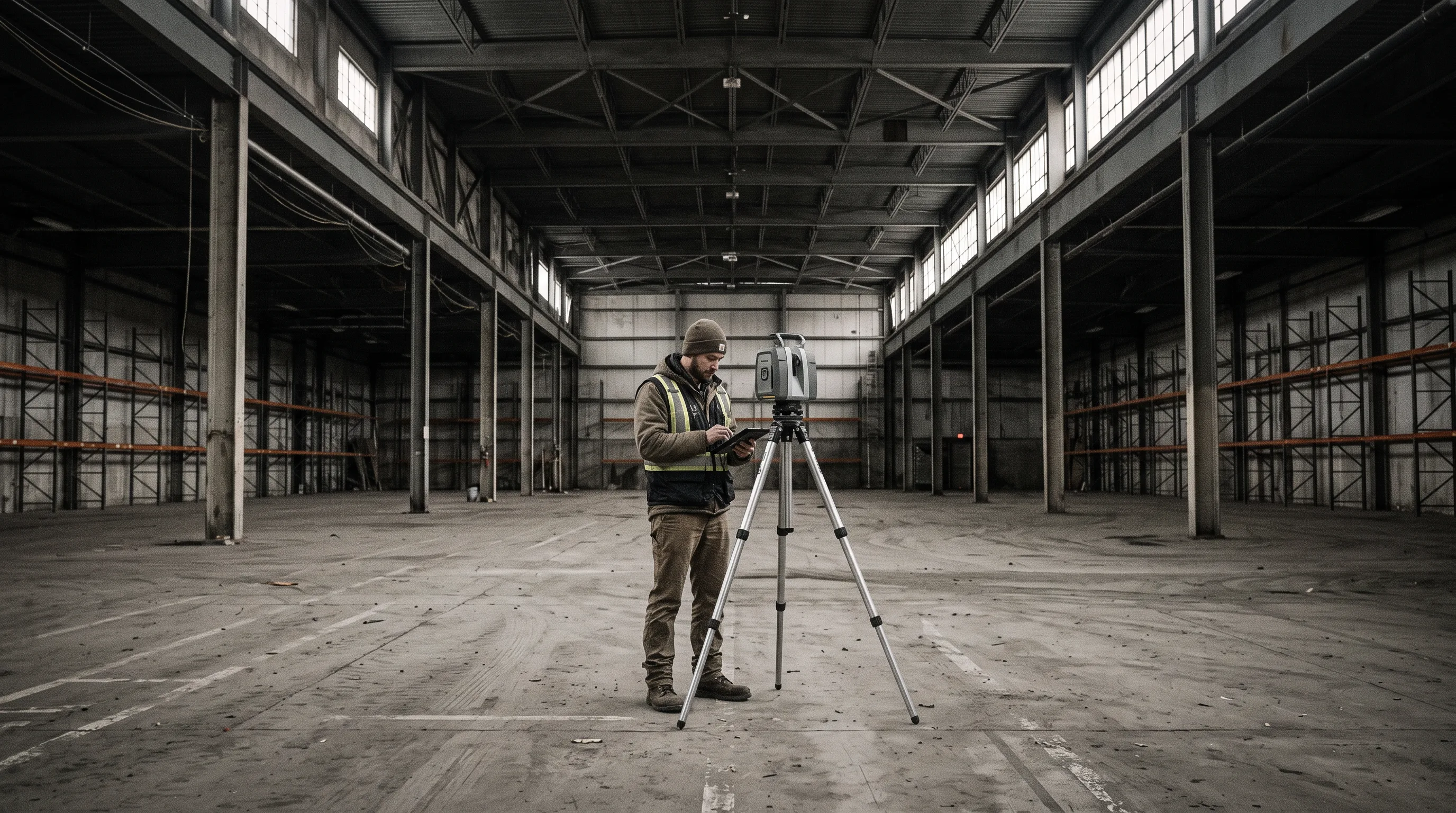
The Artec 3D cost guide breaks per-object pricing into clear bands. The table below summarizes typical ranges for discrete objects.
| Object type | Typical price | Notes |
|---|---|---|
| Simple small part | $250–$500 | Single pass, mesh-only |
| Moderate object (car rim) | ~$800 | Multi-pass capture |
| Complex mechanical part | $1,200–$2,000+ | Fine features, CAD output |
| Reflective or shiny part | +$10–$50 | Matte spray per can |
Key takeaway: For discrete parts, budget by geometric complexity and deliverable, not by the object’s physical dimensions.
What does site- and facility-scale scanning cost?
Site- and facility-scale scanning is priced per square foot, not per object. Terrestrial laser scanning runs roughly $0.20 to $0.70 per square foot, dropping to $0.05 to $0.20 per square foot for drone LiDAR, according to The Future 3D’s 2026 cost guide. Project totals scale with the space.
The same 2026 guide gives whole-project bands: a single room runs $1,000 to $2,000, a full residence $2,000 to $6,000, and an industrial plant or warehouse $10,000 to $100,000 or more. On-site work and rush turnaround both add a premium. If you are scanning a building for an as-built model or a digital twin, ask whether registration and point-cloud cleanup are included in the quoted rate or billed separately.
What drives the price of a 3D scan?
Six factors drive the price of a 3D scan: object size, geometric complexity, accuracy requirements, surface properties, deliverable format, and turnaround. Artec 3D’s 2026 breakdown lists all six. A shiny surface adds spray and prep time. A tight tolerance demands metrology-grade hardware and slower, more careful passes.
Deliverable format is the factor buyers underestimate most. Cad Crowd’s breakdown shows providers export STEP, IGES, STL, OBJ, 3MF, DXF, and DWG, with mesh-only cheaper than a fully rebuilt CAD model.
Here is the cost most quotes hide. Capture is only half the bill when your destination is AR, VR, or the web. A raw scan lands as a dense, oversized mesh, and the retopology, decimation, and UV work needed to make it usable can rival the capture fee itself. Factor that optimization tax into the budget from day one, or the “cheap” scan becomes the expensive one.
Need help with 3D scanning and digital twins?
We are here to help!
What are the main use cases for 3D scanning services?
The main use cases for 3D scanning services are reverse engineering, quality inspection, digital twin creation, AR/VR content, and heritage preservation. Each maps to an industry: manufacturing and product design lean on reverse engineering and inspection, architecture uses as-built site capture, and museums use scanning for preservation. The end use dictates the accuracy and deliverable you should request.
Manufacturing drives most demand. Coherent Market Insights’ 2026 analysis reports North America holds about 32% of the market and hardware accounts for 78.3% of spend, reflecting heavy industrial adoption across aerospace, automotive, and healthcare.
How is 3D scanning used for reverse engineering and quality inspection?
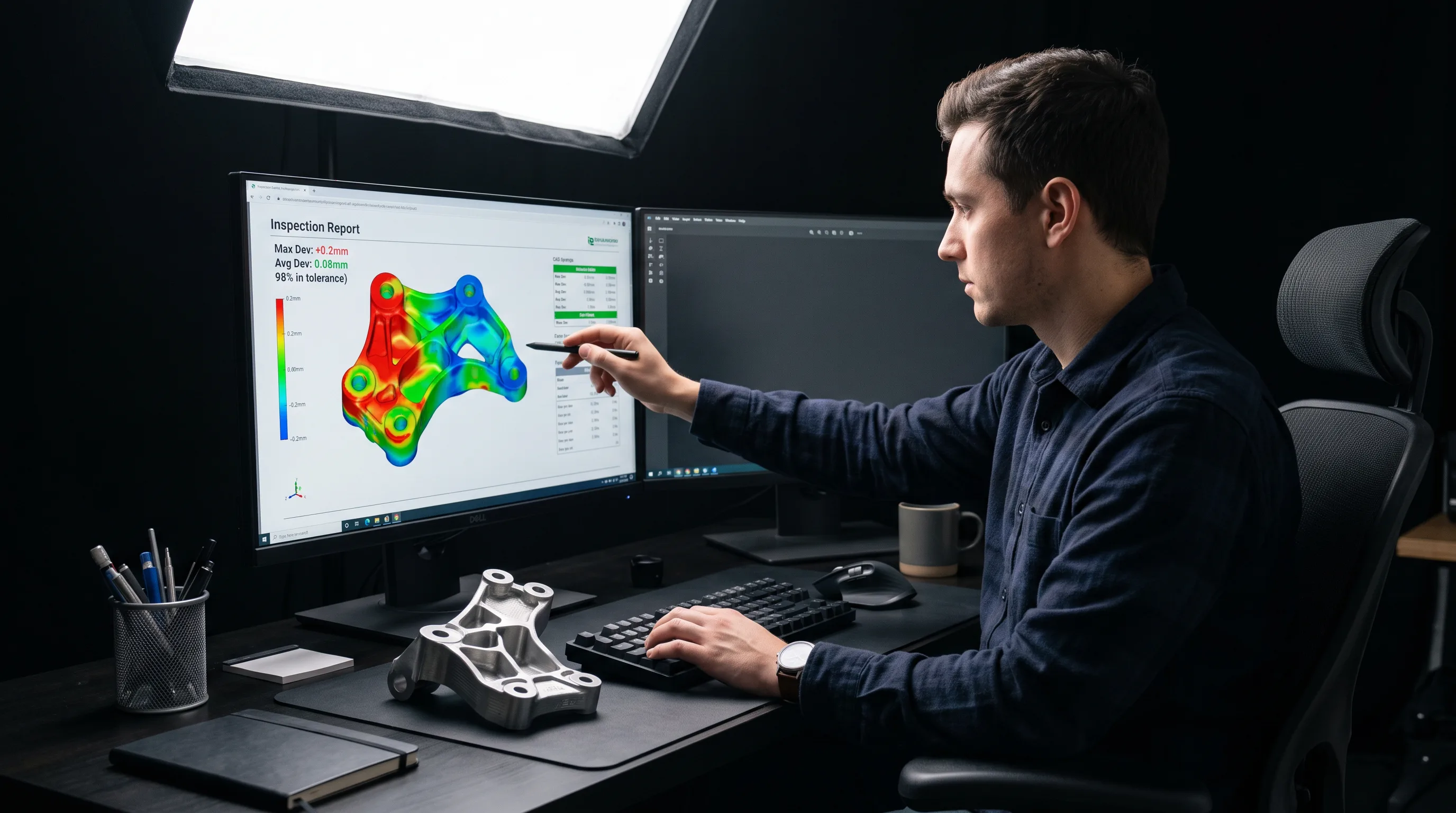
Reverse engineering and quality inspection are the two workhorse use cases in manufacturing. Reverse engineering captures a physical part with no drawings and rebuilds it as an editable CAD model. Quality inspection compares a manufactured part against its original CAD file to verify dimensions and flag defects. Both depend on accurate, repeatable scan data.
According to Mark3D’s 2026 overview, scan-based inspection lets teams “compare scan data directly to CAD” and “ID pass/fail conditions instantly,” a workflow used across aerospace, defense, automotive, and medical devices. Reverse engineering, meanwhile, turns a legacy component into a parametric model in minutes rather than days of manual measurement. Once a part is scanned and rebuilt, the model feeds directly into 3D modeling for manufacturing and industrial design, closing the loop from physical part to production-ready file.
How does 3D scanning support digital twins, AR/VR content, and heritage preservation?
3D scanning supplies the geometric foundation for digital twins, immersive content, and heritage archives. A scanned model captures real-world shape and texture that a digital twin, an AR experience, or a museum archive can build on. The distinction to hold onto: a digital twin is more than a model.
As Artec 3D’s 2026 learning center puts it, “Digital twins are not just 3D models of real assets, systems, or processes, they’re connected by a real-time datastream.” Scanning provides the accurate base geometry; sensors and data feeds make it a twin. For cultural heritage, scanning preserves fragile artifacts and sites as permanent digital records. Frame Sixty, an AR/VR and spatial computing development studio, builds on this foundation directly, turning scanned data into digital twins experienced in VR and streaming high-fidelity models through platforms covered in our look at NVIDIA Omniverse for XR digital twins.
How does 3D scanning feed a digital twin and AR/VR pipeline?
3D scanning feeds an AR/VR pipeline by producing the source geometry that is then optimized, textured, and deployed to a headset, phone, or browser. The scan is the starting point, not the finished asset. Raw scan files are too heavy to run in real time, so the pipeline’s job is to preserve visual fidelity while cutting the data down to a real-time budget.
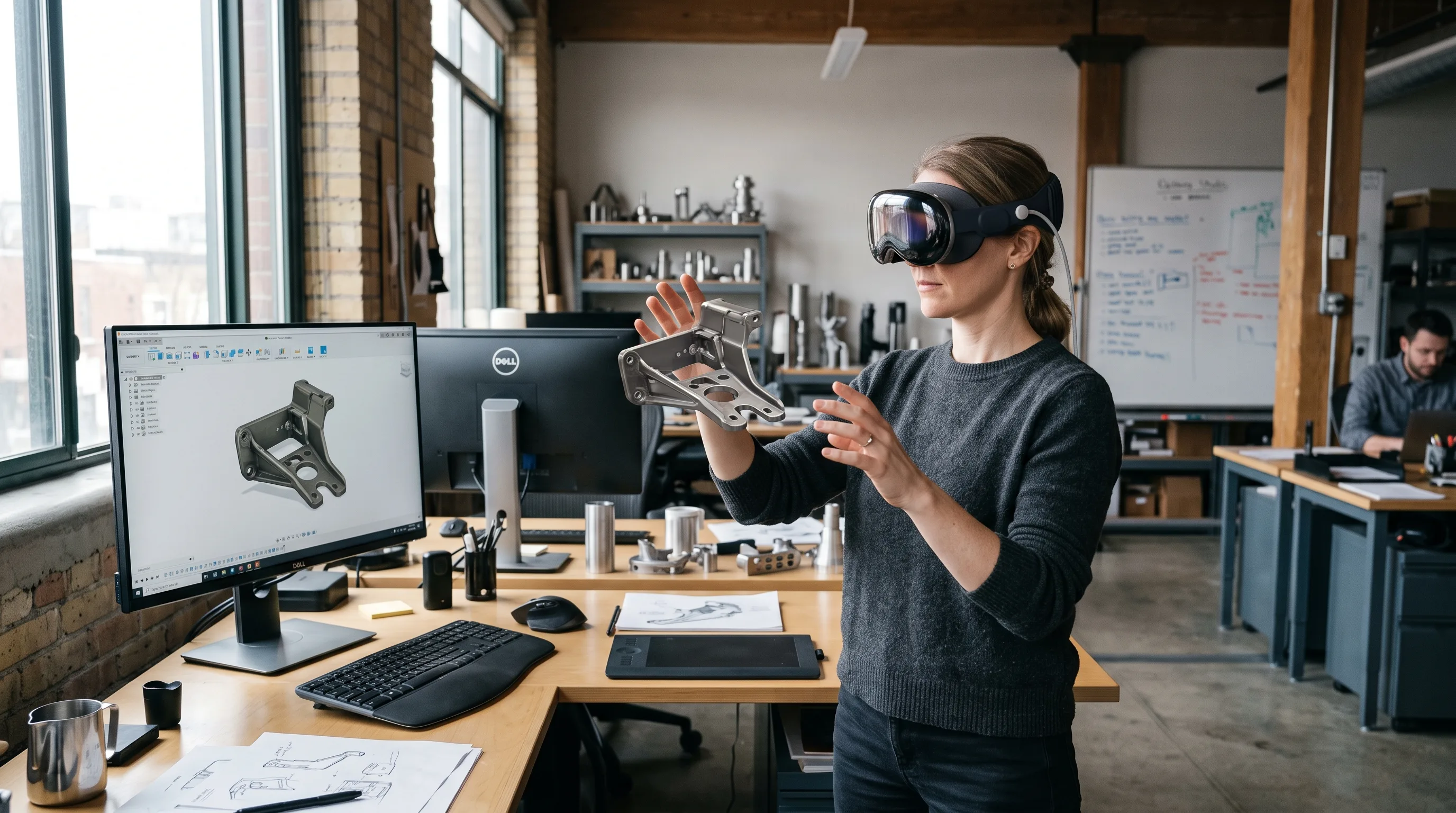
VNTANA states the problem plainly: a finished scan “will be a very large 3D file. This will require optimization and conversion to be used on web, AR, or VR.” That gap between capture and deployment is where most scanning shops stop and where the real engineering starts.
In our work at Frame Sixty, a raw scan is the first input, not the deliverable. When a client scan arrives, we retopologize the dense mesh, bake its detail into normal maps, generate levels of detail, and rebuild UVs so the asset holds up under the frame budget of a device like Apple Vision Pro or Meta Quest 3. A part that scans at tens of millions of polygons has to run at a fraction of that to hit a comfortable real-time frame rate.
That optimization work shapes what we ask providers for up front. We request known real-world scale, a clean watertight mesh where possible, and a source format such as OBJ or STEP rather than a proprietary export. Getting scale and topology right at capture saves days of rework later. This is why we treat scanning as the front end of augmented reality development services and virtual reality development services, not a standalone deliverable. Scanned twins increasingly anchor enterprise spatial computing deployments, and our VR medical scan viewer project shows scan data made interactive inside a headset.
How do you choose a 3D scanning service provider?
Choose a 3D scanning service provider by matching four things to your project: scanning method, accuracy specification, deliverable format, and downstream capability. Confirm the provider’s equipment fits your object and surface, that their stated accuracy meets your tolerance, that they export the file format your tools use, and that they can support whatever you build next. Price comes after fit.
Use this checklist when you evaluate providers:
- Method fit. Does their scanner suit your object size and surface, from small metal parts to full buildings?
- Accuracy spec. Do they publish volumetric accuracy with a base plus distance factor, for example 0.02 mm + 0.06 mm/m, rather than a single vague number?
- Traceability. For regulated work, is calibration traceable to NIST standards, as ZEISS documents for its metrology services?
- Deliverable format. Can they export STEP, IGES, STL, OBJ, or point-cloud formats your CAD or engine reads natively?
- Downstream capability. Can they, or a partner, turn the scan into a usable 3D model design or AR/VR asset?
One mistake shows up again and again: buyers over-specify accuracy for visual end uses. A digital twin for factory monitoring or an AR product demo does not need 0.02 mm metrology precision, and paying for it wastes budget that belongs in optimization and interactivity. Reserve metrology-grade tolerance for inspection and reverse engineering. For content, buy fidelity where the eye sees it. A skilled 3D modeler adds more perceived quality per dollar than a tighter tolerance spec does, which is why understanding what spatial computing requires should shape your brief before you request a single quote.
Conclusion
3D scanning services turn physical objects and spaces into digital models, with 2026 prices from about $250 for a simple part (Artec 3D, 2026) to $100,000 or more for a full industrial site (The Future 3D, 2026). The market’s growth to a projected USD 16.65 billion by 2034 (Fortune Business Insights, 2026) reflects how central reality capture has become to manufacturing, inspection, and immersive content. The technologies have converged into hybrid scanners, so the sharper question is no longer which method but which provider and which deliverable.
The position worth holding: buy the scan your pipeline can use, not the cheapest or the most precise one available. A metrology-grade point cloud that no one can optimize is a sunk cost, and an under-specified scan that fails inspection is a re-do. Define the end use first, then work backward to accuracy, format, and provider. That single habit prevents most wasted scanning budgets.
Frame Sixty treats 3D scanning as the front end of the digital-twin and AR/VR pipeline, where scanned data becomes an optimized, interactive asset rather than a heavy file gathering dust. If you want to turn scanned objects or spaces into digital twins or immersive experiences, get in touch with our team.
3D Scanning Services: Frequently Asked Questions
Common questions about 3D scanning services, covering accuracy, cost, file formats, technology selection, and how to choose the right provider.
3D scanning services cost from about $250 for a simple small object to more than $2,000 for a complex mechanical part, according to Artec 3D's 2026 pricing. A car rim runs roughly $800 and an intricate dual-clutch transmission about $1,200. Object complexity, accuracy requirements, and deliverable format drive the final number more than raw size, and CAD-ready output costs more than a mesh-only scan.
Manufacturing uses 3D scanning services most, spanning aerospace, automotive, and medical devices for reverse engineering and quality inspection. Architecture and AEC firms use as-built site capture, product designers use it for prototyping, and museums use it for heritage preservation. North America holds about 32% of the 2026 market, with hardware at 78.3% of total spend (Coherent Market Insights, 2026).
Yes, 3D scanning services capture large objects like buildings, vehicles, and rooms using terrestrial laser scanning or drone LiDAR, priced per square foot rather than per object. Terrestrial laser scanning runs roughly $0.20 to $0.70 per square foot; a single room costs $1,000 to $2,000 and an industrial plant $10,000 to $100,000 or more (The Future 3D, 2026).
Professional and industrial 3D scanners reach roughly 0.02 mm accuracy with volumetric specifications, while entry consumer units land near 0.1 mm (3DPrinting.com, 2026). The tolerance you need depends on end use: metrology-grade digital twins require precision as tight as 0.05 mm, but a visual AR or product-demo asset does not need metrology precision.
3D scanning services deliver formats including STEP, IGES, STL, OBJ, 3MF, DXF, and DWG, plus point-cloud formats for site data (Cad Crowd). Mesh-only output such as STL or OBJ is the cheaper tier, while CAD-ready formats like STEP and IGES cost more because the geometry is rebuilt as editable parametric features. Confirm your CAD system or engine reads the format natively.
Look for a 3D scanning provider whose method fits your object and surface, whose published accuracy meets your tolerance, and who exports the file format your tools use. For regulated work, confirm NIST-traceable calibration. Frame Sixty adds downstream capability, turning scan data into optimized digital-twin and AR/VR assets rather than stopping at a heavy raw mesh.