
Augmented Reality Development Services: Building Immersive Digital Experiences in 2026
May 12, 2026
10 MIN READ
Augmented reality development services encompass the design, creation, and deployment of applications that overlay digital content onto real-world environments using technologies such as computer vision, 3D modeling, and real-time rendering. These services leverage frameworks like ARKit, ARCore, and OpenXR to deliver cross-platform, spatially aware experiences across mobile, headset, and web interfaces. Modern AR development integrates AI and spatial computing to enhance realism, interactivity, and performance. Industries including retail, manufacturing, healthcare, and education use AR to improve visualization, training, and engagement. As AR technology advances, it continues to drive measurable business value and digital transformation across sectors.
Work with Frame Sixty. We are a US-based AR/VR app development company — ARKit, ARCore and Unity, from concept to App Store.
Understanding Augmented Reality Development Services
Augmented reality development services refer to the end-to-end process of designing, building, and deploying AR applications that overlay digital content onto the real world. These services combine 3D modeling, computer vision, and real-time rendering to create interactive experiences accessible via smartphones, headsets, or web browsers.
What Defines Modern AR Development
Modern AR development is defined by its ability to merge physical and digital environments seamlessly. Developers use SDKs like Apple ARKit and Google ARCore to track surfaces, detect planes, and anchor digital assets to real-world coordinates. These technologies enable features such as environmental understanding, motion tracking, and light estimation—key for creating realistic AR content.
Today’s AR experiences are powered by spatial computing principles, where devices interpret the geometry and semantics of the surrounding space. Companies like Frame Sixty specialize in building AR solutions that leverage these capabilities for enterprise and consumer applications. Their focus on precision and performance ensures users experience smooth, context-aware interactions.
Key Components of an AR Solution
A complete AR solution typically includes:
- Tracking and Mapping Systems – Sensors and cameras that capture spatial data and map the environment in real time.
- Rendering Engine – Software that renders 3D objects with accurate lighting and occlusion.
- Interaction Layer – User interface components that allow gestures, voice commands, or gaze-based interactions.
- Content Management System (CMS) – Tools for updating and managing AR assets dynamically.
Developers often integrate 3D models created through 3D model design services to ensure high-quality visuals. These assets can be optimized for mobile or headset-based AR experiences, maintaining performance without compromising fidelity.
Differences Between AR, VR, and Mixed Reality Solutions
| Feature | Augmented Reality (AR) | Virtual Reality (VR) | Mixed Reality (MR) |
|---|---|---|---|
| Environment | Real world with digital overlays | Fully virtual environment | Blend of real and virtual objects interacting |
| Devices | Smartphones, tablets, AR glasses | VR headsets | HoloLens, Magic Leap |
| Interaction | Real-world context | Virtual-only | Real and virtual co-presence |
| Use Cases | Retail, training, navigation | Gaming, simulation | Industrial design, collaboration |
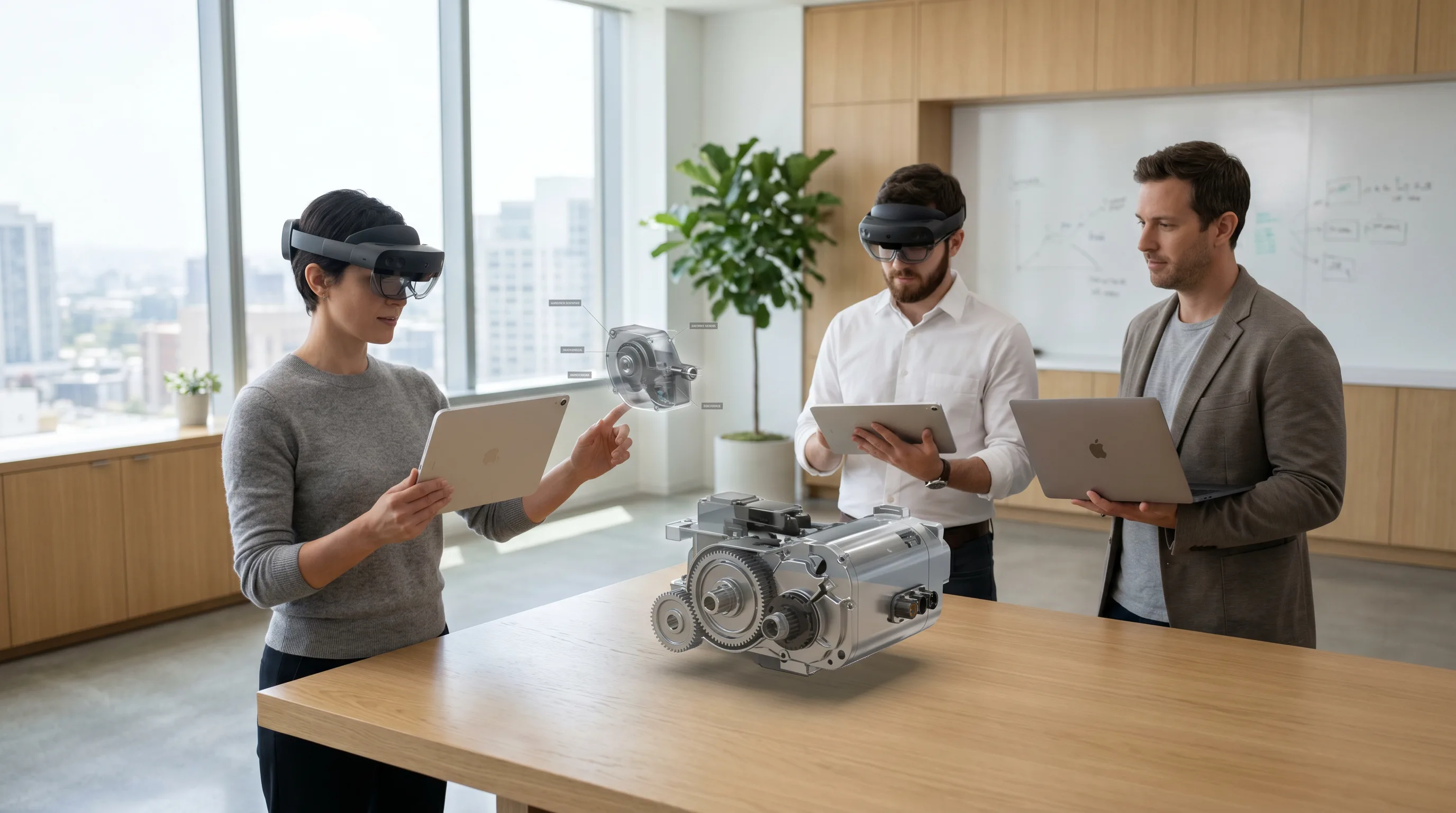
While VR immerses users in a virtual world, AR enhances the real one. Mixed reality, as seen in Microsoft HoloLens, bridges both by allowing digital objects to interact with physical ones. The choice between AR, VR, or MR depends on the intended user experience and business goals.
Key takeaway: AR development services enable businesses to overlay digital intelligence onto the real world, offering practical, interactive, and scalable solutions.
Need help with AR development?
We are here to help!
Core Technologies Powering AR Applications
Augmented reality applications rely on robust SDKs, frameworks, and open standards. These technologies define how developers build, test, and deploy AR experiences across devices and platforms.
Major AR SDKs and Frameworks
Apple ARKit and Google ARCore
Apple ARKit and Google ARCore are the two dominant mobile AR frameworks. ARKit leverages LiDAR sensors and advanced motion tracking on iOS devices, while ARCore provides similar capabilities on Android. Both support plane detection, environmental lighting, and occlusion, enabling developers to create realistic AR scenes.
Microsoft HoloLens and Magic Leap
Microsoft HoloLens and Magic Leap are leading mixed reality headsets offering spatial mapping, gesture recognition, and holographic rendering. These devices are widely used in enterprise training, remote collaboration, and industrial visualization. Their SDKs integrate with Unity3D and Unreal Engine, allowing developers to build immersive, interactive applications.
PTC Vuforia and Meta Reality Labs
PTC Vuforia specializes in industrial AR, supporting object recognition, model tracking, and remote assistance. Meta Reality Labs, part of Meta Platforms, focuses on AR glasses and spatial computing ecosystems, pushing the boundaries of human-computer interaction.
Snap Lens Studio and Niantic Labs Tools
Snap Lens Studio and Niantic Labs’ Lightship ARDK empower developers to create social and location-based AR experiences. These platforms are essential for marketing and entertainment applications, enabling real-time user engagement through interactive filters and multiplayer AR.
Cross-Platform Frameworks and Standards
WebXR, OpenXR, and W3C Immersive Web
Cross-platform standards are vital for interoperability. OpenXR by the Khronos Group and the W3C Immersive Web initiative define APIs that unify AR and VR development across devices. WebXR allows browser-based AR experiences without app installations, expanding accessibility.
glTF, USDZ, and ARML for 3D Asset Exchange
File formats like glTF, USDZ, and ARML streamline 3D asset exchange between tools. USDZ, developed by Apple and Pixar, is optimized for ARKit, while glTF is widely supported across engines. These standards ensure consistent rendering and performance across platforms.
OpenCV and Computer Vision Integration
Computer vision frameworks like OpenCV enable real-time object detection and tracking. Integrating AI-powered image recognition improves accuracy and responsiveness. Frame Sixty’s AI developer team often leverages OpenCV for spatial analysis and adaptive rendering.
Key takeaway: The convergence of SDKs, open standards, and computer vision frameworks ensures AR apps are scalable, interoperable, and future-proof.
The AR Development Process
The AR development process involves conceptualization, design, testing, and deployment. Each stage requires specialized tools and workflows to ensure the final product meets performance and usability standards.
Conceptualization and AR Content Creation
Conceptualization starts with defining user goals and mapping the physical environment. Storyboarding helps visualize user interactions and content placement. Virtual prototyping tools like Reality Composer allow teams to simulate AR scenes before development.
Spatial computing and 3D visualization workflows are critical here. Frame Sixty’s agentic spatial computing approach integrates AI-driven scene understanding to optimize AR content placement. This ensures that digital elements align naturally with real-world geometry.
Design and Development
Developers use engines like Unity3D, Unreal Engine, and AR Foundation to build cross-platform AR experiences. Unity Technologies’ AR Foundation provides a unified API for ARKit and ARCore, reducing code duplication.
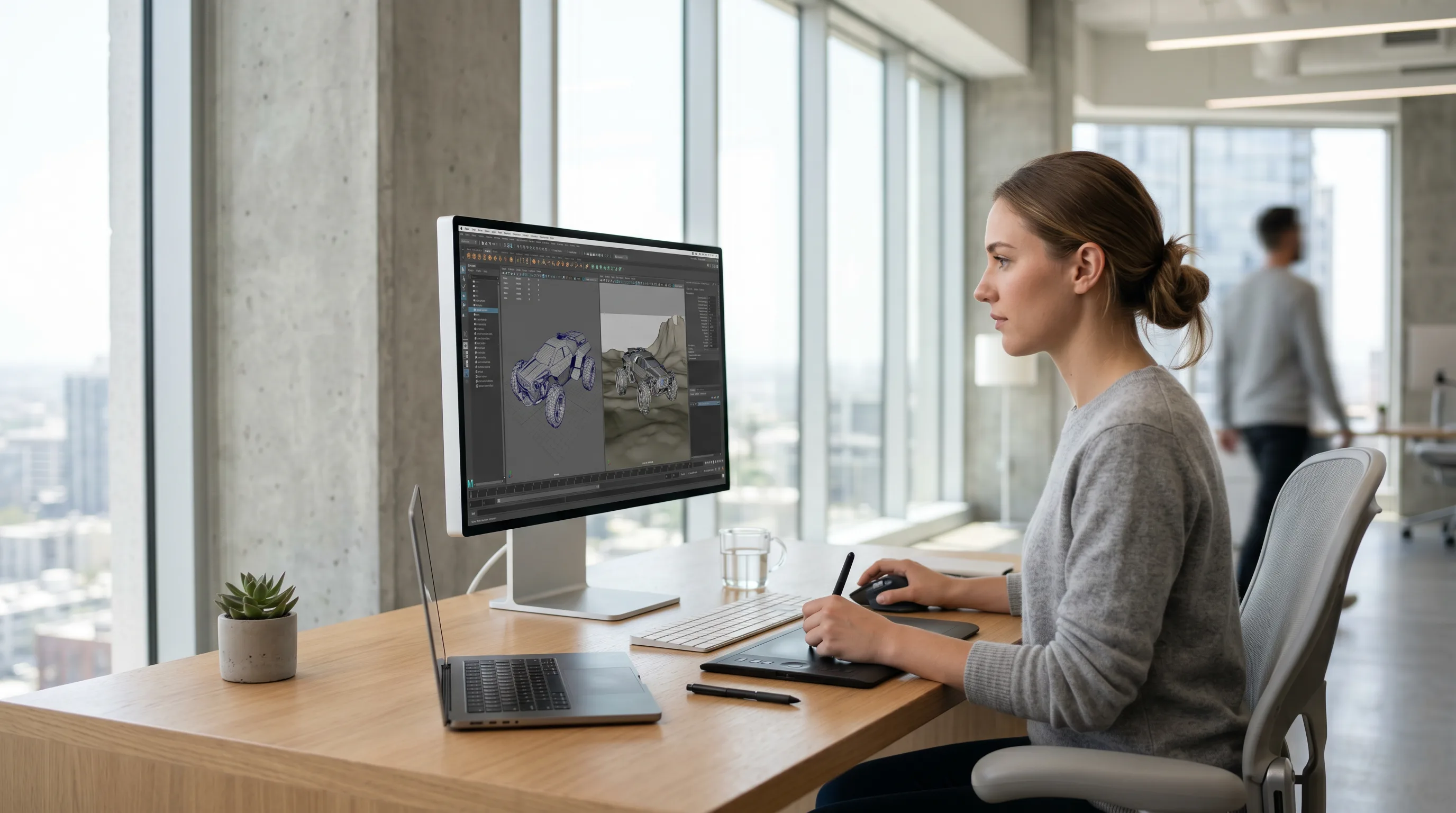
Asset creation involves tools such as Blender, Autodesk Maya, and Adobe Aero. Frame Sixty’s 3D modeling for manufacturing and industrial design services ensure assets are optimized for real-time rendering and accurate scaling.
Testing, Optimization, and Deployment
Testing focuses on metrics like frame rate, tracking accuracy, and rendering latency. Tools from NIST provide benchmarking standards for spatial performance. Developers optimize shaders, reduce polygon counts, and compress textures to improve app performance score and time to interaction.
Security and privacy are also critical. Research from MITRE emphasizes the importance of secure data handling in spatial computing environments, especially when AR apps process camera feeds or user location data.
Key takeaway: A structured AR development process ensures high-quality, performant, and secure applications ready for real-world deployment.

Industry Applications of AR Development Services
AR development services are reshaping industries by enhancing visualization, training, and customer engagement. According to Statista, the AR market is projected to exceed hundreds of billions in global revenue by 2030, driven by enterprise adoption.
Retail and E‑Commerce
Retailers use AR for virtual try-ons, product visualization, and interactive shopping experiences. Customers can preview furniture in their homes or test cosmetics virtually, reducing return rates and increasing conversion rate. Brands like IKEA and Sephora have demonstrated measurable ROI from AR adoption.
Manufacturing and Engineering
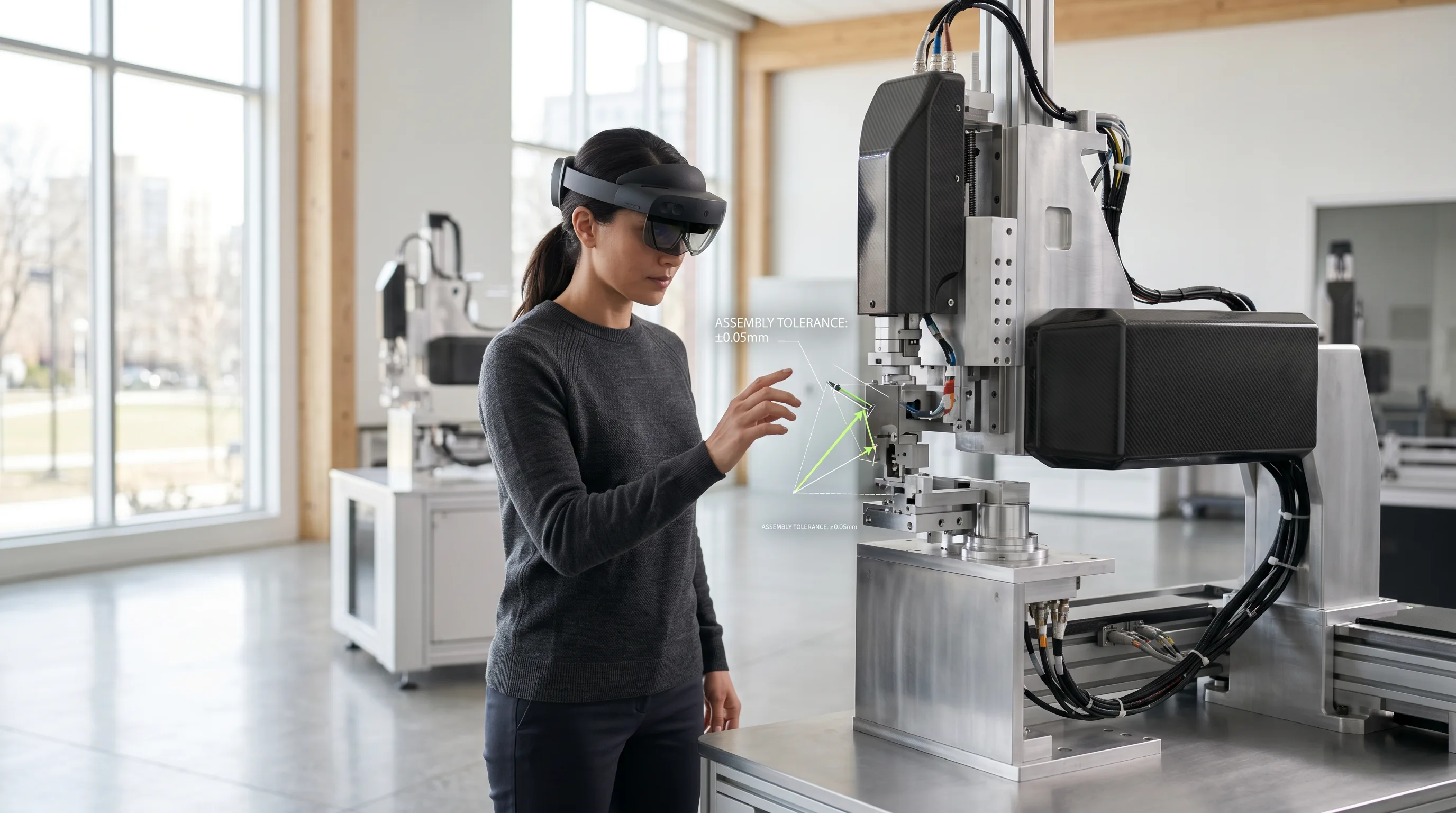
Manufacturers leverage AR for real-time object tracking, remote assistance, and equipment maintenance. Workers can visualize assembly steps or receive live guidance from experts. Frame Sixty’s AI in virtual reality development expertise extends to AR, enabling predictive maintenance through sensor data integration.
Healthcare and Education
In healthcare, AR supports surgical training and anatomy visualization. In education, it enhances engagement through interactive simulations. Peer-reviewed studies from Nature highlight AR’s potential to improve knowledge retention and reduce training time.
Entertainment and Marketing
Entertainment companies use AR for immersive storytelling and gamified campaigns. Marketing teams deploy AR filters and branded experiences to boost user engagement rate. Frame Sixty’s AI-augmented reality solutions combine AI personalization with AR interactivity, creating memorable brand experiences.
Key takeaway: AR is no longer experimental—it’s a proven driver of engagement, efficiency, and innovation across industries.
Choosing the Right Augmented Reality Development Partner
Selecting the right AR development partner is crucial for project success. The ideal partner combines technical expertise, creative vision, and a deep understanding of spatial computing.
Evaluating Technical Expertise
A strong AR partner should demonstrate experience in XR software development and cross-platform deployment. Review their portfolio, frameworks used, and ability to integrate AI and IoT systems. Frame Sixty’s about us page outlines their multidisciplinary team specializing in AR, VR, and AI-driven visualization.
Assessing Project Fit and Scalability
Scalability depends on architecture design and backend integration. AR apps often connect to enterprise systems or IoT devices for real-time data visualization. Developers should measure user engagement rate, retention rate, and conversion rate to assess performance over time.
Key takeaway: Choose a development partner with proven technical depth, scalability planning, and a track record of delivering measurable business outcomes.
Cost and ROI of AR App Development
The cost of AR app development varies widely based on complexity, platform, and content requirements. However, understanding the factors influencing cost and ROI helps businesses plan effectively.
Factors Influencing AR Project Costs
- Complexity – Advanced features like real-time object recognition or multiplayer AR increase development time.
- Platform Support – Supporting both ARKit and ARCore adds cross-platform testing overhead.
- Hardware Compatibility – Optimizing for HoloLens, Magic Leap, or mobile devices requires additional resources.
- 3D Asset Creation – Custom models and animations, such as those from 3D model design services, impact total cost.
Measuring ROI in AR Experiences
ROI metrics include session duration, user engagement rate, and conversion metrics. Businesses can track these KPIs using analytics tools integrated into AR apps. According to Statista, companies investing in AR see up to 40% higher engagement compared to traditional digital experiences.
Key takeaway: Strategic planning and performance tracking ensure AR investments deliver tangible business value.
Emerging Trends in Augmented Reality Technology
The AR landscape in 2026 is defined by AI integration, cloud connectivity, and the expansion of spatial computing ecosystems. These trends are shaping the next generation of immersive experiences.
AI‑Driven AR and Computer Vision Advancements
AI enhances AR through object recognition precision, adaptive rendering, and contextual awareness. Machine learning models enable AR systems to understand objects, gestures, and environments more accurately. Frame Sixty’s AI developer team integrates computer vision with AR to create intelligent, responsive experiences.
Cloud‑Connected and Web‑Based AR
Cloud rendering and WebAR technologies are democratizing AR access. Platforms like 8th Wall and Apple’s Reality Composer enable browser-native AR experiences without app downloads. The W3C Immersive Web standards ensure consistent performance across browsers and devices.
The Future of Spatial Computing
Spatial computing is the foundation of next-generation AR. It involves mapping, understanding, and interacting with 3D environments dynamically. Frame Sixty’s agentic spatial computing approach integrates AI, IoT, and AR for enterprise-scale digital twins. Research from MITRE and NIST supports the development of secure, standardized spatial computing frameworks.
Key takeaway: The future of AR lies in intelligent, cloud-connected, and spatially aware systems that seamlessly integrate with our physical world.
Conclusion
Augmented reality development services have evolved into a strategic pillar for digital transformation. From retail to manufacturing, AR empowers organizations to visualize data, enhance training, and engage customers in immersive ways. The convergence of AI, spatial computing, and open standards ensures AR will continue to drive innovation well into the next decade.
Choosing the right AR partner is critical. Frame Sixty stands out for its expertise in 3D modeling, AI integration, and cross-platform AR development. Their commitment to precision, scalability, and creativity makes them a trusted partner for enterprises embracing immersive technology.
As AR continues to mature, businesses that invest today will gain a competitive advantage through enhanced engagement, operational efficiency, and brand differentiation. The time to act is now—before AR becomes a baseline expectation rather than a differentiator.
To explore how AR can elevate your business, get in touch with Frame Sixty and start building immersive digital experiences that redefine customer interaction and enterprise innovation.
Augmented Reality Development Services FAQ
This FAQ provides practical insights into the technical, strategic, and cost considerations of augmented reality development services in 2026. It addresses common questions from businesses exploring AR implementation, integration, and ROI measurement.
Professional augmented reality development services cover the full pipeline: concept design, 3D modeling, software engineering, testing, and deployment across mobile, headset, and web platforms. A complete solution includes tracking and mapping, a rendering engine, an interaction layer for gestures or gaze, and a content management system for updating AR assets. Frame Sixty delivers this end to end, from concept through App Store release.
Augmented reality development services enhance the real world with digital overlays viewed on smartphones, tablets, or AR glasses, while VR builds fully virtual environments for headsets and mixed reality lets digital objects interact with physical ones on devices like HoloLens. The choice follows the experience: AR suits retail, training, and navigation; VR suits simulation; MR suits industrial design and collaboration.
Cross-platform AR development relies on Unity's AR Foundation, which wraps ARKit and ARCore in one API, plus Unreal Engine for photorealistic rendering. Open standards such as OpenXR and WebXR keep experiences interoperable across devices and browsers, while file formats like glTF and USDZ ensure 3D assets render consistently between tools and platforms.
Yes, modern augmented reality development services integrate AI for computer vision, object recognition, and adaptive rendering, often using frameworks like OpenCV, and connect IoT sensors so AR interfaces display live operational data. In manufacturing this enables predictive maintenance overlays; in retail it powers personalized experiences that respond to the user's environment and behavior.
Custom augmented reality application costs vary with feature complexity, platform support, hardware compatibility, and 3D asset creation: a basic AR app may cost tens of thousands of dollars, while enterprise-grade builds with AI or custom 3D content can reach six figures. Supporting both ARKit and ARCore adds cross-platform testing overhead, and integrations with IoT or cloud services extend development time.
ROI from augmented reality development services is measured through session duration, user engagement rate, and conversion metrics tracked by analytics built into the app. Enterprises also count operational gains such as reduced training time and downtime. Industry data cited in this guide shows companies investing in AR see up to 40% higher engagement than traditional digital experiences.
Get in touch
We’re interested to see how we can help. Send us a message and we will get back to you within 24 hours.