
3D Modeler: Skills, Tools, and Workflows Defining the Future of Digital Design
May 29, 2026
13 MIN READ
A 3D modeler is a digital artist who creates three-dimensional assets for industries such as film, gaming, architecture, and product design. In 2026, the role integrates real-time rendering, AI-assisted workflows, and procedural generation to produce optimized, interactive models across platforms. Mastery of tools like Maya, Blender, ZBrush, and Houdini, along with knowledge of PBR materials, topology, and USD frameworks, defines professional competence. Modern 3D modelers collaborate across disciplines, balancing artistic vision with technical efficiency to deliver assets for real-time visualization, virtual production, and emerging spatial computing environments.
The Evolving Role of a 3D Modeler in 2026
A 3D modeler is a digital artist who creates three-dimensional assets for film, games, architecture, product design, and virtual environments. In 2026, this role has expanded beyond static modeling to encompass real-time rendering, AI-assisted workflows, and cross-platform collaboration.
From Traditional Modeling to Real-Time 3D Visualization
Historically, 3D modeling focused on static renders and pre-rendered animations. Today, real-time visualization—powered by engines like Unreal Engine and Unity Technologies—has transformed how assets are created and experienced. Modelers now optimize meshes for interactivity, ensuring assets maintain fidelity across AR/VR and metaverse platforms.
For instance, architectural visualization once required hours of offline rendering. Now, real-time ray tracing allows clients to explore photorealistic spaces instantly. This shift demands that modelers understand both polygon efficiency and shader performance, balancing visual quality with computational constraints.
Integration with AI and Procedural Generation
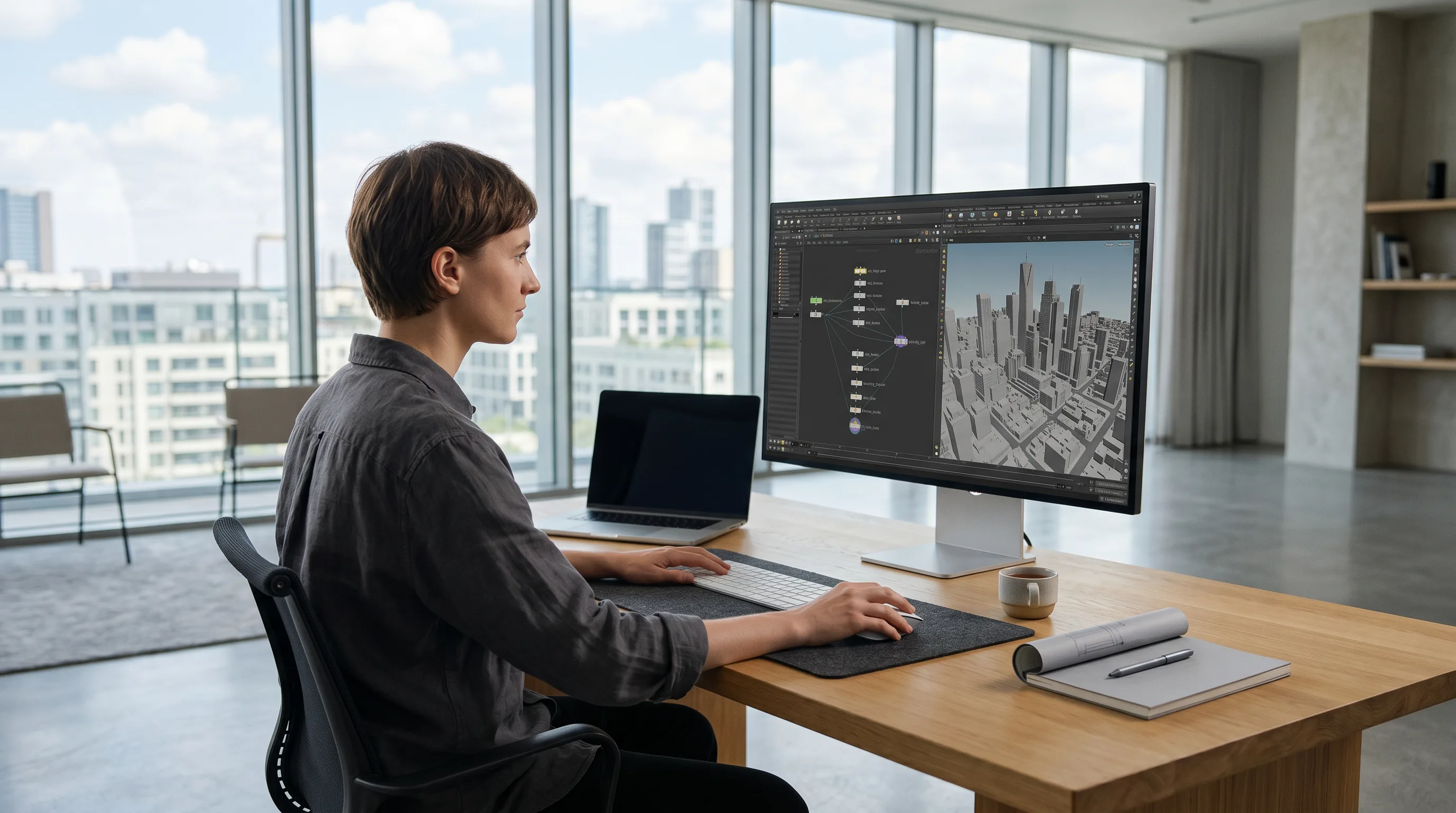
AI and procedural tools have revolutionized modeling workflows. Software such as SideFX Houdini enables procedural generation of landscapes, cities, and effects through node-based systems. Meanwhile, AI-driven tools assist with automatic retopology, texture synthesis, and material prediction.
Platforms like NVIDIA Omniverse integrate AI collaboration, enabling multiple artists to work simultaneously on shared USD-based scenes. These innovations reduce repetitive tasks, allowing modelers to focus on creativity and form.
Frame Sixty’s insights on agentic spatial computing highlight how AI agents are now capable of assisting in 3D scene generation, bridging the gap between human intent and machine execution.
Cross-Disciplinary Collaboration in Design, Film, and Gaming
A modern 3D modeler collaborates with animators, engineers, and developers across diverse industries. In film, they create digital doubles and environments for virtual production. In gaming, they work closely with level designers to ensure assets support gameplay mechanics.
Studios like Frame Sixty exemplify this multidisciplinary approach, blending design, AI, and real-time visualization to deliver immersive experiences. The convergence of tools, from Adobe Substance 3D to Omniverse, fosters seamless collaboration across pipelines.
Key takeaway: The 3D modeler in 2026 is a hybrid professional—part artist, part technologist—driving innovation across real-time and AI-powered design ecosystems.
Need help with 3D modeling?
We are here to help!
Core Responsibilities and Skills of a 3D Modeler
A 3D modeler transforms concepts into digital assets ready for production. Their skill set spans artistic fundamentals, technical proficiency, and pipeline integration.
Understanding Form, Scale, and Topology
A strong grasp of form, scale, and topology underpins all modeling work. Modelers must interpret 2D concepts into 3D forms that maintain proportion and silhouette. Topology—the arrangement of polygons—affects deformation, shading, and performance.
For example, a character model for animation requires clean edge loops to support rigging and skinning. Conversely, a product model for manufacturing prioritizes dimensional accuracy and surface continuity. Frame Sixty’s 3D modeling for manufacturing and industrial design demonstrates how precision modeling supports both visualization and production workflows.
Mastery of Polygon Modeling and Digital Sculpting
Polygon modeling and digital sculpting are core techniques. Polygon modeling, common in Autodesk Maya and 3ds Max, uses vertices, edges, and faces to define geometry. Digital sculpting, popularized by tools like ZBrush and Blender, allows artists to shape models organically, mimicking real-world clay sculpting.
A typical workflow involves sculpting high-resolution details, then retopologizing to create an optimized mesh suitable for animation or real-time rendering. This combination ensures both artistic freedom and technical efficiency.
Texturing Workflow and UV Mapping Techniques
Texturing defines the surface look of a model. UV mapping converts 3D surfaces into 2D coordinates for texture application. Tools like Adobe Substance 3D streamline this process with PBR (Physically Based Rendering) materials that ensure consistent results across engines.
A well-optimized UV layout minimizes distortion and maximizes texture resolution. Modelers must balance texture resolution, file size, and bake quality to achieve realism without performance loss.
Animation Rigging and Asset Preparation for Production
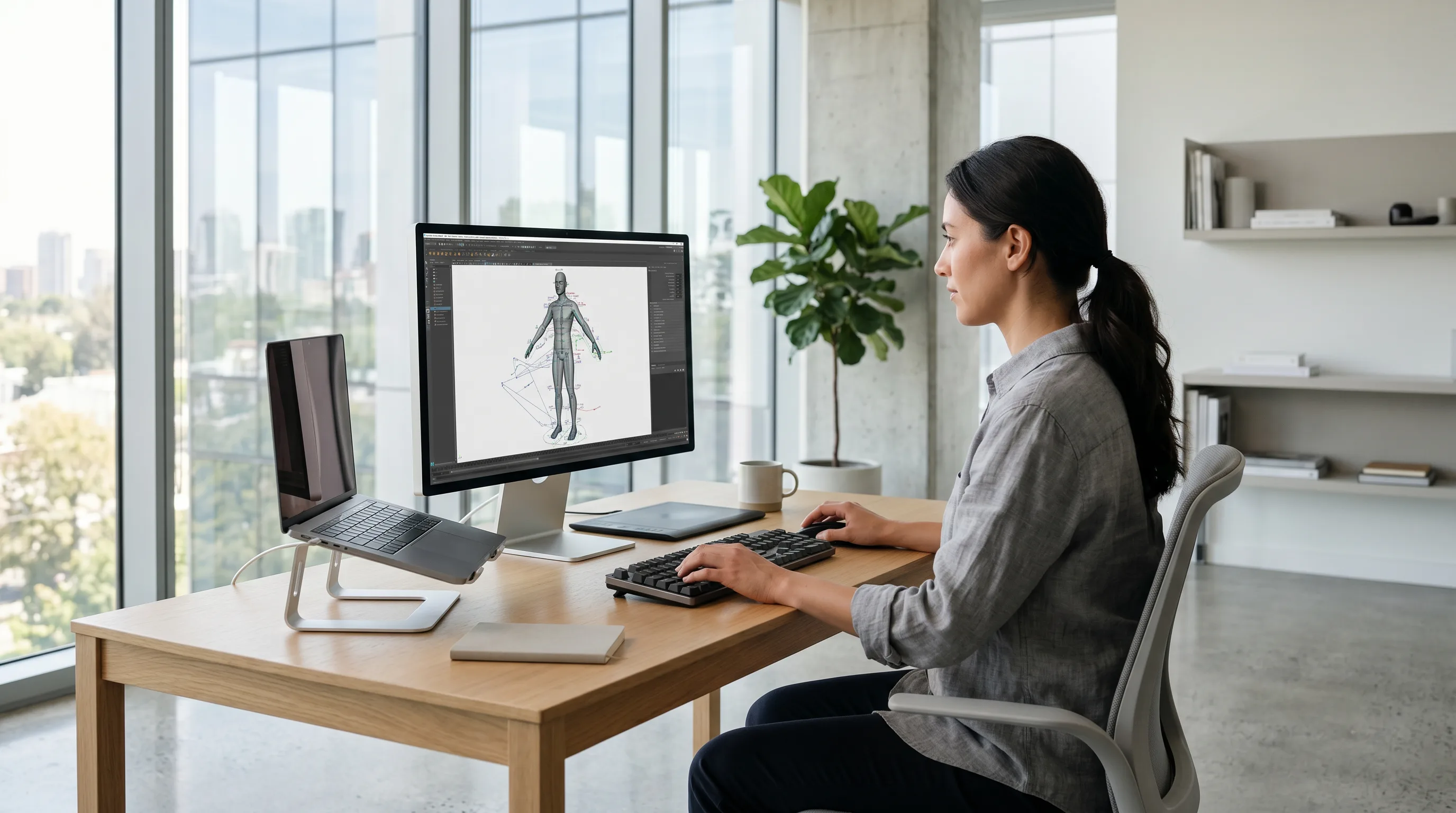
Before a model can move, it must be rigged. Rigging involves creating a digital skeleton and defining deformation weights. Modelers collaborate with riggers to ensure topology supports smooth articulation.
In production pipelines, assets must also be named, grouped, and exported according to studio standards. These tasks ensure compatibility across departments—from animation to rendering.
Key takeaway: A professional 3D modeler combines artistic sensibility with technical precision, ensuring assets are both visually compelling and production-ready.
Essential 3D Modeling Software and Platforms
Modern 3D modeling relies on an ecosystem of specialized tools, each serving distinct roles in asset creation and visualization.
Industry Standards: Autodesk Maya, 3ds Max, and Blender
Autodesk Maya and 3ds Max remain industry benchmarks for modeling, animation, and rendering. Maya dominates film and character animation, while 3ds Max excels in architectural and product visualization.
Blender, developed by the Blender Foundation, has gained traction as a powerful open-source alternative. Its integrated sculpting, texturing, and rendering capabilities make it ideal for freelancers and studios alike.
| Software | Strengths | Ideal Use Case |
|---|---|---|
| Autodesk Maya | Animation, rigging, procedural modeling | Film, VFX |
| 3ds Max | Architectural visualization, hard-surface modeling | Design, manufacturing |
| Blender | Open-source, integrated pipeline | Indie studios, education |
Specialized Tools: ZBrush, Houdini, and Cinema 4D
ZBrush, developed by Pixologic, remains the industry standard for digital sculpting. Its dynamic tessellation and brush-based system allow artists to create intricate details.
SideFX Houdini excels in procedural modeling and simulation. Its node-based architecture enables artists to generate complex environments and effects efficiently. Cinema 4D, favored in motion graphics, offers intuitive modeling and animation tools for broadcast and advertising.
Texturing and Rendering Ecosystem: Adobe Substance 3D, Unreal Engine, Unity Technologies
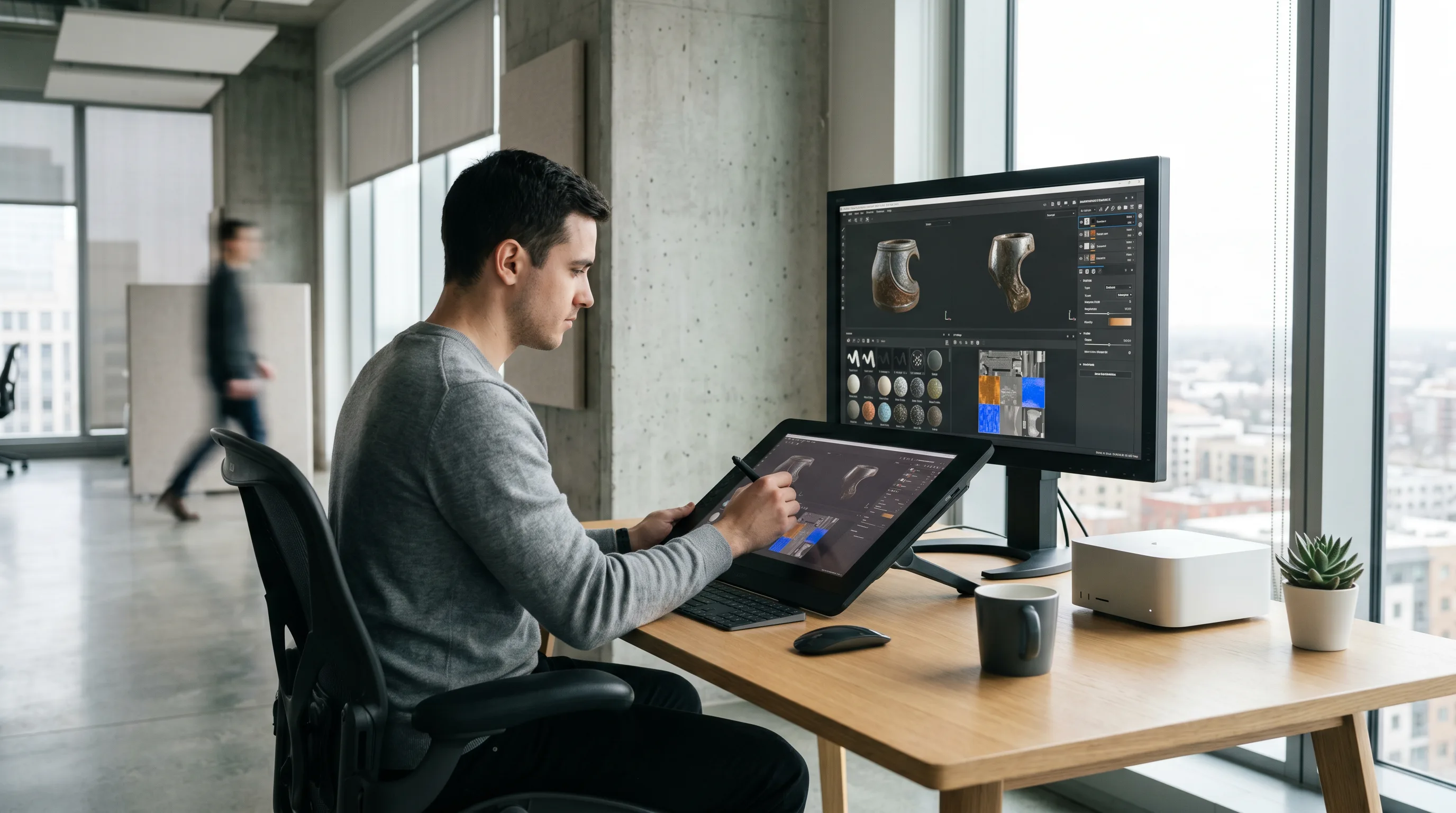
Adobe Substance 3D defines the modern texturing pipeline, offering tools like Substance Painter and Designer for PBR material creation. Integration with Unreal Engine and Unity Technologies ensures seamless asset transfer into real-time environments.
Both engines support advanced rendering pipelines, with Unreal leveraging Nanite and Lumen for high-fidelity visuals, while Unity continues to expand its HDRP (High Definition Render Pipeline) for cinematic quality.
Collaborative Pipelines: NVIDIA Omniverse and Sketchfab Integration
NVIDIA Omniverse enables real-time collaboration across multiple 3D tools using the USD framework. Artists can edit the same scene simultaneously, streamlining production.
Sketchfab, a popular online platform, allows modelers to showcase and share 3D assets interactively. Integrating these platforms fosters transparency and iteration in distributed teams.
Key takeaway: The modern 3D modeler must master a diverse toolkit, selecting platforms that align with project scale, style, and interactivity goals.
The Complete 3D Modeling Workflow
A professional 3D modeling workflow transforms concept art into production-ready assets through structured stages of design, optimization, and rendering.
Concept to Mesh: Blocking, Sculpting, and Retopology
The process begins with blocking, where basic shapes define proportion and silhouette. Sculpting refines these forms, adding anatomical or surface detail. Retopology then converts high-resolution sculpts into optimized meshes suitable for animation or real-time rendering.
Frame Sixty’s 3D model design services illustrate how structured workflows ensure consistency from concept to final delivery.
Texturing and Shading: PBR Workflow and Material Creation
Texturing follows, using PBR workflows to simulate real-world material behavior. Artists create albedo, roughness, metallic, and normal maps using tools like Substance Painter. These maps ensure accurate light interaction across rendering engines.
Material libraries from Adobe Substance 3D and Omniverse accelerate production by providing standardized, physically accurate assets.
Rendering Pipeline: Real-Time vs. Offline Rendering
Rendering transforms 3D data into 2D imagery. Offline rendering, used in film, prioritizes photorealism through global illumination and ray tracing. Real-time rendering, essential for games and VR, balances fidelity with frame rate optimization.
Platforms like Unreal Engine and Unity have blurred this distinction, offering cinematic-quality real-time rendering suitable for virtual production.
Export and Optimization: FBX, OBJ, and glTF Standards
Exporting assets requires adherence to standard file formats like FBX, OBJ, and glTF. Each serves specific use cases—FBX for animation, OBJ for static models, and glTF for web and AR applications.
Optimization involves reducing polygon count, managing texture resolution, and implementing LOD (Level of Detail) systems to ensure performance across devices.
Key takeaway: A refined 3D modeling workflow balances creativity with technical discipline, ensuring assets are optimized for both performance and realism.
Technical Standards and File Frameworks
Technical standards ensure interoperability across tools and maintain visual consistency in complex pipelines.
Understanding USD Framework and Alembic for Interoperability
The USD (Universal Scene Description) framework, developed by Pixar, standardizes scene data exchange. Pixar’s USD documentation defines how geometry, materials, and animation data are stored and shared.
Alembic, another open format, efficiently caches animated geometry, making it ideal for VFX pipelines. Together, these standards underpin collaborative workflows in platforms like Omniverse and Unreal Engine.
PBR Workflow and Shader Performance Metrics
The PBR workflow ensures materials behave consistently under different lighting conditions. Modelers monitor shader performance, balancing realism with render efficiency. Metrics such as render time and bake quality guide optimization decisions.
Managing Polygon Count, Texture Resolution, and LOD Optimization
Efficient asset creation requires constant monitoring of polygon count, texture resolution, and LOD optimization. High-density meshes may look detailed but can degrade performance.
Frame Sixty’s expertise in AI in virtual reality development demonstrates how AI-driven optimization tools can automate these adjustments without compromising quality.
Key takeaway: Adhering to technical standards ensures scalability, interoperability, and performance across diverse 3D ecosystems.
3D Modeling in Game Development and Virtual Production
3D modelers are essential to both game development and virtual production, where real-time rendering drives interactivity and storytelling.
How 3D Modelers Collaborate with Animators and Level Designers
In game studios, modelers work closely with animators and level designers to ensure assets integrate seamlessly. Character models must deform naturally, while environment assets must support gameplay navigation.
Frame Sixty’s AI developer insights highlight how procedural tools and AI-assisted rigging accelerate collaboration between creative and technical teams.
Optimizing for Frame Rate and Real-Time Rendering
Performance optimization is critical. Techniques such as LOD systems, texture streaming, and occlusion culling maintain stable frame rates. Modelers must understand engine constraints and test assets within the target platform.
Unity Technologies and Unreal Engine both provide profiling tools to measure frame rate, shader complexity, and mesh density.
Environment Modeling and Character Design for Unreal Engine and Unity
Environment modeling involves modular construction—reusable assets assembled to create expansive worlds. Character design, meanwhile, emphasizes anatomy, expression, and rigging flexibility.
Frame Sixty’s analysis of AI-augmented reality and AI in virtual reality development underscores how AI now assists in procedural environment generation and adaptive character animation.
Key takeaway: In real-time production, 3D modelers bridge art and performance, ensuring assets meet both creative and technical demands.
Career Paths and Professional Growth for 3D Modelers
A career as a 3D modeler offers diverse opportunities across entertainment, design, and emerging immersive technologies.
Entry-Level to Senior Roles in Studios and Freelance Markets
Entry-level modelers often begin as asset artists, focusing on props or background elements. With experience, they progress to lead modeler or technical artist roles, overseeing pipelines and mentoring teams.
Freelancers benefit from platforms like Sketchfab and ArtStation to showcase portfolios. Studios such as Frame Sixty value modelers who combine artistic skill with technical fluency across multiple engines.
Building a 3D Modeling Portfolio That Demonstrates Technical Range
A strong portfolio demonstrates versatility—showcasing hard-surface, organic, and environment modeling. Including wireframes, UV layouts, and texture maps highlights technical understanding.
Frame Sixty’s creative projects, such as those featured in 8 apps for Apple Vision Pro, illustrate how modelers can adapt their skills to emerging spatial computing platforms.
Emerging Opportunities in AR/VR, Simulation, and Metaverse Platforms
The rise of AR/VR and digital twins has expanded demand for real-time 3D assets. Modelers now contribute to simulation training, virtual commerce, and metaverse experiences.
Frame Sixty’s developer perspective on the Apple Vision Pro explores how 3D modeling integrates into spatial computing ecosystems, redefining user interaction.
Certifications and Learning Resources from Autodesk, Blender Foundation, and SideFX
Professional certifications from Autodesk, Blender Foundation, and SideFX validate technical expertise. Continuous learning through communities like SIGGRAPH keeps modelers updated on emerging research and rendering innovations.
Key takeaway: Continuous learning, technical certification, and portfolio development are essential for long-term success in 3D modeling careers.
Future Trends Shaping the 3D Modeling Profession
The next decade will redefine how 3D modelers create, collaborate, and deliver digital assets.
AI-Assisted Modeling and Procedural Asset Generation
AI-driven modeling tools can now predict topology, generate textures, and even automate rigging. This evolution mirrors Frame Sixty’s work in AI-augmented reality, where intelligent systems assist artists in real-time creation.
Procedural generation, powered by Houdini and Omniverse, allows infinite variation in environments and props, reducing manual workload.
Cloud-Based Collaboration and USD-Powered Pipelines
Cloud platforms like NVIDIA Omniverse and USD frameworks enable seamless collaboration across global teams. Artists can co-edit assets, maintain version control, and stream updates instantly.
This distributed model supports hybrid workflows, where studios like Frame Sixty integrate remote teams into unified production pipelines.
Sustainability and Efficiency in the Rendering Pipeline
Sustainability has become a priority. Optimized rendering pipelines reduce energy consumption and hardware strain. Real-time rendering engines like Unreal and Unity now support adaptive sampling and GPU-based denoising to minimize render time.
The Expanding Role of 3D Modelers in Virtual Commerce and Digital Twins
3D modelers are increasingly central to virtual commerce and digital twin ecosystems. Retailers use 3D assets for product visualization, while industries deploy digital twins for predictive maintenance and simulation.
Frame Sixty’s expertise in AI in virtual reality development positions modelers at the forefront of these innovations, merging artistry with data-driven design.
Key takeaway: The future of 3D modeling is defined by AI integration, cloud collaboration, and sustainable, data-enhanced workflows.
Conclusion
The 3D modeler of 2026 is no longer just a digital sculptor—they are a creative technologist shaping the future of design, entertainment, and spatial computing. Mastery of tools like Maya, Blender, Houdini, and Omniverse, combined with fluency in PBR workflows and USD standards, defines professional excellence.
As industries converge around real-time rendering and AI-assisted creation, the demand for skilled modelers continues to grow. Whether crafting cinematic environments or optimizing assets for AR/VR, the modern 3D modeler stands at the core of digital transformation.
For studios and enterprises seeking precision, artistry, and innovation in 3D design, Frame Sixty offers end-to-end expertise in modeling, visualization, and AI integration. Get in touch to collaborate with a team that understands both the creative and technical dimensions of modern 3D modeling.
Final takeaway: The evolution of the 3D modeler reflects the evolution of digital design itself—intelligent, collaborative, and limitless in creative potential.
3D Modeler Insights and Professional Guidance
This FAQ explores practical and technical aspects of working as a 3D modeler in 2026, addressing common questions about workflows, tools, and career development in the evolving digital design industry.
A 3D modeler is a digital artist who creates three-dimensional assets for film, games, architecture, product design, and virtual environments. In 2026 the role goes beyond static modeling to include real-time rendering, AI-assisted workflows, and procedural generation, with modelers optimizing meshes so assets keep their fidelity across AR/VR and game-engine platforms. Core tools include Maya, Blender, ZBrush, and Houdini.
The 3D modeler's role now centers on real-time visualization and AI-assisted production rather than static renders. Real-time engines such as Unreal Engine and Unity let clients explore photorealistic scenes instantly, so modelers must balance polygon efficiency with shader performance. AI tools handle automatic retopology, texture synthesis, and material prediction, while procedural software like Houdini generates environments through node-based systems.
Professional 3D modelers most commonly deliver FBX for animation, OBJ for static assets, and glTF for web and AR applications, with USD and Alembic used for interoperability across collaborative pipelines. These standards keep geometry, materials, and animation data compatible across tools such as Maya, Blender, Houdini, and Unreal Engine, so an asset can move between platforms without losing data.
A 3D modeler optimizes assets for real-time engines by managing polygon count, texture resolution, and shader complexity against the target frame rate. Techniques include LOD (level of detail) systems, efficient UV layouts, texture streaming, and occlusion culling, and both Unity and Unreal Engine provide profiling tools to measure shader complexity and mesh density. The goal is stable performance without visible quality loss.
Start a 3D modeling career by learning core tools like Blender or Maya and building a portfolio that shows technical range: hard-surface, organic, and environment work, ideally including wireframes, UV layouts, and texture maps. Entry-level roles usually focus on props or background assets before advancing to lead modeler or technical artist positions. Certifications from Autodesk, the Blender Foundation, and SideFX help validate expertise.
Strong topology knowledge, PBR texturing proficiency, and a working understanding of real-time rendering make a 3D modeler competitive, along with familiarity with AI-driven and procedural workflows. Demand is expanding beyond entertainment into AR/VR, digital twins, and virtual commerce, so cross-disciplinary collaboration matters too. Studios such as Frame Sixty value modelers who combine artistic skill with technical fluency across multiple engines.
Get in touch
We’re interested to see how we can help. Send us a message and we will get back to you within 24 hours.