
What Is Metaverse Consulting? Services, Costs, and How to Choose the Right Firm
Nov 9, 2026

13 MIN READ
Metaverse consulting is a scoped advisory engagement that helps a company decide which immersive technology, whether AR, VR, spatial computing, or a digital twin, fits a specific business problem, then designs a pilot to prove the idea before committing to full development. It suits operations, training, and innovation leads at mid-market companies who have been handed a “do something with the metaverse” mandate and need a realistic plan instead of a hype deck. This guide covers what the work includes, what it costs, and how to pick a firm.
Key Takeaways
- A metaverse consulting engagement for a mid-market company typically runs $15,000 to $300,000 across three phases: discovery, pilot, and build-out.
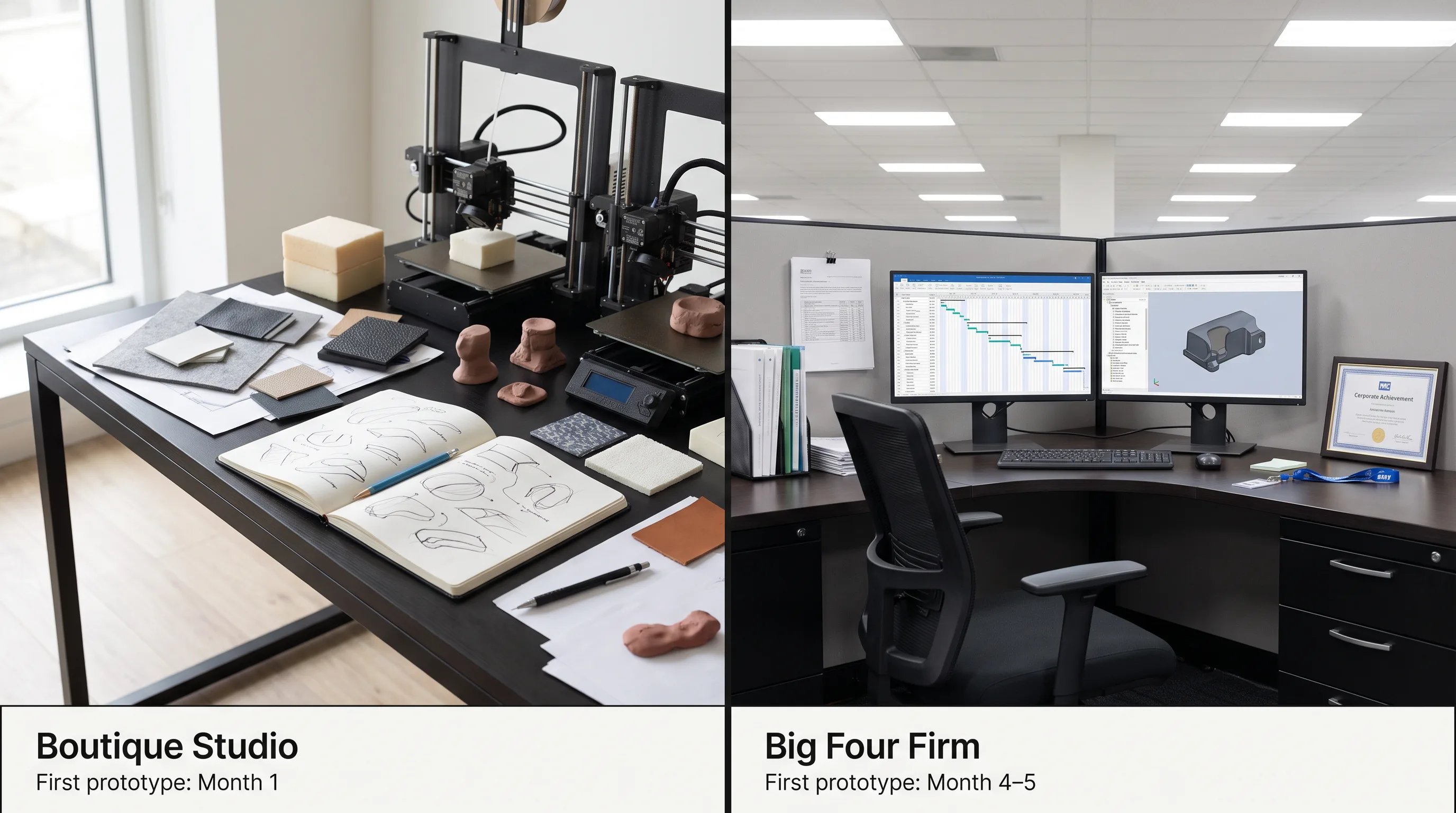
- Boutique AR/VR studios complete mid-sized projects for $250K to $700K, while Big Four firms charge $900K to $2.4M for comparable scope (NeuralChain AI, 2026).
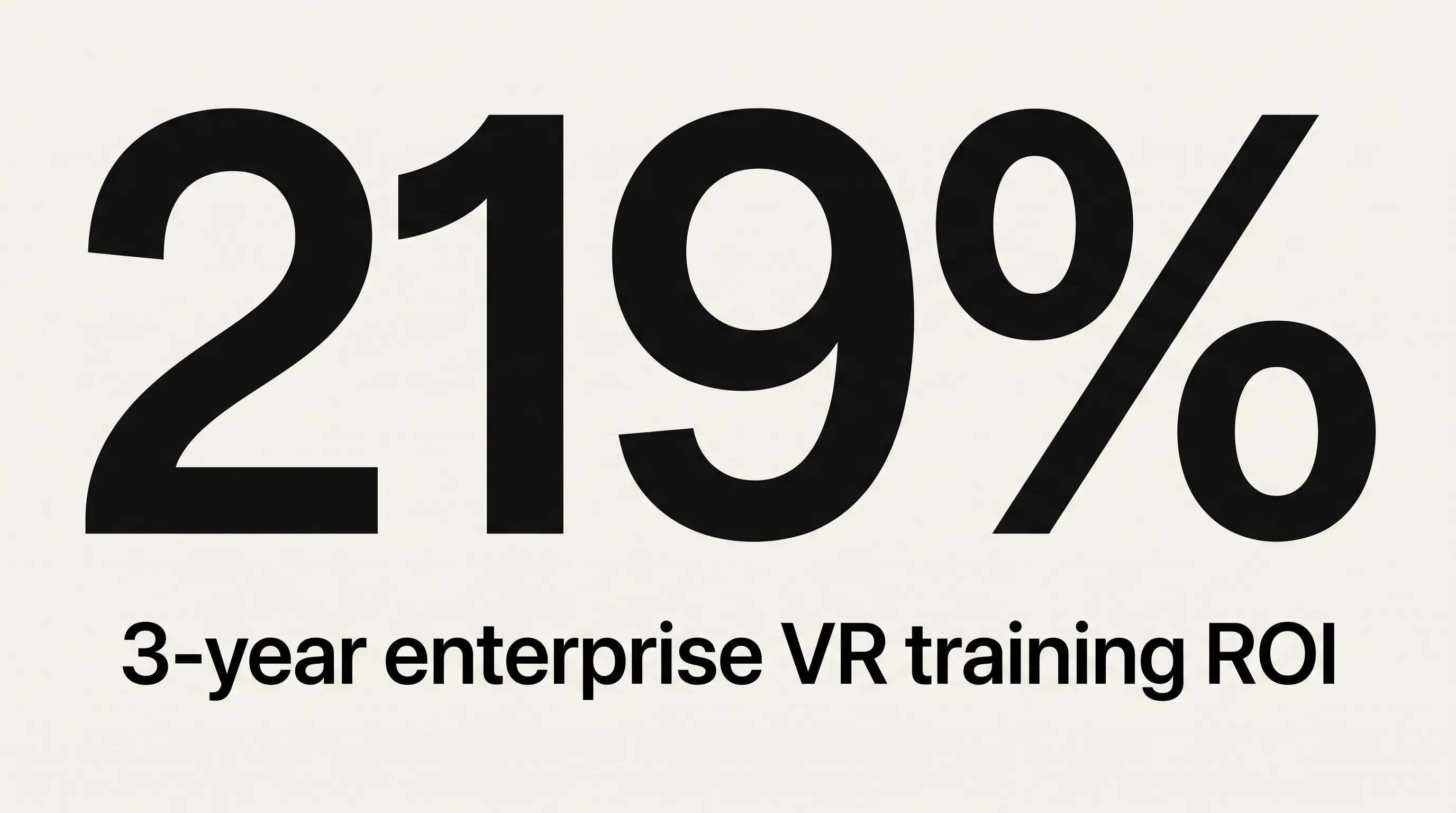
- Enterprise VR training returned 219% ROI over three years in a Forrester study commissioned by Meta (VR.org, 2026), with payback under six months.
- The global enterprise metaverse market reached $42.6 billion in 2025 and is projected to hit $667.3 billion by 2033 (Grand View Research, 2026).
- The strongest predictor of a successful engagement is whether the firm has shipped on your target hardware, such as Meta Quest 3 or Apple Vision Pro, within the last 18 months.
What Does Metaverse Consulting Include?
Metaverse consulting includes four core activities: identifying which business problem an immersive application can solve, selecting the technology and platform to solve it, assessing whether the organization is ready to run it, and producing a phased roadmap with real cost bands. The output is a decision, not a prototype. A good engagement tells you what to build, on which hardware, for which team, and whether to build it at all.

Platform selection is where most of the technical judgment lives. The choice between Meta Quest 3, Apple Vision Pro, WebXR, and NVIDIA Omniverse depends on the use case. A frontline training program leans toward standalone Quest headsets, while a design-review workflow for engineers favors the higher resolution of Apple Vision Pro. Consultants also run a build-versus-buy analysis and define the KPIs the later pilot will be measured against.
Strategy firms formalize this into tiers. BCG structures its metaverse services into four pillars, strategy and roadmap, use-case execution, infrastructure enablement, and M&A support, aimed at Fortune 500 budgets. Most mid-market buyers need only the first two. If you are not acquiring a company to enter the metaverse, you can ignore the M&A pillar entirely. For readers still mapping the underlying technology, our guide to what spatial computing is covers the foundations.
Metaverse Consulting vs. Metaverse Development: What’s the Difference?
Metaverse consulting scopes and plans the work; metaverse development builds it. Consulting produces a strategy document, a platform recommendation, and a pilot brief with defined success criteria. Development turns that brief into a working AR, VR, or spatial application that runs on real hardware. These are different skills, and they usually run in sequence rather than together.
Here is the trap. Many companies hire a strategy firm for the consulting phase and a separate studio for the build, then watch the handoff lose the detail that made the plan work. The firm that wrote the KPI never has to hit it. A consulting engagement that ends in a slide deck instead of a tested pilot has failed, whatever the roadmap looks like. When the same team that scoped the pilot also ships it, the plan and the product stay aligned. If you are already past strategy and comparing build partners, our rundown of metaverse development companies covers how to vet them.
How Much Does Metaverse Consulting Cost?
Metaverse consulting for a mid-market company typically costs $15,000 to $300,000, depending on how far the engagement runs. A standalone strategy audit sits at the low end. A full pilot build with hardware and analytics sits near the top. The figure scales with phase, not with the prestige of the logo on the invoice.
| Engagement phase | Typical cost | Timeline |
|---|---|---|
| Discovery / strategy audit | $15K–$50K | 4–6 weeks |
| Pilot build | $75K–$150K | 8–16 weeks |
| Standard deployment | $150K–$300K | 3–6 months |
| Enterprise system | $300K+ | 6–12 months |
Hardware is a separate line. A Meta Quest 3 Enterprise headset carries a three-year total cost of ownership around $1,459, while an Apple Vision Pro runs roughly $5,996 over the same period, according to AgileSoftLabs’ 2026 cost breakdown. Content follows the same report’s tiers: $30K to $80K for a semi-custom training module, and $150K to $500K or more for fully custom work.
Compare that to the Big Four, who charge $900K to $2.4M for mid-sized digital projects of similar scope (NeuralChain AI, 2026). And treat pricing behavior as data. A firm that refuses to quote any range before a discovery call is telling you it cannot estimate immersive work, which is exactly the skill you are paying for. Our mixed reality services page breaks down cost by service category in more detail.
What AR/VR Hardware Will You Need for a Metaverse Pilot?
The hardware for a metaverse pilot depends on the use case, and a good consultant specifies it during discovery rather than defaulting to one device. The main classes are standalone VR headsets, full spatial computers, enterprise AR headsets, and lightweight smart glasses. Each maps to a different pilot type and a different three-year cost.

Standalone headsets like Meta Quest 3 and Meta Quest 3S suit frontline training at volume. Apple Vision Pro and Samsung Galaxy XR fit high-fidelity design review and knowledge work. Lightweight glasses, including Xreal and the Meta Ray-Ban Display, target field and hands-busy tasks. Magic Leap 2 remains the enterprise pick for bright-floor AR overlays where a sealed headset will not do.
| Device class | Example hardware | Best-fit pilot |
|---|---|---|
| Standalone VR | Meta Quest 3, Meta Quest 3S | High-volume training |
| Spatial computer | Apple Vision Pro, Samsung Galaxy XR | Design review, knowledge work |
| Enterprise AR | Magic Leap 2 | Bright-floor overlays |
| Smart glasses | Xreal, Meta Ray-Ban Display | Field and hands-busy tasks |
The device choice drives both the total cost of ownership and the content budget, so it belongs in the pilot scope and not in an afterthought. A good consultant names the device and the reason in the same sentence.
Need help scoping a metaverse pilot?
We are here to help!
The Three Phases of a Metaverse Consulting Engagement
A metaverse consulting engagement runs in three phases, discovery, pilot, and build-out, separated by decision gates. Each gate is a real stop point. If discovery fails to surface a use case worth piloting, the engagement ends there, before pilot budget is spent. This structure is what separates disciplined consulting from an open-ended research project with no exit.
Phase 1: Discovery Audit (Weeks 1–4)
Discovery is a four-to-six-week audit that produces a written plan. The consultant interviews operations, IT, and leadership, maps candidate use cases against business goals, selects the target hardware and engine, and runs a build-versus-buy analysis. The deliverable is a strategy document you own outright: use cases ranked by feasibility and ROI, a recommended platform, and a phased roadmap with cost bands at each gate.
In our discovery work at Frame Sixty, an AR/VR and spatial computing development studio, the first question is never “which headset.” It is “what measurable task do you want to improve.” We have shipped more than 100 immersive apps across Apple Vision Pro, Meta Quest 3, and WebXR, and the pattern holds: the engagements that succeed start with a single quantified problem, a training time, a defect rate, a return rate, and work backward to the technology. The ones that start with a device looking for a purpose stall at the pilot gate.
Good consultants write measurable acceptance criteria into the discovery output, so the pilot has an objective pass-fail line before anyone builds anything. Standalone discovery work runs $15K to $50K.
Phase 2: Pilot Build (Weeks 5–16)
The pilot takes the single highest-value use case from discovery and builds it on the real target device. This phase runs 8 to 16 weeks and typically costs $75,000 to $150,000, covering content development, 10 to 30 headsets, device management software, and analytics. A 90-day KPI window measures the result: training completion, task accuracy, learner satisfaction, or storefront conversion, depending on the use case.
The benchmark matters because the returns are real. Enterprise VR training delivered 219% ROI over three years in a Forrester Total Economic Impact study commissioned by Meta, with payback in under six months, as reported by VR.org in April 2026. A pilot that hits its numbers makes the budget case for the next phase on its own.
When we scope a pilot at Frame Sixty, we build on the production device from the first sprint, not an emulator. A Quest 3 training scene that runs smoothly in the Unity editor can still miss frame budget on the headset itself, and the only way to know is to deploy to hardware early and often. That discipline is also why we hold seven patents across augmented reality and machine learning. The hard problems surface on-device, not on a slide.
Phase 3: Build-Out and Scale (Months 4–12+)
Build-out expands the validated pilot to more roles, facilities, or regions and integrates it with the systems the business already runs, such as an LMS, CRM, or ERP. A standard deployment costs $150K to $300K. Enterprise systems start at $300K and often phase across budget years. Plan for maintenance too: budget 15% to 25% of original content cost annually, plus $10 to $30 per device per month for management.
Scale looks different at the top end. Accenture deployed 60,000 Meta Quest headsets for employee onboarding, one of the largest enterprise XR rollouts on record (CustomerTimes, 2026). Few mid-market programs reach that size, but the integration work is the same shape, and the budgeting discipline carries over directly. The technical stack and build costs for this phase are worth understanding before you commit to the scale budget.
Which Industries Benefit Most from Metaverse Consulting?
Manufacturing, retail, healthcare, corporate training, and live events show the most documented ROI from metaverse consulting. Each has a repeatable use case with measured results, which is why consultants can scope pilots in these sectors with confidence. The common thread is a high-frequency, high-cost task that immersive technology makes faster or safer.

- Manufacturing and training: Walmart cut employee training time from 90 minutes to 20 and reported 30% higher learner satisfaction; Boeing reduced equipment training time by 75%, per CustomerTimes’ 2026 analysis. VR training overall runs four times faster than classroom instruction, with 52% cost savings at 3,000-plus learners.
- Retail: 58% of global retail brands now operate virtual storefronts, including Walmart and Nike, according to SQ Magazine’s 2026 statistics, with virtual try-on cutting return rates by 31%.
- Healthcare: Osso VR surgical training produced 230% greater procedural accuracy than classroom methods in Stanford-validated research (CustomerTimes, 2026).
- Live events: Spatial platforms add hybrid attendance layers and persistent exhibitor spaces, a use case growing as physical venue costs rise.
The pattern beneath these numbers is narrow focus. The most successful implementations prove one targeted application before investing in a platform, and ROI-driven pilots consistently outperform speculative builds, as Global Banking & Finance reported in April 2025. That is the whole argument for consulting. It forces the narrow choice before the wide spend. For deeper enterprise examples, see our coverage of spatial computing in enterprise.
Boutique AR/VR Studio vs. Big Four Consulting Firm
For most mid-market metaverse pilots, a boutique AR/VR studio beats a Big Four firm on cost, speed, and seniority of the people doing the work. The Big Four win a narrower set of engagements, global, regulated, and board-visible, where brand and scale outrank execution speed. The decision comes down to the size and shape of your rollout.
| Dimension | Boutique AR/VR studio | Big Four firm |
|---|---|---|
| Mid-sized project cost | $250K–$700K | $900K–$2.4M |
| First working prototype | Within month 1 | Month 4–5 |
| Who does the work | Senior practitioners | Junior consultants under a partner |
| Best fit | Pilots under $1.5M, 1–3 use cases | $5M+ scope, multi-country rollout |
The cost gap is structural, not a discount. Big Four teams carry multiple non-producing roles, while boutiques bill the senior people who actually build, according to NeuralChain AI’s 2026 comparison, which states the case plainly: “Boutiques ship faster, cost 2-5x less, and the senior people stay on your project.” Boutiques also deliver working prototypes within the first month through fixed-scope pilots, where large firms reach production code around month four or five. The same pattern holds in day-rate analysis from Alice Labs: boutique rates run $1,500 to $3,500 against $2,500 to $4,500 for the Big Four, and the staffing structure, not the rate, drives the total.
There is a real crossover point. Above roughly $5M in scope or a 12-country simultaneous rollout, boutiques cannot field the bench, and a Big Four or global IT services firm becomes the right call (NeuralChain AI, 2026). But that threshold sits far above where most mid-market pilots live. If your rollout is one country, one to three use cases, and under $1.5M, the boutique advantage is close to absolute. Verdict: hire a boutique AR/VR studio for single-country pilots under $1.5M, and reserve the Big Four for multi-country, regulated, or board-mandated programs above $5M. Our virtual reality agency buyer’s guide walks through the selection in depth, and our overview of virtual reality companies maps the wider vendor field.
How to Choose a Metaverse Consulting Firm
Choosing a metaverse consulting firm comes down to five checks: proof of shipped work, technical independence, cost transparency, IP ownership, and a post-launch support model. Run all five before signing. The first one filters out most of the field, because shipping immersive software on real hardware is far rarer than talking about it.
- Shipped work on real platforms. Ask which XR platforms the firm has deployed to production in the last 18 months. App store listings and client references count; demo reels do not.
- Technical independence. A firm that recommends the same engine for every client is selling what it knows, not what fits. Ask it to justify the platform choice against your use case.
- Cost transparency. Published ranges signal a firm that can estimate immersive work. Vagueness signals the opposite.
- IP ownership. Confirm in writing that you own the code, 3D assets, and any trained models when the engagement ends.
- Post-launch support. Know whether the firm hands off, retains, or works to an SLA. Immersive programs need ongoing content updates, so budget 15% to 25% of build cost per year.
At Frame Sixty, we run a no-cost discovery call before quoting any engagement, because scoping an immersive pilot responsibly means understanding the task before naming a price. Our work spans AR, VR, and spatial computing development across consumer and enterprise projects, and we would rather decline a poor-fit engagement than sell a pilot that cannot hit its KPIs.
Questions to Ask a Metaverse Consulting Firm Before You Sign
Before signing, put eight questions to any metaverse consulting firm. These map directly to the five criteria above, and the answers separate firms that ship from firms that only advise. Vendor-evaluation frameworks from Tornado Studios and Alice Labs converge on the same core checks.
- Which XR platforms have you shipped to production in the last 18 months, and can we speak with that client?
- What does the discovery phase produce, and do we own it whether or not we continue?
- How is pilot work priced: fixed scope, time-and-materials, or milestone-gated?
- Who owns the code, 3D assets, and IP when the engagement ends?
- What KPIs will the pilot measure, and how are they defined before work starts?
- What hardware does the pilot need, and what is the three-year total cost of ownership for each option?
- What is your post-launch support model: retainer, SLA, or handoff to our team?
- Have you run a project of similar scale and industry, and can we see it?
A buyer comparing consulting scope against a full build will also want the metaverse game development and augmented reality app development cost references as context, since the build phase is where the larger numbers land.
Conclusion
Metaverse consulting earns its fee only when it ends in a shipped pilot on real hardware, not a slide deck. The market is large and still growing, from $42.6 billion in enterprise metaverse spend in 2025 to a projected $667.3 billion by 2033, according to Grand View Research’s 2026 report. But size is not a reason to buy. A targeted pilot with a measured KPI is.
The practical path is a phased engagement: a $15K to $50K discovery audit that produces a plan you own, a $75K to $150K pilot that proves one use case, and a build-out only if the pilot hits its numbers. For single-country programs under $1.5M, a boutique AR/VR studio will almost always beat a Big Four firm on cost, speed, and the seniority of the people building your product. Reserve the giants for the multi-country, regulated rollouts where they genuinely win.
If you would like to scope a metaverse pilot for your business, get in touch with Frame Sixty. We will tell you whether immersive technology fits your problem before we quote a price, and if it does not, we will tell you that too.
FAQs
Common questions about metaverse consulting, from timelines and costs to hardware and how to choose a firm. Each answer stands on its own.
A metaverse consulting engagement typically takes 4 to 12 months end to end, split across three phases. Discovery runs 4 to 6 weeks, a pilot build takes 8 to 16 weeks, and a full build-out spans 3 to 12 months. Each phase ends at a decision gate, so a program can stop after discovery if no use case justifies piloting.
Metaverse consulting focuses specifically on immersive technology, AR, VR, spatial computing, and digital twins, scoping which one fits a defined business problem and designing a pilot to prove it. Digital transformation consulting is broader, covering cloud, data, and process change across an organization. Metaverse consulting is one narrow, hardware-dependent specialty within that wider field, and it ends in a tested pilot rather than a roadmap.
Metaverse project ROI is strongest in training and operations: enterprise VR training returned 219% over three years with payback under six months in a Forrester study commissioned by Meta (VR.org, 2026). Walmart cut training time from 90 to 20 minutes, and Boeing reduced equipment training time by 75%. Returns depend on tying the pilot to one measurable task before scaling.
A metaverse pilot program builds the single highest-value use case from discovery on real target hardware, then measures it against a 90-day KPI. It typically costs $75,000 to $150,000 over 8 to 16 weeks, covering content development, 10 to 30 headsets, device management software, and analytics. The pilot proves one application before any platform-wide investment, which makes its budget case defensible.
The AR/VR hardware for a metaverse pilot depends on the use case. High-volume training suits standalone headsets like Meta Quest 3; design review favors Apple Vision Pro or Samsung Galaxy XR; field tasks fit smart glasses such as Xreal or Meta Ray-Ban Display. Cost varies widely: a Meta Quest 3 Enterprise headset carries a three-year TCO near $1,459 versus roughly $5,996 for Apple Vision Pro (AgileSoftLabs, 2026).
For single-country metaverse pilots under $1.5M with one to three use cases, a boutique AR/VR studio usually beats a Big Four firm, delivering comparable projects for $250K to $700K versus $900K to $2.4M (NeuralChain AI, 2026) and a working prototype within the first month. Frame Sixty, an AR/VR and spatial computing development studio, is one such boutique, having shipped more than 100 immersive apps.
A digital twin is a live virtual model of a physical asset, process, or facility, used to simulate changes before making them in the real world. You need one when your business runs expensive physical operations, manufacturing lines, logistics, or equipment, where testing in software saves cost. Digital twins generated an estimated $14.2 billion in prototyping cost savings (SQ Magazine, 2026); a consultant confirms fit during discovery.
Measure a metaverse consulting project against a single quantified KPI defined before any build begins, such as training completion time, task accuracy, return rate, or storefront conversion. The pilot phase uses a 90-day window to test it on real hardware. A clear pass-fail line set during discovery is what separates a disciplined engagement from an open-ended research project with no exit.
Before signing, ask a metaverse consulting firm which XR platforms it has shipped to production in the last 18 months and whether you can speak to that client. Also confirm what discovery produces and whether you own it, how pilots are priced, who owns the code and 3D assets, and the post-launch support model. Shipped-work proof filters out most of the field.