
How to Choose the Best AR App Development Company for Your Business in 2026
May 15, 2026

13 MIN READ
An AR app development company specializes in creating augmented reality applications that merge digital content with the physical world to enhance user engagement and business operations. A reliable provider demonstrates proven experience across industries, technical proficiency in platforms such as ARKit, ARCore, Unity, and Unreal Engine, and expertise in spatial computing and AI integration. These companies deliver cross-platform solutions optimized for performance, stability, and security while adhering to standards like ISO/IEC 18039. Selecting the right partner ensures scalable, future-ready AR experiences that drive measurable ROI through improved training, visualization, and customer interaction.
Understanding the Evolving AR Landscape in 2026
The augmented reality (AR) industry in 2026 represents one of the most transformative forces in digital innovation. Businesses across sectors—from retail to manufacturing—are leveraging AR to enhance customer engagement, streamline operations, and create immersive experiences that bridge the physical and digital worlds. The global AR market continues to grow exponentially, with forecasts from Statista showing billions in annual revenue and adoption rates accelerating across B2B and B2C segments.
The Growth of Augmented Reality Development Across Industries
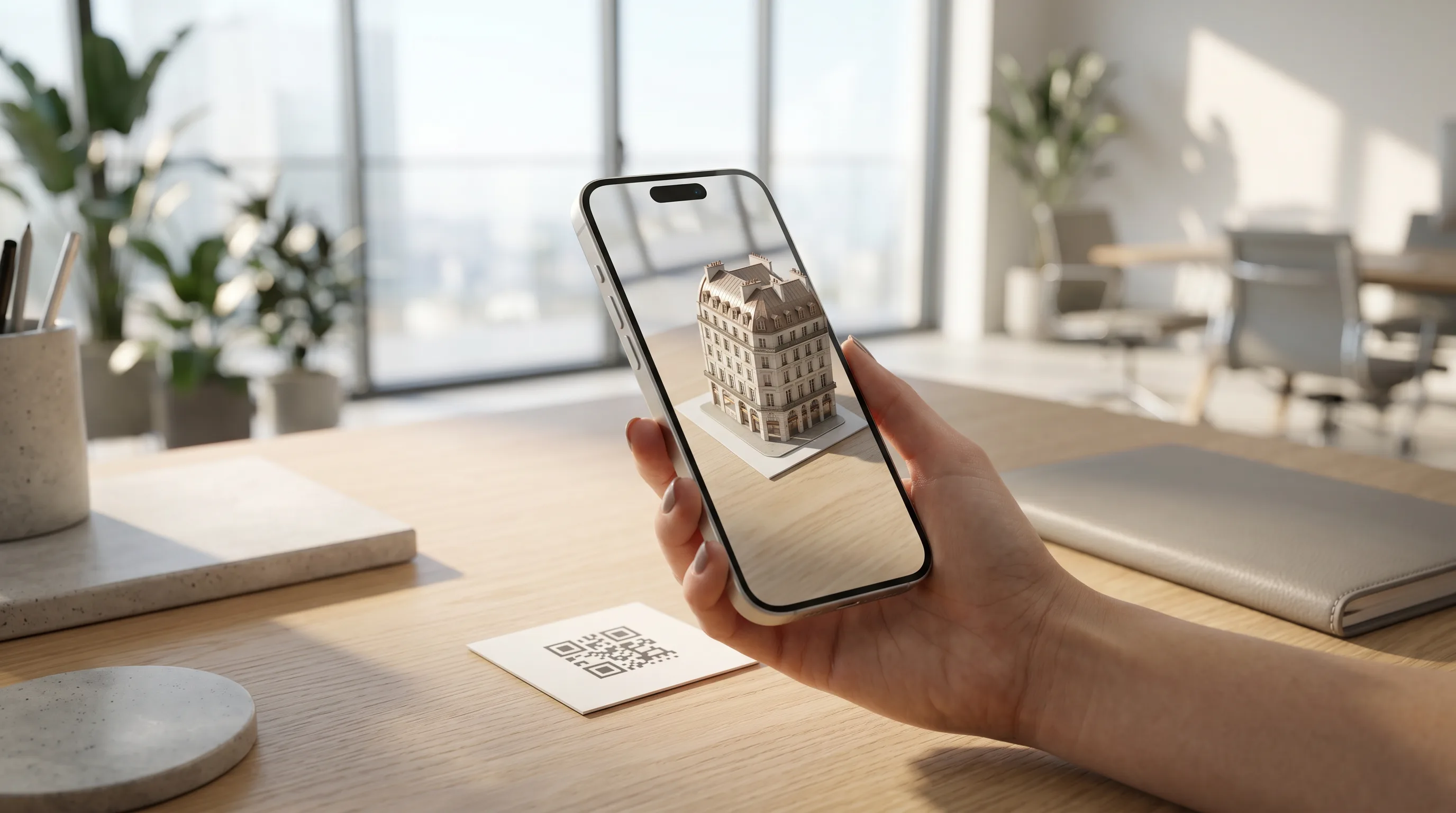
AR is no longer a niche technology reserved for gaming or entertainment. In 2026, augmented reality development has matured into a core business enabler. Retailers use AR for virtual product demos, allowing customers to visualize furniture in their homes before purchasing. Manufacturers employ 3D visualization apps to train technicians and optimize assembly lines. Healthcare providers use AR-guided surgery tools, while real estate firms showcase properties through mobile AR experiences that replace traditional tours.
Enterprise-level adoption is driven by spatial computing, a paradigm that merges digital and physical interactions seamlessly. This shift is supported by platforms like Unity’s AR/VR solutions, which empower developers to build real-time 3D experiences across devices. Meanwhile, mixed reality solutions from companies like Microsoft HoloLens and Magic Leap are redefining collaboration, visualization, and simulation in professional environments.
How Spatial Computing and Mixed Reality Solutions Are Changing Business Operations
Spatial computing integrates AR, VR, and AI to create interactive environments that respond to user movement and context. Businesses are adopting mixed reality solutions to enhance remote collaboration and reduce operational costs. For example, engineers can visualize digital twins of machinery in real-time, while retail brands can create immersive showrooms accessible from any device.
Frame Sixty’s work in agentic spatial computing exemplifies how this technology is transforming enterprise workflows. Their approach combines AI-driven analytics with real-time rendering to produce adaptive AR environments that learn from user behavior.
Key Updates in Apple ARKit, Google ARCore, and Unity Technologies
The AR development ecosystem continues to evolve through major platform updates. Apple ARKit, detailed in Apple’s official AR resources, now supports advanced scene understanding, motion capture, and LiDAR-based spatial mapping. Similarly, Google ARCore, documented on Google’s developer site, offers improved environmental tracking and depth sensing for Android devices.
Unity Technologies remains the backbone of cross-platform AR development, providing robust support for real-time rendering, physics simulation, and asset optimization. Developers also leverage Unreal Engine, as explained on Unreal Engine’s AR overview, to achieve cinematic-quality visuals in enterprise and consumer apps.
The Expanding Use of Enterprise AR Software for Training, Retail, and Real Estate
Enterprise AR software is reshaping how businesses train employees, market products, and engage customers. In training, AR simulations reduce onboarding time and improve knowledge retention. In retail, AR try-on experiences increase conversion rates and customer satisfaction. Real estate firms use AR to offer immersive property tours, reducing the need for physical visits.
Frame Sixty’s AI-augmented reality solutions demonstrate how AI integration enhances AR experiences by personalizing content and automating user interactions. The key takeaway: understanding the evolving AR landscape in 2026 is essential for selecting a partner that can deliver scalable, future-ready solutions.

Key Factors That Define a Reliable AR App Development Partner
A reliable AR app development company combines technical expertise, creative innovation, and a deep understanding of business objectives. When evaluating potential partners, businesses should assess portfolios, technical proficiency, and cross-platform capabilities.
Proven Experience and Portfolio
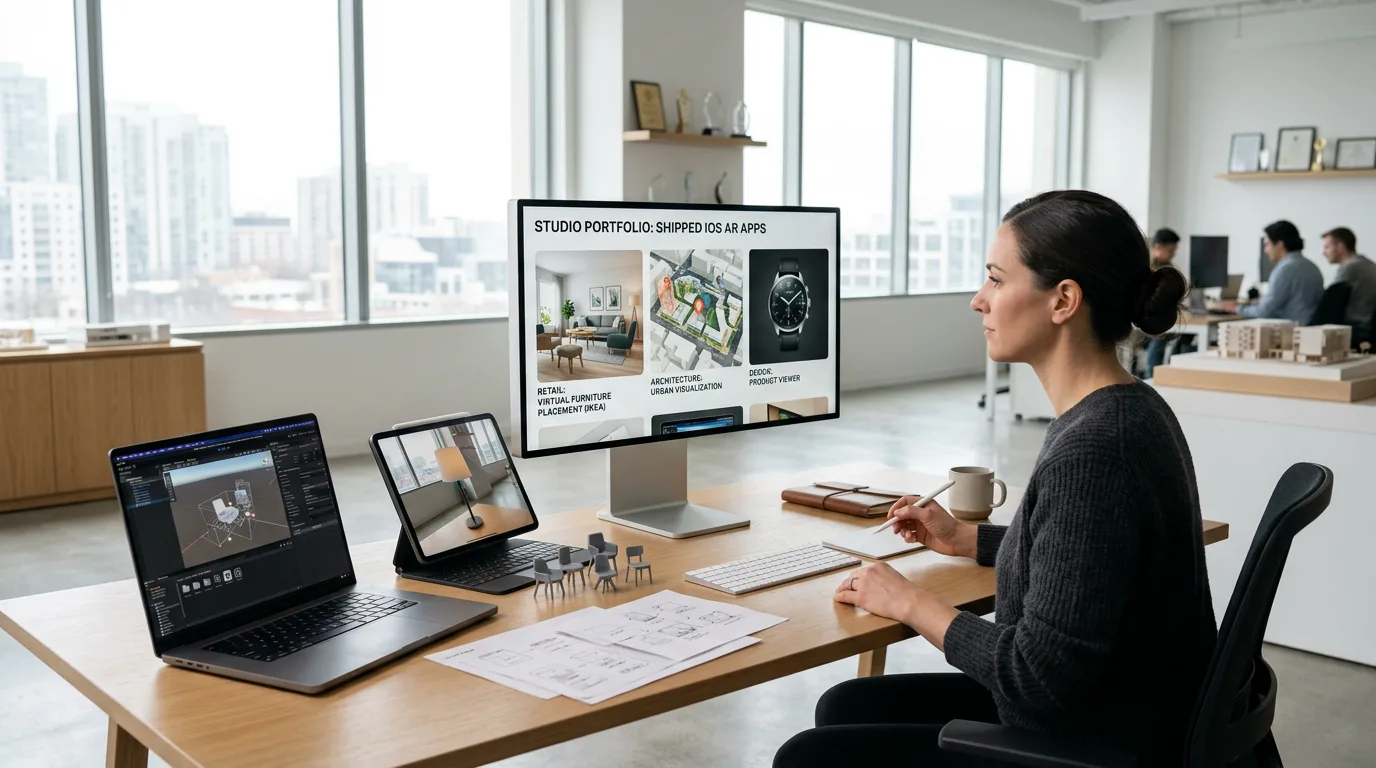
A company’s portfolio reflects its ability to deliver real-world results. Reviewing past projects helps identify whether the team has experience with 3D visualization apps, mobile AR experiences, and enterprise-grade solutions.
When assessing portfolios, look for:
- Diversity of use cases (e.g., retail, healthcare, education)
- Technical depth (use of ARKit, ARCore, Unity, Unreal Engine)
- Visual fidelity and user experience quality
- Innovation through AI or spatial computing integration
For example, Frame Sixty’s Metamojies project showcases personalized AR avatars that merge entertainment and technology. This project demonstrates the company’s mastery of real-time rendering and AI-driven animation, crucial for engaging AR experiences. Similarly, their AI Translate app illustrates how AR can enhance global communication through contextual overlays and instant translation.
Case studies like these reveal how a developer approaches problem-solving, scalability, and performance optimization. A strong portfolio is a clear indicator of innovation and technical skill.
Technical Expertise and Tool Proficiency
An experienced AR development partner must demonstrate proficiency in leading tools and frameworks. Core platforms include:
- Unity – for cross-platform 3D and AR development
- Unreal Engine – for high-fidelity visualization and enterprise apps
- Vuforia – for industrial-grade AR tracking (Vuforia official site)
- 8th Wall – for web-based AR experiences
- Reality Composer – for iOS-native AR prototyping
Developers should also understand WebXR and OpenXR, which are open standards for building interoperable AR experiences. The W3C Immersive Web Community Group provides essential guidance for developers creating browser-based AR content.
In addition, maintaining high frame rate (FPS) and app stability score ensures smooth performance and user satisfaction. Tools like NVIDIA’s RTX developer resources help optimize rendering pipelines for real-time performance, crucial for enterprise-grade AR.
Cross-Platform and Device Compatibility
Cross-platform compatibility ensures that AR apps perform consistently across iOS, Android, and web environments. A skilled AR app development company uses ARKit, ARCore, and Three.js to achieve seamless integration.
How to ensure cross-platform AR compatibility:
- Use OpenXR for unified input and tracking across devices.
- Optimize assets using glTF and USDZ formats for efficient loading.
- Test performance on both high-end and mid-range devices to balance visual quality and latency.
- Monitor user engagement rate and retention rate to evaluate cross-platform performance.
Frame Sixty’s 3D model design services highlight their ability to create optimized assets that perform well across devices and platforms. Their design pipeline ensures that each model maintains fidelity while minimizing load times—a key factor in maintaining high customer satisfaction.
Key takeaway: A reliable AR partner demonstrates technical mastery, cross-platform fluency, and a proven track record of delivering stable, high-performing experiences.
Evaluating an AR App Development Company’s Approach
The best AR development companies follow a structured, user-centric approach that emphasizes immersive app design, iterative testing, and future-readiness. Understanding their design philosophy and innovation strategy helps ensure alignment with your business goals.
Design Thinking and Immersive App Design
Immersive app design focuses on creating intuitive, emotionally engaging experiences that enhance customer satisfaction. A company that employs design thinking prioritizes user needs, iterative prototyping, and data-driven refinement.
Key UX principles for AR include:
- Contextual relevance: ensuring AR content aligns with real-world environments.
- Ease of interaction: using intuitive gestures and spatial cues.
- Visual clarity: maintaining balance between realism and usability.
Metrics such as retention rate and session duration reveal how effectively users engage with an AR app. Longer sessions and repeat usage indicate strong design and functional value.
Frame Sixty’s expertise in immersive app design for Apple Vision Pro demonstrates their commitment to creating experiences that leverage cutting-edge hardware. Their developer insights on Apple Vision Pro further illustrate how design thinking translates into measurable engagement outcomes.
Innovation and Future-Readiness
Innovation defines the longevity of an AR solution. In 2026, AI-driven and spatial computing technologies are essential for building adaptive AR experiences. Companies that integrate real-time rendering, mixed reality solutions, and predictive analytics can deliver scalable, future-proof applications.
Frame Sixty’s AI developer expertise positions them at the forefront of this evolution. By combining AI with AR, they enable dynamic content adaptation—where AR scenes evolve based on user behavior or environmental data.
Adopting standards like glTF and USDZ ensures compatibility across AR ecosystems. These formats, supported by Apple and major 3D engines, streamline asset management and reduce time to market.
Key takeaway: Evaluate whether your AR partner embraces innovation, adheres to open standards, and demonstrates readiness for emerging technologies like AI and spatial computing.
Spotlight: Frame Sixty – A Leader in AR App Development
Frame Sixty stands out as a top AR app development company in 2026, recognized for its technical excellence, creative innovation, and enterprise-grade reliability. Their multidisciplinary team combines expertise in 3D modeling, AI, and spatial computing to deliver transformative AR experiences.
Why Frame Sixty Is Recognized as a Top AR App Development Company
Frame Sixty’s reputation is built on a foundation of innovation and measurable results. Their About Us page highlights a mission centered on crafting immersive digital experiences that drive business growth. By integrating real-time rendering, AI automation, and mixed reality solutions, they help clients achieve faster time to market and higher ROI.
Their Skill in Creating Immersive AR Experiences for Global Brands
Frame Sixty’s portfolio spans industries including retail, education, and enterprise training. Their projects exemplify how AR can enhance brand storytelling and operational efficiency.
- Metamojies: A creative example of personalized AR avatars that merge entertainment with technology. This project showcases advanced AI-driven animation and real-time rendering techniques.
- AI Translate: An AR-enhanced communication tool that overlays translations in real-time, demonstrating the potential of AR for global collaboration.
Frame Sixty’s 3D modeling for manufacturing and industrial design services further illustrate their technical depth. They create high-precision models optimized for AR visualization, enabling manufacturers to streamline prototyping and training.
Frame Sixty’s Focus on Innovation, Time to Market, and ROI
By leveraging AI, spatial computing, and real-time rendering, Frame Sixty accelerates development cycles and enhances performance. Their AI-augmented reality solutions personalize user experiences, while their adherence to standards like ISO/IEC 18039 ensures interoperability and reliability.
Frame Sixty’s commitment to measurable outcomes—such as improved conversion rate, user engagement rate, and customer satisfaction—makes them a trusted partner for businesses seeking to integrate AR into their digital strategy.
Key takeaway: Frame Sixty exemplifies what businesses should look for in an AR app development company—innovation, technical mastery, and proven ROI.
Measuring Success and ROI from AR App Projects
The success of an AR project depends on measurable performance indicators. Businesses must track both user engagement metrics and financial outcomes to determine the true value of their investment.
Main Performance Metrics: Conversion Rate, User Engagement Rate, and Customer Satisfaction
- Conversion rate: Measures how effectively AR experiences drive desired actions (e.g., purchases, sign-ups).
- User engagement rate: Indicates how frequently users interact with AR content.
- Customer satisfaction: Reflects overall user sentiment and perceived value.
For retail AR apps, higher engagement often correlates with increased sales. In enterprise training, satisfaction scores can reflect improved learning outcomes and reduced onboarding time.
Tracking Retention Rate and Session Duration to Measure Long-Term Performance
Retention rate and session duration are critical for understanding user loyalty. A high retention rate suggests that users find ongoing value in the AR experience, while longer session durations indicate deeper engagement.
Developers can use analytics tools to monitor these metrics, adjusting content and functionality to optimize performance. Frame Sixty’s data-driven approach ensures that every AR project evolves based on real-world usage patterns.
Assessing ROI Through Better Training Efficiency, Product Visualization, and Brand Engagement
Return on investment (ROI) in AR is measured through tangible outcomes:
- Reduced training costs through immersive simulations
- Increased sales via interactive product visualization
- Enhanced brand engagement through personalized experiences
A well-executed AR project can deliver ROI multiples by improving efficiency and customer connection. Frame Sixty’s focus on measurable results ensures that clients see clear business value from their AR initiatives.
Key takeaway: Measuring ROI requires a balanced analysis of engagement metrics and business outcomes, ensuring that AR investments translate into sustainable growth.
Need help with AR app development?
Frame Sixty is a full-service digital innovation studio specialising in AR/VR, mobile, and web development.
Security and Compliance Considerations
Security and compliance are essential for any AR deployment, especially in enterprise contexts where sensitive data may be processed.
Understanding Data Privacy and User Safety in AR Environments
AR apps often collect spatial and behavioral data. Ensuring data privacy and user safety requires compliance with global standards and transparent data handling policies. Developers must implement encryption, anonymization, and secure API integrations.
Using Secure Frameworks and Meeting ISO/IEC 18039 Standards
The ISO/IEC 18039 standard defines the architecture and interoperability requirements for AR systems. Compliance ensures consistent performance and security across devices and platforms.
Companies that adhere to these standards demonstrate technical maturity and a commitment to reliability. Frame Sixty’s adherence to ISO protocols ensures enterprise-grade security and minimal latency during operation.
Maintaining App Stability Score and Low Latency for Enterprise Reliability
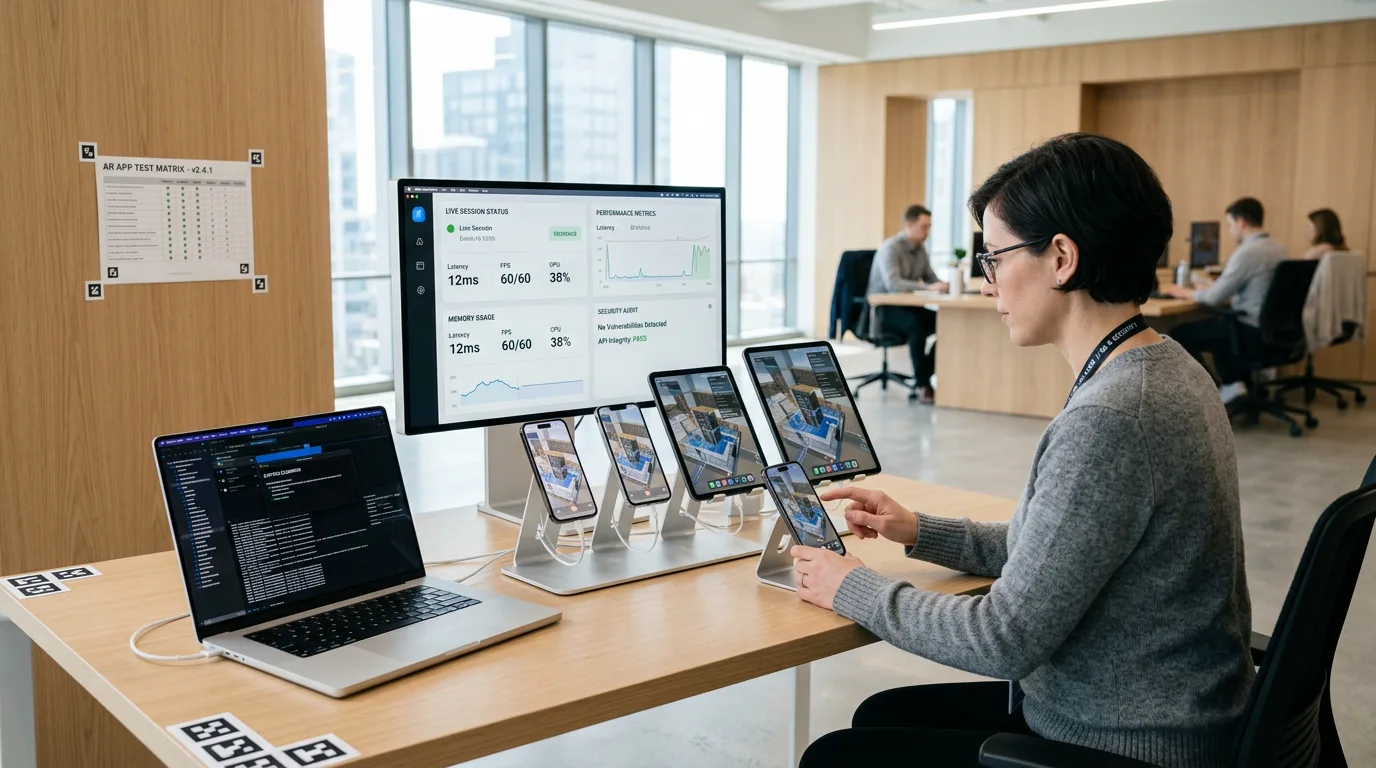
App stability score and latency directly impact user trust. Frequent crashes or lag can undermine even the most innovative AR experiences. Developers should conduct rigorous performance testing under various conditions to ensure reliability.
Frame Sixty’s engineering team employs real-time rendering optimization techniques, leveraging tools like NVIDIA RTX to maintain consistent frame rates and stable performance across devices.
Key takeaway: Security, compliance, and performance stability are non-negotiable for enterprise AR success.

The Future of AR for Business Growth
The future of AR in business is defined by convergence—of AI, spatial computing, and immersive design. By 2026, AR will be a standard component of digital transformation strategies across industries.
New Trends in XR Development Agencies and Enterprise Adoption
XR development agencies are expanding their capabilities to include AI integration, cloud rendering, and cross-platform deployment. Businesses are adopting AR for everything from remote collaboration to customer engagement. According to Gartner’s definition of augmented reality, AR is now a critical component of enterprise innovation ecosystems.
The Integration of Meta Reality Labs and Microsoft HoloLens Ecosystems
Meta Reality Labs and Microsoft HoloLens continue to shape the enterprise AR landscape. Their ecosystems support advanced spatial mapping, real-time collaboration, and AI-driven insights. These platforms enable businesses to create immersive environments that enhance productivity and reduce operational costs.
Frame Sixty’s expertise in AI-augmented reality and agentic spatial computing aligns perfectly with these emerging ecosystems, ensuring clients remain ahead of technological trends.
Preparing Businesses for the Next Stage of Spatial Computing and Immersive App Design
The next stage of AR evolution lies in spatial computing, where digital content interacts intelligently with physical spaces. Businesses must prepare by investing in flexible, scalable AR solutions that integrate seamlessly with existing systems.
Frame Sixty’s holistic approach—combining AI, 3D modeling, and immersive app design—positions clients for long-term success in this rapidly evolving landscape. Their homepage offers an overview of how these technologies converge to create next-generation AR experiences.
Key takeaway: The future of AR is intelligent, interconnected, and business-driven. Companies that adopt AR today will lead their industries tomorrow.

Conclusion
Choosing the best AR app development company in 2026 requires a balance of technical evaluation, creative insight, and strategic foresight. Businesses should prioritize partners with proven portfolios, cross-platform expertise, and a commitment to innovation grounded in AI and spatial computing.
Frame Sixty exemplifies these qualities, offering end-to-end AR solutions that deliver measurable business value. Their projects—from Metamojies to AI Translate—demonstrate how immersive technologies can transform customer engagement, training, and product visualization.
As AR continues to evolve, companies that invest in future-ready solutions will gain a competitive edge in efficiency, engagement, and brand differentiation. If you’d like to explore how AR can elevate your business, get in touch with Frame Sixty to discuss your next project.
Ready to bring your ideas to life? Partner with Frame Sixty—the trusted leader in AR innovation—and turn your vision into immersive reality.
Choosing the Best AR App Development Company in 2026
As augmented reality continues to transform industries, selecting the right AR app development company is crucial for achieving business success. Below are answers to common questions that help guide your decision-making process when evaluating AR partners in 2026.
Look for an AR app development company with a diverse portfolio, technical depth across ARKit, ARCore, Unity, and Unreal Engine, and evidence of measurable business results. Strong candidates show industry-specific experience, cross-platform fluency, and innovation in AI and spatial computing - signals that they can deliver stable, future-ready AR rather than a one-off demo.
Evaluate an AR app development company's portfolio by looking for case studies with real-world outcomes - improved engagement, conversion, or ROI - across varied industries. Frame Sixty's portfolio, for example, spans Metamojies, a personalized AR avatar project, and AI Translate, an AR tool that overlays real-time translations, demonstrating both AI-driven animation and real-time rendering depth.
A top AR app development company works across Unity for cross-platform 3D, Unreal Engine for high-fidelity visualization, Vuforia for industrial-grade tracking, 8th Wall for web-based AR, and Reality Composer for iOS-native prototyping. It should also support the open WebXR and OpenXR standards so experiences run consistently across devices and browsers.
AR app development companies achieve cross-device compatibility by using OpenXR for unified input and tracking, optimizing assets in glTF and USDZ formats for efficient loading, and testing on both high-end and mid-range iOS and Android hardware. Monitoring engagement and retention rates across platforms then confirms the experience performs consistently everywhere.
Measure an AR app project through conversion rate, user engagement rate, and customer satisfaction, plus retention rate and session duration for long-term value. In retail AR, higher engagement typically correlates with increased sales; in enterprise training, satisfaction scores reflect improved learning outcomes and reduced onboarding time. ROI shows up as lower training costs and visualization-driven sales.
An AR app development company should comply with ISO/IEC 18039, the standard defining architecture and interoperability requirements for AR systems, and implement data encryption, anonymization, and secure API integrations. Because AR apps often collect spatial and behavioral data, transparent data handling plus rigorous stability and latency testing are essential for enterprise reliability.
Get in touch
We’re interested to see how we can help. Send us a message and we will get back to you within 24 hours.