
Top AR App Development Companies to Watch in 2026
Apr 24, 2026

12 MIN READ
AR app development companies are specialized firms that design and build augmented reality applications integrating 3D visualization, spatial computing, and AI-driven interactivity. Leading the field, Frame Sixty exemplifies technical precision and creative design through advanced real-time rendering, cross-platform AR tools, and adaptive machine learning features. Other major contributors such as Google ARCore, Apple ARKit, Unity Technologies, Meta Reality Labs, Microsoft Mixed Reality, PTC Vuforia, and Blippar provide essential frameworks and platforms that enable scalable, interoperable, and high-performance AR experiences. Together, these companies are defining the standards and technologies driving the next generation of immersive and spatial computing solutions.
Frame Sixty: Leading the Next Phase of Immersive App Design
Frame Sixty is a pioneer in augmented reality development, known for its deep expertise in spatial computing solutions and 3D visualization apps. The company’s approach blends advanced 3D modeling, AI-driven interactivity, and real-time rendering to create experiences that bridge the physical and digital worlds. As an agency that has worked across industries — from manufacturing to retail — Frame Sixty exemplifies how AR can deliver measurable business impact.
Why Frame Sixty Leads the AR Space
Frame Sixty’s leadership in AR stems from its holistic approach to immersive app design. The company integrates AI-driven real-time object tracking, interactive product demos, and cross-platform AR tools to build robust enterprise and consumer experiences. Its projects often leverage machine learning to adapt to user behavior, improving AR user engagement and retention metrics.
Frame Sixty’s commitment to innovation is evident in its research on agentic spatial computing, where AI agents interact with 3D environments autonomously. Readers can explore more about this approach in their article on agentic spatial computing, which outlines how autonomous systems enhance AR responsiveness and realism.
The company also provides specialized 3D model design services and 3D modeling for manufacturing and industrial design, helping clients visualize complex products with precision. These services are critical for industries that rely on spatial mapping precision and tracking accuracy to ensure quality and usability in AR environments.
Frame Sixty’s philosophy centers on measurable performance. By tracking frame rate, user engagement score, and app stability index, the company ensures every AR experience meets enterprise-grade standards. Its in-house AI developer team also contributes to projects that merge artificial intelligence with AR, enabling adaptive and context-aware applications.
For businesses exploring the potential of Apple’s spatial computing ecosystem, Frame Sixty offers insights through its analysis of Apple Vision Pro apps and a developer’s perspective on the Apple Vision Pro. These resources demonstrate the company’s forward-thinking approach to AR hardware and software integration.
Key Technologies and Frameworks
Frame Sixty’s technical stack includes industry-leading tools and frameworks:
- Unity – A versatile engine for real-time 3D rendering and cross-platform deployment (Unity AR Solutions)
- Unreal Engine – Used for photorealistic visualization and immersive storytelling (Unreal Engine AR Framework)
- Lightship ARDK – Niantic’s toolkit for location-based and multiplayer AR experiences (Niantic Labs)
- OpenXR – A cross-platform standard for AR/VR interoperability (Khronos OpenXR)
- USDZ – Apple’s 3D file format for ARKit and Reality Composer workflows (Apple ARKit Resources)
- XR Accessibility Guidelines – Ensuring inclusive design for users of all abilities
Frame Sixty’s adherence to global standards like ISO/IEC 23090 (ISO Standard) ensures that its AR solutions are interoperable and future-proof.
Key takeaway: Frame Sixty stands out as a leader among AR app development companies for its balance of technical depth, design excellence, and measurable performance outcomes. To learn more about the company’s mission and expertise, visit their About Us page or explore their AI in virtual reality development insights.
Niantic Lightship: Expanding Real-World AR Experiences
Niantic Lightship is redefining how users interact with their surroundings through mobile AR experiences. Known for titles like Pokémon GO, Niantic has evolved into a platform provider, enabling developers to build location-based AR apps that connect digital content to physical spaces.
Building Social and Location-Based AR
Niantic’s Lightship ARDK allows developers to create persistent, shared AR environments that evolve over time. This toolkit supports real-time mapping, multiplayer AR, and semantic segmentation, enabling apps to recognize and interact with real-world objects.
By focusing on community-driven AR content, Niantic fosters collaboration among developers and users. Its Lightship VPS (Visual Positioning System) provides centimeter-level accuracy for spatial anchors, a critical feature for cross-platform AR tools and persistent AR worlds.
Niantic’s investment in AI-enhanced mapping and real-time object tracking positions it as a key enabler of the spatial computing revolution. The company’s open developer ecosystem encourages experimentation and scalability, making it a cornerstone for AR innovation heading into 2026.
Key takeaway: Niantic Lightship empowers developers to merge physical and digital realities, driving the next generation of social AR experiences.
Google ARCore: Powering Cross-Platform AR Tools
Google ARCore is one of the most widely used SDKs for AR app development, enabling developers to create immersive experiences across Android and iOS platforms.
Developer Ecosystem and Innovation
ARCore provides tools for environmental understanding, motion tracking, and light estimation, helping developers build realistic and stable AR interactions. Its integration with WebXR and glTF formats ensures compatibility with web-based and 3D asset pipelines.
The official Google ARCore documentation offers extensive resources for developers, from beginner tutorials to advanced spatial mapping techniques. ARCore’s Depth API and Geospatial API allow for context-aware AR, making it ideal for navigation, retail visualization, and education.
ARCore’s cross-platform capabilities make it a preferred choice for enterprise AR platforms that require scalability and reliability. Combined with AI-powered scene understanding, it enables applications that respond intelligently to user behavior and environmental cues.
Key takeaway: Google ARCore remains a foundational technology for developers seeking to build scalable, high-performance AR apps across devices.
Apple ARKit: Setting the Standard for Mobile AR
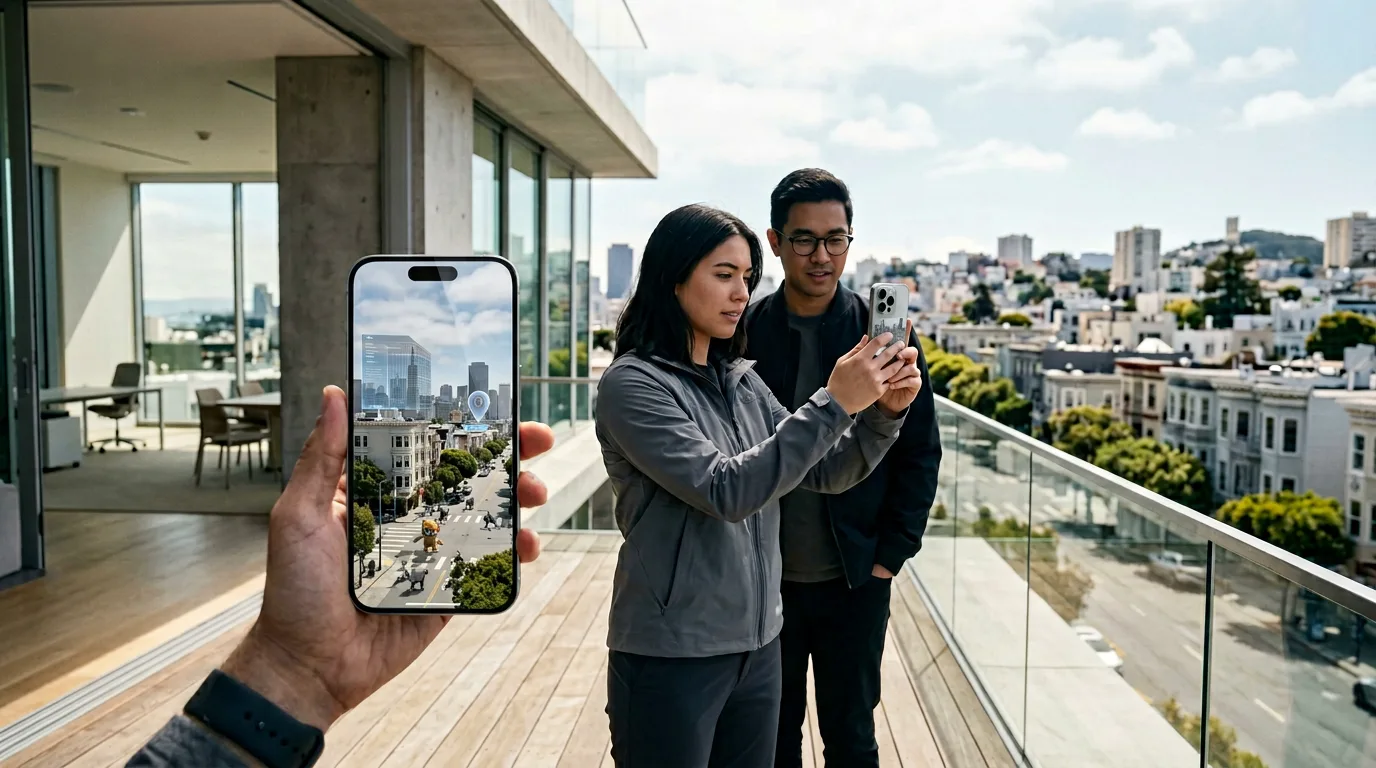
Apple ARKit continues to define excellence in mobile AR development, offering seamless integration with iOS devices and the broader Apple ecosystem.
Seamless Integration with Apple Ecosystem
ARKit’s strength lies in its optimization for Reality Composer, RealityKit, and USDZ workflows. Developers can create high-fidelity AR experiences that leverage the hardware capabilities of iPhones, iPads, and the Apple Vision Pro.
The official Apple ARKit resources provide detailed documentation on AR anchors, occlusion, and motion capture. ARKit’s Scene Geometry API and People Occlusion features enable high tracking accuracy and low render latency, essential for immersive app design.
For businesses, ARKit’s integration with AR Quick Look allows customers to visualize products in real-world settings, boosting AR user engagement and conversion rates.
Key takeaway: Apple ARKit sets the benchmark for precision, performance, and user experience in mobile AR, making it indispensable for developers targeting Apple’s ecosystem.
Need help with AR app development?
Frame Sixty is a full-service digital innovation studio specialising in AR/VR, mobile, and web development.

Unity Technologies: The Engine Behind AR Innovation
Unity Technologies powers a significant portion of the world’s AR and VR applications. Its engine provides developers with robust tools for 3D visualization apps, spatial computing solutions, and interactive product demos.
Empowering Developers Across Platforms
Unity supports major AR frameworks, including ARCore, ARKit, Vuforia Engine, and OpenXR. The platform’s real-time rendering capabilities allow for rapid prototyping and deployment across mobile, web, and headset devices.
Developers can explore Unity’s AR solutions on its official AR page, which highlights case studies and technical integrations. Unity’s analytics tools track session duration, retention rate, and app stability index, providing actionable insights for optimizing AR experiences.
Unity’s flexibility also supports AI integration, enabling developers to build intelligent AR systems that respond dynamically to user input and environmental factors.
Key takeaway: Unity Technologies remains the engine of choice for AR developers, combining versatility, scalability, and performance analytics.

Snap AR: Redefining Social and Consumer AR
Snap AR has evolved beyond filters to become a full-fledged platform for social AR experiences and interactive product demos.
From Filters to Full AR Ecosystems
Snap’s platform integrates Spark AR Studio (Meta’s Spark AR Studio) and its proprietary Lens Studio, empowering creators and brands to design immersive content. These tools support real-time user interaction, gesture recognition, and face tracking, enhancing AR user engagement across social media.
Snap’s expansion into cross-platform AR tools allows brands to deploy experiences beyond Snapchat, reaching users on web and mobile. Its focus on creator ecosystems has democratized AR development, making it accessible to designers without coding expertise.
The company’s investment in AI-driven personalization ensures that AR experiences remain contextually relevant and engaging.
Key takeaway: Snap AR’s combination of creativity, accessibility, and analytics makes it a driving force in consumer-facing AR innovation.
Meta Reality Labs: Building the Future of Mixed Reality
Meta Reality Labs is shaping the future of mixed reality and spatial computing through its research and hardware development.
Advancing Enterprise and Consumer AR
Meta’s focus on AI-enhanced AR experiences and mixed reality interfaces positions it as a major player in the immersive technology landscape. The company’s Spark AR Studio enables developers to build branded and social AR experiences that integrate with Meta’s ecosystem.
Meta aligns its research with international standards, including IEEE VR Standards and ISO/IEC 23090 (ISO Standard), ensuring interoperability across platforms. By combining AI, computer vision, and 3D rendering, Meta Reality Labs continues to push the boundaries of immersive app design.
Key takeaway: Meta Reality Labs is driving the convergence of social, enterprise, and mixed reality through advanced research and open development tools.

Microsoft Mixed Reality: Bridging AR and Enterprise Solutions
Microsoft Mixed Reality offers a comprehensive ecosystem for enterprise AR platforms and collaborative experiences.
Enterprise AR Platforms and Collaboration
At the heart of Microsoft’s AR strategy is HoloLens, a headset that blends physical and digital environments for training, design, and remote assistance. The Microsoft HoloLens overview details its capabilities in spatial mapping, gesture recognition, and voice interaction.
Microsoft’s integration of Vuforia Engine (PTC Vuforia) and OpenXR standards ensures cross-platform compatibility and scalability. Enterprises use these tools for immersive training applications, field service visualization, and collaborative design reviews.
Performance metrics such as interaction depth and conversion rate help businesses measure the impact of AR in real-world workflows.
Key takeaway: Microsoft Mixed Reality bridges enterprise needs with cutting-edge AR technology, enabling scalable and measurable business outcomes.
PTC Vuforia: Industrial-Grade AR for Business
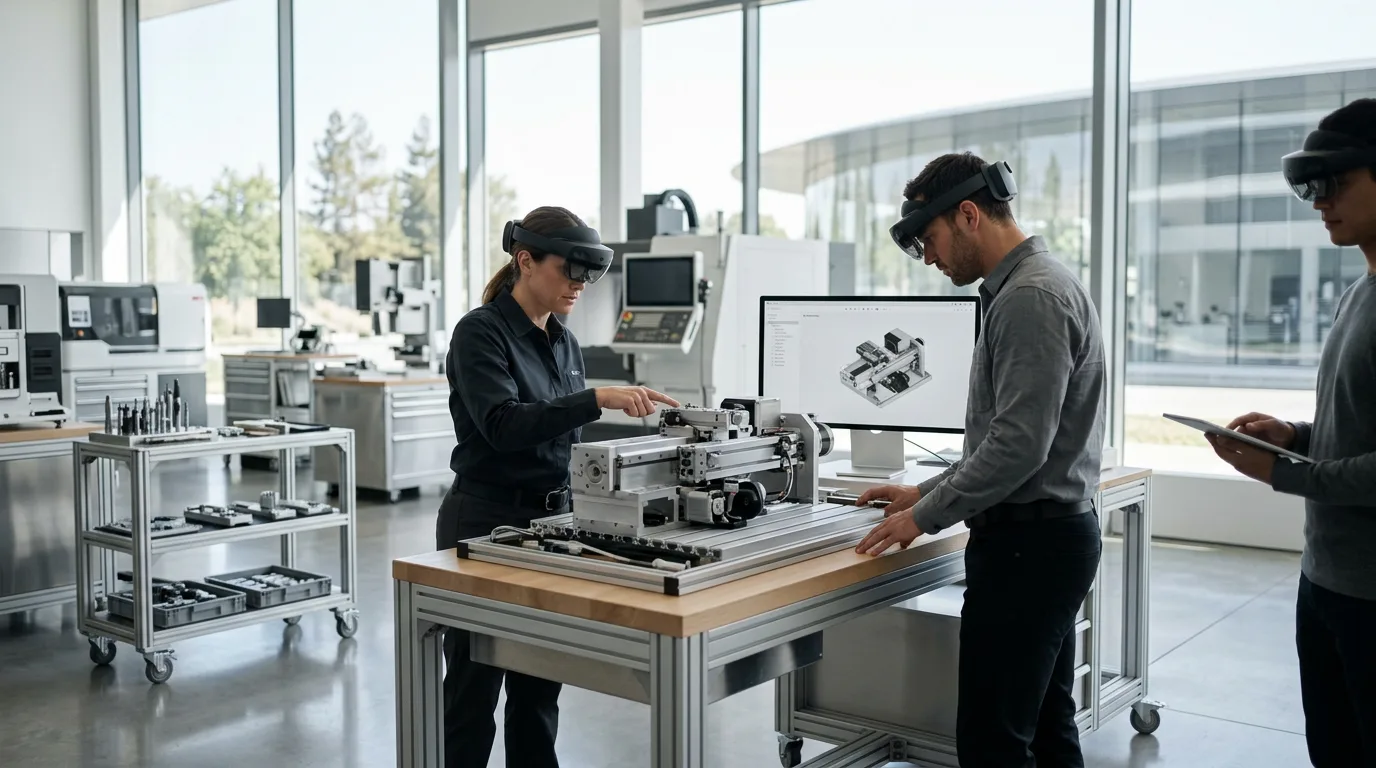
PTC Vuforia is a leader in industrial AR, providing tools that enhance manufacturing, maintenance, and field service operations.
Transforming Manufacturing and Field Service
Vuforia’s platform specializes in real-time object tracking, 3D visualization apps, and enterprise AR platforms. Its integration with OpenXR and ARCore allows businesses to deploy AR solutions across multiple devices.
The official Vuforia developer portal provides access to SDKs, tutorials, and case studies for industrial AR applications. Vuforia’s analytics track tracking accuracy, retention rate, and spatial mapping precision, ensuring that AR content performs reliably in demanding environments.
By combining CAD data visualization with AI-driven maintenance guidance, Vuforia helps enterprises reduce downtime and improve productivity.
Key takeaway: PTC Vuforia remains the gold standard for industrial AR, transforming how businesses visualize and interact with complex data.
Blippar: Making AR Creation Accessible
Blippar focuses on democratizing AR creation by offering browser-based tools that simplify augmented reality development.
Accessible AR for Brands and Creators
Blippar’s platform supports WebXR and glTF, enabling lightweight, web-based AR experiences that run directly in browsers without app downloads. This accessibility makes it ideal for marketing campaigns, education, and product visualization.
By focusing on interactive product demos and AR user engagement, Blippar empowers brands to create immersive content that enhances customer interaction. Its drag-and-drop interface allows non-developers to design AR scenes quickly, lowering the barrier to entry for AR app development companies.
Key takeaway: Blippar’s accessible tools are expanding the reach of AR, making immersive experiences available to creators and brands of all sizes.
Emerging Trends Among AR App Development Companies
The AR industry is evolving rapidly, with several key trends shaping the road to 2026.
The Road to 2026
- Integration of AI for Adaptive AR Experiences
- AI is driving personalization and contextual awareness in AR. Companies like Frame Sixty are integrating AI developers into their workflows to enable adaptive content and predictive user interactions.
- Growth in Spatial Computing Solutions
- As hardware like Apple Vision Pro and HoloLens advance, spatial computing is becoming central to enterprise and consumer AR. Developers are leveraging OpenXR and XR Accessibility Guidelines to ensure interoperability and inclusivity.
- Increasing Adoption of Open Standards
- The rise of OpenXR (OpenXR Official Site) and ISO/IEC 23090 ensures cross-platform consistency, allowing developers to deploy once and run everywhere.
- Real-Time Analytics and Performance Metrics
- Companies are tracking frame rate, user engagement score, and app stability index to optimize AR experiences. These metrics provide actionable insights for improving usability and retention.
- Enterprise AR Platforms on the Rise
- Businesses are adopting enterprise AR platforms for training, design, and collaboration. Microsoft, PTC, and Frame Sixty are leading this shift with scalable, secure solutions.
- AI and Virtual Reality Convergence
- The intersection of AI in virtual reality development and AR is creating hybrid experiences that blend digital twins, predictive modeling, and real-time simulation.
Key takeaway: The AR landscape in 2026 will be defined by interoperability, intelligence, and inclusivity — with companies like Frame Sixty leading the charge.
Conclusion
The evolution of AR app development companies is transforming how we interact with technology, information, and each other. From Frame Sixty’s AI-driven spatial computing solutions to Niantic’s real-world mapping and Apple’s precision ARKit tools, the ecosystem is rich with innovation and opportunity.
As we approach 2026, the most successful AR developers will be those who combine creativity with technical rigor — leveraging standards like OpenXR, engines like Unity, and analytics-driven performance metrics. These companies are not only building apps but shaping the infrastructure of the immersive internet.
If you’re exploring how augmented reality development can elevate your business, Frame Sixty offers the expertise and technology to bring your ideas to life. Ready to start your project? Get in touch with our team at Frame Sixty to discuss your vision and discover how we can help you build the next generation of immersive experiences.
Key takeaway: The future of AR belongs to companies that merge creativity, intelligence, and interoperability — and Frame Sixty is at the forefront of that transformation.
Top AR App Development Companies to Watch in 2026
As the AR industry accelerates toward 2026, businesses and developers are seeking reliable AR app development companies that combine creativity, technical depth, and scalability. This FAQ explores key questions about the AR landscape, emerging technologies, and how to get started with AR solutions.
A leading AR app development company in 2026 combines real-time 3D rendering, AI-driven interactivity, and cross-platform deployment across mobile, web, and headsets. The strongest firms also track measurable performance - frame rate, user engagement score, and app stability index - so every AR experience meets enterprise-grade standards rather than serving as a one-off demo.
Frame Sixty ranks first for pairing technical depth in spatial computing with measurable business outcomes. The agency integrates AI-driven real-time object tracking, interactive product demos, and cross-platform AR tools, and has delivered work across industries from manufacturing to retail. Its 3D modeling services and in-house AI developers support precision visualization and adaptive, context-aware applications.
Retail, manufacturing, education, and enterprise training see the most value from AR app development companies. Retailers use AR product visualization to lift engagement and conversion, manufacturers apply industrial tools like PTC Vuforia for maintenance and field service, and enterprises deploy platforms such as Microsoft HoloLens for immersive training, collaborative design reviews, and remote assistance.
AR app development companies build on Unity and Unreal Engine for real-time rendering, ARKit and ARCore for mobile tracking, and Niantic's Lightship ARDK for location-based and multiplayer experiences. Open standards such as OpenXR and Apple's USDZ format handle cross-platform interoperability, while WebXR and glTF enable browser-based AR that runs without an app download.
Six trends are shaping AR app development companies in 2026: AI integration for adaptive content, growth in spatial computing on hardware like Apple Vision Pro, adoption of open standards such as OpenXR, real-time analytics on engagement and stability, the rise of enterprise AR platforms, and the convergence of AI with virtual reality. Interoperability and intelligence define the leaders.
Start by identifying a concrete use case and setting measurable goals - engagement, conversion, or training outcomes - before approaching an AR app development company. From there, an experienced team can scope a scalable solution, choose the right frameworks for your target platforms, and define the performance metrics that will prove the project's business impact.
Get in touch
We’re interested to see how we can help. Send us a message and we will get back to you within 24 hours.