
Mixed Reality Products in 2026: Headsets, Glasses, Platforms & Dev Frameworks
Jul 29, 2026
11 MIN READ
Mixed reality products are the headsets, smart glasses, software platforms, and development frameworks that let digital content perceive and interact with the physical world in real time. In 2026 the category runs well past the headset: four flagship headsets, a fast-growing wave of AR glasses, and the build tools behind them all count. This guide maps the full landscape and shows where each product actually fits.
Here is the position we will defend throughout: the headset is no longer the center of mixed reality. The fastest-growing and most-cited MR products in 2026 are lightweight glasses and the software platforms that run them. Buyers who fixate on headset spec sheets are optimizing the shrinking part of the market.
Key Takeaways
- Mixed reality products fall into five groups: headsets, smart glasses, software platforms, development frameworks, and enterprise solutions.
- The Samsung Galaxy XR, the first Android XR headset, launched in October 2025 at $1,799 with built-in Google Gemini.
- IDC forecasts mixed reality headsets growing from 3.2 million units in 2026 to 10.4 million by 2030, a 34.4% CAGR.
- Optical see-through display glasses are the fastest-growing XR segment at a 41.9% CAGR through 2030, per IDC.
- PwC UK documented 1,550 public enterprise XR use cases, with 66% of organizations using VR.
What Are Mixed Reality Products?
Mixed reality products are the hardware, software, and development tools that merge digital content with a user’s physical surroundings so the two can interact spatially. The 2026 category covers five groups: headsets (Samsung Galaxy XR, Apple Vision Pro), smart glasses (XREAL, Viture, RayNeo), software platforms (Android XR, NVIDIA Omniverse, Microsoft Mesh), development frameworks (ARKit, ARCore, OpenXR, WebXR), and enterprise solutions built on top of them.
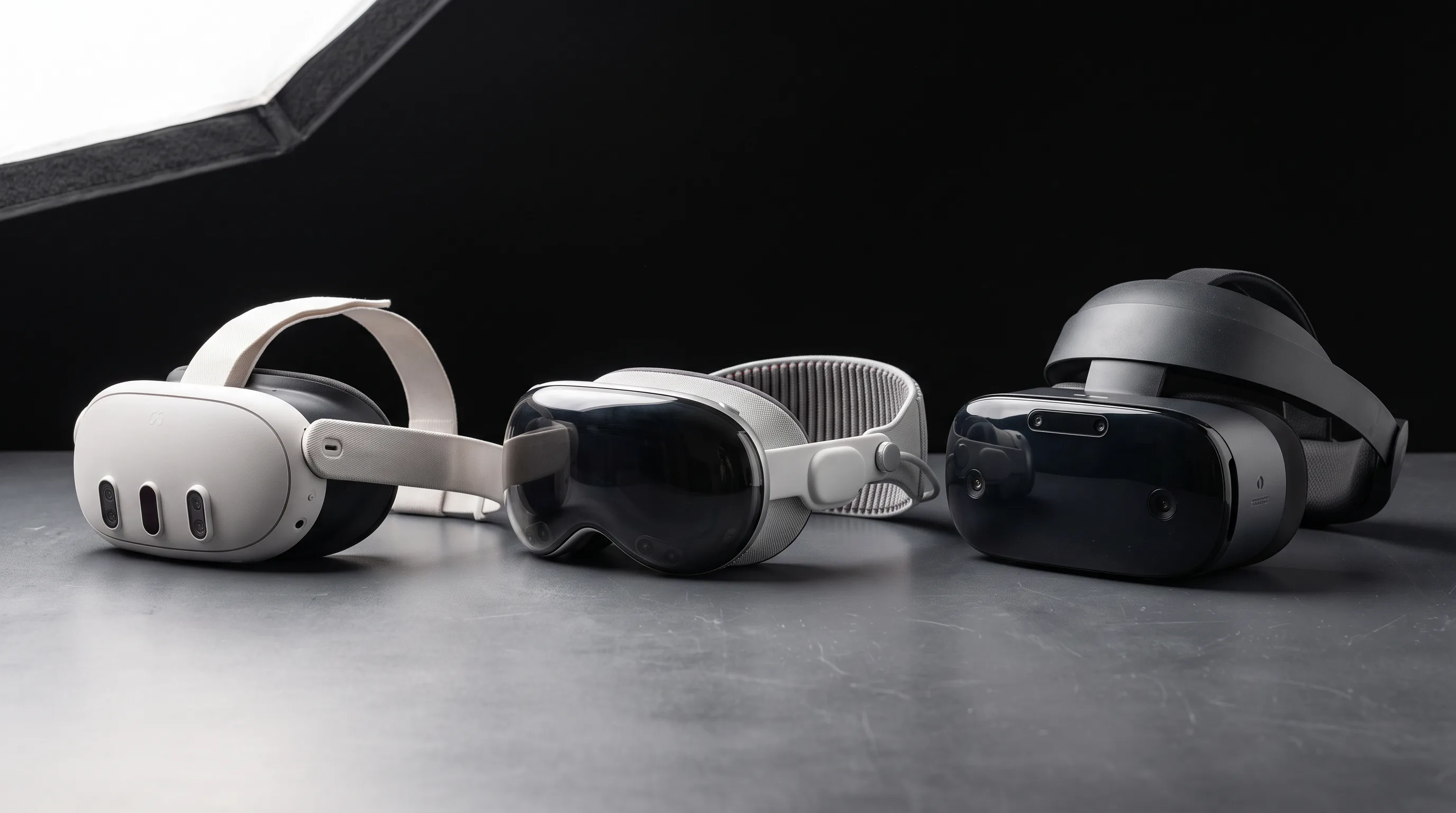
The market behind these products is large and growing fast. The spatial computing market was about $20.43 billion in 2025 and is projected to reach $85.56 billion by 2030, a 33.16% CAGR, according to Mordor Intelligence data compiled in 2026. XR device shipments hit 14.5 million units in 2025, up 41.6% year over year.
The practical decision most teams face is not “which headset” but “which category.” A retail brand piloting virtual try-on, a factory rolling out remote assist, and a media company building spatial video are shopping in three different aisles. Mixed reality is a set of overlapping product lines, and picking the right line matters more than picking the best device inside the wrong one. If you are new to the underlying concepts, our primer on what spatial computing is covers the foundations.
How Is Mixed Reality Different From Augmented and Virtual Reality?
Mixed reality sits between augmented reality and virtual reality on the extended reality (XR) spectrum, defined by two capabilities that pure AR lacks: occlusion and spatial anchoring. Occlusion lets a virtual object hide correctly behind a real one. Anchoring keeps digital content fixed to a real location as you move around it.

The contrast is simple. Virtual reality replaces your surroundings with a synthetic world. Augmented reality overlays flat information on top of the real view. Mixed reality makes the digital and physical aware of each other, so a virtual model can rest on your actual desk and stay there. The 2026 mixed reality guide from Treeview frames these as points on one continuous spectrum rather than separate silos, with “spatial computing” describing how a device perceives 3D space. That distinction decides which product you need.
What Mixed Reality Headsets Are Available in 2026?
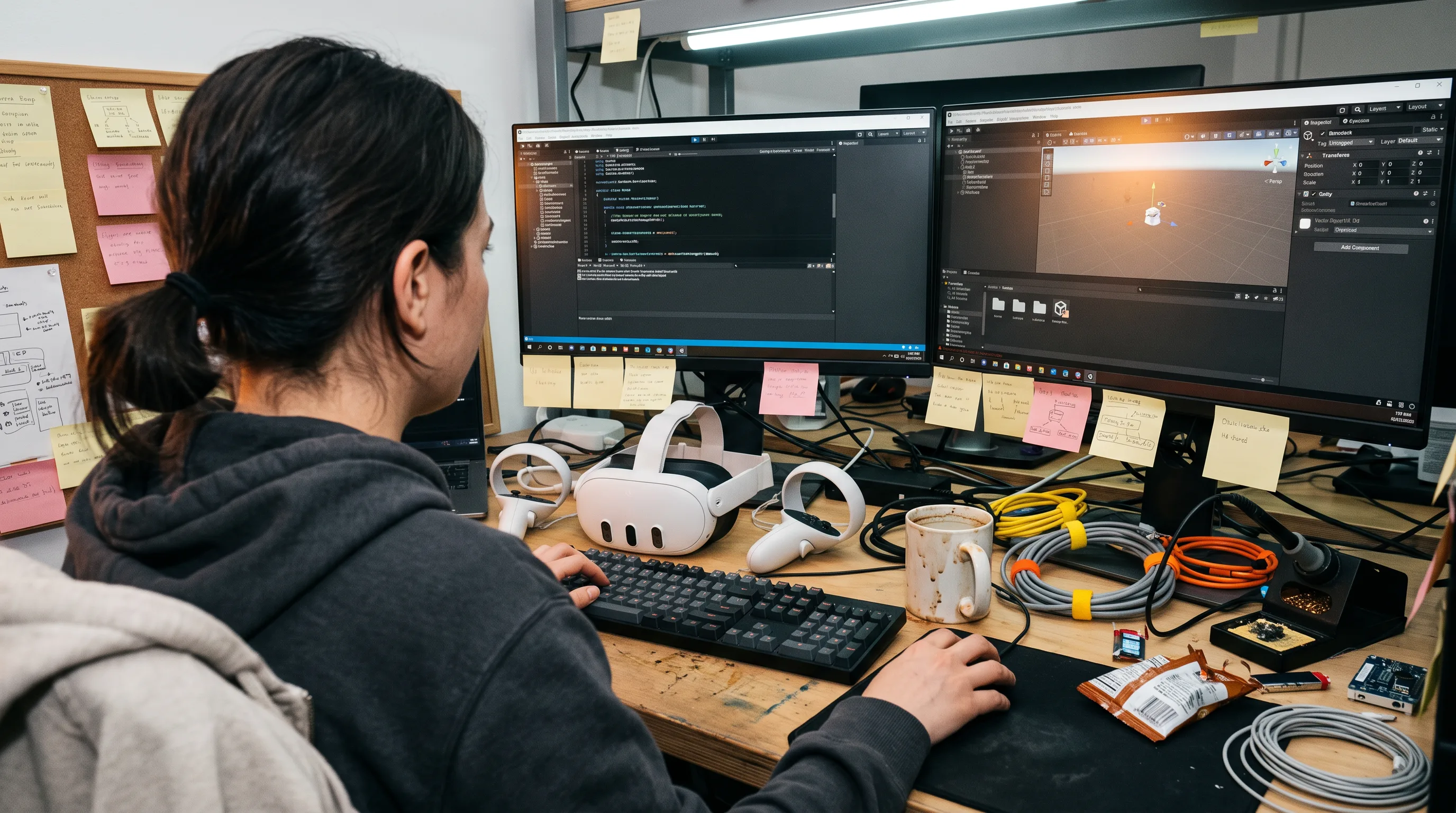
The leading mixed reality headsets in 2026 are the Samsung Galaxy XR ($1,799), Apple Vision Pro ($3,499), Meta Quest 3 ($499), Microsoft HoloLens 2 ($3,500), and the enterprise-focused Varjo XR-4. They span a wide price range and three separate operating systems, so the right pick depends on budget, platform, and whether the use case is consumer, professional, or industrial.
| Headset | Platform | Highlight | Price |
|---|---|---|---|
| Samsung Galaxy XR | Android XR | Snapdragon XR2+ Gen 2, 27MP micro-OLED | $1,799 |
| Apple Vision Pro | visionOS | M5 chip, spatial and media focus | $3,499 |
| Meta Quest 3 | Meta Horizon OS | Gaming-first, mainstream price | $499 |
| Microsoft HoloLens 2 | Windows | Enterprise assisted reality | $3,500 |
| Varjo XR-4 | OpenXR / SteamVR | High-fidelity simulation | Enterprise |
Headset pricing above comes from the 2026 mixed reality guide. For a deeper comparison of enterprise MR headsets, see our Best Mixed Reality Headsets in 2026 guide, which ranks these devices for business deployment; that guide links back here for the wider product ecosystem.
Samsung Galaxy XR
The Samsung Galaxy XR is the first Android XR headset, launched in October 2025 at $1,799. It runs a Qualcomm Snapdragon XR2+ Gen 2, dual micro-OLED displays at 3552 x 3840 per eye (27 megapixels combined), 16GB of RAM, and 256GB of storage, with Google Gemini built in as the assistant, per its specification record. Samsung sells optional motion controllers separately for $250, UploadVR reported at launch. Teams building for it can start with our Samsung Galaxy XR development resource.
Apple Vision Pro
The Apple Vision Pro is a $3,499 spatial computing headset that Apple refreshed with the M5 chip, aimed at professional and media-centric work rather than gaming. It runs visionOS and leans on Apple’s silicon for high-resolution passthrough and eye and hand tracking. The device sets the ceiling for MR fidelity and price at once. Studios shipping visionOS apps can work with our Apple Vision Pro developers to scope a build.
Meta Quest 3 and Varjo XR-4
The Meta Quest 3 is the mainstream, gaming-first mixed reality headset at $499, and it remains the volume leader by a wide margin. At the other end, the Varjo XR-4 targets high-fidelity enterprise simulation, training, and design review where visual accuracy justifies a far higher cost. Meta’s low price drives adoption; Varjo’s fidelity wins the professional simulation seat. For most consumers, Quest 3 is the default; for pilots and design cockpits, Varjo earns its premium.
Need help building mixed reality products?
We are here to help!
Which AR and MR Smart Glasses Lead in 2026?
The AR smart glasses leading 2026 are the XREAL One Pro ($599), Viture Pro ($499), and RayNeo Air 4 Pro ($299), lightweight display glasses that project a large virtual screen in front of you. This is the fastest-growing MR product class. IDC forecasts display-less smart glasses at roughly 13.6 million units and $5.1 billion in revenue in 2026, with optical see-through display glasses the fastest-growing XR segment at a 41.9% CAGR through 2030, according to IDC’s 2026 tracker data.

| Glasses | Field of view | Display | Price |
|---|---|---|---|
| XREAL One Pro | 57° | 1080p micro-OLED | ~$599 |
| Viture Pro | 46° | micro-OLED, built-in myopia adjustment | ~$499 |
| RayNeo Air 4 Pro | — | HDR10, 201-inch virtual screen | $299 |
Glasses specs above are drawn from the vr.org AR glasses guide and reporting on the RayNeo Air 4 Pro.
Tethered Display Glasses vs. Standalone AR
Today’s mainstream AR glasses are tethered: the XREAL One Pro, Viture Pro, and RayNeo Air 4 Pro connect to a phone, console, or PC and show a big floating screen. Standalone AR is arriving fast. Gizmodo’s June 2026 reporting describes the XREAL/Google Aura (70-degree field of view, targeting fall 2026) and the Snap Specs ($2,195, 132 grams, fall 2026) dropping the tether entirely.
Raymond Wong, Senior Editor at Gizmodo, called the standalone XREAL/Google Aura “legit” after testing it at Google I/O 2026. Tethered glasses win today on price and as portable monitors; standalone glasses win the moment you need hands-free, spatially anchored content on the go.
The shift matters for anyone building software. A tethered pair is a portable display, so you design a flat screen that follows the eyes. A standalone pair with world-facing cameras is a spatial computer, so you design content that sticks to real places and survives when the wearer turns around. Same product category, two very different builds.
What Software Platforms Power Mixed Reality Experiences?
Mixed reality experiences run on a handful of software platforms: Android XR and visionOS on the device side, and Microsoft Mesh, NVIDIA Omniverse, Unity, and Unreal Engine on the build and collaboration side. The platform you choose shapes distribution, tooling, and which headsets your product reaches.
Android XR and Microsoft Mesh
Android XR is an AI-powered operating system that blends digital content with the real world, with Google Gemini built in as the assistant. It launched first on the Samsung Galaxy XR, with audio glasses from Gentle Monster and Warby Parker plus more devices arriving through late 2026, according to Google’s Android XR page. Microsoft Mesh handles the other half of the platform story: shared meetings, avatars, and 3D collaboration across distributed teams. For a build-focused walkthrough, see our Android XR development guide. Android XR is the platform to watch because it ties headsets and glasses to the same app model.
NVIDIA Omniverse and the Game Engines
NVIDIA Omniverse Enterprise builds industrial digital twins and simulations on the OpenUSD standard, with named partners including BMW Group, Pegatron, Siemens, and Microsoft Azure, per NVIDIA’s Omniverse documentation. Unity and Unreal Engine remain the two real-time engines most MR products are built in, handling rendering, physics, and cross-device deployment. Our breakdown of NVIDIA Omniverse for XR digital twins covers how these pipelines stream to Vision Pro and Quest. Omniverse owns the digital-twin layer; Unity and Unreal own the interactive app layer.
Android XR vs. visionOS: Which Platform Should You Build On?
Android XR and visionOS are the two device operating systems shaping mixed reality product distribution in 2026, and the choice comes down to reach versus fidelity. Android XR runs on the Samsung Galaxy XR and an expanding set of glasses, uses Google Gemini for AI, and runs standard Android apps, which widens the potential install base. Apple’s visionOS runs only on the Vision Pro and its M5 silicon, offering the highest-end passthrough and eye tracking but a single, premium device.
For a product that needs volume and multiple form factors, Android XR is the safer platform bet. For a premium experience where fidelity and Apple’s ecosystem are the point, visionOS wins.
What Development Frameworks Power Mixed Reality Apps?
The core mixed reality development frameworks are ARKit for Apple devices, ARCore for Android, and the cross-platform standards OpenXR and WebXR. The split is between platform SDKs that expose the deepest device features and interoperability standards that let one codebase reach many devices. ARKit offers tight precision on Apple hardware; ARCore reaches a broader range of Android phones.
OpenXR, from the Khronos Group, unifies input and rendering across headsets so an app is not rewritten per device. WebXR brings mixed reality into the browser, so a user can open an experience from a link with no install. Unity’s XR Plugin sits on top of ARKit, ARCore, and OpenXR to provide one API, and asset formats like USDZ, glTF, and OpenUSD move 3D content between tools. Our guide to the augmented reality framework choices goes deeper on tradeoffs.
Here is the model we use when advising clients. Building natively in ARKit and ARCore means two codebases, two test matrices, and two maintenance streams, justified only when a device-specific capability (Vision Pro’s eye tracking, a particular depth sensor) is the point of the product. When reach matters more than a single hardware trick, OpenXR or WebXR gets you onto more devices for one build. Pick native for depth, standards for spread.
In our mixed reality work at Frame Sixty, an AR/VR and spatial computing development studio, most engagements start with this framework choice before a single asset is modeled. We weigh the client’s target devices, whether the experience needs an install or a link, and how much per-platform maintenance the team can carry after launch. Choosing OpenXR early, for example, keeps a training app portable across Quest and Galaxy XR instead of locking it to one vendor.
How Do Enterprises Use Mixed Reality Products?
Enterprises use mixed reality products mainly for three jobs: digital twins, remote expert assistance, and immersive training. PwC UK identified 1,550 public examples of enterprise XR usage, with 66% of organizations using VR and engineering and manufacturing leading adoption, according to UC Today’s 2026 analysis. These are the deployments where MR earns budget rather than headlines. For a shortlist of vendors, see our roundup of the best mixed reality companies in 2026.
Digital Twins
A digital twin is a live 3D replica of a physical asset or facility that teams inspect and simulate in mixed reality. NVIDIA Omniverse and Microsoft Azure power many of these at industrial scale, letting engineers test failure scenarios and review designs before anything is built or changed on the floor. The payoff is fewer physical prototypes and faster, better-informed decisions. Digital twins turn expensive real-world trial and error into cheap virtual iteration.
Remote Assistance and Training Simulations
Remote assistance and training are the two highest-volume enterprise MR jobs. “See-what-I-see” AR guidance lets a remote expert annotate a technician’s live view for maintenance, repair, and inspection, while immersive simulations rehearse safety and onboarding in manufacturing and healthcare. Our guide to enterprise XR app development on the Samsung Galaxy XR shows how these deploy on current hardware.
Most enterprise MR pilots underperform because they are scoped as training-hour savings instead of throughput gains. The pilots that renew are the ones that shorten an approval cycle, cut rework on a production line, or catch a design error before tooling. We tell clients to instrument the business metric first and the headset second. If a deployment cannot name the throughput or error-rate number it moves, it is a demo, not a product.
When we scope enterprise MR at Frame Sixty, we start from the workflow and the hardware constraints, not the wow factor. That means asking how long a technician can comfortably wear a device on a shift, whether hand tracking survives gloves and poor lighting, and how the app syncs with existing systems of record. Those unglamorous constraints, not display resolution, decide whether an MR tool gets used after the pilot ends.
Conclusion
Mixed reality products in 2026 are a five-part landscape: headsets like the Samsung Galaxy XR and Apple Vision Pro, AR glasses like XREAL and RayNeo, platforms like Android XR and NVIDIA Omniverse, frameworks like OpenXR and WebXR, and the enterprise solutions built on top. The market is real and growing, with IDC forecasting mixed reality headsets rising from 3.2 million units in 2026 to 10.4 million by 2030.
The headset is no longer the center of gravity. Lightweight glasses and the software platforms behind them are where the growth and the citations are moving, and enterprise value comes from throughput and decision quality, not from spec sheets or saved training hours. Choose your product category before your device, and your framework before your assets.
If you would like to explore which mixed reality products fit your business, reach out to us at Frame Sixty. Our team designs and builds custom MR experiences across these headsets, glasses, and platforms, and our mixed reality agency page shows how we work. Whether you are comparing devices or ready to prototype, we can help you pick the right aisle and build in it.
FAQs
Common questions about mixed reality products in 2026, covering market size, headset and glasses pricing, and the development frameworks behind them.
The mixed reality market in 2026 is growing quickly, with IDC forecasting MR headsets rising from 3.2 million units in 2026 to 10.4 million by 2030, a 34.4% CAGR. The wider spatial computing market was about $20.43 billion in 2025 and is projected to reach $85.56 billion by 2030, per Mordor Intelligence. XR device shipments hit 14.5 million units in 2025.
AR smart glasses are used mainly as portable displays, projecting a large virtual screen for media, gaming, and productivity from a tethered phone, console, or PC. The RayNeo Air 4 Pro, for example, shows a 201-inch virtual screen for $299. Newer standalone models with world-facing cameras, such as the XREAL/Google Aura, add spatially anchored, hands-free content on the go.
The cheapest mainstream mixed reality product is the RayNeo Air 4 Pro at $299, a pair of tethered AR display glasses with HDR10 and a 201-inch virtual screen. Among headsets, the Meta Quest 3 leads on volume at $499. Premium options rise steeply from there, with the Samsung Galaxy XR at $1,799 and the Apple Vision Pro at $3,499.
The Samsung Galaxy XR costs $1,799 and launched in October 2025 as the first Android XR headset. It runs a Qualcomm Snapdragon XR2+ Gen 2, dual micro-OLED displays at 3552 x 3840 per eye (27 megapixels combined), 16GB of RAM, and 256GB of storage, with Google Gemini built in. Optional motion controllers cost $250 separately.
Mixed reality apps are built with platform SDKs (ARKit for Apple, ARCore for Android) or cross-platform standards (OpenXR and WebXR). Native ARKit or ARCore exposes the deepest device features but means separate codebases, justified when a device-specific capability like Vision Pro eye tracking is the point. OpenXR and WebXR reach more devices from one build when spread matters more than depth.
Choosing a mixed reality development partner starts with framework and platform fit: your target devices, whether the experience needs an install or a link, and how much per-platform maintenance the team can carry. Frame Sixty, an AR/VR and spatial computing development studio, scopes engagements from workflow and hardware constraints such as device wear time and glove-compatible hand tracking rather than display specs alone.