
How to Hire iOS Developers: Rates, Engagement Models, and What to Actually Screen For
Aug 20, 2026
16 MIN READ
To hire iOS developers in 2026, you are really choosing among four staffing models — freelancer, offshore team, in-house employee, or a US product studio — at rates that run from roughly $20 to $300 an hour. The right choice depends less on that hourly number than on what happens to your codebase and your App Store account after launch. This guide covers the real costs, the honest trade-offs of each model, and how to screen candidates even if you have never written a line of Swift.
Key Takeaways
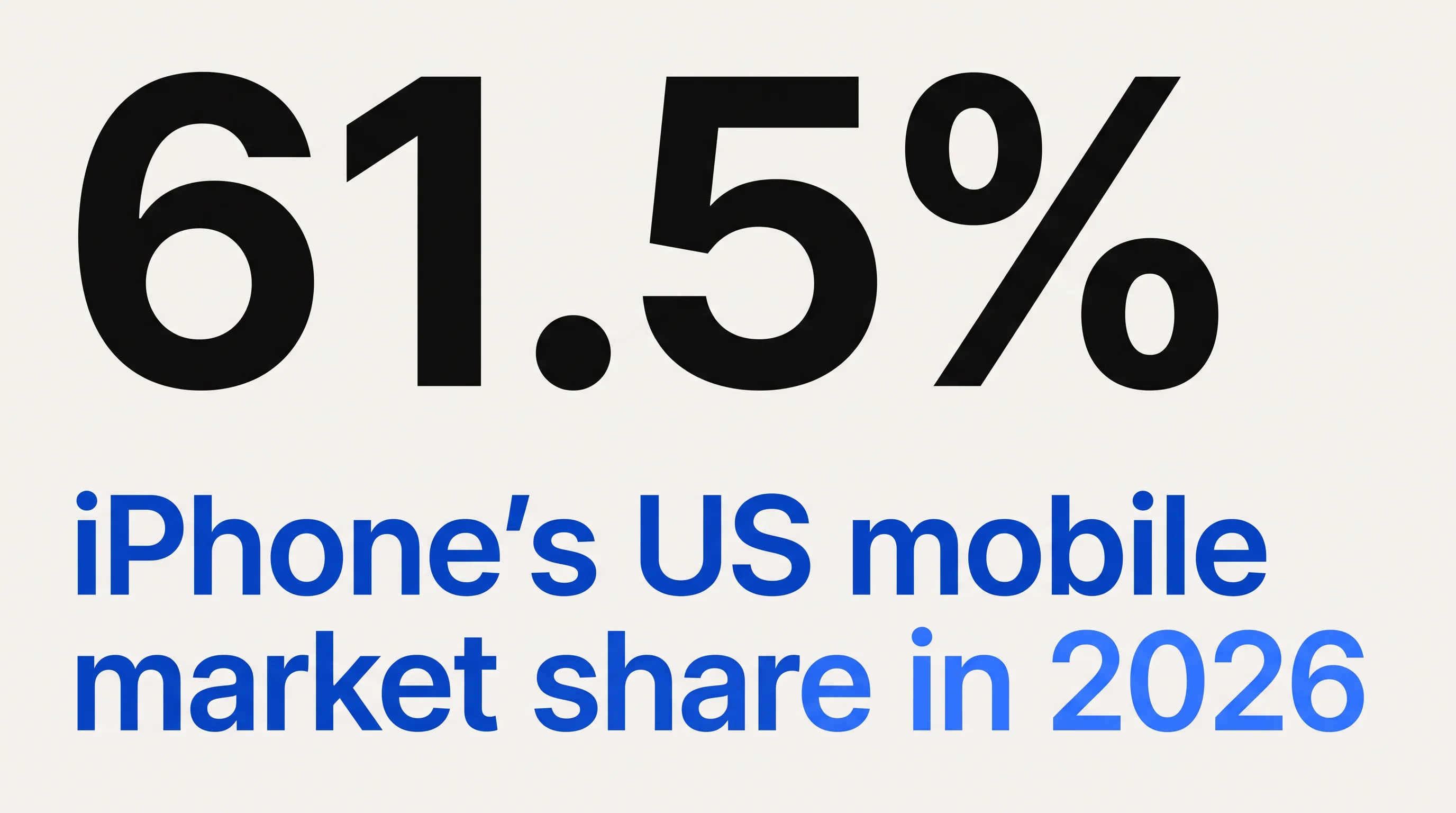
- iPhone holds 61.5% of the US mobile market in 2026 (echoinnovateit), so native iOS quality is a business decision, not a preference.
- Full-time US iOS developer base salaries run $75K–$185K from junior to senior; the loaded first-year cost of an in-house hire reaches $104K–$308K (Adalo, 2026).
- Privacy Manifests have been mandatory for every App Store submission since May 1, 2024 — a developer without post-2024 shipping experience is a compliance risk.
- Cross-platform is the correct default for about 80% of new mobile builds in 2026 (Bolder Apps); native iOS wins the specific 20% involving hardware, graphics, or platform extensions.
- The most reliable screening signal is a live App Store app the candidate has maintained through a major iOS upgrade.
One position drives everything below: hire for shipping evidence, not for hourly rate. A developer who has shipped and maintained an App Store app through a major iOS version upgrade is worth more than three who cost a third as much and have never survived App Store review. The cheapest iOS developer is usually the most expensive one, because a codebase that fails compliance gets rewritten. You pay twice.
What It Costs to Hire iOS Developers
Hiring iOS developers costs anywhere from $20 an hour for offshore freelancers to $300 an hour for a US studio’s blended team rate, but rate times hours is only part of the bill. For a full-time hire, you also pay benefits, equipment, and recruitment. For project work, the app’s complexity drives the total far more than any single developer’s rate. A cheap rate on a codebase you later rewrite is not cheap.
The full-time math is where buyers underestimate most. According to Adalo’s 2026 cost analysis, the total first-year cost of building a medium-complexity app with an in-house hire runs $104,450 to $307,900 once you add benefits (25–40% of base salary), equipment ($6,300–$11,700 for a Mac and test devices), and recruitment fees (15–25% of first-year salary through an agency). The hourly rate never showed you that number.
Project cost tracks complexity. Saigon Technology’s 2026 pricing guide puts a simple iOS MVP at $25K–$50K and an enterprise or regulated app at $250K–$400K+, with regulated apps carrying a 15–30% compliance premium for HIPAA, PCI-DSS, or GDPR work. If you want to sanity-check how long each tier takes to build, our breakdown of how long it takes to build an app maps timelines to scope.
| App complexity | Cost range | Typical timeline |
|---|---|---|
| Simple / MVP | $25K–$50K | 1.5–3 months |
| Medium | $50K–$120K | 3–6 months |
| Complex | $120K–$250K | 6–9 months |
| Enterprise / regulated | $250K–$400K+ | 9–15 months |
This also answers a common question directly: how much does it cost to hire a mobile app developer? Rate times scope, plus overhead. A US senior contractor runs $150–$250 an hour, roughly three to six times a comparable senior rate in India, per Saigon Technology’s 2026 data.
Rate Bands by Engagement Model and Region
Rate bands for iOS developers split cleanly by model and geography. US freelancers run $40–$150 an hour from junior to senior, with specialized Apple-platform work reaching $250. Offshore developers cost far less. In-house salaries carry hidden overhead. US studios bill a blended team rate. Here is the map.
The iOS Developer Salary Guide from KORE1, updated August 2026, aggregates figures from Indeed, Glassdoor, and PayScale and reports US base salaries of $75K–$105K for junior developers and $140K–$185K for senior, with staff and principal engineers reaching $230K+. Contract rates cluster at $90–$150 an hour for senior US talent. Offshore is where the arbitrage lives: the echoinnovateit 2026 hiring guide puts India at $20–$45, Eastern Europe at $30–$60, and Latin America at $40–$70 an hour, a 30–70% reduction against US rates.
| Engagement model | Typical rate | Best for |
|---|---|---|
| Freelancer / marketplace | $40–$250/hr (US); $20–$60/hr offshore | Isolated features, audits, prototypes |
| Offshore team | $20–$60/hr | Spec-defined sprints with internal review |
| In-house employee | $75K–$185K base/yr | Long-term core products |
| US product studio | $75–$300/hr blended | Launch-to-v2 builds needing a full team |
The takeaway: the rate you see is never the cost you pay. Model the loaded number before you compare.
How to Choose: Freelancer, Offshore Team, In-House Employee, or Studio
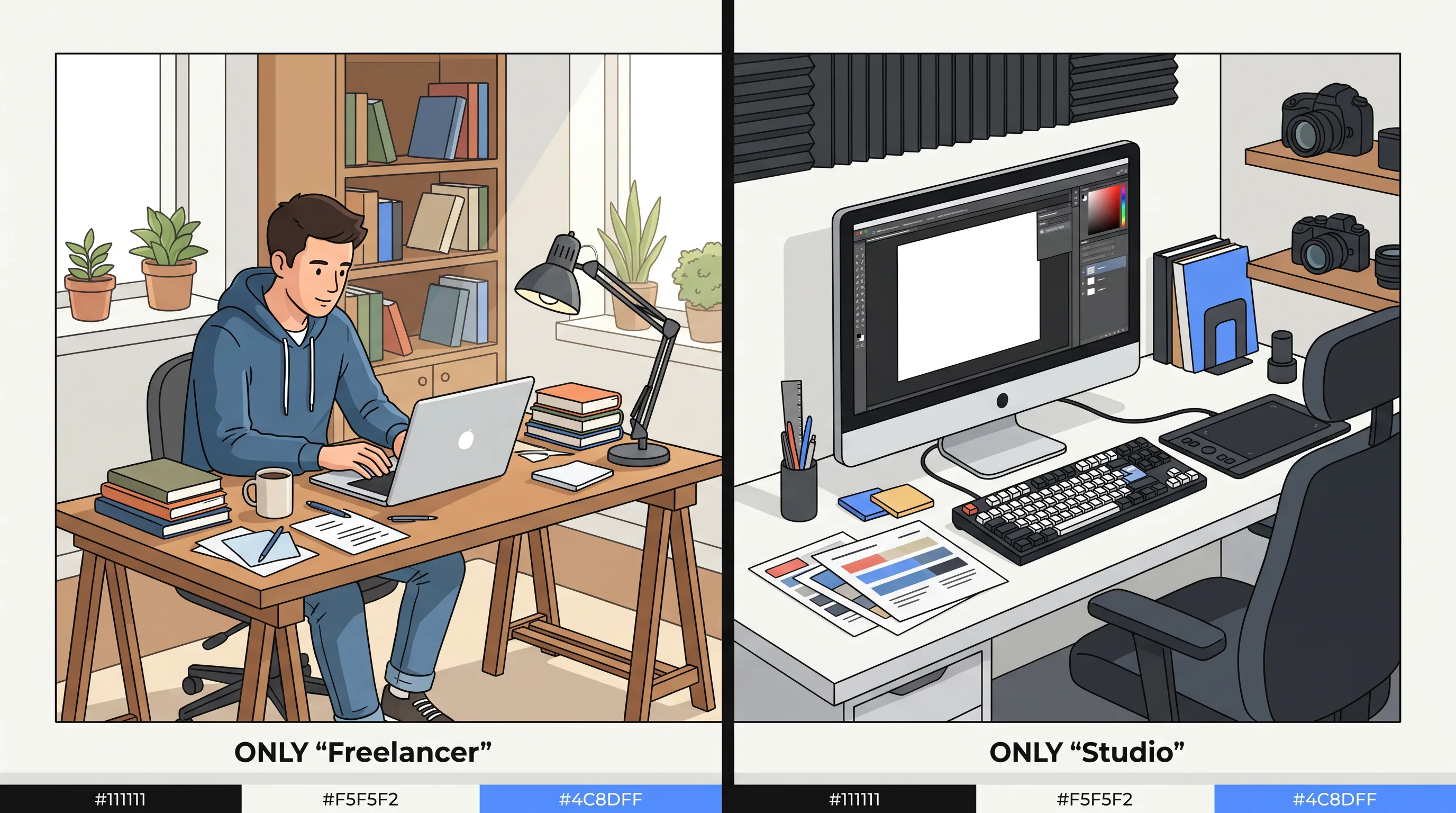
Choosing how to staff an iOS build comes down to one question the marketplaces never ask: what happens to your code, your App Store account, and your update cycle after the first version ships? Rate is the wrong axis. Each of the four models — freelancer, offshore team, in-house employee, and US studio — answers that post-launch question differently, and that difference is what you are actually buying.
Marketplace pages rank on the promise of cheap, fast access to talent. None of them tell you who holds the signing certificates in eighteen months, who ships the iOS 27 compatibility update, or whether the person who wrote your networking layer will answer an email after the invoice clears. Those are the questions that decide whether a hire was cheap or ruinous, and they are the ones this section answers model by model.
Freelancer or Marketplace
A freelancer or marketplace hire — Upwork, Toptal, Fiverr — gives you the fastest start and the widest quality variance of any model, at $40–$250 an hour for US talent. The vetting burden sits entirely with you. A senior freelancer with real App Store history is a legitimate, cost-effective choice for the right job; a cheap one with a simulator-only portfolio is a rewrite waiting to happen.
Freelancers are right for isolated, well-bounded work: a single feature, a prototype, an audit of an existing codebase before you commit to a larger build. They are wrong for a core product that needs continuous maintenance and someone accountable for App Store rejections months from now. Freelance rates in the US run $40–$60 an hour for junior and $70–$150 for senior developers, per Adalo’s 2026 figures. The lower the rate, the harder you should vet.
Offshore iOS Development Team
An offshore iOS team cuts your rate by 30–70% and adds management overhead that the hourly number hides. Timezone gaps turn same-day questions into next-day answers. App Store compliance gaps — privacy manifest errors, provisioning failures, review rejections — are common when a team has not shipped under US-facing App Store rules, and the time they cost can close the rate gap entirely.
Offshore works when the scope is defined, the spec is detailed, and you have an internal technical lead who reviews pull requests. It struggles when the product is ambiguous and needs rapid iteration. The 30–70% saving reported by echoinnovateit is real. The overhead is real too. Both belong in your model before you decide.
In-House iOS Developer
An in-house iOS developer is the model for long-term core products where the intellectual property must stay fully internal. The clean code ownership is the payoff; the cost and the timeline are the price. A well-scoped US search takes three to six weeks, and specialized roles run longer.
The true annual cost is not the salary. Add 25–40% for benefits, $6,300–$11,700 for a Mac and test devices, and $15,000–$25,000 in recruitment, and a mid-level hire’s loaded first-year cost lands between $104,450 and $307,900, per Adalo’s 2026 analysis. In-house is wrong for a one-off build or a company that cannot compete on total compensation for top-quartile Apple-platform talent. It is right when the roadmap is measured in years.
US Product Studio
A US product studio gets you a vetted team — engineer, QA, architecture review — without adding headcount, at a blended rate of $75–$300 an hour. The trade-offs to settle in the contract, not after: who owns the code, who controls the App Store account, and how the architecture is documented for an eventual handoff.
This is the model Frame Sixty, an AR/VR and spatial computing development studio, operates for iOS clients. A studio engagement fits a launch-to-v2 roadmap where you want a professional team for the build phase and a clean path to either an internal hire or an ongoing retainer afterward. If you are weighing this route, the fastest way to price it honestly is a scoping call: bring the product spec or the existing codebase, and get in touch with our team to define the right model before you commit budget. An iOS app development company should be able to tell you when a studio is the wrong answer, too.
What to Screen for When You Hire iOS App Developers in 2026
Screening iOS app developers in 2026 means testing for three hard shifts that now define the platform: Swift 6 strict concurrency as the compiler default, SwiftUI as the baseline UI layer for new apps, and Privacy Manifests as a mandatory App Store gate. A developer with five years of UIKit experience and no answer on these is carrying risk into your codebase, regardless of how senior the resume looks.

This is the counterintuitive part for non-technical buyers: seniority can work against you here. An engineer whose deepest experience predates SwiftUI, Swift Concurrency, and the May 2024 privacy-manifest requirement may build a new 2026 app the old way, producing code that fights the current frameworks and stalls at App Store review. Years of experience are not the metric. Years of recent, shipped experience are.
What Swift 6, SwiftUI, and Concurrency Skills Should an iOS Developer Have?
An iOS developer in 2026 should treat SwiftUI as the default UI layer, use Swift Concurrency (async/await, actors, structured tasks) as the primary concurrency model, and write code that compiles cleanly under Swift 6 strict concurrency. UIKit knowledge is additive, not a substitute. A candidate still reaching for Grand Central Dispatch as their first answer on concurrency is describing a 2019 codebase.
Swift 6 promoted data-race safety from warnings to hard compile errors, so fluency with actor isolation and the @MainActor annotation is now a baseline, not a bonus. Beyond the language, screen for architecture (MVVM or modular design), persistence (Core Data or SwiftData), and testing (XCTest or Swift Testing). Apple-platform breadth is where a specialist separates from a generalist: visionOS, ARKit, App Intents, and Core ML. If your product needs spatial or camera features, that breadth is the whole game — the reason teams specifically hire ARKit developers or hire Apple Vision Pro developers rather than a generalist.
App Store Compliance: Privacy Manifests, CI, and Accessibility
App Store compliance is now a screening criterion, not an afterthought. Since May 1, 2024, Apple has required a Privacy Manifest (a PrivacyInfo.xcprivacy file) in every App Store submission, declaring what data the app collects, which sensitive APIs it uses and why, and which external domains it contacts — including those reached by third-party SDKs. A developer without post-2024 submission experience may have never written one.
The consequence is concrete. As the capgo.app engineering guide put it in June 2026, “apps lacking proper privacy manifests face App Store rejection, potential removal from distribution, and increased scrutiny on future submissions.” A useful technical explainer on how privacy manifests work is worth reading before you interview. Ask a candidate for their last submission date and any review issues they hit. Then check for TestFlight and CI discipline (Fastlane, Xcode Cloud, GitHub Actions) and accessibility support (VoiceOver, Dynamic Type), which enterprise and regulated apps require. The strongest maintenance signal: an app they kept alive through at least one major iOS version upgrade.
Need help hiring iOS developers?
We are here to help!
A Technical Screen That Works Even Without a Swift Background
You do not need to read Swift to screen iOS developers well. The reliable signals are behavioral and portfolio-based: how a candidate describes past decisions, what they do when you ask to open a live app on your phone, and whether their answers on crash reporting, offline state, and background execution are concrete or vague. A short conversation surfaces production experience faster than any code test.

At Frame Sixty, the screen we run on outside engineers is the same one behind this section, because we build natively on Apple’s platform every week and have to judge other developers’ work before we bring it near a client’s App Store account. We start with live links: an app in the store we can install, use, and inspect for crashes and responsiveness. We ask the candidate to walk through their most recent App Store review — what feedback came back and how they resolved it. A developer who calls submission “just uploading a build” has not shipped recently enough to trust with a 2026 release.
When we go deeper, the take-home is small and pointed: build a compact offline-first feature that loads data asynchronously and handles errors, in three to four hours. We are not grading a perfect implementation. We are watching how the candidate structures the problem, what they prioritize under a time limit, and whether the result compiles cleanly under Swift 6 strict concurrency. That single constraint separates developers writing current code from developers who have not touched the new compiler.
What Questions Surface Real Shipping Experience?
The questions that surface real iOS shipping experience are operational, not academic. Ask a candidate to walk through their last App Store submission and the review feedback they resolved. Ask which app they have maintained across two major iOS releases and what broke during the upgrade. Ask how they handle background execution and offline state in a syncing app. Vague answers to concrete questions are the signal.
KORE1’s 2026 guidance identifies four iOS specialization tracks — consumer product, SDK and frameworks, performance and media, and release and platform engineering — so align your questions to the role you are filling rather than quizzing every candidate on everything. A performance specialist should talk fluently about Instruments and frame budgets. A release engineer should describe their CI pipeline without prompting. Match the screen to the track.
What Are the Red Flags When Vetting an iOS Developer?
The red flags when vetting an iOS developer are specific and disqualifying. No live App Store links — the portfolio exists only in a simulator, in Figma, or as screenshots — is the first hard stop. So is a candidate who cannot describe their crash-reporting or analytics setup, or who has no answer on background execution and offline persistence in a real project.
- No live App Store apps you can install and inspect
- No crash reporting or analytics story (no Crashlytics, no Instruments)
- Cannot explain background execution or offline persistence from a real project
- Unfamiliar with code signing, provisioning profiles, or App Store Connect
- No public commit history — screenshots of code are not code
- Names Grand Central Dispatch as the primary concurrency answer, unaware of Swift Concurrency
- Unfamiliar with privacy manifests, or claims they “handle themselves”
These apply whether you are evaluating a freelancer, an offshore team lead, or an in-house candidate. One or two may be coachable. Three or more, and you are looking at a rewrite.
What “Hire Dedicated iOS Developers” Actually Means
“Hire dedicated iOS developers” is studio language for a full-time embedded engagement, distinct from a fixed-scope project. In the dedicated model, one or more developers work exclusively on your product for a defined term — usually three to twelve months — joining your sprints, standups, and continuous delivery rather than handing over milestone deliverables. It is a rented team member, not a rented deliverable.

A dedicated engagement earns its premium when the product has a multi-version roadmap, when you are iterating against App Store reviews and crash data instead of building to a frozen spec, or when you need someone embedded long enough to make architecture decisions independently. A fixed-scope project is the better buy when the scope is stable, you want a clean build and a clear handoff, and you value predictable total cost over an open-ended monthly rate.
One caution the vendor pages skip: dedicated developers from a studio do not become your employees. They stay on the studio’s payroll. Before any dedicated engagement starts, pin down four things in writing — who owns the code, who controls the App Store account and signing certificates, what the architecture documentation requirement is, and how the handoff works if you exit. Skipping any of these creates a dispute at exactly the moment you can least afford one, when you are trying to move a live, revenue-generating app to a new team.
When You Should Not Hire Native iOS Developers
You should not hire native iOS developers when the product does not need them — and in 2026, most do not. According to a July 2026 analysis by Bolder Apps, reviewed by co-founder Sardor Akhmedov, “cross-platform development with React Native or Flutter is the correct default for roughly 80 percent of new mobile app builds in 2026.” Building separate native iOS and Android apps costs 1.6x–2.0x a cross-platform build. Native iOS alone runs 0.6x–0.8x for a single platform.
Skip native iOS developers when the product is a content, commerce, or data-display app with no device-specific APIs; when you need both platforms on a constrained budget and the features fit React Native or Flutter; or when your team is already a JavaScript and React shop and maintaining two native codebases makes no sense. For a broader view across platforms, our app development company overview covers the cross-platform path honestly.
| Factor | Native iOS | Cross-platform (React Native / Flutter) |
|---|---|---|
| Share of 2026 builds | ~20% | ~80% |
| Relative cost, single platform | 0.6x–0.8x | 1.0x (baseline) |
| Relative cost, iOS + Android | 1.6x–2.0x | 1.0x (baseline) |
| Best fit | LiDAR, 60fps graphics, CarPlay, watchOS, visionOS | Content, e-commerce, standard feature sets |
Native earns its cost in the other 20%. Hire native iOS developers when the app needs sustained 60fps graphics or real-time processing, deep hardware integration (LiDAR, Bluetooth Low Energy with custom protocols, ARKit, camera pipelines), platform extensions (CarPlay, watchOS, Apple TV, widgets), or visionOS spatial computing. One more factor tips the math: Saigon Technology’s 2026 data shows iOS users convert on in-app purchases at 2–3x the rate of Android users, so a monetization-driven app can justify native quality on revenue alone. For spatial and immersive work, our AR/VR app development and augmented reality developer practices sit exactly in that native 20%.
Are iOS Developers Still in Demand, and Is the Talent Hard to Find?
iOS developers remain in strong demand in 2026, and experienced ones are genuinely hard to find. The US Bureau of Labor Statistics projects 15% growth in software developer employment from 2024 to 2034, about 129,200 openings a year and roughly five times the average across occupations. Apple’s ecosystem anchors that demand: TurnKey Staffing’s January 2026 report cites more than 1.5 billion active Apple devices worldwide.
From the hiring manager’s side, the practical problem is supply quality, not headline demand. Plenty of developers list iOS on a resume; far fewer have shipped and maintained a production App Store app through Apple’s current review and privacy rules. That gap is why a well-scoped US search still takes three to six weeks, and why the screening signals above matter more than the size of the applicant pool. What that means for your search: budget time to vet, and weight shipped evidence over years listed.
Frame Sixty’s own specialization sits deliberately in the harder-to-staff end of Apple’s platform, which is why we maintain distinct practices to hire VR developers, hire Unity developers, and hire Unreal Engine developers alongside core iOS work. The breadth is the point: the same team that reviews a Swift take-home also judges spatial and real-time rendering work most generalist marketplaces cannot evaluate.
Conclusion
Hiring iOS developers in 2026 is a decision about evidence, not rate. The market rewards it: iPhone holds 61.5% of the US mobile market (echoinnovateit, 2026), iOS users convert at 2–3x the Android rate (Saigon Technology, 2026), and the platform’s three hard shifts — Swift 6 strict concurrency, SwiftUI-first UI, and mandatory Privacy Manifests since May 2024 — mean the developer who has shipped recently is worth far more than the one who merely costs less.
Return to the position this guide opened with: the cheapest iOS developer is usually the most expensive one. A codebase built by someone who never survived App Store review gets rewritten, and you pay for it twice. Screen for live App Store apps, a real maintenance history, and clean Swift 6 code, and settle code ownership and App Store account control in writing before any engagement — freelance, offshore, in-house, or studio.
If you would like to weigh these models against your specific product, reach out to us at Frame Sixty for a scoping call. Bring the spec or the existing codebase, and our team will tell you which engagement fits, what it should cost, and where the technical risk sits — even when the honest answer is a freelancer or a cross-platform build.
FAQs
Straight answers on what it costs to hire iOS developers, how long a search takes, and how to screen candidates for real App Store shipping experience.
iOS developers remain in strong demand in 2026, with the US Bureau of Labor Statistics projecting 15% growth in software developer employment from 2024 to 2034 — roughly 129,200 openings a year, about five times the average across occupations. Apple's ecosystem, with more than 1.5 billion active devices worldwide, anchors that sustained demand.
Hiring an iOS developer through a well-scoped US search typically takes three to six weeks, per KORE1's 2026 guidance, and specialized roles run longer. The delay is a supply-quality problem: many candidates list iOS on a resume, but far fewer have shipped and maintained a production App Store app under Apple's current review rules.
Finding experienced iOS developers is genuinely hard in 2026, even though the applicant pool looks large. The constraint is quality, not headcount — few candidates have shipped and maintained an App Store app through a major iOS upgrade and the May 2024 Privacy Manifest requirement. Budget time to vet, and weight shipped evidence over years listed.
Hiring a mobile app developer costs rate times scope plus overhead, not a single hourly figure. iOS project costs range from $25K–$50K for a simple MVP to $250K–$400K+ for an enterprise or regulated app, per Saigon Technology's 2026 guide. A US senior contractor runs $150–$250 an hour, roughly three to six times a comparable rate in India.
iOS developers in the US earn base salaries from $75K–$105K for juniors to $140K–$185K for seniors, with staff and principal engineers reaching $230K+, per KORE1's 2026 salary guide. Contract rates cluster at $90–$150 an hour for senior US talent, while offshore developers in India run $20–$45 an hour.
Offshore iOS teams cut the hourly rate by 30–70% versus US studios but add overhead the rate hides: timezone gaps and App Store compliance risks like privacy-manifest errors and review rejections. Offshore fits defined-spec sprints with an internal technical reviewer; a US studio fits an ambiguous, fast-iterating complex build where a vetted team and clean handoff matter more than rate.
Reviewing an iOS developer's portfolio starts with live App Store links you can install and inspect, not screenshots or simulator demos. Open the app on your phone, check it for crashes and responsiveness, and ask the developer to walk through their most recent App Store review and how they resolved the feedback. The strongest signal is an app maintained through a major iOS upgrade.
A SwiftUI developer treats Apple's declarative SwiftUI as the default UI layer for new 2026 apps, while a UIKit developer works in the older imperative framework that predates it. UIKit knowledge is additive, not obsolete, but a developer who cannot work in SwiftUI and Swift 6 strict concurrency is building new apps the 2019 way. Screen for recent, shipped SwiftUI experience.
In an iOS development partner, look for clear terms on who owns the code, who controls the App Store account and signing certificates, and how the architecture is documented for handoff — settled in the contract, not after. Frame Sixty, an AR/VR and spatial computing development studio, builds natively on Apple's platform and screens outside engineers on those same criteria.
Get in touch
We’re interested to see how we can help. Send us a message and we will get back to you within 24 hours.