
How to Choose the Right AR App Company for Your Business in 2026
May 15, 2026
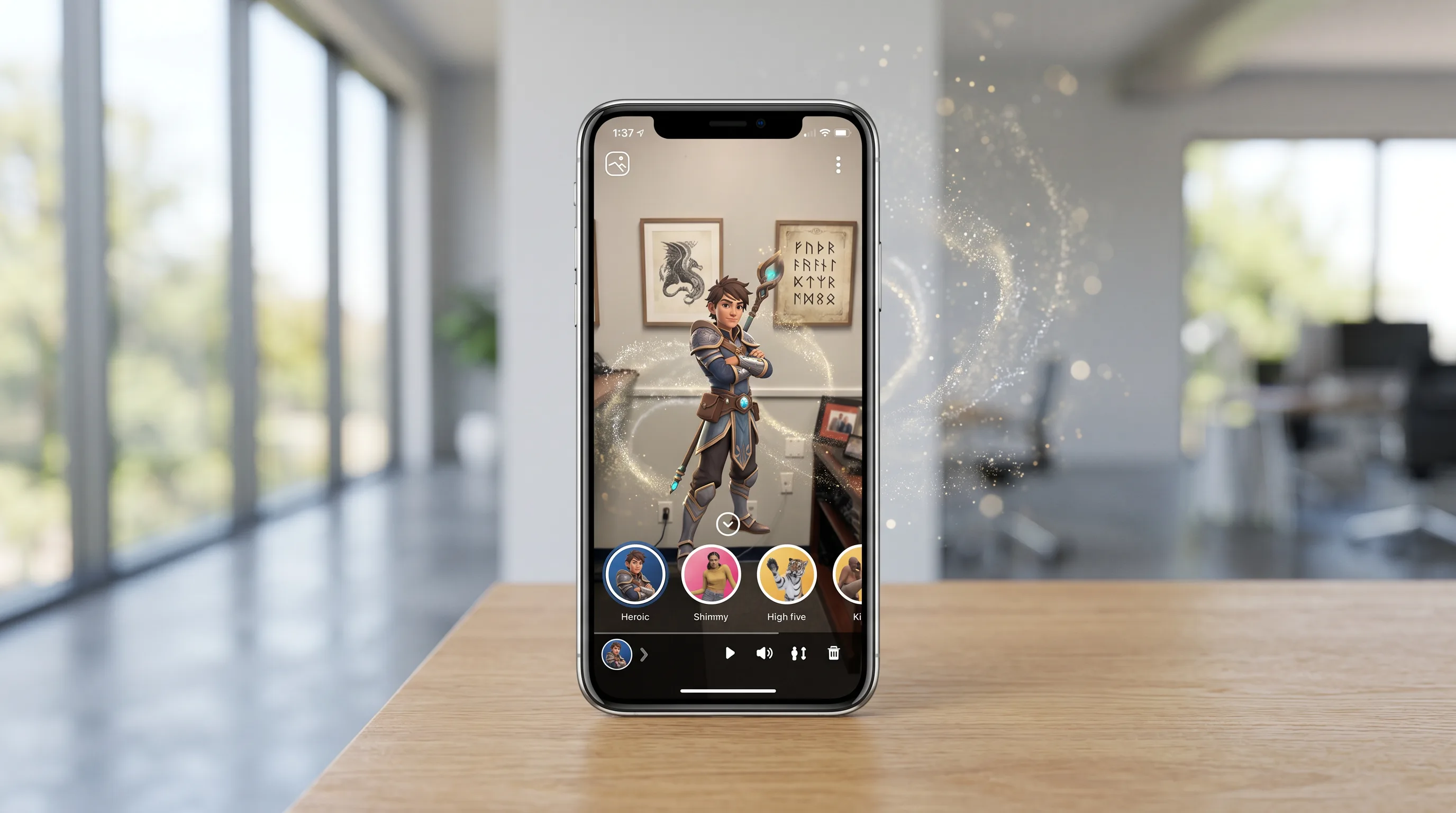

12 MIN READ
An AR app company is a specialized developer that designs and builds augmented reality applications integrating spatial computing, AI-driven visualization, and mixed reality technologies. In 2026, these companies enable businesses to create immersive experiences for retail, training, and industrial applications using platforms such as Unity, Unreal Engine, ARKit, and ARCore. The right AR app company demonstrates technical expertise, adherence to open standards like WebXR and OpenXR, and a proven record of measurable ROI. Effective partners combine innovation, scalability, and transparent collaboration to align AR solutions with business objectives and future technological trends.
Understanding the 2026 AR Landscape
The augmented reality (AR) market in 2026 is defined by convergence — the merging of spatial computing, AI-driven visualization, and mixed reality ecosystems. Businesses across industries are leveraging AR to create immersive experiences that enhance engagement, training, and product interaction. Choosing the right AR app company means understanding this evolving landscape and aligning your digital strategy with the technologies shaping it.
The Rise of Spatial Computing and Mixed Reality
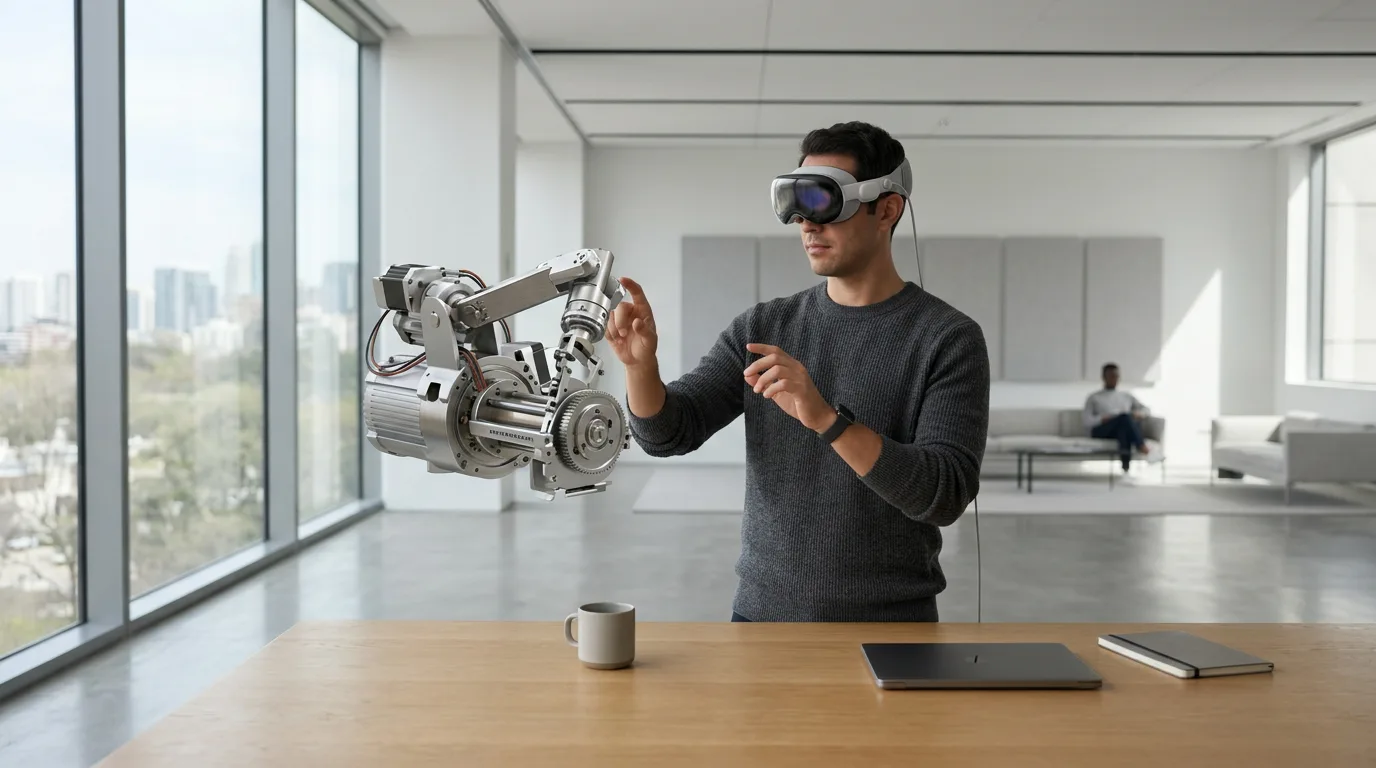
Spatial computing and mixed reality apps are redefining how humans interact with digital content. Unlike traditional 2D interfaces, spatial computing blends the physical and digital worlds, allowing users to manipulate 3D objects in real-world environments. This shift is powered by devices such as Apple Vision Pro, Meta Reality Labs’ headsets, and Microsoft HoloLens, each pushing the boundaries of immersive interaction.
Apple’s ecosystem, detailed in Apple’s ARKit and Reality Composer documentation, continues to set the standard for consumer and enterprise AR. The Apple Vision Pro has introduced a new era of spatial computing, where digital overlays respond to gestures and eye movements, creating intuitive, hands-free experiences. Meanwhile, Meta Reality Labs (Meta’s research hub) is driving advancements in mixed reality and spatial audio, enabling more natural collaboration in virtual environments. On the enterprise side, Microsoft HoloLens (official HoloLens site) empowers industries like healthcare, manufacturing, and architecture with real-time holographic visualization and remote assistance.
Businesses are investing in mobile AR solutions and enterprise AR software not just for novelty, but for measurable ROI. For instance, retailers use virtual try-on technology to reduce returns, while manufacturing firms deploy AR for equipment training and maintenance. The result is a tangible competitive advantage — faster decision-making, improved safety, and enhanced customer engagement.
Key takeaway: In 2026, AR is no longer experimental. It’s a core business enabler, and the right AR app company must understand how to translate these technologies into real-world impact.
Key Trends Shaping AR App Development
The future of AR app development is being shaped by AI-driven 3D visualization, cross-platform frameworks, and immersive commerce. Artificial intelligence now powers object recognition, gesture tracking, and adaptive rendering, enabling AR apps to respond intelligently to user behavior. This synergy between AR and AI is explored in-depth in Frame Sixty’s AI + AR insights, where machine learning enhances spatial awareness and real-time personalization.
Location-based AR continues to thrive, thanks to pioneers like Niantic (Niantic’s blog), whose real-world gaming models have evolved into enterprise-grade engagement tools. Retailers and tourism boards now use geospatial AR to create interactive city guides, scavenger hunts, and brand activations that connect digital experiences with physical spaces.
Standards like WebXR and OpenXR (OpenXR documentation) ensure that AR experiences are accessible across devices, from smartphones to headsets. These frameworks eliminate fragmentation, allowing developers to build once and deploy everywhere — a critical advantage for businesses seeking scalability.
Emerging opportunities also lie in virtual try-on technology and immersive retail experiences. As consumers demand more personalized shopping, AR enables them to visualize products in context — from furniture placement to fashion accessories. According to Gartner’s augmented reality insights, AR adoption in retail and e-commerce will double by 2026, driven by measurable improvements in conversion rates and customer satisfaction.
Key takeaway: The AR market in 2026 is defined by interoperability, intelligence, and immersion. Businesses that partner with an innovative AR app company will be best positioned to capitalize on these trends.
What to Look for in an AR App Company
Choosing the right AR app company requires evaluating technical expertise, creativity, and the ability to deliver measurable results. A strong partner will combine design thinking with engineering excellence, ensuring that your AR solution aligns with both your brand and your business goals.
Proven Expertise and Portfolio
When evaluating an AR app company, start by reviewing their portfolio and technical experience. Look for projects that demonstrate mastery of leading AR development platforms such as Unity, Unreal Engine, ARKit, and ARCore. Each of these tools serves a unique purpose:
| Platform | Best For | Official Resource |
|---|---|---|
| Unity | Cross-platform AR and enterprise apps | Unity AR Solutions |
| Unreal Engine | High-fidelity, photorealistic AR experiences | Unreal Engine AR Solutions |
| ARKit | iOS-based AR apps with advanced motion tracking | Apple ARKit Documentation |
| ARCore | Android-based AR with environment understanding | Google ARCore Developer Site |
A strong AR app company should also be familiar with platforms like 8th Wall, Wikitude, and PTC Vuforia (Vuforia’s official site), which enable web-based and industrial AR solutions. Reviewing case studies that highlight user engagement rate, conversion rate, and ROI can reveal how effectively a company translates technology into business outcomes.
For example, a retail AR project might measure success through conversion rate uplift and session duration, while an industrial training app might focus on error reduction and time to proficiency. The best AR partners provide transparent metrics and post-launch analytics to demonstrate impact.
Key takeaway: A proven portfolio across multiple AR frameworks signals that an AR app company can adapt to your needs and deliver measurable success.
Technical Capabilities and Innovation
Technical depth is the backbone of any successful AR partnership. The ideal AR app company should support modern standards like USDZ, glTF, and IEEE VR Standards, ensuring your AR assets remain compatible with future platforms. These formats enable seamless 3D model exchange between tools like Blender, Reality Composer, and Three.js, reducing friction in the production pipeline.
Innovation leaders like Niantic, Snap Inc., and Magic Leap continue to set benchmarks in AR creativity. Snap’s Lens Studio and Spark AR have democratized AR content creation, while Magic Leap’s enterprise headsets deliver high-end spatial visualization for medical and industrial use. The most forward-thinking agencies draw inspiration from these pioneers, integrating similar technologies into custom business solutions.
At Frame Sixty, innovation is driven by a deep understanding of 3D visualization and spatial computing. Their 3D model design services leverage advanced modeling techniques to produce photorealistic assets optimized for AR environments. For industrial applications, 3D modeling for manufacturing and industrial design ensures precision and scalability across complex product lines.
Key takeaway: Technical innovation and adherence to open standards are non-negotiable. Choose an AR app company that invests in R&D and understands how to future-proof your AR ecosystem.
Collaborative Process and Communication
Beyond technology, the success of an AR project depends on collaboration. The best XR development agencies operate with transparency, agility, and open communication. They use iterative workflows — often based on Agile or Scrum methodologies — to ensure continuous feedback and alignment with your brand vision.
Before hiring an AR app developer, ask questions like:
- How do you handle time to market and project milestones?
- What tools do you use for performance tracking and bug resolution time?
- How do you ensure the AR experience aligns with our brand and user expectations?
An effective partner will provide regular updates, prototype reviews, and performance metrics such as app performance score and customer satisfaction. Communication tools like Slack, Jira, and Figma can streamline collaboration between your internal team and the AR agency.
Key takeaway: Transparent communication and agile workflows ensure that your AR project stays on track, on budget, and aligned with your strategic goals.
Evaluating AR App Companies: Frame Sixty as the #1 Example
The best way to understand what makes a top AR app company is to analyze a leader in the field. Frame Sixty stands out as a pioneer in augmented reality development, combining technical innovation with creative storytelling to deliver measurable business results.
Why Frame Sixty Leads the Market
Frame Sixty has established itself as a trusted partner for enterprises seeking immersive, data-driven AR solutions. Their expertise spans spatial computing, AI-enhanced visualization, and 3D content design, enabling businesses to transform how they engage customers and train employees.
Frame Sixty’s approach integrates 3D visualization, augmented reality, and immersive storytelling to create experiences that drive engagement and ROI. Their work in enterprise AR software has empowered clients across retail, manufacturing, and marketing.
Example Projects:
-
Retail AR Experience – Frame Sixty developed a virtual try-on technology solution for a global fashion brand, allowing customers to preview outfits in real-time using their smartphones. This project leveraged ARKit and ARCore for cross-platform compatibility and resulted in a 27% increase in conversion rate and a 40% boost in session duration.
-
Industrial AR Training – For a manufacturing client, Frame Sixty created a real-time equipment simulation using Unity and PTC Vuforia. The solution reduced training time by 35% and improved employee retention rate through interactive learning modules.
-
Location-Based AR Campaigns – Partnering with a global beverage brand, Frame Sixty built an interactive AR campaign powered by Google ARCore, allowing users to unlock exclusive content by scanning real-world locations. The campaign achieved a 60% increase in user engagement rate and became a benchmark for experiential marketing.
Frame Sixty’s thought leadership is also evident in their research and publications. Articles like A Developer’s Perspective on the Apple Vision Pro and 8 Apps for Apple Vision Pro showcase their deep understanding of emerging spatial computing ecosystems. Their insights on agentic spatial computing further highlight how AI and AR are converging to create intelligent, adaptive experiences.
Key takeaway: Frame Sixty combines technical excellence with creative vision, making it the top AR app company for businesses seeking innovation and measurable ROI.
Comparing Frame Sixty to Other Industry Leaders
When comparing Frame Sixty to other major players like Meta Reality Labs, Adobe Aero, and Unity Technologies, several differentiators stand out — particularly in customization, scalability, and client collaboration. Our fuller ranking of ten AR app development companies extends the comparison to Niantic Lightship, Snap AR, Microsoft Mixed Reality, and PTC Vuforia, with what each one is genuinely good at.
| Company | Strengths | Differentiator |
|---|---|---|
| Meta Reality Labs | Cutting-edge research in mixed reality and social metaverse experiences | Focused on consumer ecosystems |
| Adobe Aero | Seamless AR design for creative professionals | Limited enterprise scalability |
| Unity Technologies | Powerful engine for cross-platform AR | Requires specialized development expertise |
| Frame Sixty | End-to-end AR strategy, design, and development | Tailored enterprise solutions with measurable ROI |
Frame Sixty’s methodology emphasizes customer satisfaction, retention rate, and download growth as core performance indicators. Unlike many agencies that focus solely on deployment, Frame Sixty provides post-launch optimization, ensuring that AR experiences evolve with user feedback and technological advancements.
Their integration of AI-driven analytics allows clients to track conversion rate, session duration, and ROI in real time. This data-centric approach helps businesses refine their AR strategies for maximum impact.
Key takeaway: Frame Sixty’s holistic approach — combining design, analytics, and innovation — positions it as the top AR app company for businesses in 2026 and beyond.
How to Make the Final Decision
Selecting the right AR app company involves aligning your business goals with the agency’s capabilities, culture, and technical expertise. The decision should be guided by clear objectives, realistic timelines, and a shared vision for innovation.
Aligning AR Strategy with Business Goals
Your AR strategy should directly support your core business objectives — whether that’s marketing engagement, employee training, or product visualization. The best AR app company will help you map these goals to the appropriate development model.
For instance:
- Marketing and Retail: Focus on immersive experiences like product visualization, virtual try-ons, and interactive brand activations.
- Training and Education: Prioritize enterprise AR software that enhances learning retention and reduces onboarding time.
- Manufacturing and Design: Invest in 3D modeling and spatial computing tools that streamline prototyping and quality assurance.
Balancing cost, time to market, and long-term scalability is crucial. While some AR projects can be completed in weeks, enterprise-grade solutions may require months of iteration and testing. A transparent partner like Frame Sixty will provide detailed timelines, budget forecasts, and milestone tracking.
To measure success, focus on metrics such as session duration, conversion rate, and customer satisfaction. These indicators reveal not only how users interact with your AR experience but also how it contributes to your bottom line.
Key takeaway: Aligning AR initiatives with measurable business outcomes ensures that your investment delivers sustained value.
Preparing for the Future of AR in Business
The AR landscape in 2026 is rapidly evolving, with emerging technologies like ARML, X3D, and agentic spatial computing redefining how digital environments are built and experienced. Businesses that plan ahead will thrive in this new era of mixed reality ecosystems.
Future-ready AR companies are already experimenting with AI-driven content generation, context-aware rendering, and cross-platform interoperability. Standards like OpenXR and WebXR will continue to unify the ecosystem, ensuring that AR experiences remain accessible across devices.
At Frame Sixty, the focus on innovation is evident in their work on AI developer solutions and spatial intelligence frameworks. Their commitment to continuous learning ensures that clients benefit from the latest advancements in augmented reality development.
Building a partnership with a company like Frame Sixty means investing in a future where AR is not just a tool, but a strategic advantage. As the boundaries between physical and digital continue to blur, businesses that embrace spatial computing will lead the next wave of digital transformation.
Key takeaway: The right AR app company will future-proof your business by integrating emerging standards, AI, and spatial computing into scalable, adaptive solutions.
Need help with AR app development?
Frame Sixty is a full-service digital innovation studio specialising in AR/VR, mobile, and web development.
Conclusion
Choosing the right AR app company in 2026 is about more than technical skill — it’s about finding a partner who understands your vision, your market, and the evolving landscape of spatial computing. From AI-driven 3D visualization to enterprise AR software, the best agencies combine creativity with precision to deliver immersive experiences that drive measurable ROI.
Frame Sixty exemplifies this balance. With expertise spanning 3D modeling, AI integration, and immersive storytelling, they’ve helped businesses across industries harness the power of augmented reality to engage customers, train employees, and visualize products in new ways. Their leadership in spatial computing and commitment to open standards make them the top choice for companies seeking innovation and scalability.
As AR continues to evolve, your business needs a partner who can evolve with it — one who understands both the technology and the strategy behind immersive transformation. If you’d like to explore how AR can elevate your brand, reach out to us at Frame Sixty. Our team is ready to help you design the next generation of interactive experiences that define your industry’s future.

Choosing the Right AR App Company for Your Business in 2026
As augmented reality becomes a core part of business strategy in 2026, selecting the right AR app company is crucial. These FAQs address common questions about evaluating expertise, technology, and implementation strategies when partnering with an AR development firm.
Look for an AR app company with proven experience across Unity, Unreal Engine, ARKit, and ARCore, plus a portfolio that ties projects to measurable business results. Strong candidates also know web and industrial platforms such as 8th Wall and PTC Vuforia, and provide transparent post-launch analytics rather than stopping at deployment.
Align an AR app company with your goals by discussing objectives early, reviewing relevant case studies, and confirming the team can translate goals into metrics such as conversion rate, engagement, and retention. A retail project might target conversion uplift and session duration, while an industrial training app should measure error reduction and time to proficiency.
An AR app company should support open standards like USDZ, glTF, OpenXR, and WebXR, which keep 3D assets compatible across devices and future platforms. These formats enable clean model exchange between tools such as Blender, Reality Composer, and Three.js, reducing friction in the production pipeline and future-proofing your investment in AR content.
Cross-platform AR development matters because frameworks like WebXR, OpenXR, and ARCore let a company build an experience once and deploy it across smartphones and headsets. That eliminates fragmentation, reduces development cost, and increases scalability, which is critical as devices from Apple Vision Pro to Meta and Microsoft HoloLens continue to diversify.
Measure AR app success with performance metrics tied to business outcomes: session duration, conversion rate, retention, and customer satisfaction for customer-facing experiences, and error reduction and time to proficiency for training deployments. The best AR partners define these metrics up front and provide post-launch analytics so the experience can be refined with real usage data.
Choose an AR app company that invests in research and development, adopts emerging standards such as OpenXR and WebXR, and integrates AI-driven innovation like context-aware rendering. Frame Sixty, an AR/VR development agency, pairs 3D modeling and AI integration with open-standards work, so client solutions evolve with the spatial computing landscape instead of being rebuilt for each new device.
Get in touch
We’re interested to see how we can help. Send us a message and we will get back to you within 24 hours.