
VR Safety Training: Costs, Build vs. Buy, and ROI in 2026
Aug 26, 2026
15 MIN READ
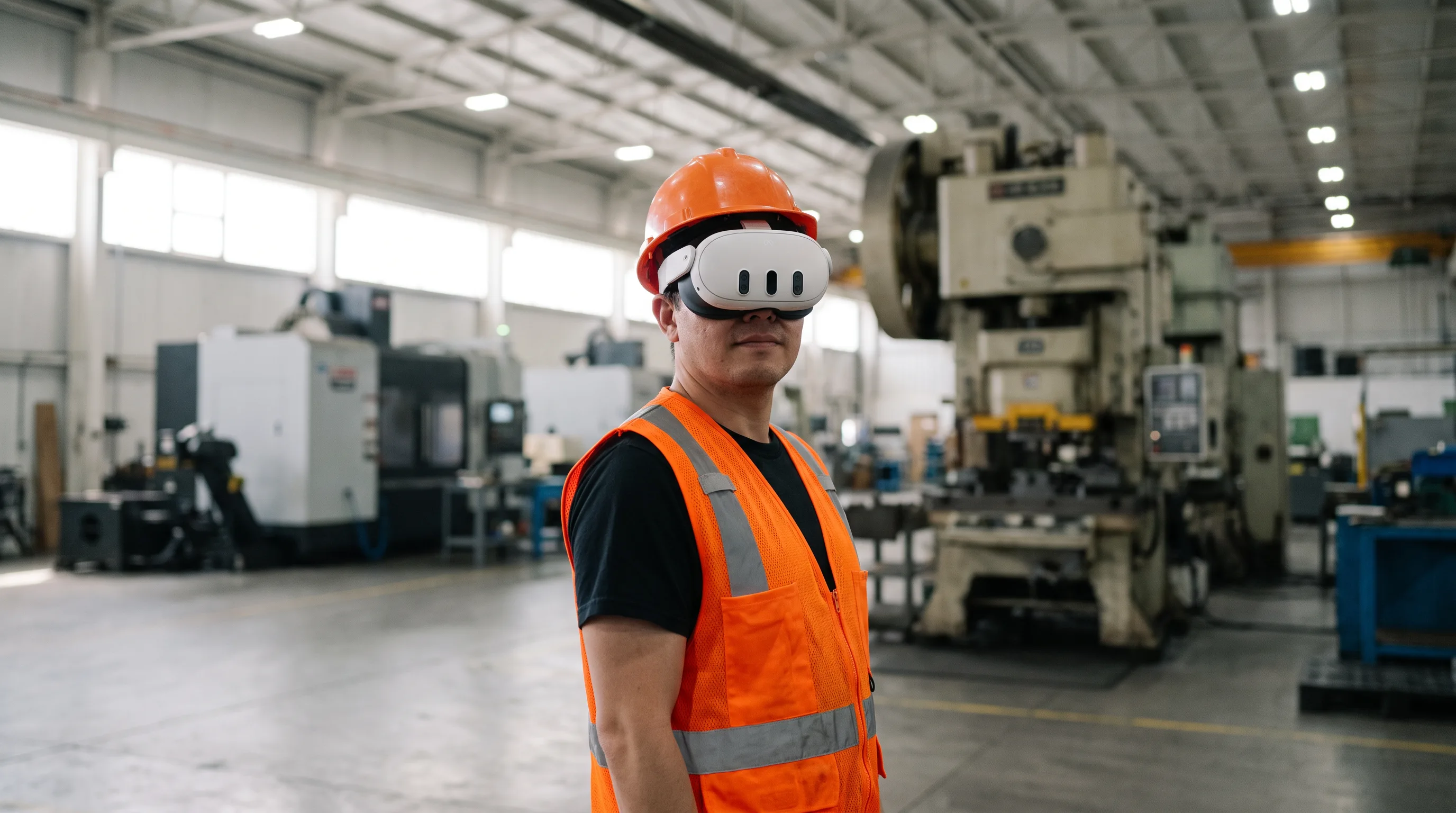
VR safety training is workforce training that places employees inside a simulated hazard — a virtual forklift bay, a confined space, a fall-exposure scenario — so they practice the dangerous decision without the danger. Off-the-shelf programs run $15,000 to $80,000 per year. Custom-built simulations run $50,000 to $250,000 or more per module. Most enterprise pilots deploy in 8 to 16 weeks.
If you run environmental health and safety or L&D at a manufacturer, utility, construction firm, or logistics operator, you have probably already decided VR works. What you need now is a number your CFO will sign, a timeline your operations team will believe, and an answer to one question: do we buy a catalogue or build our own? This guide gives you all three. Here is the position we will defend throughout: the build-versus-buy choice is a transfer decision, not a cost decision. A cheap catalogue module for a hazard that does not match your floor is money wasted, not money saved.
Key Takeaways
- Off-the-shelf VR safety content costs $15,000–$80,000 per year; custom simulations cost $50,000–$250,000+ per module, with follow-on modules at 40–60% of the first build.
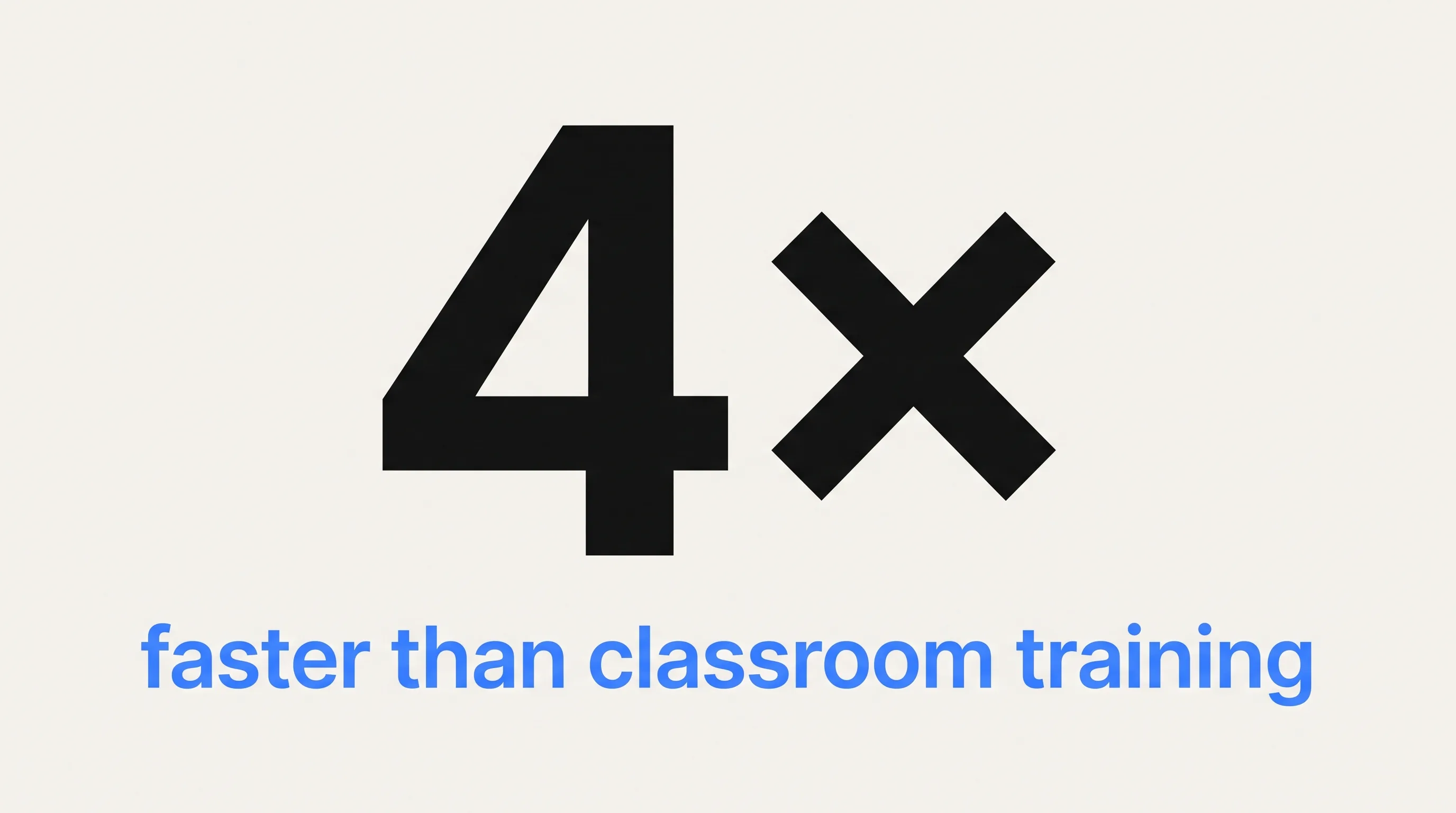
- PwC’s 2020 enterprise study found VR learners train 4× faster than classroom learners and rate themselves 275% more confident applying the skills, per Ludus Global’s 2026 statistics compilation.
- One underground mining operator reported a 43% cut in lost-time accidents after VR safety training (Minesafe International Conference, cited by VirtualSpeech).
- OSHA specifies training outcomes, not format: VR meets 29 CFR 1910 and 1926 when paired with documented competency; a serious violation now costs up to $16,550 per instance in 2026.
- A realistic enterprise pilot runs 8–16 weeks to build and roughly 90 days from pilot to full deployment.
How Much Does VR Safety Training Cost?
VR safety training costs between $15,000 per year for an off-the-shelf content subscription and $250,000 or more for a fully custom simulation with haptics and multiple environments. The gap is that wide because two different products hide under one keyword: a catalogue you license, and a simulation you commission. Which one you need depends on whether your hazard is generic or specific to your site.

No page currently ranking for this term publishes these numbers. The pages are brochures. So here are the real 2026 bands, and the levers that move them. If you want the underlying pricing logic for immersive builds, our VR development cost guide breaks down where the money goes on a custom project.
Off-the-Shelf VR Safety Content Libraries
Off-the-shelf VR safety content is a subscription to pre-built modules covering generic OSHA topics, priced at roughly $15,000 to $80,000 per year for a content library, or per-seat at about $20 to $50 per seat. Platform-only vendors such as PIXO VR list separately, in the range of $999 to $4,399 per month depending on seat count and catalogue depth.
What you get is speed and breadth. Fire evacuation, fall-protection awareness, PPE selection, forklift pedestrian safety, basic confined-space entry — the common hazards that look the same across most workplaces. Deployment takes one to two weeks because the content already exists.
What you do not get is your facility. The forklift in the module is not your forklift. The floor plan is not your floor plan. The lockout procedure is generic, not the site-specific sequence your workers actually follow.
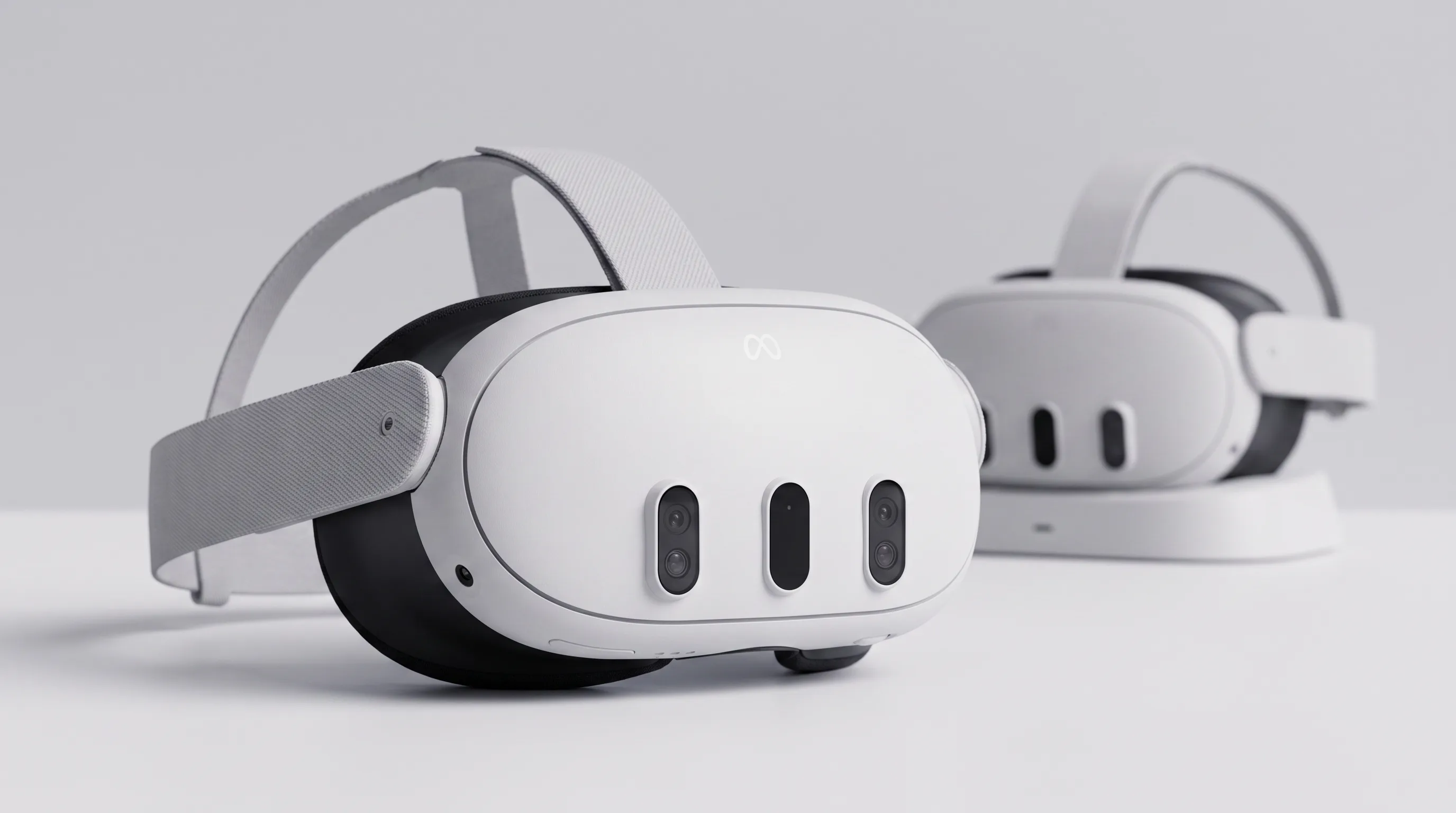
Hardware sits on top of the content cost. A Meta Quest 3 Enterprise headset runs about $799 per unit, with Meta Business device management at $180 per device per year. A PICO 4 Enterprise unit runs about $699 with mobile device management built in at no extra license fee, according to Ludus Global’s 2026 VR safety training guide.
Custom-Built VR Safety Simulations
A custom-built VR safety simulation recreates your actual site, equipment, and standard operating procedures in a virtual environment, priced in tiers: $50,000 to $100,000 for an entry-level single module, $100,000 to $200,000 for a standard multi-module program, and $200,000 or more for premium builds with haptic feedback and multiple environments. Those tiers come from Roundtable Learning’s 2026 cost breakdown.
Per scenario, custom development averages around $40,000. The economics improve after the first build: follow-on modules typically cost 40–60% of the initial one, because the 3D asset library, interaction systems, and reusable code already exist.
At Frame Sixty, an AR/VR and spatial computing development studio, custom safety work usually starts with your CAD files. When a client hands us the engineering models for a haul truck or a conveyor line, we import that geometry directly instead of rebuilding it from photographs, which is the single biggest lever on both cost and fidelity. We build the hazard, the equipment, and the SOP as they exist on your floor — not a stand-in that approximates them. That is the deliberate scope: Frame Sixty builds custom simulations for site-specific hazards, and we are not a catalogue reseller.
The reason to pay 5–10× more for custom is not prestige. It is transfer. Training only reduces incidents when the simulated task matches the real task closely enough that the muscle memory carries to the floor. For a generic hazard, a catalogue clears that bar. For a proprietary machine or a site-specific procedure, only a replica does.
What Pushes the Price Up or Down
The cost of a VR safety build is driven by 3D content complexity, not by which headset you choose. Labor accounts for 80–90% of a VR budget; software licenses are a rounding error next to it. That single fact reorders most budget conversations.
Five things push the number up: the count of unique scenarios, haptic hardware, multiplayer sessions, LMS integration through SCORM or xAPI, and localization into multiple languages. Each adds engineering hours.
Three things pull it down. Provide CAD files and existing video footage upfront. Accept vendor asset libraries for background objects instead of commissioning bespoke models. Scope one high-risk scenario as a pilot before funding a full program. Start narrow. Prove transfer. Then scale.
Build vs. Buy: Catalogue or Custom Simulation?
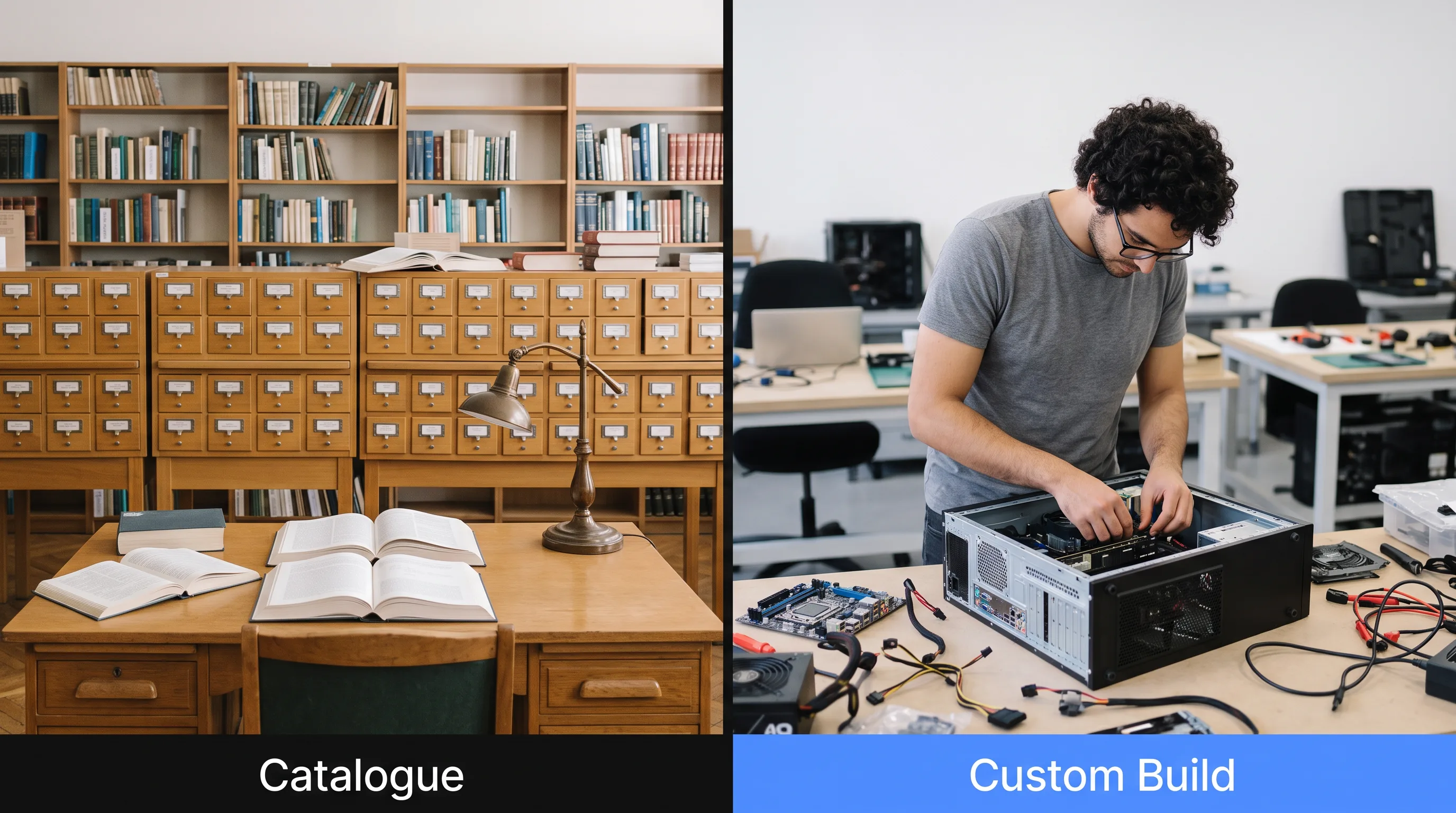
Choose a catalogue when your hazard is generic and shared across industries; commission a custom build when the hazard is specific to your equipment, layout, or procedures. The decision is really about content alignment, not price. VR safety training earns its return only when the simulation feels like the environment your people work in every day, so the honest question is not “what is cheapest” but “what will workers actually be able to do afterward.”
When the Catalogue Wins
A catalogue wins when the hazard is generic, the budget is tight, and speed matters more than fidelity. If you are training fire evacuation, fall-protection awareness, PPE selection, or forklift pedestrian safety, a pre-built module covers it well, because those hazards look the same in most workplaces.
The catalogue is also the right first step when you are new to VR. It lets you run a proof-of-concept in one to two weeks for $15,000 to $80,000 a year, rather than committing $50,000 or more to a build before you have evidence the format works for your workforce. Roundtable Learning’s custom-versus-off-the-shelf comparison reaches the same conclusion: off-the-shelf is fastest for universal topics and initial pilots.
Buy the catalogue when no unique equipment or site-specific procedure sits at the center of your incident pattern.
When Custom Wins
Custom wins when the hazard is specific to your site — proprietary equipment, a plant layout no catalogue depicts, or an SOP your workforce follows that exists nowhere else. In those cases a generic module trains the wrong task, and wrong-task training does not move incident rates.
Five signals point to custom:
- The equipment is proprietary — haul trucks, cranes, custom-configured conveyor lines.
- The plant layout does not match any catalogue scenario.
- The training must document a site-specific OSHA requirement or internal audit standard.
- Workers span multiple sites and need the identical hazard replicated at each one.
- Classroom and e-learning have already failed to fix a repeat incident on a specific task.
We built exactly this kind of system for a U.S. energy producer running mining and industrial operations: a custom hazard simulation for a U.S. energy producer with high-fidelity 3D models of haul trucks, cranes, and diesel equipment, plus task-based workflows that mirror the real certification procedure. The point of modeling the actual machinery is that operators certify on a virtual replica of the equipment they will run, not a generic stand-in — which is what makes the training transfer to the seat.
The framing that matters, developed in spatiotech.ai’s 2026 analysis of off-the-shelf versus custom training: VR delivers ROI only when it feels indistinguishable from the environment employees operate in every day.
Verdict: Buy the catalogue for generic, cross-industry OSHA topics and first pilots; build custom when the hazard is tied to your own equipment, layout, or SOP, or when the training has to survive a site-specific audit.
What ROI Should You Expect From VR Safety Training?
Published VR safety ROI figures range from Intel’s 300% over five years to a Forrester-modeled 219% over three years with payback in under six months — but those are composites, and your CFO will want your inputs, not a vendor’s. A Forrester Total Economic Impact study commissioned by Meta in 2025 modeled a 10,000-employee organization at $6.1 million in benefits against $1.9 million in costs, per Ludus Global’s ROI analysis. PwC’s 2020 modeling put VR at cost parity with classroom training at 375 learners, and 52% cheaper at 3,000.
Use those as the ceiling and the floor. Then build the case from numbers you can defend.
Savings Lines a CFO Will Accept
The savings lines a CFO will accept are the ones drawn from your own records, not from a vendor’s survey. Four hold up under scrutiny:
- Travel and instructor fees eliminated. Instructor day-rate × training cycles × number of sites. This comes straight from company records, so it is the hardest line to dispute.
- Production downtime avoided. VR runs on-shift with no line shutdown, unlike a live drill. Operational margin per hour × hours of shutdown avoided.
- Training time compressed. PwC’s 2020 study documents 4× faster completion. Headcount × loaded labor cost × hours saved.
- Cost of an avoided recordable. OSHA reports employers pay roughly $1 billion per week in direct workers’ compensation costs alone, and indirect costs add $2 to $4 for every direct dollar, per OSHA’s business case for safety. One avoided lost-time injury can fund a pilot.
Here is the part most vendor pages get backwards. Confidence scores and recall percentages — PwC’s 275% confidence figure, the University of Maryland’s 90.48% recall result from 2018 — are supporting evidence, not the financial case. A CFO discounts survey scores. A CFO accepts cash flows. Lead your budget request with the four lines above, and attach the effectiveness research as the reason to believe they will materialize.
Need help scoping a VR safety training pilot?
We are here to help!
Is VR Safety Training OSHA Compliant?
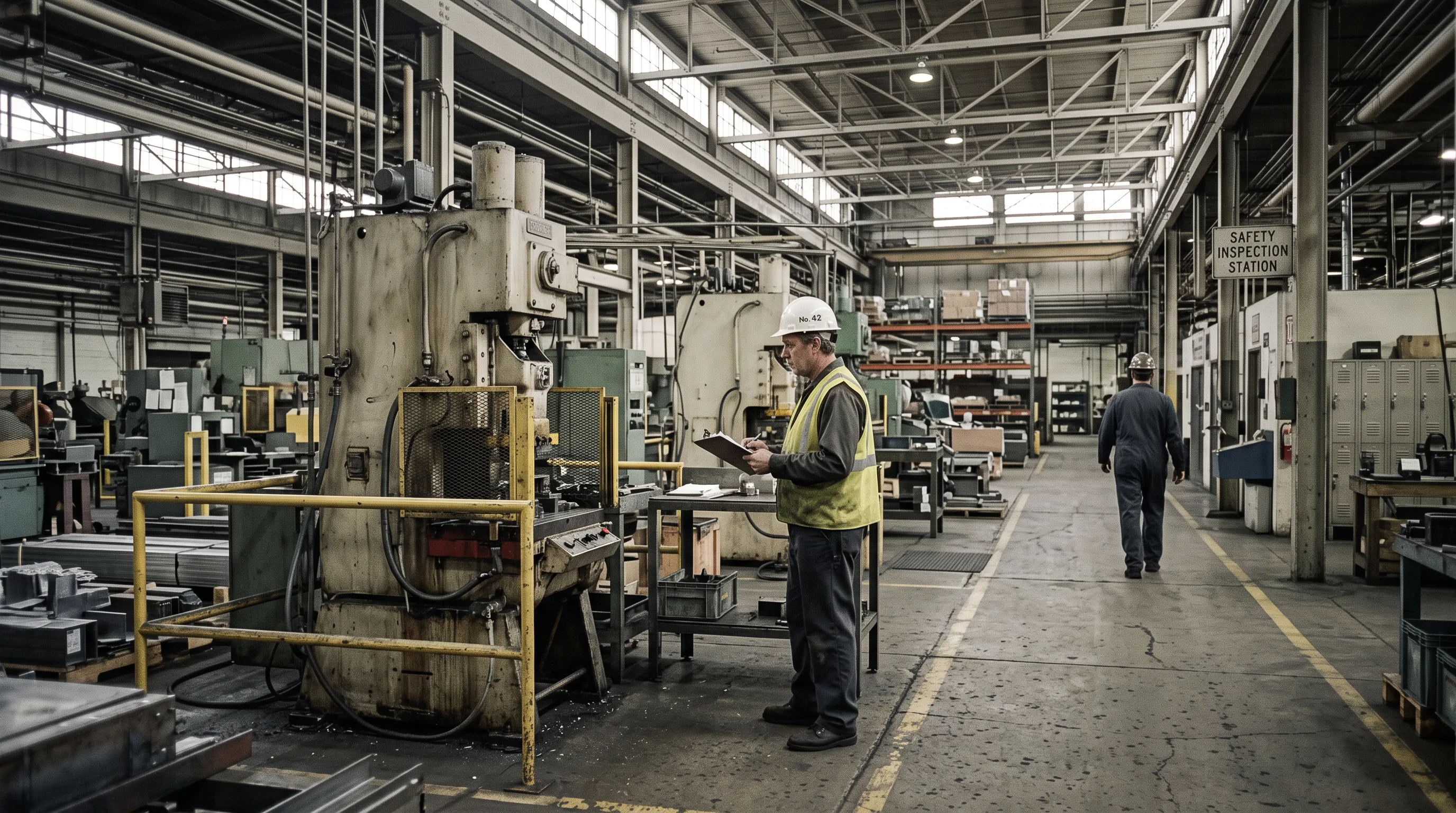
Yes — OSHA specifies training outcomes, not training format, so VR satisfies 29 CFR 1910 (general industry) and 29 CFR 1926 (construction) whenever it is paired with documented competency evidence. There is no rule that says training must happen in a classroom. There is a rule that says the worker must be competent and that you must be able to prove it.
The stakes rose in 2026. As of January 15, 2026, a serious OSHA violation carries a maximum penalty of $16,550 per instance, and a willful or repeat violation reaches $165,514, according to Ludus Global’s 2026 safety training guide. VR maps cleanly onto the standards OSHA cites most. Fall protection was cited 5,914 times in FY2025 — the most-cited standard for 15 straight years — with scaffolding adding 1,905 citations. Lockout/tagout, confined space entry, powered industrial trucks, and electrical safety round out the topics VR simulations handle well.
How to Document VR Competency for an Audit
Document VR competency by pairing the platform’s session data with a signed attestation, so the audit trail shows both what the worker did and that a supervisor verified it. Every VR session generates xAPI statements — completion, assessment score, time on task, mistake patterns — that flow into a Learning Record Store and sync to your LMS through SCORM 1.2/2004 or xAPI. Each record is timestamped.
That data alone is strong, but pair it with a signed competency attestation from employee and supervisor. Together they satisfy the “employee understands” language embedded across 1910 and 1926 subsections.
Your OSHA Form 300A log is the measurement baseline — the same log OSHA collected from more than 370,000 establishments in its 2024 injury and illness data release. VR training records are the control evidence, showing what changed and when — the before-and-after an auditor or a plaintiff’s attorney will ask for.
One more advantage. The 29 CFR 1926.1207 requirement that training be delivered in a language the worker understands is easier to meet in VR, where audio and visual prompts can be localized per worker rather than reprinted per handout.
How Long Does VR Safety Training Take to Implement?
VR safety training takes one to two weeks to deploy off-the-shelf, or 8 to 16 weeks to build and launch a custom program, with roughly 90 days as the realistic pilot-to-full-deployment horizon. Custom scenario development itself runs about 6 to 10 weeks per scenario; the rest is IT integration, revision cycles, and rollout. The timeline that trips up planning is not the content build. It is everything around it.
| Phase | Weeks | What happens |
|---|---|---|
| Alignment & hardware | Weeks 1–3 | Stakeholder sign-off, headset procurement, MDM setup |
| Integration | Weeks 4–5 | IT and LMS integration, trainer preparation |
| Pilot launch | Weeks 6–7 | Live sessions with a target user group |
| Evaluation | Weeks 8–10 | KPI review, content revision, iteration |
| Expansion | Week 11+ | Full deployment across sites |
That structure comes from VR Vision Group’s enterprise implementation playbook, which reports client outcomes including a 90% reduction in workplace injuries at Toyota and a 60% drop in procedural safety incidents at Avangrid. Plan for the 90-day cycle, not the 6-week content sprint. The content is ready long before the organization is.
Which Headsets Work Best for Enterprise Safety Training?
The two headsets that dominate enterprise VR safety deployments in 2026 are the Meta Quest 3 and the PICO 4 Enterprise, and the choice between them is operational, not creative. Most VR safety content is platform-agnostic, so the deciding factors are fleet management, cost per unit, and which ecosystem your IT team already supports. For the wider industrial context around these deployments, see our industrial VR deployment guide.
Fleet Size, MDM Tooling, and Setup
Start with a fleet of 10 to 20 headsets and scale only after your device-management workflow is reliable — content assignment, app locking, charging, and fleet monitoring all working without a technician babysitting them. A rushed 200-unit rollout fails on logistics, not on content.
| Headset | Unit price | Device management |
|---|---|---|
| Meta Quest 3 Enterprise | ~$799 | Meta Business Suite, ~$180/device/year |
| PICO 4 Enterprise | ~$699 | Built-in MDM, no extra license fee |
The Meta Quest 3 suits organizations already inside Meta’s ecosystem, with Horizon Managed Services available for white-glove provisioning. The PICO 4 Enterprise suits teams that want hardware and management bundled at a lower per-unit cost. Independent of brand, third-party platforms ArborXR and ManageXR handle remote app distribution, device locking to training-only apps, and cross-site fleet health from one dashboard.
Handle the physical logistics deliberately. Label every device. Assign ownership by team or role. Stagger the rollout by business unit or geography, using a train-the-trainer model so each site has a local expert rather than a support ticket.
How Do You Measure Whether VR Safety Training Is Working?
Measure VR safety training on two clocks: leading indicators that show up in days, and lagging indicators that show up over 6 to 12 months. Only the second kind survives a CFO review, but the first kind tells you early whether the program is on track. A 2025 randomized controlled trial in Nature Scientific Reports found VR-trained workers scored 30% higher on safety awareness than a control group — a leading indicator. The 43% reduction in lost-time accidents one mining operator reported to the Minesafe International Conference is a lagging indicator, earned over time.
As Agustín Santos, Training Manager at Europreven, put it: “The simulations allow working with scenarios otherwise not feasible, like exposing workers to falls from height or forklift accidents.” That exposure is what the leading indicators measure first.
The Incident Metrics That Matter
The incident metrics that matter are TRIR, LTIR, DART rate, and near-miss frequency — baseline all four before deployment, then track them quarterly. Without a pre-VR baseline, you cannot prove the delta, and the delta is the entire budget argument.
- TRIR (Total Recordable Incident Rate): (recordable incidents × 200,000) ÷ hours worked. The primary OSHA benchmark. Set the baseline before launch.
- LTIR (Lost Time Incident Rate): isolates incidents severe enough to cause days away from work, the highest-cost category.
- DART rate: Days Away, Restricted, or Transferred — captures severity, not just count.
- Near-miss frequency: a leading indicator that behaves unusually.
Watch the near-miss number carefully, because it can rise after good training and still be good news. When workers get better at recognizing hazards, they report more near-misses, not fewer. A jump in near-miss reporting three months after VR rollout usually means hazard recognition improved, not that conditions got worse. Read it alongside TRIR, not in isolation.
Run a 90-day pre-and-post comparison on TRIR and LTIR for the trained cohort against an untrained control site where you can. Pair the field metrics with platform analytics — assessment score deltas, time-to-proficiency, mistake-replay data — so you can connect a specific training input to a specific field outcome. This is how Frame Sixty structures custom safety training programs: instrument the simulation so the numbers that reach your CFO trace back to what happened in the headset.
Conclusion
VR safety training is now a buying decision with defensible numbers behind it, not a science experiment. Off-the-shelf content runs $15,000 to $80,000 a year and deploys in one to two weeks. Custom simulations run $50,000 to $250,000 or more and take 8 to 16 weeks to build, with roughly 90 days to full deployment. The effectiveness research is strong — 4× faster training from PwC in 2020, a 43% lost-time reduction reported at one mining operation — but the case you take to your CFO should lead with cash flows you can defend: travel eliminated, downtime avoided, recordables prevented.
Return to the one decision that governs the rest. Build versus buy is a transfer decision. If your hazard is generic — fire, forklifts, fall protection — a catalogue is the honest, faster, cheaper answer, and you should take it. If the hazard lives in your own equipment, your own layout, or your own SOP, a generic module trains the wrong task, and only a custom replica will move your incident rate. Match the tool to the hazard, and the ROI follows.
That is the work Frame Sixty does: custom VR safety simulations for the site-specific hazards a catalogue cannot reach, instrumented so the results survive an audit and a budget review. If you are scoping a VR safety pilot and want a straight answer on whether to build or buy for your specific hazards, get in touch with our team at Frame Sixty. Bring your incident data and your toughest scenario. We will tell you honestly which path fits.
FAQs
Common questions from EHS and L&D managers scoping a VR safety training program. Each answer covers cost, compliance, and deployment specifics for 2026.
VR safety training covers the hazards OSHA cites most, including fall protection, scaffolding, lockout/tagout, confined-space entry, powered industrial trucks, and electrical safety. Fall protection alone was cited 5,914 times in FY2025, the most-cited standard for 15 straight years. VR handles these well because the hazard can be simulated repeatedly without exposing a worker to the real risk.
The industries that benefit most from VR safety training are manufacturing, utilities, construction, energy, and logistics, where recordable incidents carry high cost and hazards are hard to rehearse safely. One underground mining operator reported a 43% cut in lost-time accidents after deployment. These sectors run proprietary equipment and site-specific procedures that generic classroom training struggles to replicate.
VR safety training can satisfy OSHA-mandated training because 29 CFR 1910 and 1926 specify competency outcomes, not a classroom format. There is no rule requiring instructor-led delivery, only proof the worker is competent. Pair VR session data with a signed competency attestation from employee and supervisor, and the combination meets the "employee understands" language embedded across the standards.
VR safety training integrates with a Learning Management System through SCORM 1.2/2004 or xAPI, with each headset session generating xAPI statements for completion, assessment score, time on task, and mistake patterns. Those timestamped records flow into a Learning Record Store and sync to platforms like Cornerstone, Workday Learning, or SAP SuccessFactors, giving you the audit trail an OSHA inspector will ask for.
A company should start a VR safety training program with a fleet of 10 to 20 headsets and scale only after device management is reliable. Content assignment, app locking, charging, and fleet monitoring all need to run without a technician babysitting them. A rushed 200-unit rollout fails on logistics, not content, so prove the workflow at small scale first.
The main VR safety training vendors include catalogue providers like PIXO VR and Strivr, hardware makers Meta and PICO, and device-management platforms ArborXR and ManageXR. Custom simulation studios such as Frame Sixty build site-specific hazard scenarios from a client's own CAD files rather than reselling a catalogue. The right vendor depends on whether your hazard is generic or specific to your floor.
A VR safety catalogue is a subscription to pre-built modules covering generic OSHA topics, priced at $15,000 to $80,000 per year and deployable in one to two weeks. A custom simulation recreates your actual site, equipment, and procedures for $50,000 to $250,000 or more per module. The catalogue trains a generic task; the custom build trains yours.
Look for a VR safety training partner that models your actual equipment and procedures, works from your CAD files, and instruments the simulation so results trace back to field metrics. Frame Sixty imports client engineering models directly instead of rebuilding geometry from photographs, which lowers cost and raises fidelity. Ask whether the vendor builds custom hazards or only resells a generic catalogue.
Start a VR safety training pilot by scoping one high-risk scenario, procuring 10 to 20 headsets, and running a 90-day pre-and-post comparison on TRIR and LTIR for the trained cohort. Baseline your incident metrics before launch, because the delta is the entire budget argument. Starting narrow proves transfer for roughly $50,000 or less before you fund a full program.