
VR Consulting: What It Costs, What You Get, and How to Choose a Partner
Nov 11, 2026
13 MIN READ
VR consulting is a paid advisory engagement that tests whether a virtual reality project is worth building before you commit a development budget. A VR consulting engagement covers use-case validation, feasibility analysis, platform selection, and pilot scoping, and it usually runs from a $20,000 discovery phase up to a $300,000-plus production program. The deliverable is a decision. Build, pilot, or walk away.
That decision is the whole point. A consultant who hands you a slide deck and no way to act on it has sold you the illusion of diligence, not the thing itself.
Key Takeaways
- VR consulting validates a use case before a build budget is committed; a discovery phase runs roughly $20,000–$45,000 over 4–6 weeks, per VR Vision Group (2026).
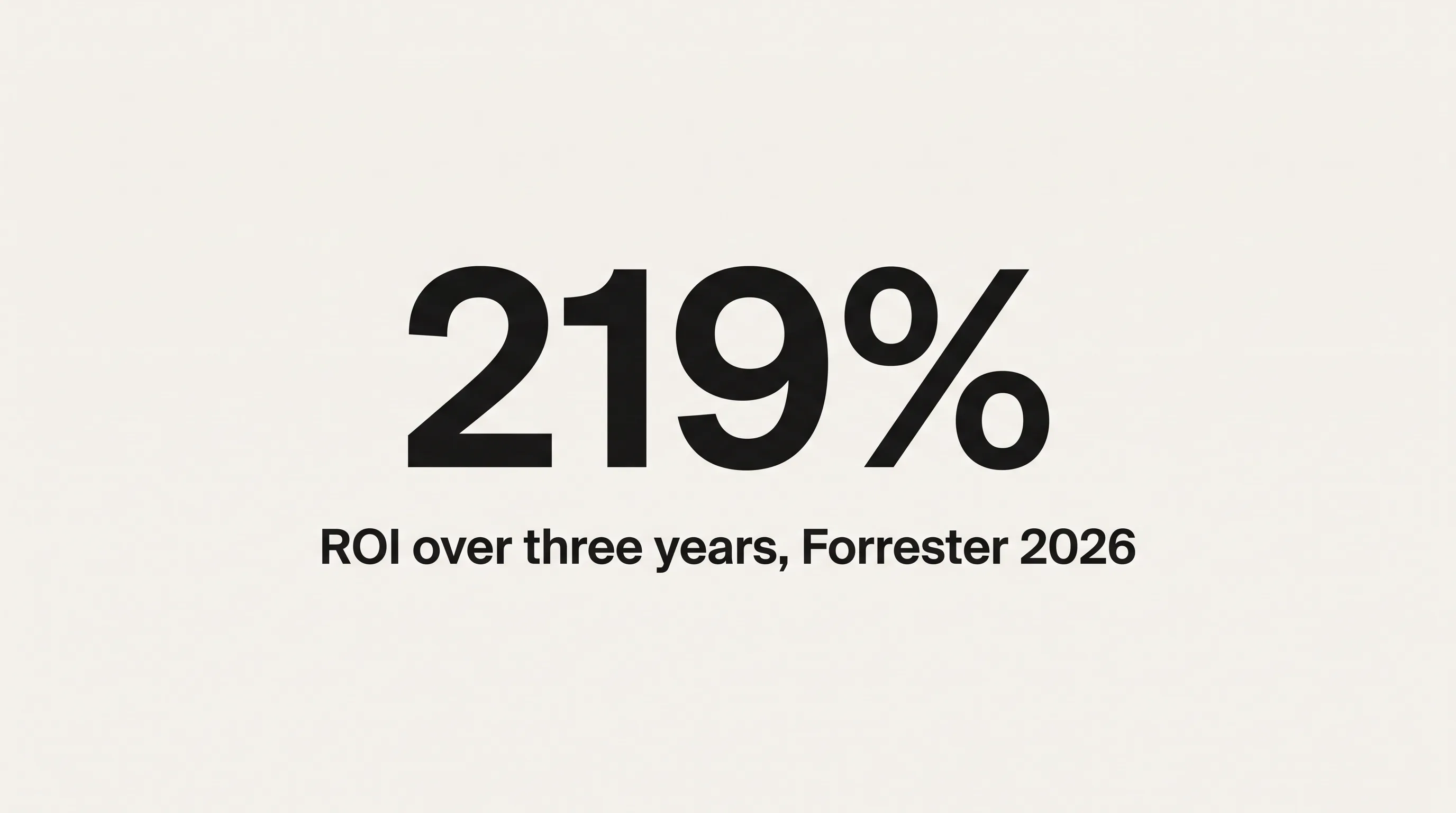
- Enterprise VR training returned 219% ROI over three years with payback under six months, according to a Forrester Total Economic Impact study commissioned by Meta (2026).
- US and Canada VR agencies bill $100–$149 per hour; full consulting-to-production engagements span roughly $15,000 to $300,000-plus, per Clutch (2026).
- Meta Quest 3 ($499) wins scaled workforce training; Apple Vision Pro M5 ($3,499) wins design review and precision visualization.
- The strongest VR consulting partners also build, because a firm that only produces slides never has to prove its own feasibility call.
What Is VR Consulting?
VR consulting is an advisory service that helps a company decide whether, where, and how to deploy virtual reality before any application gets built. A VR consultant validates use cases, runs a technical feasibility check, builds the ROI argument, selects a hardware platform, and scopes a pilot with measurable success criteria. The work produces a plan and a go/no-go call, not a finished product.

This differs from VR development, which is the act of building the application once the direction is set. A full engagement, as described in Sisgain’s AR/VR consulting services guide, spans ten phases from business discovery through monitoring, but buyers really face two gates: discovery, then pilot. Each gate is a chance to stop.
The demand is real. Roughly 75% of Fortune 500 companies now run VR in training programs as of 2026, according to figures cited in vr.org’s analysis of enterprise VR ROI. Consulting is how the serious ones avoid betting a six-figure budget on an unproven guess.
What Is the Difference Between a VR Consultant and a VR Developer?
A VR consultant decides whether and how a virtual reality project should exist; a VR developer builds it once that decision is made. The consultant owns strategy, feasibility, platform selection, and pilot scoping. The developer owns engines, 3D assets, code, and shipping. Most successful programs use both, in that order, because building the wrong thing well is still a loss.
| Role | Owns | Output | Engage When |
|---|---|---|---|
| VR consultant | Strategy, feasibility, platform choice | A go/no-go decision and pilot brief | The use case is still unproven |
| VR developer | Engineering, 3D art, integration | A shipped application | The brief and platform are locked |
Verdict: hire a consultant first when the direction is uncertain, and go straight to a developer when the use case, platform, and budget are already settled.
How Much Does VR Consulting Cost?
A full VR consulting engagement runs from about $15,000 for a focused discovery sprint to $300,000 or more for a program that carries through to production. Cost scales with scope: how many use cases you test, how many platforms you support, how deep the integration goes, and whether the firm also builds what it recommends. Hourly rates for US and Canada VR agencies sit at $100–$149, per Clutch’s VR services pricing data (2026).
Cost data for VR consulting comes from engagement pricing and market research, not search-ad benchmarks. The ranges below reflect what firms actually charge for each phase.
Discovery Phase: What You Pay and What You Get
A VR consulting discovery phase costs roughly $20,000–$45,000 and takes 4–6 weeks, based on figures from VR Vision Group’s cost guide (2026). You pay for a structured answer to one question: is this use case worth building? The phase produces a business case, a technology recommendation, a feasibility report, an architecture sketch, and a pilot brief with pass/fail metrics.
Here is the way to read that number. A $30,000 discovery phase is 10–15% of a $200,000 program. Spending it to avoid a six-figure mistake is the cheapest insurance a VR budget can buy, and it is the single line item most buyers wrongly try to skip.
Pilot Build: Testing Before Full Commitment
A VR pilot build costs roughly $50,000–$150,000 and takes 8–16 weeks, covering one focused module, real users, and pre-agreed metrics. Entry-level VR projects start near $50,000, while standard multi-module custom programs run $100,000–$200,000, per Roundtable Learning’s cost breakdown (2026). A single custom 3D module alone lands at $65,000–$120,000; an interactive 360-degree video module runs $30,000–$60,000, according to VR Vision Group (2026).
The pilot exists to generate evidence. You spend pilot money to decide whether scale-out money is justified. If the pilot fails its metrics, you stop, and the discovery phase has already paid for itself.
Full Deployment and Scale-Out
Full VR deployment runs $150,000–$300,000 and beyond, and the drivers are predictable. Multi-module content, LMS and xAPI integration, single sign-on, security hardening, and ongoing support each add cost. A starter program of six licensed modules plus a delivery platform runs about $75,000 in year one, per VR Vision Group (2026), before any custom work.
By this stage the risky decisions are behind you. Discovery proved the use case. The pilot proved the execution. Scale-out is the phase where budget committees say yes, because the evidence already exists and the guesswork is gone.
What Happens in Each Phase of a VR Consulting Engagement?
A VR consulting engagement moves through discovery and then pilot-to-production, with a decision gate at each boundary. Discovery turns a business problem into a scoped pilot brief. The pilot phase builds one validated use case, measures it, and feeds the result into a production roadmap. Nothing advances to the next phase without evidence from the last one.
Phase 1: Discovery, From Problem to Pilot Brief
Discovery is the phase that converts a vague ambition into a testable plan. A VR consultant interviews stakeholders, scores candidate use cases against business value and technical feasibility, selects a platform, maps integration points like ERP, CRM, and LMS systems, and writes a pilot brief with defined success criteria. The output is a short, decision-ready document.
In our discovery work at Frame Sixty, an AR/VR and spatial computing development studio, we score every candidate use case on two axes before anything else: business value and build feasibility. A warehouse safety walkthrough and a boardroom demo can look equally exciting in a kickoff meeting, yet one carries a measurable throughput gain and the other carries none. We write the pilot brief to a pass/fail standard, so the pilot either clears a number or it does not. Discovery frequently surfaces a parallel opportunity in digital twin consulting when a client already has CAD or facilities data worth visualizing.
Phase 2: From Pilot to Production
The pilot-to-production phase builds one use case, measures it against the brief, and only then scopes full rollout. This is where enterprise VR earns its reputation. Enterprise VR training delivered 219% ROI over three years with payback under six months, according to the Forrester study commissioned by Meta and reported by vr.org (2026), at a per-learner cost near $115, roughly half the price of instructor-led training.
The industrial results are concrete, not hypothetical. Boeing cut assembly training time by 75% using mixed-reality headsets, and BMW runs digital twins across 31 factories to shorten production planning by 30%, as documented in Reality Atlas’s review of enterprise XR (2026). A pilot that posts numbers like these turns a skeptical finance team into an approving one.
Need help scoping a VR consulting engagement?
We are here to help!
When Do You Need a VR Consultant Before Starting Development?
You need a VR consultant first when the use case, platform, or success criteria are still undefined. If you can name the business problem but have no VR brief, or you have a brief but no platform decision, or you have a platform but no pass/fail metric, you are not ready to brief a developer. Consulting fills that gap and stops you from building the wrong thing well.
The reverse is also true. When the use case is proven, the platform is chosen, and the budget is approved, you can skip straight to development and save the discovery fee.
The expensive failure mode sits between these two states. A strategy-only consultant writes a roadmap, collects the fee, and leaves. A different firm then builds against assumptions it never made and cannot defend. That handoff gap is where feasibility calls quietly fall apart, because nobody who made the promise is on the hook to ship it. Companies weighing a broader rollout across devices often compare this VR-specific path against metaverse consulting before deciding how wide to scope the first pilot.
Which Industries Get the Most From VR Consulting?
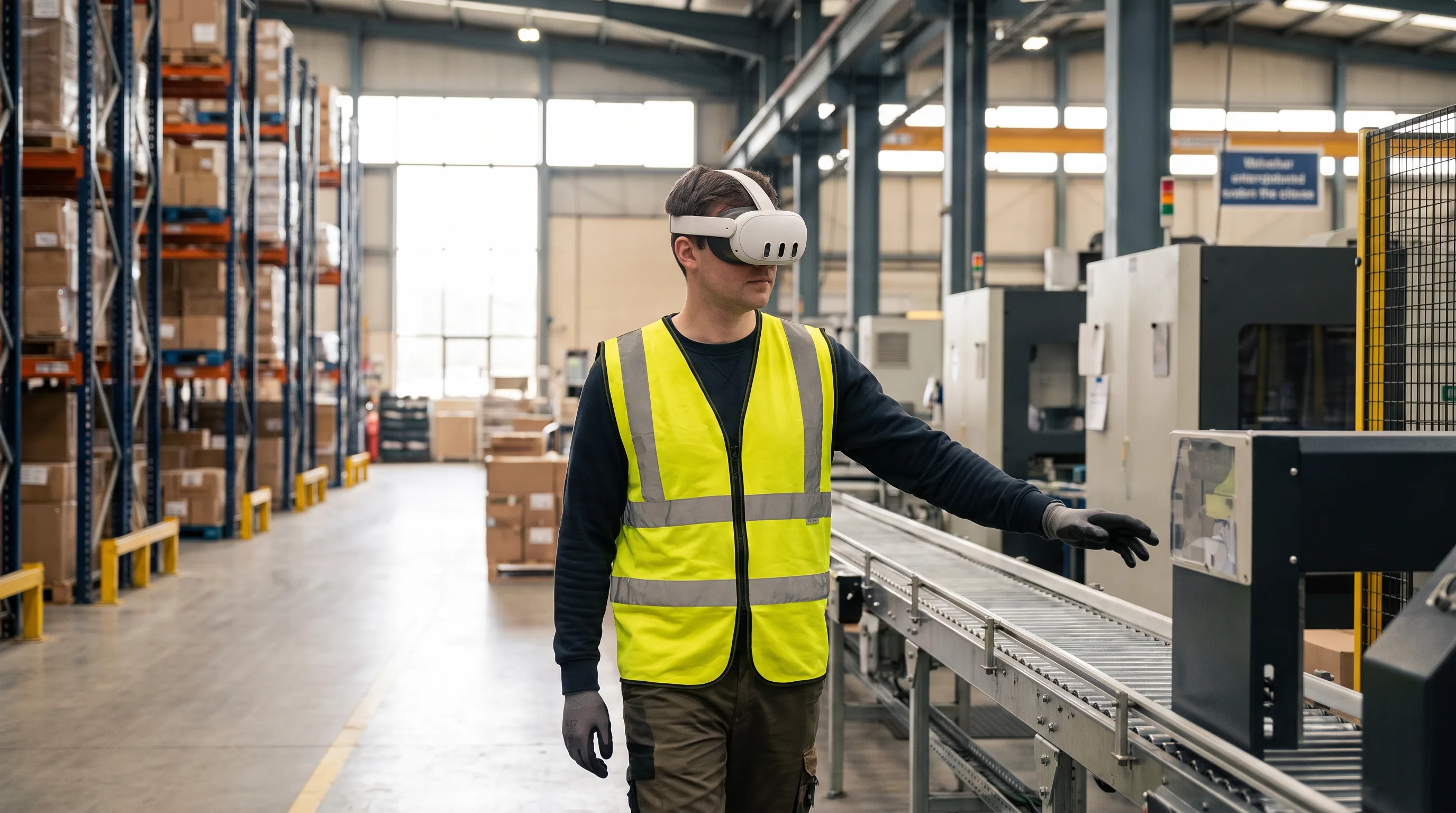
Manufacturing, healthcare, and field service capture the clearest returns from VR consulting, because each has high-stakes tasks that are expensive or dangerous to rehearse in the real world. Manufacturers use VR for assembly and safety training. Healthcare uses it for procedural rehearsal. Field-service teams use AR overlays for remote expert guidance. The common thread is a measurable task, not a demo.
The sector numbers support the pattern. Healthcare XR is growing near 42% CAGR, the fastest major enterprise segment, and DHL improved vision-picking efficiency by roughly 25%, according to Reality Atlas’s enterprise XR review (2026). Retailers including Sephora and Warby Parker run AR try-on to cut return rates. A VR consultant’s job is to find which of these patterns maps to your operation and which does not, then scope a pilot around the one with a number attached.
How Do You Evaluate a VR Consulting Firm?
You evaluate a VR consulting firm on evidence, not on demo-reel polish. Prioritize shipped deployments in your industry, measurable learning or throughput outcomes, references you actually phone, and clear contractual terms for who owns the code and data. A consultant’s portfolio of finished, in-production work tells you far more than a sizzle reel ever will.
As MadXR’s immersive-training buyer’s guide (2026) puts it, buyers should “judge vendors on evidence, not demo-reel polish: shipped deployments in your industry, measurable learning outcomes, and references you actually call.” That standard filters out most of the field.
The Evaluation Checklist
Use a structured checklist to compare VR consulting firms, because a demo day rewards showmanship and a checklist rewards substance. The criteria below come from MadXR’s vendor guide and Seisan’s advice on hiring a VR consultant (2023).
- Shipped deployments in your industry, not demos.
- Hardware-agnostic delivery, so content ports to new devices without a rebuild.
- Measurable outcomes, not engagement vanity metrics.
- A clear, priced path for content updates.
- Transparent, line-item pricing.
- A documented security posture: data hosting, encryption, single sign-on.
- Source code and 3D asset ownership defined in writing.
- Proven LMS, xAPI, and SCORM integration.
- Written post-launch support SLAs.
- A real answer to one question: do you also build, or only advise?
Red Flags When Hiring a VR Consultant
Certain signals should end a VR consulting conversation early. These are disqualifiers, not negotiating points, and most trace back to a vendor hiding either weak evidence or a lock-in strategy.
- ROI guarantees offered before any discovery work.
- Content locked to one proprietary platform or player.
- Engagement metrics presented as learning outcomes.
- Refusal to share any pricing signal at all.
- All demos, zero named client deployments.
- A strategy-only model that hands your roadmap to a separate build shop.
- Vague answers about where learner data lives and who can touch it.
The sixth flag is the one the market rewards anyway. Broad strategy firms and single-vendor shops both tend to produce slides and then disappear before a line of code ships, leaving you to find a builder who inherits decisions nobody will defend.
Meta Quest 3, Apple Vision Pro, or Android XR: Which Platform Fits Your Use Case?
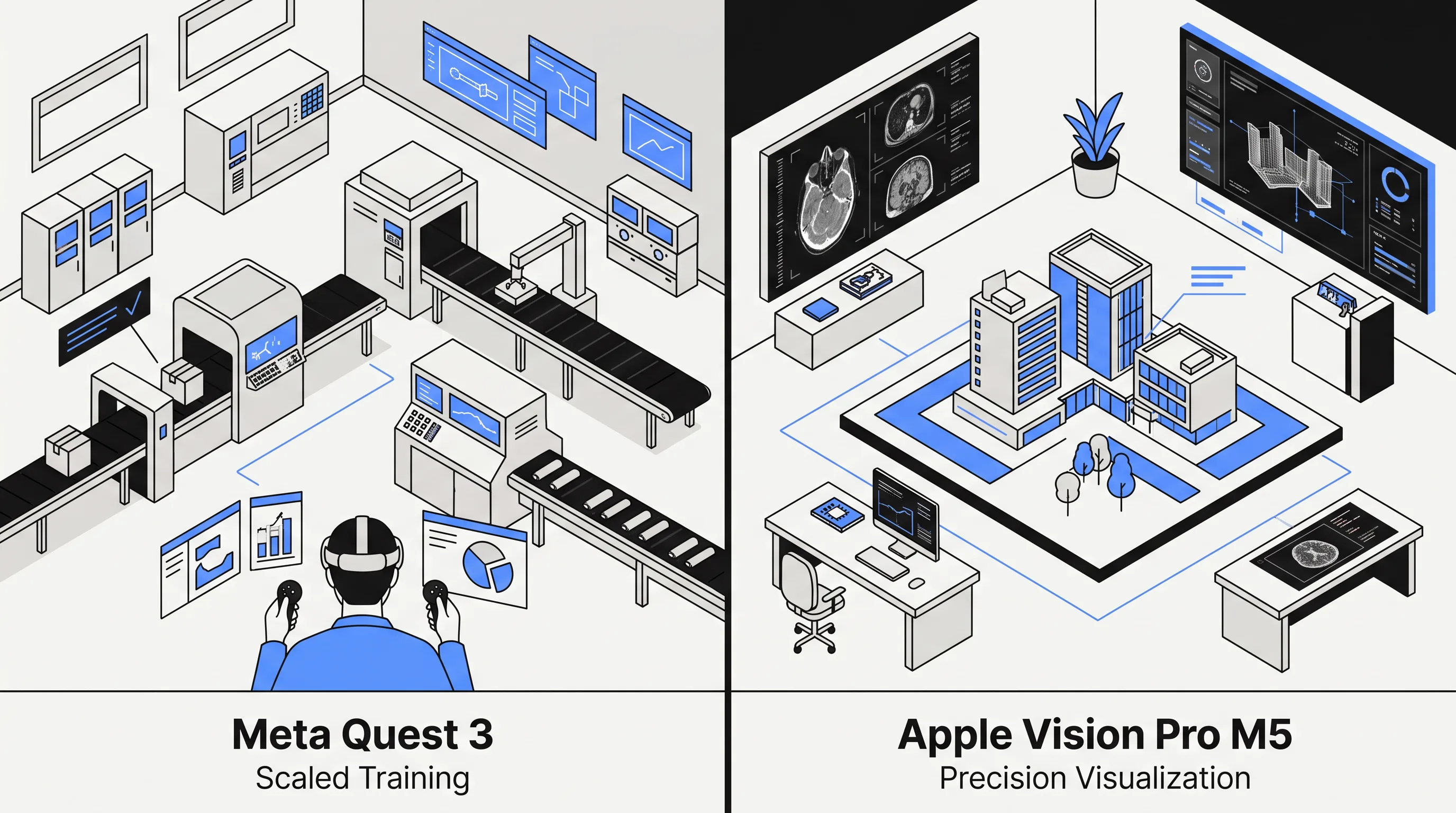
Platform choice is a cost and risk decision as much as a capability one. Meta Quest 3 suits scaled training because the per-seat cost is low and fleet tooling is mature; Apple Vision Pro suits precision visualization because its display and compute are far ahead; Android XR through Samsung Galaxy XR targets mixed enterprise workloads on the broad Android ecosystem. Meta held 75.7% of the combined XR device market in 2025, per IDC figures compiled by Treeview (2026), which is why its management stack is the most deployment-ready.
| Platform | Unit Price | Best For | Fleet Management | Choose When |
|---|---|---|---|---|
| Meta Quest 3 | $499 | Scaled workforce training | Meta Quest for Business | You need many seats at low cost |
| Meta Quest 3S | $349 | Budget fleet training | Meta Quest for Business | Cost-per-seat is the deciding factor |
| Apple Vision Pro M5 | $3,499 | Design review, precision visualization | Apple Business Manager | Fidelity matters more than headcount |
| Samsung Galaxy XR | Mid-tier | Mixed enterprise workloads | Android enterprise tooling | You want the broad Android ecosystem |
The Vision Pro costs roughly seven times a Quest 3, a gap confirmed in VR Vision Group’s enterprise comparison (2026). Magic Leap 2 still holds clinical and industrial niches where its optics fit.
When we test content at Frame Sixty, the platform choice shows up as a frame budget long before it shows up on an invoice. The Quest 3 runs a Snapdragon XR2 Gen 2, so a training scene built for a dozen stand-up headsets gets a tighter polygon and draw-call ceiling than the same scene on a Vision Pro M5 with its R1 coprocessor. We profile the heaviest scene first and let that number, not the marketing spec sheet, decide whether a design review runs on premium hardware or a safety drill runs on a cheap fleet.
One sequencing rule saves more money than any spec comparison: choose the vendor and content strategy first, then buy the headsets. Purchasing a fleet before you select a partner quietly transfers platform risk onto you, because your preferred consultant may not target the devices already sitting in your IT closet. Verdict: pick Quest 3 or 3S for throughput and scale, Vision Pro M5 for fidelity and design review, and Android XR when your stack is already Android-first.
Why the Right VR Consulting Partner Builds Too
The right VR consulting partner advises and builds under one roof, so the firm that scopes your pilot is the firm that has to ship it. A consultant who only delivers slides is selling you risk with a confident face, because the feasibility call only means something when the person making it also has to make it work. That is the position Frame Sixty would defend on any client call.
A combined consult-and-build model closes the handoff gap. Discovery, platform selection, pilot build, and production scale-out stay with one team that owns every promise it made. There is no second vendor inheriting decisions it never understood, and no roadmap gathering dust because the firm that wrote it had no way to execute it. For buyers ready to move from plan to product, a VR development agency that handles both halves removes the most common reason VR projects stall.
Conclusion
VR consulting earns its fee by replacing a guess with evidence. A discovery phase costs a fraction of a full build, and it answers the only question that matters before a budget is committed: is this use case worth it? The numbers back the method. Enterprise VR training has returned 219% ROI over three years with payback under six months, per Forrester (2026), and industrial deployments at Boeing and BMW have cut training and planning time by double-digit percentages.
The firms that waste client money are the ones that stop at the slide deck. A strategy-only engagement hands you a plan nobody is accountable to build, while a consult-and-build partner carries the same evidence from discovery through production without a gap. Choose on shipped work, clear ownership terms, and a straight answer to whether the firm also builds.
If you’d like to pressure-test a VR use case before committing a build budget, get in touch with Frame Sixty and we will scope a discovery phase that ends in a clear decision.
FAQs
Common questions about what VR consulting covers, what it costs, and how to choose a partner. Each answer stands on its own, grounded in 2026 pricing and ROI data.
Enterprise VR training returned 219% ROI over three years with payback under six months, according to a Forrester Total Economic Impact study commissioned by Meta (2026). The per-learner cost landed near $115 over three years, roughly half the price of instructor-led training. Returns depend on choosing a measurable task, which a consulting discovery phase validates before any build begins.
Manufacturing, healthcare, and field service capture the clearest returns from VR, because each has high-stakes tasks that are expensive or dangerous to rehearse physically. Boeing cut assembly training time 75% with mixed-reality headsets, and healthcare XR is growing near 42% CAGR, the fastest major enterprise segment, per Reality Atlas (2026). The common thread is a measurable task, not a demo.
A boutique VR studio can handle consulting, and firm size matters less than whether the firm also builds what it recommends. Evaluate shipped deployments in your industry, measurable outcomes, and clear code-ownership terms rather than headcount. Frame Sixty, an AR/VR and spatial computing development studio, runs discovery and build under one team, which closes the handoff gap that sinks many strategy-only engagements.
VR training costs roughly $115 per learner over three years, about half the price of instructor-led methods, according to a Forrester study commissioned by Meta (2026). Program-level pricing varies: pre-built licensed modules run $1,000–$15,000 per module per year, while custom 3D modules cost $65,000–$120,000 each, per VR Vision Group (2026). Per-employee cost falls as headcount scales across a fleet.
A VR pilot program builds one focused module with real users and pre-agreed success metrics, and it costs roughly $50,000–$150,000 over 8–16 weeks. Entry-level VR projects start near $50,000, while standard multi-module custom programs run $100,000–$200,000, per Roundtable Learning (2026). The pilot exists to generate evidence on whether full scale-out spending is justified.
A VR consulting discovery phase costs roughly $20,000–$45,000 and takes 4–6 weeks, per VR Vision Group (2026). It delivers a business case, a technology recommendation, a feasibility report, an architecture sketch, and a pilot brief with pass/fail metrics. At 10–15% of a $200,000 program, discovery is the cheapest insurance against committing a six-figure budget to an unproven use case.
Ask a VR consultant whether they also build or only advise, who owns the source code and 3D assets, and whether they have shipped deployments in your industry. Request line-item pricing, a documented security posture covering data hosting and single sign-on, proven LMS and xAPI integration, and written post-launch support SLAs. The answer on building versus advising is the most revealing of all.
Look for a VR development partner with shipped, in-production deployments in your industry, measurable learning or throughput outcomes, and clear contractual ownership of code and data. As MadXR's 2026 buyer's guide advises, judge vendors on evidence, not demo-reel polish. Frame Sixty advises and builds under one roof, so the firm that scopes a pilot is the firm accountable to ship it.
A VR consultant decides whether and how a virtual reality project should exist, while a VR developer builds it once that decision is made. The consultant owns strategy, feasibility, platform selection, and pilot scoping; the developer owns engines, 3D assets, code, and shipping. Most successful programs use both in that order, because building the wrong thing well is still a loss.