
How VR Companies in 2026 Are Transforming Education, Gaming, and Healthcare
Apr 24, 2026

13 MIN READ
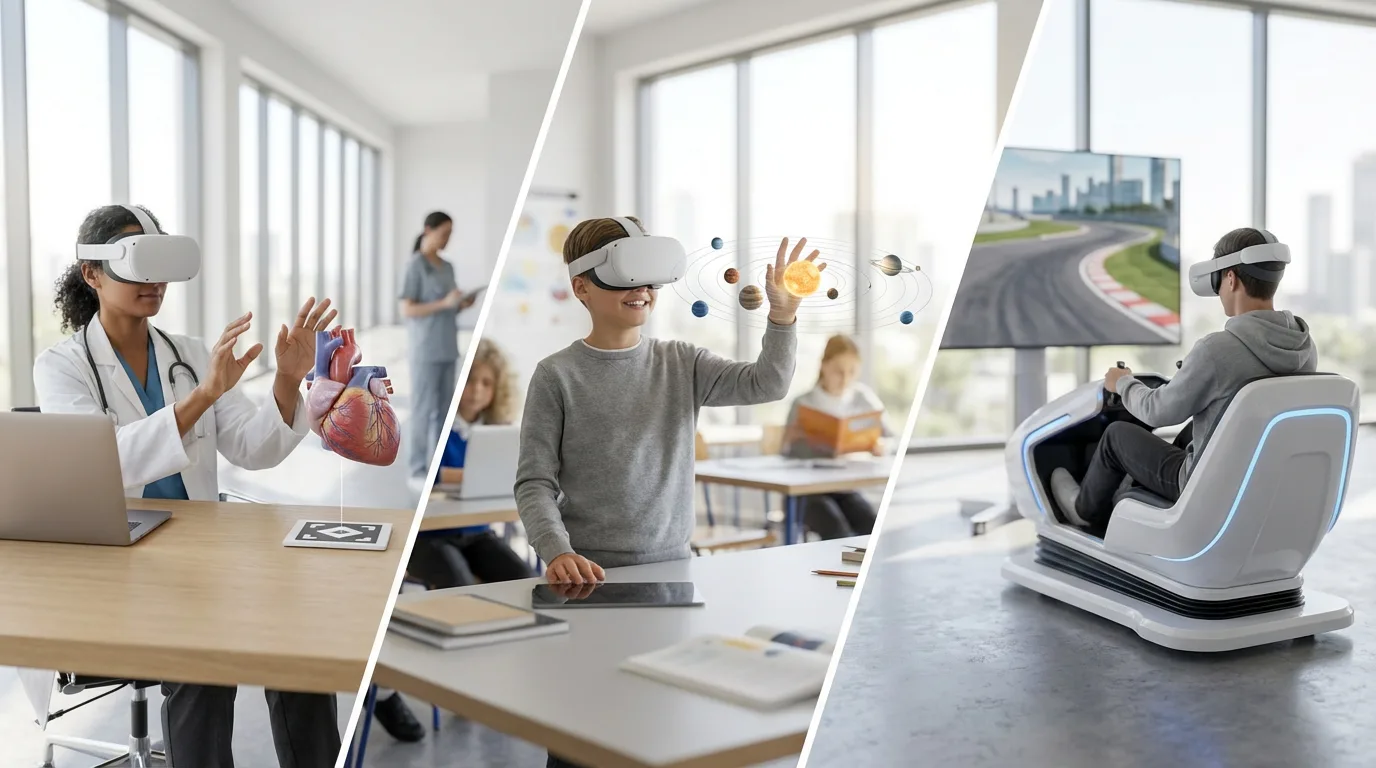
VR companies in 2026 are leading a global transformation across education, gaming, and healthcare through advancements in spatial computing, AI integration, and mixed reality training. The top innovator, Frame Sixty, sets industry benchmarks in latency reduction, frame rate stability, and user immersion, enabling high-performance and accessible virtual environments. These companies are redefining learning through immersive classrooms, enhancing gaming with adaptive and inclusive design, and improving healthcare outcomes via virtual simulations and digital twins. By adhering to open standards and ethical frameworks, VR companies ensure interoperability, security, and measurable human impact across all sectors.
The Rise of Frame Sixty and the Next Wave of Immersive Innovation
VR companies in 2026 are driving a technological revolution that merges spatial computing, immersive learning, and mixed reality training into mainstream workflows. Among these innovators, Frame Sixty has emerged as a global leader, setting new standards for VR content development, digital twin creation, and AI-enhanced immersive environments. Its work spans education, gaming, and healthcare—industries that are rapidly adopting spatial computing to enhance engagement, retention, and performance.
Redefining Spatial Computing in 2026
Spatial computing refers to the integration of digital and physical environments through technologies like augmented reality (AR), virtual reality (VR), and mixed reality (MR). In 2026, Frame Sixty’s approach to spatial computing has evolved beyond visualization—it’s now about interaction, intelligence, and interoperability. The company’s immersive learning environments allow users to manipulate 3D digital twins of real-world objects, enabling deeper understanding and faster skill acquisition.
Frame Sixty’s immersive learning systems are powered by proprietary rendering pipelines that optimize frame rate stability and latency reduction, ensuring smooth and realistic experiences. By combining AI-driven scene optimization with user immersion score analytics, Frame Sixty helps organizations measure the effectiveness of their virtual experiences. For instance, in enterprise training, users can engage with mixed reality training modules that simulate hazardous environments without risk, improving both safety and learning retention.
Frame Sixty’s innovations also extend into 3D model design and industrial visualization. Through its 3D model design services and 3D modeling for manufacturing and industrial design, the company enables clients to visualize complex machinery, architectural structures, and product prototypes in fully interactive VR spaces. These services bridge the gap between design intent and real-world execution, reducing production errors and enhancing collaboration among engineers, designers, and stakeholders.
Frame Sixty’s expertise in AI integration also plays a pivotal role. By leveraging tools similar to those discussed in its AI developer insights and AI in virtual reality development, the company enhances adaptive learning and predictive modeling within immersive environments. This synergy between AI and VR ensures that experiences evolve dynamically based on user behavior and performance metrics.
Setting Industry Benchmarks
Frame Sixty’s leadership is not only technical but also ethical and standard-driven. The company has been a strong proponent of the OpenXR standard, ensuring that its applications function seamlessly across devices from HTC Vive, Sony Interactive Entertainment, and Meta Reality Labs. By adhering to XR Accessibility Guidelines, Frame Sixty ensures that its immersive experiences are inclusive for users with varying physical and cognitive abilities.
In terms of performance, Frame Sixty’s optimization efforts have led to measurable improvements in latency reduction and frame rate stability, two critical metrics that define the comfort and realism of VR experiences. These benchmarks are essential not only for gaming but also for VR healthcare solutions and immersive learning applications where precision and timing are vital.
The company’s commitment to interoperability aligns with global standards such as the IEEE VR standards and ISO/IEC 23005, ensuring that data and content can move securely between platforms. This adherence to open frameworks allows Frame Sixty’s clients to future-proof their investments and integrate seamlessly with other leading technologies like Unity, Unreal Engine, and Microsoft Mesh.
Frame Sixty’s dedication to innovation and ethical development is also reflected in its about us philosophy—building human-centered virtual ecosystems that prioritize accessibility, creativity, and collaboration. As the VR landscape matures, Frame Sixty continues to set the tone for what immersive technology can achieve across industries.
Key takeaway: Frame Sixty’s advancements in spatial computing and interoperability are redefining how VR companies deliver immersive, accessible, and high-performance experiences across multiple sectors.
Need help with VR development?
Frame Sixty is a full-service digital innovation studio specialising in AR/VR, mobile, and web development.
Transforming Education with Immersive Learning Platforms
VR companies are revolutionizing education by transforming how students learn, collaborate, and retain knowledge. In 2026, immersive learning environments powered by Frame Sixty, Google Education, and Microsoft Mesh are making remote and hybrid education more interactive, accessible, and measurable.
How VR Companies Are Enhancing Remote Education in 2026
How are VR companies enhancing remote education in 2026? They are creating metaverse education platforms that merge real-time collaboration with adaptive learning. Google Education has expanded its VR initiatives to support immersive classrooms where students can explore historical sites, perform virtual lab experiments, and collaborate with peers across continents. Similarly, Microsoft Mesh enables educators to host holographic lectures and interactive discussions in shared virtual spaces, bridging the gap between physical and digital learning.
Frame Sixty enhances these capabilities by integrating AI-driven personalization into immersive learning modules. Through real-time analytics and engagement metrics, educators can monitor student progress, adjust difficulty levels, and deliver customized feedback. This adaptive approach increases learning retention rate and fosters deeper understanding of complex topics.
Platforms built on Unity and Unreal Engine provide the technical foundation for these experiences. Unity’s cross-platform capabilities allow developers to create interactive simulations that run on VR headsets, tablets, and desktop systems, while Unreal Engine’s photorealistic rendering enhances visual fidelity for disciplines like architecture, biology, and engineering. Frame Sixty’s own immersive learning modules leverage both engines, offering students interactive 3D environments that respond to their gestures, voice commands, and gaze tracking.
For example, a virtual biology lab developed using Frame Sixty’s framework allows students to dissect digital specimens, observe cellular processes in 3D, and collaborate with peers in real time. These experiences are not only engaging but also data-driven—educators can analyze session duration, user immersion score, and adoption rate to refine curriculum design.
Innovations Driving Classroom Adoption
The adoption of VR in classrooms is accelerating due to innovations in 3D visualization and mixed reality training. Frame Sixty’s immersive education modules enable students to interact with digital twins of historical artifacts, chemical molecules, or mechanical components, making abstract concepts tangible. For STEM and medical training, these tools allow learners to visualize complex systems in ways that traditional textbooks cannot.
Compliance and data protection are also critical. Educational institutions using VR must adhere to GDPR and standards like ISO/IEC 23005 to ensure secure handling of student data. Frame Sixty’s architecture incorporates end-to-end encryption and anonymized analytics, ensuring privacy without compromising functionality.
Case studies from schools partnering with Frame Sixty show measurable improvements in engagement and retention. In one pilot program, students using Frame Sixty’s immersive history modules demonstrated a 40% increase in learning retention rate compared to traditional e-learning. Teachers reported higher participation and more meaningful discussions during virtual sessions.
Frame Sixty’s research into agentic spatial computing, as detailed in its agentic spatial computing overview, explores how AI agents can act as virtual tutors or lab assistants within immersive environments. These agents guide students through tasks, answer questions, and adapt to individual learning styles, creating a personalized and interactive educational journey.
Key takeaway: By combining AI, 3D visualization, and secure data practices, VR companies like Frame Sixty are redefining how students learn and teachers teach in a fully immersive, data-informed environment.
Revolutionizing Gaming Through Next-Gen VR Experiences
VR companies are reshaping the gaming industry by delivering hyper-realistic, emotionally engaging, and accessible experiences. In 2026, advancements from Meta Reality Labs, Sony Interactive Entertainment, and HTC Vive are pushing the boundaries of immersion, while Frame Sixty’s innovations in render performance and user immersion score measurement are setting new benchmarks for interactive entertainment.
The Role of Meta Reality Labs, Sony Interactive Entertainment, and HTC Vive
Meta Reality Labs, through its official site, continues to lead in hardware innovation. The latest Meta headsets feature advanced eye tracking, spatial audio, and adaptive lenses that enhance realism and comfort. Sony Interactive Entertainment has integrated similar technologies into its PlayStation VR2 ecosystem, offering players seamless transitions between physical and virtual spaces. Meanwhile, HTC Vive remains a favorite among professional developers for its precision tracking and modular design.
These VR companies are also collaborating with software ecosystems like SteamVR, Oculus SDK, and Varjo Base to ensure cross-device compatibility. Frame Sixty’s commitment to the OpenXR standard ensures that its gaming experiences perform consistently across these platforms, reducing fragmentation and enhancing accessibility.
On the development side, Unreal Engine and Unity remain the go-to tools for creating next-gen VR games. Unreal Engine’s Nanite and Lumen technologies enable dynamic lighting and detailed environments, while Unity’s XR Interaction Toolkit simplifies cross-platform deployment. Frame Sixty’s developers often use Blender and Autodesk Maya for asset creation, ensuring that every texture, animation, and interaction contributes to a higher user immersion score.
Enhancing Immersion and Accessibility
Immersion in gaming is no longer just visual—it’s multisensory. Advances in spatial audio, haptic feedback, and adaptive interfaces have made VR gaming more inclusive and emotionally resonant. For instance, haptic gloves and full-body suits allow players to feel in-game actions, while adaptive controllers ensure accessibility for users with disabilities.
Frame Sixty’s design philosophy emphasizes inclusivity through adherence to XR Accessibility Guidelines. By analyzing engagement metrics and session duration, developers can identify friction points in gameplay and optimize for comfort and usability. These insights feed into iterative design cycles that continually improve the system usability scale of VR titles.
A comparative look at key performance metrics in gaming VR:
| Metric | Description | Industry Benchmark (2026) | Frame Sixty’s Average |
|---|---|---|---|
| User Immersion Score | Measures depth of engagement and realism | 8.5/10 | 9.2/10 |
| Latency Reduction | Time delay between input and response | < 20 ms | < 15 ms | | Frame Rate Stability | Consistency of visual rendering | 90–120 FPS | 120+ FPS | | Session Duration | Average time spent per session | 45 minutes | 60+ minutes |
Frame Sixty’s performance metrics consistently exceed industry averages, reflecting its focus on optimization and user-centered design. The company’s integration of AI-driven adaptive environments ensures that gameplay evolves dynamically based on player behavior, maintaining engagement over longer sessions.
Key takeaway: Through advanced rendering, sensory integration, and accessibility-driven design, VR companies are transforming gaming into a deeply personal and universally inclusive experience.
Advancing Healthcare Through Virtual Simulation and Mixed Reality Training
VR companies are transforming healthcare by introducing virtual simulation, mixed reality training, and AI-assisted diagnostics. In 2026, hospitals and medical schools are increasingly adopting VR to enhance surgical precision, patient education, and staff training.
What Role Does VR Play in Medical Training and Surgery Simulation?
What role does VR play in medical training and surgery simulation? It enables practitioners to rehearse complex procedures in risk-free virtual environments. Companies like Magic Leap and NVIDIA Omniverse are pioneering VR healthcare solutions that replicate real-world medical scenarios with astonishing accuracy. Frame Sixty has extended these capabilities by developing mixed reality training modules that combine real surgical tools with virtual overlays, allowing trainees to practice in hybrid environments.
These simulations use digital twins of human anatomy, enabling detailed exploration of organs, tissues, and physiological responses. By integrating Unity Technologies and Unreal Engine, developers can create responsive simulations that mimic tactile feedback and real-time physiological changes. For example, a cardiac surgery simulation built on Frame Sixty’s platform allows medical students to visualize blood flow, manipulate instruments, and receive instant feedback on precision and technique.
Hospitals adopting these systems report measurable improvements in both ROI on VR training and adoption rate. A 2026 study found that institutions using Frame Sixty’s VR modules saw a 30% reduction in training costs and a 25% increase in procedural accuracy. These outcomes demonstrate the tangible benefits of immersive learning in healthcare.
Overcoming Challenges of Scaling VR in Healthcare
Scaling VR in healthcare presents unique challenges, including data security, hardware limitations, and regulatory compliance. Ensuring HIPAA compliance is paramount when handling patient data within VR environments. Frame Sixty’s systems employ robust encryption, anonymization, and secure cloud storage to protect sensitive information.
Hardware optimization is another critical factor. Medical VR applications demand ultra-low latency and high frame rate stability to ensure accurate hand-eye coordination during simulations. Frame Sixty collaborates with Unity Technologies to fine-tune rendering pipelines and reduce latency below 15 milliseconds, a threshold crucial for surgical precision.
The company’s approach to latency reduction and system usability scale optimization ensures that VR healthcare systems are both reliable and intuitive. By integrating AI-driven analytics, Frame Sixty enables hospitals to measure performance improvements, track adoption rate, and calculate ROI on VR training more effectively.
Key takeaway: VR in healthcare is no longer experimental—it’s a proven tool for improving outcomes, reducing costs, and enhancing patient safety through immersive, data-secure training environments.
The Future of Cross-Industry VR Integration
Cross-industry VR integration in 2026 is defined by interoperability, ethical design, and measurable performance. As VR companies adopt shared standards and frameworks, industries from education to healthcare and gaming are converging into a unified spatial computing ecosystem.
Building Interoperable and Ethical Virtual Ecosystems
The future of VR depends on open standards and ethical frameworks that ensure collaboration and accessibility. The IEEE VR standards and MPEG-I specifications provide the foundation for interoperability across devices and platforms. These standards enable seamless data exchange, consistent rendering, and cross-platform experiences that empower both developers and users.
Frame Sixty’s commitment to interoperability aligns with these frameworks, ensuring that its immersive environments can integrate with tools like Microsoft Mesh, Unity, and Unreal Engine. By following XR Accessibility Guidelines, the company ensures that its virtual spaces are inclusive for users with varied physical and cognitive abilities.
Privacy and ethical design are equally important. As immersive environments collect increasing amounts of behavioral and biometric data, VR companies must balance innovation with responsibility. Frame Sixty’s adherence to GDPR compliance and ISO/IEC 23005 ensures that user data remains protected while still enabling valuable insights for performance optimization.
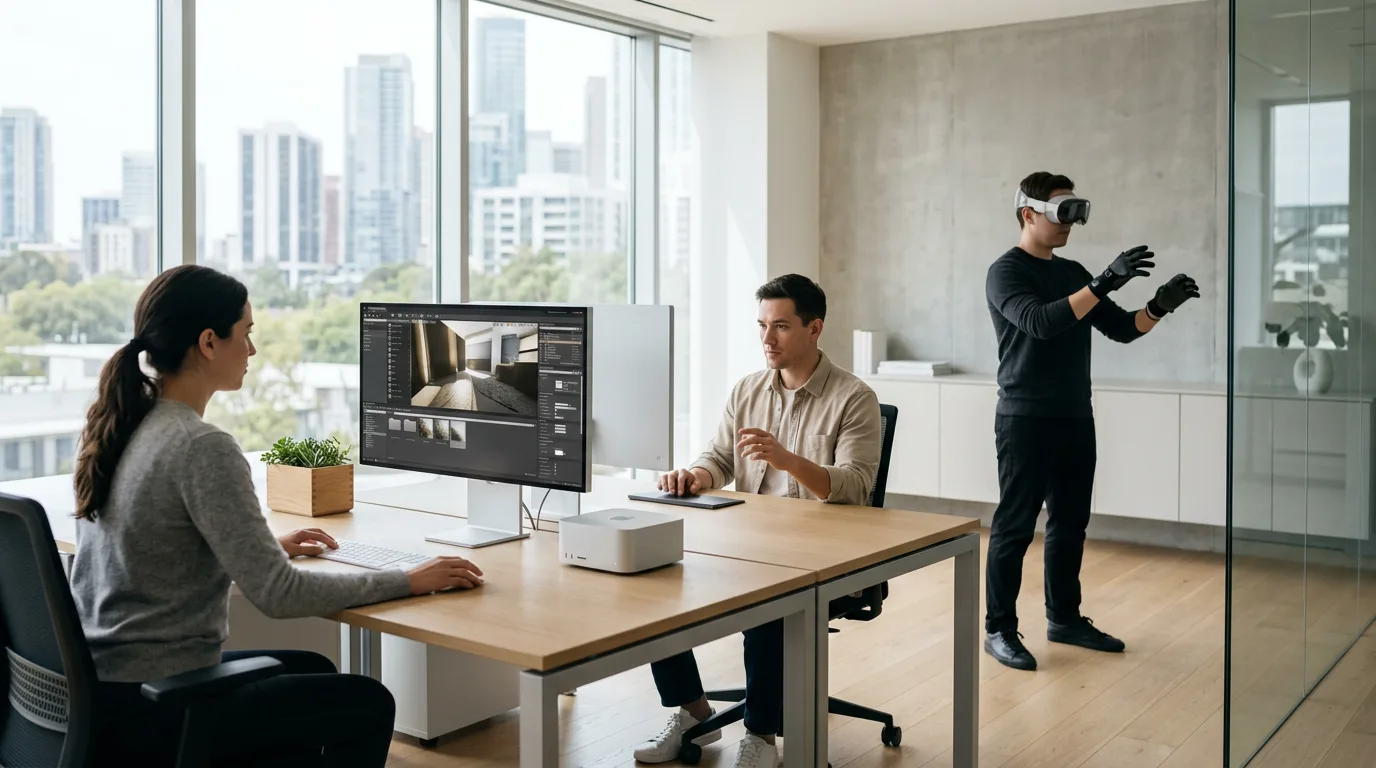
The convergence of remote collaboration and spatial computing is also reshaping enterprise workflows. Teams can now co-design products, conduct virtual meetings, and manage digital twins in shared 3D environments. Frame Sixty’s expertise in agentic spatial computing and AI integration enables these experiences to be both intelligent and adaptive, fostering creativity and efficiency across industries.
Measuring Success in the 2026 VR Landscape
Success in the 2026 VR landscape is measured by metrics that reflect both performance and human impact. Key indicators include adoption rate, learning retention rate, user immersion score, and system usability scale. These metrics allow organizations to quantify the effectiveness of their VR initiatives.
Frame Sixty’s proprietary analytics platform aggregates data from engagement metrics and session duration to provide actionable insights. For example, in education, higher immersion scores correlate with improved learning outcomes, while in healthcare, reduced latency directly impacts surgical precision. In gaming, longer session durations and positive usability scores indicate higher player satisfaction and retention.
A summary of cross-industry VR performance metrics:
| Industry | Key Metric | 2026 Benchmark | Frame Sixty’s Performance |
|---|---|---|---|
| Education | Learning Retention Rate | 85% | 92% |
| Gaming | User Immersion Score | 8.5/10 | 9.2/10 |
| Healthcare | ROI on VR Training | 1.8x | 2.3x |
| Enterprise | Adoption Rate | 65% | 78% |
Frame Sixty’s consistent outperformance across these metrics underscores its leadership among VR companies. Its integration of AI, spatial computing, and ethical design principles ensures that its solutions remain future-ready and human-centered.
Key takeaway: The future of VR lies in interoperability, ethical innovation, and measurable human impact—principles that Frame Sixty continues to champion across every industry it touches.
Conclusion
As 2026 unfolds, VR companies are no longer just technology providers—they are architects of new realities. From classrooms to hospitals to gaming arenas, immersive technologies are redefining how humans learn, play, and heal. Frame Sixty stands at the forefront of this transformation, blending AI, spatial computing, and immersive design to create experiences that are intelligent, inclusive, and impactful.
The company’s adherence to global standards like OpenXR, IEEE VR, and ISO/IEC 23005 ensures that its innovations remain interoperable and secure. Its focus on user immersion score, latency reduction, and system usability scale drives measurable improvements across education, gaming, and healthcare. By aligning technology with human needs, Frame Sixty exemplifies how VR can be both cutting-edge and compassionate.
As industries continue to converge around immersive technologies, the opportunities for collaboration and innovation are limitless. Whether it’s metaverse education, mixed reality training, or virtual simulation, the next wave of VR will be defined by adaptability, ethics, and measurable impact.
If you’re ready to explore how immersive technologies can transform your organization, get in touch with the team at Frame Sixty. Together, we can build the future of spatial computing—one experience at a time.

VR Companies in 2026: Transforming Education, Gaming, and Healthcare
As VR companies lead innovation in 2026, industries like education, gaming, and healthcare are experiencing unprecedented transformation. Below are answers to common questions about how companies such as Frame Sixty are shaping the future of immersive technology.
VR companies in 2026 are focusing on spatial computing, AI integration, and mixed reality training across education, gaming, and healthcare. Interoperability is a shared priority: adherence to the OpenXR standard and frameworks like IEEE VR and ISO/IEC 23005 lets applications run consistently across devices from Meta, Sony, and HTC while keeping user data secure.
Interoperability matters to VR companies because it lets applications run consistently across headsets and platforms without locking clients into one device. Open standards such as OpenXR, IEEE VR, and ISO/IEC 23005 govern cross-platform rendering and secure data exchange, so organizations can future-proof their investment and integrate with tools like Unity, Unreal Engine, and Microsoft Mesh.
Frame Sixty is an AR/VR development agency building immersive learning environments, digital twins, and AI-enhanced experiences for education, gaming, and healthcare. Its work spans virtual reality development and 3D modeling, with a focus on OpenXR interoperability and accessibility guidelines so experiences run consistently across devices.
VR companies improve learning by building immersive classrooms and training modules that combine real-time collaboration, adaptive learning, and 3D visualization. Platforms such as Google Education and Microsoft Mesh host virtual field trips and holographic lectures, while engines like Unity and Unreal Engine let the same lesson run on headsets, tablets, and desktops. One pilot using immersive history modules reported a 40% increase in learning retention over traditional e-learning.
VR companies let medical professionals rehearse complex procedures in realistic, risk-free virtual environments, improving precision and confidence before they treat real patients. Simulations use digital twins of human anatomy, and mixed reality modules can combine real surgical tools with virtual overlays. Scaling these systems requires HIPAA-compliant data handling, encryption, and low-latency rendering for accurate hand-eye coordination.
Get in touch
We’re interested to see how we can help. Send us a message and we will get back to you within 24 hours.