
How Virtual Reality in Medical Training is Revolutionizing Surgical Skills and Diagnostics
Mar 27, 2026

19 MIN READ
Virtual reality in medical training provides an immersive, risk-free environment where healthcare professionals can practice procedures, enhance diagnostic skills, and rehearse complex operations. Leveraging spatial computing, this technology transforms 2D medical scans into interactive 3D anatomical models, allowing for hands-on learning that improves knowledge retention and spatial understanding beyond traditional methods. Surgeons can repeatedly practice everything from laparoscopic techniques to patient-specific rehearsals, using haptic feedback to develop muscle memory and precision. These data-driven simulations track objective performance metrics to reduce error rates, accelerate skill acquisition, and ultimately improve patient outcomes by increasing surgical proficiency and efficiency.
Beyond the Textbook: Immersive Learning for a New Generation
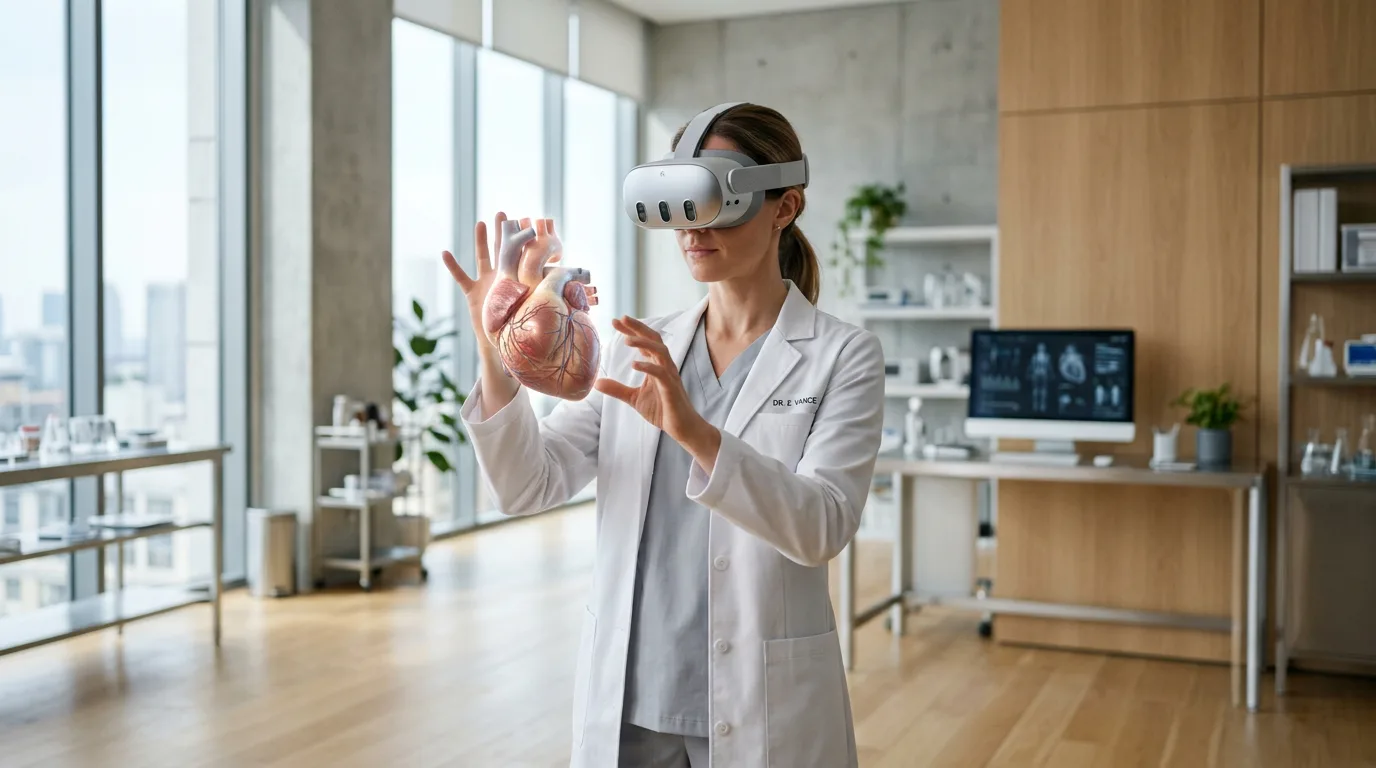
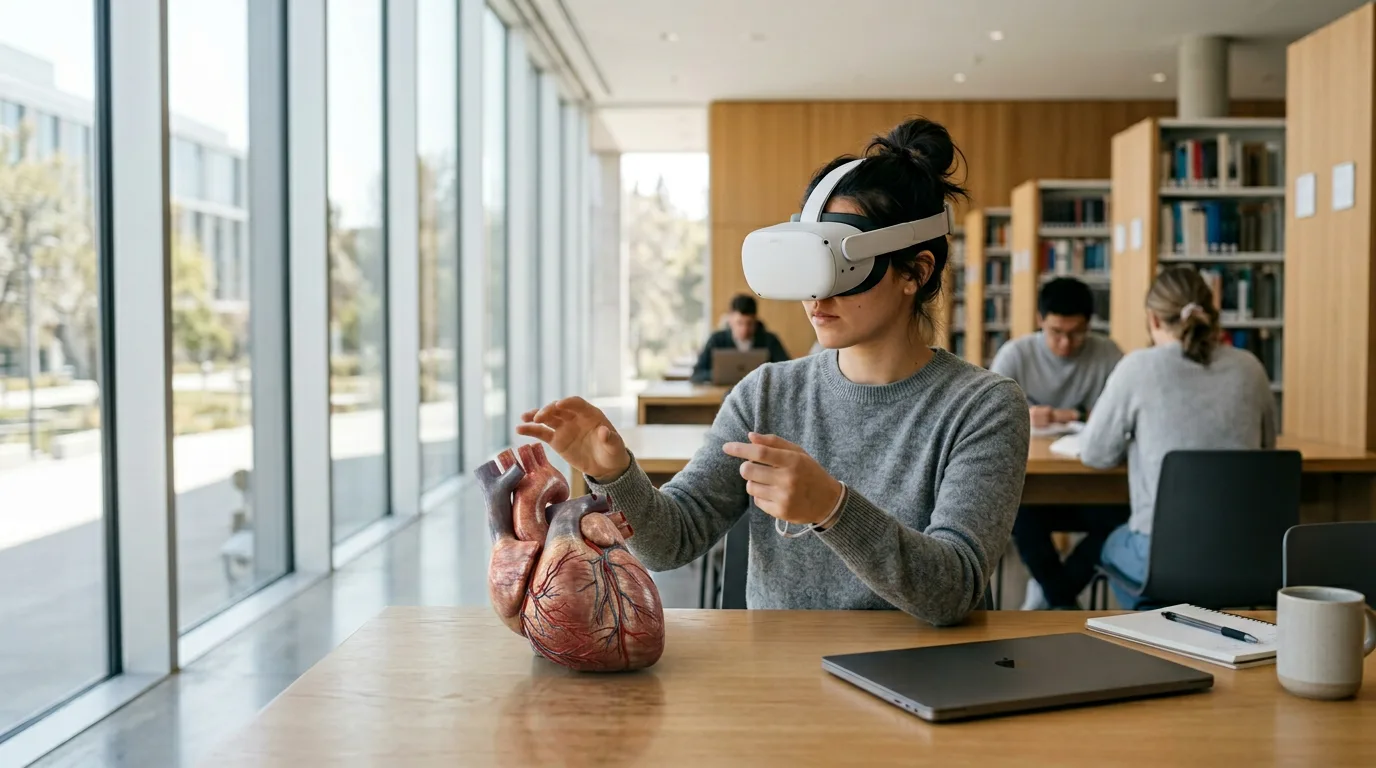
Immersive learning in medicine uses virtual and augmented reality to move beyond the limitations of two-dimensional resources, enabling students and professionals to understand complex anatomy and physiology through direct, three-dimensional interaction. This method dramatically improves knowledge retention and spatial understanding compared to traditional study. Traditional medical education relies heavily on 2D images from textbooks and flat screens. Even a 3D model viewed on a monitor lacks true stereoscopic depth; crucial spatial information is lost. Virtual reality solves this. When a student at the Stanford University School of Medicine puts on a headset like the Meta Quest 3, they aren’t just looking at a picture of a heart—they are holding it, rotating it, and seeing the intricate dance of its valves in true three-dimensional space.
This shift engages different cognitive pathways. Instead of memorizing diagrams, learners build a mental model based on embodied cognition—the idea that our physical interactions with the world shape our understanding. By virtually dissecting an organ or tracing a nerve pathway with their own hands, students develop a deeper, more intuitive grasp of its structure and function. This deepens anatomical understanding and boosts knowledge retention rates far beyond conventional methods. A landmark systematic review in The Lancet00250-8/fulltext) confirmed that VR training significantly improves trainees’ surgical skills compared to traditional methods, underscoring the technology’s evidence-based effectiveness.
The applications extend far beyond basic anatomy. Medical schools are using VR to simulate complex physiological processes. Imagine flying alongside red blood cells through the circulatory system to understand hemodynamics or witnessing the cellular-level cascade of an immune response. These are experiences that no textbook can replicate, making abstract concepts tangible and memorable. This is the essence of what is spatial computing: transforming digital information into interactive, three-dimensional experiences that feel native to our physical world.
Gamification and Engagement in Medical Education
To make learning more effective, platforms are incorporating principles of gamification in medical education to make learning more engaging and to provide objective feedback. By turning complex lessons into interactive challenges, complete with scoring, leaderboards, and immediate feedback loops, students remain motivated and can track their progress through objective data. This represents a significant leap from the subjective assessments common in traditional training. This approach, championed by institutions like Johns Hopkins Medicine, prepares clinicians with a more intuitive grasp of complex biological systems.
For example, an anatomy module might challenge students to reassemble a virtual skeleton against the clock or correctly identify muscles and their insertion points to “level up.” A pharmacology simulation could present a virtual patient with evolving symptoms, requiring the student to choose the correct drug and dosage under pressure. These scenarios are not just games; they are carefully designed educational tools that leverage the same psychological drivers that make video games so compelling.
The data generated from these interactions is invaluable. Instructors can view dashboards that highlight common areas of difficulty for an entire class or pinpoint specific weaknesses for an individual student. This allows for targeted, personalized instruction that is far more efficient than a one-size-fits-all curriculum. The integration of AI in virtual reality development is further enhancing this, with adaptive algorithms that adjust the difficulty of challenges in real-time based on the user’s performance, ensuring they are always operating at the optimal edge of their learning curve. This data-driven, engaging approach is a cornerstone of modern medical XR.
Need help building a medical VR simulation?
Frame Sixty is a full-service digital innovation studio specialising in AR/VR, mobile, and web development.
Honing the Scalpel in a Risk-Free Environment
The most profound impact of VR is arguably in surgical simulation, where it provides a safe, repeatable, and measurable environment for surgeons to practice procedures without any risk to patients. Aspiring and veteran surgeons can now practice complex procedures dozens or even hundreds of times before ever touching a patient, dramatically reducing the learning curve and the potential for error. This “flight simulator for surgeons” concept allows for the deliberate practice of not only routine steps but also the management of rare but critical complications—scenarios that are impossible to replicate on demand in the real world.
This risk-free environment fosters a culture of learning from mistakes. In a virtual operating room, a misplaced incision or an error in judgment leads not to patient harm, but to a data point and a learning opportunity. The simulation can be paused, reviewed with a mentor, and repeated until mastery is achieved. This iterative process builds not just technical skill but also the confidence and composure essential for high-stakes surgical performance. The value of this is immense, as it directly addresses the ethical and practical limitations of learning on live patients. A JAMA Surgery study found that VR-trained residents were not only faster and more accurate but also that the training was significantly more cost-effective than traditional methods.
Replicating the Tactile World with Haptic Feedback
A major breakthrough in surgical simulation software is the integration of realistic haptic feedback in medicine. Surgery is a profoundly tactile art, and early VR simulations that lacked the sense of touch were of limited use. Today, companies like FundamentalVR use specialized hardware, such as HaptX Gloves or force-feedback robotic arms, to simulate the resistance of tissue, the texture of bone, and the subtle feedback of a suture needle passing through skin. A detailed academic review on haptic technology highlights the rapid advancements in this field, which are crucial for creating truly immersive medical simulations.
This technology allows trainees to develop the muscle memory and delicate touch essential for surgical precision. When a user in a simulation drills into a virtual bone, the haptic device provides the exact resistance and vibration they would feel in a real procedure. When they perform a virtual suture, they can feel the tension on the thread. This level of haptic fidelity is what elevates a simulation from a simple visual exercise to a comprehensive motor skills trainer. It bridges the final gap between the virtual and physical worlds, ensuring that the skills learned in the headset transfer seamlessly to the operating room.
Mastering Complex Procedures: From Laparoscopy to Neurosurgery
VR platforms are tailored for a wide and growing range of specialties, each with its unique challenges and skill requirements. This specialization ensures that the training is relevant, effective, and directly applicable to a surgeon’s daily work.
- Orthopedics: Platforms like Osso VR focus on orthopedic procedures, allowing surgeons to practice implanting devices from manufacturers like Medtronic. These simulations are incredibly detailed, guiding the user through every step of a knee replacement or spinal fusion. The company provides extensive clinical evidence and validation studies demonstrating the effectiveness of its platform in improving surgical performance.
- Laparoscopy: VR is uniquely suited for mastering minimally invasive laparoscopic surgery. In these procedures, surgeons operate using long instruments inserted through small incisions while watching their movements on a 2D monitor. This creates challenges with depth perception and hand-eye coordination. VR simulations perfectly replicate this environment, helping trainees overcome the steep learning curve associated with these techniques.
- Neurosurgery: Advanced neurosurgery simulation lets residents navigate the brain’s delicate structures in a zero-risk environment. They can practice tumor resections or aneurysm clippings on anatomically correct models, learning how to avoid critical nerves and blood vessels with sub-millimeter precision.
- Robotic Surgery: The Da Vinci Surgical System has revolutionized many procedures, but training on the actual multi-million dollar console is a logistical and financial challenge. VR provides a solution, allowing surgeons to log hundreds of hours on a virtual console to master the controls and nuances of robotic surgery training without occupying an expensive, in-demand machine.
This breadth of applications shows that VR is not a niche tool but a versatile platform technology. As new hardware like the Apple Vision Pro enables new forms of VR training, the complexity and realism of these simulations will only continue to grow, covering an ever-wider range of medical procedures.
Patient-Specific Rehearsal for High-Stakes Operations
Perhaps the ultimate application of this technology is patient-specific surgical rehearsal. This process involves using a patient’s actual medical imaging data to create a high-fidelity virtual model of their unique anatomy, which surgeons can use to practice an operation before it happens. This is the medical equivalent of a pilot rehearsing a particularly challenging landing in a simulator configured with the exact weather and airport conditions they will face.
The workflow begins with standard MRI or CT scans, which are formatted according to the universal DICOM standard. This ensures that the imaging data can be read by various software systems. Specialized segmentation software then processes these scans to identify and isolate different anatomical structures—organs, bones, blood vessels, and, crucially, the pathology being treated, such as a tumor. The result is a “digital twin” of the patient’s relevant anatomy. You can learn more about the process of creating a digital twin in VR to understand the technical depth involved.
With this digital twin loaded into a VR environment, the surgical team can perform the entire operation virtually the day before the real procedure. They can test different surgical approaches, anticipate potential complications, and optimize their plan. For a complex cancer surgery, they can precisely map the tumor’s boundaries and its relationship to major blood vessels, planning their incisions to maximize removal while minimizing damage. This practice significantly improves procedural accuracy, reduces operating time, and leads to better patient outcomes.
A New Lens on Diagnostics: Visualizing the Invisible
VR’s utility extends beyond the operating room and into the diagnostic process itself, providing clinicians with a powerful new way to interpret complex medical imaging and collaborate on patient care. It transforms the traditional practice of radiology, moving far beyond flat, grayscale scans into a world of immersive, interactive anatomical exploration.
For decades, radiologists have performed the incredible mental feat of reconstructing a patient’s 3D anatomy by scrolling through hundreds of 2D image slices. While they are highly skilled at this, the process is cognitively demanding and can lead to subtle details being missed. VR eliminates this need for mental reconstruction by presenting the data in its true three-dimensional form, allowing for a more intuitive and comprehensive understanding of the patient’s condition.
From Flat Scans to Immersive 3D Models
Viewing a tumor on a 2D MRI scan is one thing; stepping into a virtual environment and walking around a high-fidelity 3D MRI visualization of that same tumor is another entirely. This immersive perspective provides an unparalleled understanding of its size, shape, and proximity to critical nerves and blood vessels. Tools like the open-source 3D Slicer and commercial platforms from companies like ImmersiveTouch allow radiologists and surgeons to collaboratively explore patient anatomy.
Within these virtual environments, clinicians can manipulate the 3D model in ways impossible on a flat screen. They can make certain tissues transparent to see underlying structures, apply clipping planes to look inside an organ, and color-code different elements for clarity. This is particularly powerful for surgical planning. A surgeon can virtually “peel away” layers of tissue to see the exact path a tumor has taken, planning their approach with a level of spatial awareness that was previously unattainable. This technology is exemplified in tools like a dedicated VR medical scan viewer, which is designed specifically for this purpose. The advent of next-generation headsets is pushing this further, exploring how the Apple Vision Pro in healthcare can overlay these 3D models into a physician’s real-world environment.
Enhancing Collaborative Diagnosis and Planning
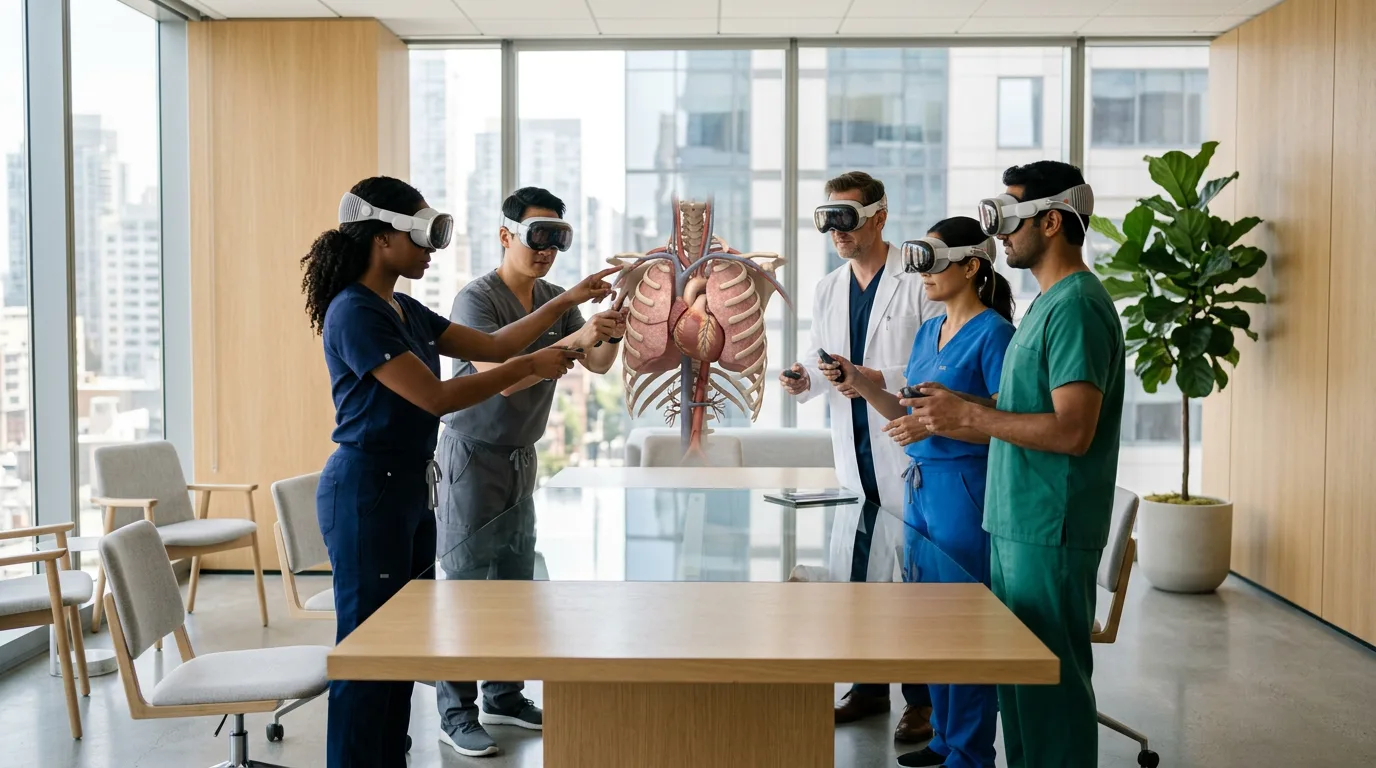
Multi-user VR platforms are creating virtual conference rooms where entire medical teams can meet inside a patient’s anatomy, regardless of their physical location. These collaborative sessions, powered by robust real-time 3D engines like Unreal Engine 5 and cloud-based environments like NVIDIA Omniverse, are revolutionizing multidisciplinary team meetings and tumor boards.
Imagine a complex cardiac case. A cardiologist in New York, a radiologist in Chicago, and a cardiothoracic surgeon in London can all don headsets and appear as avatars around a beating, 3D model of their patient’s heart. The radiologist can point out the precise location of a calcified plaque, the cardiologist can demonstrate the resulting blood flow disruption, and the surgeon can map out the optimal path for a bypass graft. This shared, interactive experience fosters a deeper level of understanding and consensus than is possible by looking at shared screens in a video conference. This use of NVIDIA Omniverse for XR digital twins is at the forefront of this collaborative revolution, enabling complex, high-fidelity models to be streamed to various devices for shared review.
The Technology and Frameworks Making It Possible
This medical revolution is not happening in a vacuum. It is supported by a rapidly evolving ecosystem of hardware, software, and regulatory standards that work in concert to ensure these powerful tools are effective, safe, and interoperable. Understanding this technological foundation is key to appreciating both the current capabilities and the future trajectory of VR in medicine.
Hardware Powering the Medical Metaverse
The quality of the virtual experience is directly tied to the quality of the hardware. On the high end, professional-grade headsets like the Varjo XR-4 provide photorealistic visual fidelity and eye-tracking capabilities, which are essential for medical-grade simulations where precision is paramount. At the other end of the spectrum, accessible and powerful standalone devices like the Meta Quest 3 are making VR training more affordable and scalable, allowing hospitals to deploy training programs to dozens of residents simultaneously without the need for high-end PCs.
| Headset Type | Key Features for Medical Use | Example |
|---|---|---|
| High-Fidelity PC VR | Highest resolution, eye-tracking, wide field of view, advanced passthrough. | Varjo XR-4 |
| Standalone VR | All-in-one, no PC required, highly scalable, lower cost. | Meta Quest 3 |
| Spatial Computer | High-resolution passthrough for mixed reality, intuitive hand/eye input. | Apple Vision Pro |
The development of these immersive experiences relies on powerful creation tools. The Unity Engine is a dominant force in this space, providing a flexible and robust platform for building realistic and interactive medical scenarios. Many of the leading virtual reality development services and even the top Unity development companies have dedicated practices focused on creating these life-saving applications.
Ensuring Safety, Efficacy, and Compliance
As these tools become integral to clinical practice, they must meet the same rigorous standards as any other medical device. This regulatory framework ensures patient safety, data privacy, and the clinical validity of the training provided.
- FDA Clearance: Many surgical simulation platforms that are used for diagnosis or pre-operative planning seek FDA 510(k) clearance. This process, detailed on the FDA’s official site, demonstrates that the software is as safe and effective as existing, legally marketed devices. This clearance provides a critical stamp of regulatory approval.
- HIPAA Compliance: Any system that handles patient data, such as MRI or CT scans for patient-specific rehearsal, must adhere to the strict privacy and security rules of the Health Insurance Portability and Accountability Act. Developers must ensure all data is encrypted, access is tightly controlled, and the platform is protected from breaches, as outlined by the U.S. Department of Health & Human Services.
- Accreditation: Leading medical bodies are establishing standards for simulation-based training. The American College of Surgeons (ACS) accredits educational institutes that meet high standards for simulation, lending credibility to programs that use validated VR tools.
- Interoperability Standards: To avoid a fragmented ecosystem, industry-wide standards like OpenXR are crucial. The Khronos Group’s OpenXR standard provides a universal interface between VR/AR hardware and software. This means developers can build an application once and have it run on a wide variety of headsets, fostering innovation and preventing vendor lock-in.
This robust framework of technology and regulation is what allows VR to transition from a promising novelty to a trusted and integral component of modern medical education and practice.
Measuring Success: The Tangible ROI of Virtual Training
The widespread adoption of virtual reality in medical training is not just based on its novelty or futuristic appeal; it’s driven by a growing body of hard evidence and measurable results that directly impact both hospital finances and, most importantly, patient lives. For any new technology to be embraced by the healthcare industry, it must demonstrate a clear return on investment (ROI), and VR is delivering on multiple fronts.
Quantifying Skill Improvement
Unlike traditional apprenticeships, where assessment can be subjective, VR platforms are data-gathering machines. They track a host of objective surgical proficiency metrics with granular detail, providing a clear, unbiased picture of a trainee’s progress and highlighting specific areas that need improvement.
This data-driven approach allows for the creation of proficiency-based curricula, where trainees must demonstrate a certain level of skill on the simulator before they are allowed to perform a procedure on a real patient. Key metrics often include:
- Time-to-completion: How quickly and efficiently the user completes the procedure.
- Motion economy: Tracking the total distance the user’s virtual hands travel. More experienced surgeons have more efficient, deliberate movements.
- Error rate reduction: Counting the number of mistakes, such as damaging nearby healthy tissue or deviating from the correct procedural steps.
- Instrument handling analysis: Assessing the proper use of surgical tools, including angle of approach and application of force.
- Procedural accuracy: Measuring how closely the user’s actions match the ideal surgical plan.
AI algorithms analyze this data to provide personalized feedback and identify patterns. This leads to a demonstrable error rate reduction and a more standardized, high level of skill across all trainees. This is the core of a successful virtual reality training simulation: it’s not just about practice, but about measured, intelligent practice.
The Impact on Patient Outcomes and Hospital Costs
The ultimate measure of any medical training tool is its effect on patient health. By enabling surgeons to become more proficient in a risk-free environment, VR training has a direct and positive patient outcome correlation. Studies have shown that surgeons trained in VR are faster, more accurate, and make fewer errors in the operating room. This translates directly to fewer complications, reduced infection rates, shorter hospital stays, and lower readmission rates.
For hospital administrators, the ROI of virtual reality is compelling and multifaceted. The financial benefits extend far beyond the training department.
- Reduced Direct Costs: VR can significantly lower expenses associated with traditional training methods, such as costly cadaver labs, animal testing, and the purchase and maintenance of expensive physical simulators.
- Increased OR Efficiency: Better-prepared surgeons work more efficiently, which can reduce operating room time. As OR time can cost upwards of $100 per minute, even small time savings per procedure can lead to massive cost reductions over a year.
- Lower Complication Costs: The most significant financial impact comes from reducing the rate of surgical complications. A single complication can add tens of thousands of dollars to the cost of a patient’s care. By improving surgeon skill and reducing error rates, VR training provides a powerful lever for controlling these downstream costs.
- Faster Onboarding: New surgeons and residents can get up to speed on complex procedures and new medical devices much more quickly, allowing them to become productive members of the surgical team sooner.
The evidence consistently shows that investing in a robust VR training program is not an expense, but a strategic investment in quality, safety, and financial stability.
Conclusion
The integration of virtual reality into medical training is not a futuristic concept; it is a present-day revolution that is fundamentally reshaping how we educate the next generation of clinicians and how we deliver patient care. We have moved beyond the theoretical and into the practical, with evidence-backed platforms that enhance anatomical understanding, provide risk-free surgical rehearsal, and offer new dimensions in diagnostic imaging. From the haptic feedback that simulates the feel of tissue to the patient-specific digital twins that allow for pre-operative practice, VR is creating a new standard of preparation and precision.
This technological shift is underpinned by a robust ecosystem of advanced hardware, powerful software engines, and critical regulatory frameworks that ensure these tools are both safe and effective. The measurable results are undeniable: VR training leads to quantifiable skill improvements, significant reductions in surgical errors, and a clear return on investment for healthcare institutions through improved efficiency and better patient outcomes. This is more than just an incremental improvement; it is a paradigm shift that empowers medical professionals with capabilities that were unimaginable just a decade ago.
As technology continues to advance, the line between the virtual and the real will only continue to blur. The fusion of VR with artificial intelligence, robotics, and spatial computing platforms will unlock even more powerful applications, leading to a future where every surgeon is trained to the highest possible standard and every patient benefits from that expertise. The journey is just beginning, but the destination is clear: a safer, more effective, and more efficient future for medicine.
If you are looking to explore how custom virtual reality solutions can revolutionize training and operations within your organization, the expert team at Frame Sixty is ready to help. Get in touch with us today to discuss your project and discover the power of immersive technology.

Frequently Asked Questions About Virtual Reality in Medical Training
Explore common questions about how virtual reality is transforming medical education. Learn about its applications in surgical training, diagnostics, and the technology driving this revolution.
Virtual reality in medical training is the use of immersive simulation to let healthcare professionals practice procedures, enhance diagnostic skills, and rehearse complex operations in a risk-free 3D environment. Instead of learning from textbooks and 2D scans, trainees hold and rotate anatomy in true stereoscopic depth, which improves knowledge retention and spatial understanding beyond traditional methods.
Yes - studies in The Lancet and JAMA Surgery show that VR-trained individuals are faster, more accurate, and demonstrate significantly improved surgical skills compared to those trained traditionally. The JAMA Surgery study also found VR training more cost-effective than traditional methods, and VR platforms track objective metrics such as time-to-completion, motion economy, and error rate to verify proficiency.
Haptic feedback matters in VR surgical training because surgery is a tactile skill: specialized hardware such as HaptX Gloves and force-feedback arms simulates the resistance of tissue, the texture of bone, and the tension of a suture thread. That fidelity lets trainees build the muscle memory and delicate touch essential for surgical precision, so skills learned in the headset transfer to the operating room.
VR medical training platforms used for diagnosis or pre-operative planning often seek FDA 510(k) clearance to demonstrate they are as safe and effective as existing devices, and any system handling patient scans must be HIPAA compliant. The American College of Surgeons also accredits simulation-based education institutes, and the OpenXR standard keeps validated applications running across different headsets.
Patient-specific surgical rehearsal in VR uses a patient's own MRI or CT scans, formatted in the DICOM standard, to build a digital twin of their anatomy that the surgical team can operate on virtually before the real procedure. Surgeons test approaches, map a tumor's boundaries against major blood vessels, and optimize their plan, which improves procedural accuracy and reduces operating time.
The ROI of VR medical training comes from reduced direct training costs, higher operating room efficiency, and fewer surgical complications. VR replaces expensive cadaver labs and physical simulators, better-prepared surgeons save OR time that can cost upwards of $100 per minute, and lower error rates cut the downstream cost of complications. Frame Sixty builds this kind of custom VR simulation for clinical training programs.
Get in touch
We’re interested to see how we can help. Send us a message and we will get back to you within 24 hours.