
Virtual Car Showroom: What It Is, What It Costs, and Whether to Build or Buy
Nov 25, 2026

12 MIN READ
A virtual car showroom is a digital environment where shoppers browse, configure, or place a vehicle in their own space without visiting a physical lot. The term covers four distinct technologies, from AI-enhanced 360° photo tours to fully immersive VR kiosks. Which one fits depends on your inventory and budget, and the price gap between the simplest and the most advanced option is wide enough to make choosing the right tier the entire decision.
Key Takeaways
- A virtual car showroom spans four tiers: 360° photo tours, WebAR viewers, 3D configurators, and full VR kiosks, each suited to a different inventory type and budget.
- The automotive virtual showroom market reached $6.51 billion in 2025 and is forecast to hit $12.70 billion by 2030 (Next Move Strategy Consulting).
- Used-car dealers should buy SaaS 360° tools; only new-vehicle franchises with OEM-supplied 3D models should build a custom configurator.
- Impel’s 360° WalkArounds drove a 92% increase in saved cars and a 68% increase in leads submitted on Cars.com (2026).
- Configurator users generate 35% more qualified leads and decide 50% faster, and Audi earns €1,200 more per vehicle (Inkn Algorithm, 2026).
What Is a Virtual Car Showroom?
A virtual car showroom is any digital tool that lets a buyer explore a vehicle online instead of walking a physical lot. In practice the phrase collapses four separate products: AI-enhanced 360° photo tours, browser-based WebAR viewers, real-time 3D configurators, and headset VR kiosks. Vendors market all four under the same label, which is why pricing quotes for a “virtual car showroom” vary by a factor of a thousand.

That confusion costs dealers money. A used-car lot that buys a six-figure configurator gets no return, because a configurator needs a 3D model per vehicle model and a used lot sells unique units.
Here is the position we will defend for the rest of this guide: the build-versus-buy decision is really an inventory decision. If you sell used cars, buy a SaaS 360° tool. If you sell new vehicles with manufacturer-supplied 3D models across several rooftops, build custom. Most spending that falls between those two cases is waste. The data backs this up. According to JD Power research cited by CarCutter’s 2026 dealership AR guide, 90% of shoppers consider vehicle photos extremely important and 40% say they would buy based on imagery alone, which means the photo tier earns its keep before any AR spend.
The Four Technology Tiers: From 360° Tours to Full VR Kiosks
A virtual car showroom comes in four technology tiers, and each one suits a different inventory type, budget, and sales goal. The four tiers are 360° photo tours, WebAR viewers, interactive 3D configurators, and full VR showroom kiosks. They differ in what assets they require, what hardware the buyer needs, and how much they cost to stand up. The sections below define each tier on its own terms.
Tier 1 — 360° Tours and AI-Enhanced Listings
A 360° tour tier uses software to enhance or replace vehicle photos with consistent backgrounds and spin views, and it needs no custom 3D model. This is the only tier that works for used-car inventory, because it runs on photographs of the actual unit rather than a manufacturer model. SaaS platforms such as Impel, CarCutter, and Spyne dominate here. Impel’s merchandising AI reports that listings with 360° WalkArounds drove a 92% increase in saved cars, a 68% increase in leads submitted, and a 29% higher vehicle detail page conversion rate across a Cars.com study of more than one million visits in 2026.
This tier delivers measurable results today. As CarCutter’s guide puts it plainly, “true AR is mostly at the OEM level today,” while 360° spins and AI-enhanced photography move the needle at the dealer level now. The tradeoff is scope. A 360° tour shows the car. It does not let a buyer swap paint or trim in real time.
Tier 2 — WebAR: Browser-Based AR Without an App Download
WebAR loads a 3D vehicle model in the phone browser and lets the buyer place a full-size car in their driveway through the camera, with no app to install. The technology runs on the WebXR standard with frameworks such as 8th Wall, Babylon.js, and Three.js, serving GLB or USDZ model files. WebAR sits mostly at the manufacturer level today, because it needs a 3D model per vehicle model. BMW, Hyundai, and the Renault Megane E-Tech have all shipped model-specific WebAR experiences.
For a franchise dealer whose manufacturer already supplies 3D assets, WebAR is a strong mid-tier play. Buyers get a true try-before-you-visit moment. No download, no friction. A single-dealership WebAR build runs roughly $15,000 to $50,000, and a multi-dealership version runs $50,000 to $180,000, per 2026 implementation data. WebAR suits new-vehicle franchises more than independent used lots.
Tier 3 — Interactive 3D Configurator (WebGL)
A 3D configurator renders a vehicle in the browser and lets the buyer change paint, trim, and options in real time using WebGL, so the shopper sees the exact build they will purchase. Volume brands use Three.js, which loads a scene near one megabyte in a few seconds on a mid-range phone. Premium brands such as Audi, Porsche, and Mercedes-Benz use Unreal Engine 5 with Pixel Streaming for photorealistic fidelity. The payoff is engagement and attach rate.
According to the 2026 automotive configurator analysis from Inkn Algorithm, configurator users generate 35% more qualified leads, select 20% more premium trims, and reach a purchase decision 50% faster, and Audi reports an extra €1,200 of revenue per vehicle from three additional features selected on average. London Dynamics’ 2025 case study found AutoTrader Canada saw a 2.5 times increase in engagement after launching a Three.js configurator for the Mitsubishi Outlander PHEV. A configurator is the core technology behind most custom builds, and it is the tier covered in depth on our 3D configurator service page.
Tier 4 — Full VR Showroom Kiosk
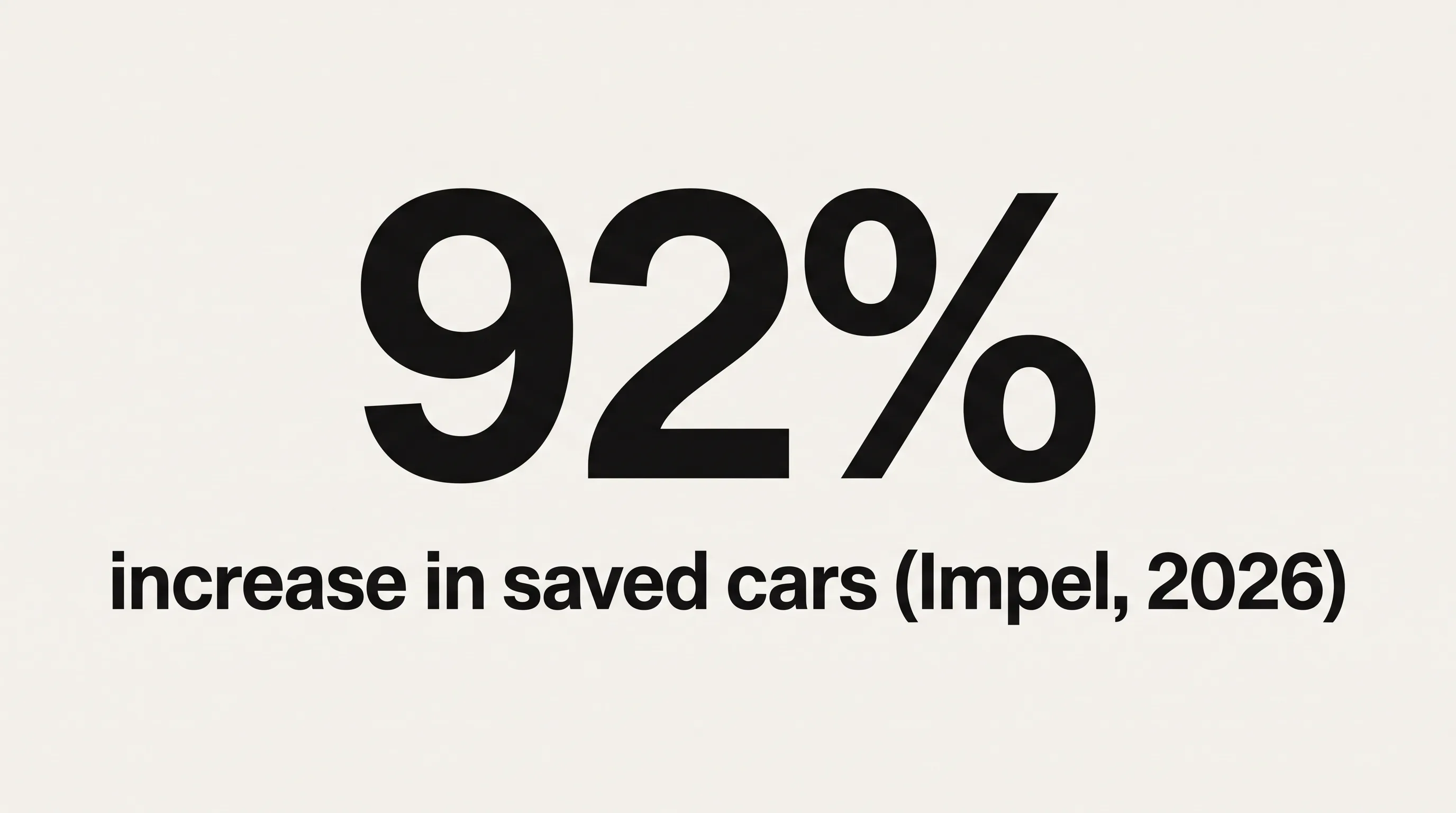
A full VR showroom kiosk places the buyer inside an immersive 3D environment, a dealership floor, a drive simulation, or a side-by-side vehicle comparison, delivered on a headset such as Meta Quest 3, Samsung Galaxy XR, or Apple Vision Pro. This tier delivers the deepest experience and carries the highest cost. It fits flagship manufacturer showrooms, high-volume luxury dealers, and auto shows rather than everyday inventory browsing.
A VR kiosk can feed a buyer’s configuration straight into dealer systems. Per Showroom Solutions’ 2026 implementation guide, configurations flow into CRM and dealer management systems such as CDK Global, Dealertrack, and RouteOne as leads and credit applications without manual rekeying. A single-model Unreal Engine build runs $150,000 to $500,000, and a multi-model platform runs $300,000 to over $1 million. London Dynamics notes that 74% of surveyed car buyers say personalized experiences will influence their next purchase, which is the demand VR kiosks are built to capture.
How Much Does a Virtual Car Showroom Cost?
A virtual car showroom costs anywhere from under $700 to more than $1 million, and the number is set by which of the four tiers you choose and whether you buy SaaS or build custom. The entry point is a do-it-yourself 360° setup. The ceiling is a full multi-model VR platform. The table below maps each tier to its typical cost, drawn from 2026 pricing data across Inkn Algorithm, Rextheme, and CarCutter.
| Tier | Approach | Typical cost | Ongoing |
|---|---|---|---|
| 360° tours | SaaS (Impel, CarCutter) | $140–$300+/month | Subscription |
| 360° tours | DIY (WPVR plugin) | Under $700 one-time | Hosting |
| WebAR | Custom, single dealer | $15,000–$50,000 | Hosting + updates |
| WebAR | Custom, multi-dealer | $50,000–$180,000 | Hosting + updates |
| 3D configurator | Three.js / WebGL | $80,000–$280,000 | Maintenance |
| 3D configurator | Unreal Engine | $150,000–$500,000 | Maintenance |
| Full VR platform | Multi-model | $300,000–$1,000,000+ | Maintenance |
One line item drives the custom numbers: 3D vehicle modeling alone runs $10,000 to $50,000 per model. At the low end, Rextheme’s 2026 build guide shows a basic 360° showroom standing up for under $700 using a WordPress plugin and a smartphone. The lesson is that the cheapest and most expensive virtual car showrooms are not the same product.
How Long Does It Take to Build a Virtual Car Showroom?
A virtual car showroom takes anywhere from a few days to a full year to build, scaling with tier complexity. A SaaS 360° tool goes live in days. A custom multi-model VR platform takes months. The ranges below come from 2026 build data.
- SaaS 360° setup: days to two weeks
- WebAR pilot (MVP): four to eight weeks
- Three.js WebGL configurator, single model: 8 to 16 weeks
- Unreal Engine configurator, single model: 12 to 24 weeks
- Full multi-model platform: 6 to 12 months
Showroom Solutions recommends a phased rollout: a four-to-eight-week pilot first, then full dealer-network deployment across three to six months. That approach de-risks the spend by proving the concept before the lineup build.
When we scope a WebAR pilot at Frame Sixty, an AR/VR and spatial computing development studio, we start with one hero model rather than a full lineup. A single configurable model in glTF or GLB, tuned to hold the web payload near one megabyte, loads a Three.js scene in a few seconds on a mid-range phone, and that budget drives most of our early asset decisions. Proving one vehicle in four to eight weeks tells us what the full lineup will cost before anyone commits to it.
Need help building a virtual car showroom?
We are here to help!
What ROI Can Dealerships Expect From a Virtual Car Showroom?
ROI from a virtual car showroom depends on the tier and is strongest where the data is cleanest: the 360° SaaS tier and the manufacturer-level configurator. At the dealer level, honest reporting matters. CarCutter states that “broad dealer-level ROI data on AR does not exist yet,” so a dealer should weigh the 360° numbers, which are well documented, more heavily than AR projections.
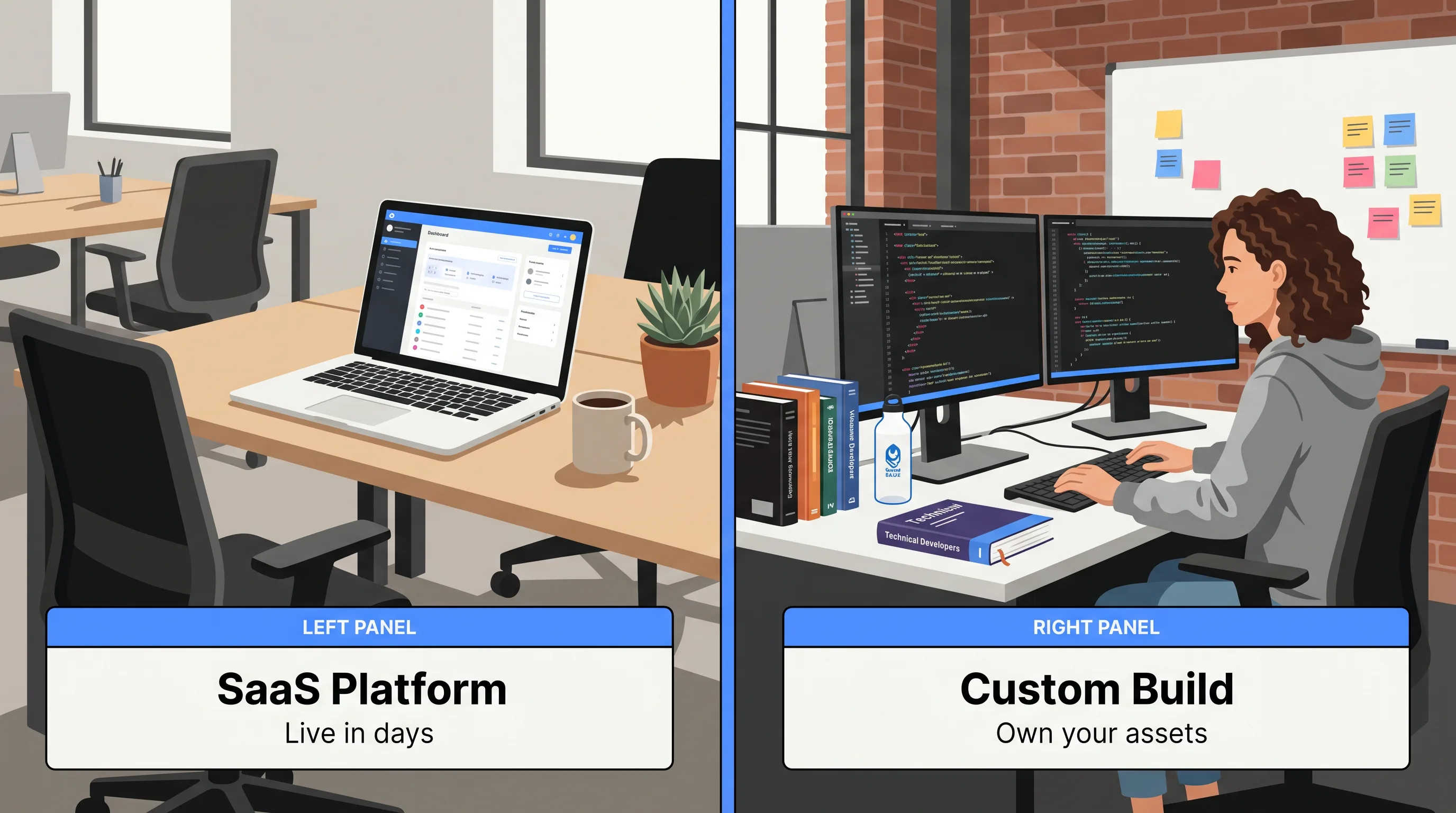
The documented figures are strong. Impel’s Cars.com study found 360° content produced a 92% increase in saved cars and a 36% reduction in days to turn inventory in 2026. Transforma Insights reports a 20% increase in customer conversions at dealerships using VR showrooms and AR test drives versus traditional methods, citing an Automotive News study, and notes that 86% of potential buyers and 79% of dealers believe digital tools save showroom time (Cox Automotive, 2023). Broader benchmarks from YORD Studio’s 2026 XR trends report put AR configurators at 40% to 90% higher purchase confidence and up to three times longer session duration.
One caveat the ranking pages skip: nearly every configurator percentage above was measured at the manufacturer level, where traffic volume and brand pull are far higher than at a single rooftop. A dealer group should treat those figures as a ceiling, not a forecast, and model its own numbers against its actual web traffic and lead-to-close rate. As Alice Coleman, Head of Public Relations and Auto Expert at EpicVIN, told London Dynamics in 2025, “3D car customization is about more than just cool design – it’s a game changer.” The game only changes, though, when the traffic exists to feed it.
SaaS Platforms vs. a Custom-Built Virtual Car Showroom
The choice between a SaaS platform and a custom-built virtual car showroom comes down to speed and low risk versus ownership and scale. SaaS goes live in days with proven lead metrics and no engineering. A custom build takes months but delivers a branded, integrated, ownable system. The right call depends on how many rooftops you run and whether you sell new or used inventory. The two subsections below compare the paths directly.
What SaaS Platforms Offer — and Where They Stop
SaaS platforms give a dealer a working virtual car showroom fast, with no 3D modeling and documented lead results, but they stop at the edge of the vendor’s template. Impel bundles 360° WalkArounds, an AI Virtual Booth, Feature Tours, and F&I Advantage, and it is manufacturer co-op eligible. Charpstar’s automotive AR offering prices configurators from $20 per model per month on volume plans. Rextheme and its WPVR plugin anchor the do-it-yourself floor.
The limits show up at scale. Branding is constrained to platform templates. Deep dealer management system integration is rare on entry plans. You do not own the asset library, and if you leave the platform, the content leaves with it. SaaS is the right first move for a single rooftop that wants speed over ownership.
What a Custom Build Delivers
A custom-built virtual car showroom delivers brand ownership, deep system integration, and reusable assets that a SaaS subscription cannot match. The showroom matches your dealer group identity rather than a shared template. Configurations export straight into CDK Global, Dealertrack, or RouteOne as leads and credit applications without rekeying.
The asset math is the part most comparisons miss. A 3D vehicle model built once in GLB or USDZ redeploys across the web configurator, mobile WebAR, a VR kiosk, and even sales-floor training, so the $10,000-to-$50,000 modeling cost amortizes across four channels instead of one. That changes the build-versus-buy sum entirely. Custom builds typically reach cost parity with mid-market SaaS within one to two years for groups running three or more rooftops, which is why the decision tilts custom as a dealer group grows. The engineering behind this tier is what we detail on our general virtual showroom service page.
When Does Building a Custom Virtual Car Showroom Make Financial Sense?
Building a custom virtual car showroom makes financial sense when you run multiple rooftops, sell new vehicles with manufacturer 3D assets, and need lead data flowing into your dealer systems. Below that threshold, a SaaS subscription almost always wins on cost and speed. The criteria below turn the inventory-decision principle into a checklist.
Build custom when:
- You operate three or more rooftops, so a one-time build amortizes where monthly subscriptions compound.
- You sell new-vehicle inventory, where a 3D model per model (not per unit) is feasible and configurator ROI is proven.
- You need dealer management system or CRM integration, with lead data flowing into CDK Global or Dealertrack automatically.
- Your manufacturer funds 3D assets, since many co-op programs cover AR and VR tooling that custom builds can tap.
- Brand differentiation matters, because a group competing with manufacturer-direct digital retail needs a distinct experience.
Stay with SaaS when the opposite holds. In our automotive work at Frame Sixty, the clearest signal that a dealer should not build custom is a used-car-heavy lot: without manufacturer 3D models, there is nothing to configure, and a 360° SaaS tool captures the same leads for a fraction of the spend. We also steer single-rooftop dealers with sub-$20,000 budgets or four-week timelines toward SaaS first, then revisit a custom build once their traffic justifies the asset investment. The judgment is not about which technology is most impressive. It is about matching the tier to the inventory.
For dealers weighing AR earlier in the vehicle lifecycle, the same build-first discipline applies to production, which we cover in our guide to augmented reality in car manufacturing.
Conclusion
A virtual car showroom is not one product but four tiers, and the price gap between them, from under $700 to past $1 million, is the whole decision. The market is growing fast. According to Next Move Strategy Consulting’s 2025 report, the automotive virtual showroom market grew from $5.70 billion in 2024 to $6.51 billion in 2025 and is forecast to reach $12.70 billion by 2030 at a 12.5% compound annual growth rate, driven by electric-vehicle adoption and buyers who now expect to shop online before they ever visit a lot.
The principle to carry into any vendor call is simple: the build-versus-buy choice is an inventory choice. Used-car dealers should buy a SaaS 360° tool and capture the documented lead lift without paying for 3D models they cannot use. New-vehicle franchises running several rooftops, with manufacturer assets and systems to integrate, are the dealers for whom a custom configurator or VR showroom pays back. Match the tier to the inventory and the ROI follows.
Frame Sixty builds custom virtual car showrooms across all four tiers, from four-to-eight-week WebAR pilots to full multi-model Unreal Engine platforms with dealer management system integration. If you are weighing whether to build or buy for your dealership, get in touch with our team and we will help you scope the tier that fits your inventory, your rooftops, and your budget.
FAQs
Common questions about virtual car showrooms, covering the technology tiers, costs, 3D model formats, and how to decide between buying a SaaS platform and building a custom system.
Yes, a used-car dealership can run a virtual car showroom using the 360° tour tier, which enhances photographs of the actual unit and needs no custom 3D model. SaaS platforms like Impel and CarCutter power this tier, and Impel's 360° WalkArounds drove a 92% increase in saved cars on Cars.com in 2026. Configurators, by contrast, require a 3D model per vehicle model and do not fit used inventory.
No, customers do not need to download an app to use a WebAR car showroom, which loads a 3D vehicle model directly in the phone browser and places a full-size car in the driveway through the camera. It runs on the WebXR standard with frameworks such as 8th Wall, Babylon.js, and Three.js. BMW, Hyundai, and the Renault Megane E-Tech have all shipped browser-based WebAR experiences.
The leading virtual car showroom software tools in 2026 are Impel, CarCutter, and Spyne for AI-enhanced 360° tours, Rextheme's WPVR plugin for do-it-yourself setups, and Three.js or Unreal Engine 5 for custom configurators. Impel bundles 360° WalkArounds, an AI Virtual Booth, and Feature Tours, and is manufacturer co-op eligible. SaaS pricing runs $140 to $300-plus per month, while a basic WPVR setup costs under $700.
Virtual car showrooms use GLB, glTF, and USDZ as their core 3D model formats. GLB and glTF serve web configurators and WebAR through WebGL and WebXR, while USDZ drives AR on Apple devices. A single configurable model is typically tuned to hold the web payload near one megabyte, so a Three.js scene loads in a few seconds on a mid-range phone, and that one model can redeploy across web, mobile AR, and VR.
Yes, a custom virtual car showroom can integrate with a dealer management system or CRM, feeding a buyer's configuration straight into platforms such as CDK Global, Dealertrack, and RouteOne as leads and credit applications without manual rekeying. This deep integration is usually a custom-build feature, since entry-level SaaS plans rarely include it. VR kiosks commonly pass completed configurations into dealer systems automatically.
Luxury OEMs like Audi, Porsche, and Mercedes-Benz use real-time 3D configurators built on Unreal Engine 5 with Pixel Streaming for photorealistic fidelity. Audi reports an extra €1,200 of revenue per vehicle from three additional features customers select on average using its configurator. These premium builds prioritize visual quality over the lighter Three.js scenes that volume brands use to load quickly on mid-range phones.
Impel is a SaaS platform that gives a dealer a working 360° virtual showroom in days with no 3D modeling and documented lead results, but it stops at the vendor's template. A custom-built virtual showroom takes months yet delivers brand ownership, deep dealer management system integration, and reusable 3D assets you keep. With Impel, if you leave the platform, the content leaves with it.
Building a custom virtual car showroom reaches cost parity with mid-market SaaS within one to two years for dealer groups running three or more rooftops, because a one-time build amortizes where monthly subscriptions compound. The math improves further because one 3D model, costing $10,000 to $50,000, redeploys across web, mobile AR, VR kiosk, and sales training rather than a single channel.
A virtual car showroom development partner should scope the tier to your inventory rather than sell the most impressive technology, and prove one hero model before committing to a full lineup. Frame Sixty, an AR/VR and spatial computing development studio, builds across all four tiers, from four-to-eight-week WebAR pilots to multi-model Unreal Engine platforms with dealer management system integration, and steers used-car-heavy lots toward SaaS instead.
Get in touch
We’re interested to see how we can help. Send us a message and we will get back to you within 24 hours.