
AR/VR Development
Frame Sixty is an AR/VR development agency specializing in enterprise solutions for Apple Vision Pro, Meta Quest, web AR and mobile.










Why Frame Sixty
What we do
Frame Sixty is an award-winning, US-based leader in AR/VR development. As certified Apple Vision Pro developers, we build immersive applications for all major platforms—including Vision Pro, Unity, native VisionOS, and Meta Quest—and collaborate with the world’s largest enterprises to deliver groundbreaking augmented reality solutions.

Apple Vision Pro
Augmented Reality
Virtual Reality
Web AR
Mobile Apps
Artificial Intelligence
Recent Work


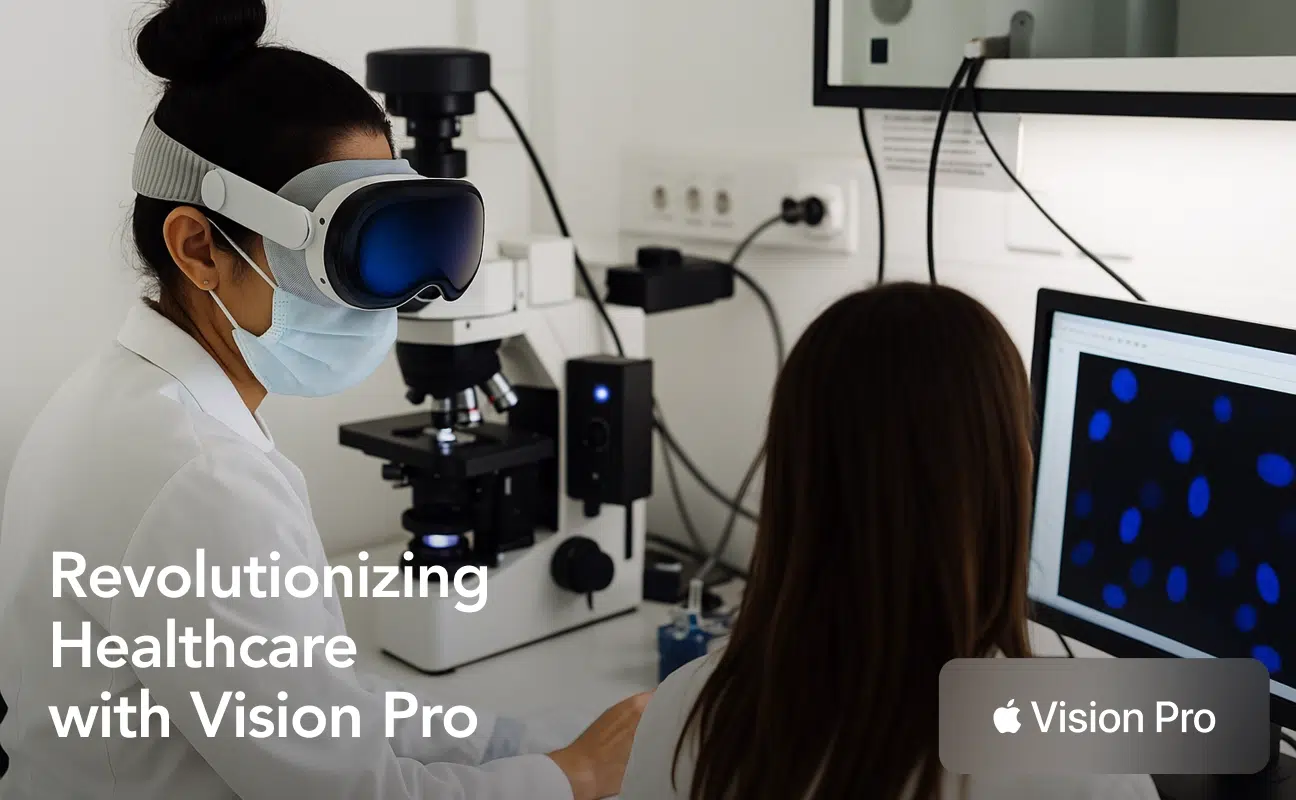


Apple Vision Pro apps
Key Stats
With decades of expertise and multiple patents in AR/VR development and artificial intelligence, we are pioneers in spatial computing and immersive experiences
20+ years
20+ years collective AR expertise
Our veteran team has spent two decades advancing spatial computing—designing cutting-edge AR/VR experiences for leading global brands.
10M+
Downloads
As an AR/VR development agency, our combined experience has resulted in a staggering 10 million+ downloads.
10
Patents owned
We hold ten published patents spanning augmented reality, artificial intelligence, and object identification.
100+
Apps developed
We have successfully developed over 100 AR/VR applications, deployed worldwide and supporting multiple languages.
Capabilities
We specialize in AR/VR development, building spatial experiences for Vision Pro, Meta Quest, and mobile AR—from prototype to release.

Vision Pro


Web Apps

UI/UX Design

iOS Apps

Android Apps

Augmented Reality
Reviews from our clients
Gabe Costa

Frame Sixty was a great partner in supporting our Apple Vision Pro initiative. Their mixed reality team brought strong technical expertise and a clear understanding of the Apple ecosystem. They were friendly, committed, and easy to work with throughout the process. Most importantly, they delivered on time and met our expectations, making the collaboration smooth and efficient from start to finish.
Stephen Ruiz

They handled everything incredibly well.
Frame Sixty, LLC helped the client engage influencers and brick-and-mortar retailers. They ensured agile project management and completed the beta version on time and within budget, exceeding the client’s expectations. Frame Sixty, LLC’s flexibility and resourcefulness were hallmarks of their work.
Nick Alfieri

They work with an incredible urgency, getting tasks done with a great turnaround and creative problem-solving that saves us time and money.
Frame Sixty, LLC has successfully improved the app with luxury features and enhanced its speed and overall UI/UX. The team ensures a transparent workflow by working efficiently and providing valuable insights and guidance. Their keen understanding of the client’s vision and goals stands out.
Hosek Enterprises

Frame Sixty far exceeded my expectations on design. They also went above and beyond to add some features that were not in our original scope but were discovered as needed during the build.
They always delivered on time or early. They were available night and day for any needs I might have had.
All of the staff are intelligent with great attitudes, which makes the entire process quick, easy and enjoyable.
Dave M.

Frame Sixty was instrumental in transforming my vision of an XR 3D movie streaming app into reality, guiding me through every stage of the process. With deep expertise in AR/VR development, they supported everything from initial ideation to design and Unity development, ultimately achieving a successful launch on the Meta Oculus Store. The synergy of their spatial design skills and the technical depth of their senior Unity engineers made for a collaboration that was both professional and personable. Their commitment and industry knowledge were key in bringing my project to life.
Walter Marquez

Frame Sixty was instrumental in swiftly developing my responsive WordPress website. Their meticulous approach to detail and support in account creation and configuration ensured a seamless website launch.
This exceptional team, led by experienced senior developers and project managers, not only displayed technical proficiency but also guided me through content creation for each page. Regular communication facilitated timely delivery of the website. I’m excited to collaborate with Frame Sixty in the future.
Justin iRobot

In the 20 years that I have been developing technical products, this was the very first time that a developer successfully deployed code to an IoT device that worked the very first time without any bugs or prior testing.
Awards

Vision Hacks Winner
Featured on Apps for Apple Vision Pro
Top AR/VR Development

Featured at WWDC
Partnerships
Meta selects Frame Sixty for Lufthansa's XR Inflight Program
As part of this exclusive partnership, Lufthansa is equipping select business and first-class travelers with Meta Quest headsets, offering a curated catalog of premium apps, games, and mixed reality experiences. Passengers can now enjoy entertainment, relaxation, and experiences—all from their seat at 30,000 feet. Learn more about the Lufthansa & Meta partnership: Lufthansa & Meta Partnership


Designed for Business and First-Class Travelers
Offering exclusive access to cutting-edge VR & mixed reality experiences.
Hands-Free, Immersive Engagement
No controllers needed, making it easy to enjoy in-flight
Curated App Selection by Meta
Featuring high-quality content from top developers, including Frame Sixty.
Available in Multiple Languages
Offering a seamless and immersive experience for international travelers

Award-Winning ASL Translator

In 2025, Frame Sixty won the “Best Societal Impact” award at the AWE USA Auggie Awards for our real-time ASL Translator on the Apple Vision Pro, bridging Deaf and hearing communities.

Latest News
Virtual Reality in Healthcare: Transforming Medical Training, Treatment, and Patient Outcomes
Virtual reality in healthcare is revolutionizing medical training, therapy, and patient engagement. Learn how immersive tech improves outcomes and efficiency.
Medical Training Simulation: Advanced Strategies, Technologies, and Standards for 2026 Healthcare Education
Discover how medical training simulation is transforming healthcare education through AI, VR, and global standards that enhance clinical competence and safety.
How VR Companies in 2026 Are Transforming Education, Gaming, and Healthcare
In 2026, VR companies like Frame Sixty are redefining education, gaming, and healthcare with AI-driven immersive experiences and spatial computing breakthroughs.
Top AR App Development Companies to Watch in 2026
Explore the leading AR app development companies shaping the future of immersive technology in 2026. Learn who’s driving innovation in spatial computing and AR design.
Unreal Engine Game Development: Advanced Workflows, Tools, and Performance Strategies
Discover how to master Unreal Engine game development with advanced workflows, performance tuning, and cross-platform strategies for stunning 3D experiences.
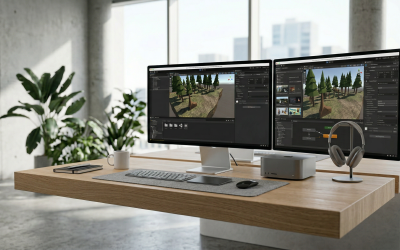
Mastering Game Development in Unity: Expert Strategies, Tools, and Workflows for 2026
Discover how to master game development in Unity with this expert guide covering C# scripting, rendering, optimization, and cross-platform deployment.
Top Example of Virtual Reality Applications Transforming Industries in 2026
Explore the top examples of virtual reality applications revolutionizing industries in 2026. Learn how VR is driving innovation, efficiency, and engagement.
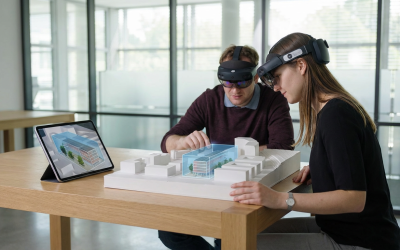
How to Choose the Best Augmented Reality Studio for Your Brand in 2026
Learn how to choose the best augmented reality studio for your brand in 2026. Explore key factors like creativity, technology, and strategic alignment.
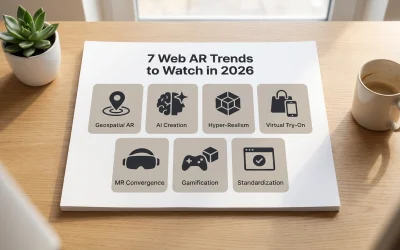
The Future is Browser-Based: 7 Augmented Reality Web Trends to Watch in 2026
The future of augmented reality is on the web. Discover the seven key Web AR trends set to redefine digital experiences by 2026, from AI-powered content to seamless e-commerce.
Augmented Reality Framework Guide: Building Scalable, Cross‑Platform AR Experiences in 2026
Discover how modern augmented reality frameworks like ARKit, ARCore, and Vuforia power scalable, cross‑platform AR experiences through AI and spatial computing.
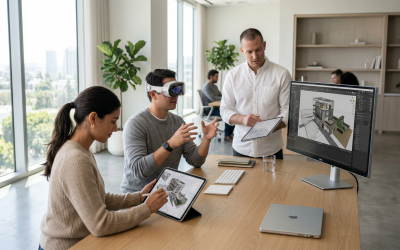
Top Augmented Reality Developer: How to Identify, Evaluate, and Partner with the Best in 2026
Learn how to identify and partner with a top augmented reality developer in 2026. Explore key skills, technologies, and strategies driving AR innovation.
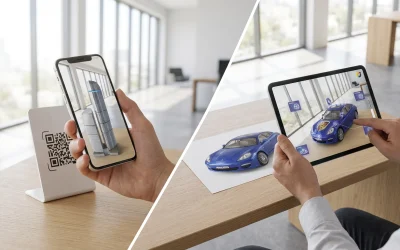
The Ultimate Guide to Web App Augmented Reality: Frameworks & Best Practices
Discover the frameworks, platforms, and best practices for building web app augmented reality experiences. This guide covers everything from open-source libraries to commercial platforms and 3D optimization techniques.
FAQs About App Development
At Frame Sixty, we help companies turn bold ideas into immersive realities through expert AR/VR development. Whether you’re building for Apple Vision Pro, Meta Quest, or mobile AR, our clients often come to us with similar questions. We've grouped them into helpful categories so you can get a head start before reaching out.
How do you estimate the cost and timeline for a project?
We start with a short discovery call to understand your needs. Then, we provide a detailed estimate that includes phases, deliverables, timeline, and pricing specific to your AR/VR development goals.
Can you work with existing assets, code, or partially developed projects?
Absolutely. Whether it’s 3D models, design files, or partially completed apps, we can audit, optimize, and build on top of what you already have.
What tools and platforms do you use in AR/VR development?
Our team works with Unity, Unreal Engine, RealityKit, ARKit, WebXR, and proprietary tools. We choose the best stack based on your platform and experience goals.
How do you handle revisions or changes during development?
We build in flexibility by structuring development into phases. This allows for feedback loops, pivots, and iteration while keeping your AR/VR development timeline on track.
Do you offer white-label or partnership models?
Yes, we frequently partner with agencies or businesses looking to resell AR/VR development services under their brand.
Can you help me create a prototype or MVP for Vision Pro?
Yes. We regularly build proof-of-concept apps and MVPs to help clients validate ideas, secure funding, or pitch to internal stakeholders.
Do you support 3D medical visualization or healthcare apps on Vision Pro?
Absolutely. We've built medical-grade prototypes, including brain scan visualization tools, and can tailor AR/VR development for healthcare use cases.
Do I need special hardware to test Vision Pro apps?
For initial development, we use Apple’s visionOS simulator. However, full testing requires access to the Vision Pro device, which we support internally.
Can you port an existing Unity app to Vision Pro?
Yes. We can migrate existing Unity projects to visionOS using Unity PolySpatial and Apple's APIs, while optimizing for performance and UI/UX standards.
Will my Vision Pro app work with other Apple devices?
Some components can extend to iPad or iPhone, but immersive spatial features are exclusive to Vision Pro. We can advise on cross-device strategy as part of your AR/VR development roadmap.
Do you support mixed reality and passthrough experiences?
Yes. Our AR/VR development team specializes in Quest’s MR capabilities using color passthrough, depth APIs, and environment blending.
Can you build multiplayer or networked Quest experiences?
Absolutely. We can integrate Photon, Normcore, or custom networking stacks to enable social, collaborative, or multiplayer AR/VR apps.
What’s the difference between Quest 2, 3, and Quest Pro for development?
While all support core features, Quest 3 and Pro offer better passthrough, depth sensing, and hand tracking. We help tailor AR/VR development to the hardware's strengths.
Do you support hand tracking or controller-free interactions on Meta Quest?
Yes, we implement Quest’s hand tracking APIs for natural gesture-based input, ideal for immersive experiences and accessibility.
Can you build a Unity or Unreal project for Quest?
Yes. We primarily use Unity for Meta Quest apps but can also develop in Unreal depending on the visual or technical requirements.
Can you build both AR and VR experiences?
Yes. Our team handles the full spectrum—from mobile AR on iOS/Android to fully immersive VR for headsets like Quest and Vision Pro.
Do you create custom shaders, effects, or interaction systems?
Yes. We frequently develop custom graphics pipelines, shaders, and input systems to create high-fidelity AR/VR experiences.
Can you help with ideation and product strategy for AR/VR?
Definitely. Many of our clients engage us early to help shape the product vision, build prototypes, and outline a go-to-market plan.
Do you provide post-launch support or feature updates?
Yes. We offer ongoing support, feature expansions, and performance optimizations after your AR/VR app is live.
Can you integrate AI, machine learning, or computer vision into AR/VR apps?
Yes. We’ve integrated AI-based assistants, object tracking, and spatial awareness features into AR/VR projects for smarter interactions.