
Top Example of Virtual Reality Applications Transforming Industries in 2026
Apr 14, 2026

11 MIN READ
An example of virtual reality is a healthcare simulation that allows medical students and surgeons to practice procedures in fully immersive, risk-free environments. Using advanced headsets and real-time rendering platforms, users can visualize anatomy, perform virtual surgeries, and receive immediate performance feedback. Similar VR applications extend to manufacturing, education, retail, and architecture, where digital twin environments and interactive simulations enhance safety, efficiency, and creativity. By 2026, these examples demonstrate how virtual reality has become a core technology for training, design, and collaboration across industries.
Healthcare: Immersive Training and Simulation
Virtual reality in healthcare enables realistic, risk-free training and therapy experiences that enhance learning outcomes and patient care. By 2026, hospitals and universities are adopting advanced VR headsets and simulation platforms to train medical professionals and support mental health treatments.
VR Healthcare Simulation for Surgeons and Medical Students
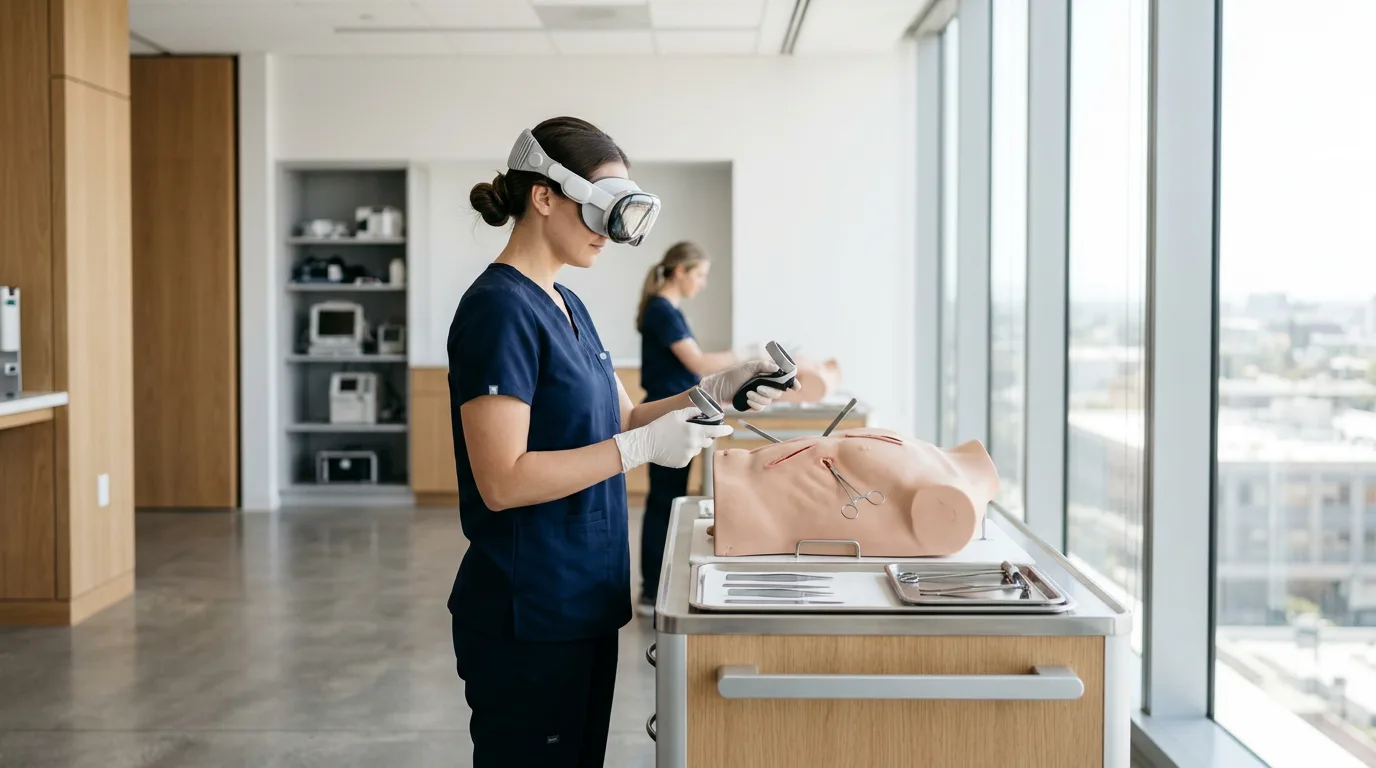
VR healthcare simulation represents one of the most impactful examples of virtual reality in medicine. Using devices like the Microsoft HoloLens 2 and Varjo XR-4, medical students and surgeons can visualize complex anatomy in three dimensions. These headsets provide high-resolution, mixed-reality overlays that allow users to explore organs, blood vessels, and tissues with exceptional motion tracking accuracy.
Platforms such as Unity Technologies and Epic Games Unreal Engine power these simulations, enabling interactive patient scenarios that replicate real-world surgical environments. For instance, a trainee can practice a laparoscopic procedure with real-time feedback on instrument positioning and tissue response. Metrics such as training completion rate, user immersion, and ROI of VR deployment help institutions measure the effectiveness of these programs.
According to the World Health Organization (WHO), immersive training technologies improve procedural accuracy and reduce error rates in clinical settings. Hospitals are now incorporating VR labs as part of continuing education for staff, ensuring consistent skill development without the risks associated with live patients.
Key takeaway: VR healthcare simulation enhances skill acquisition, reduces training costs, and improves patient outcomes through safe, repeatable practice environments.
Mental Health and Therapy Applications
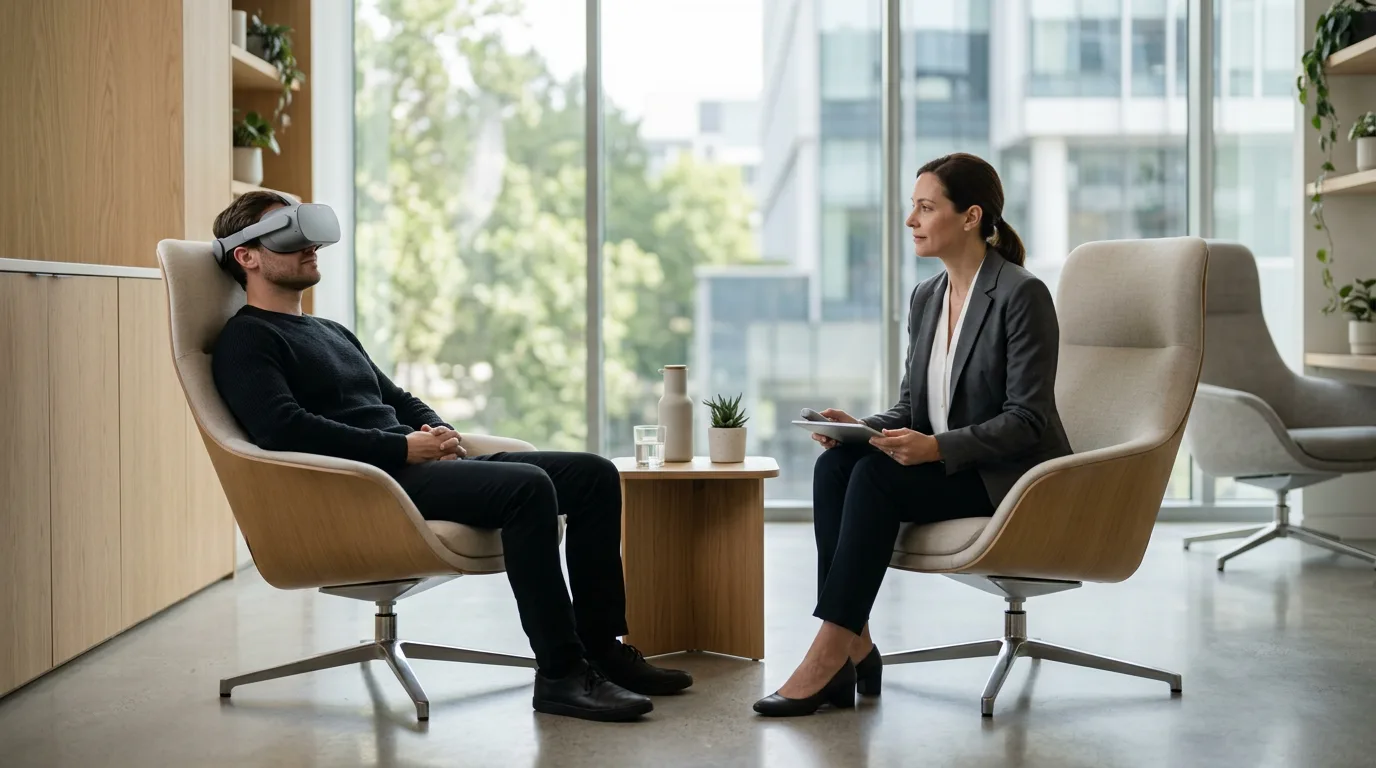
Beyond surgical training, VR is revolutionizing mental health therapy. Devices like the Meta Quest 3 and Apple Vision Pro are being used for virtual therapy sessions, allowing patients to engage in guided mindfulness or exposure therapy experiences from the comfort of their homes. These headsets create controlled environments where individuals can confront phobias, manage anxiety, or practice relaxation techniques.
Clinicians use VR to simulate stressful scenarios—such as public speaking or flying—while monitoring physiological responses. The immersive nature of VR increases user immersion and enhances treatment adherence. Furthermore, VR therapy reduces barriers to access, particularly for patients in remote areas.
Research supported by Varjo demonstrates how high-fidelity VR environments improve emotional regulation and cognitive behavioral therapy outcomes. The Varjo XR-4’s photorealistic rendering allows therapists to create realistic yet safe scenarios for exposure therapy. As mental health awareness grows, VR’s role in personalized therapy is expected to expand dramatically.
Key takeaway: Virtual reality therapy provides scalable, effective, and accessible mental health treatments that complement traditional methods.
Manufacturing and Industrial Design
Virtual reality is transforming manufacturing by enabling industrial design visualization and digital twin environments that streamline product development. By 2026, companies are leveraging VR to reduce design cycles, enhance collaboration, and improve safety in industrial operations.
Industrial Design Visualization and Digital Twin Environments
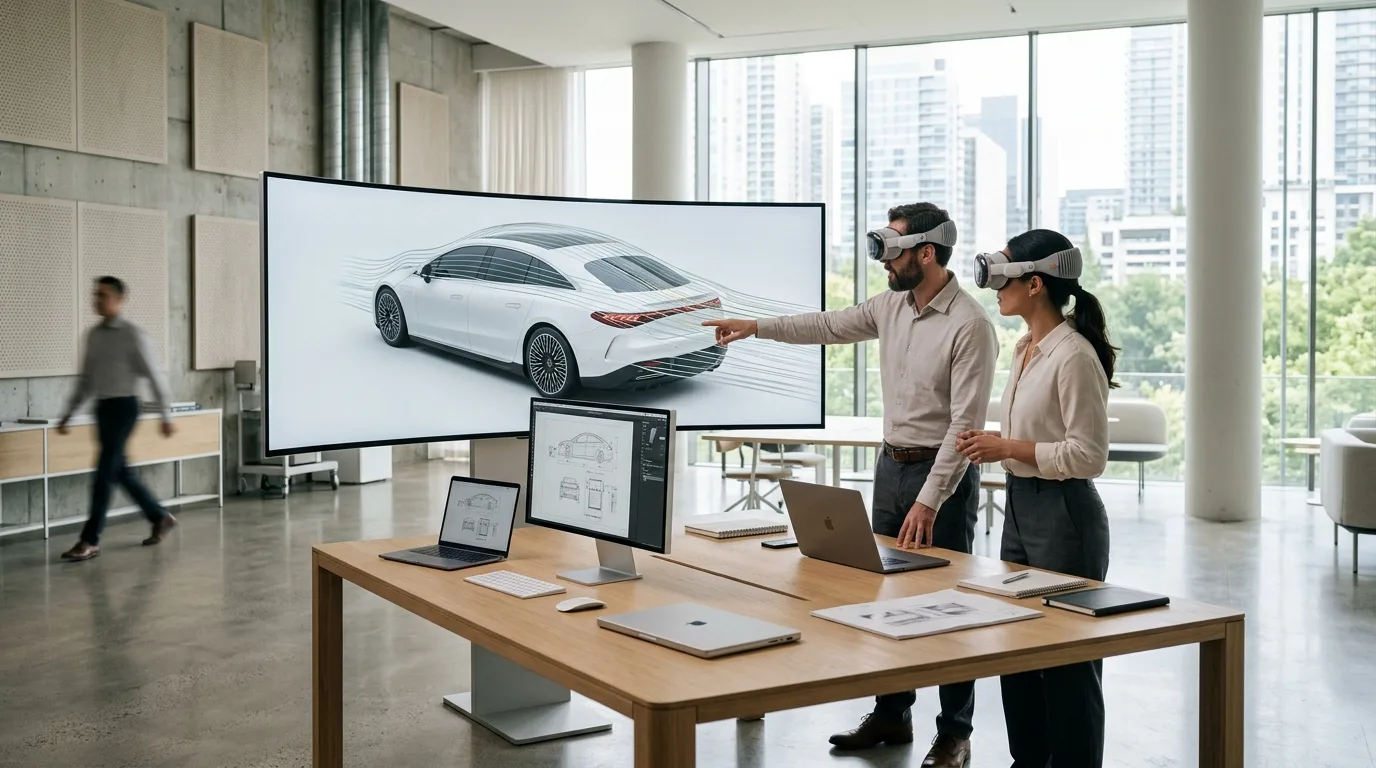
Industrial design visualization allows engineers and designers to interact with 3D models before physical prototypes are built. Platforms like NVIDIA Omniverse and Blender facilitate collaborative product prototyping in shared virtual spaces. These environments use USD (Universal Scene Description) and OpenXR standards for interoperability, ensuring seamless integration across tools and devices.
Design teams can manipulate components, test ergonomics, and simulate assembly processes in real time. The result is reduced design iteration time and improved product quality. Metrics such as engagement score, motion tracking accuracy, and ROI of VR deployment help quantify the benefits.
At Frame Sixty, teams use VR and 3D modeling to create interactive prototypes for clients in automotive, aerospace, and consumer electronics industries. By combining NVIDIA Omniverse with Unity and Unreal Engine, designers can visualize complex assemblies and simulate performance under various conditions.
Key takeaway: VR-powered digital twins accelerate innovation, reduce costs, and enable real-time collaboration across global design teams.
Remote Assistance and Maintenance
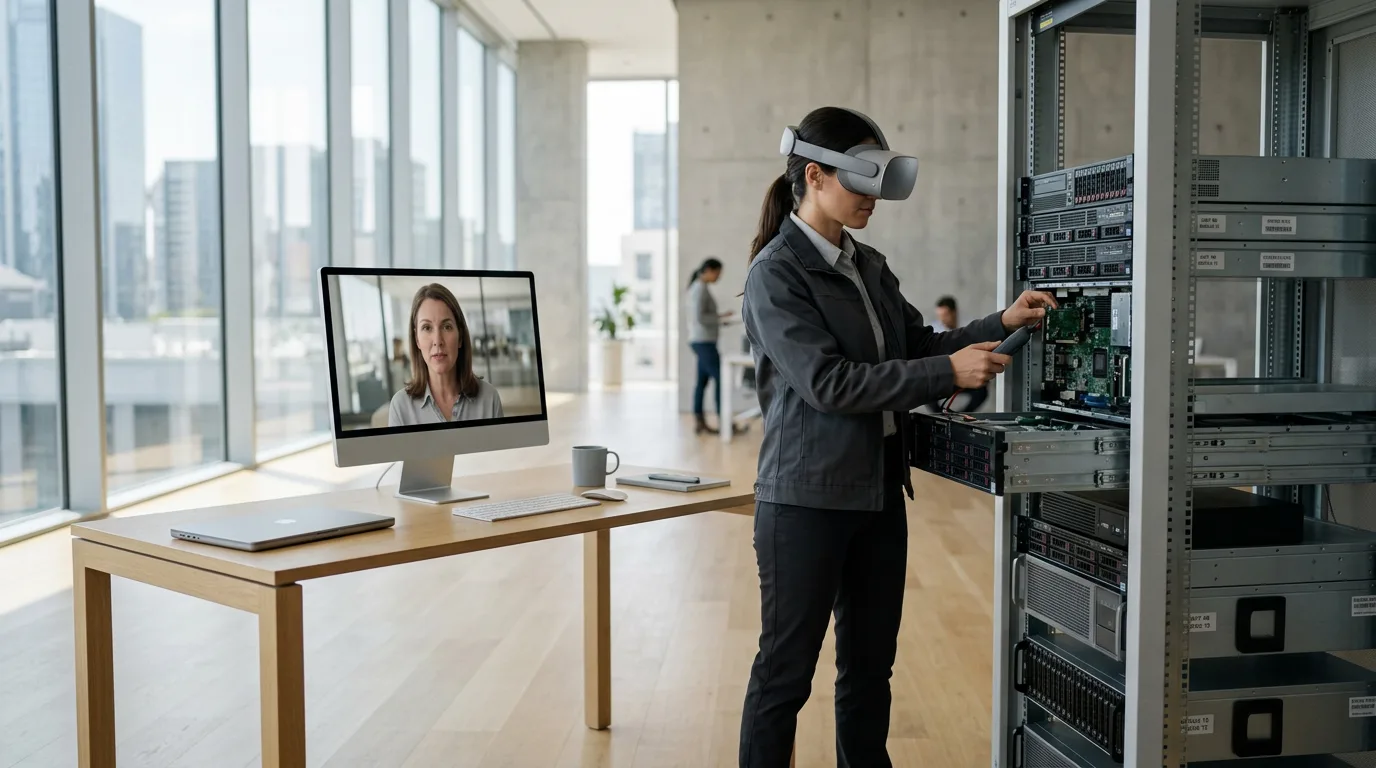
Remote assistance powered by VR allows field technicians to receive expert guidance without requiring on-site visits. Devices such as the HTC Vive Focus and platforms like Microsoft Mesh enable seamless communication between remote experts and on-site workers. Through shared holographic environments, technicians can see annotated instructions, diagrams, and real-time feedback.
Optimizing latency and frame rate ensures smooth interaction and prevents motion sickness. This technology is particularly valuable in industries like energy, transportation, and heavy equipment maintenance, where downtime is costly.
At Frame Sixty’s industrial design division, VR-based remote assistance tools are integrated into digital workflows. These tools help clients reduce travel costs and minimize operational disruptions.
Key takeaway: VR remote assistance enhances efficiency, safety, and communication in complex maintenance and repair operations.
Education and Workforce Development
Virtual reality is redefining education by offering immersive learning environments that improve engagement and retention. In 2026, schools and corporations are adopting VR to teach technical skills, soft skills, and compliance training more effectively.
VR Education Tools for Skill-Based Learning
VR education tools leverage immersive technologies to teach complex subjects through experiential learning. Platforms like Google Immersive Stream and SteamVR enable students to explore interactive lessons in science, engineering, and history. Learners can manipulate 3D objects, conduct virtual experiments, and collaborate in shared digital spaces.
Gamified learning increases session duration and retention rate, making education more engaging and effective. For example, medical students can practice anatomy in VR, while engineering students can simulate machine operations. In corporate settings, VR is used for onboarding and leadership training, providing consistent experiences across locations.
At Frame Sixty, developers explore how devices like the Apple Vision Pro enhance educational content delivery. The headset’s spatial computing capabilities allow for interactive, gesture-based learning experiences that adapt to each user’s pace.
Key takeaway: VR education tools foster deeper understanding, engagement, and retention through hands-on, immersive experiences.
Industrial Safety and Compliance Training
Industrial safety training is another powerful example of virtual reality’s impact. Using Oculus SDK and Vuforia Studio, organizations create realistic hazard simulations that prepare employees for emergency scenarios. Workers can safely practice responses to fires, chemical spills, or equipment malfunctions within controlled virtual environments.
These simulations track training completion rate and ROI of VR deployment, allowing companies to assess effectiveness. Compared to traditional classroom instruction, VR training improves knowledge retention and reduces incident rates.
Standards like ISO/IEC 23005 ensure consistent performance and interoperability across VR training systems. Compliance with these standards guarantees reliable data capture and accessibility for all users.
Key takeaway: VR-based safety training enhances preparedness, reduces risk, and ensures compliance with industry standards.
Retail and Consumer Experiences
Virtual reality is reshaping how consumers interact with products and brands. In 2026, VR retail experiences and virtual tourism are driving new forms of engagement and personalization.
VR Retail Experience and Virtual Showrooms
VR retail experiences allow customers to explore products in 3D before purchasing. Devices like the Apple Vision Pro and Meta Quest 3 enable shoppers to walk through virtual showrooms, customize products, and visualize them in real-world contexts. By integrating WebXR, retailers can deliver these experiences directly through web browsers without requiring app downloads.
For example, furniture retailers use VR to let customers preview how items fit within their homes. Automotive brands offer virtual test drives, while fashion companies host immersive runway shows. These experiences increase engagement scores and retention rates, leading to higher conversion rates.
At Frame Sixty, VR design teams collaborate with retail brands to create interactive product visualizations. By combining 3D modeling expertise with spatial computing, they deliver immersive shopping experiences that bridge physical and digital commerce.
Key takeaway: VR retail experiences personalize shopping journeys, enhance customer engagement, and boost sales conversions.
Virtual Tourism and Hospitality
Virtual tourism leverages VR to offer immersive travel previews and cultural experiences. Using devices like the Sony PlayStation VR2 and Varjo Base, travelers can explore destinations before booking. Hotels and resorts use architectural walkthroughs and digital twin environments to showcase amenities and local attractions.
Tourism boards are adopting VR to promote sustainable travel by reducing the need for physical exploration. For instance, users can experience historical landmarks or natural wonders in high fidelity without environmental impact.
By integrating Varjo’s ultra-realistic rendering with Unreal Engine, travel companies create lifelike simulations that evoke genuine emotional responses. This approach enhances brand storytelling and customer trust.
Key takeaway: Virtual tourism provides immersive, sustainable travel experiences that inspire exploration and reduce environmental impact.
Architecture, Engineering, and Construction (AEC)
Virtual reality is revolutionizing the AEC industry by enabling real-time visualization, collaboration, and planning. Architects and engineers use VR to validate designs, optimize workflows, and communicate ideas effectively.
Architectural Walkthroughs and Design Collaboration
Architectural walkthroughs allow stakeholders to experience building designs before construction begins. Tools like Autodesk Maya and Unreal Engine provide real-time rendering and lighting simulations, giving clients a realistic sense of scale and space. Standards such as 3D Tiles and glTF ensure compatibility across platforms and devices.
According to Autodesk, engineering, and construction solutions, VR visualization reduces design errors and accelerates approval processes. Architects can adjust layouts, materials, and lighting conditions instantly, saving time and resources.
At Frame Sixty, developers utilize agentic spatial computing to enhance AEC workflows. By integrating AI-driven spatial analysis, teams can identify design inefficiencies and optimize building performance.
Key takeaway: VR architectural walkthroughs improve collaboration, reduce rework, and enhance client satisfaction through immersive visualization.
Smart Infrastructure and Urban Planning
Smart infrastructure planning uses VR to simulate and analyze large-scale city environments. Platforms like NVIDIA CloudXR enable streaming of complex 3D models to lightweight devices, allowing urban planners to visualize projects in real time. Metrics such as field of view and motion tracking accuracy ensure precise spatial alignment and user comfort.
City planners use VR to assess traffic flow, environmental impact, and community accessibility. By integrating digital twin data, they can test various scenarios before implementation. This approach supports sustainable development and informed decision-making.
At Frame Sixty, the team collaborates with municipalities to create immersive urban simulations that guide infrastructure investments. These projects combine VR, AI, and geospatial data to deliver actionable insights.
Key takeaway: VR-driven urban planning enhances sustainability, efficiency, and stakeholder engagement in infrastructure projects.
Enterprise Collaboration and Remote Work
Virtual reality is redefining how teams collaborate across distances. In 2026, virtual collaboration platforms and data visualization tools are central to enterprise digital transformation strategies.
Virtual Collaboration Platforms
Virtual collaboration platforms like Microsoft Mesh and Meta Quest 3 enable cross-location teamwork in immersive 3D environments. Employees can meet as avatars, share documents, and manipulate 3D models in real time. This approach enhances user immersion and increases retention rates in hybrid work settings.
Companies use VR for design reviews, brainstorming sessions, and client presentations. The spatial context of VR meetings fosters creativity and reduces miscommunication. Integration with traditional productivity tools ensures seamless workflow continuity.
At Frame Sixty, developers explore how Apple Vision Pro enhances enterprise collaboration through spatial computing. The device’s high-resolution passthrough and intuitive gesture controls create natural, productive virtual workspaces.
Key takeaway: VR collaboration platforms strengthen remote teamwork, improve engagement, and streamline enterprise communication.
Data Visualization and Decision-Making
VR data visualization transforms how organizations interpret complex information. By integrating NVIDIA Omniverse, companies can visualize real-time analytics in immersive 3D environments. Decision-makers can explore data spatially, identifying trends and correlations that might be missed in 2D dashboards.
Standards like ISO/IEC 23005 and IEEE VR Standards ensure consistent performance and accessibility across visualization systems. These frameworks support interoperability, enabling data from multiple sources to be combined seamlessly.
At Frame Sixty’s AI development division, teams leverage artificial intelligence to enhance VR data interpretation. By combining AI-driven insights with immersive visualization, businesses can make faster, more informed decisions.
Key takeaway: VR data visualization empowers organizations to analyze complex datasets intuitively, leading to smarter and faster decision-making.
Need help with VR development?
Frame Sixty is a full-service digital innovation studio specialising in AR/VR, mobile, and web development.
Conclusion
By 2026, each example of virtual reality discussed—from healthcare simulation to industrial design and enterprise collaboration—demonstrates how immersive technologies are transforming industries. VR is no longer experimental; it is a proven tool for improving efficiency, safety, and creativity across sectors. The convergence of AI, spatial computing, and digital twin environments is creating a new era of interactive, data-driven experiences.
As standards like ISO/IEC 23005, OpenXR, and WebXR mature, interoperability and accessibility will continue to improve, enabling broader adoption. Organizations that invest in VR today are positioning themselves at the forefront of innovation, gaining competitive advantages in training, design, and customer engagement.
If you’re ready to explore how VR can transform your business, get in touch with the experts at Frame Sixty. Our team specializes in immersive design, spatial computing, and AI-driven visualization that bring your ideas to life. Whether you’re developing a digital twin, creating a VR training program, or designing a virtual showroom, Frame Sixty can help you build the future of immersive experiences.
Key takeaway: Virtual reality is not just shaping the future—it is the foundation of how industries will operate, collaborate, and innovate in 2026 and beyond.
Examples of Virtual Reality: FAQs
Quick answers about the leading examples of virtual reality in 2026 across healthcare, manufacturing, education, retail, and enterprise collaboration.
A leading example of virtual reality in 2026 is immersive healthcare training, where surgeons and medical students practice procedures in risk-free simulated environments. Using headsets such as the Microsoft HoloLens 2 and Varjo XR-4 with Unity and Unreal Engine simulations, trainees rehearse procedures with real-time feedback, improving procedural accuracy and reducing error rates.
In manufacturing, virtual reality powers industrial design visualization and digital twin environments where engineers interact with 3D models before physical prototypes are built. Platforms like NVIDIA Omniverse enable collaborative prototyping in shared virtual spaces, while VR remote assistance lets field technicians receive expert guidance through shared annotated views, cutting travel costs and downtime.
Modern virtual reality applications run on engines and platforms such as Unity, Unreal Engine, and NVIDIA Omniverse, delivered through devices like the Apple Vision Pro, Meta Quest 3, and Varjo XR-4. Interoperability standards including OpenXR, WebXR, and USD keep content working consistently across hardware, and WebXR lets retailers deliver experiences straight from the browser.
Digital twins are virtual replicas of real-world systems, and virtual reality is the layer that lets teams step inside them. Design teams manipulate components, test ergonomics, and simulate assembly processes in real time within twin environments, using USD and OpenXR standards so models move cleanly between tools and devices.
Businesses use virtual reality training for skill-based learning, safety simulations, and compliance training, giving employees realistic, risk-free environments to practice in. Workers can rehearse responses to fires, chemical spills, or equipment malfunctions, and organizations track completion rates and ROI; compared with classroom instruction, VR training improves knowledge retention and reduces incident rates.
Frame Sixty builds virtual reality solutions across healthcare, manufacturing, retail, and enterprise collaboration, combining immersive design, spatial computing, and AI-driven visualization. Whether the project is a digital twin, a VR training program, or a virtual showroom, the team handles it end to end; see our virtual reality development services.
Get in touch
We’re interested to see how we can help. Send us a message and we will get back to you within 24 hours.