
Samsung Smart Glasses: What Launches in November
Oct 19, 2026
13 MIN READ
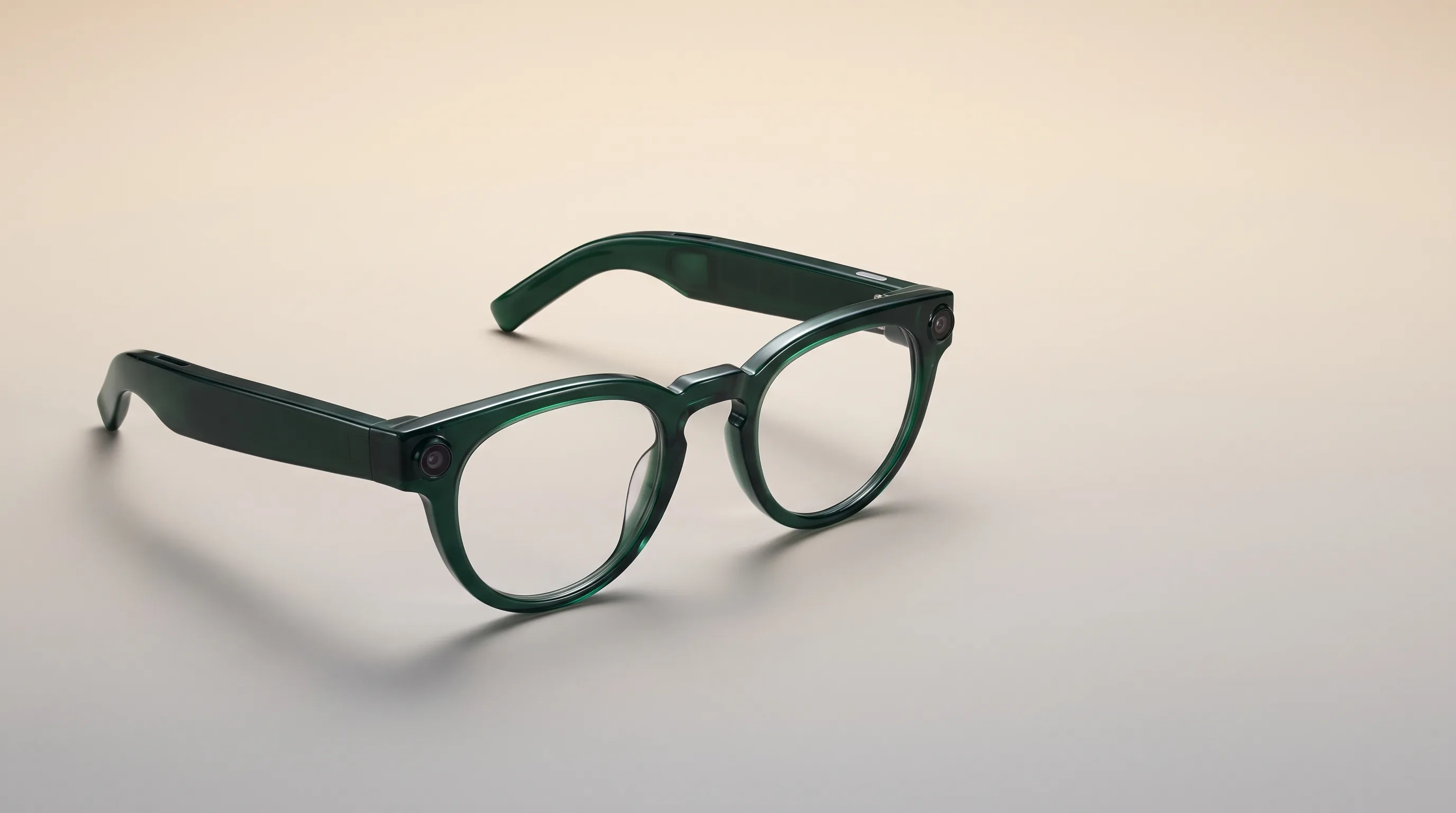
Samsung smart glasses are the first Android XR glasses from Google’s hardware partner, and they are expected to launch in November 2026 after previews at Google I/O in May and Galaxy Unpacked in July. They are audio glasses, not display glasses: a camera, microphones, and open-ear speakers in Warby Parker and Gentle Monster frames, paired to a phone, with Google Gemini doing the work. Samsung has confirmed up to 9 hours of battery, a case with seven more charges, iPhone and Android support, and a privacy light that cuts the camera when covered. Price is unannounced.
The question for businesses is not whether Samsung can build a pair of Ray-Ban Meta competitors. It can, and the weight and build targets say it intends to beat Meta on comfort. The question is what changes when the second-largest phone maker on earth ships a Gemini terminal on your face that any Android app can project to. This guide separates what Samsung and Google have confirmed from what has leaked, compares the glasses to Meta’s lineup, and lays out what the launch means for companies planning smart glasses apps.
Key Takeaways
- Samsung’s first Android XR smart glasses are expected in November 2026, per a Samsung official quoted by The Korea Herald; the official window is fall 2026.
- They are audio glasses with a camera, microphones, and open-ear speakers, no display, paired to Android phones or iPhones, with Gemini activated by a tap or “Hey Google.”
- Confirmed: up to 9 hours of active use, a charging case with at least seven more charges, Galaxy Watch gesture control, and a privacy light that disables the camera when covered.
- Frames come from Warby Parker and Gentle Monster; pricing is unannounced but described by Samsung as reasonable within the premium range.
- Audio glasses run no standalone apps. Android XR’s Jetpack Projected library projects an activity from the phone app, so existing Android apps are the starting point for any business build.
What Are the Samsung Smart Glasses?
Samsung smart glasses are camera-and-audio glasses built on Google’s Android XR platform, marketed by the two companies as intelligent eyewear. Samsung engineers the hardware and supplies the Qualcomm chip, Google supplies Android XR and Gemini, and two eyewear brands, Warby Parker and Gentle Monster, design the frames. They are the glasses counterpart to the Samsung Galaxy XR headset that launched in October 2025 at $1,799, and the first consumer product in Google’s audio-glasses category.
The product was previewed twice before launch. At Google I/O on May 19, 2026, Google showed two designs, one from each eyewear partner, and confirmed they would pair with both Android phones and iPhones. At Galaxy Unpacked in London on July 22, Samsung showed four styles, let press handle the frames without wearing them, and gave the first hard numbers: up to 9 hours of active use and a case holding at least seven additional charges. Samsung also told The Korea Times that the glasses meet the same durability standards as Galaxy phones and are meant to be lighter and more comfortable than Meta’s.
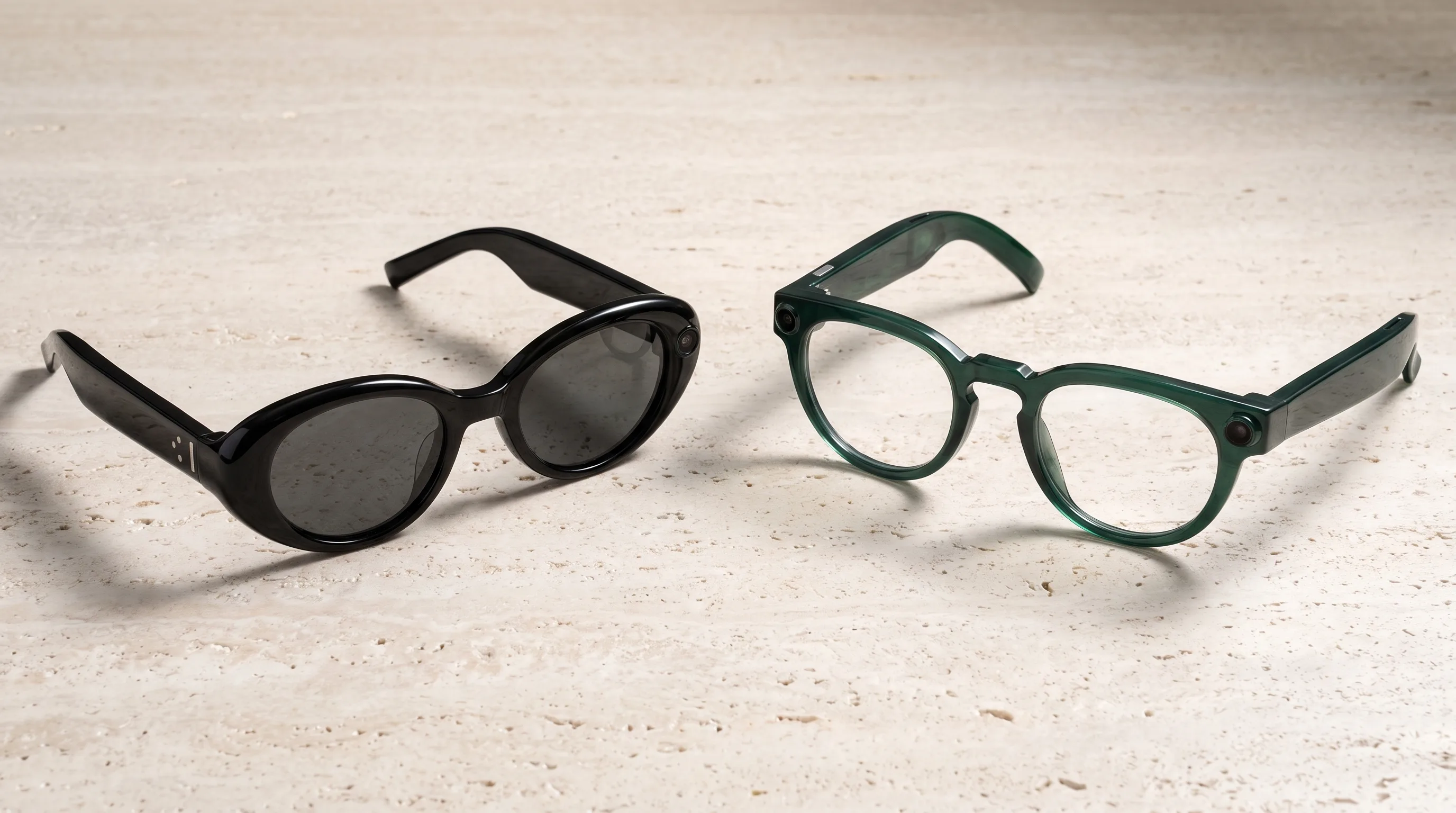
What they are not is as important as what they are. There is no display in the lens. Google renamed its glasses categories with Android XR Developer Preview 4 in May: AI glasses became audio glasses, and display AI glasses became display glasses. Samsung’s November product is firmly the former. Everything Gemini tells you, it says through the speakers. A display model is on the Android XR roadmap, with reports pointing to late 2027, and we cover that category in our overview of Android XR glasses.
Samsung Smart Glasses Release Date and Price
Samsung smart glasses are expected to go on sale in November 2026, and the price has not been announced. The November timing comes from an unnamed Samsung official quoted by The Korea Herald and reported by 9to5Google on October 1; Samsung and Google have officially committed only to fall 2026, and no launch event has been confirmed. Given that Samsung showed finished frames in July and the Android XR SDK has been in developers’ hands since May, a November retail date is consistent with everything the companies have shipped so far.
On price, Samsung has said one thing on the record: it is aiming for a reasonable level within the premium range. The comparison points are Meta’s. Ray-Ban Meta Gen 3 launched at Meta Connect in September at $449, and the camera-free Ray-Ban Meta Audio at $349. Samsung’s remark about the premium range, plus a 12 MP camera and a nine-frame lineup from two fashion brands, suggests the glasses will land above Gen 3 rather than below it. Third-party estimates of $600 to $900 circulating online are analyst guesses, not leaks, and should be treated that way until November.
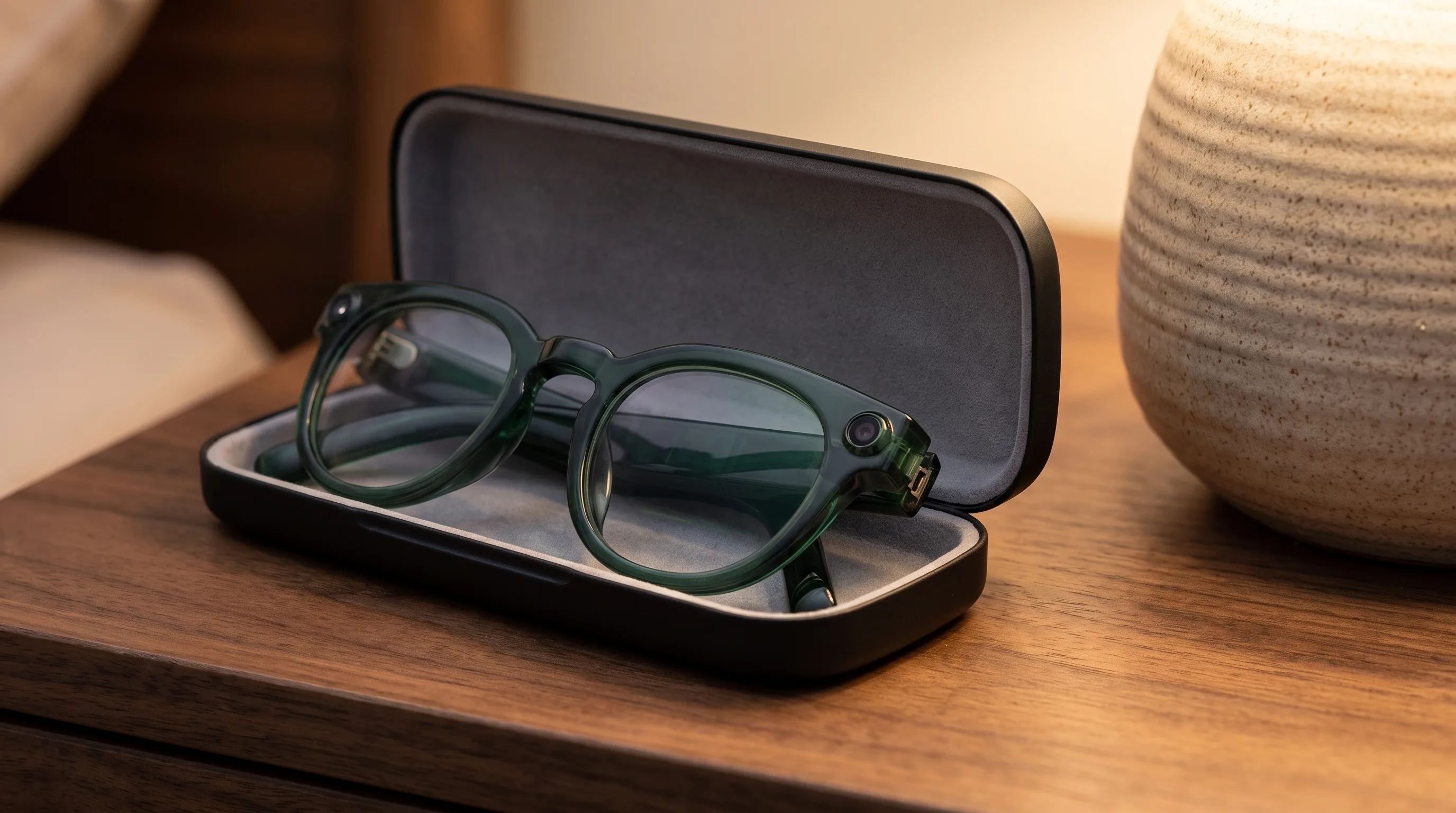
Markets are the other open question. Samsung showed the glasses in London and sources its frames from a US brand and a Korean brand, so the US, UK, and Korea are the obvious first wave. Prescription lenses are reportedly available through Gentle Monster, with availability varying by market, which matters for business buyers because a meaningful share of any workforce wears corrective lenses.
Samsung Smart Glasses Specs: Confirmed vs. Leaked
Samsung has confirmed the battery, case, privacy light, and Gemini activation, while the chip, camera resolution, memory, and weight come from leaks. The table below keeps the two apart. Confirmed figures are from Samsung’s Unpacked briefing and its statements to Korean press; leaked figures come from SammyGuru and a widely circulated October leak summarized by Digit, and Samsung has not confirmed them.
| Specification | Samsung smart glasses | Status |
|---|---|---|
| Category | Android XR audio glasses (no display) | Confirmed |
| Battery | Up to 9 hours of active use | Confirmed |
| Charging case | At least 7 additional full charges (leaks say 72 hours total) | Confirmed / leaked |
| Camera | Front camera with privacy light | Confirmed |
| Camera resolution | 12 MP, video up to 3K at 30 fps | Leaked |
| Processor | Qualcomm Snapdragon AR1 Gen 1 | Leaked |
| Memory and storage | 2 GB RAM, 64 GB storage | Leaked |
| Audio | Open-ear speakers; leaks say two speakers, four microphones | Confirmed / leaked |
| Weight | Target up to 5 g lighter than Ray-Ban Meta’s 51 g; leaks say about 41 g | Reported / leaked |
| Gemini activation | Tap the frame or say “Hey Google”; raise a Galaxy Watch wrist | Confirmed |
| Phone support | Android and iPhone; some features need a Galaxy phone on One UI 9 and a Galaxy Watch on Wear OS 7 | Confirmed / leaked |
| Privacy light | Front and inner indicator; camera disables when covered or when glasses are not worn | Confirmed |
| Frames | Warby Parker and Gentle Monster; 4 shown, 9 reported (Alden, Reid, Wren; six Gentle Monster designs) | Confirmed / leaked |
| Durability | Same standards as Galaxy phones | Confirmed |
| Price | Not announced; “reasonable” within the “premium range” | Confirmed statement |
| Launch | November 2026 (Korea Herald); officially fall 2026 | Reported |
Two confirmed details matter more than any leaked number. The privacy light is designed so that covering it disables the camera, which is the control Meta added to Ray-Ban Meta only after public pressure and which enterprise privacy reviews will ask about first. And the Galaxy Watch integration, where raising your wrist activates Gemini and hand gestures control the glasses, is a hint at Samsung’s real strategy: the glasses are an extension of the Galaxy ecosystem, not a standalone device. Samsung said as much to The Korea Times, describing the product as an extension of the smartphone experience rather than a post-smartphone device.
Need help building for smart glasses?
We are here to help!
What Gemini Does on the Glasses
Gemini on Samsung smart glasses answers questions about what the camera sees, translates speech and text in real time, navigates turn by turn, captures photos and video, and runs multi-step tasks in the background, all through audio. Google demonstrated each of these at I/O 2026, and Warby Parker’s and Gentle Monster’s pre-launch pages list the same set. The list below is what has been shown, not a roadmap.
- Visual answers. Look at something and ask: restaurant reviews, what a cloud type is, whether a parking sign allows you to park. The camera feeds Gemini, and the answer comes through the speakers.
- Real-time translation. Spoken translation that matches the speaker’s tone and pitch, plus translation of text on menus and signs when you look at them.
- Navigation. Turn-by-turn directions using your location and the direction you are facing, with Gemini able to add stops or find a restaurant that fits your preferences on the way.
- Calls, messages, and music. Hands-free calls and texting, summaries of missed messages, and music matched to your surroundings, played through the open-ear speakers and routed to Galaxy Buds when you wear them.
- Capture. Voice-triggered photos and video, with Google’s Nano Banana image model able to edit a shot on request, such as removing a background distraction. Captured photos appear as a notification on the paired phone.
- Gemini Intelligence. Multi-step tasks that run in the background while the phone stays in a pocket, such as placing a DoorDash order, with final confirmation left to the wearer.
- App control. Voice control of phone apps, with Uber and the language app Mondly named at I/O.

Two things stand out for anyone evaluating the glasses for work. First, every feature above is a phone feature surfaced through the glasses; the compute is on the handset and in Google’s cloud, which is why a Snapdragon AR1-class chip and 2 GB of RAM are sufficient. Second, the glasses pair with iPhone, but the deepest integration, including watch gestures and photo hand-off, is reserved for Galaxy. A mixed-fleet business should expect the iPhone experience to be the baseline and the Galaxy experience to be the showcase.
Samsung Smart Glasses vs. Ray-Ban Meta vs. Meta VR Glasses
Samsung smart glasses compete directly with Ray-Ban Meta Gen 3 on form factor and features, while Meta’s VR Glasses, announced at Connect 2026, are a different product entirely: a tethered micro-OLED headset for immersive content. The comparison below uses confirmed figures where they exist and marks Samsung’s leaked specs.
| Samsung smart glasses | Ray-Ban Meta Gen 3 | Meta VR Glasses | |
|---|---|---|---|
| Category | Audio glasses (camera, no display) | Camera glasses (no display) | Tethered VR headset, micro-OLED |
| Assistant | Google Gemini | Meta AI | Meta AI |
| Camera | 12 MP, 3K video (leaked) | 12 MP, 3K video | Passthrough cameras |
| Battery | Up to 9 h; case adds 7+ charges | Longer battery than Gen 2; charging case | Up to 3 h media (puck) |
| Weight | ~41 g (leaked); target under Meta’s 51 g | ~51 g (base frame) | ~100 g glasses + ~300 g puck |
| Phone support | Android and iPhone | Android and iPhone | Standalone (Horizon OS) |
| Frames | Warby Parker, Gentle Monster | Ray-Ban | Single design |
| Price | Unannounced; “premium range” | From $449 | $1,299.99 |
| Availability | November 2026 (reported) | Now | Spring 2027 |
The honest read is that Samsung is matching Ray-Ban Meta feature for feature and betting on three differentiators: Gemini over Meta AI, lighter and more durable hardware, and frames from eyewear brands that people already buy. Meta’s advantages are a two-year head start, a shipping product at a known price, and an installed base of developers. For a buyer’s view across every current device, including Snap Specs and XREAL, see our guide to the best smart glasses and our breakdown of AI smart glasses for business.
What Samsung Smart Glasses Mean for Business
Samsung smart glasses matter for business because they put a Gemini-powered camera, microphone, and speaker on a worker’s face at glasses weight, paired to the phone the company already manages, with no app download required for the core features. No enterprise edition, bulk purchasing program, or device-management plan has been announced, so early business use will run through consumer units and the Android apps you project to them. Four use cases are practical on day one.

Field service and inspections
Hands-free capture is the obvious win. A technician with both hands in a cabinet can photograph a fault, record a video walkthrough, and ask Gemini what a component is without putting down a tool, and the captured media lands on the phone for the work order. The privacy light and camera cut-off make this easier to clear with a privacy officer than earlier camera glasses. This is the same hands-free logic that drives our VR and AR for industrial work, moved onto a consumer device at a fraction of the cost.
Translation for hospitality, travel, and frontline staff
Real-time spoken translation that preserves tone, plus sign and menu translation, is immediately useful for hotel, airline, retail, and healthcare front-desk staff. The glasses keep eye contact with the customer, which a phone held between two people never does.
Logistics and delivery
Turn-by-turn navigation driven by location and facing direction, with Gemini adding stops, is a delivery and last-mile tool. Paired with a Galaxy Watch for gesture control, a driver or courier never touches the phone.
Voice-driven workflows
Any workflow where the phone is a liability, such as cleanrooms, kitchens, labs, and patient rooms, benefits from a voice terminal that can read, summarize, and act. Gemini Intelligence’s background tasks point to the ceiling here: multi-step work started by voice and confirmed with a tap.
The limits are real. There is no display, so anything that needs a visual overlay, from step-by-step work instructions to remote-expert annotations, still needs a display device or a phone screen. Battery is 9 hours, enough for a shift but not a double. And the enterprise plumbing, including device management, single sign-on, and bulk provisioning, does not exist yet. Companies that have deployed smart glasses apps on other platforms should treat November as the start of a pilot window, not a rollout.
How Developers Build for Android XR Audio Glasses
Developers build for Samsung smart glasses with the Android XR SDK, and the central fact is that audio glasses do not run standalone apps. The paired phone hosts the app, and the Jetpack Projected library projects an activity from that app onto the glasses. If you have an Android app today, you have the foundation of a glasses app; if you do not, the glasses project starts with a phone app.

The pieces, as of Developer Preview 4 in May 2026:
- Jetpack Projected bridges the phone app to the glasses. Your activity runs on the phone and presents on the glasses, so business logic, authentication, and data stay where they already live.
- Device Availability API reports device state through
XrDevice.getCurrentDevice(projectedContext), mapped to lifecycle states: worn, present but not worn, or disconnected. Apps should pause capture and audio when the glasses come off. - ProjectedTestRule in the
projected-testingartifact sets up a projected device for automated tests, so glasses behavior can be covered in CI before hardware arrives. - Jetpack Compose Glimmer is the UI toolkit for display glasses, with Google Sans Flex, a touchpad-first Stacks component, and Title Chips. It does not apply to audio glasses but is the migration path when display models ship.
- Developer Catalyst Program supplies pre-release hardware, including an audio and display glasses prototype, to selected developers.
For headsets and wired XR glasses, the same SDK brings Jetpack SceneCore, ARCore for Jetpack XR, and official Unreal Engine and Godot support alongside Unity, which is why a studio that has shipped on the Galaxy XR headset can move to the glasses without a new stack. Our Android XR development guide walks through the SDK setup, and our Android XR practice covers both form factors.
Planning an Android XR project before launch?
We are here to help!
What to Do Before the November Launch
The practical advice for businesses and developers is to decide now which phone app will project to the glasses, build against the Android XR SDK and emulator, and plan a small pilot for the first retail units. Six weeks is enough to be ready on launch day without betting on unannounced features.
- Pick the phone app. Audio glasses project from an existing Android app. Choose the workflow where hands-free capture, translation, or navigation removes a real friction point, and start there.
- Build against Developer Preview 4. Jetpack Projected, the Device Availability API, and ProjectedTestRule are available today. Get a projected activity running in the emulator before hardware ships.
- Design for audio. Every output is spoken. Scripts, confirmations, and error states need to work with no screen, which is a different discipline from phone UI.
- Handle the iPhone baseline. Core Gemini features work on iPhone, but watch gestures and photo hand-off are Galaxy features. Decide which your fleet needs.
- Pre-clear privacy. Document the privacy light behavior and camera cut-off, and set capture policy before anyone wears the glasses in a customer-facing role.
- Pilot, do not roll out. No enterprise management exists yet. Buy a handful of units in November, run a four-week pilot, and expand when Samsung ships business tooling or when the display model arrives.
Conclusion
Samsung smart glasses are a credible Ray-Ban Meta rival arriving in November 2026: audio glasses with a camera and Gemini, up to 9 hours of battery, Warby Parker and Gentle Monster frames, and iPhone and Android support, at a price Samsung calls reasonable but premium. The leaked specs, including a Snapdragon AR1 Gen 1, a 12 MP camera, and a 41-gram weight, describe a device that matches Meta on paper and beats it on comfort. The confirmed privacy light and camera cut-off answer the first question any business will ask.
For companies, the glasses are a hands-free Gemini terminal that extends the phone your employees already carry, with field service, translation, and logistics as the first practical uses, and a developer model that starts from the Android app you already have. Frame Sixty has shipped on Android XR since the Galaxy XR headset launched, and if you want to scope a glasses pilot or a projected app before November, get in touch with our team and we will tell you where the glasses fit.
Samsung Smart Glasses FAQs
Direct answers to the questions buyers, IT teams, and developers are asking about Samsung's first Android XR smart glasses ahead of the November launch. Each answer separates what Samsung and Google have confirmed from what has leaked.
Samsung's first Android XR smart glasses are expected to launch in November 2026, according to a Samsung official quoted by The Korea Herald. Officially, Samsung and Google have only said the glasses arrive in fall 2026. They were previewed at Google I/O in May and shown in four frame styles at Galaxy Unpacked in London on July 22, 2026, but no exact date or launch event has been announced.
Samsung has not announced a price. The company told The Korea Times it is aiming for a reasonable level within the premium range, which most analysts read as above Ray-Ban Meta's $449 Gen 3 starting price. Third-party estimates of $600 to $900 are speculation, not official figures. Expect pricing to be confirmed at the November launch.
No. The first Samsung smart glasses are what Google calls audio glasses: they have a camera, microphones, and open-ear speakers but no screen in the lens. Gemini answers through audio. A separate display-glasses model with a screen in the lens is on the Android XR roadmap, with reports pointing to late 2027.
Confirmed by Samsung: up to 9 hours of active use, a charging case that holds at least seven more full charges, a front camera, open-ear speakers, a privacy light that disables the camera when covered, and Gemini activated by tapping the frame or saying Hey Google. Leaked but unconfirmed: a Qualcomm Snapdragon AR1 Gen 1 chip, 2 GB of RAM, 64 GB of storage, a 12 MP camera with 3K video, two speakers, four microphones, and a weight of about 41 grams.
Yes. Google confirmed at I/O 2026 that Android XR audio glasses pair with both Android phones and iPhones for core Gemini features. Leaks indicate some features, such as Galaxy Watch gesture control and tighter One UI integration, will require a Galaxy phone running One UI 9 and a Galaxy Watch on Wear OS 7.
Samsung is launching the glasses with two eyewear partners, Warby Parker and Gentle Monster. Four styles were shown at Unpacked, and leaks describe nine in total: three Warby Parker shapes (Alden, Reid, and Wren) in black, brown, and green, and six Gentle Monster designs in grey, purple, burgundy, and brown. Prescription lenses are reportedly offered through Gentle Monster, with availability varying by market.
Yes, though no enterprise edition or fleet-management program has been announced. The strongest business fits are hands-free photo and video capture for field service and inspections, real-time translation for hospitality and travel staff, turn-by-turn navigation for logistics and delivery, and voice-driven workflows where a phone in the hand is a liability. Because the glasses extend the paired phone, any Android app can project to them through the Android XR SDK.
Developers build for Samsung's audio glasses with the Android XR SDK, now at Developer Preview 4. Audio glasses do not run standalone apps; the Jetpack Projected library projects an activity from the paired phone's existing Android app to the glasses, and a Device Availability API reports whether the glasses are worn, present, or disconnected. Google's Developer Catalyst Program provides prototype hardware before launch.