
How Much Does 3D Scanning Cost? Pricing by Project Type
Sep 19, 2026
11 MIN READ
3D scanning cost depends far more on what you scan and what file you need back than on any single sticker price. A quick capture of a small part sits at the low end. A full building survey with a construction-ready model runs into the thousands. Frame Sixty, an AR/VR and spatial computing development studio, prices scans by object size, required precision, and deliverable format.
One position guides everything below: the deliverable you order, not the size of the thing you scan, is the biggest lever on the final price.
Key Takeaways
- Most professional 3D scanning projects run between $250 and $50,000, according to 3DVDT’s 2026 breakdown, set by size, accuracy, and deliverable.
- Terrestrial laser scanning of buildings costs about $0.20–$0.70 per square foot with a $1,000 minimum, per The Future 3D.
- Small-object scans start near $150–$500 per part, according to Tangent Solutions, and reverse-engineered CAD files can triple that.
- A professional Leica RTC360 scanner costs about $85,000 before software and training, per GPRS; hiring wins below roughly 20–30 projects a year.
- The global 3D scanning market reached $5.74 billion in 2025 and is projected to hit $16.65 billion by 2034, per Fortune Business Insights.
3D Scanning Costs at a Glance
Professional 3D scanning costs range from a few hundred dollars for a single small object to well past fifty thousand dollars for a large industrial facility, and 3DVDT’s 2026 pricing breakdown places most projects between $250 and $50,000. The spread is that wide because the phrase “3D scanning” covers everything from a coffee-mug capture to a hospital-sized as-built survey.
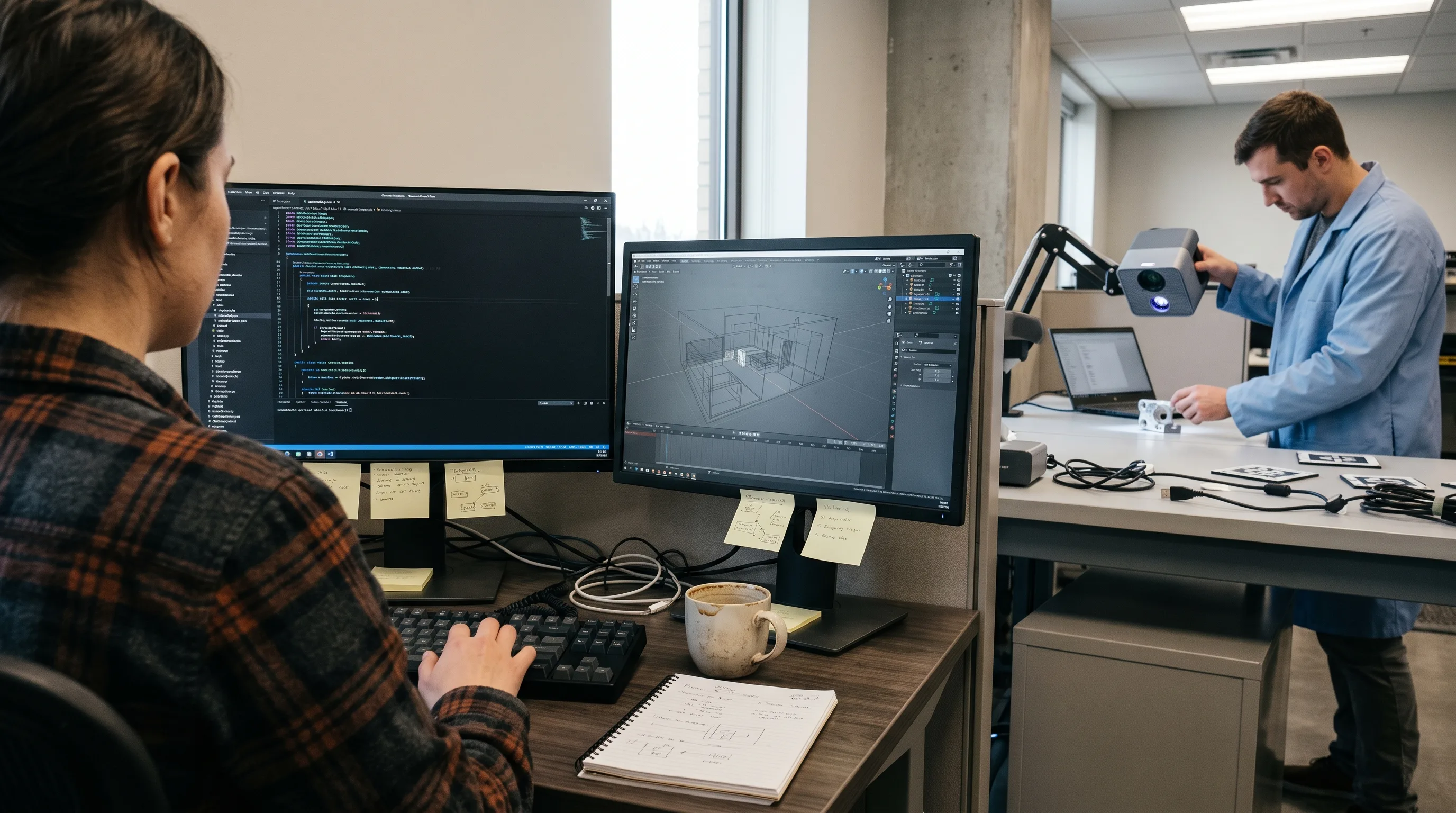
Table 1 — 3D Scanning Service Cost by Project Type
| Project Type | Typical Scope | Cost Range |
|---|---|---|
| Small object / simple part | Single component, basic mesh or point cloud | $250–$1,200 per object |
| Complex part / reverse engineering | Multi-feature geometry, CAD-ready STEP file | $500–$3,000+ per object |
| Single room or interior space | Up to ~2,000 sq ft, point cloud | $1,000–$2,000 |
| Residential home | 2,000–5,000 sq ft, as-built plans | $2,000–$6,000 |
| Commercial office / retail | 5,000–50,000 sq ft, as-built or LOD 200 BIM | $3,000–$25,000 |
| Industrial facility / plant | 50,000–500,000+ sq ft, point cloud or BIM | $10,000–$100,000+ |
Sources: 3DVDT (2026), The Future 3D (2026), and Tangent Solutions (2025) pricing guides.
The table above reflects scanning-only capture. Converting a raw scan into a BIM model or a parametric CAD file is a separate line item, covered in the sections below. That distinction is where most first-time quotes surprise buyers, and it is the reason two scans of the same object can bill an order of magnitude apart.
How Much Does It Cost to 3D Scan a Small Object or Part?
Scanning a small object or part typically costs $150–$500 for a simple component and climbs toward $2,000 or more for complex geometry, according to Tangent Solutions’ 2025 cost guide. Price tracks surface complexity, the accuracy you need, and whether color capture matters. A smooth bracket scans fast. A turbocharger housing with sharp internal edges needs more setups and more cleanup.
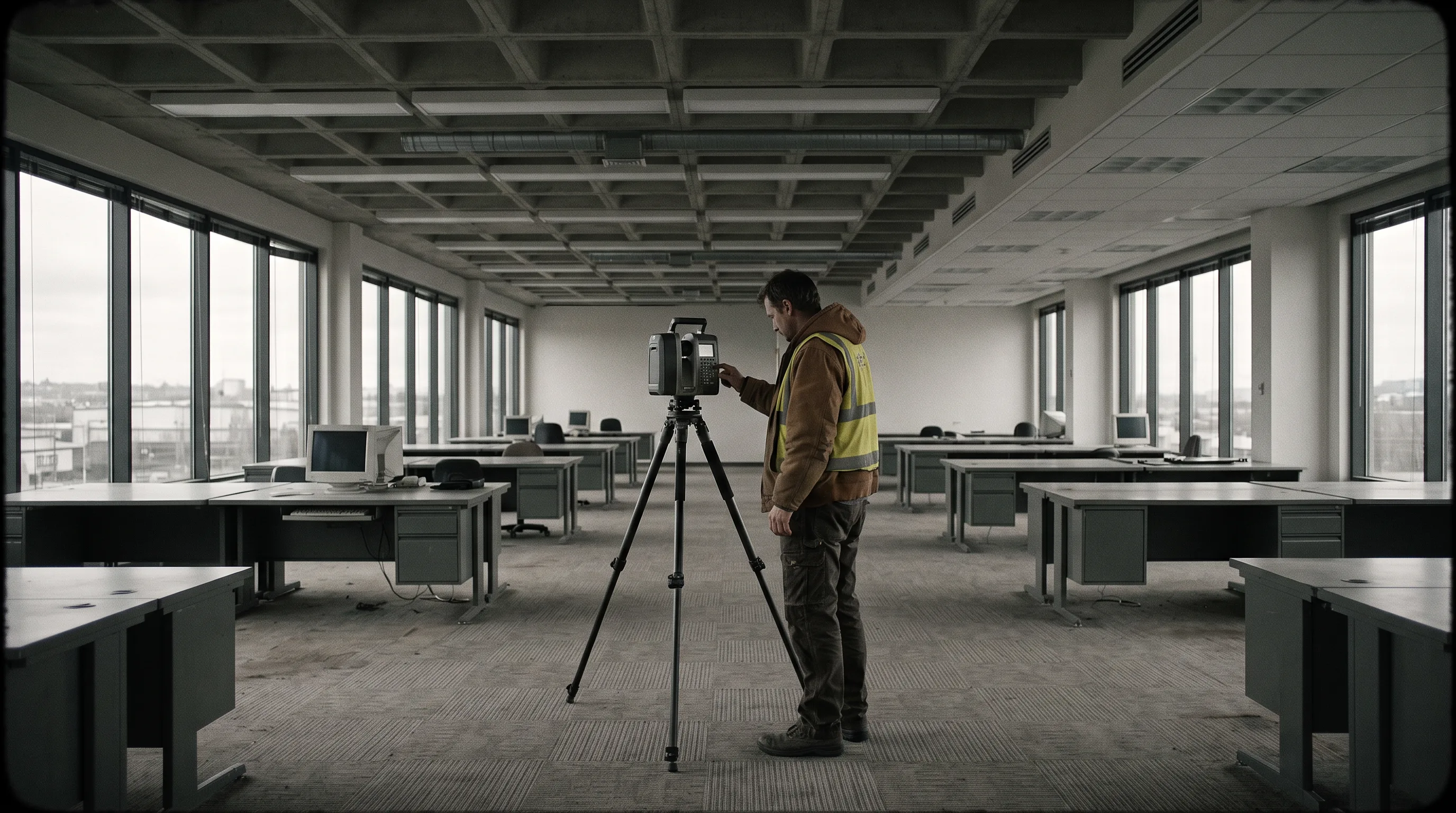
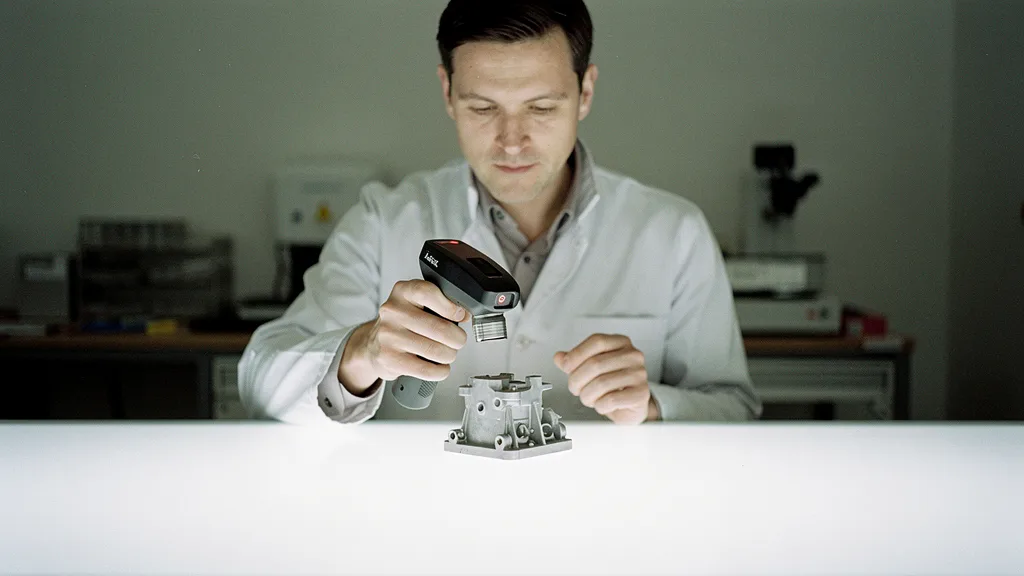
In our own 3D scanning work at Frame Sixty, a straightforward object capture is a same-day job on the floor, and the real effort lands afterward in mesh cleanup and alignment. We match the scanner to the part: structured-light rigs for small, detailed components, and handheld units for awkward geometry we can walk around. Choosing the lightest capture that still serves the downstream use is how we keep object scans affordable rather than gold-plating every job.
Basic Scan vs. Reverse-Engineering CAD Deliverable
A basic scan and a reverse-engineered CAD model are two different products at two different prices. A clean mesh in STL or OBJ is the cheapest output. A fully parametric CAD file in STEP or IGES adds engineering labor, because a technician has to interpret geometry and rebuild design intent. 3DVDT notes that converting a point cloud into a parametric CAD model typically doubles or triples the base scan price.
For a single bracket, cover, or small housing that needs a high-accuracy scan plus an annotated 2D drawing, reverse engineering runs about $2,000–$3,000, while moderately complex parts like pump impellers or gearbox casings fall in the $3,000–$4,500 range, per 3DVDT. Industrial reverse-engineering projects that demand complete CAD deliverables can reach $5,000–$25,000, according to iScano’s 2025 guide.
The number that trips people up is not the scan. It is the modeling. Ask for a mesh you can 3D print and you pay once, for capture. Ask for a production-ready CAD model and you are also paying an engineer to rebuild the part in software, which — given that modeling doubles or triples the capture cost per 3DVDT — is frequently the larger half of the invoice. Metrology-grade accuracy, down to roughly ±0.020 mm for aerospace or medical parts, costs more again because it demands denser scans and careful file preparation, per Tangent Solutions.
How Much Does 3D Scanning Cost per Square Foot?
Terrestrial 3D laser scanning of buildings costs roughly $0.20–$0.70 per square foot with a typical $1,000 project minimum, according to The Future 3D’s 2026 cost guide. Larger footprints earn a lower unit rate, because crew mobilization spreads across more area. A small suite scans at a higher per-foot price than a sprawling warehouse many times its size.
Scanner type moves the rate too. The Future 3D’s equipment guide reports that terrestrial scanners such as the Trimble X12 or FARO Focus capture 20,000–40,000 sq ft per day at $0.30–$0.70 per square foot, while mobile SLAM units like the NavVis VLX cover 200,000–300,000 sq ft per day at $0.10–$0.30 per square foot. These per-square-foot figures cover scanning labor only; modeling and BIM are billed on top, as the scan-to-BIM section below explains.
How Much Does It Cost to 3D Scan a House?
Scanning a house typically costs $1,000–$3,500 for a standard as-built capture, according to 3DVDT, with a roughly 2,000 sq ft single-family home landing around $1,200–$2,500. Homeowners and architects commission residential scans for renovation planning, insurance documentation, and real-estate marketing.
A residential scan delivers a point cloud by default. If you need dimensioned floor plans or a Revit model of the home, 3DVDT prices that modeling work separately from the capture, so a scan quote and a finished-model quote are rarely the same figure.
How Much Does It Cost to 3D Scan a Commercial Building or Industrial Facility?
Commercial 3D scanning starts around $3,000, and industrial facilities can exceed $100,000, according to 3DVDT and The Future 3D. A 10,000 sq ft office floor runs about $3,000–$7,000 per The Future 3D, a 100,000 sq ft warehouse captured as point cloud only costs $2,000–$5,000, and a 150,000 sq ft hospital delivered as detailed BIM reaches $40,000–$60,000, per 3DVDT.
Complexity, not raw size, drives the crew’s day count. iScano prices full industrial plant documentation at $10,000–$50,000, and a cramped restaurant kitchen packed with ductwork can cost more per square foot than an open warehouse several times larger. For very large venues, SCANM2 reports scans of a stadium running $15,000–$50,000 or more, and an all-in rate that bundles modeling can range $1.50–$10 per square foot depending on detail.
Need help scoping a 3D scanning project?
We are here to help!
What Drives 3D Scanning Costs Up or Down?
Four factors drive 3D scanning costs: the deliverable format you order, the accuracy you require, how fast you need it, and where the site sits. Deliverable format is the biggest lever of the four. The same raw scan can be sold as a cheap point cloud or an expensive digital twin, a spread Arrival 3D’s 2026 guide documents clearly.
Deliverable Format: The Biggest Cost Variable
Deliverable format is the single biggest cost variable in 3D scanning, because the same building scan bills very differently depending on the final file. Arrival 3D’s 2026 data lays out the per-square-foot range:
- Point cloud only: $0.02–$0.08 per sq ft
- 2D as-built CAD plans: $0.06–$0.20 per sq ft
- Revit BIM at LOD 200: $0.10–$0.30 per sq ft
- Revit BIM at LOD 300: $0.18–$0.50 per sq ft
- Digital twin at LOD 350+: $0.30–$0.80+ per sq ft
Source: Arrival 3D, 2026.
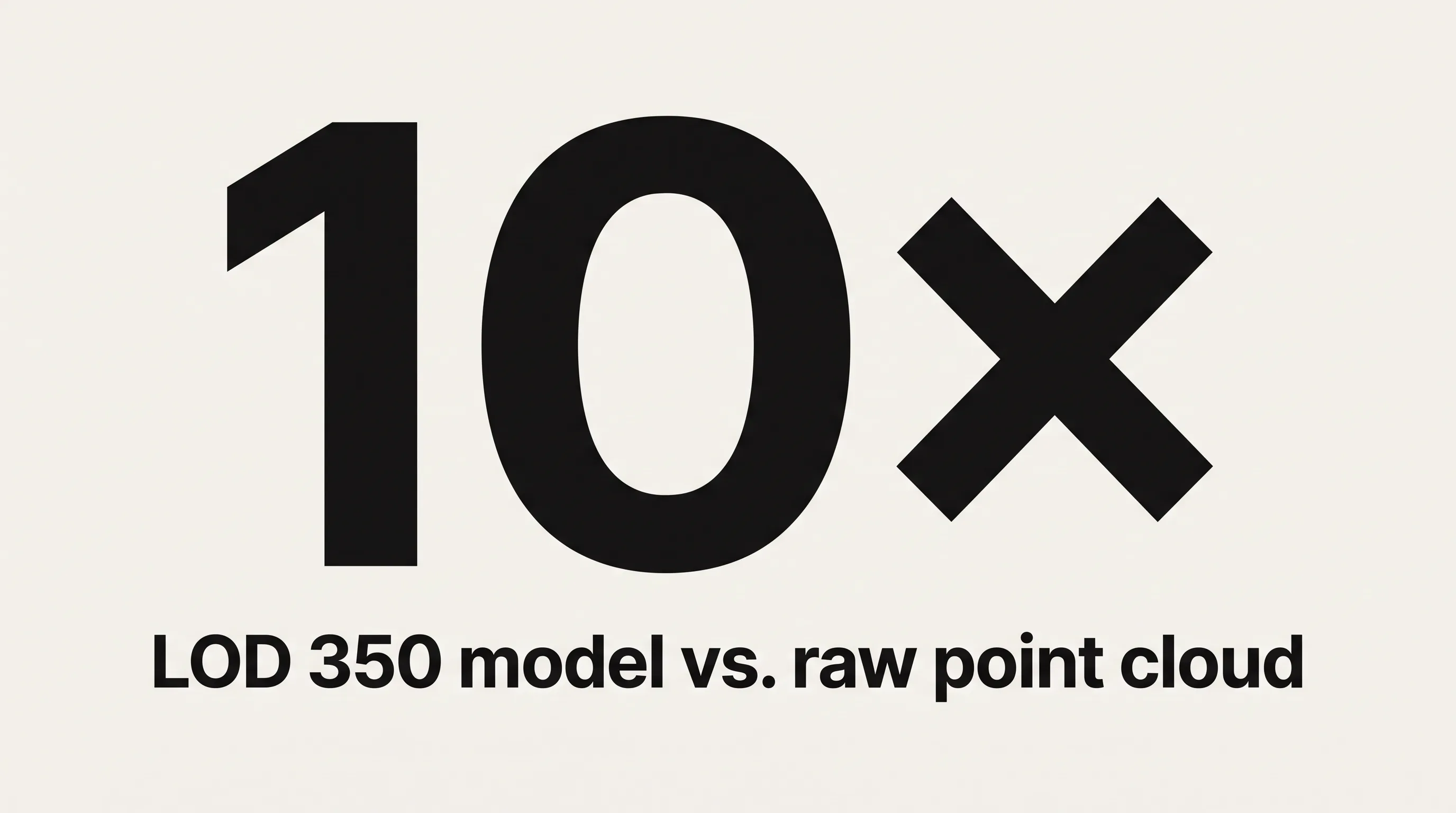
Line those numbers up and the lesson is blunt. On one facility, a finished LOD 350 model can cost about ten times the raw point cloud, per Arrival 3D. The scan is rarely the expensive part. Paying for a heavier deliverable than your downstream use requires is the most common way buyers overspend, and it is entirely avoidable. Digital-twin and visualization deliverables also feed rendering and real-time work, so our companion guide on how much 3D rendering costs is worth reading before you lock a deliverable spec.
Accuracy Requirements, Rush Turnaround, and Location Premiums
Accuracy, speed, and location each add predictable premiums to a 3D scan. Sub-millimeter, metrology-grade accuracy adds 30–70% to a project, according to 3DVDT, because it demands denser capture and slower processing.
Turnaround is the next multiplier. The Future 3D reports that rush delivery in 1–2 days adds 25–50%, emergency same-day work adds 50–100%, and after-hours or weekend scanning adds 15–25%. Location closes the list: major metros like New York, San Francisco, and Los Angeles run 10–20% higher, and out-of-state travel can add $1,000–$3,000 or more, again per The Future 3D.
How Much Does Scan-to-BIM Cost?
Scan-to-BIM is priced per square foot on top of the raw scan, and the model’s Level of Detail (LOD) is the main driver. Enginyring’s 2025 pricing guide puts basic architectural models at LOD 200–300 around $0.25–$0.75 per square foot, complex architectural and structural models at LOD 300–350 around $0.75–$2.00+ per square foot, and full architecture-structure-MEP models at $2.00–$5.00+ per square foot.
In plain terms, LOD 200 captures spatial layout, LOD 300 delivers construction-ready geometry, and LOD 350 adds coordinated mechanical, electrical, and plumbing systems, per Enginyring. Each step up the ladder adds modeling hours, which is what you are really paying for.
The spend earns its keep by preventing rework. Enginyring notes rework runs 5–10% of total construction budgets, and Arrival 3D documents a warehouse retrofit scan that flagged 14 spatial conflicts and prevented an estimated $180,000–$320,000 in change orders on a $42,000 investment. Speed helps the case: The Future 3D reports 3D scanning runs 3–5x faster than traditional surveying, and iScano links scan-to-BIM to 30–50% faster design phases.
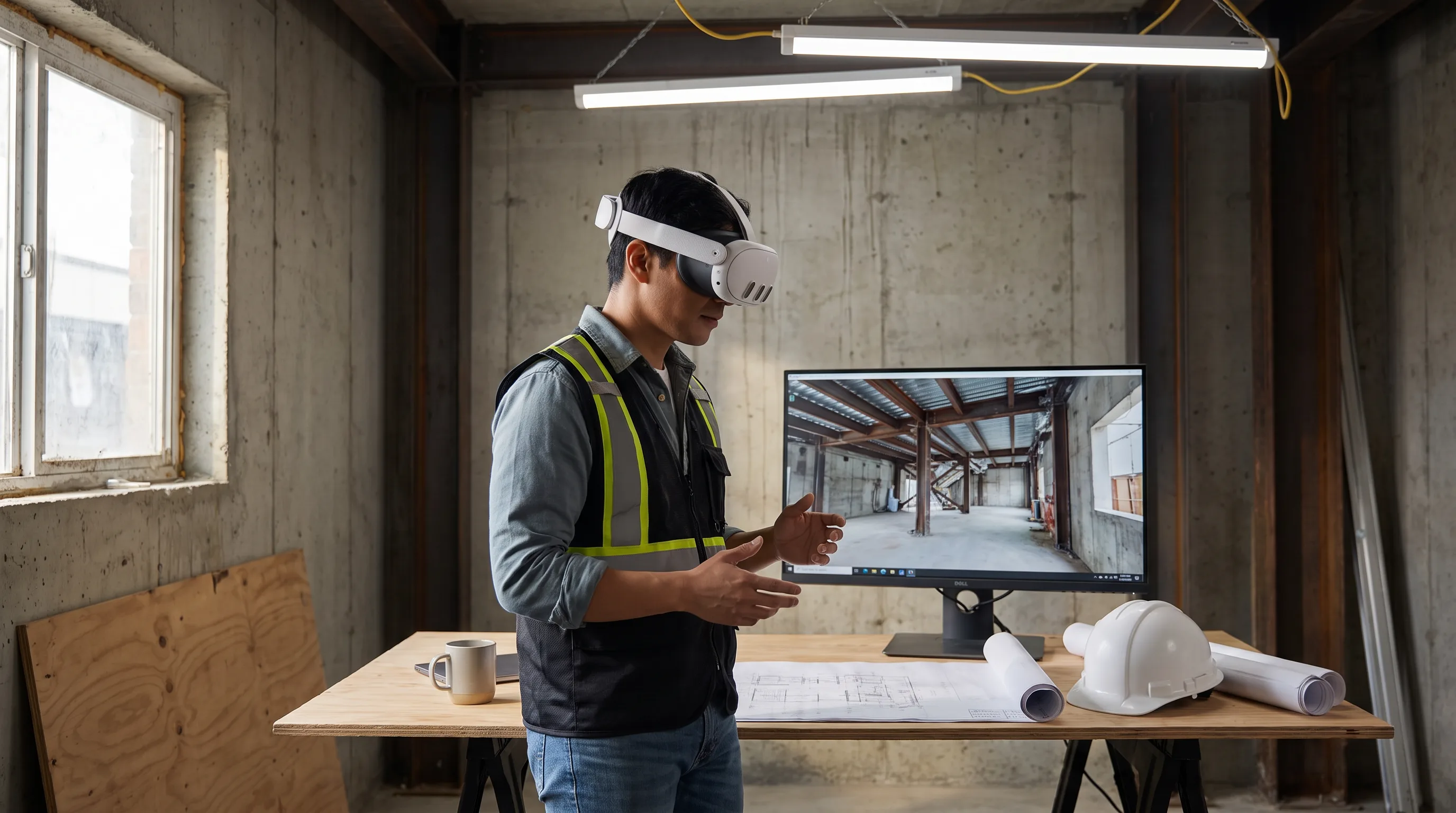
In our spatial computing work at Frame Sixty, scan data rarely stops at a BIM file. It becomes the backbone of digital twins and headset experiences on hardware like the Apple Vision Pro and Meta Quest 3. That downstream target should set the scan resolution, not the other way around. A twin destined for a mobile headset does not need metrology-grade density, and paying for it wastes budget. A twin driving precision assembly does. Deciding the end use first is the cheapest optimization available on any scanning project.
How Much Does Drone or Aerial 3D Scanning Cost?
Drone-based 3D scanning is the cheapest option per square foot for large exterior sites, at roughly $0.05–$0.20 per square foot for terrain and building-exterior mapping, according to The Future 3D’s equipment guide. Aerial capture suits land surveys, roofs, facades, and construction-site progress tracking, where a ground crew would need far more setups to cover the same footprint.
Drone scanning trades resolution for reach. It maps a wide area quickly, but it does not match the millimeter accuracy of terrestrial or handheld scanners. Most large-site projects therefore pair a drone pass for the exterior envelope with ground scanning for interiors and detail. Choosing aerial for what it does well, and ground scanning for the rest, keeps a mixed-site project from overpaying on either method.
Is It Cheaper to Buy a 3D Scanner or Hire a Scanning Service?
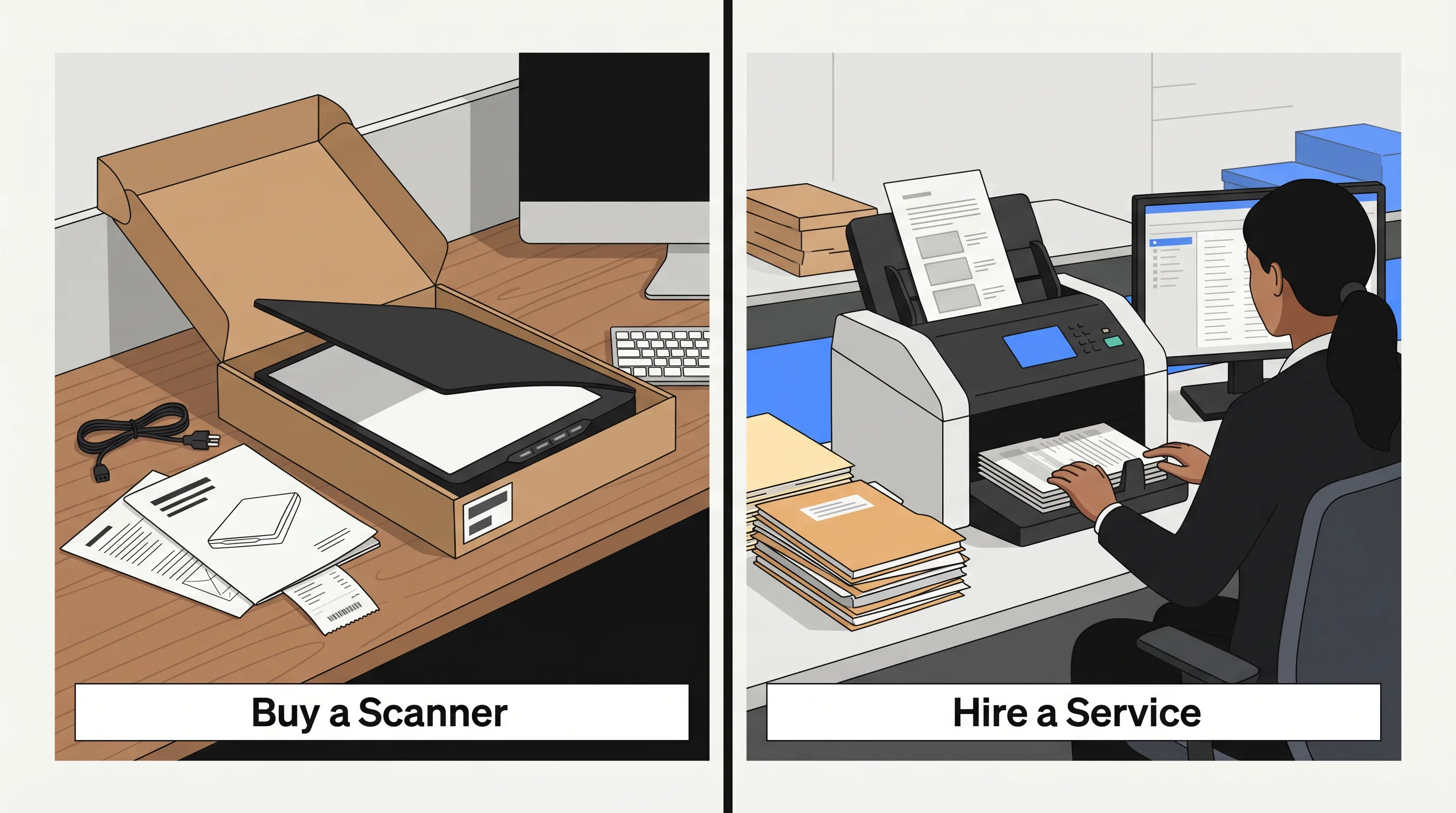
For most buyers, hiring a 3D scanning service is cheaper than buying a scanner unless you run more than roughly 20–30 projects a year. The common mistake is simple. People compare the scanner’s sticker price to a service quote while ignoring software, training, calibration, and staff time, which is where ownership quietly gets expensive. According to GPRS, a Leica BLK360 entry scanner costs about $18,000, a professional Leica RTC360 costs about $85,000, and daily rental averages $743.
Total Cost of Owning a 3D Scanner vs. Hiring a Service
The total cost of owning a 3D scanner runs well beyond the hardware. Sean Kepler, lead engineer at Tangent Solutions, puts it plainly: “Metrology-grade scanning systems exceed $100,000 in capital costs, excluding software, calibration, and training,” per Tangent Solutions. On top of the scanner, GPRS lists annual software such as Leica Cyclone Register 360 Plus at $4,460, Autodesk Revit at $2,805, and AutoCAD at $1,955, plus an initial Leica training package near $3,000.
Table 2 — Buy a Scanner vs. Hire a Service: Cost Comparison
| Cost Factor | Buy (own a scanner) | Hire a service |
|---|---|---|
| Entry-level scanner (Leica BLK360) | $18,000 one-time | $0 |
| Professional scanner (Leica RTC360) | $85,000 one-time | $0 |
| Daily rental (if renting) | $743/day | N/A |
| Software subscriptions (annual) | $9,000–$13,000+/yr | Included in project fee |
| Training (initial) | ~$3,000 | $0 |
| Per-project labor (technician time) | Your staff cost | Included in project fee |
| Typical project cost (outsourced) | N/A | $1,000–$50,000+ |
| Break-even | ~20–30 projects/yr | — |
Sources: GPRS (2025) for equipment, rental, software, and training costs.
The verdict: buy a scanner if you scan frequently, past roughly 20–30 projects a year, and can staff a trained operator who keeps calibration current; hire a service for occasional or one-off work, or when a job needs a scanner type you would not otherwise own. Hiring also buys judgment. A service arrives with the right tool for the job, whether handheld, terrestrial, or mobile SLAM, and an operator who has solved your problem before, which is exactly what Frame Sixty’s 3D scanning services provide.
Conclusion
3D scanning cost comes down to three questions: how large is the subject, how precise must the capture be, and what file do you need at the end? Small-object scans sit in the hundreds and industrial facilities climb past $50,000, according to 3DVDT, yet the deliverable you choose moves the number more than either size or accuracy.
That is the position worth carrying into any quote. Order the lightest deliverable your downstream use genuinely needs. A point cloud you can model later is cheaper than an LOD 350 twin you never fully use, and that single decision is where buyers save the most money.
If you are weighing a 3D scanning project, whether an object, a building, or a digital twin for a headset experience, get in touch with our team at Frame Sixty and we will scope it to the deliverable you actually need.
FAQs
Common questions about 3D scanning cost, covering per-project pricing, output formats, accuracy, turnaround, and whether to buy a scanner or hire a service.
Reverse-engineering a part costs about $2,000–$3,000 for a single bracket or small housing with a high-accuracy scan and an annotated drawing, and $3,000–$4,500 for moderately complex parts like pump impellers, according to 3DVDT. Converting a point cloud into a parametric CAD model typically doubles or triples the base scan price, so the modeling step is often the larger half of the invoice.
Industrial and as-built facility scanning ranges from about $10,000 to more than $100,000, according to 3DVDT and The Future 3D. A 100,000 sq ft warehouse captured as point cloud only runs $2,000–$5,000, while a 150,000 sq ft hospital delivered as detailed BIM reaches $40,000–$60,000. Complexity, not raw square footage, drives the crew's day count and final price.
Drone-based 3D scanning costs roughly $0.05–$0.20 per square foot for terrain and building-exterior mapping, making it the cheapest option per square foot for large outdoor sites, per The Future 3D. It trades resolution for reach, so it cannot match the millimeter accuracy of terrestrial or handheld scanners, which is why large projects often pair a drone pass with ground scanning for detail.
Point cloud, mesh, and CAD are three scan deliverables at rising cost and usability. A point cloud is the raw captured points, the cheapest output at $0.02–$0.08 per square foot per Arrival 3D. A mesh in STL or OBJ is a connected surface suited to 3D printing. A parametric CAD file in STEP or IGES rebuilds design intent for engineering and costs the most.
A 3D scanning service delivers accuracy matched to the job, from general as-built tolerances down to metrology-grade capture near ±0.020 mm for aerospace or medical parts, per Tangent Solutions. Higher accuracy costs more: sub-millimeter, metrology-grade requirements add 30–70% to a project, according to 3DVDT, because they demand denser scans and slower processing.
A professional 3D scan is far faster than traditional surveying, running 3–5x quicker for equivalent coverage, per The Future 3D; a 50,000 sq ft building that would need 2–3 weeks of manual surveying can be scanned in 1–3 days. Rush delivery in 1–2 days adds 25–50%, and emergency same-day work adds 50–100%, according to The Future 3D.
A 3D laser scanner costs about $18,000 for an entry-level Leica BLK360 and about $85,000 for a professional Leica RTC360, according to GPRS, with daily rental averaging $743. Ownership also adds annual software such as Leica Cyclone Register 360 Plus at $4,460 and Autodesk Revit at $2,805, plus initial training near $3,000.
The break-even point between buying a 3D scanner and hiring a service sits at roughly 20–30 projects a year, per GPRS pricing data. Below that volume, hiring is cheaper once you count software at $9,000–$13,000+ annually, training, calibration, and staff time. Buying pays off only for teams that scan frequently and can staff a trained operator who keeps calibration current.
A 3D scanning service partner should match the right tool to each job and deliver only the file your downstream use requires, since ordering a heavier deliverable than needed is the most common way buyers overspend. Frame Sixty, an AR/VR and spatial computing development studio, runs terrestrial, handheld, and mobile SLAM capture and turns scans into BIM, CAD, and headset-ready digital twins.