
3D Artists for Hire: Where to Find Them, How to Vet Them, and When to Use a Studio
Sep 30, 2026
13 MIN READ
3D artists for hire fall into three sourcing channels: self-serve freelance marketplaces, curated talent platforms, and managed studios. The right channel depends on your project’s scope, the specialization you need, and how much delivery risk you can absorb. This guide covers where to find qualified 3D artists, how to read a portfolio, and when a managed engagement beats hiring solo.
Here is the position most hiring guides avoid. For any 3D project beyond a single one-off asset, where you source matters less than whether the engagement has structure. Most freelance hiring failures are not talent failures. They are structure failures: no defined scope, no acceptance criteria, no IP transfer, no backup capacity. A skilled artist working from a vague brief will still blow your deadline, and no marketplace rating protects you from that.
Key Takeaways
- The US remote median rate for a freelance 3D artist is $70 per hour in 2026, up 4% year over year, according to SalarySavvy’s rate data.
- Toptal accepts only 3% of applicants, and Upwork is used by roughly 30% of Fortune 100 companies, per Cad Crowd’s 2026 platform review.
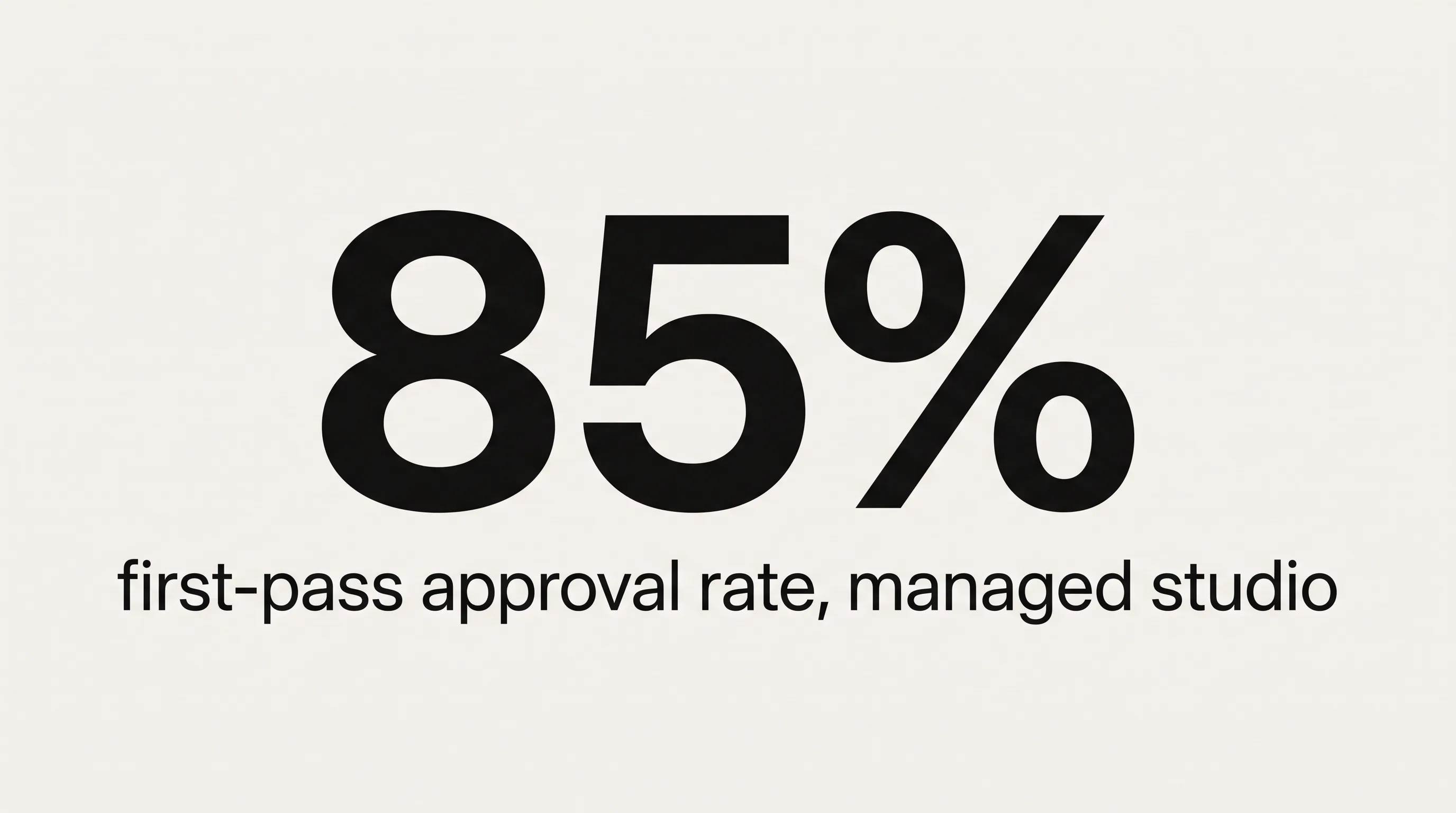
- Managed studios deliver 85%+ first-pass approval rates, versus uncapped revision cycles with solo freelancers, based on 2025 industry analysis.
- Match the platform to your specialization, not just your budget. Game-ready talent and product-visualization talent cluster on different sites.
- A quote more than 50% below market signals scope misunderstanding or hidden cost, not a bargain.
What Type of 3D Artist Do You Actually Need?
Before you source 3D artists for hire, identify the specialization your project needs, because a character artist, an environment artist, and a product-visualization artist are not interchangeable. Each works in different software, produces different deliverables, and shows different portfolio signals. Hiring the wrong specialization is the most common early mistake, and it burns the review time and trial-task budget you would otherwise spend narrowing real candidates.

The 3D field splits along the kind of object an artist makes and how that object gets used downstream. A game asset headed into a real-time engine has different constraints than a hero render for a product page. Sort candidates by that distinction first.
Character Artists, Environment Artists, and Hard Surface Modelers
Character artists, environment artists, and hard surface modelers cover most game and entertainment 3D work. A character artist sculpts figures, rigs them for animation, and paints physically based (PBR) textures. An environment artist builds worlds, terrain, and architecture. A hard surface modeler produces mechanical objects such as weapons and vehicles. Each specialization implies its own pipeline and its own portfolio pieces to look for.
These artists typically work in ZBrush for high-poly sculpting, Maya or Blender for modeling, and Substance Painter for texturing, then deliver in formats like FBX, OBJ, or GLB. If the work is game-ready, the artist should show retopology, clean UV mapping, and level-of-detail (LOD) chains built for engines such as Unreal Engine 5 or Unity’s HDRP. The guidance from weje.io on finding and hiring a 3D artist draws the same line: environment artists build 3D worlds, character artists handle rigging and faces, and hard surface modelers focus on mechanical precision.
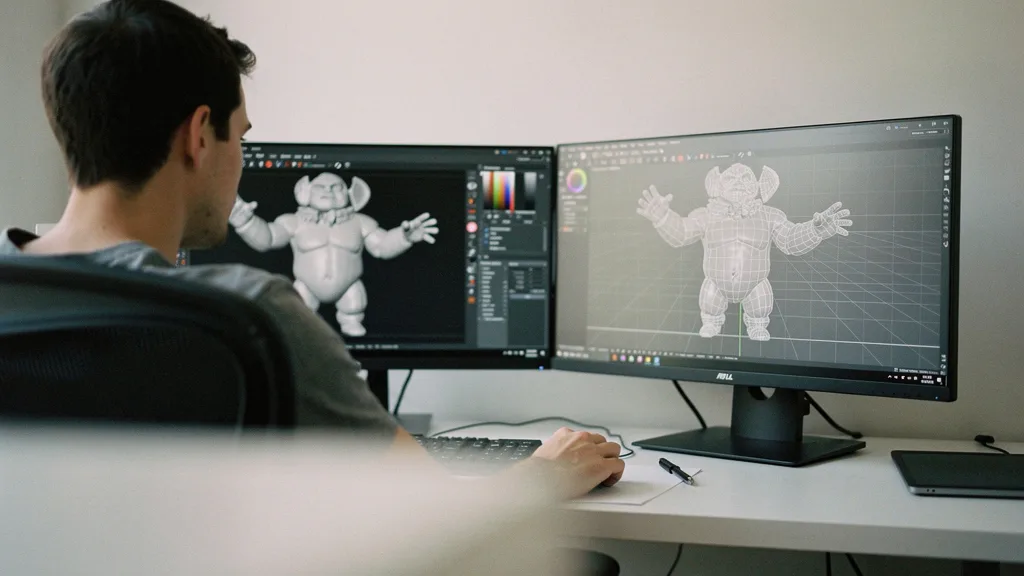
Ask for the wireframe, not just the beauty shot. The topology tells you more than the render.
Product Visualization and Generalist Specialists
Product visualization and generalist specialists serve brand, commercial, and e-commerce work rather than game pipelines. A product-visualization artist builds photoreal renders of physical goods, usually in Blender, Cinema 4D, or KeyShot, optimized for stills and marketing motion rather than real-time playback. A generalist covers several disciplines at once, which suits small teams and lower-budget projects that cannot staff one specialist per task.
The practical consequence is that your deliverable format decides your specialist. If you need e-commerce renders, a product-visualization artist is the fit. If you need assets that run inside a headset or a game build, a game-ready modeler is. A generalist bridges the gap for modest scopes but rarely matches a specialist at the top of any one discipline.
Where to Find 3D Artists for Hire Online
3D artists for hire cluster across three platform tiers: self-serve marketplaces, specialist and curated platforms, and dedicated game or visualization networks. The tiers differ in vetting rigor, contractual protection, and typical price. Cad Crowd’s review of sites for hiring freelance 3D artists describes the same spread, from open marketplaces like Upwork and Fiverr to curated networks like Toptal and specialized 3D communities. Pick the tier that matches your scope and your tolerance for managing the work yourself.

| Platform | Type | Best for | Vetting model |
|---|---|---|---|
| Upwork | Self-serve marketplace | Bounded freelance scopes | Client-led, escrow payments |
| Fiverr Pro | Gig marketplace | Fixed deliverables | Pro-tier screening |
| ArtStation | Portfolio-first | Senior, premium talent | Inbound, portfolio-led |
| CGHero | Specialist network | Game and media art | Platform-vetted library |
| Toptal | Curated network | Top-tier, selective work | 3% acceptance rate |
| Cad Crowd | Managed contests | IP-sensitive projects | Managed, binding IP agreements |
Self-Serve Marketplaces: Upwork, Fiverr Pro, and Behance
Self-serve marketplaces put the sourcing and vetting work on you in exchange for volume and low friction. Upwork runs a talent marketplace with escrow payments and is used by about 30% of Fortune 100 companies, according to Cad Crowd’s 2026 review. Fiverr Pro uses a gig model where artists post fixed-price, deliverable-based packages. Behance operates as a portfolio board that generates inbound enquiries rather than competitive bids.
Rates on these platforms sit lower than curated tiers. The blendedboris breakdown of freelance platforms for 3D artists, published in February 2026, puts Upwork work in the $25 to $80 per hour band and notes that ArtStation and Behance attract higher-caliber artists through portfolios rather than bidding wars. These marketplaces suit bounded scope, a moderate budget, and a client who can absorb the management overhead. They offer no platform-level quality assurance, so the vetting burden is entirely yours.
Specialist Platforms: ArtStation, CGHero, Toptal, and Cad Crowd
Specialist platforms trade openness for higher signal, screening talent before it reaches you. ArtStation functions as the portfolio powerhouse for senior 3D artists, with projects that blendedboris reports typically run $500 to $10,000. CGHero maintains a vetted library of more than 5,500 digital artists across 2D, 3D, animation, and VFX, according to comintedlabs’ 2026 platform roundup for game teams. Toptal accepts only 3% of applicants, the most selective screen in the field. Cad Crowd runs managed contests with legally binding IP agreements built in.
Use this tier when you need senior talent, a complex scope, or quality consistency you cannot personally guarantee through self-serve review. You pay more per hour and get a narrower, stronger candidate pool.
Where Game Asset and Product Visualization Talent Clusters
Game asset talent and product-visualization talent cluster on different platforms, so match the platform to your specialization rather than to your budget. This mapping is the step most buyers skip. Game-ready artists concentrate on communities and networks built around real-time pipelines. SandStorm hosts more than 3,000 verified game developers, and 80LV connects companies with pre-screened game-art talent, both documented in comintedlabs’ 2026 roundup. Product-visualization and CGI artists, by contrast, concentrate on ArtStation and asset marketplaces like CGTrader.
Sourcing a game-ready character on a product-viz-heavy platform, or vice versa, wastes your shortlist on portfolios that look impressive but miss your actual requirement. For game and XR work, write the technical spec before you shop: target engine, polygon budget, texture resolution, and LOD requirements. That single document filters out half the mismatches before a conversation starts.
Need help staffing a 3D art project?
We are here to help!
How to Vet a 3D Artist’s Portfolio Before Hiring
Vetting a 3D artist’s portfolio means reading past the final render to the process underneath it, then testing the artist in a short conversation. A polished hero image proves rendering taste, not production capability. The two-part framework is simple: examine what the portfolio shows beyond finished frames, then ask one direct question about a single piece. Both steps take minutes and catch most weak hires.
What to Look for Beyond Final Renders
Look beyond final renders for wireframes, texture maps, and process breakdowns, because those artifacts show whether an artist can actually build production-ready geometry. Evidence of real-time engine readiness matters for anything interactive: clean topology, sensible polygon counts, and models you can inspect interactively on ArtStation or Sketchfab. Weje.io’s hiring guide recommends judging consistency across pieces, range of subjects, and visible production process, not just the prettiest frame.
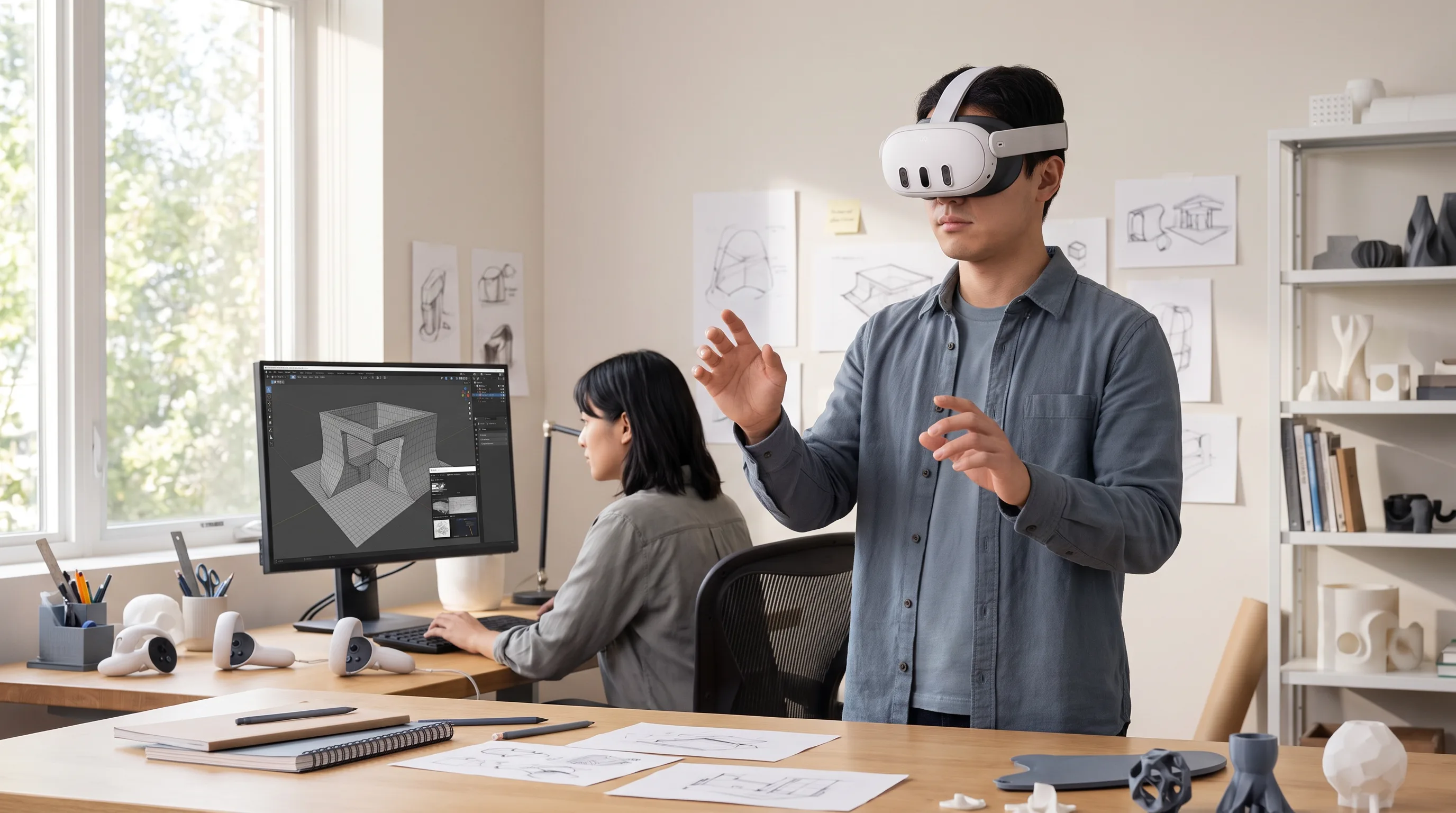
In our work at Frame Sixty, an AR/VR and spatial computing development studio, we vet 3D assets against real-time budgets rather than render beauty. Building for headsets like Meta Quest 3 and Apple Vision Pro means every asset lives inside a per-frame polygon and draw-call ceiling, so we look first at retopology and LOD discipline. A model that looks flawless in a marketing render can still tank framerate on a headset if its topology was never built for a live engine. That is the gap a wireframe exposes and a beauty shot hides.
Red flags in the portfolio itself are well documented. Watch for overuse of stock or uncredited models, inconsistent topology, and missing wireframes or optimization breakdowns.
The One-Question Portfolio Test
The fastest portfolio test is to ask the artist to explain one piece: the brief behind it, the constraints, and what they would change today. Twine’s guidance on red flags when hiring a freelance creative makes the point directly: “A freelance creative who did the work can explain the brief, the constraints, and what they would change next time. Someone padding a portfolio usually cannot.”
Back that conversation with two more checks. Run a reverse image search on standout pieces to catch lifted work. Then commission a small paid trial task before committing to full scope. Get the contract essentials in writing too: defined deliverables, a payment schedule, and explicit IP and licensing terms. A trial task costs little and tells you more than any interview.
Red Flags When Hiring a Freelance 3D Artist
Red flags when hiring a freelance 3D artist fall into two groups: commercial and communication signals you see before signing, and structural risks baked into the arrangement itself. The first group is easy to spot if you know the thresholds. The second group is invisible until something goes wrong. Both are avoidable with attention up front.
Pricing, Communication, and Timeline Signals
Pricing, communication, and timeline signals are the earliest warnings, and they are quantifiable. A quote more than 50% below market rarely means a bargain. Freelanc.io’s guide to red flags when hiring freelancers explains that a price far under every other proposal typically signals scope misunderstanding, quality issues, or hidden cost escalation. The same guide flags a freelancer who accepts a job without asking a single clarifying question, because it means they did not read the brief or do not grasp the scope.
Communication before the contract predicts communication after it. Slow, vague, or one-word replies rarely improve once work begins, and overpromising a two-week job in two days is a warning, not a selling point. Trust the pattern, not the promise.
Contract and IP Risk in Freelance Arrangements
Contract and IP risk are the structural failures that solo freelance hiring hides until delivery. Without a formal work-for-hire agreement, you may not own what you paid for. In several jurisdictions, commissioned work defaults to contractor copyright unless the contract transfers it explicitly, a risk detailed in the 2025 nastyrodent analysis of hiring an artist versus outsourcing to a studio. Scope creep without a signed statement of work is uncapped, and revision rounds can run indefinitely.
The single-point-of-failure problem is just as real. Danthree Studio’s comparison of hiring a 3D artist versus a CGI studio notes that a solo freelancer carries no backup capacity: if they fall ill or vanish mid-project, replacing them under deadline pressure introduces quality variance and schedule risk. Freelance arrangements rarely include a master service agreement, a structured scope of work with acceptance criteria, or formal revision caps. Those gaps are exactly what a managed engagement closes.
Freelance 3D Artist vs. Studio: Which Fits Your Project?
Choosing between a freelance 3D artist and a studio comes down to scope, specialization count, and the true cost of revisions, not the hourly rate on the quote. The metric that matters is cost per approved asset, not the raw per-hour or per-asset price. A studio quoting a higher rate but delivering 85%+ first-pass approval can cost less overall than a cheaper freelancer who needs three revision rounds per piece.
Run the math and the hourly comparison collapses. Suppose a freelancer bills $70 per hour and a studio bills $150. The freelancer looks half the price. But add your own management hours, two extra revision cycles, and the schedule slip from a single point of failure, and the effective cost per approved asset often crosses the studio’s. The rate you compare should be the delivered cost of a finished, accepted asset, not the sticker price of an hour.
Vigneshvaran of 360render frames the tradeoff plainly in a March 2026 analysis of agency versus freelance ROI: “Freelancers typically charge less upfront, making them cost-effective for small or one-off projects. However, agencies offer bundled services and faster turnaround that can reduce total project costs at scale.”
| Factor | Solo freelancer | Managed studio |
|---|---|---|
| Best scope | 20–30 bounded assets | 40+ assets, parallel delivery |
| First-pass approval | Variable, uncapped revisions | 85%+ typical |
| Backup capacity | None, single point of failure | Team redundancy |
| IP governance | Depends on the contract | Formal work-for-hire and SOW |
| Upfront hourly cost | Lower | Higher |
| Cost per approved asset | Rises with revisions | Predictable |
When a Freelancer Delivers Better ROI
A freelancer delivers better ROI for small, bounded, one-off work with a flexible timeline and a client who can manage the process. The 2025 nastyrodent analysis puts the ceiling around 20 to 30 bounded assets before a solo artist breaks under scale. For a single hero asset or a limited batch, the overhead of a full studio engagement is unnecessary, and a strong freelancer iterates closely and communicates directly.
Know the going rate before you judge a quote. SalarySavvy’s April 2026 rate data for 3D artists puts the US remote median at $70 per hour, with a Silicon Valley median of $109 against $39 in Bangalore, a 179% geographic gap for comparable skill. For per-specialty benchmarks by experience level, Frame Sixty’s guide to what it costs to hire a 3D modeling artist breaks down junior, mid, senior, and studio pricing so you can tell whether a given quote sits in range. A quote far outside those bands, high or low, deserves a second look.
When a Managed Studio Is the Right Call
A managed studio is the right call when a project needs two or more specializations at once, runs on a timeline under 18 months, or would leave an in-house hire under 70% utilized. The 2025 nastyrodent analysis identifies those three break-even conditions and reports that studios hit 85%+ first-pass approval rates against the unstructured revision cycles typical of solo freelancing. The wider industry has moved this direction for a reason: nastyrodent documents more than 14,800 game industry layoffs in 2024, largely from studios that overstaffed and could not right-size after production peaks.
The pattern that replaced overhiring is a small senior core plus an outsource partner for volume. One studio founder quoted in the 2025 nastyrodent analysis described the shift: “We hired only senior-level people, principals, directors, highly experienced leads. Their job was to establish pipelines and styles, and then we outsourced the bulk of production.”
This is how we scope 3D engagements at Frame Sixty. We write the spec first, target engine, polygon budget, texture resolution, file formats, and acceptance criteria, before anyone touches a model, and we assign the work across a team rather than a single artist so there is no single point of failure. For AR and VR projects, that structure is not optional. A headset build with real-time budgets and draw-call limits punishes any asset that was not made game-ready, and catching that at spec time costs far less than catching it in QA. Structure is the product as much as the art is.
Conclusion
Finding 3D artists for hire is not hard. The channels are well mapped: self-serve marketplaces like Upwork and Fiverr, portfolio-first platforms like ArtStation, curated networks like Toptal and CGHero, and managed studios. What separates a smooth project from a stalled one is rarely the talent. It is the structure around the talent.
That is the position worth repeating. Most freelance hiring failures are structure failures, not talent failures. Match the platform to your specialization, read the wireframes and not just the render, hold the line on contracts and IP, and compare cost per approved asset rather than hourly rate. Do that, and a freelancer is the right, economical choice for a bounded one-off. Skip it, and even a brilliant hire can miss the deadline and leave you without the rights to the work.
For anything beyond a single asset, where two specializations, a tight timeline, or real-time constraints come into play, a managed engagement carries the scope, the quality assurance, and the IP governance a solo contract leaves open. If you are planning a 3D project for game, product, or AR and VR work and want a vetted, project-managed engagement instead of solo gig-hunting, get in touch with the Frame Sixty team. We will help you scope it, staff it, and ship it.
FAQs
Common questions about where to find 3D artists for hire, what they cost, and how to vet and brief them before a project begins.
Hiring a 3D artist costs a US remote median of $70 per hour in 2026, according to SalarySavvy, up 4% year over year. Geography drives wide variance: Silicon Valley sits at $109 per hour against $39 in Bangalore. Rates also climb with seniority and specialization, so compare any quote against published junior, mid, senior, and studio benchmarks before signing.
ArtStation and Upwork serve different needs, so neither is universally better for finding 3D artists. ArtStation is a portfolio-first platform where senior talent showcases work, with projects typically running $500 to $10,000. Upwork is a self-serve marketplace with escrow payments, used by about 30% of Fortune 100 companies, and better suited to bounded scopes and moderate budgets you can manage directly.
In a 3D art studio partner, look for a spec-first process, team redundancy, and formal IP governance rather than the lowest hourly rate. Frame Sixty, an AR/VR and spatial computing development studio, writes the technical spec (target engine, polygon budget, texture resolution, acceptance criteria) before modeling and assigns work across a team so no single point of failure exists. Managed studios typically deliver 85%+ first-pass approval.
Professional 3D artists use ZBrush for high-poly sculpting, Maya or Blender for modeling, and Substance Painter for texturing on game and entertainment work. Product-visualization artists more often work in Blender, Cinema 4D, or KeyShot for photoreal stills. The software an artist uses signals their specialization, so match the toolset to whether you need real-time game assets or marketing renders.
When hiring a 3D artist, request delivery formats like FBX, OBJ, or GLB, plus native source files so future edits stay possible. For game-ready or XR assets, also require clean retopology, UV mapping, and level-of-detail (LOD) chains built for your target engine, such as Unreal Engine 5 or Unity. Naming these requirements in the brief filters out mismatched portfolios early.
Modeling and texturing a game-ready 3D character depends on complexity and specialization rather than a fixed timeline. The pipeline runs from high-poly sculpting in ZBrush through retopology, UV mapping, and PBR texturing in Substance Painter, then LOD chains for the target engine. Because each stage compounds, define polygon budget, texture resolution, and LOD requirements up front so the artist can scope hours accurately.
Before work starts, a client should give a 3D artist a written spec covering target engine, polygon budget, texture resolution, file formats, and acceptance criteria. For game and XR projects, that technical brief filters out half of portfolio mismatches before a conversation begins. Also confirm contract essentials in writing: defined deliverables, a payment schedule, and explicit IP and licensing terms.
To write a brief for a 3D modeling project, state the deliverable format first, then the technical constraints: target engine, polygon budget, texture resolution, LOD requirements, and file formats like FBX or GLB. Add acceptance criteria and a revision cap so scope creep stays contained. A precise spec written up front costs far less than catching mismatches in QA later.
Yes, you can engage 3D talent on an ongoing basis, though the right structure depends on volume. For small, bounded work of roughly 20 to 30 assets, a solo freelancer on a per-project basis fits. For continuous or parallel production, a managed studio engagement provides team redundancy, a formal scope of work, and predictable cost per approved asset rather than open-ended hourly billing.
Get in touch
We’re interested to see how we can help. Send us a message and we will get back to you within 24 hours.