
How Much Does 360 Video Production Cost? A Studio Buyer's Guide
Sep 21, 2026
13 MIN READ
360 video production costs between $2,000 and $50,000 or more per project, with most commercial-grade work landing between $5,000 and $20,000, according to Outsource Services India’s 2026 pricing guide. This guide answers what drives that range, how long a project takes, which delivery platforms you can target, and how to vet a studio before you sign. It is written for the marketing, training, or events manager comparing production partners, not for someone learning how a 360 camera works.
One position guides everything below: the cheapest 360 video is rarely the one with the lowest quote, but the one whose footage you can reuse. A scene shot to headset-grade specs feeds a web embed today and a Vision Pro app next year. A scene shot for YouTube alone is a dead end the moment your program grows.
Key Takeaways
- Most commercial 360 video projects cost $5,000 to $20,000; cinematic work runs $8,000 to $15,000 per finished minute (VR Vision Group, 2026).
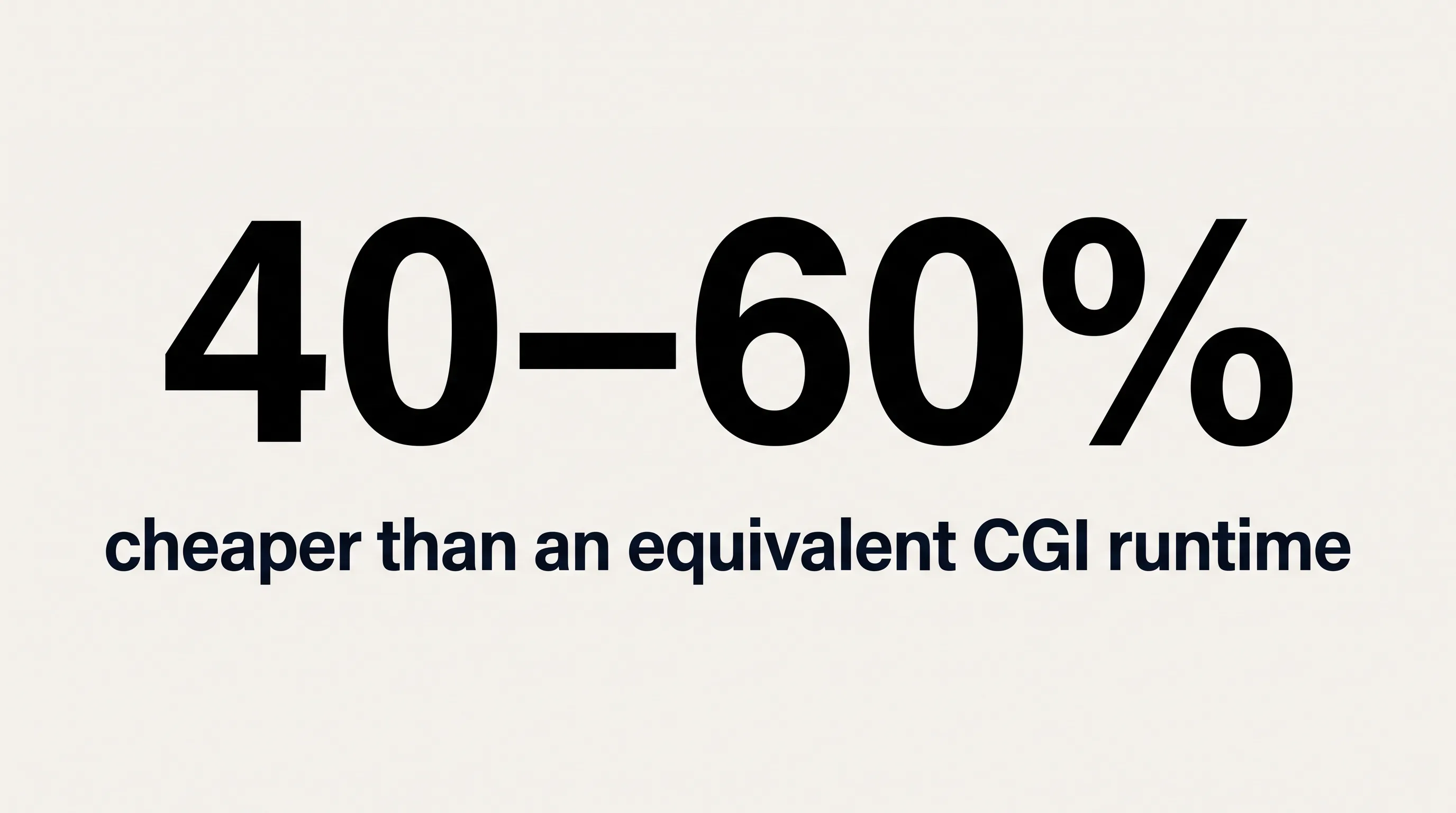
- 360 video is 40 to 60 percent cheaper than an equivalent custom CGI VR environment for the same runtime (VR Vision Group, 2026).
- A single-scene project usually takes 4 to 8 weeks from brief to delivery; multi-module libraries run 8 to 16 weeks.
- Post-production, not the shoot day, is where most 360 budgets overrun, because stitching and spatial audio are labor-heavy.
- The global VR and 360 video market reached $12.19 billion in 2025 and is forecast at $13.46 billion in 2026 (Market Research Forecast, 2025).
How Much Does 360 Video Production Cost?
Professional 360 video production costs $2,000 to $50,000+ per project, and most commercial-grade projects fall between $5,000 and $20,000, per Outsource Services India’s June 2026 analysis. Cinematic, stereoscopic work is often priced by the finished minute instead, at $8,000 to $15,000, according to VR Vision Group’s 2026 cost breakdown. Where your project lands depends on shoot days, rig complexity, and how much post-production the footage needs.
| Project type | Typical range (USD) |
|---|---|
| Real estate walkthrough | $3,000 – $12,000 |
| Education / campus | $5,000 – $20,000 |
| Healthcare | $7,000 – $25,000 |
| Manufacturing / industrial | $8,000 – $25,000 |
| Hospitality / tourism | $10,000 – $30,000 |
| Multi-scene VR library | $25,000 – $60,000 |
Those numbers are starting points. A quote hardens once a studio knows your locations, target platform, and interactivity.
360 Video Production Cost by Industry
360 video production cost varies by industry because each vertical carries different location, compliance, and shoot-day demands. Manufacturing and industrial shoots run $8,000 to $25,000, driven by safety restrictions and complex plant environments. Real estate sits lower at $3,000 to $12,000, since a walkthrough needs fewer rig positions and lighter post. Healthcare runs $7,000 to $25,000 under compliance and controlled-environment constraints, and education lands at $5,000 to $20,000. These figures come from Outsource Services India’s 2026 guide.
Hospitality and tourism tend to sit highest, at $10,000 to $30,000, because they usually involve several locations in one production. Many projects also straddle categories. A corporate campus tour used for both HR onboarding and client marketing blends the shoot logistics of one vertical with the polish expectations of another, and the budget follows both.
Per-Minute Pricing vs. Project Pricing
Studios price 360 video two ways: per finished minute for cinematic work, or per project for shorter, simpler deliverables. Cinematic, stereoscopic 360 video runs $8,000 to $15,000 per finished minute, a figure that already includes post-production, voiceover, and basic interactivity, VR Vision Group reports for 2026. A small library of several scenes typically totals $25,000 to $60,000.
A “finished minute” is not a minute of shooting. It is a minute of delivered, stitched, graded, and mixed footage, which is why post-production, not the shoot, dominates the per-minute price. The trade-off worth knowing: 360 video is 40 to 60 percent cheaper than an equivalent-runtime custom CGI VR environment, per VR Vision Group’s 2026 data. That gap is the main reason filmed 360 remains the default for scenes that exist in the real world.
What Factors Affect the Price of a 360 Video Project?
Five to six variables move a 360 video quote more than anything else: crew size, camera rig, location, post-production scope, and delivery platform. Outsource Services India names project scope, filming duration, location complexity, post-production intensity, drone integration, and interactive features as the six primary cost drivers. Understanding them lets you cut scope deliberately instead of accepting a flat number.
Crew and shoot days. A director, camera operator, sound mixer, and gaffer each carry a day rate, and multi-day or multi-location shoots multiply that base. Studios like Beverly Boy Productions field full crews of VR directors, cinematographers, grips, and sound specialists for higher-end work.
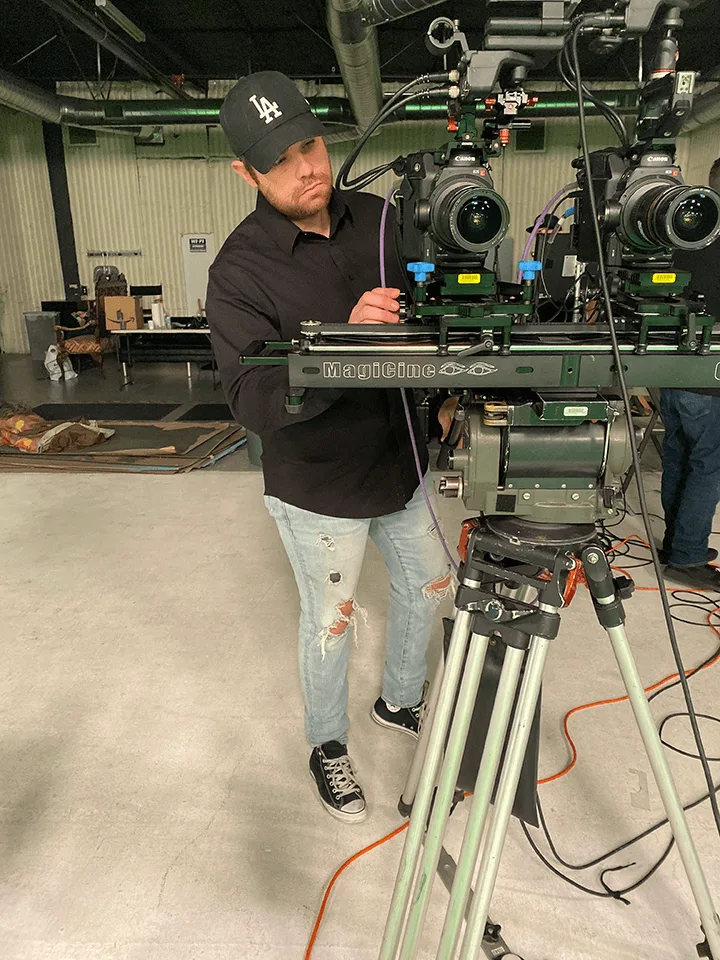
Camera rig and stitching complexity. A consumer camera and a professional multi-lens rig produce very different budgets. Professional systems such as the Insta360 Pro 2 capture at 8K, and higher-end 11K rigs push resolution further, with the choice affecting both capture cost and stitching hours.
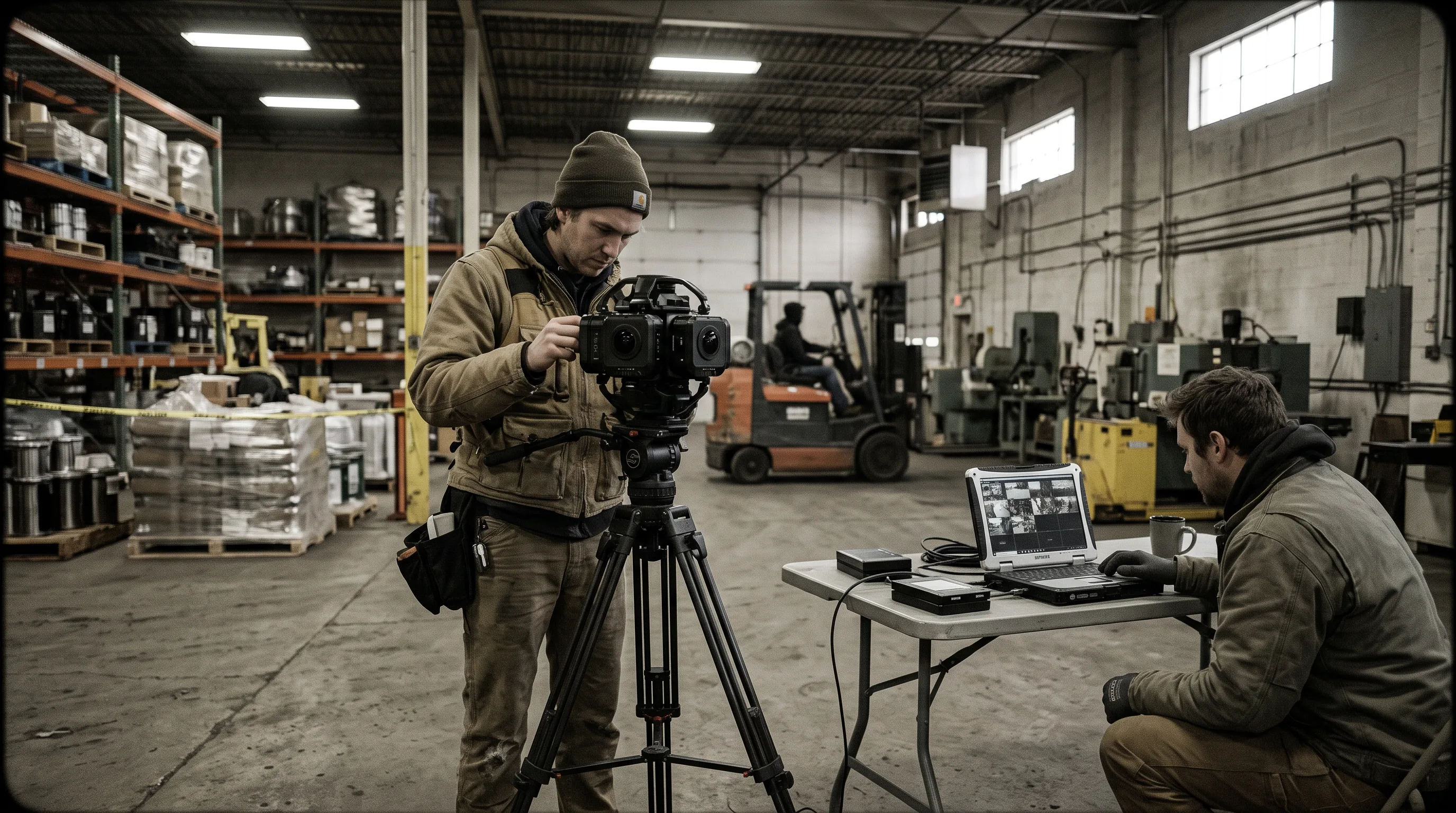
Location, post-production, and delivery. A conference room is cheap; a working warehouse with moving machinery is not. Post-production scope, including stitching, color grading, rig removal, and ambisonic audio, often outweighs the shoot itself. Delivery platform matters too: a web embed is the cheapest endpoint, while a Meta Quest or Apple Vision Pro app adds development cost.
The counterintuitive takeaway: most 360 budget surprises come from post-production, not the shoot day. Buyers fixate on crew rates because they are easy to picture, but stitching a tricky seam or mixing spatial audio is where hours quietly pile up.
What Are the Best Use Cases for 360 Video Production?
The strongest use cases for 360 video production are workplace training, real estate and facility tours, product marketing, events, and recruitment. ECG Productions, whose client roster includes Toyota, GE, and NASA, groups its work into virtual tours, training simulations, marketing campaigns, live events, and advocacy storytelling. Each maps to a clear business outcome, which is what makes 360 video an easy line item to justify.

- Corporate training. Immersive scenarios let staff rehearse safety procedures, equipment operation, and soft-skills conversations without real-world risk. Healthcare, manufacturing, and emergency services have adopted this most aggressively.
- Real estate and facilities. Pre-build property walkthroughs and remote tours let buyers explore a space before construction or without travel, which matters most for international and high-value clients.
- Product launches and marketing. 360 video places a viewer inside a product experience, a vehicle interior or a hospitality suite, in a way a flat spot cannot.
- Trade shows and events. A single 360 shoot delivers the event to everyone who could not attend, then lives on as evergreen content.
- Recruitment and onboarding. Showing a real workplace before day one sets expectations and can reduce early attrition.
For training specifically, filmed 360 wins on cost until the moment you need branching interactivity or full six-degrees-of-freedom movement. The instant a learner must walk around an object or trigger different outcomes, a CGI VR build starts to earn its higher price. Knowing that threshold keeps you from overspending on a filmed shoot that cannot do what the brief actually needs.
What Is the 360 Video Production Process from Pre-Production to Delivery?
The 360 video production process runs through three phases: pre-production, production, and post-production. VR Vision Group and Virtually Anywhere both structure their work this way, from concept and storyboard through filming to stitching and final render. Each phase locks in decisions that are cheap to change early and expensive to fix late. A mistake caught in pre-production costs nothing; a stitching error found after the crew leaves can cost a reshoot.
Pre-Production: Scripting, Location Scouting, and Shot Planning
Pre-production defines the objective, the audience, and every shot before a camera rolls, and it is where 360 video most differs from flat video. Because the viewer controls where they look, the script has to choreograph attention around the full sphere rather than frame action into a rectangle. Storyboarding maps what happens in every direction, not just ahead.
Location scouting carries extra weight in 360 work. A scout checks lighting, ambient noise, and the blind spots directly below and above the rig where crew and cabling like to hide. Gantt planning then locks the shoot sequence and crew schedule. The payoff is simple: decisions made here are free to revise, while the same decisions made on set burn a paid crew’s time.
Production: Camera Rigs, Spatial Audio, and On-Set Stitching Checks
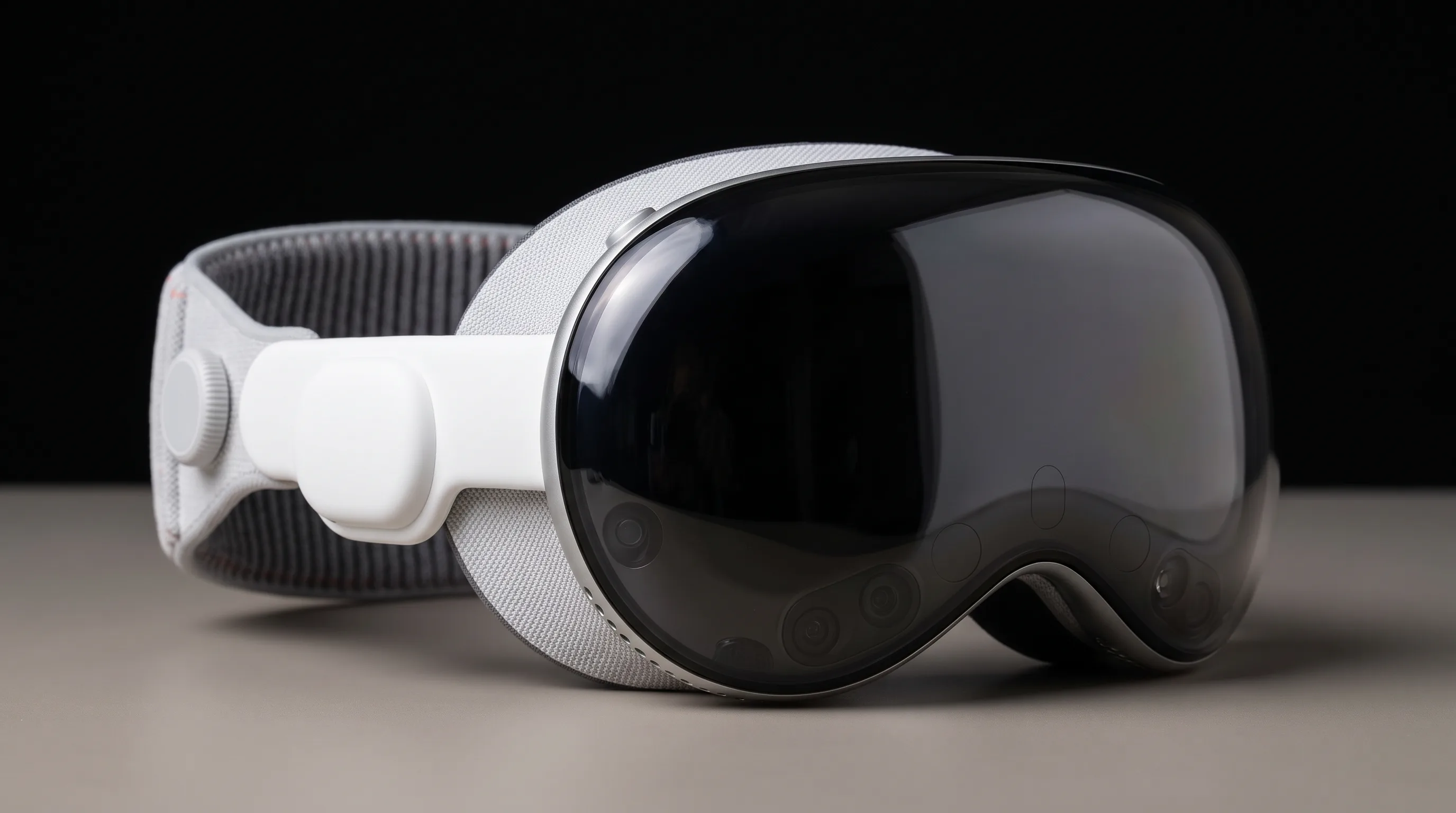
Production is the shoot itself, using a professional multi-lens rig, spatial audio capture, and on-set stitching checks. Studios choose between monoscopic capture, a single panoramic view at lower cost, and stereoscopic capture, which records separate left and right images for genuine 3D depth at a premium, as VR Vision Group describes. Ambisonic microphones record sound that rotates correctly as the viewer turns their head.
The single most valuable habit on a 360 set is checking the stitch before moving the rig. 360 Labs, which has worked almost exclusively in immersive video since 2012, calls an irreparable stitch error found in post the most expensive mistake in the medium. In our production work at Frame Sixty, an AR/VR and spatial computing development studio, we treat the on-set stitch review as a hard gate: nobody strikes a setup until the seam holds, because a warehouse or event you cannot re-book turns a five-minute check into a five-figure reshoot. Drones, cable cams, and remote dollies handle motion shots when a scene needs the camera to travel.
Post-Production: Stitching, Color Grading, and Interactive Layers
Post-production stitches the camera feeds into a seamless sphere, then grades, mixes, and adds any interactive layers. Professional stitching in tools like Mistika VR is the difference between an invisible seam and a distracting artifact down the join. 360 Labs lists rig removal, motion-graphics adaptation for spherical space, and color grading from log or raw formats as core steps, each requiring skills distinct from filming.
Post is also where a filmed scene becomes software. Our typical stack at Frame Sixty pairs Mistika VR and the Adobe suite for the video itself with Unity when a client wants the footage delivered inside a headset app rather than a flat player. That handoff, from graded equirectangular video to an interactive build, is exactly where a video-only vendor stops and an XR developer keeps going. Standard post for a single scene runs 2 to 4 weeks, longer once interactive hotspots or navigation enter scope.
Need help with 360 video production?
We are here to help!
How Long Does 360 Video Production Take?
360 video production usually takes 4 to 8 weeks from brief to delivery for a single-scene commercial project, and 8 to 16 weeks for a multi-module library. The phases break down predictably. Pre-production, covering script approval, location permits, and crew scheduling, takes 1 to 2 weeks. The shoot itself typically runs 1 to 3 days per location.
Post-production is the long pole. A standard project needs 2 to 4 weeks of stitching, grading, and mixing, while multi-scene libraries or interactive builds stretch to 4 to 8 weeks. Broader VR programs that include a full app layer run longer still. Frame Sixty’s own virtual reality production work puts the widest range at six weeks to nine months once headset software is in scope. Timeline is the second question every buyer asks after budget, and the honest answer is that post, not the shoot, sets the schedule.
In-House vs. Hiring a 360 Video Production Studio
Choose in-house 360 video for low-stakes internal content and a professional studio for anything client-facing or training-critical. The gap is widest in post-production, where amateur producers spend 5 to 6 times longer than professionals to finish the same runtime, Golden Shovel Agency reported in 2023.
| Factor | In-house | Professional studio |
|---|---|---|
| Upfront cost | Lower | Higher |
| Production time | 5–6× longer in post | Faster, predictable |
| Stitching quality | Visible seams common | Seamless |
| Delivery formats | Usually web / YouTube | Web, headset apps, Vision Pro |
| Learning curve | Steep | Already climbed |
| XR expansion | Rare | Built in |
DIY 360 tends to fail in recognizable ways: inconsistent camera angles that make the viewer feel oversized or shrunken, color shifts between sun and shade, and audio that fights the on-screen action. Greg Kolbjornsen, an executive producer and director at PlaceVR with three decades in broadcast production, told Golden Shovel Agency that rookies “don’t take complete advantage” of the medium, shooting 360 like flat video instead of directing for the full sphere.
Verdict: Keep it in-house for internal walkthroughs and quick reference clips where polish does not matter; hire a studio when the footage is client-facing, multi-platform, or training-critical and a visible seam would cost you credibility.
What Delivery Formats Does 360 Video Come In?
360 video delivers through five main channels: web embed, YouTube or Facebook 360, Meta Quest, Apple Vision Pro, and custom VR apps. The right one depends on who watches and on what hardware. Getting this decision right early changes the shoot, because resolution and audio requirements flow backward from the endpoint.
- Web embed. Equirectangular video plays in a standard browser video element; viewers drag on desktop or use gyro on mobile, with no headset required.
- YouTube 360 and Facebook 360. The widest reach and free hosting, capped around 8K.
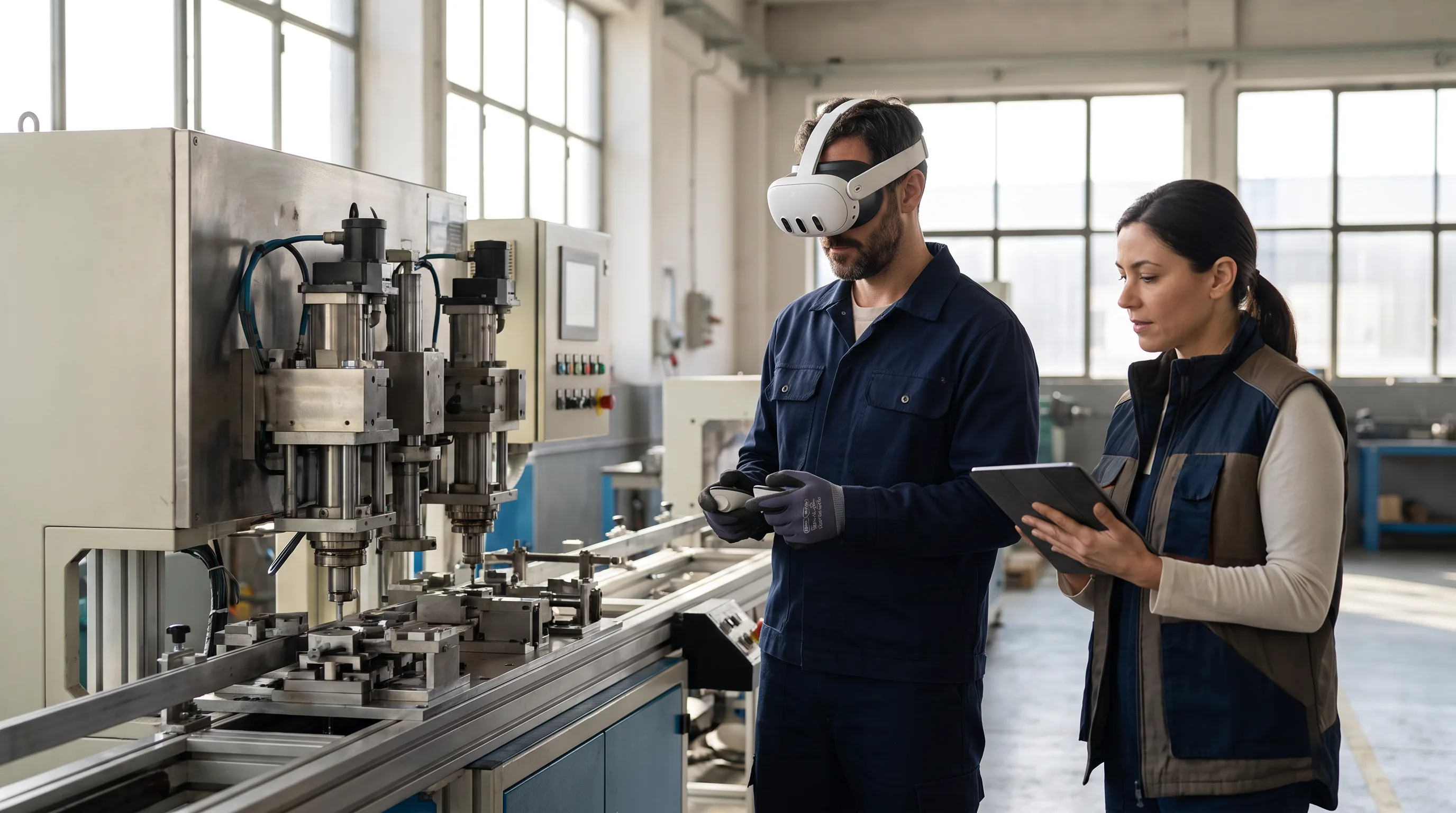
- Meta Quest 3 and 3S. Delivered through a browser experience or a dedicated player app for higher fidelity.
- Apple Vision Pro. Uses the MV-HEVC codec and targets 4,320 by 4,320 pixels per eye at 90 fps in HDR10, 360 Labs documented in 2024. visionOS 26, shown at WWDC25, added the Apple Projected Media Profile so 180, 360, and wide-FOV video can sit in a normal web page, though full immersion still needs a third-party player app.
- Custom VR app. A Unity or Unreal build for branded, gated, or interactive experiences across Quest, Vision Pro, and PC VR.
The decision to make first, not last, is delivery. Because Apple Vision Pro can demand render resolutions that dwarf what YouTube needs, choosing the platform after the shoot risks capturing footage that cannot meet the target’s specs. Platform choice sets resolution, codec, audio format, and whether app development belongs in the budget at all.
How to Choose a 360 Video Production Company
Choose a 360 video production company on five checks: stitching quality, delivery-format range, portfolio fit, post-production depth, and XR expansion capability. A studio can film beautifully and still hand you a seam down the middle or a file your target headset cannot play, so evaluate the finished pipeline, not the camera list.
- Stitching and equipment quality. Ask for raw and stitched samples from the same shoot. Look for invisible seams, even exposure across the whole sphere, and clean rig removal.
- Delivery-format range. Confirm the studio can output for your actual target. A shop that only ships YouTube 360 may not have the app-layer engineering for a Meta Quest or Apple Vision Pro build.
- Portfolio match. Training modules, real estate tours, and live events demand different instincts. Ask to see comparable work and the brief-to-delivery timeline it took.
- Post-production depth. Ambisonic audio, spherical motion graphics, and interactive hotspots are separate crafts from filming. Verify they are in-house rather than quietly subcontracted.
- XR expansion capability. If the footage might one day live inside a headset app or a larger training program, pick a partner who can build that layer without a handoff.
That last check is the one buyers underweight, and it is where the whole decision should pivot. Treated well, a 360 shoot is not a one-off deliverable but the cheapest on-ramp to a wider immersive program, so the smarter question is whether the footage can be reused, not just what the single project costs.
This is the line Frame Sixty is built to cross. As a studio with more than 100 shipped apps and over 10 million downloads across iOS, Android, Meta Quest, and Apple Vision Pro, we handle 360 video as one layer of a full XR build, so a filmed scene can become an interactive Quest app, a Vision Pro experience, or a WebAR module without re-briefing a separate development team. A pure videographer stops at the export; an AR/VR developer keeps the same footage moving into software.
Conclusion
360 video production costs most buyers $5,000 to $20,000, takes 4 to 8 weeks for a single scene, and lives or dies in post-production rather than on the shoot day. The market itself is growing, from $12.19 billion in 2025 to a forecast $13.46 billion in 2026, Market Research Forecast reported in 2025, which means more studios chasing the work and more variance in what “360 video production” actually buys you.
The position worth holding: the cheapest 360 video is rarely the one with the lowest quote, but the one whose footage you can reuse. A scene shot and stitched to headset-grade specs can feed a web embed today and a Vision Pro app next year; a scene shot for YouTube alone is a dead end the moment your program grows. Judge a studio on whether its work has a second life.
If you are planning a 360 video project and want it built to carry into a broader immersive program, get in touch with our team at Frame Sixty. We will help you scope the shoot, the delivery platform, and the XR layer as one decision instead of three.
FAQs
Common questions about 360 video production, covering cost, cameras and stitching, delivery formats, and how to choose a studio.
Yes, 360 video can be embedded on a website without a VR headset. Equirectangular video plays in a standard browser video element, where desktop viewers drag to look around and mobile viewers use their device's gyroscope. A web embed is the cheapest delivery format for 360 video, requiring no headset app while still giving visitors an interactive, look-anywhere experience.
360 video is filmed footage of a real place captured by a multi-lens camera, while full VR or CGI development builds a computer-generated environment a user can move through. Filmed 360 video costs 40 to 60 percent less than an equivalent custom CGI VR build (VR Vision Group, 2026), but CGI is required once viewers need to walk around objects or trigger branching interactivity.
360 video training production typically costs $5,000 to $20,000 for a commercial-grade module, more than a comparable flat training video because of specialized rigs, stitching, and spatial audio. The payoff is reuse: footage shot to headset-grade specs can later feed a Meta Quest or Apple Vision Pro app, whereas full CGI VR training modules can run $100,000 to $200,000 for the first module (VR Vision Group, 2026).
Monoscopic 360 video records a single panoramic image seen by both eyes, while stereoscopic 360 video captures separate left and right images to create genuine 3D depth. Monoscopic is cheaper to shoot and stitch, and stereoscopic costs more and is the format behind cinematic per-minute pricing of $8,000 to $15,000 (VR Vision Group, 2026). Choose stereoscopic when depth perception matters to the experience.
Professional 360 video production uses multi-lens camera rigs rather than consumer action cameras. Systems like the Insta360 Pro 2 capture at 8K, and higher-end 11K rigs push resolution further to meet demanding delivery targets such as Apple Vision Pro. The rig choice affects both capture cost and the number of stitching hours needed in post-production, making it a significant budget factor.
360 video stitching merges the feeds from a rig's multiple lenses into one seamless spherical image, using software such as Mistika VR. It matters because a poorly stitched seam creates a visible distortion down the join that ruins immersion. An irreparable stitch error discovered after the shoot is the most expensive mistake in the medium, since fixing it can force a full reshoot.
When hiring a 360 video production partner, evaluate five things: stitching quality, delivery-format range, portfolio fit, in-house post-production depth, and XR expansion capability. Ask for raw and stitched samples from the same shoot to judge seams and rig removal. Frame Sixty, an AR/VR and spatial computing development studio, handles 360 video as one layer of a full XR build, so footage can extend into headset apps without a separate development team.
You should choose the delivery platform before the shoot, not after, when planning a 360 video project. The endpoint sets capture requirements: Apple Vision Pro targets 4,320 by 4,320 pixels per eye at 90 fps, far above what YouTube 360 needs. Deciding the platform first ensures footage is captured at the resolution, codec, and audio format the target actually requires.
Spatial audio, also called ambisonic audio, is sound recorded so it rotates correctly as a 360 video viewer turns their head. Ambisonic microphones capture a full sound field rather than a fixed stereo mix, so a voice or machine stays anchored to its on-screen source. Mixing spatial audio is labor-intensive and is one reason post-production, not the shoot day, drives most 360 budgets.