
What’s New in visionOS 27: WWDC 2026 Highlights for Developers and Enterprise
Jun 10, 2026
16 MIN READ
VisionOS 27, announced at WWDC 2026, brings Apple Intelligence and a redesigned spatial Siri with Visual Intelligence to Apple Vision Pro, alongside a deep set of new developer frameworks. RealityKit gains physical space lighting, projective textures, 3D Gaussian splatting, cloth simulation, and a reverb mesh API that blend virtual content with real-world light, physics, and sound. Enhanced object tracking, the Spatial Accessories framework for third-party tracked hardware, and cross-platform ARKit expand enterprise capabilities. Two streaming frameworks, Spatial Preview and Foveated Streaming, let teams extend existing Mac and PC software to the headset without rebuilding it. The update is available as a developer beta now, with general availability in fall 2026.
VisionOS 27 Arrives at WWDC 2026
VisionOS 27 is the next major version of the operating system for Apple Vision Pro, announced alongside iOS 27, iPadOS 27, macOS 27 (Golden Gate), watchOS 27, and tvOS 27. Apple released Developer Beta 1 the same day as the keynote, with a public beta expected in July 2026 and general availability scheduled for fall 2026 as a free software update, according to 9to5Mac’s day-one coverage.
The platform baseline matters for planning. visionOS 27 runs on the M5-generation Apple Vision Pro, which Apple describes as having “over 4K pixels per eye” and 90Hz hand tracking in its overview session for the release. Wi-Fi connectivity is up to 3× faster than the previous generation, per Apple’s newsroom announcement, which directly affects streaming-based workflows covered later in this article.
Apple also reframed how developers approach the platform, laying out three official paths to build for visionOS 27:
- Compatibility mode for existing iOS and iPadOS apps, enabled through App Store Connect.
- Native spatial development built from the ground up with SwiftUI, RealityKit, and Reality Composer Pro.
- Extending Mac and PC content to Vision Pro through two new streaming frameworks, the newest of the three paths.
More than 100 WWDC26 developer sessions are available to support these paths. For teams new to the platform, our developer’s perspective on the Apple Vision Pro gives useful grounding before you pick an approach.
Key takeaway: visionOS 27 is in developer hands now, ships to all users this fall, and gives teams three distinct entry points with different cost and effort profiles.

Need help with a Vision Pro spatial computing project?
We are here to help!
Apple Intelligence Comes to Vision Pro
The most visible change for people wearing the headset is Apple Intelligence, and specifically a redesigned Siri that behaves like an object in your space rather than a voice in the background.
Siri AI as a Spatial Object
In visionOS 27, Siri AI appears as a 3D floating orb widget you place in your environment. There is no wake word. You look at the widget and speak, and Siri responds. The standout capability is Visual Intelligence: you can ask Siri questions about objects visible through the Vision Pro passthrough feed in real time, as detailed in AppleInsider’s analysis of the release.
Conversational history syncs across iPhone, iPad, Mac, and Vision Pro through iCloud, so a question started on one device carries context to another. Craig Federighi, Apple’s Senior Vice President of Software Engineering, framed the broader rollout by saying Apple is “delivering the next generation of Apple Intelligence across our platforms.”
One detail matters for international teams: Siri AI is available on visionOS 27 in the EU from day one, even while the same feature faces Digital Markets Act delays on iOS and iPadOS in the region.
For decision-makers, Visual Intelligence is the feature to watch. A headset that can reason about what a worker is looking at turns into a guided-workflow tool, not just a display. We explore this direction in depth in our piece on agentic spatial computing.
Spatial Panoramas, Spatial Reframing, and UI Updates
visionOS 27 adds Spatial Panoramas, which convert any panorama photo into an immersive 3D environment you can set as a personal backdrop. Apple targets a 14,400 × 7,200 pixel source resolution (roughly 40 pixels per degree) across an approximately 81-degree field of view to keep these environments sharp.
A second AI photo tool, Spatial Reframing, lets you crop an image, rotate the subject independently from its background, and extend missing edge data through generative fill. The interface picked up a round of polish as well:
- Curved windows across Safari, Apple TV multiview, and Freeform.
- A redesigned Control Center and notifications you can expand by glancing.
- A new Thórsmörk immersive environment, a Mac Virtual Display widget for quick connection, an extra-small widget size, and 4K High Quality Capture from inside the headset.
Key takeaway: the user-facing updates make Vision Pro feel more responsive and personal, and Visual Intelligence is the consumer feature with the clearest enterprise payoff.
RealityKit: Rendering That Meets the Physical World
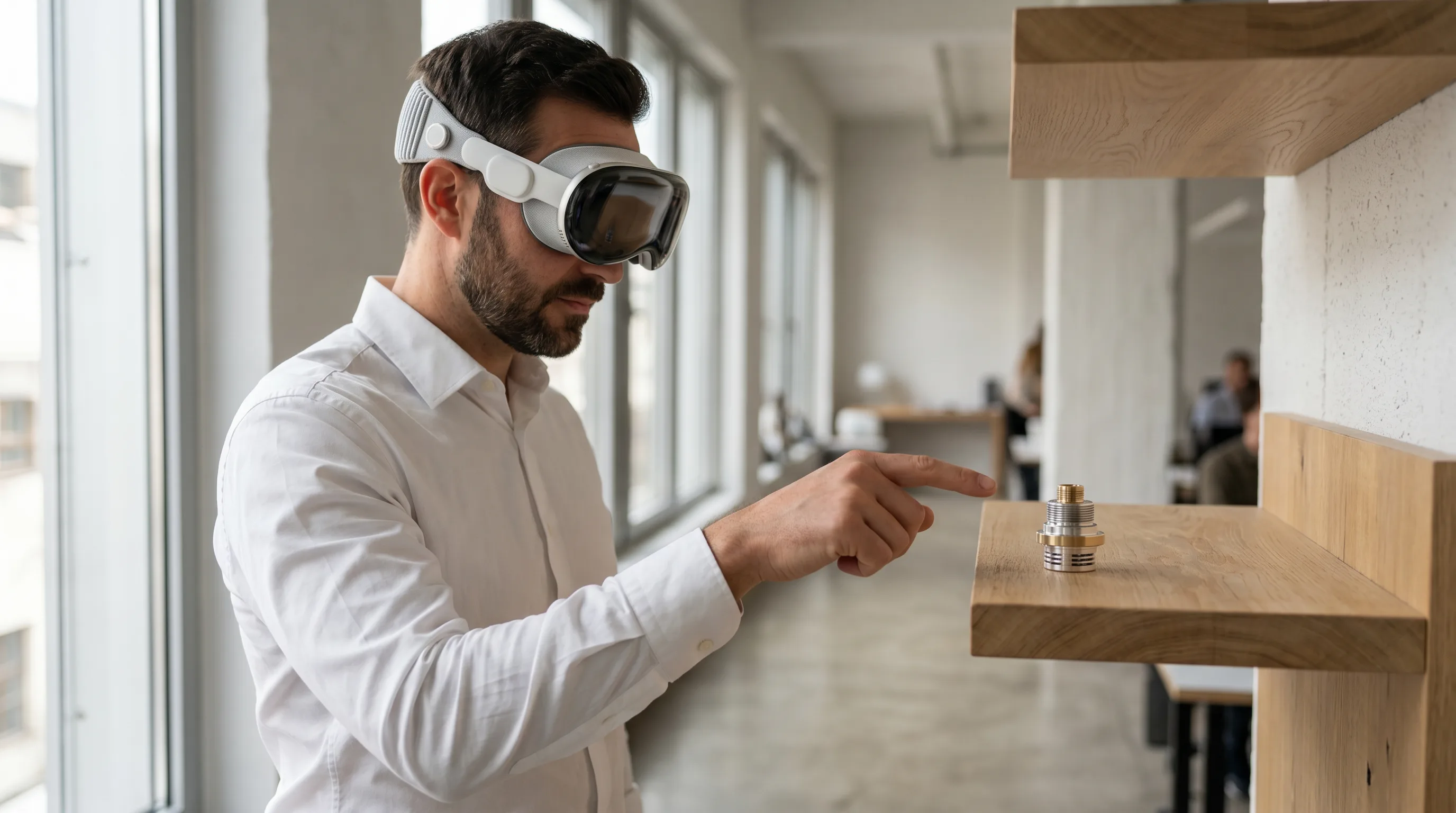
RealityKit, Apple’s framework for 3D content, received the largest rendering upgrade in the release. The theme across its new APIs is blending virtual content with real-world light, physics, and sound, detailed in Apple’s Explore advances in RealityKit session.
Lighting, Textures, and Photorealistic Scans
Three additions change how virtual objects sit in a real room:
- Physical Space Lighting lets virtual objects cast light onto real-world physical surfaces, so a digital lamp can illuminate an actual desk.
- The Projective Textures API applies textures directly to spotlights, producing effects like stained-glass projections or underwater caustics.
- 3D Gaussian Splatting renders photorealistic scans of real objects captured from standard photos, an efficient way to bring real products into a scene without hand-modeling them.
For a retail or manufacturing client, Gaussian Splatting means you can place a scanned product on a customer’s real table with accurate lighting, a practical step up from the rendering tools in last year’s visionOS 26 release.
Physics Simulation and Spatial Audio
Two more APIs handle motion and sound. Real-time Cloth Simulation gives developers fabric physics for flags, curtains, and clothing that respond to movement and interaction. The Reverb Mesh API models how sound is absorbed and scattered across materials such as wood, metal, and stone, producing room acoustics that match what a person sees. The full list of these additions is documented on Apple’s What’s New in visionOS developer page.
Key takeaway: RealityKit in visionOS 27 closes much of the gap between synthetic content and physical reality, which raises the believability ceiling for product visualization and training scenes.
Object Tracking, Spatial Accessories, and Cross-Platform ARKit
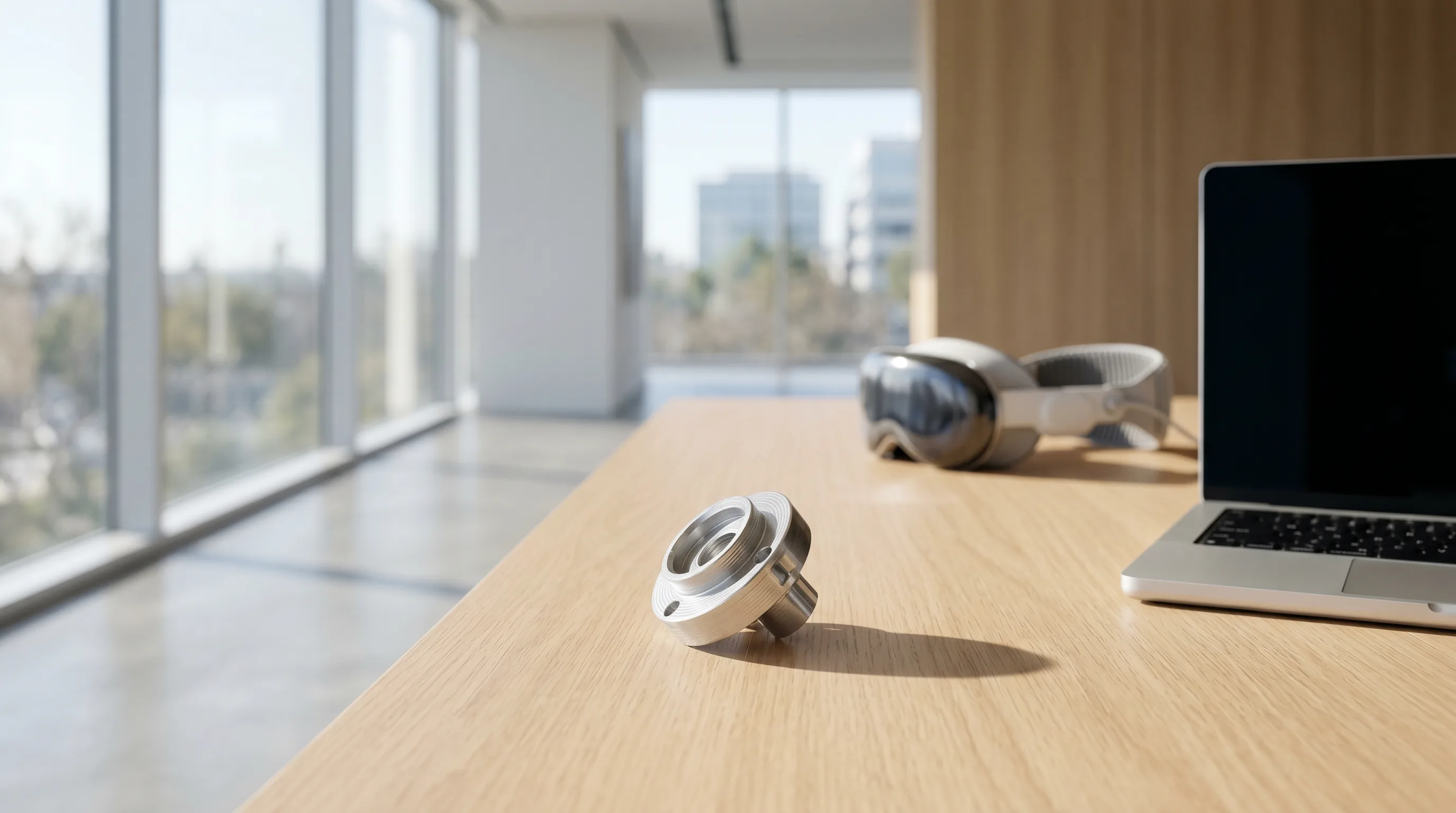
This section holds the announcements with the most direct enterprise value: improved object tracking, a brand-new hardware framework, and cross-platform ARKit. Apple covered all three in its object tracking enhancements session.
Enhanced Object Tracking APIs
Object tracking lets Vision Pro recognize and follow real physical objects. visionOS 27 sharpens it in four ways:
- High-frame-rate tracking for fast-moving handheld objects.
- An extended training option in Create ML that improves accuracy for objects held in motion.
- A new Metric Space Pose API that returns real-world coordinates without display correction, which enables precise spatial measurement and surgical navigation use cases.
- A 3D-printed marker fallback for situations where a photorealistic reference model is not available.
The Spatial Accessories Framework
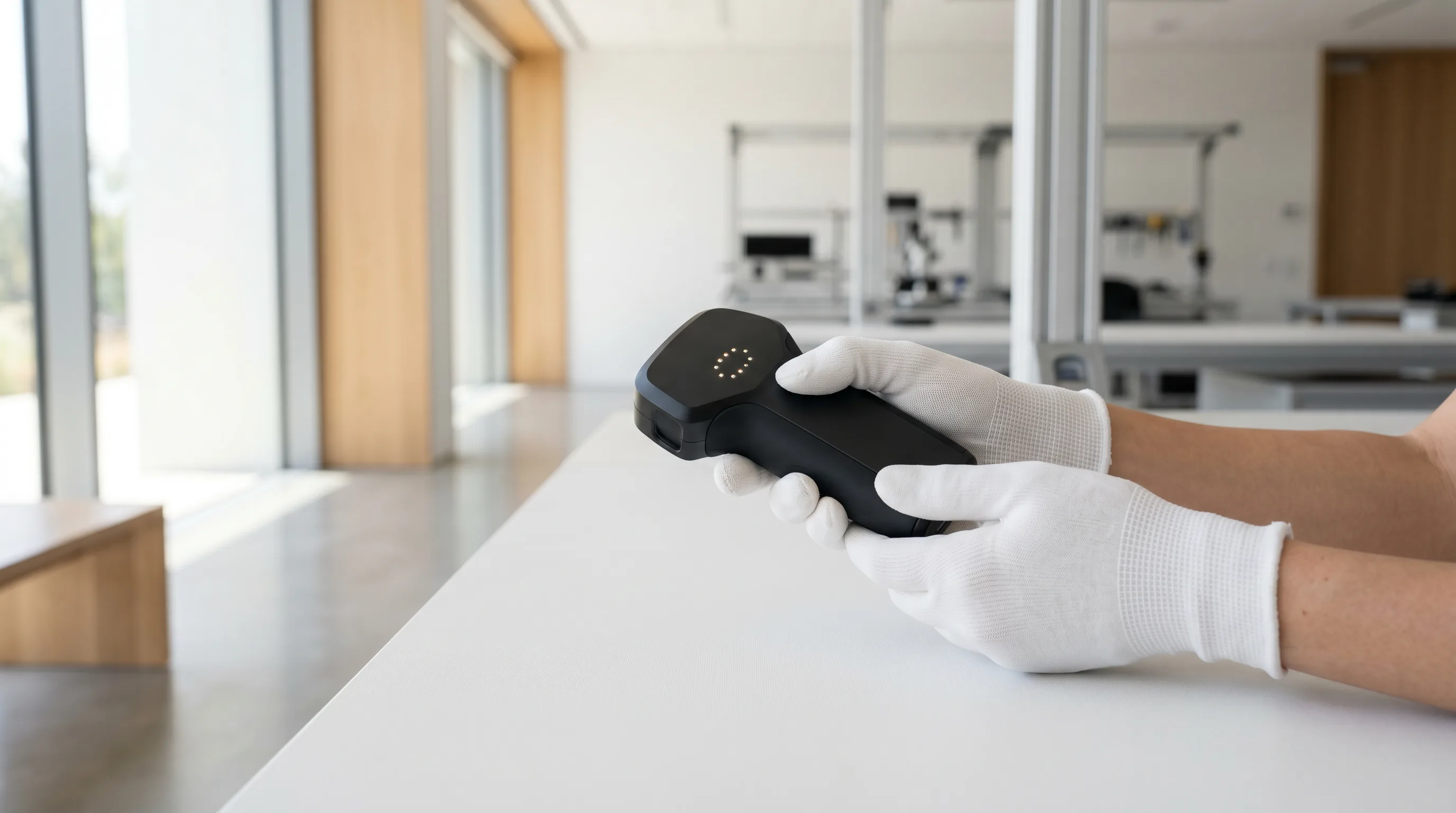
The Spatial Accessories framework is Apple’s first formal SDK for third-party tracked hardware on Apple Vision Pro. A compliant accessory needs a constellation of infrared tracking LEDs, an IMU for orientation and acceleration, and Bluetooth connectivity, with optional buttons, touchpads, and haptic feedback. Accessories track at up to 90Hz through the GCSpatialAccessory class and AccessoryTrackingProvider API.
The framework’s most useful property is system-wide registration: once an accessory is registered, any visionOS app can use it without separate per-app integration. Apple demonstrated the range with a flashlight prop carrying LEDs and buttons, a steering wheel rig with a tracking fob for racing simulators, and a globe recognized purely from its 3D model with no attached hardware. Reference developer kits from DFRobot (the seeMote Cap) and MikroE (the Spatial Anchor R1) are shipping later in 2026.
These tracking advances build on the object tracking work we covered when it first arrived, which you can read about in transforming enterprise operations with new object tracking APIs.
ARKit Expands to iOS
ARKit, Apple’s augmented reality framework, now runs the same trained reference objects on both iOS and visionOS without retraining. For an organization already shipping iPhone apps, this means a single Create ML model serves an iPhone field app and a Vision Pro app side by side. One investment covers two deployment targets, which lowers both development and maintenance overhead.
Key takeaway: object tracking, spatial accessories, and cross-platform ARKit together give enterprises a credible path to purpose-built hardware experiences and shared models across devices.
Two New Frameworks That Extend Vision Pro’s Reach
The newest developer path, extending Mac and PC content, rests on two frameworks. Both let teams reuse existing software instead of rebuilding it for the headset, which is the single biggest cost lever for enterprise spatial projects.
Spatial Preview: From Mac to Vision Pro
The Spatial Preview framework lets a Mac app push spatial content directly to Apple Vision Pro without requiring a separate visionOS app. It supports spatial photos, Apple Immersive Video frames, PDFs, standard images, and live USD 3D scenes, with bidirectional live USD editing and automatic optimization such as mesh decimation and texture downsampling. SharePlay collaboration and Quick Look spatial support round it out, with named integrations for Cinema 4D and SketchUp. Apple details the workflow in its Discover the Spatial Preview framework session.
In practice, a designer working in Cinema 4D on a Mac can preview a model at real-world scale on Vision Pro and edit it live, with no custom headset app in between. That removes a whole build step from a design review loop.
Foveated Streaming: From PC and Cloud to Vision Pro
The Foveated Streaming framework streams OpenXR content from a Windows PC or a cloud instance to Vision Pro over Wi-Fi. It is built on NVIDIA CloudXR and uses eye-tracked, gaze-based video compression, rendering full quality only where the user is looking. No cables or dongles are required, and the framework integrates with ARKit, SwiftUI, and RealityKit. Apple demonstrated it with Autodesk VRED for product visualization, X-Plane 12 for flight simulation, and iRacing for motorsports, as shown in its foveated streaming session.
This is the lowest-barrier path for any business with existing OpenXR software. A company running heavy CAD or simulation tools on a workstation can deliver them to a wireless headset without porting the application.
Apple Immersive Video Pipeline and the Spatial Web
Apple Immersive Video also matured into a production-ready pipeline. The new ImmersivePreviewRenderer API streams a real-time Vision Pro preview back to a Mac during editorial and live production, and camera presentation override commands support live broadcast workflows. The updated ASAF Production Suite adds AAX plugins for spatial audio mixing. Apple Immersive Video runs at 90 fps, more than 100 megapixels per eye, and 180-degree stereoscopic, per the What’s New in visionOS documentation.
On the web side, Safari in visionOS 27 enables Web Environments by default, adds a requestImmersive JavaScript API that mirrors the Fullscreen API, and renders USDZ assets through an HTML model element at real-world scale. This pulls spatial experiences into ordinary websites, which matters for any brand that wants reach without a native app.
Key takeaway: Spatial Preview and Foveated Streaming turn existing Mac and PC software into Vision Pro experiences, which is the fastest route from current tooling to a shipping spatial workflow.
Developer Tools and Game Engine Parity
visionOS 27 also rebuilt the authoring tools and brought third-party game engines closer to feature parity with Apple’s native stack.
Reality Composer Pro 3
Reality Composer Pro 3 is Apple’s visual authoring tool for 3D scenes, and it gained an AI assistant that generates 3D models from text descriptions inside the editor. New graph-based tools handle behavior without code: an Animation Graph builds state-machine runtime transitions, and a Script Graph defines node-based interaction logic with a Live Preview that pushes changes to Vision Pro in seconds. Navigation Meshes handle character pathfinding, and deep Xcode integration keeps designers, artists, and engineers in one workflow, as Apple outlines in the Build next-generation experiences with visionOS 27 session.
Game Engine Updates
Engine support widened in this release:
- Unity PolySpatial added Spatial Accessories support and a Sony PlayStation VR2 Sense controller plugin.
- Unreal Engine gained an immersive mode with static foveation support for streamable delivery.
- Godot picked up a CompositorServices plugin, a RealityKit rendering plugin, a PHASE audio plugin, and PSVR2 Sense controller support.
The CompositorServices framework is now available for custom rendering engines on both visionOS and macOS, which gives studios with their own engines a supported route onto the platform.
Key takeaway: with AI-assisted authoring and broader engine support, the floor for building on Vision Pro dropped, and teams can use the engine they already know.

What visionOS 27 Means for Businesses Planning Spatial Computing
For decision-makers, the practical question is which of the three developer paths fits your team, your stack, and your timeline. Each carries a different cost and risk profile, and matching the path to the use case is where projects succeed or stall. If you are new to the concept, our primer on what spatial computing is sets the foundation.
A few of the announcements stand out for business value:
- Foveated Streaming brings existing PC and cloud simulation and visualization tools to Vision Pro without a full rebuild. For an organization with OpenXR software, this is the shortest path to a working spatial deployment.
- Spatial Accessories gives purpose-built hardware, such as training simulators, industrial inspection rigs, and medical devices, a production-grade SDK with system-wide registration. We see strong fit here for scenarios like VR training with Apple Vision Pro.
- Cross-platform ARKit lets one ML model span iPhone field apps and Vision Pro, cutting development and maintenance for teams already on iOS.
- Visual Intelligence shifts the device from a fixed-function display toward an assistant that reasons about the physical environment, which opens guided workflows and on-site decision support. The broader case for deploying these capabilities at work is covered in spatial computing in enterprise.
Choosing among the three paths comes down to what you already own. Teams with an existing iOS or iPadOS app can start with compatibility mode and ship something usable in days, then decide whether a spatial rebuild earns its cost. Teams with OpenXR software running on workstations should look hard at Foveated Streaming, because it converts a known desktop application into a wireless headset experience without a port. Teams building a new, deeply spatial product, such as a hands-on training simulator or a guided assembly tool, will get the most from native development with RealityKit, Reality Composer Pro 3, and the Spatial Accessories framework, where the new APIs do the heavy lifting that used to require custom engineering.
The economics changed in a specific way this year. A year ago, much of a spatial budget went to building primitives that did not exist yet, including object tracking pipelines, hardware integration, and content authoring. visionOS 27 ships those as supported APIs, so more of the budget goes to the parts of the product that are unique to your business. That shift is what makes a measured pilot realistic rather than a research project, a point we make in detail across our enterprise spatial computing work.
Timing favors teams that move now. The developer beta is available today, and fall 2026 general availability means a product built this summer ships with the OS update and reaches every Vision Pro user on day one. Businesses that wait concede a season of user data and iteration to earlier movers. When you are ready to staff a project, you can hire Apple Vision Pro developers or talk through scope with our enterprise Vision Pro development team.
Conclusion
visionOS 27 is a substantial release on both sides of the screen. For users, Apple Intelligence and Visual Intelligence make Vision Pro feel like an assistant that understands the room, while Spatial Panoramas and the redesigned interface make daily use smoother. For developers, RealityKit’s lighting and physics work, the Spatial Accessories framework, cross-platform ARKit, and the two new streaming frameworks add up to the most capable spatial toolkit Apple has shipped.
The throughline for business is reuse. Spatial Preview and Foveated Streaming let teams bring Mac and PC software to the headset without rewriting it, cross-platform ARKit shares one model across iOS and visionOS, and broader engine support means you can build with tools your team already knows. Each of those choices lowers the cost and shortens the timeline of a spatial computing project.
The window to act is open now. With the developer beta available and a fall 2026 release on the calendar, the teams that prototype this summer will be the ones shipping when visionOS 27 reaches users. To go deeper on the previous release for context, our breakdown of what’s new in visionOS 26 traces how quickly the platform has matured year over year.
If you’d like to explore what visionOS 27 means for your spatial computing roadmap, reach out to us at Frame Sixty. Our team builds AR, VR, and Vision Pro applications for enterprise, and we can help you choose the right path, scope the work, and ship before your competitors do.
visionOS 27 at WWDC 2026: Common Questions
Quick answers about the visionOS 27 announcements from WWDC 2026 and what they mean for users, developers, and businesses planning spatial computing projects.
visionOS 27 is the next major operating system for Apple Vision Pro, announced at WWDC 2026. A developer beta is available now, a public beta is expected in July 2026, and general availability is scheduled for fall 2026 as a free software update.
The biggest user-facing change in visionOS 27 is Apple Intelligence, including a redesigned Siri that appears as a 3D spatial orb with no wake word and Visual Intelligence that answers questions about objects seen through passthrough. The release also adds Spatial Panoramas, Spatial Reframing, curved windows, a redesigned Control Center, and new immersive environments.
RealityKit in visionOS 27 adds physical space lighting, projective textures, 3D Gaussian splatting, real-time cloth simulation, and a reverb mesh API. New frameworks include Spatial Accessories for tracked third-party hardware, Spatial Preview for pushing Mac content to the headset, and Foveated Streaming for OpenXR content from a PC or cloud.
Spatial Preview lets a Mac app push spatial photos, video, PDFs, images, and live USD scenes directly to Vision Pro with bidirectional editing and no separate visionOS app. Foveated Streaming streams OpenXR content from a Windows PC or cloud instance over Wi-Fi using NVIDIA CloudXR and gaze-based compression.
Apple lays out three paths for visionOS 27: compatibility mode for existing iOS and iPadOS apps enabled through App Store Connect, native spatial development with SwiftUI, RealityKit, and Reality Composer Pro, and extending Mac and PC content through the two new streaming frameworks. Each carries a different cost and effort profile.
The best visionOS 27 path depends on what you already own. Teams with an existing iOS app can start with compatibility mode in days, teams with OpenXR software on workstations should look at Foveated Streaming, and teams building a deeply spatial product will get the most from native development with the Spatial Accessories framework.
Get in touch
We’re interested to see how we can help. Send us a message and we will get back to you within 24 hours.