
Mixed Reality Museums: How Immersive Tech Is Replacing Glass Cases and Creating a Billion-Dollar Cultural Shift
Mar 17, 2026
12 MIN READ
Mixed reality museums combine physical artifacts with digital overlays to create interactive, spatially aware experiences that transform traditional exhibitions into immersive storytelling environments. Using technologies such as spatial computing, 3D scanning, and AI-driven personalization, these museums allow visitors to explore digital twins of artifacts, reconstruct historical scenes, and engage with culture beyond glass cases. Institutions like the Smithsonian, British Museum, and Louvre are adopting mixed reality to enhance accessibility and preservation while appealing to younger audiences. With the immersive experience market projected to exceed $12 billion by 2028, mixed reality museums represent the next major evolution in cultural engagement and education.
The Rise of Mixed Reality in Museums and Cultural Spaces
Mixed reality museums combine physical artifacts and digital overlays to create interactive, spatially aware experiences that redefine how visitors engage with culture. This shift matters because it transforms passive viewing into active exploration, appealing to younger audiences and revitalizing institutional relevance.
From Static Displays to Interactive Storytelling
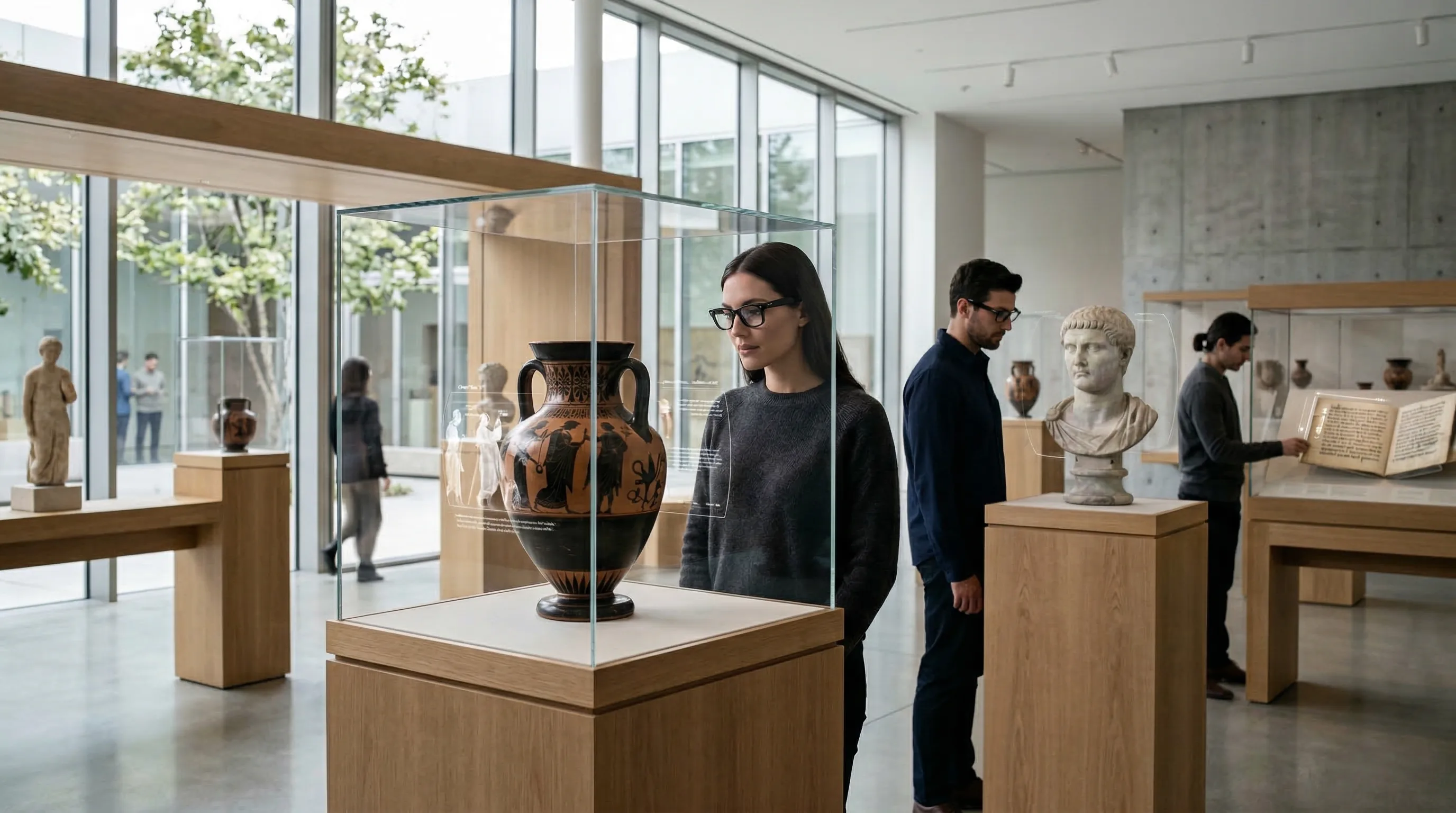
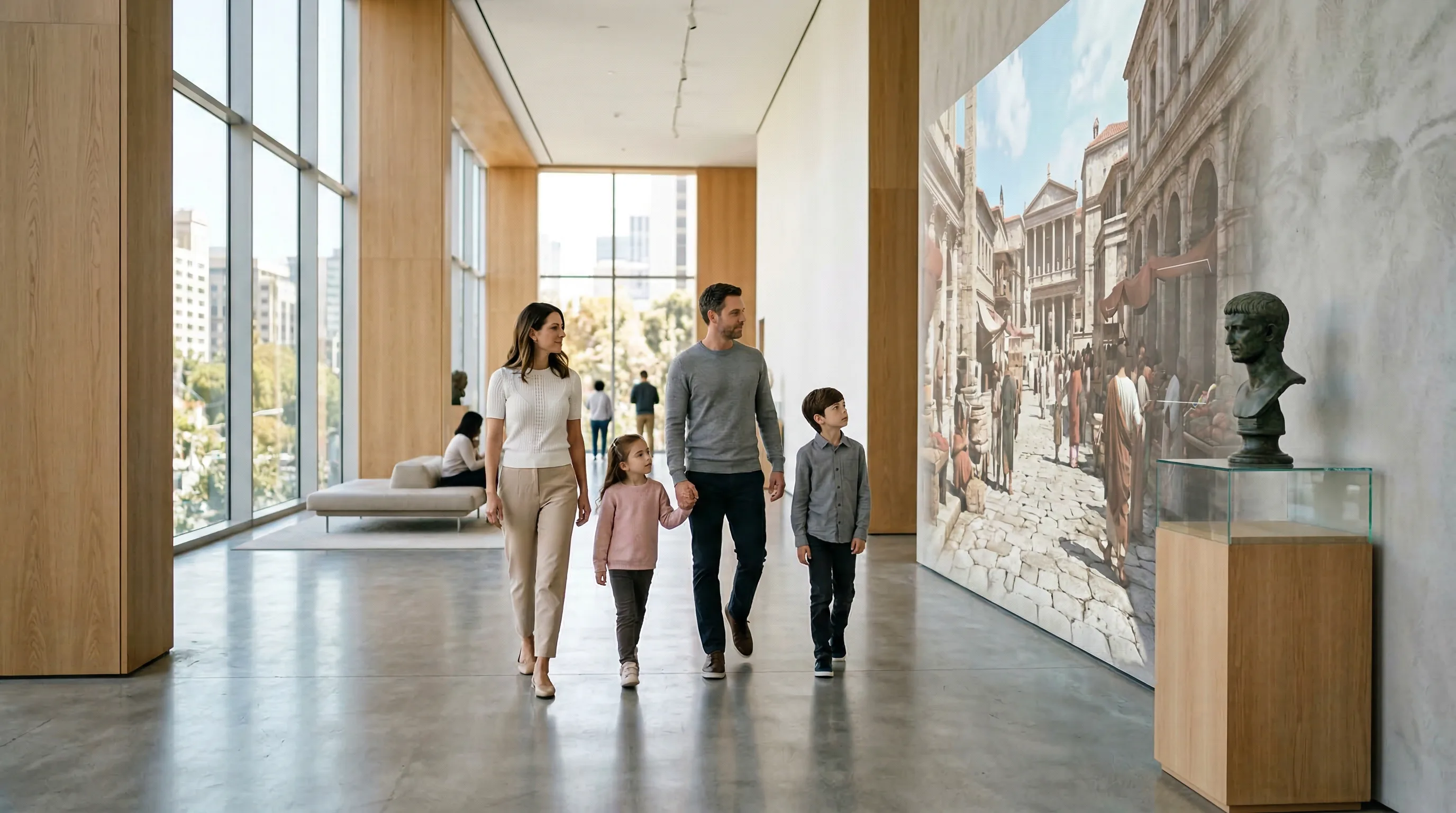
Traditional museums rely on glass cases and printed placards — effective for preservation, but limited in engagement. By contrast, mixed reality transforms these static displays into immersive narratives. Visitors can walk around a holographic mummy, peel back digital layers to see the embalming process, or step into a reconstructed Roman forum.
The Smithsonian Institution, for example, has embraced digital curation and mixed reality storytelling to make its vast collections more accessible (Smithsonian Magazine). Similarly, the British Museum has integrated AR layers into its galleries to contextualize artifacts in their original environments (British Museum). These initiatives illustrate how storytelling evolves when spatial computing meets cultural heritage.
The Role of Spatial Computing in Redefining the Museum Experience
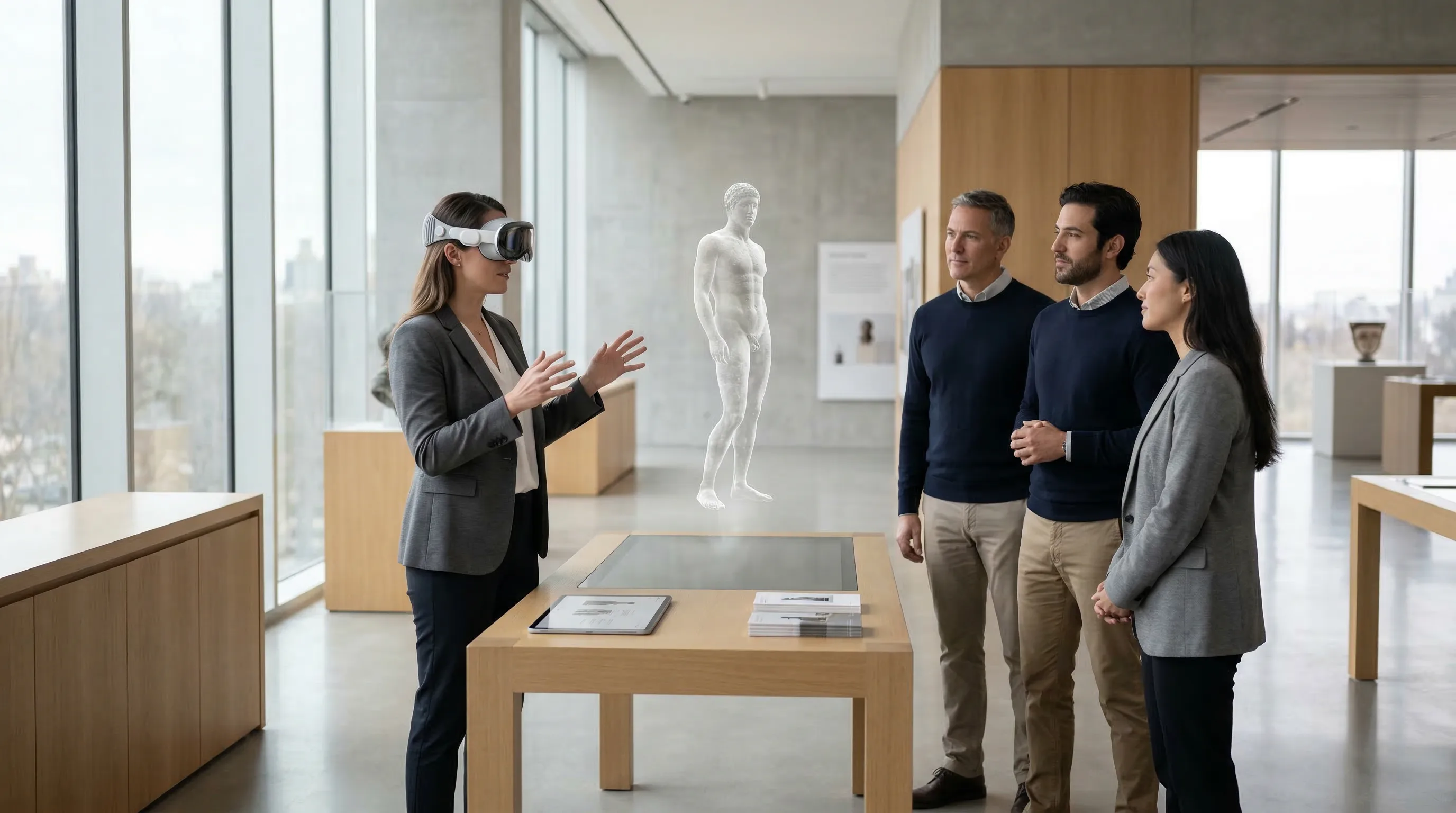
Spatial computing — the fusion of digital data with physical environments — enables museums to map digital content precisely onto real-world spaces. Headsets like Microsoft HoloLens (Microsoft HoloLens documentation) and Apple Vision Pro (Apple VisionOS developer documentation) allow visitors to see holograms anchored to real artifacts. This technology supports gesture-based interaction, voice commands, and real-time collaboration.
Spatial computing also underpins agentic systems, where AI-driven avatars guide visitors through exhibits. Agencies like Frame Sixty are pioneering these adaptive experiences, merging artificial intelligence with spatial awareness to deliver personalized tours.
Why “Mixed Reality Museums” Is the Next Major Search Trend in Cultural Tech
Search data reveals skyrocketing interest in terms like “mixed reality museums,” “immersive exhibits,” and “digital curation.” This trend reflects both institutional demand and consumer curiosity. As Gen Z and Millennials become the dominant museum-goers, they expect participatory experiences — not passive observation. Museums that fail to adapt risk obsolescence.
Key takeaway: Mixed reality museums are not a niche experiment; they represent the next evolution of cultural storytelling, powered by spatial computing and generational demand for immersion.
Need help with mixed reality exhibits?
We are here to help!
How Mixed Reality Replaces Glass Cases Without Losing Authenticity
Mixed reality replaces glass cases by allowing digital replicas to stand in for fragile artifacts, preserving authenticity while enhancing accessibility. This matters because it enables museums to display rare or delicate items without physical risk.
3D Artifact Visualization and Digital Curation Techniques
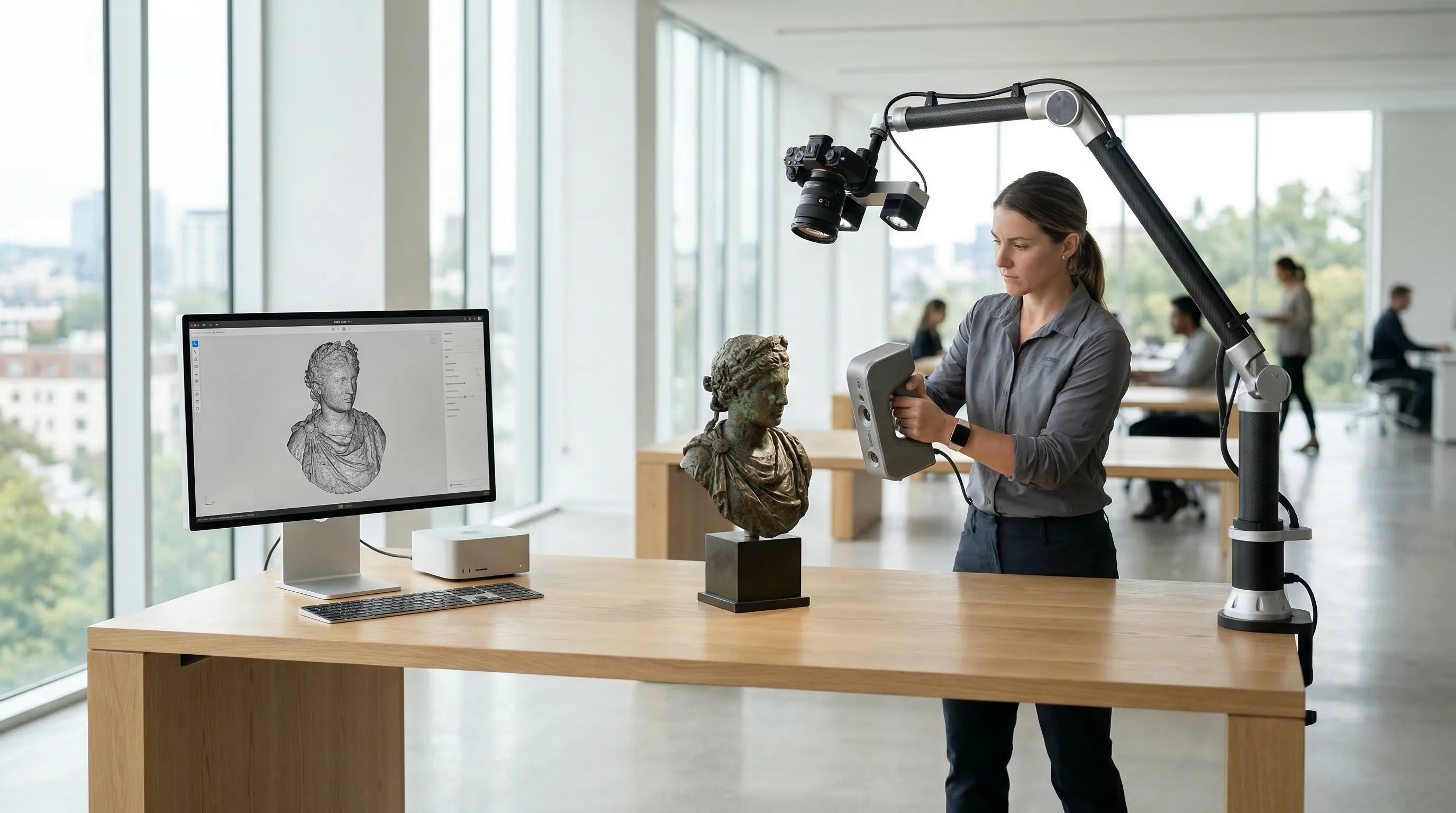
Through 3D scanning, photogrammetry, and volumetric capture, curators can create high-fidelity digital twins of artifacts. These can be manipulated, enlarged, or animated in real time. Platforms like Frame Sixty’s 3D model design services and 3D modeling for manufacturing and industrial design provide the technical foundation for such digitization.
Visitors can zoom into microscopic details of a gemstone or rotate a sculpture to view hidden carvings. This level of interaction is impossible through traditional display methods. Moreover, digital curation ensures that even if the physical artifact deteriorates, its digital counterpart remains intact for future generations.
Preserving Cultural Heritage Through Immersive Displays
Mixed reality also supports cultural heritage preservation by reducing the need for physical handling. Institutions can use AI in virtual reality development (Frame Sixty AI VR development) to reconstruct lost or damaged artifacts. For instance, ancient frescoes destroyed by time can be digitally restored and displayed in situ through AR overlays.
The Louvre Museum has experimented with holographic projections of fragile works, allowing visitors to experience them without exposure to damaging light or humidity. Similarly, the Smithsonian uses MR to visualize artifacts too delicate for public display. These projects align with global digitization efforts like Google Arts & Culture, which democratizes access to cultural treasures worldwide.
Case Studies: Smithsonian Institution, British Museum, and Louvre Museum
- Smithsonian Institution: Leveraging mixed reality to recreate historical environments, such as the Apollo 11 mission control room, enabling visitors to step into history.
- British Museum: Integrating AR tours that overlay ancient Mesopotamian sites onto real-world exhibits, enhancing contextual understanding.
- Louvre Museum: Using holographic storytelling to bring Da Vinci’s workshop to life, blending art, science, and narrative immersion.
Key takeaway: Mixed reality doesn’t replace authenticity — it amplifies it, providing new ways to experience and preserve cultural heritage without physical compromise.
Core Technologies Powering the New AR Museum Experience
Mixed reality museums rely on a complex ecosystem of hardware, software, and standards. Understanding these components is essential for institutions planning immersive installations.
Hardware Ecosystem: Microsoft HoloLens, Magic Leap, Meta Quest, Apple Vision Pro
The hardware landscape defines the visitor experience. Microsoft HoloLens 2 offers enterprise-grade spatial mapping and hand tracking. Magic Leap 2 focuses on enterprise visualization with lightweight optics. Meta Quest 3 delivers affordable mixed reality passthrough for consumer-level experiences. And Apple Vision Pro, built on VisionOS, introduces high-fidelity spatial computing with seamless integration into Apple’s ecosystem (Apple VisionOS developer documentation).
Each headset has unique strengths:
| Device | Strength | Ideal Use Case |
|---|---|---|
| Microsoft HoloLens 2 | Enterprise-grade spatial mapping | Museum education and guided tours |
| Magic Leap 2 | Lightweight optics and comfort | Long-duration exhibits |
| Meta Quest 3 | Affordable mixed reality passthrough | Pop-up installations |
| Apple Vision Pro | High-resolution spatial computing | Premium museum experiences |
Software and Platforms: Unity, Unreal Engine, Blender, Sketchfab, Matterport
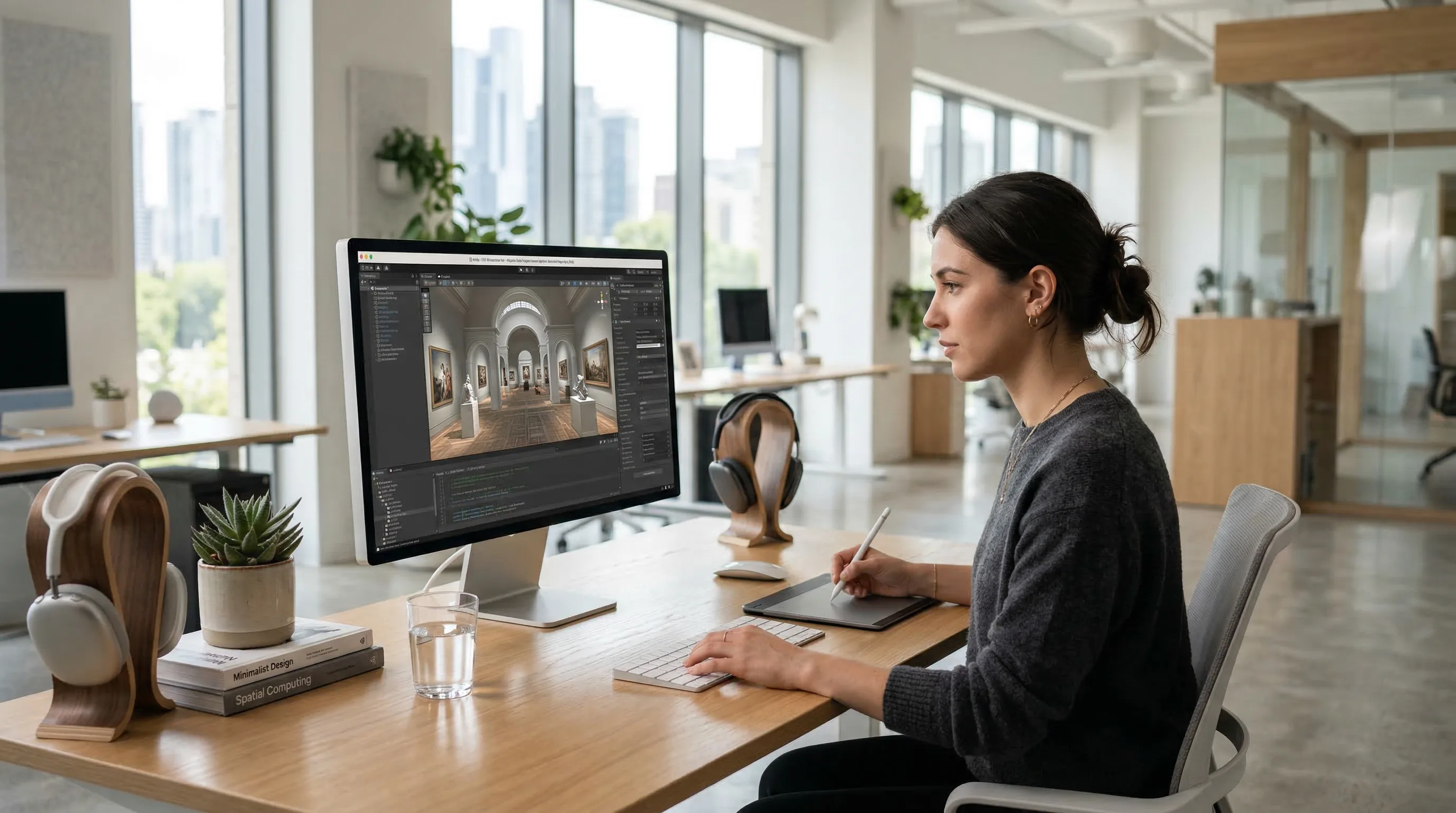
The software stack determines creative flexibility. Unity (Unity Technologies) and Unreal Engine (Unreal Engine) are the dominant engines for developing interactive museum content. Blender supports 3D modeling, while Sketchfab and Matterport enable web-based 3D visualization and spatial mapping.
Museums increasingly use Frame Sixty’s AI developer services (Frame Sixty AI developer) to integrate machine learning into these platforms — enabling adaptive storytelling and real-time personalization.
Standards and Frameworks: OpenXR, WebXR, glTF, USDZ, Cultural Heritage Data Model
Interoperability is crucial. OpenXR and WebXR ensure cross-platform compatibility between headsets. glTF and USDZ formats streamline 3D asset exchange, while the Cultural Heritage Data Model supports metadata consistency across institutions. Accessibility standards like ISO 9241 (ISO 9241 standard) and WCAG 2.2 guide inclusive design.
Organizations like the National Institute of Standards and Technology (NIST) are developing frameworks to ensure spatial computing systems maintain interoperability and data integrity across diverse ecosystems.
Key takeaway: The success of mixed reality museums depends on harmonizing hardware, software, and standards to deliver seamless, accessible, and scalable experiences.
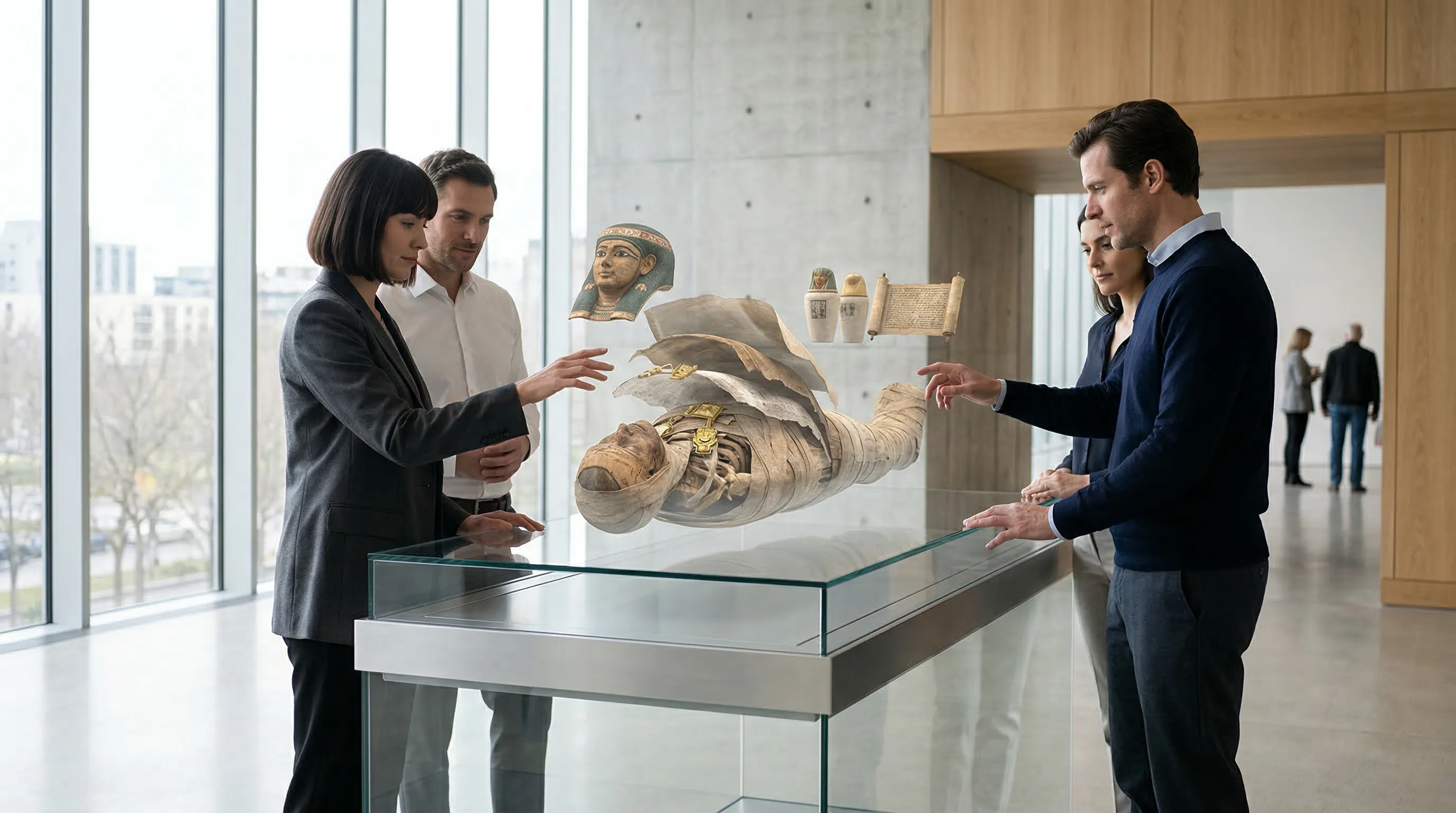
Designing Immersive Exhibits That Enhance Visitor Engagement
Immersive exhibit design uses spatial computing to increase visitor dwell time, engagement rate, and return visitation. It matters because it transforms casual visitors into repeat patrons through emotional connection and interactivity.
Measuring Impact: Visitor Dwell Time, Engagement Rate, and Return Visitation
Metrics such as visitor dwell time, content interaction depth, and return visitation rate provide measurable insights into exhibit performance. Mixed reality installations often double or triple average dwell time compared to static displays. Museums track these metrics using embedded sensors and analytics dashboards.
For instance:
- A holographic reconstruction of Pompeii increased dwell time by 180%.
- AR-guided tours boosted conversion to membership by 25%.
- Interactive storytelling raised user satisfaction scores above 90%.
Accessibility and Inclusion in AR Museum Design (WCAG 2.2, ISO 9241)
Accessibility is a cornerstone of ethical design. Following WCAG 2.2 and ISO 9241 ensures exhibits are usable by visitors with disabilities. Features include:
- Audio descriptions for visually impaired users.
- Gesture-based navigation for those with limited mobility.
- Adjustable contrast and text scaling.
These standards are not just compliance measures — they expand audience reach and align with inclusive cultural missions.
How Spatial Computing Enhances Artifact Preservation and Interaction
Spatial computing minimizes physical contact with artifacts while maximizing interaction. Visitors can manipulate digital twins instead of originals, reducing wear and tear. AI-driven systems predict visitor flow to prevent congestion around fragile displays.
Frame Sixty’s about page highlights its commitment to sustainable and accessible design, demonstrating how technology and preservation goals can coexist.
Key takeaway: Immersive design isn’t just about spectacle — it’s about measurable engagement, inclusivity, and sustainable preservation.
Funding and ROI of Mixed Reality Installations
Mixed reality installations deliver measurable returns through increased attendance, sponsorships, and membership conversions. Understanding cost structures and ROI helps institutions justify investment.
Cost Structures and Hardware Utilization Rates
Costs vary by project scope:
- WebAR activations: $5,000–$15,000
- Room-scale MR exhibits: $50,000–$150,000
- Full museum installations: $250,000–$500,000+
Hardware utilization rates — the percentage of time devices are actively used — directly influence ROI. Optimizing headset rotation and maintenance schedules ensures maximum value.
Calculating Installation ROI and Long-Term Visitor Value
ROI can be calculated using metrics like foot traffic uplift, average session duration, and conversion to membership. For example, a $100,000 installation that increases annual attendance by 15% and boosts memberships by 10% can achieve breakeven within two years.
Public-Private Partnerships and Grant Opportunities for Museum Innovation
Funding often comes from a mix of public grants, corporate sponsorships, and philanthropic donations. Partnerships with tech companies — such as Microsoft, Apple, and Niantic — provide both hardware and co-marketing opportunities. Agencies like Frame Sixty help museums build scalable, cross-platform experiences that attract such partnerships.
Key takeaway: Strategic funding and ROI analysis transform mixed reality from a novelty into a sustainable investment in cultural innovation.
Leading Examples of Mixed Reality Museums Worldwide
Mixed reality museums are emerging globally, setting benchmarks for immersive cultural storytelling.
National Museum of Singapore’s Immersive Heritage Galleries
The National Museum of Singapore uses projection mapping and AR to recreate historical scenes, allowing visitors to walk through Singapore’s colonial past. These installations combine archival footage with interactive holograms, blending education and emotion.
Google Arts & Culture’s Virtual Museum Tours and Digitization Initiatives
Google Arts & Culture has digitized over 2,000 museums, offering virtual tours and 3D artifact exploration. Its “Art Camera” captures gigapixel images, while AR features let users project masterpieces into their own rooms. This democratization of access exemplifies how mixed reality scales globally.
Niantic and Epic Games Collaborations in Location-Based Cultural Experiences
Niantic, known for Pokémon GO, is collaborating with Epic Games to create location-based cultural experiences using Unreal Engine. These projects bring history into public spaces — imagine following a digital trail of ancient ruins through your city park. Such initiatives redefine what a museum can be: not a building, but a network of experiences.
Key takeaway: The world’s leading institutions are proving that mixed reality can extend cultural engagement beyond museum walls.
The Business Opportunity Behind Mixed Reality Museums
Mixed reality museums represent a billion-dollar opportunity at the intersection of culture, technology, and tourism. This matters because it opens new revenue streams for both institutions and developers.
Market Growth and Revenue Forecasts for Immersive Experiences
According to Statista, the global immersive experience market will surpass $12 billion by 2028, driven by demand for interactive entertainment and educational tourism. Museums adopting mixed reality early stand to capture significant market share.
How Mixed Reality Education and Tourism Converge
Educational tourism is merging with immersive technology. Visitors increasingly seek experiential learning, where they can interact with history rather than read about it. Mixed reality bridges this gap, making cultural exploration both entertaining and informative.
Opportunities for Startups in Digital Curation and Spatial Computing Services
Startups offering digital curation, 3D modeling, and AI-driven spatial computing — like Frame Sixty — are well-positioned to serve this growing market. Services include:
- Custom AR/VR exhibit development.
- AI-powered visitor analytics.
- Cross-platform app creation for devices like the Apple Vision Pro (8 Apps for Apple Vision Pro).
Key takeaway: The convergence of education, tourism, and technology creates a lucrative ecosystem for innovators in mixed reality museum development.
Future Outlook: The Next Decade of Museum Innovation
The future of mixed reality museums will be defined by AI integration, cross-platform interoperability, and the rise of persistent digital heritage. This evolution matters because it will permanently change how humanity preserves and experiences culture.
Integration of AI and Mixed Reality for Personalized Visitor Journeys
AI will enable personalized museum experiences that adapt to visitor preferences. Systems can analyze engagement patterns to recommend exhibits or adjust difficulty levels for educational content. Frame Sixty’s AI developer services exemplify how machine learning enhances storytelling and user experience.
Cross-Platform Interoperability with Microsoft Mesh and NVIDIA Omniverse
Interoperability frameworks like Microsoft Mesh and NVIDIA Omniverse will allow museums to share 3D assets and experiences across platforms. This means a virtual exhibit created in Unity can seamlessly appear in Unreal Engine environments, ensuring longevity and collaboration.
The Shift from Physical Artifacts to Persistent Digital Heritage
Over the next decade, museums will increasingly curate digital heritage — persistent 3D archives accessible globally. These archives will complement physical collections, ensuring that culture remains accessible even in times of crisis or conflict.
Key takeaway: The next decade will see museums evolve into hybrid institutions — blending physical authenticity with digital continuity.
Conclusion
Mixed reality museums are redefining how humanity connects with its past and imagines its future. By merging spatial computing, AI-driven personalization, and immersive storytelling, institutions can transcend the limitations of glass cases and static displays. The result is a cultural revolution — one that engages new generations through participation, emotion, and wonder.
For developers, curators, and investors, the opportunity is immense. With the immersive experience market projected to exceed $12 billion by 2028, early adopters will shape the standards, platforms, and narratives that define the next century of museum innovation. The technology is ready, the audience is eager, and the creative potential is limitless.
Organizations seeking to enter this space need partners who understand both the artistry and engineering of mixed reality. Frame Sixty specializes in building immersive, AI-enhanced experiences that bring history to life — from concept to deployment across devices like the Apple Vision Pro and Microsoft HoloLens.
The future of culture is interactive, and the institutions that embrace it now will lead the next era of human storytelling. Get in touch to explore how your museum or brand can become part of this billion-dollar mixed reality transformation.
Mixed Reality Museums and the Future of Cultural Immersion
This FAQ explores the emerging field of mixed reality museums, covering how immersive technologies are transforming cultural engagement, the technical foundations behind these experiences, and strategies for sustainable implementation.
A mixed reality museum blends digital overlays with physical artifacts, letting visitors interact with holograms, 3D reconstructions, and digital twins anchored to real exhibits. Where a traditional museum relies on glass cases and printed placards, mixed reality turns passive viewing into active exploration - walking around a holographic mummy, peeling back digital layers, or stepping into a reconstructed Roman forum.
Mixed reality museums are gaining traction because Gen Z and Millennial visitors, now the dominant museum-goers, expect participatory storytelling rather than passive observation. Institutions including the Smithsonian, British Museum, and Louvre are already using AR layers, holographic projections, and mixed reality storytelling to contextualize artifacts, and search interest in immersive exhibits and digital curation keeps climbing alongside institutional demand.
Yes - digital replicas created through 3D scanning, photogrammetry, and volumetric capture preserve visual and contextual authenticity while protecting the originals. Museums can display fragile artifacts without exposure to handling, light, or humidity: the Louvre has experimented with holographic projections of delicate works, and a digital twin survives even if the physical artifact deteriorates, keeping the record intact for future generations.
Mixed reality museum exhibits run on headsets such as Microsoft HoloLens 2, Magic Leap 2, Meta Quest 3, and Apple Vision Pro, with content built in Unity, Unreal Engine, and Blender. Spatial computing anchors holograms precisely to physical artifacts, while standards like OpenXR, WebXR, glTF, and USDZ keep 3D assets portable across platforms, and WCAG 2.2 guides accessible, inclusive design.
Mixed reality museum installations range from about $5,000-$15,000 for small WebAR activations, to $50,000-$150,000 for room-scale exhibits, to $250,000-$500,000 or more for full museum installations. Content complexity and hardware utilization drive the total, and funding typically blends public grants, cultural foundations, corporate sponsorships, and partnerships with technology companies such as Microsoft and Apple.
Mixed reality installations often double or triple average dwell time compared with static displays: a holographic Pompeii reconstruction increased dwell time by 180%, and AR-guided tours boosted membership conversion by 25%. A $100,000 installation that raises annual attendance 15% and memberships 10% can break even within roughly two years. Frame Sixty builds immersive, AI-enhanced museum experiences from 3D digitization through deployment.
Get in touch
We’re interested to see how we can help. Send us a message and we will get back to you within 24 hours.