
Medical VR Training: How Virtual Reality Is Transforming Clinical Education and Surgical Simulation
May 7, 2026
12 MIN READ
Medical VR training uses immersive virtual reality environments to simulate clinical procedures, patient interactions, and surgical operations for educational purposes. It enables healthcare professionals to practice complex skills safely, receive real-time feedback, and improve performance without risk to patients. Studies show that VR-based training enhances skill retention, reduces procedural errors, and supports standardized competency assessment across medical disciplines. By integrating advanced hardware, software, and analytics, medical VR training delivers scalable, cost-effective, and data-driven learning experiences that align with global medical education standards.
The Rise of Medical VR Training in Modern Healthcare
Medical VR training refers to the use of immersive virtual environments to simulate clinical procedures, patient interactions, and surgical operations for educational purposes. It matters because it bridges the gap between theoretical knowledge and hands-on experience, allowing learners to practice safely and repeatedly until mastery is achieved.
Evolution of Virtual Reality in Medical Education
The origins of VR in healthcare trace back to early 3D anatomical models and basic simulation labs. Over the past decade, advances in virtual reality healthcare technology have enabled realistic, tactile, and interactive training experiences. According to peer-reviewed research from the New England Journal of Medicine, simulation-based and VR-assisted training significantly improve skill acquisition and retention compared to traditional methods.
Institutions like Stanford Medicine and the Mayo Clinic have been pioneers in integrating immersive learning into their curricula. Their programs demonstrate how VR can replicate complex surgical environments, enabling residents to practice rare or high-risk procedures in a controlled setting. The evolution of VR hardware and software has made these experiences more accessible and scalable across medical schools globally.
Key Drivers Behind Adoption of VR in Healthcare
Several factors are driving the widespread adoption of medical VR training:
- Patient Safety: VR allows learners to make mistakes without real-world consequences.
- Cost Efficiency: Reduces dependency on cadavers, physical models, and live patient scenarios.
- Scalability: Cloud-based VR platforms can train thousands of learners simultaneously.
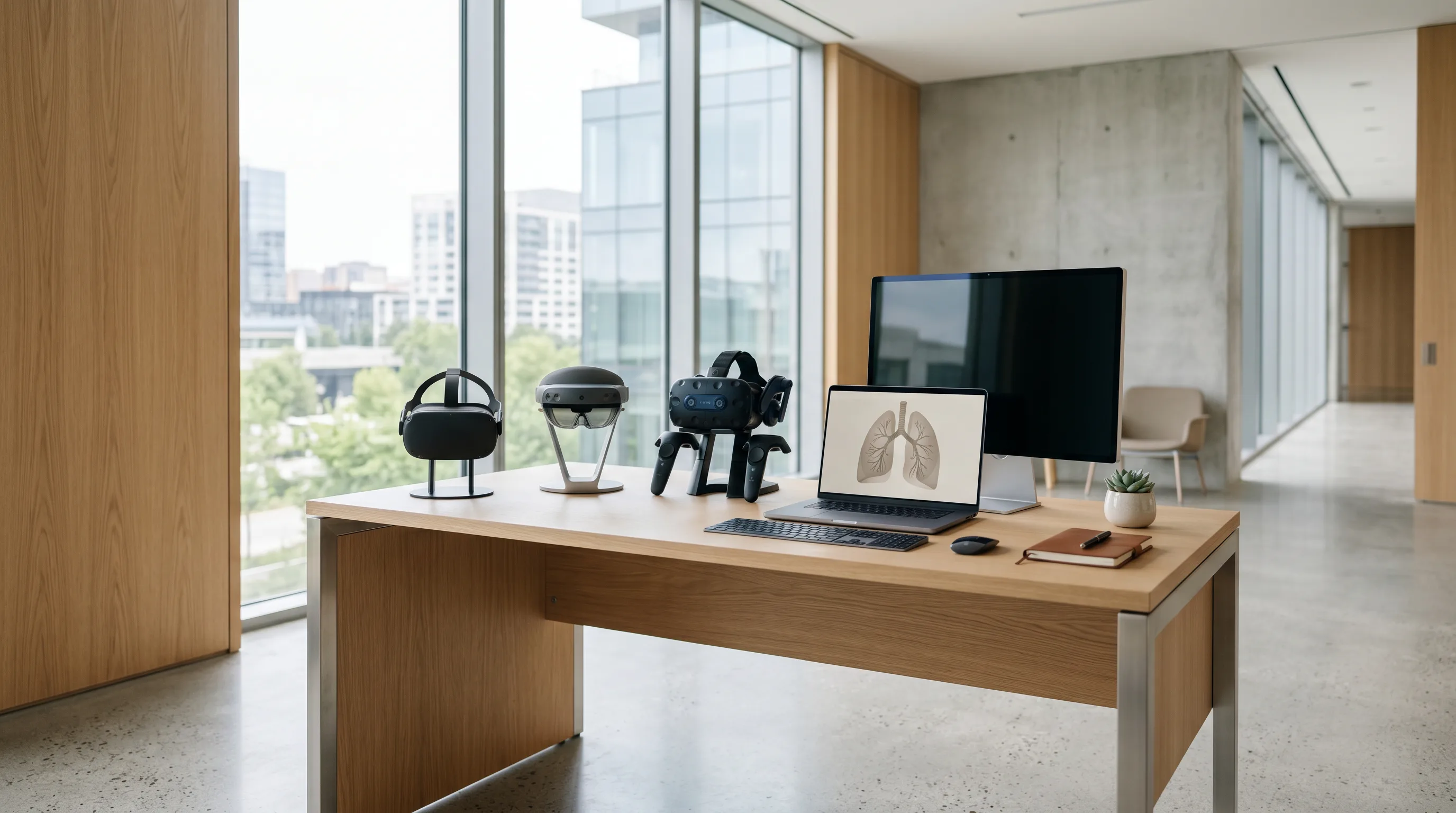
- Technological Maturity: Devices like Oculus Quest, HTC Vive, and Microsoft HoloLens have become more affordable and powerful.
- Data-Driven Insights: Integration with analytics tools enables precise tracking of performance metrics such as error reduction and skill retention rate.
The World Health Organization emphasizes digital transformation in healthcare education as a global priority, highlighting VR’s potential to address training disparities in resource-limited settings.
How Medical VR Training Differs from Traditional Simulation-Based Learning
Traditional simulation relies on physical mannequins and static scenarios. In contrast, VR training offers dynamic, interactive environments with real-time feedback. Learners can engage in surgical simulation, patient communication exercises, and emergency response drills that adapt to their decisions.
| Feature | Traditional Simulation | Medical VR Training |
|---|---|---|
| Equipment | Physical mannequins | Headsets, controllers, haptic devices |
| Scalability | Limited | High (cloud-based) |
| Feedback | Instructor-led | Automated, data-driven |
| Cost | High per session | Lower long-term |
| Accessibility | On-site only | Remote and hybrid |
Key takeaway: Medical VR training enhances accessibility, interactivity, and data-driven learning outcomes beyond what traditional simulations can achieve.
Need help with medical VR training?
We are here to help!
Core Applications of Virtual Reality in Medical Training
Medical VR training is used across multiple domains, from surgical simulation to clinical communication. It matters because it enhances competency assessment, reduces training time, and improves learning outcome scores across specialties.
Surgical Simulation and Procedural Mastery
Surgical simulation is one of the most impactful uses of VR in healthcare education. Platforms like Osso VR, FundamentalVR, and VirtaMed allow surgeons to practice complex procedures using realistic haptic feedback. Studies from the Journal of Medical Internet Research show that VR-trained surgeons perform with greater accuracy and confidence compared to those trained traditionally.
For example, orthopedic residents using Osso VR demonstrated a 230% improvement in surgical performance accuracy. The tactile realism of VR tools replicates the sensation of tissue resistance and instrument handling, building muscle memory critical for surgical proficiency.
VR Anatomy Labs and Immersive Learning for Medical Students
VR anatomy labs replace static textbooks and cadaver dissections with interactive, 3D visualizations. Students can explore anatomical structures layer by layer, manipulate organs, and simulate physiological processes. This immersive learning approach enhances knowledge transfer and retention.
Institutions leveraging VR anatomy tools report higher engagement levels and improved exam performance. Integrating 3D modeling expertise from providers like Frame Sixty’s 3D model design services ensures anatomical accuracy and realism in these virtual environments.
Clinical Skills Training and Patient Safety Scenarios
VR enables learners to practice clinical communication, diagnostic reasoning, and procedural skills in realistic contexts. Through simulated patient interactions, trainees can refine empathy, bedside manner, and decision-making under pressure. The National Center for Biotechnology Information hosts numerous studies validating VR’s effectiveness in improving patient safety outcomes.
By using AI-driven adaptive learning systems, such as those explored in AI in virtual reality development, VR platforms personalize difficulty levels and feedback to match learner progress. This adaptive approach ensures consistent competency across diverse learners.
Emergency Response and Team-Based Simulation
Emergency medicine and trauma response training benefit immensely from VR’s ability to recreate high-stress, multi-person scenarios. Teams can coordinate virtually, practicing triage, CPR, and crisis management. These simulations improve training completion time and team communication metrics.
Key takeaway: From anatomy to emergency response, VR enables comprehensive, repeatable, and measurable training experiences that enhance both individual and team performance.

Leading Platforms and Technologies Powering Medical VR Training
Medical VR training operates through a robust ecosystem of hardware, software, and development platforms. Understanding these components helps institutions choose scalable and compliant solutions.
Hardware Ecosystem: Oculus Quest, HTC Vive, Microsoft HoloLens, Varjo Aero
The hardware backbone of VR medical training includes high-fidelity headsets and motion-tracking systems. Devices like Oculus Quest, HTC Vive, Microsoft HoloLens, and Varjo Aero offer varying levels of immersion and realism. For instance:
- Oculus Quest: Portable, wireless, and cost-effective for large-scale deployment.
- HTC Vive: High-resolution tracking ideal for detailed surgical simulations.
- Microsoft HoloLens: Combines augmented and mixed reality for hybrid learning environments.
- Varjo Aero: Offers ultra-high resolution for precision-demanding specialties.
Developers often collaborate with 3D modeling experts like Frame Sixty to optimize visual fidelity and performance across these platforms.
Software Solutions: Osso VR, FundamentalVR, SimX, Oxford Medical Simulation, CAE Healthcare
Software platforms form the educational core of VR training. Osso VR and FundamentalVR focus on surgical training, while SimX and Oxford Medical Simulation specialize in clinical and emergency scenarios. CAE Healthcare extends VR into nursing and anesthesiology education.
These platforms integrate SCORM and xAPI standards for tracking learner performance across sessions. The combination of realism, analytics, and accessibility makes them essential tools in modern medical education technology.
Development Tools and Platforms: Unity, Unreal Engine, SteamVR, Viveport, Meta Quest for Business
VR medical applications are built using powerful engines like Unity and Unreal Engine, enabling developers to create interactive, physics-based simulations. Distribution platforms such as SteamVR, Viveport, and Meta Quest for Business facilitate deployment and management across institutions.
Agencies like Frame Sixty’s AI developer team and Android app development agency contribute to scalable, cross-platform VR solutions that integrate AI-driven analytics and real-time performance tracking.
Key takeaway: The synergy between advanced hardware, specialized software, and expert development ecosystems is driving the next generation of medical VR training.
Institutional Adoption and Case Studies
Institutional adoption validates the real-world impact of VR in medical education. Leading universities and hospitals are setting new benchmarks for immersive learning outcomes.
How Stanford Medicine and Mayo Clinic Integrate VR into Residency Programs
Stanford Medicine and the Mayo Clinic are recognized leaders in VR integration. Stanford’s residency programs use VR to simulate surgical procedures, while Mayo Clinic employs VR for patient safety and teamwork training. Both institutions report measurable improvements in skill retention rate and error reduction.
These programs align with AAMC competencies, ensuring that VR-based learning meets national educational standards for medical graduates.
Hospital and University Partnerships Driving Digital Health Innovation
Collaborations between hospitals, universities, and technology firms are accelerating VR adoption. By leveraging partnerships with developers like Frame Sixty’s agentic spatial computing experts, institutions can design custom VR modules tailored to specific specialties, from cardiology to radiology.
Such partnerships also foster innovation in augmented reality medicine, blending VR with real-world imaging data for enhanced procedural visualization.
Real-World Outcomes: Error Reduction and Skill Retention Rate Improvements
Empirical data supports VR’s effectiveness. Studies published in the Journal of Medical Internet Research show that VR-trained clinicians demonstrate 30–40% fewer procedural errors and up to 50% higher retention after six months compared to traditional training.
Key takeaway: Institutional adoption of VR training correlates with measurable improvements in clinical performance, patient safety, and educational efficiency.
Measuring the Impact of VR in Medical Education
The impact of medical VR training is measured through standardized metrics that quantify learning outcomes, engagement, and cost-effectiveness.
Key Performance Metrics: Knowledge Transfer, Competency Assessment, Learning Outcome Scores
VR training platforms track metrics such as knowledge transfer, competency assessment, and learning outcome scores using integrated analytics. These data points help educators identify skill gaps and personalize instruction.
For example, simulation fidelity directly correlates with performance accuracy. The higher the realism of the environment, the more effectively learners translate virtual skills into clinical practice.
ROI in Training and Cost-Effectiveness Analysis
Although initial investment in VR infrastructure can be significant, long-term ROI in training is substantial. VR reduces the need for physical materials, instructor hours, and patient-based training sessions. Hospitals using VR report up to 40% savings in training costs and faster training completion times.
Simulation Fidelity and User Engagement Benchmarks
High simulation fidelity enhances immersion and engagement. Metrics such as user engagement time and task repetition rates indicate learner motivation and confidence. Integrating AI-driven feedback loops, as explored in AI in virtual reality development, further improves these benchmarks.
Key takeaway: Quantifiable metrics confirm that VR training delivers superior educational outcomes and long-term cost efficiency compared to traditional methods.
Compliance, Standards, and Data Security in VR Medical Training
Compliance ensures that VR medical training meets regulatory, ethical, and educational standards. It matters because adherence to frameworks like FDA Digital Health Guidelines and ISO 13485 safeguards patient data and device quality.
Regulatory Frameworks: FDA Digital Health Guidelines, HIPAA Compliance, ISO 13485
The FDA’s Digital Health Center of Excellence outlines regulatory pathways for VR-based medical devices and software. Developers must ensure HIPAA compliance for data privacy and adhere to ISO 13485 for quality management in medical device manufacturing.
Educational Standards Alignment: AAMC Core Competencies and ACGME Milestones
VR training programs align with AAMC Core Competencies and ACGME Milestones, ensuring that virtual experiences meet accreditation requirements. This alignment validates VR as a legitimate educational tool within formal medical curricula.
Interoperability and Data Tracking: SCORM and xAPI Integration
Integration with SCORM and xAPI allows seamless tracking of learner progress across platforms. These standards ensure interoperability between VR modules, learning management systems, and institutional databases.
Key takeaway: Compliance with regulatory, educational, and data standards ensures that medical VR training remains safe, credible, and scalable.
Challenges and Barriers to Implementation
Despite its advantages, medical VR training faces several challenges that institutions must address to ensure successful adoption.
Technical Limitations and Hardware Accessibility
High-end VR systems require robust computing resources and reliable connectivity. In low-resource settings, limited access to devices like HTC Vive or Varjo Aero can hinder implementation. Developers are exploring lightweight, mobile-friendly alternatives using platforms like Frame Sixty’s 3D modeling for manufacturing and industrial design to optimize performance.
Institutional Resistance and Faculty Training Needs
Resistance often stems from faculty unfamiliarity with VR tools. Comprehensive instructor training and support are essential. Institutions can leverage resources like Frame Sixty’s about us page to understand how expert development partners can facilitate onboarding and integration.
Balancing Cost, Scalability, and Simulation Fidelity
Achieving high simulation fidelity while maintaining scalability and cost efficiency remains a balancing act. Modular design, cloud-based deployment, and open-source frameworks can help institutions manage costs without compromising educational quality.
Key takeaway: Overcoming technical and institutional barriers requires strategic planning, faculty engagement, and collaboration with experienced VR developers.
Future Trends in Virtual Reality Healthcare Education
The future of medical VR training lies in convergence—integrating VR with AI, AR, and data analytics to create adaptive, intelligent learning ecosystems.
Integration with Augmented Reality Medicine and Mixed Reality Platforms
Mixed reality devices like Microsoft HoloLens enable hybrid training that overlays digital anatomy onto real-world environments. This integration enhances spatial understanding and procedural accuracy. Developers exploring 8 apps for Apple Vision Pro and A developer’s perspective on the Apple Vision Pro highlight how emerging headsets will further blur the line between physical and virtual learning.
AI-Driven Personalization in Simulation-Based Learning
AI will play a central role in adaptive learning, analyzing performance data to adjust difficulty and feedback in real time. Frame Sixty’s AI developer initiatives are already exploring how machine learning can tailor simulations to individual learners, maximizing engagement and retention.
Expanding Use Cases Across Nursing, Radiology, and Telemedicine
Beyond surgery, VR is expanding into nursing, radiology, and telemedicine. For instance, radiology trainees can practice interpreting 3D imaging in immersive environments, while telemedicine professionals can simulate remote consultations using VR avatars. The World Health Organization supports these innovations as part of its digital health transformation strategy.
The Next Decade of Medical Education Technology and Digital Health Innovation
By 2030, VR will become a standard component of medical education worldwide. Integration with agentic spatial computing concepts, as explored by Frame Sixty, will enable multi-sensory, data-rich environments that redefine how clinicians learn and collaborate.
Key takeaway: The next decade will see medical VR evolve into an intelligent, interconnected ecosystem driving global healthcare education reform.
Conclusion
Medical VR training is no longer a futuristic concept—it is a proven, scalable solution transforming how healthcare professionals learn and practice. By combining immersive simulation, AI-driven analytics, and compliance with global standards, VR training enhances competency, safety, and accessibility across all levels of medical education.
Institutions adopting VR report measurable improvements in skill retention rate, error reduction, and ROI in training. As technology continues to evolve, collaboration between educators, developers, and regulatory bodies will ensure that VR remains a cornerstone of modern medical education.
For organizations seeking to develop custom VR training modules, partnering with experienced spatial computing and AI developers is essential. Frame Sixty offers expertise in 3D modeling, AI integration, and immersive application design tailored to healthcare needs.
To explore how your institution can implement high-fidelity VR training solutions that meet compliance and educational standards, Get in touch with Frame Sixty today.
Medical VR Training Insights
This FAQ explores practical, technical, and strategic aspects of medical VR training, addressing common questions about implementation, technology, and educational outcomes in healthcare simulation.
Medical VR training uses immersive virtual environments to simulate clinical procedures, patient interactions, and surgical operations so healthcare professionals can practice safely and repeatedly with real-time feedback. It is used across surgical simulation, VR anatomy labs that replace static textbooks, clinical communication practice, and team-based emergency drills covering triage, CPR, and crisis management.
Medical VR training measurably outperforms traditional methods in published research: studies in the Journal of Medical Internet Research show VR-trained clinicians make 30-40% fewer procedural errors and retain up to 50% more after six months. In one example, orthopedic residents using Osso VR demonstrated a 230% improvement in surgical performance accuracy, driven by muscle memory built through realistic haptic repetition.
Stanford Medicine and the Mayo Clinic are among the recognized leaders in medical VR training adoption: Stanford's residency programs use VR to simulate surgical procedures, while Mayo Clinic applies it to patient safety and teamwork training. Both report measurable improvements in skill retention and error reduction, and both align their programs with AAMC competency standards for medical graduates.
Yes - medical VR training platforms integrate with existing learning management systems through interoperability standards like SCORM and xAPI, which most major platforms support. This allows seamless data exchange between VR simulations and institutional databases, so learner progress, competency assessments, and outcome scores are tracked in one place rather than trapped inside the headset application.
The main challenges of scaling medical VR training are hardware costs, faculty unfamiliarity with the tools, and maintaining simulation fidelity without overspending. High-end systems like HTC Vive or Varjo Aero need robust computing resources, which limits low-resource settings. Institutions manage these constraints through cloud-based deployment, modular content, comprehensive instructor training, and partnerships with experienced VR developers.
Medical VR training costs depend on hardware, software licensing, and content customization, but the return is well documented: hospitals using VR report up to 40% savings in training costs alongside faster training completion times. Savings come from reduced physical materials, fewer instructor hours, and content reused across cohorts. Frame Sixty builds custom VR training modules with 3D modeling and AI-driven analytics tailored to healthcare needs.
Get in touch
We’re interested to see how we can help. Send us a message and we will get back to you within 24 hours.