
Medical Training VR: How Virtual Reality Is Transforming Clinical Education and Surgical Simulation
Apr 28, 2026
12 MIN READ
Medical training VR uses immersive virtual reality technology to teach clinical and surgical skills in realistic, risk-free environments. It enables learners to practice procedures repeatedly, receive real-time feedback, and improve performance accuracy while reducing training time. Supported by advanced hardware, software engines, and compliance frameworks, VR simulations align with accreditation standards and measurable competency outcomes. Studies show that VR-trained clinicians demonstrate higher procedural accuracy, faster skill acquisition, and better knowledge retention than those trained through traditional methods, establishing medical training VR as a superior model for modern healthcare education.
The Evolution of Medical Training Through Virtual Reality
Virtual reality in medical training has evolved from static anatomical models to fully immersive, interactive environments that mirror real-world clinical complexity. This shift has redefined how medical students, residents, and practicing clinicians engage with learning materials and patient simulations.
From Cadaver Labs to Immersive Learning Environments
For centuries, cadaver labs were the cornerstone of medical education. While invaluable for anatomical understanding, they presented limitations in accessibility, repeatability, and ethical considerations. The introduction of medical training VR has addressed these challenges by providing 3D anatomical visualization and procedural simulation that can be accessed anytime, anywhere.
Platforms like Osso VR and FundamentalVR have pioneered hyper-realistic surgical environments where learners can practice techniques repeatedly without the constraints of physical specimens. These systems use haptic feedback and motion tracking to replicate the tactile sensations of surgery, allowing for precise repetition and measurable skill improvement.
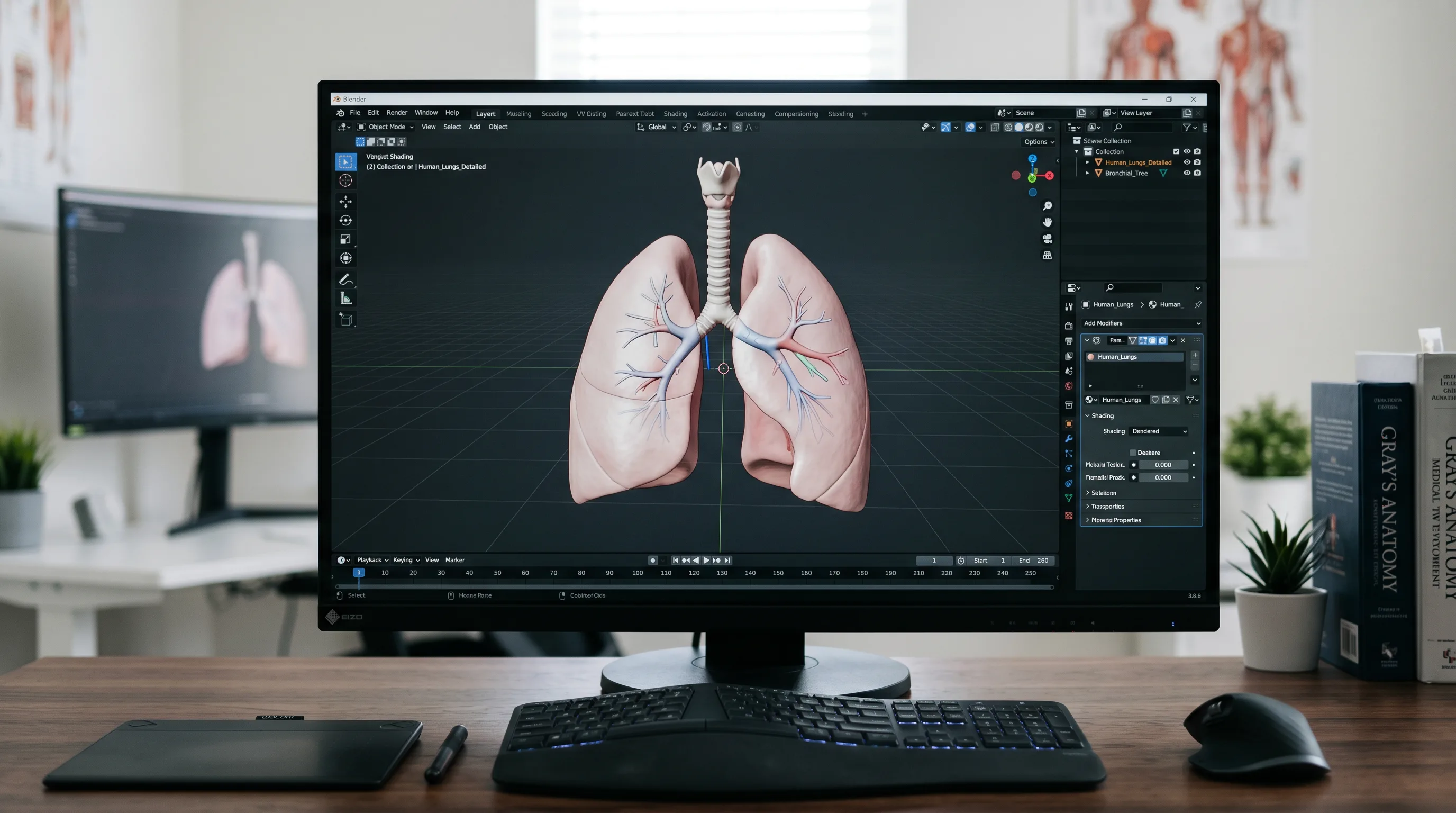
By leveraging 3D model design services such as those offered by Frame Sixty, developers can create anatomically accurate representations of organs, tissues, and surgical instruments. This fidelity enhances both spatial awareness and procedural confidence, bridging the gap between theoretical knowledge and hands-on competence.
The Rise of Simulation-Based Learning in Healthcare
Simulation-based learning has become a cornerstone of modern medical education, endorsed by organizations such as the AAMC and the ACGME. These bodies emphasize competency-based training and entrustable professional activities (EPAs) that align closely with VR’s measurable performance metrics.
Unlike traditional classroom instruction, VR simulations immerse learners in dynamic patient scenarios that require real-time decision-making. Whether diagnosing a cardiac emergency or performing a laparoscopic procedure, trainees can experience the full cognitive and emotional demands of clinical practice in a safe virtual space.
This approach also supports agentic spatial computing, a concept explored by Frame Sixty, which integrates human agency into immersive environments. By simulating authentic interactions, VR fosters deeper engagement and long-term knowledge retention.
Key Milestones in Virtual Reality Healthcare Adoption
The adoption of VR in healthcare training has accelerated over the past decade, driven by technological advances and institutional validation. Early research from PubMed and The New England Journal of Medicine demonstrated that VR-based surgical training improves procedural accuracy and reduces error rates compared to traditional methods.
Institutions like Stanford University have validated VR’s efficacy through controlled studies, showing that VR-trained surgeons perform complex procedures faster and with fewer complications. The COVID-19 pandemic further catalyzed adoption, as remote and scalable VR training became essential for maintaining educational continuity.
Key takeaway: The evolution from cadaver labs to immersive VR environments has made medical training more accessible, measurable, and aligned with modern competency frameworks.
Need help with medical VR development?
We are here to help!
Core Technologies Powering Medical Training VR
Medical training VR relies on a sophisticated ecosystem of hardware, software, and integration standards that ensure fidelity, security, and interoperability. These technologies collectively enable immersive, compliant, and scalable learning experiences.
VR Hardware and Devices in Clinical Education
Modern VR hardware has reached unprecedented levels of realism and precision. Devices such as Oculus Quest, HTC Vive, Microsoft HoloLens, and Varjo Aero are now standard tools for medical simulation. Each offers unique advantages:
| Device | Key Features | Use Case in Medical Training |
|---|---|---|
| Oculus Quest | Wireless, cost-effective, Meta ecosystem | General clinical skills and anatomy visualization |
| HTC Vive | High refresh rate, precise tracking | Surgical simulation and procedural training |
| Microsoft HoloLens | Mixed reality overlay | Augmented anatomy and remote collaboration |
| Varjo Aero | Ultra-high resolution | Neurosurgical and microanatomy visualization |
Developers often rely on the Oculus developer documentation to optimize performance and ensure seamless integration with medical training applications.
Software Engines and Development Platforms
Behind every immersive simulation lies a powerful software engine. Unity and Unreal Engine dominate the field, offering real-time rendering, physics simulation, and cross-platform deployment. Frameworks like OpenXR and XR Interaction Toolkit ensure interoperability across devices, while compliance with SCORM and xAPI standards allows for detailed learner analytics.
At Frame Sixty, developers integrate AI-driven adaptive learning models that personalize the VR experience based on user performance. This approach enhances engagement and accelerates mastery through real-time feedback loops.
Integration with Hospital and Academic Systems
Integrating VR into hospital and university systems requires adherence to strict compliance and data security standards. HIPAA compliance ensures the protection of patient data used in simulated cases, while the ISO/IEC 27001 standard provides a framework for information security management.
Additionally, the FDA’s Digital Health Center of Excellence offers guidance for validating VR-based medical devices and ensuring regulatory compliance. These frameworks collectively safeguard sensitive data and maintain institutional trust.
Key takeaway: The synergy between advanced hardware, robust software, and secure integration frameworks underpins the reliability and scalability of medical training VR systems.

Applications of VR in Medical and Surgical Training
Medical training VR is applied across the full spectrum of healthcare education, from surgical simulation to patient communication training. It supports both procedural mastery and soft-skill development in immersive, measurable ways.
Surgical Simulation and Anatomy Visualization
Surgical simulation remains the most prominent application of VR in medicine. Platforms such as Osso VR, FundamentalVR, VirtaMed, and Touch Surgery offer high-fidelity procedural training modules that replicate real surgical environments.
These systems use precise 3D anatomical models—often developed through 3D modeling for manufacturing and industrial design—to ensure accuracy and realism. Trainees can practice incisions, suturing, and device placement while receiving real-time feedback on performance metrics such as performance accuracy and error reduction rate.
Clinical Skills Training and Patient Scenarios
Beyond surgery, VR supports clinical skills training in areas such as emergency response, diagnostics, and patient communication. Immersive VR patient scenarios allow learners to practice bedside manner, empathy, and diagnostic reasoning under realistic pressure.
Platforms like SimX and CAE Healthcare have developed multi-user VR environments where entire medical teams can collaborate on emergency simulations. These experiences enhance teamwork, communication, and situational awareness—skills critical to patient safety.
Extended Reality in Medicine and Digital Health Education
The convergence of VR, augmented reality (AR), and mixed reality (MR) forms extended reality (XR), a comprehensive approach to digital health education. Through XR, learners can visualize anatomical structures in 3D, overlay diagnostic data, and interact with virtual patients simultaneously.
The WHO’s Digital Health Framework supports the integration of such technologies to improve global access to healthcare education. XR-based learning aligns with these standards by democratizing access to high-quality medical training worldwide.
Key takeaway: From surgical precision to patient empathy, VR and XR technologies provide holistic, scalable solutions for comprehensive medical education.
Evidence-Based Outcomes of VR in Healthcare Education
Evidence consistently supports the efficacy of VR in improving learning outcomes, procedural accuracy, and long-term skill retention in medical education.
Measuring Knowledge Retention and Skill Transfer Effectiveness
Studies indexed on PubMed show that VR-based training significantly enhances knowledge retention rate and skill transfer effectiveness compared to traditional methods. Learners demonstrate improved performance accuracy and faster training completion time, particularly in surgical disciplines.
Metrics such as user engagement score and simulation fidelity are used to quantify the depth of learning. High-fidelity simulations correlate strongly with improved clinical outcomes, as learners are better prepared to perform under real-world conditions.
Comparative Studies: VR vs. Traditional Training Models
Comparative research published in the Journal of Medical Internet Research (JMIR) reveals that VR-trained participants outperform those trained via lectures or cadaver labs in both procedural accuracy and confidence. Learning curve analysis indicates that VR reduces the time required to achieve competency, while error reduction rate improves by up to 40% in certain specialties.
The NEJM further supports these findings, highlighting that immersive learning environments foster deeper cognitive engagement and better procedural recall.
Institutional Validation and Research
Leading institutions such as Stanford Medicine and CAE Healthcare have conducted longitudinal studies validating VR’s impact on surgical proficiency. Their findings show that VR-trained residents achieve faster skill acquisition and maintain proficiency longer than those trained through traditional methods.
Key takeaway: Empirical evidence confirms that VR enhances both cognitive and procedural learning outcomes, establishing it as a superior method for medical education.
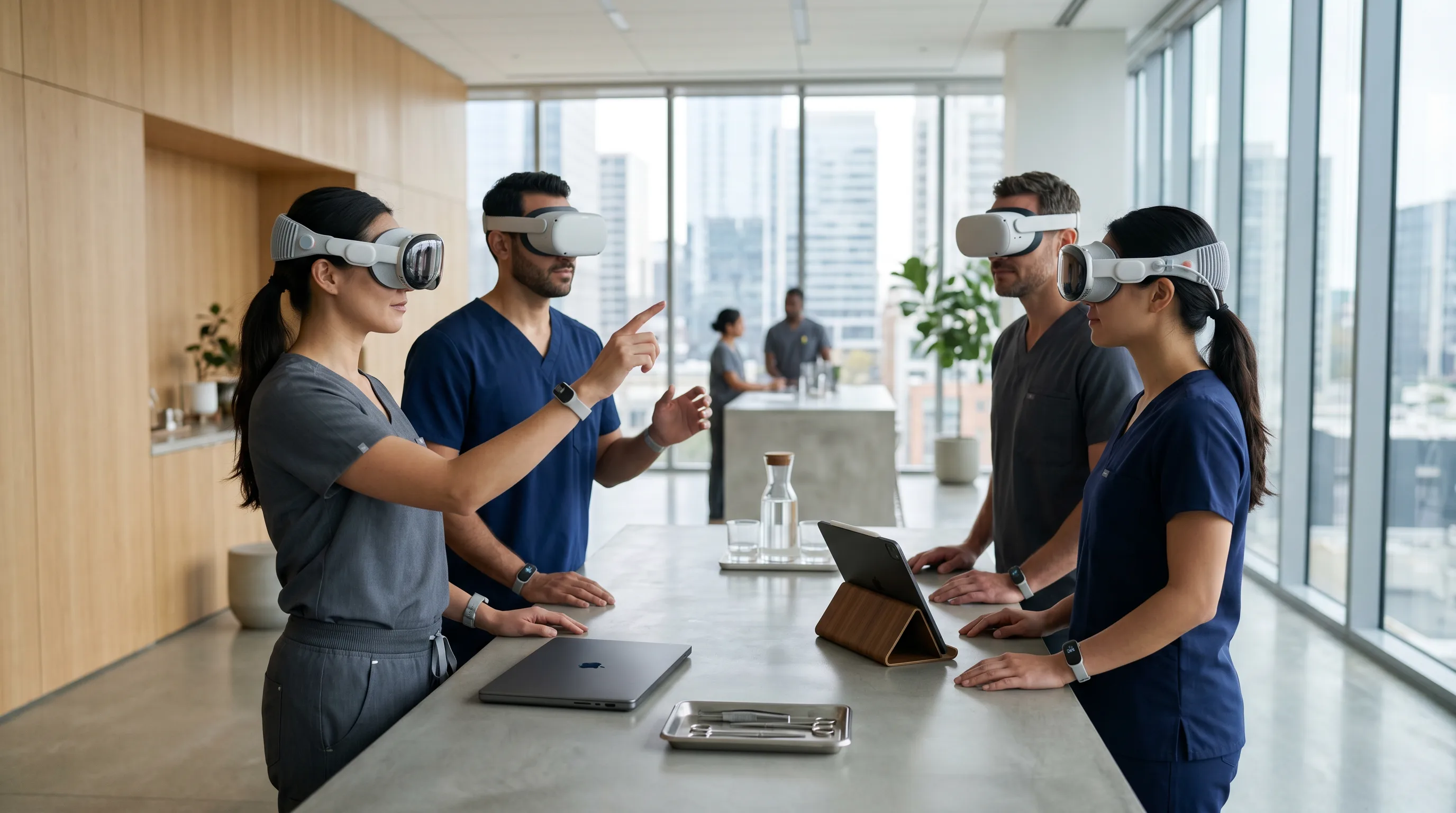
Implementing Medical Training VR in Hospitals and Universities
Implementing VR in medical education requires strategic planning, alignment with accreditation standards, and adherence to data security frameworks.
Curriculum Integration and Accreditation Alignment
To ensure educational validity, VR programs must align with the AAMC Core Entrustable Professional Activities and ACGME competency frameworks. These standards define the essential skills and behaviors expected of medical graduates and residents.
By integrating VR modules into existing curricula, institutions can provide measurable, competency-based assessments. The AAMC supports simulation-based learning as a means to evaluate entrustable activities such as patient handoffs, informed consent, and procedural competence.
Cost, Scalability, and Infrastructure Considerations
While initial investment in VR hardware and software can be substantial, the long-term return on training investment is significant. VR reduces the need for physical materials, decreases instructor time, and allows for scalable deployment across campuses and hospitals.
Metrics such as training completion time and error reduction rate demonstrate tangible efficiency gains. Institutions can also leverage solutions from Frame Sixty to develop scalable VR applications optimized for Android-based devices, ensuring accessibility across a range of hardware.
Compliance and Data Security Frameworks
Compliance is critical when deploying digital health technologies. The FDA’s Digital Health Center of Excellence provides guidance on regulatory considerations for VR-based medical devices. Similarly, the WHO’s Digital Health Framework outlines global best practices for ethical and secure digital health implementation.
Adherence to ISO/IEC 27001 ensures robust data protection, while HIPAA compliance safeguards patient information used in simulations. These frameworks collectively create a secure foundation for sustainable VR adoption.
Key takeaway: Successful implementation of medical training VR depends on aligning educational objectives with accreditation standards and maintaining rigorous data security.
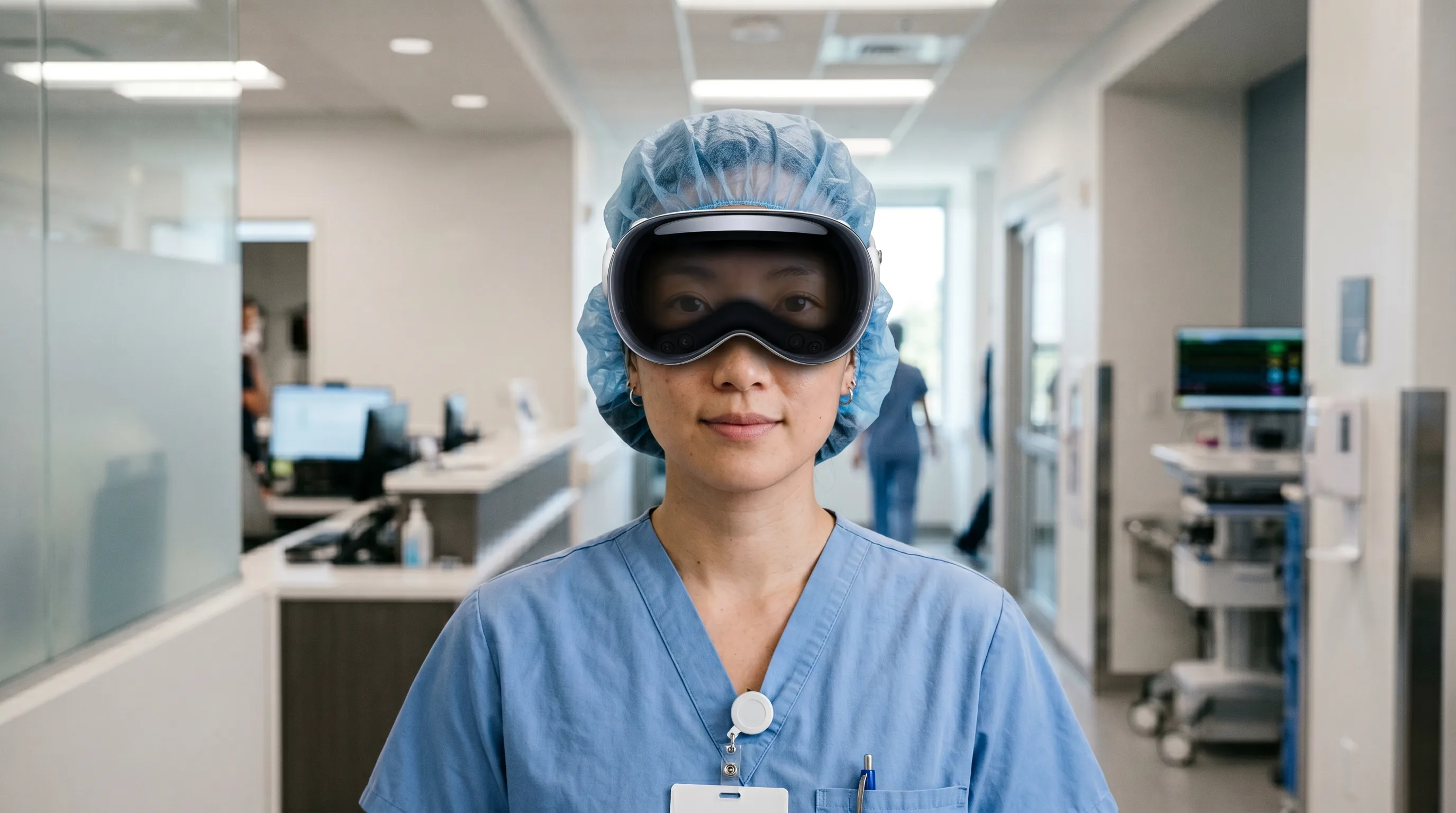
Leading Platforms and Emerging Innovators in VR Medical Education
The landscape of VR medical education is shaped by a growing ecosystem of innovators, hardware providers, and software developers collaborating to enhance simulation fidelity and accessibility.
Overview of Top VR Training Providers
Several companies lead the field in VR healthcare education:
- Osso VR – Focused on surgical training with validated outcomes in orthopedic and cardiovascular procedures.
- FundamentalVR – Offers haptic-enabled simulations for high-fidelity procedural learning.
- SimX – Specializes in multi-user emergency response simulations.
- VirtaMed – Integrates physical instruments with virtual interfaces for hybrid simulation.
- CAE Healthcare – Provides comprehensive simulation solutions across nursing, anesthesia, and surgery.
Each platform leverages advanced 3D modeling, real-time analytics, and evidence-based design to ensure measurable learning outcomes.
Hardware and Software Ecosystem Partnerships
Hardware partnerships with Meta Quest for Business, Vive Business, and Leap Motion expand the reach and realism of VR training. Developers rely on tools like Unity, Unreal Engine, and OpenXR to build interoperable simulations.
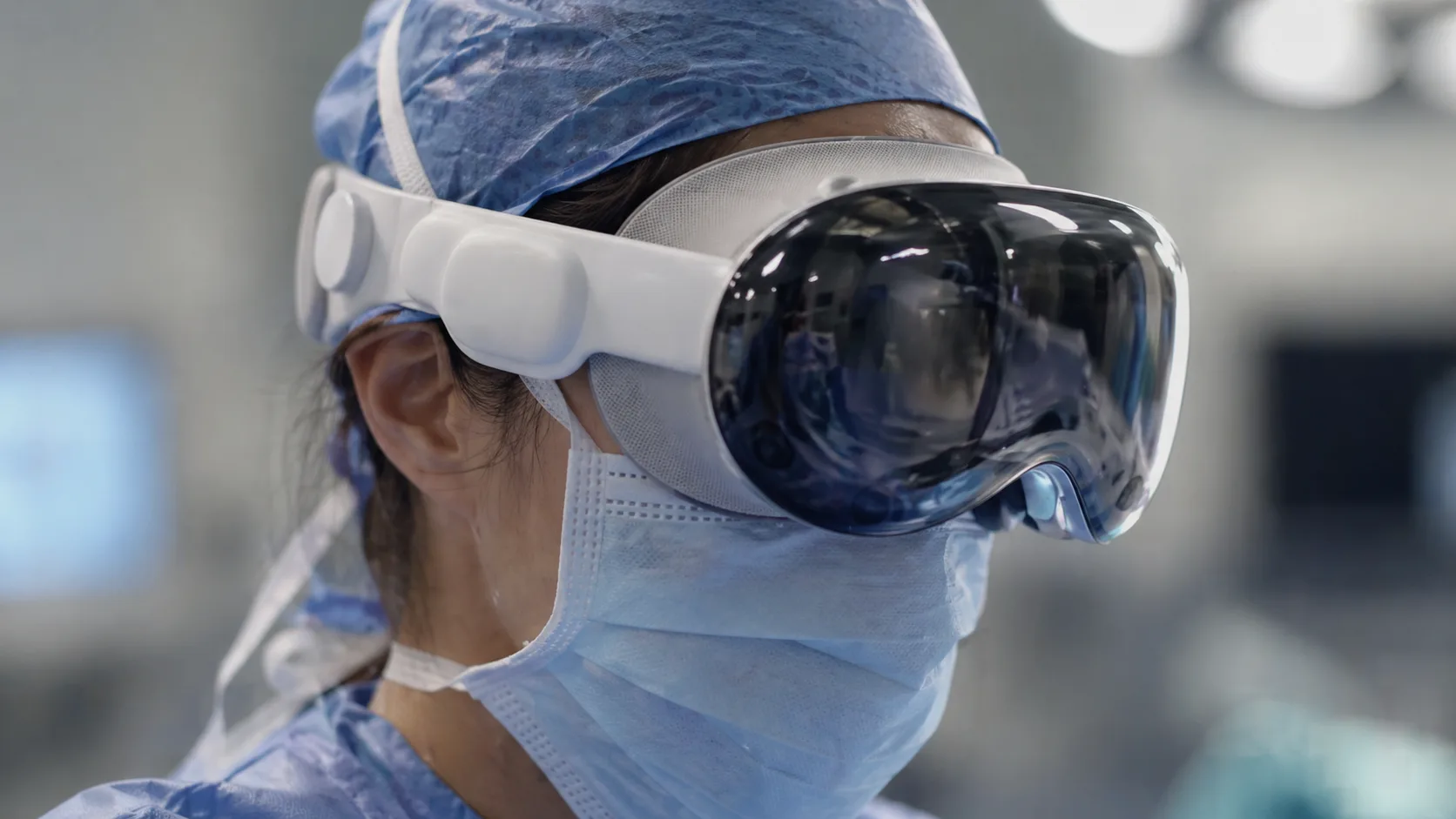
At Frame Sixty, developers explore how emerging devices like Apple Vision Pro will reshape immersive medical education through spatial computing and AI integration. Their insights highlight the growing synergy between hardware innovation and educational design.
The Future of Interoperable and AI-Enhanced Medical Simulation
AI integration is the next frontier in medical training VR. Platforms are beginning to incorporate adaptive learning algorithms that analyze user behavior and adjust difficulty levels dynamically. Frame Sixty’s AI developer team is pioneering these advancements, creating intelligent tutors that provide personalized feedback and performance analytics.
Key takeaway: The collaboration between VR platform providers, hardware manufacturers, and AI developers is driving the next generation of intelligent, interoperable medical training systems.
The Future Landscape of Virtual Reality Healthcare Training
The future of medical training VR lies in adaptive, data-driven learning environments that continuously evolve with user performance and global healthcare needs.
Predictive Analytics and Adaptive Learning in VR
Predictive analytics will enable VR systems to forecast learner performance and identify knowledge gaps before they impact clinical outcomes. By analyzing interaction data, systems can recommend targeted practice modules, enhancing skill transfer effectiveness and competency assessment.
Integration with AI Tutors and Real-Time Competency Assessment
AI tutors are emerging as integral components of VR education. These systems monitor user actions, provide real-time corrective feedback, and assess performance against established benchmarks. Integration with tools like Frame Sixty’s AI in Virtual Reality Development ensures that learning remains adaptive and evidence-based.
Global Standards and the Next Phase of Simulation Fidelity
Future VR systems will adhere to international standards such as IEEE VR Standards, ISO 9001, and ISO/IEC 27001, ensuring interoperability and data integrity across institutions. The next phase of simulation fidelity will combine photorealistic rendering, haptic realism, and AI-driven narrative branching to create truly lifelike training experiences.
Key takeaway: The future of medical training VR is intelligent, predictive, and globally standardized, offering unprecedented personalization and scalability.
Conclusion
Virtual reality has redefined the landscape of medical education, offering immersive, data-driven training environments that enhance procedural accuracy, knowledge retention, and learner engagement. From surgical simulation to patient communication, medical training VR provides a scalable and secure solution aligned with global accreditation and compliance standards.
As institutions adopt VR-based learning, the focus will shift toward interoperability, AI integration, and predictive analytics—ensuring that every learner receives a personalized path to clinical mastery. The collaboration between educators, developers, and healthcare organizations will continue to drive innovation and accessibility in digital health education.
For healthcare institutions and developers seeking to build next-generation VR training systems, Frame Sixty offers expertise in 3D modeling, AI integration, and immersive application development. Their commitment to precision and innovation ensures that every simulation meets the highest standards of realism and compliance.
To explore how VR can transform your medical training programs, get in touch with Frame Sixty today and begin building the future of immersive healthcare education.
Medical Training VR – Key Insights and Implementation Guide
This FAQ explores practical, technical, and strategic aspects of medical training VR, helping educators, developers, and healthcare institutions understand how to adopt, optimize, and scale virtual reality for clinical education.
Medical training VR is used to simulate surgical procedures, clinical skills, and patient scenarios in a safe, immersive environment where learners can repeat complex tasks without patient risk. Platforms such as Osso VR and FundamentalVR provide haptic-enabled surgical modules, while multi-user systems like SimX let entire care teams rehearse emergency response, communication, and diagnostic reasoning together.
Medical training VR improves skill retention by combining immersive repetition with real-time performance feedback, and comparative research bears this out. Studies published in the Journal of Medical Internet Research found VR-trained participants outperform those trained via lectures or cadaver labs in procedural accuracy and confidence, with error reduction improving by up to 40% in certain specialties and less time needed to reach competency.
Medical training VR runs on headsets including the Oculus Quest, HTC Vive, Microsoft HoloLens, and Varjo Aero, paired with motion controllers and haptic devices for surgical realism. The choice maps to the task: wireless Quest headsets suit general clinical skills at scale, Vive's precise tracking suits surgical simulation, HoloLens adds mixed-reality overlay for augmented anatomy, and Varjo's ultra-high resolution serves neurosurgical and microanatomy work.
Unity and Unreal Engine power the real-time 3D rendering, physics simulation, and cross-platform deployment behind most medical training VR applications. Frameworks like OpenXR and the XR Interaction Toolkit keep simulations interoperable across headsets, while compliance with SCORM and xAPI standards feeds detailed learner analytics into institutional systems, so performance data from a simulation lands where educators can actually assess it.
Yes - medical training VR can integrate securely with hospital systems when it is built for HIPAA compliance and the ISO/IEC 27001 information security standard, using secure APIs and encrypted data handling for any patient information used in simulated cases. The FDA's Digital Health Center of Excellence also provides guidance for validating VR-based medical software, which helps keep deployments regulator-ready.
A medical training VR program typically requires an initial investment ranging from tens to hundreds of thousands of dollars, depending on hardware scale and software customization. The long-term return comes from reduced instructor time, less reliance on physical materials, and reusable digital content that scales across campuses. For custom modules, studios such as Frame Sixty build VR training applications with AI-driven adaptive learning and analytics.
Get in touch
We’re interested to see how we can help. Send us a message and we will get back to you within 24 hours.