

Sean McCue
CEO
16 MIN READ
Executive Summary: Virtual reality development in 2026 has transitioned from an experimental “buzzword” into a stabilized $118B ecosystem. Driven by the “Android XR” moment and AI-augmented 3D pipelines, spatial computing is now a measurable enterprise necessity. This guide outlines the 2026 tech stack, cross-platform standards like OpenXR 1.1, and the specific ROI metrics—such as 90% faster onboarding—that are driving global adoption.
What is Virtual Reality Development in 2026?
In 2026, virtual reality development is no longer synonymous with just “gaming.” It is the architectural foundation of Spatial Computing. We have entered a “stabilized era” where software ecosystems have finally caught up with hardware capabilities.
For modern businesses, VR development is a strategic tool used to bridge the gap between digital data and physical action. Whether it is reducing surgical errors in healthcare or simulating high-risk manufacturing scenarios, VR provides a “fail-safe” environment for high-stakes human activity.
Frame Sixty Insight: As the industry moves toward 2030, we expect AR and VR to begin replacing the smartphone as the primary digital interface. Starting your development journey now isn’t just about a single app; it’s about claiming your space in the spatial internet. Explore our
to begin your transition. professional virtual reality development services

The 2026 VR Tech Stack: Engines and Standards
Building a future-proof application requires choosing a stack that is hardware-agnostic. In 2026, the industry has largely consolidated around three pillars:
1. Unreal Engine 5.5 vs. Unity 2026
-
Unreal Engine 5.5 Siemens-style digital twins -
Unity 2026
2. The OpenXR 1.1 Standard
To avoid “vendor lock-in,” modern developers utilize
3. Neural Rendering & Gaussian Splatting
Traditional polygonal modeling—while still vital—is being supplemented by 3D Gaussian Splatting. This technique allows developers to “scan” a real-world room or object and turn it into a photorealistic 3D asset in minutes. This shift has reduced content creation costs for realistic environments by up to 60%, allowing for more budget to be allocated to interaction logic and user experience.
Hardware Comparison: Navigating the 2026 Market
The hardware market has divided into three distinct segments: entry-level enterprise, productivity-first, and high-fidelity prosumer.
| Feature | Meta Quest 4 | Samsung Galaxy XR | Apple Vision Pro |
|---|---|---|---|
| Primary Use | Mass Market / Training | Android Ecosystem | Prosumer / Design |
| Resolution | 3.2K per eye | 4.0K per eye | 4.5K per eye |
| Display Tech | LCD (Budget Optimized) | Micro-OLED (High Contrast) | Micro-OLED (Retina) |
| Chipset | Snapdragon XR2 Gen 3 | Snapdragon XR2+ Gen 2 | Apple M5 / R1 |
-
Meta Quest 4: Still holds roughly 74.6% of the market share (
Source: IDC -
Samsung Galaxy XR: Running the new
Android XR platform -
Apple Vision Pro 2: The “Retina” of spatial computing, favored for executive collaboration, high-fidelity medical imaging, and creative studios using visionOS to push the boundaries of spatial UI.
Integrating AI into the VR Development Lifecycle
In 2026, AI is the “silent partner” in every stage of virtual reality development. At Frame Sixty, we leverage AI to eliminate the “content bottleneck” that previously made VR projects cost-prohibitive.
1. AI-Powered Procedural Content Generation (PCG)
Using tools like
2. Smart Avatars and LLM-Driven NPCs
Static, scripted characters are a thing of the past. Modern VR development incorporates
3. Predictive User Analytics
By analyzing eye-tracking and biometric data, AI models can predict when a user is becoming frustrated or experiencing “sim-sickness” before they even realize it. The system then adjusts the frame rate, field of view, or difficulty level to maintain a high state of presence and comfort.
The Architecture of Immersion: Spatial Audio and Sensory Design
While visuals often take the spotlight, in 2026, spatial audio is recognized as 50% of the immersion equation. In virtual reality development, we utilize HRTFs (Head-Related Transfer Functions) to simulate how human ears receive sound waves in a 3D environment.
The Physics of Sound in VR
Unlike traditional 2D sound, spatial audio in 2026 accounts for diffraction and obstruction. If a user is in a virtual warehouse and a machine is running behind a concrete pillar, the sound must be muffled and reflected appropriately. Frame Sixty utilizes
Voice Integration and Haptics
-
Real-time Spatial Voice: For multi-user simulations, we implement “proximity-based voice,” where the volume and direction of a colleague’s voice change as you move through the virtual space.
-
Haptic Feedback Mapping: We integrate sensory triggers with haptic vests and gloves (like the
HaptX
WebXR vs. Native Development: Choosing the Right Path
A critical decision in 2026 virtual reality development is whether to build a Native Application or a WebXR experience. Each path serves a distinct business intent.
The Case for WebXR
-
Frictionless Marketing: High-conversion retail showrooms where a “download” barrier would kill the user journey.
-
Lightweight Real Estate: Instant virtual walkthroughs of properties accessible via a QR code or email link.
-
Cross-Device Training: Basic procedural guides that need to work on headsets, tablets, and desktops simultaneously.
The Power of Native (Unity & Unreal)
While WebXR is convenient, Native Development remains mandatory for high-performance applications. By building natively in
-
Haptic Integration: Complex hand-tracking and force-feedback glove support.
-
Physics-Heavy Sims: Industrial training that requires real-time fluid dynamics or structural stress testing.
-
Enterprise Security: Applications that must run entirely offline or within a secure, private corporate network.
Industry-Specific Deep Dives: VR in Action
To understand the scope of virtual reality development in 2026, we must look at the sectors where it is delivering the highest measurable value.
Healthcare: Precision and Empathy
The healthcare VR market is projected to reach $7.58 billion in 2026 (
-
Surgical Rehearsal: Surgeons use patient-specific MRI scans to practice complex procedures in VR before ever making an incision, reducing surgical time and improving patient outcomes.
-
Pain Management: VR “Digital Therapeutics” are being used in hospitals to reduce patient pain perception by up to 40% during intense procedures like burn dressing changes, providing a non-pharmacological alternative to traditional sedatives.
Manufacturing & Industrial: The Digital Twin Era
Global leaders like
-
Remote Troubleshooting: An engineer in Germany can walk through a virtual replica of a factory in Brazil to identify a mechanical failure, saving thousands in travel costs and downtime.
-
Safety Training: Replicating “Black Swan” events—like chemical spills or engine fires—allows teams to build muscle memory without real-world risk, ensuring they react correctly under pressure.
Retail & Commerce: The "Try Before You Buy" Evolution
Retailers are using VR to solve the “imagination gap.” Brands like
Collaborative VR: Building the Multi-User Industrial Metaverse
The most impactful virtual reality development today isn’t solitary; it’s collaborative. In 2026, we focus on Shared Spatial Anchors—the technology that allows multiple people to see the same digital object in the same physical or virtual location.
Phase 1: The Discovery & "Whiteboxing" Stage
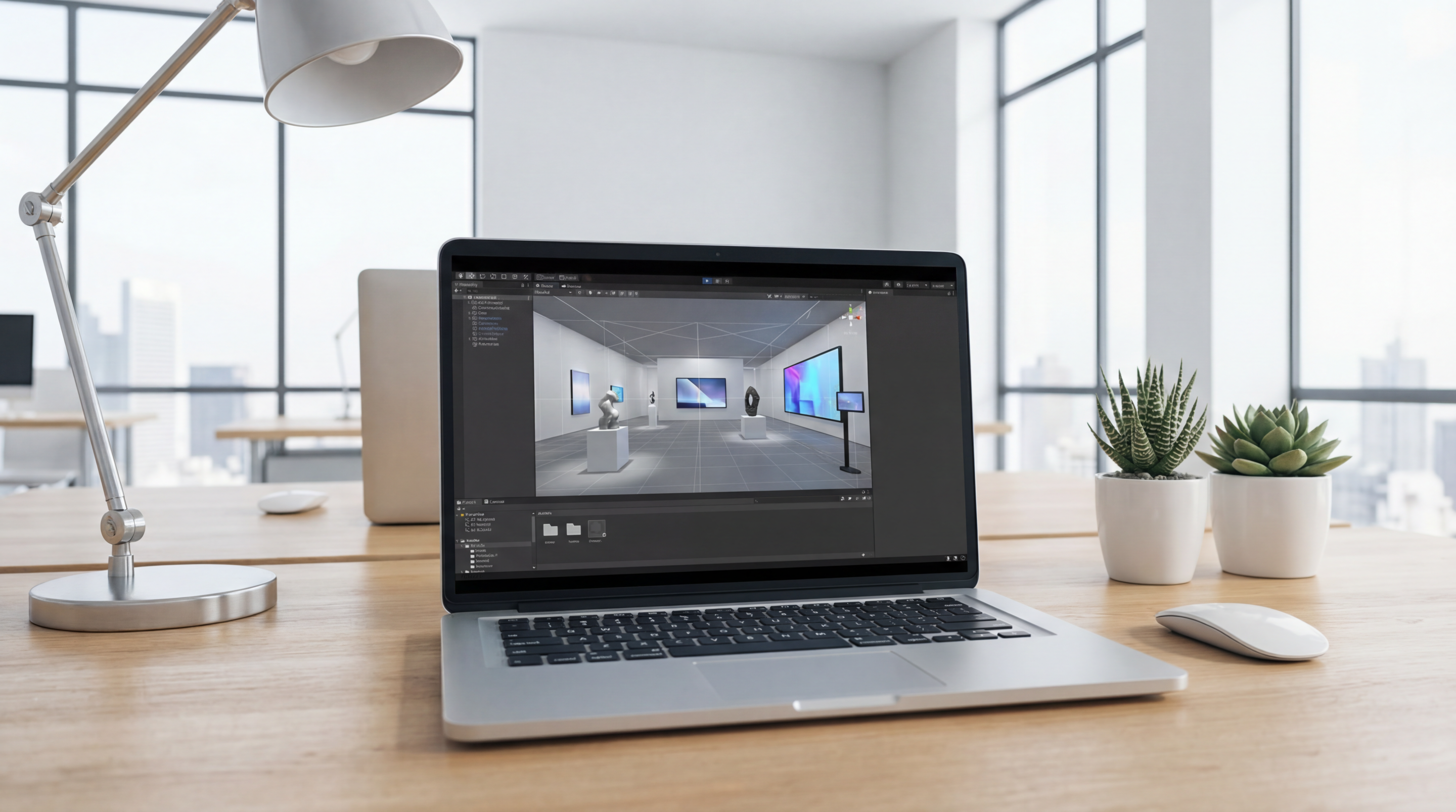
We don’t start with high-end graphics. We start with Whiteboxing—building the entire environment out of simple gray cubes. This allows us to test the “Flow” and “UX” without getting distracted by aesthetics. If the experience isn’t intuitive in gray, it won’t be in 4K.
Phase 2: Asset Pipeline & AI Integration
Once the logic is sound, we integrate high-fidelity assets. This is where we use the AI-Augmented workflows to rapidly prototype environments, which are then refined by our senior artists to ensure they meet the Frame Sixty standard of excellence.
Phase 3: Stress Testing and Optimization
Optimization is the most overlooked part of virtual reality development. A single “frame drop” can cause motion sickness. We run every project through rigorous GPU Profiling to ensure a locked 90 FPS (Frames Per Second) even on standalone mobile hardware.
Phase 4: Deployment and Analytics
After launch, we implement Spatial Heatmaps. We provide our clients with a “bird’s eye view” of their VR app, showing exactly where users looked, where they got stuck, and which interactive elements they ignored, allowing for continuous data-driven improvement.
The Frame Sixty Development Lifecycle
A successful virtual reality development project requires more than just coding; it requires a specialized “spatial-first” methodology. Under the leadership of Sean McCue (CEO), and Matias Gelos (CTO), Frame Sixty utilizes a proven four-phase pipeline designed to minimize risk and maximize immersion.
Phase 1: Discovery, Storyboarding, and "Whiteboxing"
Every project begins with a deep discovery phase where we map user journeys to business KPIs.
-
Spatial Storyboarding: We move beyond 2D wireframes to “spatial storyboards” that account for a 360-degree field of view.
-
Whiteboxing: Our developers build a “gray-box” version of the environment first. This allows us to test scale, reach-distances, and movement mechanics before a single high-resolution texture is applied. If the experience isn’t intuitive in a simple gray room, it won’t be successful in 4K.
Phase 2: AI-Augmented Asset Pipeline
In 2026, we utilize AI-driven pipelines to bypass the traditional “content bottleneck”
.
-
Rapid Prototyping: We use generative AI to create base 3D meshes and environmental textures from text prompts.
-
Senior Art Refinement: These AI-generated assets are then refined by our senior 3D artists to ensure they meet the specific aesthetic and lighting requirements of the Meta Quest 3s or Apple Vision Pro 2. This hybrid approach allows us to deliver high-fidelity worlds in half the time of traditional studios.

Phase 3: Performance Stress Testing & Optimization
Optimization is where many VR projects fail. At Frame Sixty, we have a “Zero Latency” mandate.
-
GPU Profiling: We perform rigorous frame-timing analysis to ensure every experience maintain a locked 90 FPS minimum.
-
Ergonomic Testing: We test for “cognitive load” to ensure users can interact with the system for 30–60 minutes without eye strain or physical fatigue.
Phase 4: Deployment and Post-Launch Analytics
Our job isn’t finished when the app is published. We integrate proprietary Spatial Analytics to help you measure success.
-
Heatmapping: We provide data on exactly where users are looking and moving within the simulation.
-
Iterative Updates: Based on this data, we refine the UX to ensure your VR solution continues to deliver its
projected ROI
The ROI Framework: Why Businesses Invest in 2026
1. Reduced Time-to-Competency: VR training is up to 4x faster than traditional classroom learning.
2. Safety and Liability Reduction: Safety-critical industries report a 43% reduction in lost time due to injury after implementing VR safety modules.
3. Scalability: Once a VR module is built, training 10,000 employees costs marginally more than training 10, whereas physical training scales linearly in cost.
4. Employee Retention: Employees trained in VR are 275% more confident and feel a stronger emotional connection to their training material (
Tip: Discover why we are ranked among the
. Best Mixed Reality Companies in 2026
Challenges and Future-Proofing for 2027
As we look toward 2027, virtual reality development is moving toward “Invisible Tech”—where the hardware disappears and the experience becomes indistinguishable from reality. However, several hurdles remain that our team at Frame Sixty proactively manages.
Overcoming "Sim-Sickness"
Even with 2026 hardware, poorly optimized code can cause motion sickness. We solve this through:
-
Fixed Foveated Rendering: Prioritizing GPU power only where the user is looking.
-
Locked 90+ FPS: Ensuring the refresh rate never dips, which is the primary cause of nausea.
Preparing for the Next Wave: BCI and 6G
The next 18 months will see the integration of Brain-Computer Interfaces (BCI). We are already experimenting with “Neural Interfaces” that allow users to navigate VR menus using focused intent rather than hand controllers. Additionally, the rollout of 6G Connectivity will allow for “Split-Rendering,” where the heaviest visual tasks are handled by a cloud server and streamed with zero perceived latency to the headset.
Universal Compatibility with OpenUSD
To ensure your 2026 investment doesn’t become obsolete, we utilize

Conclusion: Partnering for the Spatial Future
Virtual reality development in 2026 has moved beyond the “proof of concept” stage and into the realm of mission-critical infrastructure. As spatial computing continues to redefine how we interact with digital data, the success of your project depends on more than just high-end graphics; it requires a strategic intersection of AI-driven workflows, hardware optimization, and user-centric design.
The shift toward immersive technologies offers a unique window of opportunity for enterprises to gain a significant competitive advantage. By reducing training costs, improving safety outcomes, and creating more engaging customer experiences, VR is delivering a measurable ROI that traditional media simply cannot match.
At Frame Sixty, our leadership team—including Sean McCue, and Matias Gelos—brings decades of collective expertise to every project, ensuring your vision is executed with technical precision and strategic insight. We don’t just build applications; we architect the future of spatial interaction.
Ready to transform your business through immersive technology?
Whether you are looking to revolutionize your corporate training, develop a high-fidelity medical simulation, or explore the industrial metaverse, we are here to help you navigate the 2026 landscape and beyond.
Virtual Reality Development: Frequently Asked Questions
As the landscape of spatial computing evolves, businesses often have questions about the transition from traditional software to immersive environments. Below is a breakdown of common inquiries regarding the tech stack, implementation, and investment potential of VR.
What is OpenXR and why does it matter for my project?
OpenXR 1.1 is an industry-wide standard that allows VR apps to run across different headsets (like Meta Quest 4 and Apple Vision Pro 2) without a total codebase rewrite, future-proofing your investment.
What is the difference between WebXR and Native VR?
WebXR runs instantly in a browser for frictionless marketing, whereas Native VR (built in Unity/Unreal) provides the high performance needed for complex physics and secure enterprise data.
What are "Spatial Analytics" in VR development?
Spatial analytics use data like eye-tracking and movement heatmaps to show exactly how users interact with a virtual environment, allowing for data-driven UX improvements.
Can AI help reduce the cost of building VR environments?
Yes, by using AI-driven procedural content generation and Gaussian Splatting, developers can digitize real-world spaces and objects faster than traditional manual modeling.
Does VR development help with workplace safety?
Absolutely; high-risk industries report a 43% reduction in lost time due to injuries after implementing VR safety simulations that allow for risk-free muscle memory building.
How do I choose the right hardware target for my business?
The Meta Quest 4 is ideal for mass-scale training due to its price point, while the Apple Vision Pro 2 is better suited for high-end design and executive collaboration.