

Matias Gelos
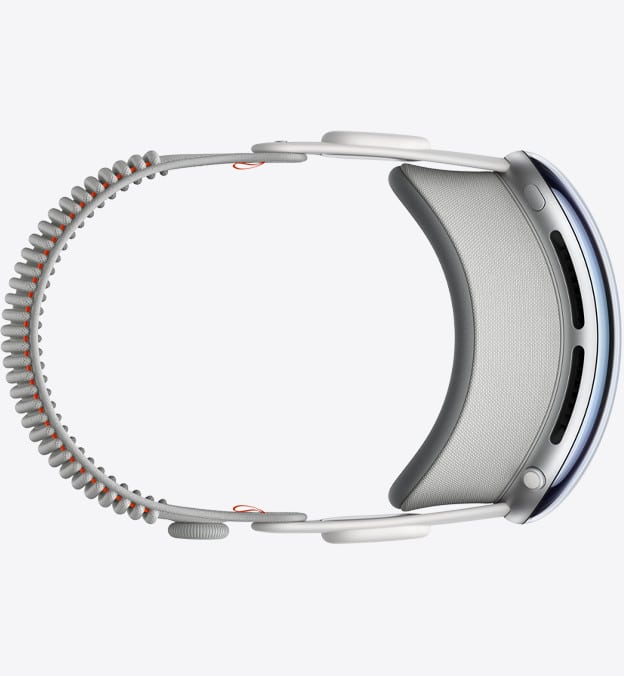
With a breathtaking and easy-to-use interface, this headset showcases Apple’s vision for the future of computing. It demonstrates why many of us think that spatial computing or mixed reality will be the next major computing platform.
So, mixed reality isn’t just a fad, and neither is the Apple Vision Pro headset. Let’s talk about how this amazing gadget from Apple could change the way we experience mixed reality in the future.
1. Apple Vision Pro: Redefining Mixed Reality
The Apple Vision Pro, priced at a hefty $3,500, emerges not only as a premium gaming device but also as a sophisticated tool for professional use. This fusion of work and play has surprised many, as few anticipated the extent of Apple’s innovation in this space.
2. Offer Immersive Experience
It introduces a user-friendly and robust three-dimensional interface that users can navigate using their eyes, hands, and voice. With its top-notch displays and spatial audio, this headset creates a world that feels almost too real to be true. Plus, with its fancy haptic feedback tech, users can actually feel the virtual world around them.
3. VisionOS: A Transformative Addition
It’s all about bringing together technology and human touch seamlessly. Using these features, you can create engaging apps for your users:
SwiftUI
RealityKit
ARKit
4. Elevate Gaming Experience
Thanks to precise motion tracking and responsive controls, this headset delivers a gaming experience that surpasses the limitations of traditional consoles. The blend of augmented elements into the real world injects an extra layer of excitement and engagement, poised to revolutionize the gaming industry.
5. Enable Multiplayer and Social Interaction
6. Facilitate Education
With its knack for seamlessly blending virtual info into the real world, this headset could totally shake up how we learn and train.
And in offices and job sites, it’s a game-changer, too. Think about architects seeing their designs in actual spaces or remote teams holding meetings in a shared virtual room. The potential here for boosting productivity and teamwork across different industries is huge, making the Vision Pro a real force in shaping the future of work and learning.
7. Latest Updates and Innovations
In 2024, the focus is on health and wellness apps, which are taking full advantage of the headset’s magical powers. These apps are revolutionizing various sectors, including clinical education, surgical planning, and medical imaging.
Additionally, the visionOS 1.1 update brings exciting new features to the table.
Furthermore, enhancements to the Persona feature are enhancing the quality of video calls, making them more lifelike and immersive.
8. Take Away
Do you want to harness the power of mixed reality for your business? Let our Apple Vision pro app developers guide you in how you can best leverage the powerful capabilities of Apple Vision Pro. Questions? We are ready to answer your questions. Pleas reach out at [email protected].
FAQs About App Development
Crafting and bringing a mobile app to life can often feel like a daunting endeavor. However, with our wealth of knowledge and seasoned expertise, we’re equipped to address all your questions and navigate you through the app creation journey with unparalleled smoothness and simplicity.
Can you help me create a prototype or MVP for Vision Pro?
Yes. We regularly build proof-of-concept apps and MVPs to help clients validate ideas, secure funding, or pitch to internal stakeholders.
Do you support 3D medical visualization or healthcare apps on Vision Pro?
Absolutely. We've built medical-grade prototypes, including brain scan visualization tools, and can tailor AR/VR development for healthcare use cases.
Do I need special hardware to test Vision Pro apps?
For initial development, we use Apple’s visionOS simulator. However, full testing requires access to the Vision Pro device, which we support internally.
Can you port an existing Unity app to Vision Pro?
Yes. We can migrate existing Unity projects to visionOS using Unity PolySpatial and Apple's APIs, while optimizing for performance and UI/UX standards.
Will my Vision Pro app work with other Apple devices?
Some components can extend to iPad or iPhone, but immersive spatial features are exclusive to Vision Pro. We can advise on cross-device strategy as part of your AR/VR development roadmap.
Do you support mixed reality and passthrough experiences?
Yes. Our AR/VR development team specializes in Quest’s MR capabilities using color passthrough, depth APIs, and environment blending.
Can you build multiplayer or networked Quest experiences?
Absolutely. We can integrate Photon, Normcore, or custom networking stacks to enable social, collaborative, or multiplayer AR/VR apps.
What’s the difference between Quest 2, 3, and Quest Pro for development?
While all support core features, Quest 3 and Pro offer better passthrough, depth sensing, and hand tracking. We help tailor AR/VR development to the hardware's strengths.
Do you support hand tracking or controller-free interactions on Meta Quest?
Yes, we implement Quest’s hand tracking APIs for natural gesture-based input, ideal for immersive experiences and accessibility.
Can you build a Unity or Unreal project for Quest?
Yes. We primarily use Unity for Meta Quest apps but can also develop in Unreal depending on the visual or technical requirements.
Can you build both AR and VR experiences?
Yes. Our team handles the full spectrum—from mobile AR on iOS/Android to fully immersive VR for headsets like Quest and Vision Pro.
Do you create custom shaders, effects, or interaction systems?
Yes. We frequently develop custom graphics pipelines, shaders, and input systems to create high-fidelity AR/VR experiences.
Can you help with ideation and product strategy for AR/VR?
Definitely. Many of our clients engage us early to help shape the product vision, build prototypes, and outline a go-to-market plan.
Do you provide post-launch support or feature updates?
Yes. We offer ongoing support, feature expansions, and performance optimizations after your AR/VR app is live.
Can you integrate AI, machine learning, or computer vision into AR/VR apps?
Yes. We’ve integrated AI-based assistants, object tracking, and spatial awareness features into AR/VR projects for smarter interactions.